GIUK
Greenland - Iceland - UK Gap Scenarios, EC2000/3 Battle for the GIUK Gap
162 files
-
The Krasnodar Incident, late April 2016. Historical Scenario/Alternate History Scenario.
A Harpoon Commander's Edition introductory scenario for the EC2003 Battle for the GIUK GAP Battleset and the HCDB-150928 1980-2015 era Platform Database. This scenario is designed with advanced Scenario Editor and to be run with HCE 2015.008+ or later.
Image: The new diesel-electric submarine B-265 Krasnodar with the Russian Navy Saint Andrew's Cross flag raised on her commisioning day 5 November 2105 on the eve of Submariner Day, near Saint Petersburg, and before to be transferred to the Black Sea Fleet. Photo credit Mil.ru, Ministry of Defence of the Russian Federation, took from Wikipedia Commons.
This scenario is designed to be played from the Blue/Polish side or from the Red/Russian side. To avoid spoilers you should play a few times first the Blue side, and only later play the Red side.
The scenario is based in current historical events, mainly the Russian media propaganda stunt about a hypothetical subsurface collision between the just commissioned Russian conventional submarine Krasnodar and the Polish submarine Orzel in the Baltic Sea, in a time period when Orzel has not quitted the Gulf of Gdansk waters. This scenario depicts a derivative and open-fire limited submarine war, but is very improbable the political motivation in either side capable to generate an open and all-out war.
Is basically an introductory scenario, inspired by the (continuous) current events.
After the full of naval, military and security incidents year of 2014 the World was beginning the so-called Second Cold War. Mostly as result of President of Russia Vladimir Putin (ex-KGB lieutenant colonel) actions, provoking in succession the Crimea, Ukraine, Donetsk, Baltic States, October 2014 Swedish submarine incursion, G-20 Brisbane meeting naval crisis, November 2014 Faslane submarine incident, frigate Yaroslav Mudryy February "Channel Dash", April 2015 Finnish submarine incursion (for many observers causing the pre-mobilization of Finland reserve forces), Russian intervention in Syria from 30 September 2015, violation by Russian military helicopters of the Finnish and Georgian borders on 10 December 2015, March 2016 detection by the French of a Russian submarine near Bay of Biscay, violation by Russian military helicopters of the Polish border on 18 April 2016, and with constant and multiple overflies with military warplanes entangled in potential incidents with commercial and military flights in Europe. That without counting in other unrelated naval incidents, just as the Iranian seizure of the Maersk Tigris in 28 April 2015 (and neither counting in landlocked actions, as the ISIS operations in Middle East).
And all those incidents without counting more towards Far East with China as a less perceived and growing problem, and his own generated incidents. China was building structures with military capabilities, including from 2012 more relevant structures, as the 3000+ meters long (Very Large Airport in Harpoon parameters) runway in Fiery Cross Reef (now finished, at March 2016), and more important, building artificial reefs and islands above previous simple shoals for claiming territory. At last in an undetermined date late April 2015 China claims as territorial waters the 12 nautical miles circling his "new" islands.
As the US official doctrine is Freedom of Navigation (FON) worldwide on international waters (same in Baltic and Black Seas), and as in this case with fears about a decision not to send naval vessels into the zone would inadvertently help the Chinese build their own case for sovereignty in the area, some air and surface elements of US Navy begin to orbit near the Chinese claims, but not crossing the 12 nm line.
Between the first incidents were a VP-45 Pelicans' P-8A Poseidon in surveillance mission carrying a CNN TV team inside, warned by the Chinese to no flight 12 nm near of Fiery Cross Reef on 20 May 2015, and the trailing for some hours of the USS Fort Worth (LCS-3) by the Chinese frigate Yuncheng (571) on 11 May 2015. Late, from 26 October 2015, USS Lassen (DDG-82) implement the Freedom of Navigation (FON) near the Chinese occupied Subi and Mischief Reefs in the Spratlys, and a clash of destroyers was possible, but avoided with the humble and shy behaviour of the US side, transiting without radars illuminating or the helicopter flying, the 1 to 8 March 2016 sailing of the USS John C. Stennis Carrier Strike Group on the contested area, and the sailing of the cruiser USS Chancellorsville between Scarborough Shoal and Mischief Reef on late March 2016, when was persistently trailed by Chinese frigate Yueyang (575) and the action was limited to an exchange of weather pleasantries.
In this Alternate History case, the new Polish nationalist leaders (incumbents from August and November 2015) decides the Russian subsurface navigation of Gulf of Gdansk, near the Russian exclave of Kaliningrad (containing the old Prussian cities of Konigsberg and Pillau), can't be tolerated, and will be opposed by any means necessary.
Enrique Mas, 1 May 2016.- 257 Downloads
Updated -
This is the third scenario in the series.
PRELUDE:
Following the victory of ECON against the US backed coup in the UK, the Labour party formed a government and the UK officially joined ECON.
The most important result of the struggle over the UK happened elsewhere however. The Russian Kuznetsov carrier battle group came under attack by US aircraft in the North Sea. Whether the sinking of a Udaloy class destroyer by 3 Harpoon missiles fired by US F/A-18s was a mistake or deliberate action will never be known. The Putin-Merkel pact was signed the following day, forming a military alliance between ECON and Greater Russia, dragging Russia into the conflict. Other nations picked sides quickly too with South American nations joining the US led alliance, followed by Canada and Japan. China and Australia decided to stay neutral for the time being. The biggest surprise came from Israel. Happy with the progress towards democratization and the crackdown on Islam militants in the Arab nations, Israel decided to join the ECON alliance.
The official request for help by the ousted Icelandic government against a US “invasion force” led to the effects that follow.- 294 Downloads
Updated -
This is the second scenario in the series.
PRELUDE:
The conflict between the ECON-India-Arab coalition in the summer of 2019 was the first event in a cascade that was to follow. Although the coalition managed to oust US forces from Pakistan, that success was only short-lived. The American counterattack using submarine launched cruise missiles and long-range bomber strikes out of Diego Garcia severely gutted the recovering Arab forces and rendered most of the oil terminals useless. The following CIA-backed insurgency in the Middle East brought the newly elected Arab governments to the brink of collapse. ECON and the US referred from directly attacking each other across the Atlantic and in May 2020 the Reykjavik peace treaty was finally signed.
The worse seemed to have been over, but then disaster stroke once again. The UK general election of 2022 ended in chaos after right-wing militant groups attacked voting stations, where strong results for the labour party were expected. The attacks seem to have been triggered after the labour party had declared its plan to initiate talks of the UK joining ECON again (after leaving the EU in 2018 in the first place). Whistle blowers revealed documents linking the CIA to the attacks; however solid evidence was never retrieved to back up this claim. Diplomatic tensions rose swiftly after that between the UK and ECON, with the UK Tory government declaring a state of emergency and asking for US military assistance to safeguard the British islands. This was the drop that spilled the cup, forcing ECON to intervene.- 590 Downloads
Updated -
BALTOPS 2015 going hot, 17-18 June 2015. Alternate History Scenario.
A Harpoon Commander's Edition scenario for the EC2003 Battle for GIUK Gap Battleset and the HCDB-150621 1980-2015 era Platform Database.
Image: HMS Ocean in BALTOPS 2015, near the landing target of Ustka, Poland. Photo by 1st Lt. Sarah E. Burns, USMC, a US servicewoman in duty, and as consequence in public domain. Taked from Wikipedia Commons.
This scenario is designed to be played from the Blue/NATO and partners side or from the Red/Russia side. You should play a few times first the Blue/NATO and Partners side to avoid spoilers, and only later play the Red/Russia side.
After the naval and security incidents full year of 2014 and the not less eventful first five months of 2015 and with the World beginning the so-called Second Cold War when President of Russia Vladimir Putin (ex-KGB lieutenant colonel) provoked in succession the Crimea, Ukraine, Donetsk, Baltic States, October 2014 Swedish submarine incursion, G-20 Brisbane meeting naval crisis, November 2014 Faslane submarine incident, frigate Yaroslav Mudryy February "Channel Dash", April 2015 Finnish submarine incursion (for many observers causing the pre-mobilization of Finland reserve forces), and constant and multiple overflies with military warplanes entangled in potential incidents with commercial flights (even employing transport types because the shortage of true military types in the Russian forces). That without counting other unrelated naval incidents, just as the Iranian seizure of the Maersk Tigris in 28 April 2015 (and neither counting very prominent landlocked actions, as the counter-DAESH operations in Middl
e East).
When the big anti-submarine exercise Dynamic Mongoose did begin in 4 May 2015 was interpreted by many journalists as an answer to the latest Russian actions and menacing postures, but it was actually a yearly exercise. But in the current world situation was legit to think otherwise, more with the intervention in the exercise of Swedish Navy elements, probably as consequence of the Russian-attributed Swedish submarine incident of October 2014, as Sweden is not a NATO member, but did participate as partner.
Further, when the also yearly BALTOPS 2015 multipurpose and landing exercise did begin from 5 to 20 June 2015 with theoretically neutral Swedish and Finnish partner participation, the Russian State-owned media (Russia Today, Sputnik, Russia Beyond the Headlines and others) and associated Western media did begin a campaign to delegitimize the NATO exercises (BALTOPS 2015 was a complex exercise simultaneous to others as Saber Strike 2015 and Noble Jump 2015), and to justify any Russian military action.
At last, in this alternate history path, on 17 June 2015 at BALTOPS 2015 peak, the NATO and partners show of force did go erroneously a few nautical miles East, and the ships for the programmed landing in the small Polish town of Ustka (BNp, a few days previously was another training landing in Sweden, near Ravlunda, BOp) are presented just off the coastline of the Russian exclave of Kaliningrad between Lithuania and Poland (Formerly Konigsberg in East Prussia. What better excuse to request a land bridge from the Russian side, nobody remember the very near Danzig Corridor and the 1939 German Ultimatum to Poland?), and the situation goes to the boiling point very fast.
To keep his security promises to the Russian people Putin is forced to an open war and destroy the landing forces near Kaliningrad, employing all the forces in the Baltic theatre, and another very few deployed from others.
The state of readiness of the NATO forces is low, the first two days of the open conflict can count only with the forces at disposition of the current exercises, but with the complete Polish Air Force order of battle, in high state of readiness because the international situation (The Finnish Air Force will be limited to protect this homeland).
Will be vital for both sides to prevail these two first days of war, for Russia as propaganda and to show his force, for NATO and partners for resist and mobilize all the Western forces the next days, almost guaranteeing the victory against Putin's Russia.
Enrique Mas, July 4 2015.- 530 Downloads
Updated -
Exercise Dynamic Mongoose 2015. 4-14 May 2015. Historical Training Scenario.
A Harpoon Commander's Edition scenario for the EC2003 Battle for GIUK Gap Battleset and the HCDB-150502 1980-2015 era Platform Database or the HCDB2-170319 new standard 1980-2025 era Platform Database. This scenario is designed with the Advanced Scenario Editor and to be run with HCE 2015.008+ or later.
Image: Swedish submarine Gotland, British frigate Portland, Spanish AEGIS frigate Blas de Lezo and Dutch NH90 Caiman helicopter. US Navy photo taked off Bergen 4 May 2015 by Commander David Benham, as consequence in public domain. Retrieved from http://www.nato.int/cps/en/natohq/photos_119170.htm
This scenario is designed to be played from the Blue/NATO side or from the Red/NATO side. You should play a few times first the Blue side to avoid spoilers, and only later play the Red side.
After the eventful year of 2014 and the not less eventful first four months of 2015 and with the World beginning the so-called Second Cold War, the President of Russia Vladimir Putin (ex-KGB lieutenant colonel) was showing clearly his plan to recover the Russian Empire and later Soviet territories for reinstitute the greatness of his Russia, and to guarantee his passage on the History as saviour of the Rodina.
From May 2014 Putin provoked in succession the Crimea, Ukraine, Donetsk, Baltic States, October 2014 Swedish submarine incursion, G-20 Brisbane meeting naval crisis, November 2014 Faslane submarine incident, frigate Yaroslav Mudryy February "Channel Dash", April 2015 Finnish submarine incursion (for many observers causing the pre-mobilization of Finland reserve forces), and constant and multiple overflies with military warplanes entangled in potential incidents with commercial flights.
When the big anti-submarine exercise Dynamic Mongoose did begin in 4 May 2015 was interpreted by many journalists as an answer to the latest Russian actions and menacing postures, but it was actually a yearly exercise. But in the current world situation was legit to think otherwise, more with the intervention in the exercise of Swedish Navy elements, probably as consequence of the Russian-attributed Swedish submarine incident of October 2014, as Sweden is not a NATO member, but did participate as partner.
Of course this is a training exercise and actually shots, torpedoes and missiles aren't fired and nobody is hurt ...
Enrique Mas, 10 May 2015.
- 419 Downloads
Updated -
Duel in the English Channel, mid-February 2015. Alternate history scenario.
A Harpoon Commander's Edition scenario for the EC2003 Battle for GIUK Gap Battleset and the HCDB-140909 1980-2015 era Platform Database.
Image: HMS Argyll in 2009, UK MoD photo, from Wikipedia Commons. Author: LA(Phot) Caz Davies.
This scenario is designed to be played from the Blue/UK side or from the Red/Russia side. Is a very simple and introductory scenario, but you should play first a few times the Blue/UK side to avoid possible spoilers, and only later play the Red/Russia side.
After the eventful year of 2014 and with the World beginning the so-called Second Cold War, the President of Russia Vladimir Putin (ex-KGB lieutenant colonel) was showing clearly his plan to recover the Russian Empire and later Soviet territories for reinstitute the greatness of his Russia, and to guarantee his passage on the History as savior of the Rodina.
From May 2014 Putin provoked in succession the Crimea, Ukraine, Donetsk, Baltic States, Swedish submarine incursion, G-20 Brisbane meeting naval crisis, November 2014 Faslane submarine incident, and constant and multiple overflies with military warplanes causing potential incidents with commercial flights.
After UK did retire all the Nimrod MR.2 ASW and maritime patrol aircrafts in 2010 (and his ill-fated projected replacement Nimrod MRA.4 in 2012), the island nation was hopeless without a credible defence even of his nearest sea lanes (we can add to these very erroneous decisions others recent ones, losing full weapon capabilities in others fields, as the air-launched Sea Eagle anti-ship missile in 2000, the Sea Harrier in 2006, the Harrier in 2009 and the anti-radar ALARM missile in December 2013).
Also, from near 2010 only a warships was available for "escort" foreign or potentially enemy ships sailing the English Channel.
One of the first naval incidents of 2015 was the 17 February "Channel Dash" by the Neustrashimyy-class frigate Yaroslav Mudryy, returning to her Baltiysk base near Kaliningrad.
This scenario shows as the incident did could go wrong.
Enrique Mas, March 2015.
- 603 Downloads
Updated -
Minelaying Incursion in the Phoney War, 12-13 December 1939. Historical Scenario.
A Harpoon Commander's Edition scenario for the EC2003 Battle for GIUK Gap Battleset and the HCWW-101110 World Wars era Platform Database. To avoid spoilers is better to play first a few times the British/Blue side, and only after play the German/Red side.
Image: pre-War photos of German destroyers Z1 Leberecht Maas and Z5 Paul Jakobi, as depicted on the A503 FM30-50 booklet for identification of ships, published by the Division of Naval Inteligence of the Navy Department of the United States and as consequence in public domain. Taked from Wikipedia Commons.
A mining scenario based on the 12-13 December mining incursion near Newcastle by German light surface forces in the Phoney War.
Both sides have limited resources and many task to do and many paths to victory.
The present forces are all the historical correct as I can get them.
Are depicted the historical surface and subsurface naval forces, the complete RAF Coastal Command order of battle at 12 December 1939, and the on the German side in the same date the near to North Sea units of Kustenfliegergruppen, Seeaufklarungsgruppen and the only and one Tragergruppe 186 with instructional land-based aircrafts to ready Luftwaffe air crews for future naval use in the Graf Zeppelin aircraft carrier, ship who never entered in service.
Notes:
Some very few British DD/DE not are of the exact time period represented, but almost all of them are historically correct and present as in the operations in December 1939.
The number of aircraft in the air units of both sides are hypothetical and not strictly historical.
A very few of the German aircraft types subvariants are not historical accurate.
Some aircrafts of the RAF Coastal Command are represented by similar types because limitations in the Database:
30xAnson MkI=15xHudson MkI/II.
4xLondon I, London II, Stranraer or Skeeter represented by 1xSunderland III.
2xSunderland I represented by 1xSunderland III.
The ahistorical SOSUS or CAESAR contacts on naval units can be considered as representations of SIGINT or HUMINT detections.
Enrique Mas, February 2015.
- 531 Downloads
Updated -
Sub Hunt off Faslane 2014. Historical scenario/Alternate history scenario.
A Harpoon Commander's Edition scenario for the EC2003 Battle for GIUK Gap Battleset and the HCDB-140909 1980-2015 era Platform Database or the New Standard HCDB2-170611 1980-2025 era Platform Database.
Image: Royal Air Force Sentinel R.1 visits the National Test Pilot School at Mojave, 29 October 2007. Photo by Alan Radecki. From Wikipedia Commons.
This scenario is designed to be played from the Blue/NATO side or from the Red/Russian side. You should play a few times first the Blue/NATO side to avoid spoilers about force presence, and only later play the Red/Russian, but the victory conditions are probably difficult to get for an AI-controlled Blue side.
After UK did retire all the Nimrod MR.2 ASW and maritime patrol aircrafts in 2010 (and his ill-fated projected replacement Nimrod MRA.4 in 2012), the island nation was hopeless without a credible defence even of his nearest sea lanes (we can add to these very erroneous decisions others recent ones, losing full weapon capabilities in others fields, as the air-launched Sea Eagle anti-ship missile in 2000, the Sea Harrier in 2006, the Harrier in 2009 and the anti-radar ALARM missile in December 2013).
Few time later, in the event full year of 2014 the President of Russia Vladimir Putin (ex-KGB operative) was showing his plan to recover the Russian Empire and later Soviet territories for reinstitute the greatness of his Russia, and to guarantee his passage on the History as savior of the Rodina.
After provoked from May 2014 the Crimea, Ukraine, Donetsk, Baltic States, Swedish submarine incursion, G-20 Brisbane meeting naval crisis, and constant and multiple overflies with military warplanes incidents, a less published but remarkable incident happened in the seas surrounding Scotland and the approaches to strategic British SSBN base of Faslane (HMNB Clyde).
In late November 2014 the periscope of an unidentified submarine was perceived near to Faslane base, and UK was forced to request support of the Allied for get some ASW aircrafts, after the Nimrod debacle of 2010.
Two American P-3C Orion (Of VP-4 "Skinny Dragons", based at NAS Sigonella, Sicily), two Canadian CP-140 Aurora, one French Atlantique 2, and one useless for the task British Sentinel R.1 (ASTOR) were deployed to RAF Kinloss in Scotland.
The situation was not very covered by the media, probably because the temporal proximity of the October 2014 Swedish Submarine Incident, and because the incertitude of the situation.
Enrique Mas, 18 December 2014.
- 434 Downloads
Updated -
Harpoon 3 Battles of the Third World War, May 1991.
A Harpoon Commander's Edition scenario for the EC2003 Battle for GIUK Gap Battleset and the HCDB-140909 1980-2015 era Platform Database.
Image: Soviet CVH Baku circa 1988. US Navy photo, from Wikipedia Commons.
This scenario is designed to be played from the Blue/Allied side or from the Red/Soviet side. You should play a few times first the Blue side to avoid spoilers, and only later play the Red side.
A North Atlantic-GIUK scenario inspired by some old scenario booklets of the Harpoon 3 series of the late 1980s edited by GDW, good for testing generic tactics and weapons. Actually is a mix-up of individual sea-operations centred scenarios as only the Computer Harpoon can provide. And reflecting all the knowledge acquired the last years in some matters, as about Soviet/Russian platforms, OOBs and Soviet/Russian carrier air wings composition.
The scenario is settled at the start of the conventional WWIII as was forecasted in the North Atlantic for about May 1991 in some of the GDW edited booklets, the opening movements and contacts, and the first days of open combat.
Enrique Mas, 5 December 2014.
- 871 Downloads
Updated -
Swedish Submarine Incident October 17-24, 2014. Historical scenario/Alternate history scenario.
A Harpoon Commander's Edition scenario for the EC2003 Battle for GIUK Gap Battleset and the HCDB-140909 1980-2015 era Platform Database.
Image from Wikipedia Commons: Swedish corvette K31 Visby in Aura river in Turku during the Northern Coasts 2014 exercise public pre sail event, 31 August 2014. Author: MKFI.
This scenario is designed to be played mostly from the Blue/Swedish side or from the Red/Russian side. You should play a few times first the Blue side to avoid spoilers, and only later play the Red/Russian side if you've interest on it, but I think the victory conditions are very difficult to get for an AI-controlled Blue side.
Years after the demise of Soviet Union, the prudent, neutral and natively well-armed Sweden did start near 2008 to downsizing clearly his armed forces (Forsvarsmakten), retiring whole categories of weapons systems, as the useful HKP-4B/C/D Boeing Vertol Kawasaki KV-107-II (CH-46 Sea Knight-derivative) twin-rotor ASW helicopters, specially configured for shallow and difficult waters. All this despite the habitual submarine incidents that had taken place continuously since at least 1962 on the Swedish territorial shores and archipelagos, originated in Soviet clandestine activities, of which the most obvious and memorable event was the stranding of S-363 "Whiskey on the Rocks Incident" in the vicinity of the sensible naval base of Karlskrona in November 1981.
But from the other side of the Baltic Sea the President of Russia Vladimir Putin was working for years in a plan to recover the Russian Empire and later Soviet territories, to reinstitute the greatness of his Russia, to guarantee his passage on the History as saviour of the Rodina, and doing return the ghost of the past.
Some months before the Crimean and Ukrainian crises, from 8 December 2013 begun the deployment of updated Su-27SM3 Russian fighters in the Belarusian 61st Fighter Air Base at Baranovichi, with all the pilots deployed qualified as Pilot First Class, and later apparently to form a full Flanker regiment to be based at Lida 206th Assault Air Base from 2015 (the Su-27 was previously retired from Belarusian service in December 2012)..
Also, deployment of advanced Iskander surface-to-surface missiles and a battery of the very impressive S-400 Triumf/SA-21 SAM in the Russian exclave of Kaliningrad between Lithuania and Poland (Formerly Konigsberg in East Prussia. What better excuse to request a land bridge from Russia, nobody remember the very near Danzig Corridor and the 1939 German Ultimatum to Poland?) can give some ideas about future events. More clear even from 7 April 2014, when after only a day of occupation by Russian affine forces was proclaimed the Donetsk People's Republic.
At last in Autumn, as another of the multiple World Crisis of 2014, in October 2014 were intensified Russian military flights with long range elements in the Pacific and Caribbean areas, Black and Baltic Seas shores and so far as the Portuguese Atlantic Coast.
But the more eye-catching and symptomatic incident on 17-24 October was the Swedish submarine chase of unidentified submerged object, with multiple but unclear sights on Kanholmsfjarden in the Stockholm archipelago and radio transmissions linked to a military site in Kaliningrad, compatible with a Russian submarine in distress. All with the addition of at least three Russian-operated civilian ships very probably equipped with submarine holding bays orbiting the near Baltic zone: NS Concord, a converted 105000 tons oil tanker sailing in circles in middle of the sea for one week, R/V Professor Logachev (an 3900 tons standard ex-AGI Project 12283M ship), and the 18425 tons LPG tanker Sibur Voronezh with very reduced IR signature, the two tankers operated at last instance by the Russian company Sovcomflot (SCF).
On this scenario the idea is to show the currently reduced ASW capabilities of the Swedish Armed Forces against a possible multiple midget submarine menace, at the same time facing and defending against some limited Russian air incursions potentially menacing the nimble Swedish surface ASW elements.
Is present the current Swedish OOB (the in service JAS.39C Gripen Block 19 (2010) and Block 20 (2012) have a slightly improved radar than plain JAS.39C, but are not yet armed with Meteor or Taurus) , and the limited Russian OOB showed in the scenario is as accurate as possible on open sources in October 2014.
Enrique Mas, November 2014.
- 505 Downloads
Updated -
From 1953, British citizens were told that they could expect four minutes of warning before an impending Soviet nuclear attack. Once the alert was given, television and radio networks all over the country would be interrupted by a broadcast warning, as well as activation of the national air raid siren system. In practise, the warning would have likely been much less than four minutes. The RAF Bomber Command Main Force, and its V class bombers - the Valiant, Vulcan, and Victor - was intended to guard against this threat and to prevent the neutralization of British nuclear retaliation capability. The V bomber force, and especially the Avro Vulcan, were intended to be kept at high readiness and also to be capable of flushing to their dispersal airfields within the four minute warning.
The Cuban Missile Crisis of October 1962 saw Vulcans lined up on their runways, bombs loaded and engines running, ready to take off at two minutes notice. The Ballistic Missile Early Warning System (BMEWS) station at Fylingdales in North Yorkshire would not be operational until September 1963. The period between late 1962 and late 1963 could therefore arguably be measured as the most dangerous test of the four minute warning.
- 361 Downloads
Submitted -
Scenario Background:
New Russia Part One: The Invasion of Poland
Version 2.0
September, 15th, 2014.
One month ago, Russia invaded the Ukraine. This had been well prepared and the Ukrainian forces were outgunned and overrun in a month. Russia has taken control over the whole country amazingly fast and installed a Moscow friendly regime.
Nato acted helpless and chattered in different tongues. The US look weak and are heavily involved in the Middle East where the IS forces gain territory by the day.
Russia has decided to make use of this perfect strategic situation. It has massed troops, armored vehicles and aircraft all along the border and is ready to strike and ... win again.
This is a huge scenario. Nearly 1'000 aircraft and hundreds of mobile land units are involved.
At the same time, it is fast and furious, thus, especially in the beginning, game speed 1:1 is recommended.
I tried to set up the current Polish, Russian and German Air Forces and bases accurately. It is interesting to test how this mixed Polish force of somewhat aged American and Russian aircraft will perform against the modern Russian Air Force when the first blows come in.
Comments and critiques welcome.
- Central Front
- Russia
- Poland
- Germany
-
Tagged with:
- 563 Downloads
Submitted -
Scenario Background:
September, 15th, 2014.
One month ago, Russia invaded the Ukraine. This had been well prepared and the Ukrainian forces were outgunned and overrun in a month. Russia has taken control over the whole country amazingly fast and installed a Moscow friendly regime.
Nato acted helpless and chattered in different tongues. The US look weak and are heavily involved in the Middle East where the IS forces gain territory by the day.
Russia has decided to make use of this perfect strategic situation. It has massed troops, armored vehicles and aircraft all along the border and is ready to strike and ... win again.
Editor's Notes:
This is a huge scenario. Nearly 1'000 aircraft and hundreds of mobile land units are involved.
At the same time, it is fast and furious, thus, especially in the beginning, game speed 1:1 is recommended.
I tried to set up the Polish Air Force accurately. It is interesting to test how this mixed force of somewhat aged American and Russian aircraft will perform against the modern Russian Air Force.
Comments and critiques welcome!
- 130 Downloads
Submitted -
Submarines Galore 2014!!!, late May 2014, Alternate history scenario.
A Harpoon Commander's Edition scenario for the EC2003 Battle for GIUK Gap Battleset and the HCDB-130818 1980-2015 Era Platform Database.
Image from Wikipedia: Portsmouth, Va. - The nations newest and most advanced nuclear-powered attack submarine USS Virginia (SSN 774) passes the skyline of Hampton, Va., with the campus of Hampton University seen in the background, on its the way to Norfolk Naval Shipyard upon completion of Bravo sea trials. Virginia is the Navys only major combatant ready to join the fleet that was designed with the post-Cold War security environment in mind and embodies the war fighting and operational capabilities required to dominate the littorals while maintaining undersea dominance in the open ocean. August 25, 2004. U.S. Navy photo by Journalist 2nd Class Christina M. Shaw(RELEASED).
A submarine-only scenario without other diversions, inspired on origin by some old scenario booklets of the Harpoon 3 series but very modified on this 2014 Edition, good for testing submarines (specially the new ones included after HCDB-110831), submarine tactics, sonars, torpedoes and other ASW weapons. Perhaps the Western submarines are numerically over-represented, but it's reflecting the original and very reduced in number of submarines paper scenarios. Also it's configured as a vanilla scenario for lazy players wanting to enjoy a simple pastime, and with the aim of replayability thanks to the aleatority of the starting positions and of the units presence or not presence. I think it's playable at the 10 or even 30 minutes time compression ... before doing any contact.
From February 21, 2014, well staged by President Putin, were unveiled and erupted multiple simultaneous crises in Ukraine, Baltic States and China. With a feeble and hesitating Obama Administration, and when the international relations and foreign policy "experts" and "analysts" were expecting for the start of a new cold war, it was very difficult for the uncoordinated and surprised Western Powers to see another path than that of the war. At least the first ten boats of the very advanced Virginia-class SSN were commissioned on less than the programmed budget and even eleven months before the scheduled date. Also, the Russian submarine fleet has not been very updated from the Cold War end, and has substantially shrunken in number. To keep low the political and social unrest because the war imminence and also because exceptionally bad weather, the opening naval actions were limited to discrete submarine operations, in a situation remembrance of the 1939 Phony War and of the 1994 Tom Clancy's novel Debt of Honor (where both Japan and the United States are in war against the other, but both governments are occulting the fact to his respective public opinions to prevent the collapse of the stock markets), but these underwater actions were not less decisive or murderous than a full open war.
Enrique Mas, May 18, 2014.
- 179 Downloads
Submitted -
NATO Baltic Air Policing in action, late May 2014. Alternate history scenario.
A Harpoon Commander's Edition scenario for the EC2003 Battle for GIUK Gap Battleset and the HCDB-130818 1980-2015 era Platform Database.
Image source Wikipedia: Description: Su-27SM3 at the Celebration of the 100th anniversary of Russian Air Force. Date 12 August 2012, 16:48:23 Source http://vitalykuzmin.net/?q=node/464 Author Vitaly V. Kuzmin.
This scenario is designed to be played from the Blue/Baltic-States-NATO side or from the Red/Belarus-Russia side. You should play a few times first the Blue side to avoid spoilers, and only later play the Red/Belarus-Russia side if you've interest on it, but I think the victory conditions are very difficult to get for an AI-controlled Red side.
Years after the demise of Soviet Union, when since March 2004 the three Baltic States Latvia, Lithuania and Estonia joined NATO, the 24/7 task to police the airspace of the Baltic States (without own effective Air Forces) was conducted on three or later four-month rotation from Lithuania's First Air Base in Siauliai Airport (a little famous Soviet base because was home of the Tu-126 Moss AWACS), from 2011 called Ronald Reagan International Airport. Usual deployments consist of only four fighter aircraft and support personnel.
As a reflect of the started 21 March 2014 Ukrainian Crises the NATO Baltic Air Policy detachment in the Ronald Reagan International Airport was reinforced with a greater number of fighters.
But from the other side of the border the President of Russia Vladimir Putin was working for years in a plan to recover the Russian Empire and later Soviet territories, to reinstitute the greatness of Russia, and to guarantee his passage on the History as saviour of the Rodina.
Some months before the Crimean and Ukrainian crises, from 8 December 2013 begun the deployment of updated Su-27SM3 Russian fighters in the Belarusian 61st Fighter Air Base at Baranovichi, with all the pilots deployed qualified as Pilot First Class, and later apparently to form a full Flanker regiment to be based at Lida 206th Assault Air Base from 2015 (the Su-27 was previously retired from Belarusian service in December 2012)..
Also, deployment of advanced Iskander surface-to-surface missiles and a battery of the very impressive S-400 Triumf/SA-21 SAM in the Russian exclave of Kaliningrad between Lithuania and Poland (Formerly Konigsberg in East Prussia. What better excuse to request a land bridge from Russia, nobody remember the very near Danzig Corridor and the 1939 German Ultimatum to Poland?) can give some ideas about future events. More clear even from 7 April 2014, when after only a day of occupation by Russian affine forces was proclaimed the Donetsk People's Republic, previously to the general Russian invasion of Ukraine on 10 May 2014 (date hypothetical on writing this text).
At last the Putin's plans were disclosed in late May 2014, when the Belarusian forces, acting as a Russian proxy to avoid a global conflict, and exploiting the numerous minor crises spread in the World (North Korea, Iran, Venezuela, China, India-Pakistan, Middle East, Sahel, ...) and the lack of momentum of the Obama Administration.
As response to the limited war started by Belarus with only a little support from the Russian forces based at Kaliningrad, NATO transferred the forces based in the Baltic States to Latvia, Lithuania and Estonia, but expelled them from NATO!, to avoid a generalized conflict.
In consequence, the Baltic States stand alone for the few first days of war, waiting for help only if they keep fighting to survive, and his cause is later supported by the Western Powers, after a political and strategic change.
Renamed places are:
AGa Amari AB, EEEI, Estonia.
ZHb, Saint Petersburg, Russia.
ZTa Minsk Machulishchy AB, UMLI, Belarus.
ZUa Hrodna/Grodno IA, UMMG, Belarus.
ZVa Pruzhany AB, UMNV, Belarus.
ZWa Luninets AB, BY-9934, Belarus.
ZXa Lida AB, UMDD, Belarus.
Notes:
Belarussian Su-25 are represented by Ukrainian Su-25.
The two MPQ-64 Sentinel radars of the LTAFADB are represented by Giraffe 75 radars.
Enrique Mas, April 7, 2014.
- 374 Downloads
Updated -
The Storozhevoy Mutiny, 8-9 November 1975. Historical Scenario.
A Harpoon Commander's Edition scenario for the EC2003 Battle for GIUK Gap Battleset and the HCCW-130801 1950-1975 Cold War Platform Database.
Image: from Wikipedia Commons, his sister ship Legkiy in 1993. Description: Aerial starboard bow view of the Russian Northern Fleet Krivak I Class guided missile frigate Legkiy underway. Сторожевой корабль Лёгкий в Северной Атлантике, август 1993 года.
On November 8, 1975, the day after of the 58th anniversary of the October Revolution in Riga, now capital city of Latvia (the date divergence comes from the change from the old Russian calendar) , Captain Third Rank Valery Mikhailovich Sablin, son and grandson of naval officers, the political commissar of the modern Soviet ASW frigate Storozhevoy and a committed Communist, called the crew together and showed them Battleship Potemkin, Sergei Eisenstein's fiction film account of the 1905 naval mutiny in Odessa.
After the movie screening Sablin, inspired by the memory of the battleship Potemkin, and also by the presence of the near museum in Leningrad of the protected cruiser Aurora, which with her gunfire and crew had ignited the revolution of 1917, and for all his life in deeply disaccord with the current communism ruling the Soviet Union, decides to sail with the Storozhevoy to Leningrad, and broadcast a direct message to the Soviet people to start a new and pure revolution.
After a voting, crew members and officers in disagreement with his action were confined at the sonar room.
However, an officer escaped and radioed for assistance. The news reached the Kremlin and Leonid Brezhnev, who immediately issued an order to ^Bomb it and sink it^, even employing nuclear bombs if necessary.
The mutiny was masqueraded to the rest of the world as an attempt at defecting to the West. The course for Leningrad, which would lead the ship through the Swedish island of Gotland and Stockholm as the gulf of Riga is impassable to the North, closed by the islands of Saaremaa and Hiiumaa, gave the mistaken impression that Storozhevoy was heading to Sweden instead of Leningrad. Until the end of the Cold War, Western intelligence believed that the crew was going to defect. This story inspired US author Tom Clancy to write the 1984 novel ^The Hunt for Red October^, and as consequence in a late stage the own Harpoon system, but that is another history.
Unnamed places are:
ZTa: Minsk/Machulishchi Airport and Air Base -/UMLI.
Enrique Mas, August 2013.
- 216 Downloads
Submitted -
Red Lighting 2 scenario description for Battleset HDS9 series3 "GIUK" in HARPOON GOLD !
Here is the complete thread and more info on this scen:
http://www.matrixgames.com/forums/tm.asp?m=3325616
How to load this into the game? Unzip to place of your choice, select GIUK HDS9 battleset in Harp Gold, click "user scenario", navigate to folder where you unzipped the files into...ready to go.
Scenario Background:
Sometime in the 90ties: The coup in Russia succeeded. Not only was the president imprisoned but the freedom movements in Poland and the GDR (=East Germany) were supressed. Not with violence, but more "quietly". So the west had not much clues what went on at all. First they were shocked by the turmoil in the Kremlin, but soon the relations between the sides normalized, because the new government in Russia seemed reasonable. They wanted a new deal with the US for delivery of non millitary items and the US business needed new deals - pressured the white house to be more friendly with the east. So they did, also the West German cancellor who also was more a puppet of big corporations that wanted export to the east, met with eastern president Lisy to discuss new trade deals. He was impressed by the chance of language - the new officials seemed to be more realistic and friendly than the old guard around Honecker. But little did they know what was happening, as in reality the millitary planned to get back the old s
oviet glory and demand what was rightfully them. If demand wasn´t working, pressure maybe would.....first the old Finnish wound should be healed. As their demand was not really bad (a "leasing" of the old territories which the Generals felt belonged to Russia), the Fins caved in to not have a second winter war. But the Russians didn´t stop there, they wanted a better protection of their northern flank. Sweden was strictly neutral and too strong, so Norway was the only option....
NATO wasnt prepared at all, lulled in by the new warm climate between the blocks. But the homeguard was. But they were too few. Russian speznaz and paratroops suddenly stormed key bases and the tanks came later. There were not much Nato forces in Norway at all, so this was solved fast. The norwegian government called a ceasefire with the option offered by the Russians that only the northern half of the country will be occupied, the other half became a norwegian "vichy". The few US marines with their few helis and harriers fled to Denmark as well some left over planes from the Norway airforce (some F16+F5 Tigers). So all 3 countries in the north now were more (=Norway) or less (=Sweden) controlled by the USSR. While Nato was still discussing how to react, the Russians made their next coup, demanding from Denmark free passage for all shipping. If this demand would be fullfilled, the case would be settled and there would be peace again. So the Kremlin. The Denish had a resolute prime minister at this time, who s
end Moscow a package with a letter and a bottle in it: "You can have this bottle of Denish beer for free, but not more". Also it contained a bottle of Danish beer.........
Overview of the BLUE forces (this is in the 90ties, but no specific date):
a) Belgium (only airforce - their few ships are employed in convoi duty and coastal patrol).
They have mostly F16s and a few Mirages. Belgium had MirageIIIs but they are substituted with 2000s in game (there is also no MIII in the database for this batttleset). Also you can use some Alpha Jets for light bombing duties (these are substituted by Hawks in game cause no Alpha Jet in database). Bases represented are Kleine Brogel and Florennes (the latter the bigger one).
Canada
Canada had CF18s stationed in Germany. In this scen it is assumed they are mostly withdrawn, but the last ones are still there: At Frankfurt Rhein Main airport ready for departure to Canada (ferry loadout)......
c)Denmark
They have also mostly F16s and a few Saab Draken. But also some F5s which fled from Norway. The Saab isnt in the database so you need to do without them, therefore the F16s look really cool (see pic). Also some Hawks are provided as light attack planes (or trainer but you do not need to train your pilots in this game). They also have some asw helis and all the US marine corps transport helos that fled from Norway. You should not lose too much of these transports they are needed for a air landing attack in Eastern Germany later....they have severall bases mostly at the coast (biggest one Copenhagen). Their navy consists of small corvettes, fast missile boats and diesel subs (2 of them in game).
d)France:
They always were (and wanted) something special and their own way. So in the 90ties the French werent keen on Nato service anymore (in fact they had withdrawn from the active duty member role in reality but returned later). But there was no question that they would defend themselves and their neighbouring allied countries (mainly WGermany and Belgium in central front). So as soon someone in earnest may attack these countries the French will be involved...but most of their forces are already occupied in the med and atlantic and the southern front.There are no French navy assets available for the northsea and baltic regions (this wasnt their responsibility anyways). They provide some air assets however: At the airfield Cambrai they have assigned Mirages (2000s and F1s) as well asw forces in the form of 2 brandnew Atlantic2 and 2 Puma helos to Nato central command....
ROE for France: Their force can only be used if a hostile shot is fired on Belgium or WGerman territory....Cambrai is pretty much far away from Red bases so should face no direct attack normally.
e) Germany (WEST): Provides the main force in the central front, severall bases are spread over the whole country as well the important war ports of Wilhelmshaven (Northsea) and Kiel/Eckernfoerde (Balticsea). Their bases are only medium in size with only "large" aircraft capacity - but some have good defenses in the form of Patriot batteries + Flak guns (most bases have Hawks+AA guns at least like all the others in W-Europe). The main exception is the huge military part of the airport Frankfurt/Main with 3 runways and Vlarge capacity! This is mostly used by the US airforce however.
The Luftwaffe employs Tornados in interdiction/attack role, some of the new SEAD/recon versions "ECR" are already there. Since their F4s in the attack role are mostly now overtaken by the more modern Tornado, the German F4Fs were modified as specialized fighter versions with better radar, avionics and they can use AMRAAM missiles. But note this is an early version of the missile not much better except in range as the newer Sparrows (AMRAAM range 40nm, Sparrow 24nm)... also some light attack planes/trainers can used (here Hawks which substitue the Alpha Jet in game). Note that Tornados can fly at Vlow altitude with afterburner on.
The Bundesmarine has as their main assets still the ex US destroyers of the Lutjens class (2 left at this time), Bremen frigates, as well 1 of a new frigate type just completed. They have an old destroyer still of the Hamburg class and auxilary tenders which should be protected (if possible?). Light forces are severall fast attack craft Excocet armed. Of course the light Diesel subs of class 206A not to forget....while only small they pack a heavy torpedo punch and are silent (untill they fire.....)..... the Marine also has Tornados (can be armed with Kormoran2 anti ship missiles) and severall Sea King and Atlantic1 as asw assets...
f) The Netherlands (sometimes refered to as Holland or simply cheese and windmill country)
They have 2 bases here: Soesterberg + Leuwaarden. While the first one holds a US airforce unit of F15s the latter has all the F16s in different loadouts. Dutch navy provides 2 Diesel subs as well a major sufarce fleet with 1 DD and 4 frigates. These are based at Den Helder port, where also the cheese ASW helos can be found.
g) Norway: Is already beaten and occupied by Red - but neither side has any bases in range for this conflict. Part of the Norwegian airforce managed to flee to Denmark tho (mostly F5 "freedom fighters")
h) USA (only air assets, their fleet has no business in this part of the front)
Upper Heyford, UK vlarge and 3 runways: F111s, B52s (which are a just per coincidence here...) also the few Awacs Nato has in this scen can be found here.
Soesterberg, NL: F15c
Ramstein, Ger: F16, F4 "wild weasel"
Bitburg,Ger: F15c
Frankfurt/Main,Ger: F15 c+e (ferry loadout as they are ready to leave Germany) also here you find the large transport planes and helis. These are most important and should be protected of course. Losing too much important transports will certainly NOT improve Natos chances for surviving, even if in-game they are more or less useless....Also do not forget the Canadian CF18s at this airport.
i) UK (air and 1 sub)
Brits have 1 modern upholder diesel sub in the north of the baltic (mission was recon so it should stay only in emergency fire)
Coltishall, UK: TornadoF3, Tornado GR4, Jaguar plus some AEW/ASW helis
Laarbruch; Ger: Tornado GR4, Harrier
NOTE1: There are no CAS planes ala A10 and only a few light attack planes (like the Hawk, Alpha Jet.. which are really roughly comparable) in this scen. As these were/are really for support of ground troops/training not for strikes on major ships or airports. But a few are provided which can be used for these purposes in emergencies. The RED side also has also only a few of these planes (if someone misses SU25 for example).....EDIT: You even allowed to use these "Alpha Jets" for ATA missions as I just read Alpha Jet could carry 2 sidewinders (as well in German version a 27mm Mauser)
NOTE2: In V1 of this scen (which is the "easier" one) Nato has a few more planes (please look at some ports which will hold Harriers and the Belgians have differing OOB, more F16 no M 2000, but therefore M F1.....) But no big differences on Nato site.....as for Red I wont spoil that of course. You need to find out yourself...
MEANWHILE: What happens at the front??? The politicians are concerned about the Russian reaction to the Danish reaction to their demands. They decide that now the point is reached where the fun ends and mobilize their forces. Nato will prepare to defend their member Denmark this time (better than Norway?) and themselfes....
So what does the intel say about the RED forces and their intentions???
It is assumed that the Russian generals are not very pleased with the Danish reaction. Marshall Ustinow even went in a rage he was reported yelling :" What dare this dwarf country to resist to our might and rightful demands.........". Plans obtained in the 80ties assume that speznas and air landing troops might attack important Nato assets, as well SSMs launched. As Russians are well aware that in modern war air suppority is needed to move large armies, they might try to neutralize airports and the assets on them. Ports like Wilhemshaven might be also priority targets . The East German and Polish forces werent as good as the Russians ones, but still they hold major roles. Like landing in Northern Germany or Denmark coasts and of course support the air campaign, but their ships are older and mostly small.
a) Germany (EAST)
Air: They provide all the bases for the Russian forces, as well substantiell strength of their own. However they should only have few Mig29s as planes that hold modern standards. They still employ MiG21 for mostly AtA duties but might also use them for strike (even if payload is small), their main combat plane is the Mig23 tho. They posess SU17/22 strike planes too. Exact locations and distribution of all the Red assets unknown, we only can identify numbers and size of planes (eg. we can of course tell from satellite recon if a airbase holds small Mig21 or TU16 bombers). We prepared for the commander a map where all our known infos are collected (select red base, click on full report).....
Navy: They have mostly older smaller Russian types, but built some own designs as well (eg. Balcom, Frosch LSTs). Osa1 missile boats can be expected, no submaries afawk......of course the Russians and Poles might help them out with ships....
Poland
Provides bases for Russian airforce. Has good airforce themselfes too. Check the East Ger report, as it is roughly the same for Poland. However the main base is Brzeg (vlarge, 2 runways) which should be used by the Russians with modern planes....navy smaller but they might possess the one or other bigger older DD (Kashin?)....
c) Russia
Air: They have put all their Mig21s in reserve or gave them to allies. Main fighters are Mig29 and Su27. For special duties they use some Mig25 still also the newer Mig31 *could* be in service. Mig23 latest version still used. As for attack, Mig27 seem to be numerous, small numbers of Mig29 *could* be used in this role too (they have more payload!). Russia still retained some older SU17s too but modernized with eg. better missiles...the early SU24 were a huge step for the Russian strike forces and it should be the main plane now used for longer ranges, it *can* be that a even more capable EW/patrol/SEAD version is in service now. Bomber and recon forces still like the TU16s... but the far faster Backfires would be prefered. However these are often used for maritime strikes so it is questionable if they are available for land attacks...main bases of Russia: Kaliningrad, Brezg and St. Petersburg port. Check the whole map, so you do not oversee Red bases (hint)
Navy: In this area not much cruisers should be expected cause the seas are to shallow and tight....but Russia has dozends of smaller craft, as well good numbers of DDs and FFs. They use older Kashins, together with modern Udaloys. New frigates might be in service, too. Russian base St. Petersburg is said to hold marine infantry so we can assume the landing ships to transport them are there too (Polnochny ? Alligator etc.?).... Russia uses merchants too in the role of landing support ships. Submarine thread should be high to servere.....mostly Diesel subs but we are not really sure about that aspect sadly....our knowledge of the Norwegian sea is slim cause Russia has air suppority there (there was a rumour that larger ships are headed there but we dont believe that Russia tries to intervene in the northsea, except with air+subs), slim too the recon of the northern baltic region, this is why we have sent our subs out.
Blue Orders:
a) Protect airspace and all installations
If the red side should do something stupid, you are authorized to attack and destroy any red assets. Order of priority: bases, ports, major ships, bomber-fighter-attack planes, subs......and every other asset.
c) Keep your forces intact for later ops.
d) Protect our fleet and sortie out to the north and baltic seas (better wait untill if you have air suppority, dont!!! sortie the German ships too early!!! they may have trouble to deal with heavy air attacks) to hunt down the submarine pests we suspect there ! As well you might have trouble to control all the assets on your command at once. So leave the surface actions alone untill the air war cools down.
e) Use the subsurface assets to gather intelligence on the Red fleet, but remember if you launch weapons you will mostly be detected early on. Heavy resistance by air ASW planes can be expected, so be careful.
Red Orders:
This scen is only playable by the blue side.....
- 361 Downloads
Submitted -
A Harpoon Commander's Edition scenario for the EC2003 GIUK Battleset.
This scenario is designed for play by either of the BLUE side or the RED side.
An annual exercise aimed at open dialogue and cooperative training, the FRUKUS naval drills typically see the commitment of at least one warship from each of the navies of France, Russia, the United Kingdom and the United States. The drills have usually gone relatively smoothly, excepting, for example, in 2008 when the Russian intervention in Georgia caused partner navies to pull out of participation in the exercise scheduled to occur that year in the Sea of Japan. Perhaps inevitably, diverging positions on foreign policy have once again thrown a monkey wrench into plans for the latest FRUKUS exercise. This time with dire results.
- 240 Downloads
Submitted -
A Harpoon Commander's Edition scenario for the EC2003 GIUK Battleset.
This scenario is designed for play by the BLUE side.
Okean (Ocean) 70, conducted by the USSR during April and May 1970, was the largest exercise held by any navy since the end of WWII. Hundreds of surface ships, submarines and land based aircraft participated simultaneously in several worldwide operating regions, including the Barents, Norwegian Sea, Baltic, and Mediterranean, as well as in the Pacific. Five years later, in April 1975, another major Soviet naval exercise, dubbed Okean 75, repeated the same kinds of ASW, anti-carrier strike and amphibious landing drills. Another exercise was expected to occur in Spring 1980. But it did not happen. Events such as the Iranian hostage crisis and the Soviet invasion of Afghanistan a year earlier had heightened the risk of a confrontation between the superpowers. Later in the year, and rather unexpectedly, the Soviets began gearing up for what was expected to a large scale Okean style exercise. NATO did not know it at the time, but Okean 80 would prove to be the launch of a full scale attack by the Warsaw Pact.
- 349 Downloads
Submitted -
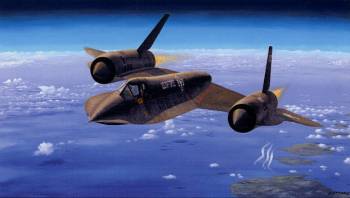
Bedonian Express
A Harpoon Commander's Edition scenario for the EC2003 GIUK battleset.
This scenario is designed for play by the BLUE side only.
The nickname Bedonian Express was applied to certain strategic reconnaissance missions conducted by US Air Force SR-71 Blackbird aircraft during the Cold War, and in particular, those missions repeatedly carried out through a corridor that followed the coast of Poland and the USSR in the Baltic Sea. These flights typically entered the Baltic over a reporting point codenamed Codan, and located about 80 km south of Copenhagen.
Brad Leyte, August 2012
- 340 Downloads
Updated -
*** Red Side Only ***
Scenesetter: (Taken from “The BRICS Conflict – A Brief History of the Third World War (2016 to 2018)”)
Historians argue about the affect the claims dispute over the Arctic region had in the conflagration that became known as the BRICS Conflict.
As Europe’s economy melted down in the early years of the 21st century’s second decade, Russia established itself as one of the dominant economic powers in the Northern Hemisphere. In 2011, the International Monetary Fund ranked Russia as having the fifteenth strongest economy (based on its net international investment position (NIIP)). As the financial futures of Germany, Belgium, Netherlands and Denmark plummeted in the crash of 2012; Russia’s ranking rose on the back of it’s petroleum revenues, al low, fixed domestic income tax and global arms sales. In a strategic move, Russia offered to bail out Denmark by paying off its entire national debt – in exchange for its claims on Greenland – an offer it couldn’t refuse.
The move caused uproar in the UN with other Arctic region claimants (particularly Norway, Canada and the US). On the floor of the General Assembly President Vladimir Putin addressed the global political organization, making the solemn promise of keeping the region de-militarized (something NATO didn’t do during the Cold War). Additionally, travel along the Northwest would remain open and free.
With the assembly’s approval of Russia’s acquisition, the largest land deal in recent memory occurred and the opening moves of the coming global war occurred.
Russian Naval Headquarters in St. Petersburg:
Fleet Admiral Mikhail Stanislav Petrovskiy was up very late, going over planning for the upcoming operation. “Misha,” the admiral thought to himself, “You can’t keep doing this.” He glanced at the clock – 0200 and out the window of his office. Although the White Night celebration was three weeks ago, there was still a considerable amount of light outside, at time of year.
He picked up the intelligence reports again and cursed out loud, “Idiotic Venezuelans! What does Brazil thinks it’s doing down there!” He rubbed the stubble on his chin as he thought. The attack by Venezuela’s Navy on the forces of the US Navy and the Colombian fleet had occurred almost three weeks ago – about the same time as White Night. “Funny,” the admiral thought, “It’s interesting how things occur.”
The Venezuelans were supposed to wait until the first shipments of Club-M multi-purpose missiles were delivered and placed, before launching their strike. However, authorities at higher levels must have thought differently. Because of this small change in plans, Misha was ordered to move up the schedule on Operation: Northern Moves, the BRICS bid for power in the northern reaches.
Misha smiled to himself. The plan was challenging, yet beautiful and he said out loud, “Fortune favors the bold.” He didn’t know who had coined the phrase, but when he heard it years ago in Washington, DC as Naval Attaché, he loved it. It was Football, in a soccer world. He had fallen in love with the American’s sports pastime and the embassy proved excellent seat. The beer left something to be desired, but the cheerleaders on the sidelines were quite another thing! Soccer clubs could learn a thing or two from the Americans there! As he studied the sport, he saw in the various moves and plays, applications that could be applied to naval warfare. He had used his love of the sport, in planning this operation.
A two-pronged and preceded by a feint to catch the opposing team off guard, then the Hail Mary pass! As he rubbed his chin, he knew the Baltic was going to be the difficult part. The Scandinavians and the breakaway republics had screamed like stuck pigs over the Mistrals. He knew there would be hell to pay, getting them into open territory for a run to the north.
He knew great rewards are never cheap. Yes, Fortune was a fickle lover and she always spurned the weak at heart. With that, he picked up his pen to begin drafting the operations order.
- 426 Downloads
Updated -
First Convoy in the Phoney War, 14-18 September 1939.
A Harpoon Commander's Edition scenario for the EC2003 Battle for GIUK Gap Battleset and the HCWW-101110 World Wars era Platform Database.
That's an essay of building an historic and realistic scenario, and as consequence, something boring for most of the time, with some moments of terror, as in the real world ASW operations, in this case in the Western Approaches. And probably most of the played scenarios will be finished with a draw. Playtesting after built the scenario reflects it is more playable in the Red/German side.
It reflects the Phoney War in all his splendour and peculiarities, with though fighting in the sea lanes, in opposition to the calm land and air fronts. It reflects also the very limited UK ASW capabilities at the war start, the approximative initial Order of Battle of the RAF Coastal Command and his historical bases (Most of the Hudson represents Anson MkI, Sunderland MkIII represents Sunderland MkI, and minor types as Stranraer, London, Lerwick or others are not represented, some Air Stations only with detachments are neither in play), merchants sailing unescorted, also is depicted OB-4 (OB stands for Liverpool - Outward (North America)) the first convoy attacked in WWII by German submarines, the great number of German submarines operating at this time in the sector (in patrol from before the hostilities, his number was later inferior because maintenance and transit times), with his approximated historical positions (Including the after the Cold War infamous U-34, who sunk the Spanish Republican submarine C
-3, my grandfather boat, in the Spanish Civil War, in the covert Operation Ursula), and also is present the fleet carrier HMS Courageous and her nimble escort, the last attempt to employ the large fleet carriers as ASW platforms ...
Ironically, in the Phoney War time period Hitler was attempting to seize the peace with Great Britain, and the objective victory reached by the Kriegsmarine sinking the Courageous was contrary to the Fuhrer interests, and dismissed by him.
The represented historical Coastal Command bases and squadrons are:
AXa RAF Leuchars EGQL, 233 Sqd RAF Coastal Command (Hudson MkI/II).
AYa RAF Thornaby, 224 Sqd Det (Hudson MkI/II), 220 Sqn (Hudson MkIII), 608 Sqd (30?xAnson MkI=15xHudson MkI/II).
AZa RAF Aldergrove EGAA, 224 Sqd. Det (Hudson MkI/II), 502 Sqd Anson I (30?xAnson MkI=15xHudson MkI/II).
BAa RAF Gosport, 224 Sqd (Hudson MkI/II).
BBa RAF Prestwick EGPF, 102 Sqd, 30?xWhitley MkIII (represented by MkII).
BCa RAF Thorney Island, 48 Sqd (30?xAnson MkI=15xHudson MkI/II).
BDa RAF Sullum Voe, 201 Sqd with London I, London II, Stranraer, represented by 2xSunderland III.
BEa RAF Mount Batten, 204 Sqd (8?xSunderland I represented by 4xSunderland III).
BFa RAF Bircham Newton, 201 Sqd, (30?xAnson MkI=15xHudson MkI/II).
BGa RAF Pembroke Dock, 210 and 228, Sqd, (8?xSunderland I each, represented by 4xSunderland III).
BHa RAF Warmell, 217 Sqd, Anson I (30?xAnson MkI=15xHudson MkI/II).
BIa RAF Montrose, 269 Sqd, Anson I (30?xAnson MkI=15xHudson MkI/II).
BJa RAF Detling, 500 Sqd, Anson I (30?xAnson MkI=15xHudson MkI/II).
BKa RAF Dyce EGPD, 612 Sqd, Anson I (30?xAnson MkI=15xHudson MkI/II).
Some British DD not are of the exact time period represented, but most of them are historically correct and present in the Western Approaches operations in September 1939.
The ahistorical SOSUS or CAESAR contacts on German submarines can be considered as representations of SIGINT or HUMINT detections.
Enrique Mas, July 2012.
- 1,307 Downloads
Updated -
From 1990. A wing of F4s must defend Norwegian bases and a Marine Amphibious Group from destruction.
- 180 Downloads
Submitted -
From Unknown, 1993.
Sub vs. surface in the North Sea.
Some minor fiddling to the original ROE.
- 140 Downloads
Submitted