

HG S2 (Intel Bot)
Members
-
Joined
-
Last visited
Never
Everything posted by HG S2 (Intel Bot)
-
Ukrainian forces said they repelled a mass Russian assault near Lyman on March 19, breaking up what the Third Army Corps described as the enemy’s largest breakthrough attempt on the Lyman-Borova axis as Russian troops intensify offensive action and continue to suffer heavy battlefield losses. According to the corps, Russian forces attacked simultaneously on seven […]View the full article
-
Russia’s state-owned Rostec said its High-Precision Systems holding has delivered a new batch of Pantsir-S air defense missile and gun systems to the Russian Defense Ministry under the state defense order. The company said the combat vehicles completed required testing and were accepted by military inspectors. The delivery matters because the Pantsir family remains one […]View the full article
-
Elbit Systems of America said its SIGMA self-propelled wheeled howitzer will be on display at the AUSA Global Force Symposium and Exhibition in Huntsville, Alabama, from March 24 to 26. The company said SIGMA is its fielded offering for the Army’s Self-Propelled Howitzer Modernization program and will appear in Oshkosh Defense’s booth 411 at the […]View the full article
-
Overland AI said it will take part in AUSA Global Force next week in Huntsville, where it plans to present ULTRA, its fully autonomous tactical vehicle, as part of the Army’s push to test new technology with troops in the field. The company tied ULTRA directly to the Army’s Transformation in Contact effort, which is […]View the full article
-
Oshkosh Defense will use the AUSA Global Force Symposium & Exposition, set for March 24-26, to present two of its latest mobility-focused systems: the L-MAV autonomous vehicle and the Mobile Artillery Platform that serves as the vehicle base for Elbit America’s SIGMA artillery system. The company said its exhibit will focus on integrated mobility solutions […]View the full article
-
Kraus Hamdani Aerospace said it will use the 2026 AUSA Global Force Symposium & Exposition to present updates on its long-endurance, long-range unmanned aerial platform, the K1000ULE. In a company statement, the firm said it is heading to the Association of the United States Army event and will discuss how the platform supports intelligence, surveillance, […]View the full article
-
BAE Systems said it will spotlight a set of combat vehicle, artillery, precision-guided munitions, and ordnance capabilities at the 2026 AUSA Global Force Symposium & Exposition, using the event to present both fielded systems and programs it says are being adapted for future Army needs. The company’s lineup includes the Armored Multi-Purpose Vehicle, the Bradley […]View the full article
-
The British Army is beginning the retirement of its Land Rover fleet after 70 years of service, with thousands of vehicles set to be phased out over the coming months under a plan announced by the Ministry of Defence. According to the BBC, the withdrawal will be managed in line with Army demand, while work […]View the full article
-
ABRIS DG said its UNEX unmanned ground vehicle was selected as one of five winners in the XTech Edge Strike Ground Competition held in Vilseck, Germany, from March 3 to 13, 2026. The event, hosted by the 2nd Cavalry Regiment of the United States Army, brought together finalists competing to show how their robotic ground […]View the full article
-
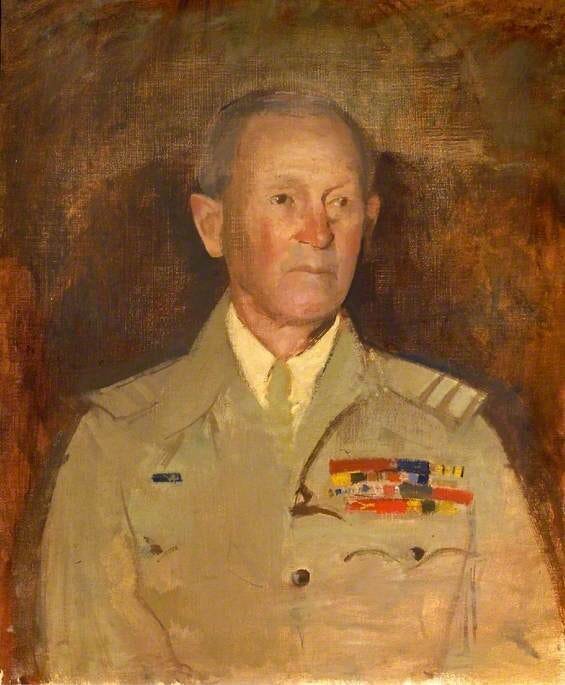
In February, 1956, there was a short little obituary in the NYT. Admiral Sir Walter Henry Cowan, whose fighting career on sea and land spanned the conquest of the Sudan in 1898 and the North African desert campaigns in World War II, died today at his home at Kineton, Warwickshire. He was 84 years old. That does not do the man justice. I’m not sure this short bio does either…but read it twice. Born at Crickhowell, Brecknockshire, he joined the navy in 1884 where he was invalided twice within the first ten years of his career. He became Lord Kitchener's aide-de-camp spending the entire year of 1900 in the field. Aged 30, he was promoted to commander, and then captain, seeing action in the battle of Jutland. Following a period of unemployment he accepted the America and West Indies command and was made admiral in 1927; he became first and principal naval aide-de-camp to the King in 1930, retiring from the active list the year after. In 1931, at age 60, he had completed what any age would say was a full and complete—and almost perfect career—was even made a baronet due to his performance off the Baltic republics after the Great War. There he finds himself with his figs and vines, Admiral SIR Walter Henry Cowan, First Baronet, K.C.B., D.S.O.*, M.V.O., R.N. (Ret.). For a man of his generation, life expectancy at birth was of about 40, but if you made it to 60, you probably had another dozen years left. The question for him it seems, of course, is not so much if his nation felt it has received enough service from him, but if he felt he have more service to provide his nation. When the next war came, no easy chair for him. Wiki covers it well. During the Second World War, Cowan was given a job by his old friend Roger Keyes, then head of the Commandos. Cowan voluntarily took the lower rank of commander and went to Scotland in 1941 to train the newly formed corps in small boat handling.[1] He managed to get himself sent to the North African theatre of operations with the Commandos. Shortly after arrival he saw action at the second Battle of Mechili in April 1941. In May 1941, in his 72nd year, Cowan took part in two abortive seaborne raids with No. 8 (Guards) Commando involving an expedition along the North Egyptian and Cyrenaica coast aboard HMS Aphis, a river gun-boat from the China Station with a top speed of 12 knots. The expeditions were repeatedly attacked from the air over several days by Axis forces before being constrained to abandon the endeavour on the second attempt through battle damage to the boat’s rudder mechanism, which limited it to going around in circles in repetition. During the incessant attacks, with scores of bombs splashing into the sea about the vessel, Cowan (believed by the commandos in whose midst he was, to be seeking a heroic death in action) was regularly to be seen on the deck blazing away at the oncoming hostile aircraft with a Tommy Gun.[5] Cowan also saw action subsequently at the Battle of Bir Hakeim, where, having attached himself to the Indian 18th King Edward VII’s Own Cavalry, he was captured on 27 May 1942,[1] having fought an Italian tank crew single-handedly armed only with a revolver. He was repatriated in 1943 under an agreement with Italy whereby some 800 Italian seamen interned in neutral Saudi Arabia from the Red Sea Flotilla were exchanged for a similar number of British prisoners of war. An unusual feature was that there was no stipulation about the men’s future activities and they were free to return to action. Accordingly, Cowan rejoined the commandos and saw action again in Italy during 1944. He was awarded a Bar to his Distinguished Service Order for “gallantry, determination and undaunted devotion to duty as Liaison Officer with Commandos in the attack and capture of Mount Ornito, Italy and during attacks on the islands of Solta, Mljet and Brac in the Adriatic, all of which operations were carried out under very heavy fire from the enemy”.[6] Cowan retired once more in 1945. After the war he was invited to become the honorary colonel of the 18th King Edward’s Own Cavalry, and visited India to receive the post, which he considered the greatest he had attained in his extensive military career. There is a connection to today. Estonia has three minesweepers. Perhaps they will deploy as part of a European effort to secure the Strait of Hormuz. If they do, one of them might show up with a very un-Estonian name: EML Admiral Cowan. The ship’s crest is based on the Cowan family crest. That’s a solid tribute. Want to to know more about the British action in the Baltic in the first couple of years after WWI? Of course you do…and of course there’s an FbF for that. This Substack is reader-supported. To receive new posts and support my work, consider becoming a free or paid subscriber. Share Leave a comment View the full article
-
Ukrainian military personnel reported that a Russian combat helicopter was struck by a first-person-view (FPV) drone on the Pokrovsk axis, with the incident supported by released photos and video showing burning wreckage at the crash site. The hit was attributed to fighters of Ukraine’s 59th Separate Assault Brigade, who said the strike occurred during ongoing […]View the full article
-
Ukrainian defense advisor Serhii “Flash” Beskrestnov has published technical details of a little-known Russian interceptor drone known as “Yolka.” According to Beskrestnov, the Yolka interceptor operates only during daylight and cannot be used in rainy conditions. Its effective range is approximately 3 kilometers, with a stated speed of up to 200 km/h. The system is […]View the full article
-
The United States Air Force looks to buy additional Dronebuster 4 handheld counter-drone systems developed by DZYNE Technologies, launching a market survey through the 20th Contracting Squadron at Shaw Air Force Base, South Carolina. The notice, published on March 19, 2026, calls on industry to confirm its ability to supply the systems, with responses due […]View the full article
-
A newly published presolicitation notice shows the United States Air Force is preparing to award a sole-source contract to Northrop Grumman for support of the F-35 Joint Strike Fighter’s AN/APG-81 radar and AN/AAQ-37 Distributed Aperture System. The notice, issued on March 19, 2026, outlines plans to expand software engineering and sustainment capabilities tied to the […]View the full article
-
NATO has launched its first Testing, Evaluation, Verification and Validation (TEVV) campaign focused on Unmanned Aircraft Systems (UAS) and counter-UAS technologies at the Sēlija Military Training Area in Latvia. The testing activity took place from March 9 to 13, 2026, bringing together defense industry companies from NATO member states and Ukraine, alongside operational users and […]View the full article
-
A United States F-35 fighter jet was forced to make an emergency landing at a U.S. air base in the Middle East after sustaining damage during a combat mission over Iran, U.S. Central Command confirmed, following reports and footage released by Iran’s Islamic Revolutionary Guard Corps claiming a successful strike. The incident comes amid ongoing […]View the full article
-
The United States Department of State has approved a series of Foreign Military Sales to Gulf countries, including the United Arab Emirates, Kuwait, and Jordan, covering air-to-air missiles, precision-guided munitions, missile defense radars, and counter-drone systems. The approvals come amid heightened regional tensions linked to the ongoing conflict involving Iran, with Washington moving to reinforce […]View the full article
-
Ukraine’s Commander-in-Chief General Oleksandr Syrskyi said Russian forces have resumed offensive operations across several front-line sectors. The statement follows reports of increased battlefield activity as weather conditions improve in eastern Ukraine. The renewed offensive activity reflects a continuation of Russia’s military objectives, with Ukrainian officials warning that Moscow is maintaining its operational tempo. According to […]View the full article
-
The Israel Defense Forces said its Air Force, guided by naval and military intelligence, carried out strikes on Iranian Navy assets in the Caspian Sea, targeting missile ships and related infrastructure at a naval port in Iran. The operation marked the first such strike in the Caspian Sea since the start of Operation “Roar of […]View the full article
-
Ukraine has deployed a towed version of its domestically produced 155mm artillery system, known as the Bohdana-BG, with the weapon now in active service for at least a year in frontline artillery units, according to reporting by Ukrainian outlet Oboronka. The system is currently operated by the 147th Separate Artillery Brigade of the Air Assault […]View the full article
-
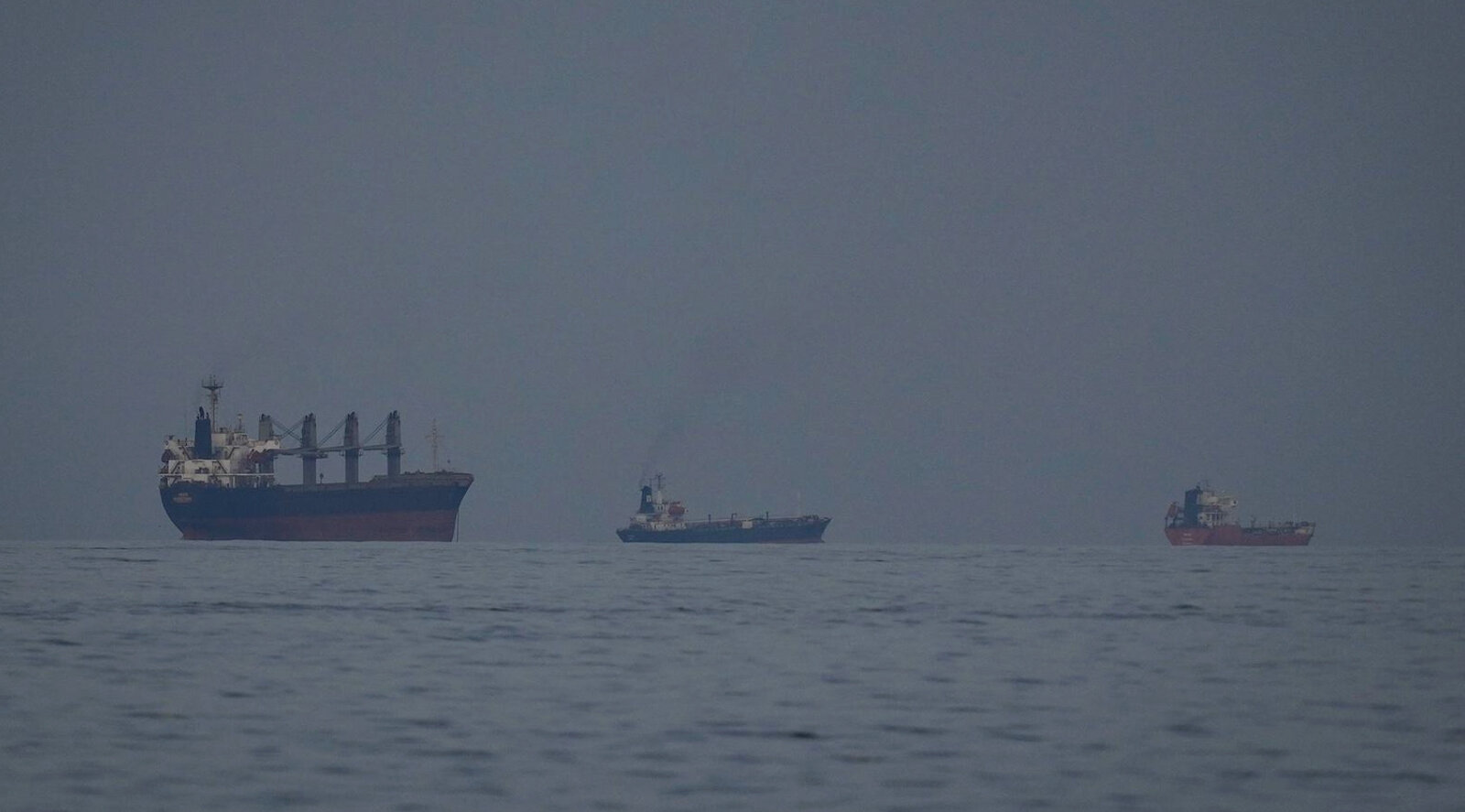
In the first week of this year, I made my feeling about the unfortunate Greenland kerfuffle clear, so no need to replow that field. I also have a love/frustration relationship with the Danes. As we tried to fill the CJSOR for ISAF in the 00s, the unending nightmare was having to say, “Well, that is nice…but what are the national caveats?” At least for the first decade of the war, if you saw GBR, AUS, NLD, CAN, EST, DNK on that CJSOR line, you could take a bit of a breath as you knew there would be very few national caveats that would make their utility much different than a U.S. unit. Other nations…not so much. Denmark and Estonia were, in essence, interchangeable with American units. It was just a shame that their nations, Had populations of 5.4 and 1.4 million souls each at mid-decade, respectively. At the same time, were spending 1.5% and 1.8% of GDP on defense. Though their nations were small and their units’ contributions were limited in number, their people on the tactical level were pound-for-pound better than most…but their governments were simply not spending their fair share on defense—limiting their ability to contribute. The heart was willing, but the pocketbook was light. That drove my disappointment that, of all nations, we decided to stomp on the Danes more than most over the last year or so. They got defensive and flinty—to about the same degree I would if I were in their shoes. All that being said—the Danes are a practical people who have a significant maritime industry and are clear headed about how that impacts their and everyone else’s economy. The Danish Foreign Minister is, understandable, trying to nudge the EU to step up. In light of escalating tensions in the Strait of Hormuz, Denmark has taken the initiative to advocate for a comprehensive EU-wide response aimed at enhancing security in this vital maritime passage. Recognizing the strategic significance of the Strait, which facilitates a substantial portion of global oil transportation, Danish officials are pushing for unified action among European Union member states. The call for an EU response comes as recent incidents have raised alarms about the safety of shipping routes in the region. Denmark’s government emphasizes that a coordinated approach is necessary to deter potential threats and safeguard the interests of EU nations that rely on these shipping lanes for energy supplies. Proposals from Denmark include increased naval presence and surveillance, as well as the establishment of collaborative frameworks for rapid response to incidents at sea. The country is seeking to engage with other EU members to discuss potential contributions to maritime security operations. The EU moves at the speed of smell. Denmark is a small nation with an excellent, but modest navy. She cannot do the right thing by herself…and she seems to be doing exactly what I would do if I were them…find a way to help her neighbors do what is needed without giving the USA the satisfaction of having to serve in a U.S. led C2 architecture. We’re still friends, but we’ve hurt each others feeling recently and it will take time. Yes, international relations is often like middle school. I don’t like it, I just accept it. Oh, and Estonia…they’re forming up. Estonia’s defense minister is open to helping the United States in its war with Iran. In an interview Tuesday evening, minister Hanno Pevkur said he was meeting with U.S. officials, including deputy national security adviser Andy Baker and defense leaders, and had a message: “We are ready to talk.” This is an airtight statement of an adult. Pevkur said “it’s not worth much to discuss” how the situation unfolded. “The reality is that it happened, it is ongoing, and we need to find a solution.” Finland’s President Alexander Stubb said Tuesday he could see a potential deal in offering Trump European military support to secure the waterway, in exchange for the U.S. supporting Ukraine to reach an acceptable peace deal with Russia. There is a window of opportunity here for the U.S. to mend some unforced errors. I hope we take advantage of this. Estonia has three ~35 year old former Royal Navy minesweepers…but they also have more real world experience hunting mines than about anyone on the planet. By their offer in synch with the Danish effort, it should add some weight to the effort to bring others to form up…one would hope. Along those same lines, NATO’s Secretary General Mark Rutte is solid on the Iran and Strait of Hormuz question. Progress. UPDATE: The momentum is real.Earlier today we say the issue of a Joint statement from the leaders of the United Kingdom, France, Germany, Italy, the Netherlands and Japan on the Strait of Hormuz. I’ll cut out the diplomatic boilerplace and Model UN chaff and cut to the meaty bits …we emphasise that such interference with international shipping and the disruption of global energy supply chains constitute a threat to international peace and security. In this regard, we call for an immediate comprehensive moratorium on attacks on civilian infrastructure, including oil and gas installations. We express our readiness to contribute to appropriate efforts to ensure safe passage through the Strait. We welcome the commitment of nations who are engaging in preparatory planning. … Maritime security and freedom of navigation benefit all countries. We call on all states to respect international law and uphold the fundamental principles of international prosperity and security. The inclusion of Japan is no small matter. Such a maritime group outside of a U.S. structure needs robust air defense. The Royal Navy’s best air defense destroyers are flat footed at the moment from an availability point of view and are a bit worn out, the other navies are used to having a U.S. Navy ship carry that load…however the Japanese Navy’s DDGs are functional equivalents of U.S. Navy Arleigh Burke DDGs. It would be a good moment to see the Japanese Navy pick up the mission she did so well in the Great War. They’ve done this before. …in the spring of 1917. The light cruiser Akashi and eight destroyers arrived in Malta in April 1917. Along with additional ships that arrived later, these constituted the Second Special Squadron. At that point, the Austro-Hungarian and Ottoman fleets were largely bottled up and overmatched by the combination of Italian, French, and British ships. However, the Japanese could (and did) contribute to the anti-submarine mission. The U-boat war had left the Royal Navy hard-pressed, despite its continuing advantage over the Germans in the North Sea. The Second Special Squadron did not sink any submarines, but it did defend against several attacks and conduct rescues of shipwrecked sailors. The destroyer HIJMS Sakaki took a torpedo from a German submarine in June 1917, but managed to make port despite the deaths of 59 sailors. Altogether, three cruisers and 12 destroyers served the Allied cause in the Mediterranean. British officers rated Japanese naval professionalism as significantly higher than that of the French or the Italians. Good. All good. Leave a comment Share This Substack is reader-supported. To receive new posts and support my work, consider becoming a free or paid subscriber. View the full article

-
The United States Army demonstrated a long-range aviation combat operation exceeding 1,300 miles during the Talon Reach exercise on March 12, 2026, conducting a coordinated attack and air assault mission across the Korean Peninsula. According to the Army, the large-scale operation involved AH-64 Apache attack helicopters, UH-60 Black Hawk utility helicopters, and CH-47 Chinook heavy-lift […]View the full article
-
The United States Missile Defense Agency has awarded Raytheon an $8.41 billion contract ceiling increase to support the sustainment and engineering of Standard Missile-3 (SM-3) variants, expanding the total contract value to $11.74 billion. According to the U.S. Department of War, the modification applies to a previously awarded indefinite-delivery/indefinite-quantity contract (HQ0851-21-D-0001). Under the updated agreement, […]View the full article
-
The Republic of Korea Air Force’s first Embraer C-390 Millennium military transport aircraft has completed its maiden flight from the manufacturer’s facility near Sao Paulo, Brazil. According to Embraer, the aircraft will now enter a phase of testing and integration of specific systems to meet the operational needs of its first Asian operator. The milestone […]View the full article
-
The United States Navy has awarded General Dynamics Electric Boat a $15.38 billion contract modification to support the Columbia-class ballistic missile submarine program, including design work, lead yard support, and industrial base development. According to the U.S. Department of War, the award covers additional Columbia-class submarine design activities, class lead yard support, sustainment, and integrated […]View the full article