HG S2 (Intel Bot)
Members
-
Joined
-
Last visited
Never
Everything posted by HG S2 (Intel Bot)
-
The United States carried out strikes on multiple Venezuelan military and infrastructure targets on Friday, including air bases and port facilities in and around Caracas, according to local reports. Confirmed targets included Isla Margarita near La Guaira, Generalissimo Francisco de Miranda Air Base in Caracas, the port at La Guaira, El Libertador Air Base, Fort […]View the full article
-
U.S. Marine Corps F-35 fighter jets destroyed Venezuelan Air Force aircraft during precision strikes on air bases across Venezuela, according to local reports describing the operation. The reports said Marine Corps F-35s carried out targeted attacks on Venezuelan fighter aviation bases shortly after missile strikes hit areas hosting long-range air defense systems, including S-300V and […]View the full article
-
President Donald Trump approved U.S. military strikes in Venezuela days before the operation was carried out, according to two U.S. officials who spoke to CBS News under condition of anonymity to discuss national security matters. The officials said the president gave the U.S. military authorization to conduct land strikes in Venezuela several days ahead of […]View the full article
-
The United States struck the residence of Venezuela’s defense minister during air attacks on Caracas on Friday. Reports indicated that the home of Vladimir Padrino López, Venezuela’s Minister of Defense, was targeted during the bombing campaign. The strike was reported amid ongoing U.S. air operations over Caracas, where multiple military and government-linked sites have been […]View the full article
-
The United States carried out precision strikes on military command and control facilities in Caracas and surrounding hills on Friday, disrupting Venezuela’s ability to coordinate its air and ground defenses, according to local reports. The strikes targeted core command, control, and communications nodes of Venezuela’s armed forces in the capital and nearby elevated areas. Multiple […]View the full article
-
The United States carried out missile and air strikes against Caracas and surrounding areas on Friday, targeting Venezuelan air defense systems, an airport, military aircraft, and government facilities linked to the country’s leadership, according to multiple officials and regional statements. The attacks hit air defense systems in the capital region, struck an airport near Caracas, […]View the full article
-
Russia will equip a new batch of T-90M main battle tanks with the Arena-M active protection system featuring an “anti-drone” mode, a Russian Defense Ministry officer said during a broadcast on Russia‑24. The officer said work on updating the Arena-M software was completed in 2025, adding a dedicated sub-mode designed to intercept drones as they […]View the full article
-
A drone crashed on the outskirts of Maidan Shahr, the provincial capital of Afghanistan’s Maidan Wardak province, on January 1, 2026, with debris discovered about 40 kilometers southwest of Kabul, according to local reporting. Residents and local sources said wreckage from the unmanned aircraft was found near the administrative center of the province earlier that […]View the full article
-
The United States Air Force confirmed the completion of Exercise Virtual Flag: Coalition 26-1, a large-scale multinational distributed battle management exercise hosted by the 705th Combat Training Squadron at Kirtland Air Force Base, New Mexico, integrating U.S. and allied forces in a simulated high-end Indo-Pacific conflict. According to the U.S. Air Force, the exercise brought […]View the full article
-
Saudi airstrikes hit positions near the Saudi border in Yemen’s Hadramout province on Friday amid clashes between forces loyal to the Saudi-backed provincial governor and fighters aligned with the separatist Southern Transitional Council (STC), according to statements from local officials and the STC. The STC accused Saudi Arabia of carrying out seven airstrikes against its […]View the full article
-
Russia’s Ministry of Defense said on Thursday, January 1, that it handed over decrypted routing data and a flight controller from what it claims was a Ukrainian unmanned aerial vehicle involved in an alleged attack on President Vladimir Putin’s residence near Lake Valdai to a representative of the U.S. embassy’s military attache office. According to […]View the full article
-
Last week was the story of the HMS JERVIS BAY and her crew during the Battle of Convoy HX84. When we finished last week, HMS JERVIS BAY was out of the fight and the convoy was scattered - but she did her job. By the time they realized that the Jervis Bay had been terribly alone, an hour had been lost. The convoy had been given time enough to break up and begin to flee. ...and so the pocket battleship ADMIRAL SCHEER, unopposed now, closed in. However, there was a Canadian ship, the SS BEAVERFORD, armed with one 4 inch & one 3 inch gun who turned towards the SHEER and her six 11 inch, eight 5.9 inch guns and eight 21 inch torpedo tubes. What was the BEAVERFORD? Beaverford was the first of five Beaver class cargo liners in service with the Canadian Pacific Railway’s fleet. The 10,042 ton twin screw, steam turbine merchant ship had her maiden voyage in 1928 ... designed to carry 10,000 tons of cargo and twelve passengers at 15 knots. ... Although a Canadian Pacific ship, the company chose to register her in the UK, as was the practice at the time. She carried a crew of seventy-seven sailors and ably mastered by 60-year-old Captain Hugh Pettigrew from Coatbridge, Glasgow. He had been sailing with CP since 1910. Most of her crew came from the UK, except for two Canadians. ... She was one of 18 ships that sailed in HX-1, the first convoy of the war from Halifax to the UK on 16 September 1939; just six days after Canada declared war on Germany. In early 1940, Beaverford had a 4 inch gun installed on her stern and a three inch gun on her bow, for defense against surfaced U-boats. By the time HX-84 left Halifax on 28 October 1940, Beaverford had already crossed the Atlantic sixteen times in convoy. JERVIS BAY was lost, and here is where we pick up the story, wonderfully told by Roger Litwiller; SCHEER then steamed past the sinking JERVIS BAY, now free to engage the merchant ships of the convoy. With only 22 minutes the convoy was still a smorgasbord of targets for the pocket battleships 11 inch guns with a range of over 19 miles; she could pick and choose her targets unimpeded. In quick succession she sank the freighter Maiden carrying a mixed cargo and military vehicles, all ninety-one sailors killed, then damaged and set on fire the tanker San Demetrio, followed by sinking the freighters Trewellard, carrying steel and 12 aircraft, killing 16 sailors and Kenbane Head, general cargo, with 23 killed. Captain Pettigrew had heeded the order to disperse, bringing Beaverford to full speed and turning away from the mighty German warship, as he and his crew watched JERVIS BAY engage ADMIRAL SCHEER. Beaverford’s radio operator sent out a continuous update of the action on the ships wireless. They watched as the ship closest to them, Kenbane Head, suddenly exploded and sink as the massive German rounds found their mark. Pittigrew gave the order to turn Beaverford about and he raced his ship through the smoke towards the mighty ADMIRAL SHEER. Beaverford’s radio operator sent one last message on the wireless, “It is our turn now. So long. The captain and crew of SS Beaverford.” Pettigrew ordered the stokers, manning the boilers to make smoke, laying a dense smoke screen to hide the fleeing ships of the convoy. At 15 knots the Canadian Pacific ship suddenly broke through the smoke close enough for her 4 and 3 inch guns to register a near miss on SCHEER. The pocket battleship checked her fire and concentrated on the new threat, turning her full might on Beaverford. With the skill of a master mariner and the courage of his crew, Captain Pittigrew battled ADMIRAL SCHEER, playing a deadly game of “cat and mouse” as she ducked in and out of the smoke screen, harassing the enemy warship. Beaverford’s superior steam turbines allowed the merchant ship to utilize a burst of speed and with Pettigrew’s skill and exceptional seamanship he would wait for SCHEER’s 11 inch guns to fire and then order an increase in speed and change of course, making his ship a difficult target to hit. Beaverford’s delaying action allowed the Swedish freighter Stureholm to return and pick up the sixty-five survivors from HMS JERVIS BAY. The battle between Beaverford and ADMIRAL SCHEER continued into the dead of night. The fleeing ships of HX-84 could see the star shells and illumination rockets lighting the night sky, as SCHEER attempted to find her antagonizer. The merchant ship had many opportunities to turn away and escape in the darkness and the smoke, but she continued on with the fight. Whenever SCHEER would turn towards the direction of the fleeing merchant ships, Beaverford would break through the smoke and darkness and engage the pocket battleship, then disappear again. Beaverford suffered for her actions, SCHEER fired 83 rounds from her 11 inch guns and 71 rounds from her 5.9 inch guns at the Canadian Pacific ship. The battle had now lasted over five incredible hours, Beaverford was in trouble, and fires were raging in the ship, making her an easier target for the German gunners. She had by now been struck with twelve 11 inch shells and sixteen 5.9 inch shells. We can only imagine the hardship, destruction and carnage faced by her sailors as they attempted to continue the fight. With her speed slowing as the steam turbines were damaged, SCHEER fired a torpedo. It found its target in Beaverford’s bow at 2245. With a sudden, fierce explosion, Beaverford disappeared in a mass of flames as the ammunition stowed in her bow detonated. We do not know how many of Beaverford’s brave crew died during the battle or if anyone survived that final devastating moment as their ship erupted into a massive ball of fire. By the time Beaverford was lost, there were no allied ships in the area to search for survivors. All seventy-seven sailors sacrificed their lives so convoy HX-84 could escape. What can you say of such men? Such leaders? Such Sailors? Fullbore. Painting credit to Jim Rae.Leave a comment Share Subscribe now View the full article

-
Ukraine’s military intelligence confirmed the delivery of a newly developed armed patrol boat to the Main Directorate of Intelligence on January 1, describing it as a New Year’s transfer to support maritime operations. According to a statement released by the Main Directorate of Intelligence of Ukraine, the specialized vessel was purchased and handed over by […]View the full article
-
Ukrainian forces confirmed on January 1, 2026, that operators from the Asgard Battalion of the 412th Nemesis Unmanned Systems Brigade struck a multifunction radar of Russia’s S-350 Vityaz air defense system and self-propelled launchers of the Tor and Buk systems on temporarily occupied territory in the Donetsk region. As reported by Militarnyi, the strike targeted […]View the full article
-
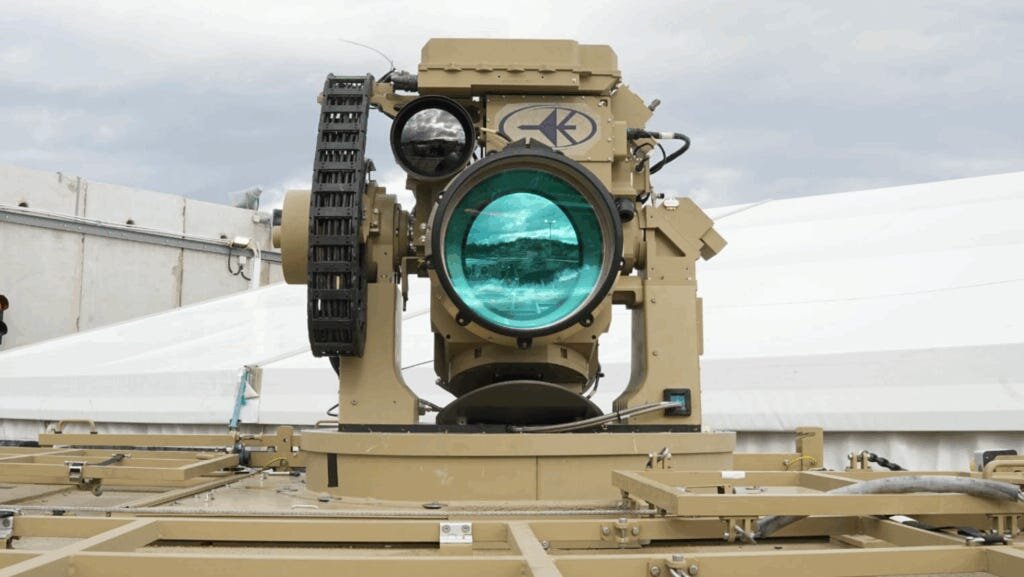
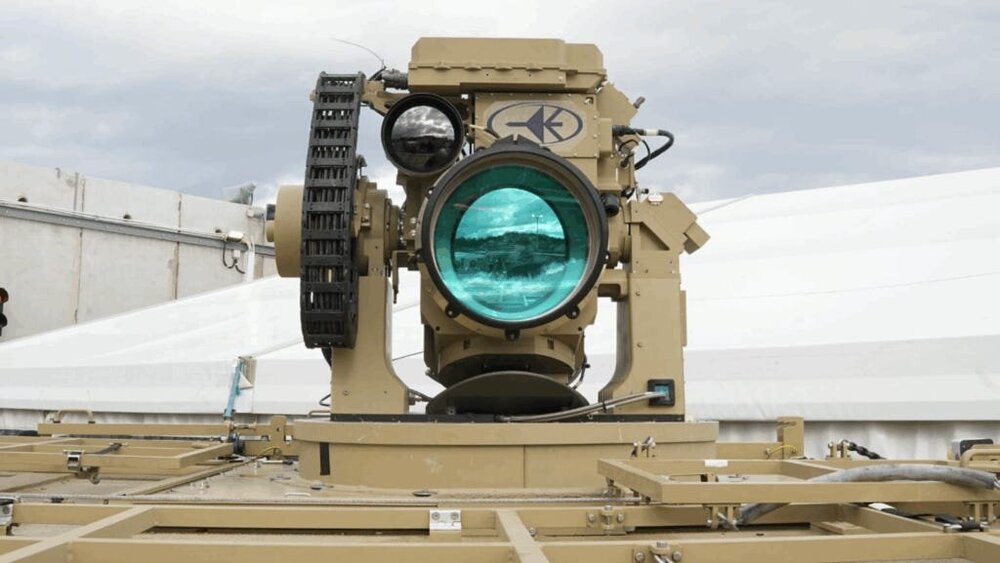
What is one of the fundamentals that we keep returning to here? If you want to know what will be important in and needed for the next large war, look closely at the most advanced small and medium sized wars happening now. There is no better judge, test, or simulation to help you see the utility of a weapon system than actually having it perform in sustained combat conditions against a non-cooperative target. As we approach the 4th anniversary of the Russo-Ukrainian War of 2022, untold pages of text have been written about FPV and other drones. Yes, these are important and are a new tool for war—but they are not the answer to all. Gunpowder, machine guns, airplanes, submarines, etc…all these things were new tools in the conduct of war and changed the way wars were fought, but they did not change the nature of war. They unquestionably did not dominate the battlefield to the extent that they were the only thing you needed. They simply joined existing legacy systems that still worked and had their niche. For each new idea or weapon, with experience, counters are developed to them. Before the counter is developed, let’s say the weapon system had a 2.0 impact on the conflict. Before counters are brought in, pushing it down to a 0.7. In the hyper-Darwinian nature of war, a response to the counter is found, and it moves up to 1.5. Another counter brings it down to 1.4…and the cycle continues. So it is with drones of all types. Just look at the path from dropping grenades to fiber optic bespoke attack drones. Drones are not even new; they have been with us since fireships. When it comes to trying to figure out the response to drones, the accountants and industrialists have been ringing the bell for a few problems. Using a $2,000,000 missile to bring down a $200,000 drone is unsustainable. Having 35 AAW missiles to counter a mix of 125 drones, cruise missiles, and ballistic missiles is not a sustainable way to hold open a sea lane or defend an airfield. What can you do? Well, you can find a way to use cheaper anti-air guns at sea and ashore. You can find a way to repurpose old or cheaper weapons to do the job. You can indirectly attack them with electronic warfare…or you can look for something “new.” That brings us to lasers. Ah, yes, lasers. It is easy to be cynical and state, “Lasers: the past, present, and future’s weapon of the future. Always around the corner on the developmental Möbius strip.” Without diving too deep, the tactical utility of lasers has always been an engineering problem: chemical, mechanical, computer, and electrical. How do you generate enough power in a small enough package and keep the laser on target for a long enough time to destroy/divert it from its target? Then, how long can it be until it is ready for the next target, and how many targets can it service in X length of time? What is the opportunity cost of having this capability compared to other systems? As sea, there is the extra challenge of atmospherics. If there is one military in the world that does not have the luxury of relying on vaporware or systems that only work on PPT and the range, it is Israel. Indeed, many of the failures on October 7th were because they bought into comforting ideas and technological shortcuts that Hamas took advantage of. They are extra careful today that they don’t make that same mistake. So, that is why their laser program is getting my interest. The Israeli Ministry of Defense and Rafael Advanced Defense Systems delivered the first Iron Beam system to the Israeli Air Force on Dec. 29, just getting in under the wire on a promise to deliver Iron Beam before the end of the year, according to a joint press release. The ministry noted that the system, known as “Or Eitan” in Hebrew, was run through “an extensive series of tests against various threats and successfully intercepted rockets, mortars, and UAVs, will be integrated into the IAF and incorporated into Israel’s multi-layered aerial defense array as a complementary capability to the Iron Dome, David’s Sling, and Arrow systems.” The potential for laser-based interception of drones, missiles and rockets is one long-desired by militaries, given the cost discrepancy between an expensive kinetic interceptor and incoming small drones or rockets. The Iron Beam can burn or fry objects at a range of around ten kilometers, according to previous statements. Note the end of the next quote: Amir Baram, the ministry’s director general, said that the delivery marks the completion of an initial phase, from development to serial manufacturing. There are “numerous additional systems already in production,” he said. “Even as production continues, we are already advancing the development of next-generation defense systems for land and air deployment.” Airborne lasers? OK…this will be interesting to see. What I don’t see is these being ship-based like we see proposed for USS Defiant (BBG-1). However, I have heard that there are two ground system variants and a naval one in the works. Notice what you see in this picture. It appears that these are designed to be containerized. So incredibly smart. If they used standard containers, they can be transported by almost anything commercially designed to be the same. Can be placed in untold numbers of locations designed to secure and carry them. Plug and play…but it does beg the question: how much power does it demand, and can our LCS provide it? I have ideas… Leave a comment Share This Substack is reader-supported. To receive new posts and support my work, consider becoming a free or paid subscriber. View the full article
-
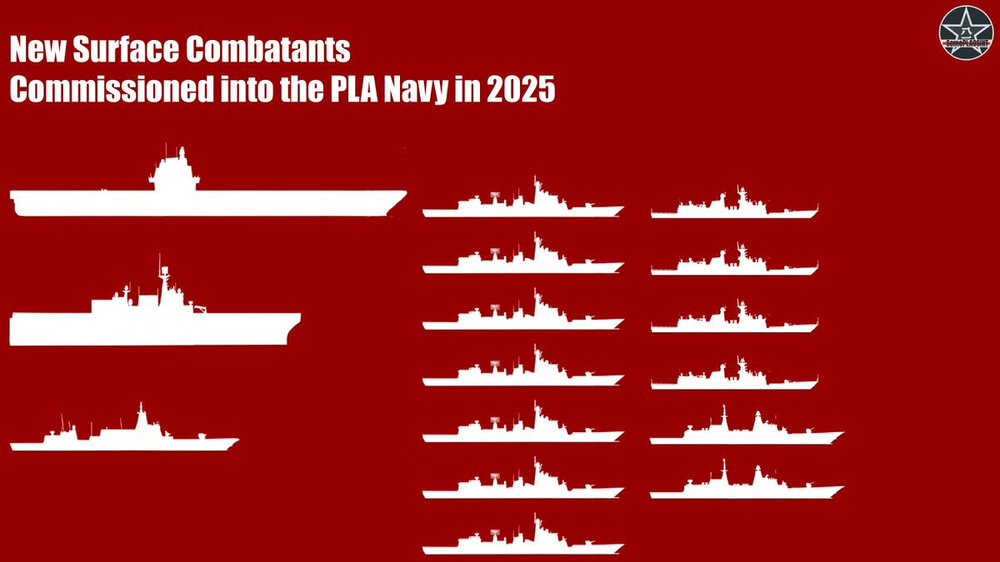
As the final post of 2025, let’s look at the warships the U.S. Navy commissioned this year. Carriers: None. Next scheduled in 2027. Amphibious Ships: None. Next LHA expected in 2026. Destroyers: None. Two expected in 2026. Frigates or Other Small Surface Combatants: USS Pierre, LCS-38 Attack Submarines: USS Iowa, SSN-797 So, a LCS and a SSN. 2026 should be a bit better, but it is what it is. Two. As Sal pointed out, we have had a few auxiliaries as well, but this is about warships. Meanwhile, how is the largest Navy in the world, the navy of the People’s Republic of China doing? Via SomePLAOSINT - some great graphics. Using the same format as we did for the U.S. Navy, what does the People’s Liberation Army Navy have for new command slots this year? Carriers: One Amphibious Ships: One LHD Destroyers: Eight. (one, the Type 55D should be called a cruiser) Frigates or Other Small Surface Combatants: Six. Attack Submarines: Two SSN. Perhaps additional conventional submarines as well. Eighteen. 18. Perhaps as many as 21 depending on how many conventional submarines they commissioned. 2 versus 21. For a decade we’ve heard about VLS cells in the Pacific. A lot of talk. Not a lot of action. To focus the mind, ponder this graphic. Fear and shame are great motivators. Fear the power in the Western Pacific that we helped build. Have shame at our lack of leadership and vision at the very highest levels from both political parties as this happened. As a result, this is what we will order our Navy to engage should the fight come west of the international dateline. Get angry. Get motivated. Demand action. While you do that, enjoy SomePLAOSINT video explaining the way he got his numbers. Share Leave a comment This Substack is reader-supported. To receive new posts and support my work, consider becoming a free or paid subscriber. View the full article
-
The United States Missile Defense Agency has awarded Lockheed Martin Space a $142.6 million contract modification to provide continued maintenance and sustainment support for two Terminal High Altitude Area Defense batteries operated by the United Arab Emirates, according to an official contract announcement. Lockheed Martin Space, based in Sunnyvale, California, received the noncompetitive contract modification, […]View the full article
-
The United States Air Force has awarded Strategic Test Solutions LLC a $1.87 billion service contract to support operations and maintenance at Eglin Air Force Base in Florida, according to an official contract award notice released this week. Strategic Test Solutions LLC, based in Huntsville, Alabama, received a contract valued at $1,868,902,857 for the Eglin […]View the full article
-
Thailand’s Army has confirmed a direct tank engagement with Cambodian armored forces during recent fighting along the Thai-Cambodian border, after videos circulated on social media showing a Thai M48A5 tank engaging multiple Cambodian T-55 tanks. The footage was first published by Thai sources on social media, showing a Thai Army M48A5 main battle tank firing […]View the full article
-
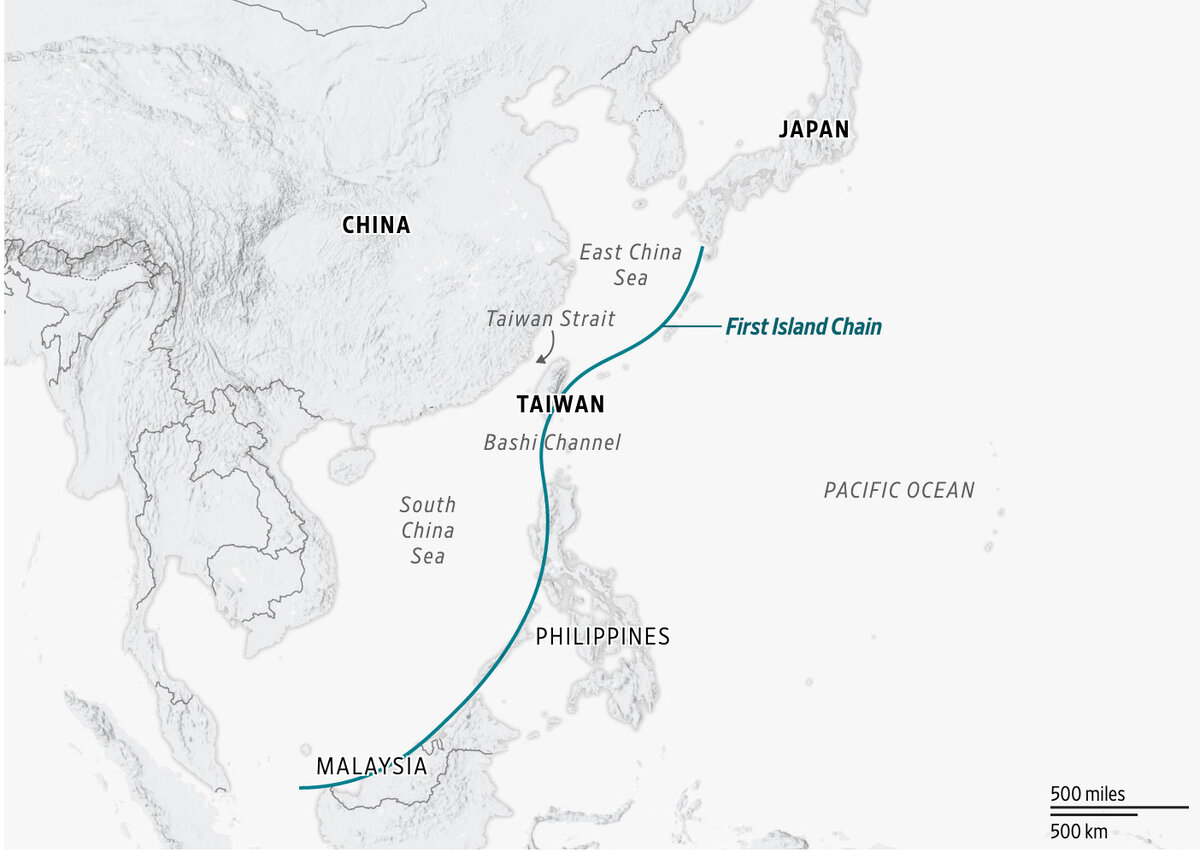
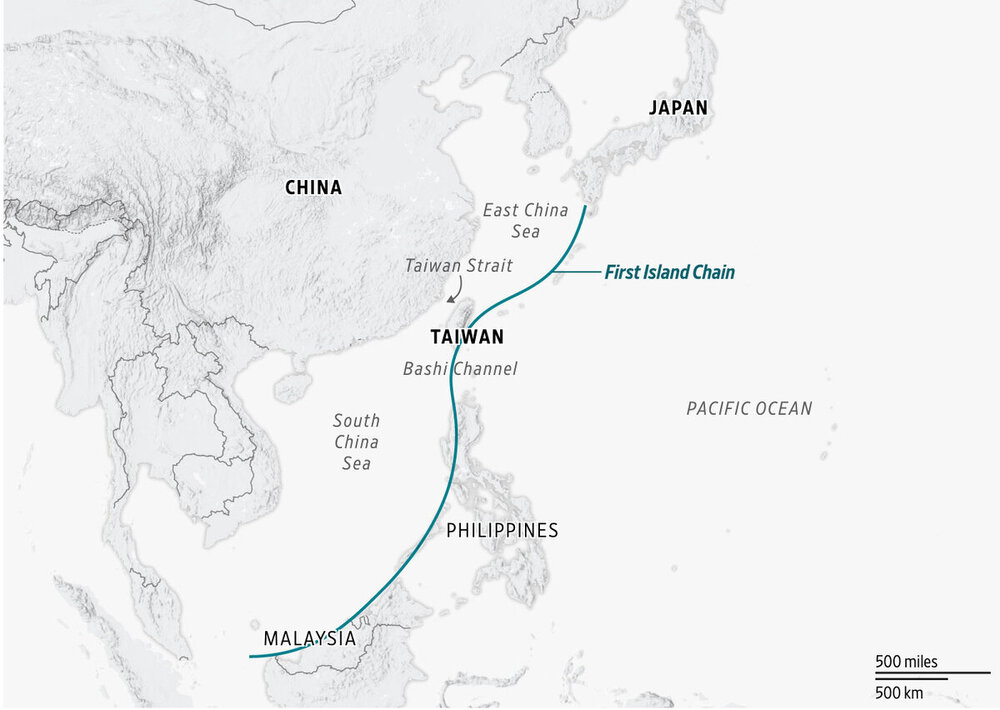
If you’ve been looking for a more substantial reason for the latest news coming from Japan, you’re thinking right. The last month or so since the new Prime Minister, Sanae Takaichi, took office, you’re hearing a lot of superficial symptoms of a larger issue. Hardline conservative Sanae Takaichi was voted in by parliament as Japan’s first female prime minister on Tuesday, emulating her hero, Britain’s late leader Margaret Thatcher, after a whirlwind few weeks of political wrangling. … She is a regular visitor to the Yasukuni shrine, which honours Japan’s war dead - including some executed war criminals - and is viewed by some Asian neighbours as a symbol of its past militarism. She also favours revising Japan’s pacifist postwar constitution, and suggested this year that Japan could form a “quasi-security alliance” with Taiwan, the democratically governed island claimed by China. That last bit got a lot of attention, but should it? There are still no signs of a diplomatic breakthrough between Tokyo and Beijing following Japanese Prime Minister Sanae Takaichi’s November statement on Japan’s potential role in a Taiwan contingency. During a meeting of the budget committee in the lower house of Japan’s Diet on November 7, Takaichi said that if China conducted a naval blockade of Taiwan, it would constitute a “survival-threatening situation”, which could prompt Japan to exercise the right of collective self-defense. The content of her remarks was neither new nor surprising: Takaichi has long been a steadfast supporter of Taiwan, and her characterization of a Taiwan crisis as a “threat to Japan’s survival” closely mirrors the stance of her late mentor, Shinzo Abe. Despite China’s strong response, Takaichi has not walked back her comments. Her party’s Vice President Taro Aso recently reiterated his support, noting that she had “merely stated Japan’s position in a concrete manner.” While Beijing may not be able to get over WWII, almost everyone else is. As the WWII generation is almost gone, so are their ghosts and phobias. In their place, natural and enduring concerns are rising to the surface and exerting themselves. In the Western Pacific, the rise of China, a society of representative government taking root, nationalism, reliance of the free flow of goods at market prices, and geography—all are shaping modern relationships. The last few decades’ increasingly positive relationship between Japan and Taiwan is just one manifestation of this growing movement. Taiwan’s memory of its colonial rule by Japan is, well…complicated…more positive than the Korean-Japanese history. A friend of mine recently moved to Japan. He and his Japanese girlfriend vacationed in Taiwan recently. The one thing he noticed was that without fail, if they were trying to talk to someone who could not speak English, his girlfriend would switch to Japanese and, sure enough, they were off and running. To a person, everyone was happy to meet an American and a Japanese. I don’t think this is just one or many anecdotal reports. As both nations face the same primary enemy, that should drive the relationship closer. There is more than rhetoric backing up the Prime Minister’s comments about using their military if needed. Japan’s Cabinet on Friday approved a record defense budget plan exceeding 9 trillion yen ($58 billion) for the coming year, aiming to fortify its strike-back capability and coastal defense with cruise missiles and unmanned arsenals as tensions rise in the region. The draft budget for fiscal 2026 beginning April is up 9.4% from 2025 and marks the fourth year of Japan’s ongoing five-year program to double annual arms spending to 2% of gross domestic product. … Takaichi’s government, under U.S. pressure for a military increase, pledged to achieve the 2% target by March, two years earlier than planned. Japan also plans to revise the ongoing security and defense policy by December 2026 to further strengthen its military. This could not come at a better time. Japan’s military is exceptionally professional. Anyone who has worked with them will tell you. We cannot fight and win in the Western Pacific without our Japanese bases, and if they can grow to a 2%+ of GDP military as well, more the better. Her economy may be 15% the size of the American economy and 20% of the Chinese economy, but her quality…exemplary. Her social cohesion, almost uniquely strong. What is driving this story…with some echoes of what brought us to war with each other in the middle of the 20th century—geography. Yes, it is behind the paywall, but if you want to see the deeper reason Japan appears to have broken through the post-WWII pacifist wall, the article by Niharika Mandhana and Daniel Kiss in WSJ, See How a Chinese Attack on Taiwan Would Be Japan’s Problem, does an exceptional job, mostly through a fundamental—maps. Let’s start there. In the last few years, when people thought of the “First Island Chain”, their eyes were in the South China Sea. Look north, and you find the Taiwan-Japan connection. A large portion of global trade passes through the South and East China Seas. Chokepoints like the Bashi Channel sweep Taiwan’s edges. A successful Chinese conquest of Taiwan would enable Beijing to dominate the region’s strategic waterways, project military power widely into the Pacific and more aggressively pursue its contested maritime and territorial claims. “The balance of power in Asia would be tipped quite decisively in favor of China should Taiwan fall into China’s hands,” said Robert Ward, Japan chair at the International Institute for Strategic Studies. Looking seaward, China is “sort of hemmed in” right now, he said, referring to the First Island Chain—a string of archipelagoes off the country’s east coast made up largely of a trio of U.S. partners: Japan, Taiwan and the Philippines. China “clearly wants to break out of that,” Ward said. It is the center of the line holding China in. When you look just north of Taiwan, it is easy to see how it would be hard for Japan not to be brought in. In a conflict, Taiwan’s fate would become quickly intertwined with the U.S.-Japan security alliance. To repel a full-scale attack, Taipei would need America—its main defense partner—to join the fight. To fight effectively, American forces would need Japan. Whether the U.S. would intervene directly in a clash is an open question. Washington maintains a policy of what it calls “strategic ambiguity” to keep China guessing. Geography presents particular challenges for Japan. A sweep of Japanese islands called the Ryukyus arcs southwest, stopping just short of Taiwan. The island of Yonaguni, more than 1,200 miles from Tokyo, is less than 70 miles from Taiwan. My comment earlier about the essential nature of US bases in Japan? If we could not use them in a fight against China, I’m not sure we have many options. A 2023 report on a Taiwan wargame by the Center for Strategic and International Studies, co-written by Heginbotham, described Japan as the linchpin. “The United States must be able to use its bases in Japan for combat operations,” it said. One island in particular, Okinawa, is blanketed with military facilities and training areas. Kadena Air Base, located on it, houses a range of aircraft at any given time, including jet fighters that would be needed to sink Chinese ships in the Taiwan Strait and fight Chinese warplanes in the air. A new missile-toting Marine Corps unit designed for an island-hopping fight is also based on Okinawa. China, of course, knows this, and they have designed their rocket forces specifically to put those bases under threat. As we’ve discussed here before, such maps are the best sales pitch for naval power you can find. Yes, ships can be targeted at sea…but they move. Those big land bases and supply depots…they’re static. Build more. Faster. Everyone. Leave a comment Share This Substack is reader-supported. To receive new posts and support my work, consider becoming a free or paid subscriber. View the full article
-
Turkey has moved a large convoy of armored vehicles into Syria through the Bab al-Hawa border crossing, according to overnight footage circulating online that shows dozens of military vehicles entering Syrian territory from Turkey. The footage, which emerged overnight, shows a sustained flow of armored vehicles crossing into northern Syria via Bab al-Hawa, one of […]View the full article
-
Saudi Arabia carried out an airstrike on Yemen’s Mukalla Port after determining that ships carrying armored vehicles and weapons for UAE-backed separatist forces were present at the facility, according to a report by Clash Report. The strike targeted vessels described as transporting military equipment from the United Arab Emirates intended for the Southern Transitional Council, […]View the full article
-
Soldiers from the 1st Battalion, 2nd Stryker Brigade Combat Team conducted a week of day and night live-fire gunnery at Yakima Training Center, Washington, using an experimental Stryker vehicle equipped with a 30mm autocannon, the U.S. Army confirmed. The training event, held in a full operational environment, focused on live-fire qualification with the Stryker-mounted 30mm […]View the full article
-
India on Dec. 29 conducted the first successful flight test of the Pinaka Long Range Guided Rocket, validating a maximum strike range of 120 kilometers during a trial at the Integrated Test Range in Chandipur, according to an official statement issued in New Delhi. The maiden test of the Pinaka Long Range Guided Rocket, designated […]View the full article
-
The United States on Dec. 29 approved a possible $1.8 billion Foreign Military Sale to Denmark for up to three P-8A multi-mission maritime patrol and reconnaissance aircraft and related systems, with Congress formally notified of the decision. According to the notification, the determination was made by the U.S. State Department, and the Defense Security Cooperation […]View the full article