WestPac
Western Pacific Scenarios
111 files
-
This is the sixth and final part of the series.
As with all previous scenarios: Only to be played by the BLUE side.
PRELUDE:
The sudden deployment of nuclear weapons by the Israeli Defence Force came as a surprise to all involved conflict parties. Faced with annihilation after the collapse of the front along the Gaza strip and the breakthrough achieved by US-backed Egyptian Army units, the Israelis resorted to the last possible measure available to them. The ensuing nuclear storm engulfed US forces in Egypt as well and led to a limited US nuclear strike on Israeli units by B2 bombers. The last shot in that side-conflict fell, when the “Tanin”, a Dolphin class Israeli submarine, unleashed a nuclear-tipped cruise missile strike on the Diego Garcia installation, where the B2 bomber strike originated from. Following that strike, both the Israelis and the US-Egyptian coalition decided to disengage.
ECON quickly distanced itself from the Israeli actions, just as Greater Russia did.
Turkey decided to stay neutral again, following the defeat of its air force over the Aegean by ECON forces and being effectively isolated after Egypt left the conflict.
The war was approaching a stalemate between the two pacts.
It was Vladimir Putin who surprised ECON leadership with an ambitious plan to carry the fight to the enemy and potentially accelerate the end of the war.- 154 Downloads
Updated -
Second Cold War ASW Warfare in the Sea of Japan, late November 2017.
A Harpoon Commander's Edition scenario for the Western Pacific Battleset and the HCDB2-170909 (or later) 1980-2025 era Platform Database. This scenario is designed with Advanced Scenario Editor Build 2017.013 and to be run with HCE 2015.008+ or later. This scenario is very probably more funny, fast and furious than the precedent and similar "ASW Forms, Harpoon 3 Battles of the Third World War", settled some twenty-five years before, on late August 1991
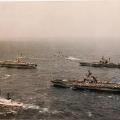
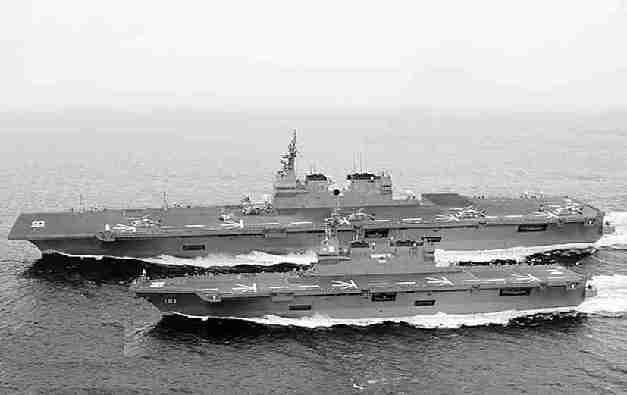
Image: The Japan Maritime Self-Defence Force anti-submarine warfare helicopter destroyer Hyuga (DDH-181) during Annual Exercise ANNUALEX 21G. On deck two SH-60J (two first ones) and two SH-60K behind, with ESM sensors relocated up in the nose middle. November 17, 2009, photo by John M. Hageman, U.S. Navy, a serviceperson on duty and in consequence in public domain, took from Wikipedia Commons.
This scenario is designed to be played from the Blue/Allied side or from the Red/Russian-? side. You should play a few times first the Blue side to avoid spoilers, and only later play the Red side.
An anti-submarine warfare derivative scenario from the precedent "ASW Forms, Harpoon 3 Battles of the Third World War, late August 1991", with updated and contemporary Orders of Battle and better and more realistic warships and submarines availability and deployment.
.
The scenario is settled at the start of a contemporary Second Cold War going hot because many causes, the opening movements and contacts, and the first days of true combat.
At November 2017, few weeks after the WWIII start in Europe after the Putin's Russia invasion of the Baltic States after the Zapad-17 drills and the subsequent NATO response, in the Far East Japan was keep neutral to avoid a second front for the NATO and other allied Western forces.
In the Sea of Japan trading lanes and fishing zones were maintained open and accessible, but with the months pass the tension was increasing.
At last, Russia decided to attack the Japanese maritime traffic to create a Far East second front and alleviate the pressure in the main European/North Atlantic theatre of operations.
Note: the scenario is qualified as "Historical" because the forces present in the scenario were the historically deployed or very near to the zone of operations in November 2017, including the US Navy ships forward deployed to United States Fleet Activities Yokosuka (and not damaged in recent collisions!), the most modern Japanese Maritime Self-Defence Force submarines and warships, basically those from Sasebo District Fleet and Sasebo Naval Base, the Russian Pacific Fleet, and the Chinese North Sea Fleet.
Enrique Mas, October 29, 2017.- 158 Downloads
Updated -
ASW Forms, Harpoon 3 Battles of the Third World War, late August 1991.
A Harpoon Commander's Edition scenario for the Western Pacific Battleset and the HCDB2-170909 (or later) 1980-2025 era Platform Database. This scenario is designed with Advanced Scenario Editor Build 2017.013 and to be run with HCE 2015.008+ or later.
Image: Only three years later of the scenario date and to show the forces concentration level in the region, a 24 May 1994 aerial view of the United States Fleet Activities Yokosuka naval base. The ships tied up at the piers are (bottom to top) the Japan Maritime Self-Defence Force destroyers Sawagiri (DD-157), Asagiri (DD-151), the helicopter carrying destroyer Kurama (DDH-144), the destroyer USS O'Brien (DD-975), the Japanese guided missile destroyer Kongo (DDG-173) and the Ticonderoga-class guided missile cruiser USS Bunker Hill (CG-52) with VLS, first of Flight II. At the top, off to the right, is the amphibious command ship USS Blue Ridge (LCC-19). To the far right at Berth 5 are four Japanese Yushio-class submarines. Official US Navy photo by PH1 (Photographer's Mate First Class) H. Johnson, U.S. Navy, a serviceperson on duty, and in consequence in public domain, took from Wikipedia Commons.
This scenario is designed to be played from the Blue/Allied side or from the Red/Soviet-? side. You should play a few times first the Blue side to avoid spoilers, and only later play the Red side.
A Sea of Japan scenario inspired by some good old scenario booklets of the Harpoon 3 series of the late 1980s edited by GDW, of great value for fun testing of generic tactics and weapons. Actually is a mix-up of originally random table generated ASW operations centred scenarios, do easier as only the Computer Harpoon can provide. And also reflecting all the knowledge acquired the last years in some matters, as about Soviet/Russian and others platforms characteristics, OOBs and historical deployments.
The scenario is settled at the start of the conventional WWIII as was forecasted for the whole World for circa May 1991 and later in some of the GDW edited booklets, the opening movements and contacts, and the first days of true combat.
At August 1991, after three months of WWIII start, in the Far East Japan was keep neutral to avoid a second front for the NATO and other allied Western forces.
In the Sea of Japan trading lanes and fishing zones were maintained open and accessible, but with the months pass the tension was increasing.
At last, the Soviet Union decided to attack the Japanese maritime traffic to create a Far East second front and alleviate the pressure in the main European/North Atlantic theatre of operations.
Note: the scenario is qualified as "Historical" because the forces present in the scenario were historically deployed or very near to the zone of operations in August 1991. As example, Japanese Mitsubishi SH-60J Seahawk were first deployed just in August 1991, USS Truxtun (CGN-35) departed Bremerton for her WESTPAC deployment on 16 August 1991, and the Soviet naval vessels are those historically deployed at that time in its Pacific Fleet.
Enrique Mas, October 28, 2017.- 152 Downloads
Updated -
Fire and Fury
A Harpoon Commander's Edition scenario for the Westpac Battleset.
This scenario is designed for play by the BLUE side, and requires database HCDB2-170714 or later.
Long suspected of having a nuclear weapons program, the Democratic Peoples Republic of Korea (DPRK) caused worldwide alarm when it tested its first atomic bomb in 2006, in spite of years of negotiations aimed at preventing just that. In parallel with the Bomb itself, the Hermit Kingdom also pursued the means to deliver it. And in July 2017, barely a decade after first becoming a nuclear power, the DPRK demonstrated what appeared to be the first successful test of a potential intercontinental ballistic missile (ICBM). This time around, there was a very different personality sitting behind the Resolute desk in the Oval Office. A man who declared in no uncertain terms that the North Korean regime would face the 'fire and fury' of American military power if they threatened to use their newfound weapons against the United States of America.
- 1,587 Downloads
Submitted -
Reagan against China (and F-35B first blood), December 2016-early 2017. Hypothetical/Historical Scenario.
A Harpoon Commander's Edition scenario for EC2003 Battle for the Western Pacific BattleSet and the new HCDB2-170401 (Previously 170122) 1980-2025 era Platform Database. This scenario is designed with advanced Scenario Editor and to be run with HCE 2015.008+ or later.
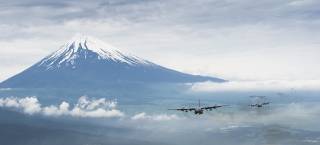
Image: Aircraft assigned to Carrier Air Wing (CVW) 14 perform a diamond formation flyby over the aircraft carrier USS Ronald Reagan (CVN-76) during a Tiger Cruise air power demonstration. U.S. Navy photo of 18 October 2009 by Mass Communication Specialist 3rd Class Torrey W. Lee/Released, and took from Wikipedia Commons.
This scenario is designed to be played from the US/Blue side or from the Chinese/Red side. To avoid spoilers you should play a few times first the US/Blue side, and only later play the Chinese/Red side.
The scenario is based in current historical events, mainly the steaming of the just formed Chinese aircraft carrier CV-16 Liaoning CVBG thought the Bashi Channel in the contested sea area from 26 December 2016. But it was very improbable the political motivation in either side capable to generate an open war. At least President Obama had wanted to leave to posterity and to President-Elect Trump a strange and complicated legacy, to force the new incumbent to keep a very strong and militant posture against China.
Also, one of the aims of this scenario is to show how numerous and modernized are the Chinese forces at the current times, forgetting the usual conception about they're obsolete and simple forces (but depicting also his lack of enough naval helicopters, tankers and EW aircrafts).
Is showed the more accurate possible Chinese order of battle (December 2016) of his three fleets attack submarine force, his People's Liberation Army Navy (PLAN) air elements, some very few People's Liberation Army Air Force (PLAAF) combat elements, and a few PLAAF strategic elements, as UAVs, AWACS or ELINT aircrafts.
Worth of remembering is, after the full of naval, military and security incidents year of 2014 the World was beginning the so-called Second Cold War. Mostly as result of President of Russia Vladimir Putin (ex-KGB lieutenant colonel) actions, provoking in succession the Crimea, Ukraine, Donetsk, Baltic States, October 2014 Swedish submarine incursion, G-20 Brisbane meeting naval crisis, November 2014 Faslane submarine incident, frigate Yaroslav Mudryy February "Channel Dash", April 2015 Finnish submarine incursion (for many observers causing the pre-mobilization of Finland reserve forces), Russian intervention in Syria from 30 September 2015, March 2016 detection by the French of a Russian submarine near Bay of Biscay, the propaganda stunt of the deployment of the only one Russian aircraft carrier Admiral of the Fleet of the Soviet Union Kuznetsov steaming (a lot, literally) from Kola Bay towards Eastern Mediterranean from October 15, 2016, and with constant and multiple Russian overflies with military warplanes entangled in potential incidents with commercial flights in Europe. That without counting in other unrelated naval incidents, just as the Iranian seizure of the Maersk Tigris in 28 April 2015 (and neither counting in landlocked actions, as the counter-ISIS operations in Middle East).
But meanwhile, more towards Far East a less perceived and growing problem was China, as reflected in the transfer of the 60% of the USN and USAF combat forces to the Pacific Theater of Operations from 2012, move to be completed by 2020.
In some places of the South China or East Philippine Sea multiple countries claimed Spratly Islands archipelago (Chinese: Nansha islands, Filipino: Kapuluan ng Kalayaan, Malay: Kepulauan Spratly and Vietnamese: Quan dao Truong Sa), China was for years mongering his plans and established a permanent base at least from 1987, and 1988 included a naval battle against Vietnam, the Johnson South Reef Skirmish. Also at least from 1995, as denounced by Philippines, China was building structures with military capabilities, including from 2012 more relevant structures, as the 3000+ meters long (Very Large Airport in Harpoon parameters) runway in Fiery Cross Reef (finished at March 2016) and other smaller finished in Mischief Reef, and more important, building artificial reefs and islands above previous simple shoals for claiming territory, and equipping them with advanced weapons. At last in an undetermined date late April 2015 China claims as territorial waters the 12 nautical miles circling his "new" islands.
As the US official doctrine is Freedom of Navigation (FON) worldwide on international waters, and as in this case with fears about a decision not to send naval vessels into the zone would inadvertently help the Chinese build their own case for sovereignty in the area, some air and surface elements of US Navy begin to orbit near the Chinese claims, but not crossing the 12 nm line.
Between the first incidents were a VP-45 Pelicans' P-8A Poseidon in surveillance mission carrying a CNN TV team inside, warned by the Chinese to no flight 12 nm near of Fiery Cross Reef on 20 May 2015, and the trailing for some hours of the USS Fort Worth (LCS-3) by the Chinese frigate Yuncheng (571) on 11 May 2015. Late, from 26 October 2015, USS Lassen (DDG-82) implement the Freedom of Navigation (FON) near the Chinese occupied Subi and Mischief Reefs in the Spratlys, and a clash of destroyers was possible, but avoided with the humble and shy behaviour of the US side, transiting without radars illuminating or the helicopter flying.
Other previous very important situation, and after some months without US aircraft carriers in the region, was from 1 to 8 March 2016, when the USS John C. Stennis (CVN-74) Carrier Strike Group (JCSCSG or Carrier Strike Group Three) transited the Luzon Strait on the contested area. Other possible incident in our timeline was the sailing of the cruiser USS Chancellorsville between Scarborough Shoal (Bajo de Mansiloc Spanish historical name) and Mischief Reef on late March 2016, when was persistently trailed by Chinese frigate Yueyang (575) but the action was limited to an exchange of weather pleasantries.
But perhaps in the December 2016 transit of the Liaoning CVBG another outcome would have been possible ...
Enrique Mas, 24 January 2017.- 869 Downloads
Updated -
Battle of Chancellorsville: The Red Badge of Courage, March 2016. Alternate History Scenario.
A Harpoon Commander's Edition introductory scenario for the Western Pacific Battleset and the HCDB-150928 1980-2015 era Platform Database or the HCDB2-170401 new 1980-2025 era Platform Database . This scenario is designed with advanced Scenario Editor and to be run with HCE 2015.008+ or later.
Image: USS Chancellorsville (CG-62) steams port side of the aircraft carrier USS Ronald Reagan (CVN-76) during Rim of the Pacific (RIMPAC) exercise in 8 July 2010. U.S. Navy photo by Mass Communication Specialist 3rd Class Stephen M. Votaw, a serviceman on duty and in consequence in public domain, took from Wikipedia Commons.
This scenario is designed to be played from the Blue/US side or from the Red/Chinese side. To avoid spoilers you should play a few times first the Blue side, and only later play the Red side.
The scenario is based in current historical events, mainly the navigation of the USS Chancellorsville (CG-62) on the contested area in late March 2016, as is the US clear aim to keep open to all maritime traffic the region sea, one of the world's busiest shipping lanes. But is very improbable the political motivation in either side capable to generate an open and all-out war.
Is basically an introductory scenario, inspired by the (continuous) current events.
After the full of naval, military and security incidents year of 2014 the World was beginning the so-called Second Cold War. Mostly as result of President of Russia Vladimir Putin (ex-KGB lieutenant colonel) actions, provoking in succession the Crimea, Ukraine, Donetsk, Baltic States, October 2014 Swedish submarine incursion, G-20 Brisbane meeting naval crisis, November 2014 Faslane submarine incident, frigate Yaroslav Mudryy February "Channel Dash", April 2015 Finnish submarine incursion (for many observers causing the pre-mobilization of Finland reserve forces), Russian intervention in Syria from 30 September 2015, March 2016 detection by the French of a Russian submarine near Bay of Biscay, and with constant and multiple overflies with military warplanes entangled in potential incidents with commercial flights in Europe. That without counting in other unrelated naval incidents, just as the Iranian seizure of the Maersk Tigris in 28 April 2015 (and neither counting in landlocked actions, as the ISIS operati
ons in Middle East).
But meanwhile, more towards Far East was China a less perceived and growing problem.
In some places of the South China or East Philippine Sea multiple countries claimed Spratly Islands archipelago (Chinese: Nansha islands, Filipino: Kapuluan ng Kalayaan, Malay: Kepulauan Spratly and Vietnamese: Quan dao Truong Sa), China was for years mongering his plans and established a permanent base at least from 1987, and 1988 included a naval battle against Vietnam, the Johnson South Reef Skirmish. Also at least from 1995, as denounced by Philippines, China was building structures with military capabilities, including from 2012 more relevant structures, as the 3000+ meters long (Very Large Airport in Harpoon parameters) runway in Fiery Cross Reef (now finished, at March 2016), and more important, building artificial reefs and islands above previous simple shoals for claiming territory. At last in an undetermined date late April 2015 China claims as territorial waters the 12 nautical miles circling his "new" islands.
As the US official doctrine is Freedom of Navigation (FON) worldwide on international waters, and as in this case with fears about a decision not to send naval vessels into the zone would inadvertently help the Chinese build their own case for sovereignty in the area, some air and surface elements of US Navy begin to orbit near the Chinese claims, but not crossing the 12 nm line.
Between the first incidents were a VP-45 Pelicans' P-8A Poseidon in surveillance mission carrying a CNN TV team inside, warned by the Chinese to no flight 12 nm near of Fiery Cross Reef on 20 May 2015, and the trailing for some hours of the USS Fort Worth (LCS-3) by the Chinese frigate Yuncheng (571) on 11 May 2015. Late, from 26 October 2015, USS Lassen (DDG-82) implement the Freedom of Navigation (FON) near the Chinese occupied Subi and Mischief Reefs in the Spratlys, and a clash of destroyers was possible, but avoided with the humble and shy behaviour of the US side, transiting without radars illuminating or the helicopter flying.
Other previous very important situation, and after some months without US aircraft carriers in the region, was from 1 to 8 March 2016, when the USS John C. Stennis (CVN-74) Carrier Strike Group (JCSCSG or Carrier Strike Group Three) transited the Luzon Strait on the contested area.
And the last possible incident in our timeline was the sailing of the cruiser USS Chancellorsville between Scarborough Shoal (Bajo de Mansiloc Spanish historical name) and Mischief Reef on late March 2016, when was persistently trailed by Chinese frigate Yueyang (575) and the action was limited to an exchange of weather pleasantries, but other outcome was possible, re-enacting Stephen Crane's Battle of Chancellorsville-inspired The Red Badge of Courage ...
Enrique Mas, 1 April 2016.- 224 Downloads
Updated -
Solving the Spratlys problem: Stennis Compromise, March 2016. Alternate History Scenario.
A Harpoon Commander's Edition scenario for the Western Pacific Battleset and the HCDB-150928 1980-2015 era Platform Database. This scenario is designed with advanced Scenario Editor and to be run with HCE 2015.008+ or later.
Image: An VFA-14 "Tophatters" F/A-18E Super Hornet (Squadron with the only Super Hornets with the old APG-73 radars in the CVW-9, the others have the APG-79 AESA) participates in an air power demonstration near the aircraft carrier USS John C. Stennis (CVN 74) as the ship operates in the Pacific Ocean on April 24, 2013. Photo took from Wikipedia, realized by Seaman Apprentice Ignacio D. Perez U.S. Navy, a serviceman on duty and in consequence in public domain.
This scenario is designed to be played from the Blue/US side or from the Red/Chinese side. To avoid spoilers you should play a few times first the Blue side, and only later play the Red side.
The scenario is based in current historical events, mainly the navigation of the USS John C. Stennis (CVN-74) Carrier Strike Group (JCSCSG or Carrier Strike Group Three) from the Luzon Strait on the contested area from 1 to 8 March 2016. But is very improbable the political motivation in either side capable to generate an open war.
Also, one of this complex scenario aims is to show how numerous and modernized are the Chinese forces at the current times, forgetting the usual conception about they're obsolete and simple forces (but including his lack of enough naval helicopters, tankers and EW aircrafts).
Is depicted the more accurate possible Chinese order of battle (March 2016) of his South Sea Fleet, his People's Liberation Army Navy (PLAN) aviation elements, his People's Liberation Army Air Force (PLAAF) Southern and Eastern Theatre Commands, and a few strategic elements, as AWACS or ELINT planes.
After the full of naval, military and security incidents year of 2014 the World was beginning the so-called Second Cold War. Mostly as result of President of Russia Vladimir Putin (ex-KGB lieutenant colonel) actions, provoking in succession the Crimea, Ukraine, Donetsk, Baltic States, October 2014 Swedish submarine incursion, G-20 Brisbane meeting naval crisis, November 2014 Faslane submarine incident, frigate Yaroslav Mudryy February "Channel Dash", April 2015 Finnish submarine incursion (for many observers causing the pre-mobilization of Finland reserve forces), Russian intervention in Syria from 30 September 2015, March 2016 detection by the French of a Russian submarine near Bay of Biscay, and with constant and multiple overflies with military warplanes entangled in potential incidents with commercial flights in Europe. That without counting in other unrelated naval incidents, just as the Iranian seizure of the Maersk Tigris in 28 April 2015 (and neither counting in landlocked actions, as the ISIS operati
ons in Middle East).
But meanwhile, more towards Far East was China a less perceived and growing problem.
In some places of the South China or East Philippine Sea multiple countries claimed Spratly Islands archipelago (Chinese: Nansha islands, Filipino: Kapuluan ng Kalayaan, Malay: Kepulauan Spratly and Vietnamese: Quan dao Truong Sa), China was for years mongering his plans and established a permanent base at least from 1987, and 1988 included a naval battle against Vietnam, the Johnson South Reef Skirmish. Also at least from 1995, as denounced by Philippines, China was building structures with military capabilities, including from 2012 more relevant structures, as the 3000+ meters long (Very Large Airport in Harpoon parameters) runway in Fiery Cross Reef (now finished, at March 2016), and more important, building artificial reefs and islands above previous simple shoals for claiming territory. At last in an undetermined date late April 2015 China claims as territorial waters the 12 nautical miles circling his "new" islands.
As the US official doctrine is Freedom of Navigation (FON) worldwide on international waters, and as in this case with fears about a decision not to send naval vessels into the zone would inadvertently help the Chinese build their own case for sovereignty in the area, some air and surface elements of US Navy begin to orbit near the Chinese claims, but not crossing the 12 nm line.
Between the first incidents were a VP-45 Pelicans' P-8A Poseidon in surveillance mission carrying a CNN TV team inside, warned by the Chinese to no flight 12 nm near of Fiery Cross Reef on 20 May 2015, and the trailing for some hours of the USS Fort Worth (LCS-3) by the Chinese frigate Yuncheng (571) on 11 May 2015. Late, from 26 October 2015, USS Lassen (DDG-82) implement the Freedom of Navigation (FON) near the Chinese occupied Subi and Mischief Reefs in the Spratlys, and a clash of destroyers was possible, but avoided with the humble and shy behaviour of the US side, transiting without radars illuminating or the helicopter flying.
At last, and after some months without US aircraft carriers in the region, when on 1 March 2016 the JCSCSG (Group AEC) transited the Luzon Strait, everything was possible...
Enrique Mas, 15 March 2016.- 713 Downloads
Updated -
Clash of DDGs, Spratly Islands 26-27 October 2015. Historical Scenario.
A Harpoon Commander's Edition scenario for the Western Pacific Battleset and the HCDB-150928 1980-2015 era Platform Database or the new HCDB2-170522 New Standard 1980-2025 era Platform Database. This scenario is designed with advanced Scenario Editor and to be run with HCE 2015.008+ or later.
This scenario is designed to be played from the Blue/US side or from the Red/Chinese side. To avoid spoilers you should play a few times first the Blue side, and only later play the Red side.
Image: The Arleigh Burke-class guided-missile destroyer USS Lassen (DDG-82) during a scheduled port visit in Da Nang, Vietnam, on 7 November 2009. Cmdr. H.B. Le, commanding officer of Lassen was visiting Vietnam for the first time since he and his family fled the country in 1975. (U.S. Navy photo by Mass Communication Specialist 3rd Class Daniel Viramontes/Released) 091107-N-7280V-386. Photo in public domain because taked by a US serviceperson on duty and publicly released, taked from Flickr.
After the full of naval, military and security incidents year of 2014 and the not less eventful first eight months of 2015, the World was beginning the so-called Second Cold War. Mostly as result of President of Russia Vladimir Putin (ex-KGB lieutenant colonel) actions, provoking in succession the Crimea, Ukraine, Donetsk, Baltic States, October 2014 Swedish submarine incursion, G-20 Brisbane meeting naval crisis, November 2014 Faslane submarine incident, frigate Yaroslav Mudryy February "Channel Dash", April 2015 Finnish submarine incursion (for many observers causing the pre-mobilization of Finland reserve forces), and with constant and multiple overflies with military warplanes entangled in potential incidents with commercial flights in Europe. That without counting in other unrelated naval incidents, just as the Iranian seizure of the Maersk Tigris in 28 April 2015 (and neither counting in landlocked actions, as the ISIS operations in Middle East), and at last, the use by Russia of Latakia as advanced air base from operations against the opposition to the Syrian President Bashar al-Assad from 30 September 2015, with unpredictable consequences.
But meanwhile, more towards Far East was China a less perceived and growing problem.
In some places of the South China or East Philippine Sea multiple countries claimed Spratly Islands archipelago (Chinese: Nansha islands, Filipino: Kapuluan ng Kalayaan, Malay: Kepulauan Spratly and Vietnamese: Quan dao Truong Sa), China was for years mongering his plans and established a permanent base at least from 1987, and 1988 included a naval battle against Vietnam, the Johnson South Reef Skirmish. Also at least from 1995, as denounced by Philippines, China was building structures with military capabilities, including from 2012 more relevant structures, as the 3000+ meters long (Very Large Airport in Harpoon parameters) runway in Fiery Cross Reef, and more important, building artificial reefs and islands above previous simple shoals. At last in an undetermined date late April 2015 China claims as territorial waters the 12 nautical miles circling his "new" islands.
As the US official doctrine is Freedom of Navigation (FON), and as in this case with fears about a decision not to send naval vessels into the zone would inadvertently help the Chinese build their own case for sovereignty in the area, some air and surface elements of US Navy begin to orbit near the Chinese claims, but not crossing the 12 nm line.
Between the first incidents were a VP-45 Pelicans' P-8A Poseidon in surveillance mission carrying a CNN TV team inside, warned by the Chinese to no flight 12 nm near of Fiery Cross Reef on 20 May 2015, and the trailing for some hours of the USS Fort Worth (LCS-3) by the Chinese frigate Yuncheng (571) on 11 May 2015.
At last, from the late hours of 26 October 2015, USS Lassen (DDG-82) implement the Freedom of Navigation (FON) near the Chinese occupied Subi and Mischief Reefs in the Spratlys, and a clash of destroyers was possible.
Enrique Mas, 27 October 2015.- 593 Downloads
Updated -
Tesseract
A Harpoon Commander's Edition scenario for the Westpac Battleset.
This scenario is designed for play by the BLUE side only.
A month ago, the Peoples Republic of China seemed to finalize its grip on the South China Sea, appearing to complete efforts to establish full fledged military installations on several newly created man made islands. Its territorial ambitions and aggressive land reclamation policies in the region have long aggravated and alarmed its neighbours in Southeast Asia, but the events of the past two weeks have been deeply disconcerting. The Chinese have now moved troops and weaponry into these new bases, and declared an air defense identification zone that encompasses almost the entirety of the South China Sea. In an emergency meeting of the Association of South East Asia Nations (ASEAN), all but Cambodia, Laos and Myanmar have agreed to send military forces into the Spratly archipelago to confront the Chinese.- 229 Downloads
Submitted -
LCS Goes to War 2, the Real Thing, Spratly Islands, 11 May 2015. Historical Scenario.
A Harpoon Commander's Edition scenario for the Western Pacific Battleset and the HCDB-150511 1980-2015 era Platform Database.
Image: USS Fort Worth (LCS-3) trailed by Chinese frigate Yuncheng (571) in the Spratly Islands, 11 May 2015. Official photo released by US Navy and as consequence in public domain.
This scenario is designed to be played from the Blue/US side or from the Red/Chinese side. To avoid spoilers you should play a few times first the Blue side, and only later play the Red side.
After the full of naval and security incidents year of 2014 and the not less eventful first five months of 2015 and with the World beginning the so-called Second Cold War when President of Russia Vladimir Putin (ex-KGB lieutenant colonel) provoked in succession the Crimea, Ukraine, Donetsk, Baltic States, October 2014 Swedish submarine incursion, G-20 Brisbane meeting naval crisis, November 2014 Faslane submarine incident, frigate Yaroslav Mudryy February "Channel Dash", April 2015 Finnish submarine incursion (for many observers causing the pre-mobilization of Finland reserve forces), and constant and multiple overflies with military warplanes entangled in potential incidents with commercial flights. That without counting in other unrelated naval incidents, just as the Iranian seizure of the Maersk Tigris in 28 April 2015 (and neither counting in landlocked actions, as the ISIS operations in Middle East).
But meanwhile, more towards Far East, was China the less perceived problem.
In some places of the South China Sea multiple country claimed Spratly Islands archipelago (Chinese: Nansha islands, Filipino: Kapuluan ng Kalayaan, Malay: Kepulauan Spratly and Vietnamese: Quan dao Truong Sa), China was for years mongering his plans and established a permanent base at least from 1987, and 1988 included a naval battle against Vietnam, the Johnson South Reef Skirmish. Also at least from 1995, as denounced by Philippines, China was building structures with military capabilities, including from 2012 more relevant structures, as the 3000+ meters long (Very Large Airport in Harpoon parameters) runway in Fiery Cross Reef, and more important, building artificial reefs and islands above previous simple shoals. At last in an undetermined date late April 2015 China claims as territorial waters the 12 nautical miles circling his "new" islands.
As the US official doctrine is Freedom of Navigation (FON), and as in this case with fears about a decision not to send naval vessels into the zone would inadvertently help the Chinese build their own case for sovereignty in the area, some air and surface elements of US Navy begin to orbit near the Chinese claims, but not crossing the 12 nm line.
One of the first incidents (another was a VP-45 Pelicans' P-8A Poseidon in surveillance mission carrying a CNN TV team inside, warned by the Chinese to no flight 12 nm near of Fiery Cross Reef on 20 May 2015) was the trailing for some hours of the USS Fort Worth (LCS-3) by the Chinese frigate Yuncheng (571) on 11 May 2015.
This scenario try to show what could have happened, and shows how near was one of the first missions of a controversial LCS to end with the ship placed where she was not designed to be, first line of combat.
Enrique Mas, 23 May 2015.- 353 Downloads
Updated -
Bullying the G-20 Brisbane Summit, November 2014. Historical scenario/Alternate history scenario.
A Harpoon Commander's Edition scenario for the Western Pacific Battleset WestPac and the HCDB-140909 1980-2015 era Platform Database.
Image: Varyag in 2009, from Wikipedia Commons. Title: Russia will celebrate Pacific Fleet Day on May 21. The Guards guided-missile cruiser Varyag underway at sea. RIA Novosti. Author Vitaliy Ankov.
This scenario is designed to be played mostly from the Blue/Allied side or from the Red/Russian side. You should play a few times first the Blue side to avoid spoilers, and only later play the Red/Russian side.
From the Cold Ward end the President of Russia Vladimir Putin was working for years in a plan to recover the Russian Empire and later Soviet territories, to reinstitute the greatness of his Russia, and to guarantee his passage on the History as savior of the Rodina.
After provoked from May 2014 the Crimea, Ukraine, Donetsk, Baltic States, Swedish submarine incursion and multiple overflies with military warplanes, it's time to do some unrest on the G-20 leaders meeting in the Brisbane Convention & Exhibition Centre, Australia Also they don't want befriend him, another time!
Just on 12 November 2014, three days before the summit start, was detected a Russian task force centered on the missile cruiser Varyag in the Coral Sea, southwards and without clear declared intentions.
After the last weeks Russian provocations, it's time to wait for the worse and perhaps to settle a limit and uphold it, by all the means necessary.
Enrique Mas, 13 November 2014.
- 722 Downloads
Updated -
Battle of the USS Midway 1988. Hypothetical scenario in WWIII.
A Harpoon Commander's Edition scenario for the EC2003 Battle for Western Pacific Battleset and the HCDB-130818 1980-2015 Era Platform Database.
Image: USS Midway (CV-41) on the Persian Gulf in 1988, with F/A-18A on deck. Photo retrieved from navysource.org and taked by a US Serviceman, and in consequence public domaint. Attributed to Kelly Scherer, SFC, USA (Ret) (Former AO1).
This scenario is designed for play with the US-Allied/Blue side or with by the Soviet-Vietnamese/Red side, to avoid spoilers is better to play a few times first the US-Allied/Blue side, and only after the Soviet-Vietnamese/Red side. This is a complex scenario and worth of play many times for the experienced Harpoon player because a lot of random elements and composite Total Victory Conditions requiriments. This is the third scenario of a series inspired in old boardgames of the 1970's and 1980's, but modified mainly to introduce the accumulated knowledge about weapons and forces deployment after the Cold War end.
In the wake of the Black Sea naval incident of 22 February 1988, and with other clashes droved to WWIII and after the neutralization of a Soviet convoy to Philippines with support of his old Vietnamese allies on the South China Sea, carrying weapons and on board the new revolutionary government to be imposed on Philippines, the US and Allied forces need to keep a firm operations base in Philippines. As consequence, two Allied convoys with MPS ships are sailing to Manila to reinforce Philippines against any new Soviet attempt, and to keep at bay the Soviet-driven local insurgence. Another US force of amphibious ships is probably sailing to reinforce the Luzon Strait. At same time two Soviet convoys with reinforcements are sailing to Vietnam. Some of the remaining Soviet Long Range Aviation elements at the campaign start in Vietnam have returned, as most of the 3rd Tactical Fighter Wing based at Clark AB. Another risk for the Allied convoys will be the Soviet submarines. Is probably both side have displaced an
aircraft carrier to the South China Sea. To get Total Victory both sides should arrival on time and destination with his convoys.
Enrique Mas, August 2014.
- 449 Downloads
Updated -
Manila Galleon 1988 ... in WWIII.
A Harpoon Commander's Edition scenario for the EC2003 Battle for Western Pacific Battleset and the HCDB-130818 1980-2015 Era Platform Database.
Image: USS Trípoli (LPH-10), undated, but clearly after 1972(installation of Sea Sparrow. Credited to Dennis Stephenson SMC USN Ret in navysource.org, and showed on Wikipedia as public domain because taked by an US serviceperson on duty.
This scenario is designed to be played with the US-Philippine/Blue side or with by the Soviet-Vietnamese/Red side, to avoid spoilers is better to play a few times first the US/Blue side, and only after the Soviet/Red side. In part is pretended as an introductory scenario, but worth of play for experienced Harpoon players. Second scenario of a series inspired in old boardgames of the 1970's and 1980's, but modified mainly to introduce the accumulated knowledge about weapons and forces deployment after the Cold War end.
In the wake of the Black Sea naval incident of 22 February 1988, and with other clashes droved to WWIII and after the neutralization of a Soviet convoy to Philippines with support of his old Vietnamese allies on the South China Sea,carrying weapons and on board the new revolutionary government to be imposed on Philippines, the US and Allied forces need to keep a firm operations base in Phllippines. As consequence, three Allied convoys with amphibious and transport ships are sailing to Manila to reinforce Philippines against any new Soviet attempt, and to keep at bay the Soviet-driven local insurgence. After the first clash the remaining Soviet Long Range Aviation elements in Vietnam were retired far North, but also most of the 3rd Tactical Fighter Wing based at Clark AB is displaced North, to protect Japan and South Korea. The main risk for the Allied convoys reinforcing Philippines will be the Soviet submarines. The reduced US and Allied ASW forces (with old and odd types of planes and ships on his force composition like a remembrance
of the ABDA force 46 years before) in theater have the task of protect the sail and unload of the convoys near Subic Bay.
Enrique Mas, July 2014.
- 849 Downloads
Updated -
Philippines Invasion 1988 ... or Battleship Return to Vietnam in WWIII.
A Harpoon Commander's Edition scenario for the EC2003 Battle for Western Pacific Battleset and the HCDB-130818 1980-2015 Era Platform Database.
Image: Missouri (BB-63) in company with the Long Beach (CGN-9) and others just prior to RIMPAC '88. Retrieved from navysource.org,courtesy of Larry Lee, probably in public domain as taked for an US servicemen. http://www.navsource.org/archives/01/63h.htm
This scenario is designed for play with the US-Philippine/Blue side or with by the Soviet-Vietnamese/Red side, to avoid spoilers is better to play a few times first the US/Blue side, and only after the Soviet/Red side. In part is pretended as an introductory scenario, but worth of play for experienced Harpoon players because a lot of random elements. I hope it will the first of a series inspired in old boardgames of the 1970's and 1980's, but modified mainly to introduce the accumulated knowledge about weapons and forces deployment after the Cold War end.
In the wake of the Black Sea naval incident of 22 February 1988, some other clashes droved to WWIII. One of them was the Soviet clear and open support to Philippine rebel forces against Corazon Aquino democratic presidency, the Benigno Aquino widow, and his Comprehensive Agrarian Reform Law, contrary to the collectivist aims of the leftist opposition. As climax of the crisis, a Soviet convoy with support of his old Vietnamese allies is openly sailing on the South China Sea with weapons and on board the new revolutionary government to be imposed on Philippines, starting in the poor region of Occidental Mindoro, were the pro-Soviet forces have the control after the seizure of the sugar mills and the rice plantations. The reduced US and allied forces (with old and odd types of planes and ships on his force composition like a remembrance of the ABDA force 46 years before) in theater have the task of prevent the unloading of the convoy, sinking it if necessary, as the first clash of titans is inevitable.
Enrique Mas, July 2014.
- 807 Downloads
Updated -
Fleet Ex 83
A Harpoon Commander's Edition scenario for the Westpac Battleset.
This scenario is designed for play by the BLUE side only.
The year 1983 has sometimes been described as the 'most dangerous year'. Certainly an argument can be made that this is true, at least as far as the Cold War was concerned. A number of events occurred during 1983 that brought the two superpowers of the era - the United States and the Soviet Union - as close to the brink of war as they had ever been.
On 8 March 1983, American President Ronald Reagan delivered a speech in which he described the Soviet Union as an 'evil empire' and the 'focus of evil in the world'. Soviet President Yuri Andropov responded angrily, describing Reagan as 'insane'. Barely two weeks later, fuel was thrown on the smoldering fire. Reagan delivered another speech on 23 March, announcing plans for a laser armed, space based missile defense system that would defend America from nuclear attack. Again Andropov was incensed, accusing the USA of preparing for a first strike.
With the rhetoric heated to an unprecedented temperature, and the paranoia in full swing, the stage was set for the possibility of a full scale conflagration between the superpowers.
- 434 Downloads
Submitted -
Operation Ivy Bells, 1971.
The Halibut finest moment.
This picture of USS Halibut in San Francisco Bay is a USN official photo apparently in public domain, retrieved from navysource.org, published on that site as courtesy of Darryl Baker.
A Harpoon Commander's Edition scenario for the WestPac Battleset and the HCCW-120614 Cold War Platform Database.
This scenario is designed for play by the US/Blue or the Soviet/Red side, to avoid spoilers is better to play first some times the US/Blue side and only after play the Soviet/Red side.
The noisy and peculiar USS Halibut (originally SSGN-587) was previously a Regulus strategic missile carrier later converted in a apparently conventional SSN, after the Regulus cruise missile was retired and his patrols deleted just some months before the introduction of the SSBN patrols. But Halibut was not a quiet fish.
Halibut was converted for special covert operations in the Cold War, exploiding the room of her cavernous hangar, but her conversion and her missions not yet full exposed or detailed (aside this one, Halibut was previously employed on at least another great mission, Operation Sand Dollar, locating on 1968 the accidentally sunken K-129, a Soviet Golf-class SSB, for her ulterior recovery in Project Azorian).
The basic design was developed by Dr. John P. Craven head of USN Deep Submergence Systems Project. From summer 1971 she was equipped on the after deck with a fixed divers decompression and lockout chamber simulating a DSRV submersible, for very deep saturation divers breathing an helium and oxygen mixture with methods researched at SeaLab.
Operation Ivy Bells was based on the intuition of Captain James E. Bradley Jr. director of undersea warfare at the Office of Naval Intelligence about the existence of a undersea communications and telephone cable in the Sea of Okhotsk between the Soviet SSB/SSBN base at Petropavlosk in the very far and almost isolated Kamchatka Peninsula and his Pacific Fleet Headquarters near Vladivostok. The idea was, one time determined the cable emplacement (and previously guaranteed his existence in the same mission!) to tape it with a device working through induction, without violate physically the cable, and even with the adequate legal converture within the bounds of international law, out of the three mile limit of the Soviet territorial waters. The mission was a complete success, the cable was taped, and the Soviets delivered unencrypted plain text messages by the cable, thinking it was sure. Later, other cables will be taped by other US submarines, but this was the first one.
And so, on October 1972, Halibut sailed with her captain Commander John E. Mcnish from Mare Island to hunt the West Shore of the Kamchatka Peninsula with the covert mission of retrieve debris of the SS-N-12 anti-ship missile, but actually after signals of fantasy cables and to an uncertain future.
Probably this is not an easy scenario.
Enrique Mas,January 2013.
- 1,237 Downloads
Updated -
Bald Eagles over Beijing, 1959.
Image: a USAF very similar Martin RB-57D-2 Model 796 53-3979 collecting atmospheric data during Juniper Nuclear bomb test; Operation Hardtack I 22 July 1958 at Bikini Atoll. United States Air Force photograph. Source: Wikipedia.
A Harpoon Commander's Edition scenario for the WestPac Battleset and the HCCW-120614 Cold War Platform Database.
This mini-scenario is designed for play by the Taiwanese/Blue or the Chinese/Red side, to avoid spoilers is better to play first some times the Taiwanese/Blue side (But it will be very difficult for the Red human player to lose).
This more than a mini-scenario is a little divertment and a historical remembrance of the historical situation depicted.
Almost forgotten now, the RB-57D Bald Eagle was a very modified high altitude optical reconnaissance variant of the Martin B-57 Canberra (a American variant of the original English Electric Canberra pioneer and combat-proven jet bomber).
After the operational introduction of U-2, some three RB-57D were supplied under the "Diamond Lil" program run by the Central Intelligence Agency to the 4th Squadron of the Republic of China Air Force for strategic flights over mainland China flying from the Taoyuan Airbase near Taipei, mainly aimed at Beijing and to airfields, military establishments, ports, factories and other strategic installations..
With the five batteries of SA-2a (some 62 V-750 and V-750V missiles) anti-aircraft missiles very early supplied by the Soviets and introduced in the 2nd Rocket Battalion under the command of Yue Zhenhua, the Chinese developed and settled an ambush against the high flyers near Beijing, studying his approach routes of previous flights.
At last, on 7 October 1959 an RB-57 with Captain Ying Chin Wong at the controls was shot-down and the unfortunate pilot killed.
After the U-2 also replaced the RB-57 in Taiwanese service and some of them were also shoot-down and his wrecks displayed as propaganda by the Beijing government, but this first incident was kept secret and forgotten by years.
It was not only a proxy black operation through the Bamboo Curtain, it was also an historical hit, the first real kill in a combat situation by a surface-to-air missile, the first of many to follow the next decades.
Enrique Mas, January 2013.
Edited 17 January 2013: added BALD59B scenario, with a slighty chance of win by the Blue side played by the computer.
- 382 Downloads
Updated -
A Harpoon Commander's Edition scenario for the Westpac Battleset.
This scenario is designed for play by the BLUE side.
An American effort to deter aggression on the Korean Peninsula is met by unexpected resistance from the Peoples Republic of China. Caught deep inside the Yellow Sea, an American carrier strike group must fight to stay alive and protect the reinforcements already enroute to Inchon.
This is a large and very busy scenario, a monster of sorts. RED has more than 40 bases and over 2,000 aircraft at its disposal. You will likely need to adjust your game and staff settings, and make liberal use of the pause feature, just to keep things manageable. Early mistakes will almost certainly result in your demise.
- 695 Downloads
Submitted -
Midget Submarine Action in the Pearl Harbor Attack.
This scenario is designed to be played from the Japanese/Red side, or the American/Blue side, but is better to play first the Japanese side.
The Day of Infamy 7 December 1941 attack on Pearl Harbor is almost only remembered by the Japanese carrier-based air attack, but a very controversial, analysed and with few results midget submarine attack was in course a few hours earlier, and it was near to denial the surprise to the main Japanese attack. Later midget submarine actions against Sidney, Madagascar and other places were also a failure, and they were as consequence redeployed as last stance coastal defence.
In fact, the first shots and victory in the Pacific War was those of the DD-139 USS Ward (here represented by USS Kane) against one of the Japanese mini-submarines, sinking she.
This scenario is an essay to force the limits of the GE and the DB, and of probably impossible victory for the Red/Japanese player (Some hints: one solution can be to slown down the game to 10 or 30 seconds compression and reset the height to periscope deep each time the submarine surfaces, it's possible to penetrate the port and get again periscope depth in the interior bay).
As Hawaii is not present in the WestPac map, I used the wider Cavite Bay in representation of Pearl Harbor.
Also, I've replaced some few ship classes or configurations with other of similar characteristics.
Enrique Mas, August 2012.
Picture credit: DEPARTMENT OF THE NAVY -- NAVAL HISTORY AND HERITAGE COMMAND
http://www.history.navy.mil/photos/sh-forn...apsh-h/ha19.htm
Updated 23 August 2012: modified course of groups AES and AIS to avoid going aground.
- 854 Downloads
Updated -
Imperium
A Harpoon Commander's Edition (HCE) scenario for the Westpac Battleset.
This scenario is designed for play by the BLUE side.
In this alternate history scenario, the fruition of the Manhattan Project was delayed. The Soviet Union invaded northern Japan, and the Allies were forced to invade southern Japan. The Japanese eventually surrendered when the Bomb finally arrived, but in the aftermath of World War II the country was divided into a communist North and a capitalist South. Each was tied to their respective masters.
Brad Leyte, August 2012
- 308 Downloads
Submitted -
Scenario Background:
Running on empty.
China's declared exclusion zone and subsequent attacks on ships has caused shipping insurance companies to stop offering insurance to any ship that comes within 500 miles of the conflict area. The consequence of this is that Japan is down to two weeks worth crude oil and natural gas. The only solution the Japanese have been able to come up with is for the government to buy several ULCC's, and LNG carriers and have the JMSDF operate them. These ships must reach the Tokyo area for unloading as soon as possible.
Blue Orders:
SITREP:
The JMSDF has sent a large escort group to the Malacca Straits to escort vital oil and LNG tankers to Japan. Some US assistance will be available to your escort group from Clark Field and Anderson AFB. Major PLAN surface assets have retired to ports in the East China Sea for repairs and re-supply. The only available US carrier is committed to patroling the eastern portion of the Yellow Sea to prevent sorties by PLAN surface assets. Most military assets of allied nations in the South China Sea were destroyed in the opening phases of this conflict.
The threat to your convoy from the PLAAF and PLAN air and submarine assets is considered to be extreme. Expect large numbers of sorties from all PRC airbases during your transit.
Orders:
Proceed by the fastest possible route through the South China Sea enroute to Tokyo. The survival of your command and the merchant ships you are escorting is vital to the conduct of the war.
- 507 Downloads
Submitted -
Scenario Background:
Numerous incidents in the South China Sea have finally enraged the PRC leadership. As a consequence they have declared all their territorial claims in the South China Sea to be an exclusion zone. To enforce the exclusion zone the Shi lang and escorts are being dispatched to the SCS. Virtually every nation with a territorial claim in the Spratly's has had their navy set sail and their air forces are conducting combat patrols over their territorial claims.
Red Only
Red Orders:
Your orders Admiral are to remove any and all non Chinese vessels from our declared exclusion zone. Any ships, combatant and non-combatant alike, should be first told to leave the territorial waters of the PRC, any resistance or even delay by any ship in exiting our territorial waters should be met with whatever force you feel is necessary to accomplish your mission.
If there is any interest I can rework this to be played blue side too
- 356 Downloads
Updated -
- 194 Downloads
Submitted