

HG S2 (Intel Bot)
Members
-
Joined
-
Last visited
Never
Everything posted by HG S2 (Intel Bot)
-
Thailand and Cambodia exchanged heavy artillery fire on Friday as a rapidly intensifying border conflict entered its second day. The Royal Thai Army reported shelling in multiple areas, including Ubon Ratchathani and Surin provinces, and confirmed it had launched strikes in response to attacks from Cambodian forces. According to a statement from Thailand’s Second Army […] The post Thailand deploys tanks, jets in border showdown first appeared on Defence Blog.View the full article
-
Ukrainian military-affiliated sources report that Russia has begun using its newest air-to-air missile, known as Izdelie 180 or the K-77M, in combat operations over Ukraine. The missile, a modernized variant of the earlier Izdelie 170 (R-77), is believed to feature a two-mode propulsion system, enhanced aerodynamic control surfaces, and a new active radar seeker. According […] The post Russia fields new long-range air-to-air missile first appeared on Defence Blog.View the full article
-
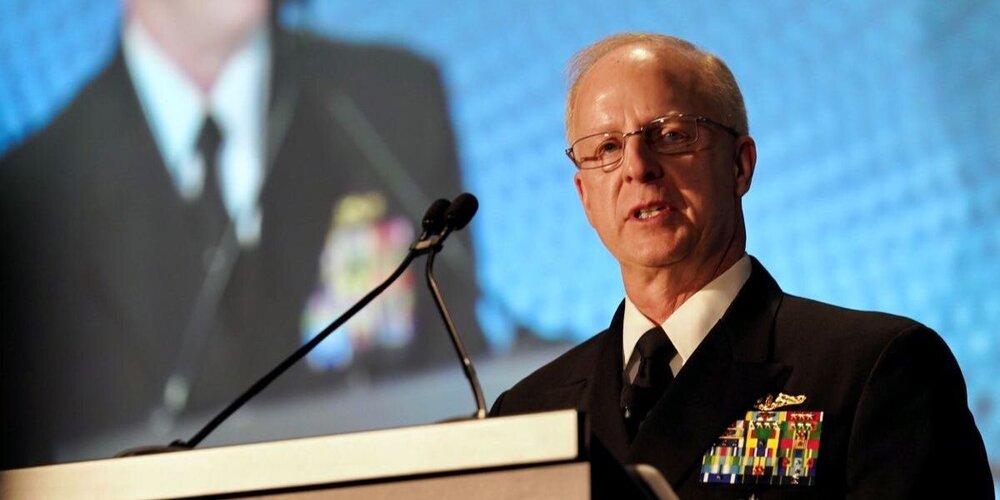
The Senate Armed Services Committee has published the advance policy questions, with answers, for the nominee for appointment to be our next Chief of Naval Operations, Admiral Daryl L. Caudle, USN. If you want to know where he stands or where the center-mass of consensus thinking on topics are, this is about as good of a source as any. Yes, there is a fair bit of boilerplate, but there are some solid answers as well. Even better, it is a serious set of questions. I did word searches for some of the socio-political garbage previous CNOs invested their personal capital in, and none of it is there. To keep things short, I do have a list of Top-5 quotes for you to consider. The first one is, for me, the most important one. It has been eight years since the horrible summer of 2017. It has been 2.11 WorldWars since the last of the collisions of that summer, and yet we are still working through the issues. The report of the post-mishap investigation into the June 17, 2017, collision between the USS Fitzgerald and a Philippine-flagged container ship found that the collision was avoidable and resulted from an accumulation of “smaller errors over time,” ultimately resulting in a lack of adherence to sound navigational practices. Similarly, the report of investigation into the collision of the USS John S. McCain and merchant vessel Alnic MC on August 21, 2017, also was avoidable and resulted primarily from crew complacency, over-confidence, and lack of procedural compliance. 37. What has the Navy done to counter the “smaller errors over time” and the “complacency, overconfidence, and lack of procedural compliance” that resulted in these otherwise “avoidable” collisions? Simply said, the Navy is embracing, assessing, and leveraging near misses using the best practices honed over decades by Naval Reactors versus only responding to corrective actions following a significant incident or mishap. Prior to these collisions, the Navy reviewed each incident as a standalone issue and established a working group to directly tackle and address the deficiencies without holistic extensions of the problems or ruthlessly executing all corrective actions to closure. As a direct result of the collisions in 2017 and the fire that destroyed USS BONHOMME RICHARD (LHD-6) in 2020, the Navy implemented sweeping changes with a targeted objective of increased safe operations through rigorous compliance with safety standards, increased focus on improving overall fleet manning and training, improving long-term sustained readiness and establishing a stronger culture of operational excellence. In October 2021, the Navy established the Learning to Action Board (L2AB), which supports the implementation of critical recommendations and measures sustainment and effectiveness of those recommendations over time. The L2AB, co-chaired by the Undersecretary of the Navy and the Vice Chief of Naval Operations, has overseen a cross organizational review and completion of 90 percent, or 349, investigation findings from nine major incident investigations in order to implement more holistic and enduring solutions. The team has matured into the establishment of the Office of Warfighting Advantage (OWA), which aims at working with Assessment Partners such as the Naval Safety Command, the INSURV Board, the Navy Inspector General, and Fleet Commanders through their Fleet Improvement Offices to identify risks and operational gaps early in order to avoid mishaps. Additionally, this office is focused on improving the Navy’s ability to self-assess, self-correct and continuously improve through enhanced organizational learning at all Echelons and can be credited with the combined reduction of 20 percent in simple fires and 93 percent in major fuel related fires Navy-wide over the last four years, as well the restructuring, streamlining, and simplification of the Navy’s shore-based infrastructure chain of command, and comprehensive overhaul of Sailor Quality of Service policies and programs. If confirmed, I am committed to leveraging the partnerships forged by the Office of Warfighting Advantage to continue to improve unit readiness and safeguard operational excellence, prioritize programmatic and materiel changes necessary to continued improvement of ship operational safety, leadership development and Quality of Life for our Sailors. Finally, I am committed to further developing our ability to leverage the massive data the Navy acquires through the various formal assessment 14 and reporting processes to better predict and forecast areas for deep dives to prevent mishaps from occurring in the first place. AI and large language models (LLMs) will be essential to this effort. 38. If confirmed, specifically what more would you do to correct for the deficiencies that were found to have caused these two collisions? The Navy has made sweeping changes to the training and continuous assessment processes across the Surface Fleet over the last decade. All Navy homeports now have established seamanship and navigation simulators where bridge and combat information watch teams are qualified by courses and instructors certified to the International Maritime Organization’s Convention on Standards of Training, Certification and Watchstanding. In addition, all officer training pipeline schools have been revamped with focused training and accountable assessments in these areas from Division Officer to Commanding Officer that must be passed before assignment. The Navy has also invested heavily in our System of Systems approach ensuring greater integration and realistic training across our ship control systems. If confirmed, I will work to ensure that those efforts are accelerated and fielded to support our Sailors and watchstanders. Finally, the Navy continues to evaluate our Force Generation and Readiness processes to ensure we can meet the dynamic needs of our Nation under any circumstances with acceptable levels of risk. If confirmed, I will continue to assess and improve our ability to generate forces to meet the readiness requirements of our peacetime presence needs and future combat missions. Finally, I will continue to accelerate and enhance the work being done by the OWA. This organization continuously looks across the enterprise, working with Assessment Partners and Fleet leadership, to identify issues early and often before they become incidents by leveraging near miss data and formal assessment data sources. The OWA supports breaking down some of the stovepipes in learning, training and assessing that led to the collisions and establishes processes to accelerate lessons learned across communities. Again, 2.21 WorldWars. This should not be a top-shelf discussion topic in 2025. That it is one, should be a note of caution to all the work we need to do in order to get OPNAV to move a bit faster than the speed of smell. The second topic is one that, as I outlined last fall, I non-concur with. The Nuclear-Armed Sea-Launched Cruise Missile (SLCM-N) program, reintroduced in the 2018 Nuclear Posture Review to counter Russian and Chinese regional nuclear threats, gained legislative momentum with the Fiscal Year 2024 National Defense Authorization Act (NDAA), which mandated its development and initial operational capability by 2034 despite initial cancellation in 2022. Recent Congressional funding reflects bipartisan support. 60(a). Do you support the SLCM-N program as a necessary enhancement to U.S. theater deterrence? Yes. I fully support the development of the SLCM-N program. SLCM-N will provide the President with enhanced flexible response options, which will support deterrence of limited nuclear use and high-consequence non-nuclear strategic attacks against U.S., allied, and partner vital interests. 60(b). Given Congressional backing and the deteriorating global security environment highlighted in 2024 testimony, what steps would you take to accelerate the SLCM-N’s timeline to meet the 2034 operational goal? If confirmed, I am committed to seeking the necessary resources to develop SLCM-N to the Congressionally mandated IOC of 2034. Further, I am committed to working with select stakeholders, such as Strategic Systems Program, to accelerate facets of the SLCM-N program as applicable. This subject is infuriatingly short of a discussion of the opportunity cost of bringing back SLCM-N into the U.S. Navy—especially a desire to put it on surface ships. Any scenario where we need to “support deterrence of limited nuclear use and high-consequence non-nuclear strategic attacks” can be ‘serviced’ by our manned bomber force or SSBN. If you missed it, see my Monday Substack for more detail. The third topic makes me want to consider day-drinking as an option. 80. What is your assessment of the root cause of the announced three-year delay to the Constellation-class frigate program? While delays in shipbuilding programs are always the sum of several challenges, I understand the main drivers associated with the three-year delay in the Constellation-class Frigate program primarily stem from the iterative design change process and, to some extent, the shipyard’s underperformance. Specifically, a systemic overstretch and capacity deficit combined with the inherent technical complexities of developing a new, advanced warship. Requirement creep has been a common narrative in recent programs. There are also challenges such as workforce shortages, excessive workload on the shipbuilder, and design maturity issues, all of which are symptoms reflecting an underlying strain on our nation's ability to concurrently design and construct multiple complex naval platforms. The Constellation-class frigate program is an example of these common themes. 81. At what point should we consider expanding frigate production to a second source? As to whether the Navy will pursue a second shipbuilder to produce Constellation-class Frigates, I will defer to the Secretariat for that issue. I am aware an assessment team recently reviewed the details of the Frigate Program. Based on this review, recent visits to Fincantieri Marine Group, and a thorough data-informed analysis of the Frigate Program metrics and milestones, the Secretary of the Navy is currently evaluating options for the way ahead. First of all, the FREMM is not a “new, advanced warship.” Hell, it isn’t even the latest in frigate design. The same people who failed the Navy and the nation with LCS, DDG-1000, and CG(X) have done everything they could to turn an 85/15 program into a 15/85. It is criminal. Simply criminal. There is a lot of blame shifting and deflection in that answer, which is unfortunate. It was caused by the U.S. Navy which has failed to reform itself. That being said, absolutely we need to be building the Frankenfrigate from two yards, not one. The fourth issue seems esoteric, but it’s not. In March 2023 testimony before the Senate Armed Services Committee, Secretary of Defense Austin stated that, with respect to losing “S-band” spectrum, “it be devastating, … it would take us somewhere north of 20 years to try to recover from -- from the loss of that -- that spectrum. Parts of that spectrum are vital to our national defense and the protection of the homeland. And -- and, you know, in order to describe exactly -- well, you know what the -- what the specific platforms are, but we would have to go to a classified session to speak in detail about this. But I would tell you that this is not something you can fix overnight once you break it. It’ll take 20 years plus to recover from that.” Discussions about the U.S. Navy potentially losing access to the S-band spectrum (2-4 GHz), critical for systems like the Aegis SPY radar, have intensified since 2023 due to commercial pressure for 5G expansion, with Pentagon leaders warning that sharing or vacating this band could disrupt military operations. 131. What Navy systems might be affected by this loss of “S-band” spectrum, in your view? Loss of access to the S-band spectrum would pose an unacceptable risk to our Navy’s ability to successfully conduct its missions and to our nation’s defense. The Navy’s core homeland defense architecture—including the Aegis SPY radar and other systems contributing to the Golden Dome—is anchored in the 3.1 to 3.45 GHz mid-band range. Vacating this spectrum jeopardizes our ballistic missile defense capability and undermines national readiness. Beyond these systems, S-band supports a wide range of mission-critical functions: precision-guided missiles, secure communications, air traffic control, weather radars, and radio frequency signature characterization. Our six Major Range and Test Facility Bases in CONUS depend on this spectrum to develop, test, and validate the next generation of naval technologies. Preserving DoD primacy in this band is essential to the Navy’s ability to effectively train, operate, modernize, and fight. Once the Navy’s access to the spectrum is compromised, the path to recovery spans decades. We cannot afford that timeline. 132. Were DOD required to “vacate” or leave the spectrum “S-Band” instead of sharing, what would be the potential operational and monetary costs to the Navy, in your view? Spectrum is a finite and non-renewable strategic asset. Forcing DoD, and specifically the Navy, to vacate the S-band would impose profound operational risk across critical missions, including homeland defense. Our premier radar systems, including Aegis SPY and the Golden Dome architecture, rely on the unique characteristics of the 3.1 to 3.45 GHz band to enable threat detection, tracking, and missile defense. Loss of access would degrade radar performance, impair target discrimination, and compromise command-and-control across the Joint Force. Development and fielding of substitute capabilities would take decades and cost hundreds of billions without guaranteeing equivalent performance. Preserving this spectrum is not simply a technical requirement—it is a strategic imperative. 133. How long would it take for the Navy to move its systems to a different area of the spectrum, in your view? The Navy’s use of the S-band is based on optimal propagation characteristics, detection fidelity, and the practical constraints of shipboard integration. There is currently no viable alternative band that offers comparable performance. Hypothesizing, if technically possible, relocating systems to other areas of the spectrum would take decades, if at all, requiring wholesale system redesigns, hardware replacement, and significant ship alterations. Such a shift would impose significant operational and financial costs. Spectrum cannot be seen, felt (unless properly powered, natch), smelled, or touched…but it is as critical as iron, coke, chromium, and steel. It is hard to explain to even technically-minded people. I’m not sure who has the charter to address Caudle’s concerns, but give them all the support they need. Finally we have one of my hobby horses. The NDAA for FY 2017 modified the Joint Qualified Officer (JQO) system established by the Goldwater-Nichols Act in two significant ways. First, it broadened the statutory definition of “joint matters” to expand the types of positions for which an officer can receive joint duty credit. Further, it reduced from three years to two the minimum tour length required for joint duty credit. 176. What is your assessment of the effectiveness of the FY 2017 modifications to the JQO system? Overall, I assess this was a positive change. The Goldwater-Nichols Act modifications of 2017 have allowed the Navy to balance career timing and an officer’s primary warfare specialty when assessing JQOs proportional time in a joint tour to the overall career prior to Flag selection. The overall types of positions which were expanded are not all encompassing as the variance of experience vastly depends on the type of joint duty the specific service member lands in following Flag selection. 177. In your view, are the requirements associated with becoming a JQO, and the link between attaining joint qualification and eligibility for promotion to flag officer rank, consistent with the operational and professional demands of Navy line officers? Yes, professional demands are routinely balanced by detailers and the service members themselves as joint training and the associated requirements to become a JQO are spread over an officer’s career through touch points where professional demands, the needs of the Navy, and the development goals of the officer allow. 178. In your view, what additional modifications, if any, to JQO prerequisites are necessary to ensure that Navy officers are able to attain both meaningful joint and Navy-specific leadership experience and adequate professional development? I believe JQO prerequisites are currently aligned appropriately and managed to allow specific experience. If confirmed, I will work with the Secretary of the Navy to weigh any need for changes and make recommendations. The entire Joint process extruded from the archaic Cold War dead hand of Goldwater-Nichols serves nothing but itself. It warps the system. It is inefficient, and is here because its here because its here because its here. There is no objective measure to show that it is a net positive on our Navy or military as a whole. Joint delenda est. So, there we go. Since Richardson isn’t around, I don’t see why Caudle won’t be confirmed…so give the full statement a read. It’s and 80/20 read for me…and that is enough to press 100. h/t C.Leave a comment Share This Substack is reader-supported. To receive new posts and support my work, consider becoming a free or paid subscriber. View the full article
-
South Korea is moving closer to deploying a next-generation unmanned aerial system designed to fly alongside its KF-21 Boramae fighter jet, aiming to expand the Republic of Korea Air Force’s (ROKAF) air combat capabilities through human-machine teaming. A recent demonstration video released by Korea Aerospace Industries (KAI) showcased a conceptual air combat mission involving the […] The post South Korea develops AI-controlled drone to fly with KF-21 fighter first appeared on Defence Blog.View the full article
-
A South Korean Air Force C-130 transport aircraft prompted a response from Japanese fighter jets earlier this month after it entered Japanese airspace without prior authorization, according to South Korean defense officials. The incident occurred on July 13 as the aircraft was en route to Guam for training. Military officials said the crew encountered severe […] The post South Korean C-130 plane triggers Japanese jets scramble first appeared on Defence Blog.View the full article
-
France’s next-generation military helicopter, the H160M Guepard, has completed a flight milestone at Airbus Helicopters’ Marignane facility, according to an announcement from the Direction générale de l’armement (DGA) on July 24. Developed as part of the Light Joint Helicopter (HIL) program, the Guépard is intended to provide a modular, multi-role rotorcraft platform across all three […] The post France’s next-gen military helicopter makes its first flight first appeared on Defence Blog.View the full article
-
The Royal Malaysian Air Force (RMAF) will dispatch a team to Kuwait in September to evaluate 38 retired F/A-18 Legacy Hornet fighter jets as part of a possible acquisition program, according to Malaysian defense officials. General Datuk Seri Muhamad Norazlan Aris, the newly appointed Chief of the Royal Malaysian Air Force, confirmed that the U.S. […] The post Malaysia to inspect Kuwait’s retired F/A-18 Hornets first appeared on Defence Blog.View the full article
-
Denmark has purchased MBDA France’s VL MICA air defense system, according to a statement released by the Danish Defence Acquisition and Logistics Organization (FMI). The contract, signed as part of the Danish military’s accelerated investment strategy, will deliver two “fire units” of the VL MICA surface-to-air missile system. The acquisition is part of an early-phase […] The post Denmark buys VL MICA air defense system first appeared on Defence Blog.View the full article
-
Thailand has reportedly used its Ukrainian-made T-84 Oplot main battle tanks in combat for the first time. Local media and defense observers in Thailand say the Royal Thai Army employed the tanks during an assault on Cambodian military positions in the area near the Thai-Cambodian border. Sompong Nondhasa, a prominent Thai defense commentator, posted online: […] The post Reports: Thai Oplot tanks deployed to Cambodian border first appeared on Defence Blog.View the full article
-
Russian forces have used a newly developed guided aerial bomb for the first time in a strike against Ukraine, according to Ukrainian officials. The attack, carried out by a Su-34 bomber, hit civilian targets in the city of Kharkiv with two UMPB-5 precision-guided munitions fired from approximately 100 kilometers away. The strike, launched from near […] The post Russia tests new bomb in strike on Ukrainian city first appeared on Defence Blog.View the full article
-
Russia has sharply increased its production of Garpiya-A1 attack drones despite Western sanctions, according to documents reviewed by Reuters and cited by European security officials. The documents show that Izhevsk Electromechanical Plant Kupol (IEMZ Kupol), a sanctioned Russian defense manufacturer, boosted its annual output of the Garpiya-A1—Moscow’s domestically produced version of the Shahed-class drone—from 2,000 […] The post Russia ramps up kamikaze drone production with Chinese help first appeared on Defence Blog.View the full article
-
The Royal Thai Air Force carried out air strikes against two Cambodian military targets on Thursday, after a surprise assault earlier in the day. According to Royal Thai Army deputy spokesperson Col. Ritcha Suksuwanon, six F-16 fighter jets were launched from Ubon Ratchathani province and struck ground targets inside Cambodia. “We have used air power […] The post Thai F-16 jets hit Cambodian targets after border attack first appeared on Defence Blog.View the full article
-
Türkiye’s defense electronics leader ASELSAN has introduced its new ground-based precision strike system, GÖKTAN, during the IDEF 2025 defense exhibition. The system is part of a broader suite of next-generation warfare technologies showcased by the company, aimed at meeting the changing needs of modern armed forces operating across multiple domains. According to ASELSAN, GÖKTAN is […] The post ASELSAN unveils GOKTAN strike system at IDEF 2025 first appeared on Defence Blog.View the full article
-
The French military announced a joint air surveillance operation over the Black Sea on July 24, conducted in close coordination with British and Belgian forces. The operation aimed to enhance regional stability and safeguard the security of Europe’s southeastern flank amid ongoing concerns about access to international airspace and maritime freedom. The surveillance mission, conducted […] The post France, UK, Belgium jets patrol Black Sea first appeared on Defence Blog.View the full article
-
Show LinksReforming the promotion system in DOD Australian Missile Canister Loading Equipment (MCLE) USNS Oscar V. Peterson (T‑AO 206) SummaryIn this episode of the Commander Salamander UNCLAS Read Board Podcast, the host discusses various topics related to national security, military developments, and the challenges faced by the Navy. Key themes include t… Read more View the full article
-
No, neither that pic above nor the one below is the F/A-XX, but it’s the closest we’ve got. However, let’s review the decades-long Salamander Requirements List we have set out for the next Navy tactical aircraft. All hail the return of the heavy fighter to the airwing: Range: It has to fight in the Pacific and engage other enemies from a distance. Payload: It must be able to carry at least a half-dozen AIM-174B Gunslinger, with a minimum of four of them internally. As the drone wars over Israel have proven its utility again, it must have an internal gun. Flexibility: Must perform air-to-air and air-to-ground missions like the Super Hornet it will replace.. Two Engines: We promised ourselves that the A-7 would be the last carrier aircraft with one engine. Then we accepted the F-35C compromise. Never again. Two Crewmembers: Time and again, the utility of heavy fighters with a dedicated pilot and weapon systems officer in combat has been proven. Tell the accountants, 1310-Mafia, and the perma-shore-duty cadre to pack sand. The dual-crewed heavy fighter can bring a carrier airwing nothing else can. The F-35 will be the “light fighter” niche for the airwing. Whatever we get, the “Bravo” model must be designated the EF-XXB. The Growler should fade away quicker than the Super Hornet. Its range is just way too limiting. The USAF has stolen a march on the Navy, and yes the picture at the top is in USAF livery. OK fine, here is another image of vaporware that scratches the same itch but Navy. …but take it for what it is. I’ve set the table, and let’s dive in to the topic. How did I miss this back in May? Via Audrey Decker at DefenseOne, In keeping with his penchant for shocking the defense industry, President Donald Trump today seemingly revealed plans to develop a twin-engine version of the F-35 Joint Strike Fighter known as the F-55, as well as an upgraded “F-22 Super.” But former Air Force Secretary Frank Kendall said he was “mystified by Trump’s comments,” and analysts said that what the president described would be a highly challenging engineering endeavor on par with creating a clean-sheet aircraft. They also questioned the wisdom of spending scarce budget dollars on a twin-engine advanced F-35 when the newly announced F-47 is already planned to fill that niche. “A two engine version of F-35 would be virtually a complete redesign,” Kendall told Breaking Defense. “It’s an option that was never presented and that we never considered, to my knowledge.” I’m going to have to explain this to everyone, aren’t I? There is a lot to sort through. “We’re doing an upgrade, a simple upgrade, but we’re also doing an F-55. I’m going to call it an F-55, and that’s going to be a substantial upgrade, but it’s going to be also with two engines, because an F-35 has a single engine. I don’t like single engines,” the president said during a press conference in Doha, the second stop on the first international trip of his second presidential term. “Even this man [GE Aerospace CEO Larry Culp], he’s the best in the world at engines, but on occasion, I know you won’t admit this, if an engine goes out it’s nice to have two, three or four. That’s why I like the 747, it’s got four. Today they’re getting very big and, a little more cost saving to have two very, very big ones. No matter how good, you know, they tell me, Larry, the engine will never go out. Well, I think it goes out on occasion, fairly rarely. “We’re going to do an F-55 and I think, if we get the right price, we have to get the right price, and that will be two engines, and a super upgrade on the F-35 and then we’re going to do the F-22. I think the most beautiful fighter jet in the world is the F-22, but we’re going to do an F-22 Super, and it will be a very modern version of the F-22 fighter jet.” … Trump appeared to indicate that the “F-55” would be a two-engine version of the F-35, but such a modification would require a comprehensive redesign of the airframe, essentially resulting in a new airplane. Trump’s comments come weeks after Lockheed Martin CEO Jim Taiclet said the company is working on an upgrade to “supercharge” the F-35 and deliver 80% of sixth-generation capability at half the price. But Lockheed is talking about better avionics and sensors, not a redesign to double the number of engines. How Trump’s proposed “F-55” coincides with Lockheed’s plans, if at all, remains to be seen. It is also possible that Trump was thinking about the two-engine F-47, a sixth-generation fighter jet that Boeing won the contract to build in March. Yet another possibility is that Trump was talking about the Navy’s F/A-XX, a different next-gen fighter jet intended to replace the F/A-18 Super Hornet. Boeing and Northrop Grumman are competing to design and build the F/A-XX, which is expected to have two engines. But the program is in limbo: some Pentagon officials want to delay the contract award up to three years to use the money elsewhere, Reuters reported on Wednesday. I guess I’m going to have to be the Trump Explainer. A lot of people Mike Stone at Reuters may be taking things a bit too literally. The timing of the F-55 announcement raises questions about how it fits into existing defense procurement plans and budgets. The Pentagon is already managing multiple high-cost aviation programs, including the ongoing F-35 program, the new F-47 development, and potentially the Navy's next generation carrier-based fighter jet - F/A-XX. For Lockheed Martin, the F-55 concept represents a critical opportunity to maintain relevance in the high-end fighter market after significant setbacks in next-generation competitions. Boeing's NGAD, which was just awarded and therefore is not in mass production yet, is expected to eclipse the F-22's capabilities, and so would F-55, the person said, making it a formidable fighter jet. Ditto the folks Valerie Insinna and Michael Marrow’s at Breaking Defense talked to. In keeping with his penchant for shocking the defense industry, President Donald Trump today seemingly revealed plans to develop a twin-engine version of the F-35 Joint Strike Fighter known as the F-55, as well as an upgraded “F-22 Super.” But former Air Force Secretary Frank Kendall said he was “mystified by Trump’s comments,” and analysts said that what the president described would be a highly challenging engineering endeavor on par with creating a clean-sheet aircraft. They also questioned the wisdom of spending scarce budget dollars on a twin-engine advanced F-35 when the newly announced F-47 is already planned to fill that niche. “A two engine version of F-35 would be virtually a complete redesign,” Kendall told Breaking Defense. “It’s an option that was never presented and that we never considered, to my knowledge.” Sigh. While I reserve the right to be wrong—let me tap into nine years of senior military staff weeniedom and a decade and a half working with pure-civilian entrepreneurs to help everyone get a handle on what is going on. If I can put my eye-twitching pedantry to one side about our refusal to keep proper numbering conventions for our aircraft to the side—what the Navy now calls “F/A-XX” is going to be called the F-55. Even though the USAF has rolled out their new fighter first, the next U.S. Navy fighter aircraft will debut during the Trump administration—likely sooner than later. He’s said the next fighter will be F-55. As no other fighters are under development right now, so shall it be. Oh, no F/A-55 either. Just F-35 and save millions of keystrokes and tons of ink. The F-35 talk is just what we discussed earlier this year; Lockheed’s desire to fold in technology from their failed bid for the NGAD/F-47 into an upgraded F-35. If that is done and produced, it will just—if we are logical about it—be a F-35D. The F-22 talk is either simply confusion or the byproduct of a brief about incorporating some aspects that we see, or wanted to see, in the F-22. President Trump has been briefed on the F-47 in details few have the clearance to see, possibly Lockheed’s options for what I called the F-35D above, and I would assume what we now call F/A-XX that—giggle—will almost certainly be called the F-55. His briefing likely discussed integrating technology from the F-22, F-35, and NGAD/F-47 competition into the Navy’s new fighter. He’s busy guy with what I think is the most active first six-months of any Presidency in my lifetime…so just assume he’s conflating a few things…but what should we boil down? We are close to seeing the selection of the Navy’s new fighter. It will have two engines. It will be called the F-55. That is your responsible takeaway. That is all we know. Hopefully, the end product will align with the Salamander Requirements List outlined at the top of the post. Some of the people quoted above give me the impression they are seeing roughly the same thing I am. Others who made comments like Kendall etc above? They either are vested in refusing to try to think about what Trump meant v. what he said, are excessively rigid in thinking, or they don’t function well in chaos. It is actually funny to read in places. Leave a comment Share This Substack is reader-supported. To receive new posts and support my work, consider becoming a free or paid subscriber. View the full article

-
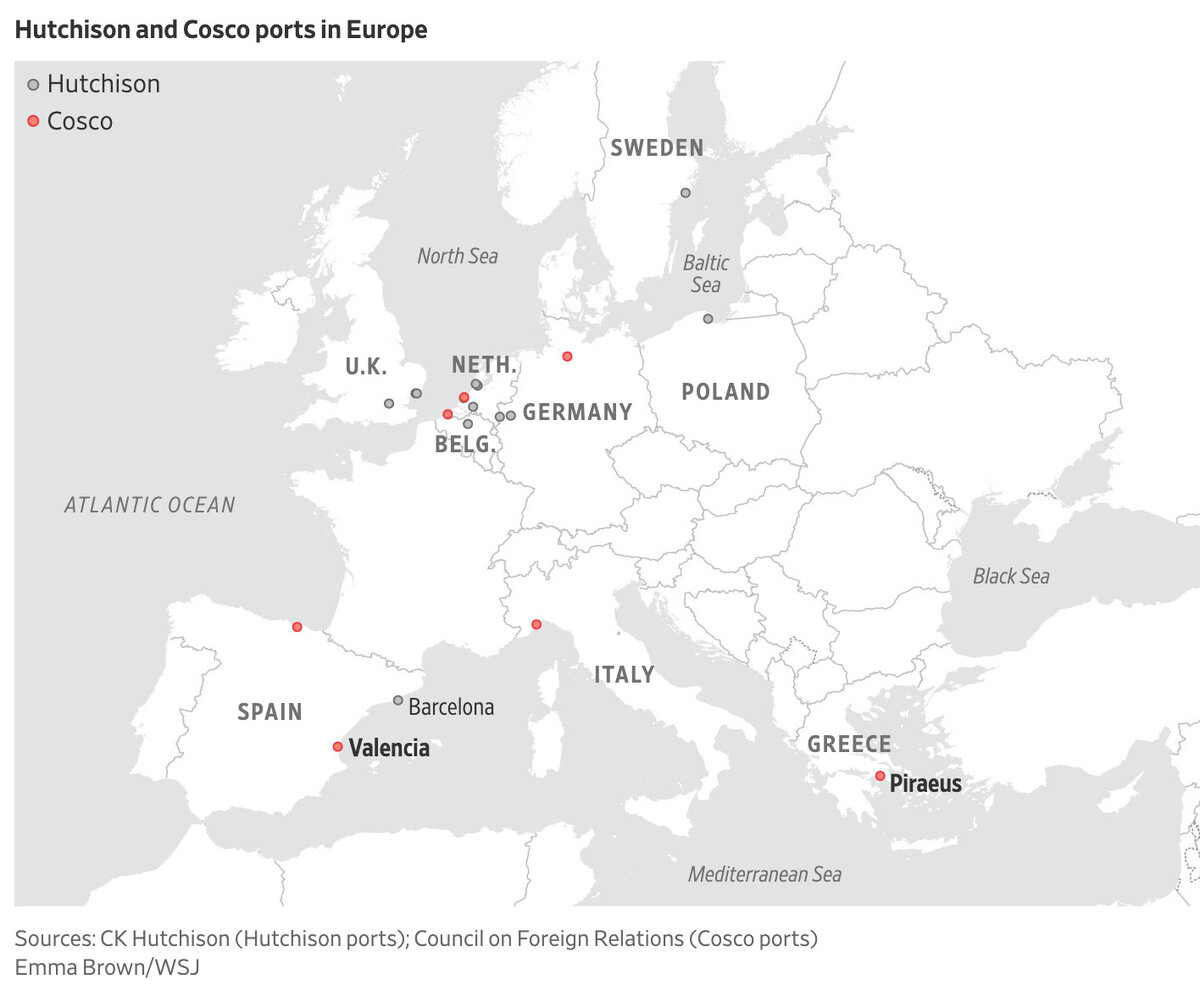
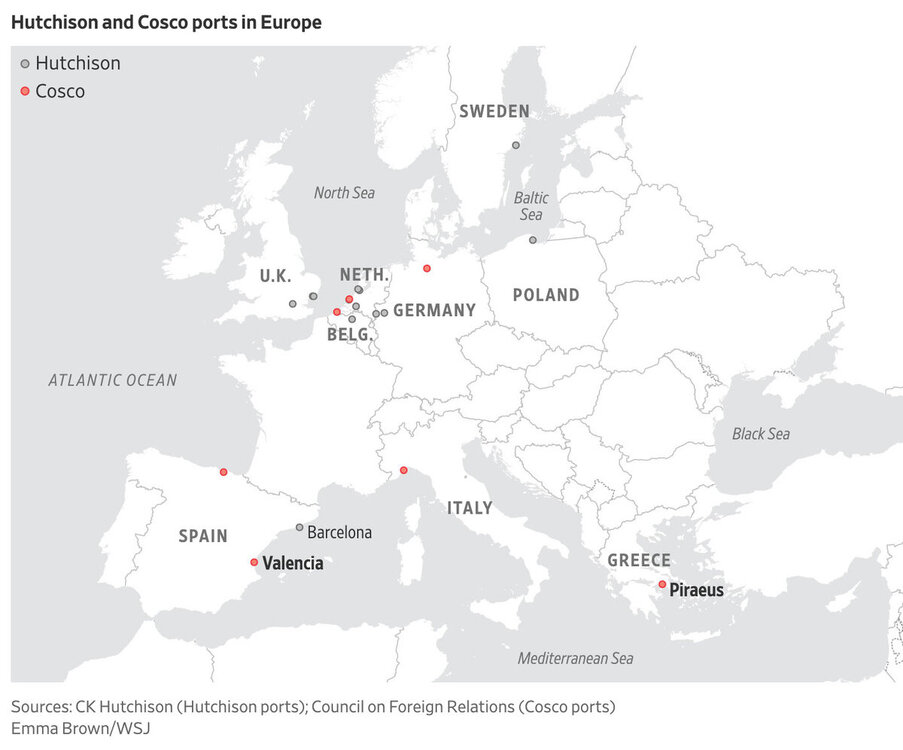
Neither rust nor the People’s Republic of China (PRC) sleep. They are determined, persistent, and keep the long-term view—especially when it comes to their neo-mercantilist drive to dominate global trade and the ports. Remember when early on in the Trump Administration it seemed that BlackRock was going to buy back some of the critical port infrastructure that the PRC grabbed hold of while the world was distracted and pockets got itchy? Well, don’t think all is taken care of. Via James T. Areddy, Daniel Kiss & Ming Li in last Saturday’s WSJ: When a Hong Kong conglomerate set plans this year to sell its global network of shipping ports to an American-led investment group, two facilities in Panama got most of the attention. But the real action is in Europe, where Chinese business interests have spent decades accumulating port holdings. Hong Kong-based CK Hutchison agreed in March to sell more than 40 ports in 23 nations to an investor group led by American financial firm BlackRock, and the parties had aimed to reach a definitive agreement on the $23 billion deal at month-end. Now, Beijing is trying to muscle into the deal and carve out a stake for its giant shipping group Cosco, The Wall Street Journal reported Thursday. … The most substantial impact on China’s ambitions from the port deal might be in Europe, a continent crucial to Beijing’s trade and diplomatic ambitions. Nearly half of the facilities on the block are in Europe or North Africa. Trump’s trade tariffs, meanwhile, have Europe bracing for a deluge of Chinese goods that have been rerouted away from the U.S. Shipping volumes of items including electric vehicles are already up in places such as Spain. There are always second-order effects. Whether the deal goes through as planned or with Cosco’s participation, China’s port foothold in Europe would be concentrated under government-run companies similar to Cosco, which U.S. authorities consider a military-aligned enterprise. Exiting the region would be Hutchison, a private company controlled by the family of the 96-year-old Hong Kong billionaire capitalist Li Ka-shing, who hasn’t always seen eye-to-eye with Beijing. Do you feel like the PRC is playing everyone? Also, where are the European leaders? Every one of those ports is in a NATO nation. Does anyone have full confidence that should a general war break out in the Pacific with the PRC that those ports in NATO nations will just continue to function as normal? If you do, can I invite you to poker night? China’s port expansion strategy in Europe has primarily featured opportunistic acquisitions—a possible reason the Hutchison sale looks inviting to Cosco. “The European ports are the best in terms of asset and infrastructure, of international importance for trade,” said Liu of the Council on Foreign Relations, making them appealing investments. Government-run China Merchants took one of the boldest steps in 2013, buying 49% of a port business called Terminal Link from CMA CGM for 400 million euros. The deal gave China Merchants a minority share in a range of facilities, especially in Europe, and slivers in Miami and Houston. … Cosco itself first entered Europe as a ports investor in 2004 with a minority stake in a container facility in Antwerp, Belgium. Cosco then made inroads starting in 2008 buying a concession to run facilities south of the Greek capital Athens at Piraeus, which it transformed into a world-class port. Pertinent to today’s situation, Valencia in the 1980s was quick to adopt containerized shipping, which has been crucial to spurring world trade—and helped make China the world’s top exporter for 16 years. Beijing gained control of the Port of Valencia in a European financial crisis. Wall Street’s 2008-09 financial crisis had sparked major debt problems for corporate Europe, including for Spanish construction giant ACS Group. Insert cliché about selling the rope to hang you with. Who benefits…and who is willing to stand up for their nation with the same enthusiasm the PRC is showing to take from it? You have to respect the PRC’s consistency and success. h/t Gordon Leave a comment Share This Substack is reader-supported. To receive new posts and support my work, consider becoming a free or paid subscriber. View the full article
-
“The difference, of course, between the debate over the nature of thermonuclear war and previous such debates is that it remains hypothetical. And unless we want to bet everything on the optimist, that is what it will always be. For if we lost this bet, and the pessimist turned out to be right, a thermonuclear war will have destroyed the human race, and along with it things like discourse and memory. The debate would remain forever unresolved, because those pessimists proven right, along with those optimists proven wrong, would all be dead.” —Campbell Craig, Destroying the Village The Israeli-American attack on the Iranian has for now at least, brought the topic of the theory and practice of nuclear deterrence and its crazy sister nuclear war to the front of the discussion space. Two of my must-listen podcasts, Geopolitics Decanted and Net Assessment, have both discussed it this July. After a still ongoing exchange with Bob Peters that started on the Sabbath, I decided I should pick up the topic here for the Front Porch to bat about. For full disclosure, I’ve never been very satisfied with the sermons from the high priests of nuclear theory. My feelings that something was a bit “off” about how we think about nuclear weapons date back to when I was a Midshipman and the Soviet Union had SSBN patrolling their “Yankee Boxes” in the mid-Atlantic, giving the East Coast of the USA about 10-15-min max to try to find the nearest bomb shelter or confessional. A TIME FOR HERESY With something as existentially important as nuclear weapons, it is only natural that there would be an entire industry of specialists, theorists, and practitioners on the topic. However, there is an uncomfortable arrogance around their untested confidence in their archaic and ravenously expensive concept about the use and utility of nuclear weapons. The high priests in the Nuclear Specialist Guild will brag about “80 years of wargaming and theory” by The Smartest People in the Room™ as if that proves the validity of this, that, or the other idea or scenario to the point that they believe they believe they are entitled to dismiss arguments to the contrary. Bollocks. I’m sorry, no. Nuclear deterrence and war theory are frozen in Aspic from a time that the K Car was going to save Chrysler, and are ripe for a baseline review.. The existential importance of getting as close to “right” as possible demands it. No. No one has "proof" that their pet theory is correct or not—including mine. It is all about opportunity cost, the robustness of your planning assumptions, and where you are willing to accept risk. No one has dropped a nuclear weapon at war in 80 years. As such, this is all theory. My theory of the case is that there is no such thing as “limited nuclear war” between large nuclear powers, or “tactical nuclear weapons.” If I am wrong, then we only have a "limited" nuclear exchange followed by a walk-back and negotiation. If the Neo-McNamarians are wrong in their belief that you can micro-manage your way through a limited nuclear exchange with a major nuclear power, then congrats...you've tripped yourself into a full nuclear exchange that will result in Argentina, New Zealand, and Australia being the major powers on our small planet. Are there certain vignettes that might, might, allow a major nuclear power to have a limited exchange of low yield weapons with small to medium nuclear powers? Sure, I can play that out—though regardless of salesmanship at the Decision Brief, I’m not sure that another U.S. President wants to be known as, “The second U.S. President who conducted a nuclear first strike.” That marker down, you can go ahead and add that to your list of Planning Assumptions: Due mainly to the uncertainty with imperfect intelligence and lack of historical reference points, regardless of public statements to the contrary, no U.S. President will authorize first use of nuclear weapons. In the narrowest of circumstances where something like this needs to be done, it could be handled by nuclear forces designed for peer deterrence either with our existing posture, or the one I offer at the end of the post. Especially at sea, expending time, money, and effort to deploy and maintain a high-overhead, low-probability-of-use weapon system across deployable units is myopic fiscal and strategic foolishness. As a junior officer I saw that up close and personal. No, thank you. THE INERRANCY OF ERRORIt would be helpful if those in the nuclear planning industry recognized how horribly we’ve predicted conventional wars since WWII. We got Korea, Vietnam, Iraq, Afghanistan and even Somalia wrong. With something like nuclear war, are we really confident that the strange people behind the SCIF door will do better? Pulling the "my strategic analysis is unassailable" card by many of the same people who were so wrong on the conventional side is almost as weak as saying, "We have war gamed..." as if that proves anything. That is not what war games are for. We all know that if you tell me what outcome you want, we can design/execute a war game to give you that result. War games are best seen as testing mechanism, not proving mechanisms. KNOW YOUR LEXICONLet’s hit the wave tops of the theory of nuclear war. I find it useful to look at the larger picture as opposed to arguing esoteric and isolated vignettes. Along those lines, there are two major schools of how to conduct nuclear war, counterforce and countervalue. Let’s define our terms, if we can. Not sharing the same definition is where many problems start. It appears that we have been arguing theory and dogma so long without a war to validate any of them, that we have developed a whole constellation of different schools of thought, each with slightly different definitions of the same word. For those looking for a clean and precise definition of terms and concepts, in 2025 you are unlikely to find them. If something so foundational cannot be agreed on, that should give everyone pause in assuming with certitude anything built on top of it. You would think that with this lack of agreement even on terms, responsible players would move towards more flexibility and caution in their assumptions instead of doubling down on their exquisitely assured policy recommendations. You’d think. To explain what I mean by the unstable foundation, what better source would there be than the barely two months old, Counterforce in Contemporary U.S. Nuclear Strategy, edited by Brad Roberts from the Center for Global Security Research at the Lawrence Livermore National Laboratory? Definitions matter. The new strategic challenge of deterring two peer competitors has revived debates about the benefits and shortcomings of a “counterforce” targeting strategy. That debate reveals the fact that different people have different definitions of the term itself. Thus, their arguments and counterarguments tend not to connect. One result is a general confusion. Another is uncertainty: does “counterforce” actually refer to targets of value to political leaders, nuclear forces including command and control, or military and war-supporting industry? This definitional confusion is particularly important as the United States develops a strategy for deterring two peer competitors, and considerations of counterforce targeting will have implications for deterrence and arms control policies. … In a 2009 essay, for example, Thomas Schelling acknowledged, “We never had an agreed understanding of ‘flexible response’ or ‘nocities’ and its relation to counterforce targeting.” As Acton notes, a counterforce targeting would not necessarily avoid cities. In an attempt to reconcile this false binary, Keir Lieber and Daryl Press advocate for a hybrid of counterforce and countervalue leaving the United States with its current counterforce capabilities to provide credible retaliatory options across a wide range of circumstances (e.g., an adversary’s limited nuclear attack), all the while avoiding the need to build additional counterforce capabilities each time China or Russia enhances its nuclear arsenal. There is an active interplay between the two theories ongoing for decades, but in recent times there are more discussions about how newer capabilities are changing things. One paper in the last half-decade I have significant issues with—mostly because of the antiseptic view it takes of responses to and actions from theory—but I find useful, is Benjamin C. Jamison, Major, USAF’s, The Counterforce Continuum and Tailored Targeting: A New Look at United States Nuclear Targeting Methods and Modern Deterrence: “…if a state is the first to employ nuclear weapons, a counterforce targeting strategy designed as a disarming first strike is the most advantageous approach. In contrast, if the state is responding to a nuclear attack, it ought to use a countervalue targeting strategy as a retaliatory response. While these two approaches have evolved since the Cold War, they remain the foundation of nuclear targeting. With technological advances in the form of precision delivery and low- yield nuclear weapons, and the distinctly different geopolitical climate of 2021 compared to the height of the Cold War, it is time to reevaluate these targeting strategies." It is easy to fall down this rabbit hole and never come back, so let’s pull back a bit from the highly-arguable details and look at the big pixels. As no one will give a short and clear definition of the two largest pillars in the discussion, counterforce and countervalue, I’ll offer my own one sentence shorthand: Counterforce: targeting your enemy’s military capability with the goal of minimizing their ability to continue significant nuclear exchange. Traditional state-on-state warfare, with nuclear characteristics. Countervalue: targeting your enemy’s population centers with the goal of eliminating their population. In essence, a war of annihilation, AKA Tamerlane’s way of war against cities. Do we really know what the doctrine is of any opponent? No. Do we really know what our doctrine will be for each scenario? No. Assume that we have a whole series of war options that span the spectrum—as do our opponents—but you only get one general nuclear war to fight, so what can you expect? Blue and Red have two general options: counterforce and countervalue. Given limited resources and only one chance to play this game, what do you choose? LAST DANCE WITH THE GENIEThe first play only has four options. You really only have two options, because if anyone goes countervalue, the other party will as well. Why? Simple. If the first strike party targets the population (countervalue) at the expense of military targets, then the other party will have a remnant military power that will see the population it is sworn to defend deliberately targeted for genocidal extermination, which is what countervalue is. That party, if they attacked counterforce while their enemy attacked countervalue will have kept additional nuclear weapons in reserve that survived. Thousands of years of human history will tell you what the response will be. Even a mildly successful focused counterforce attack in response to attack will degrade the enemy’s military to the point their remaining population centers will be open for attack. The second strike from the remaining military forces on the receiving end of a countervalue attack will spare no mercy. No quarter should be expected, nor deserved. A dual countervalue attack on the first play will result to both nations’ remaining military forces focused on a mission of mutual genocidal extermination to the last available nuke. You don’t even have to go to ancient examples of this brainstem part of the human condition, just look at the behavior of “modern” Western nations in the mid-19th century Paraguayan War. I am sure that some of you will have an issue with my suggestion that if both parties have a counterforce strategy that someone could “win.” Well, depends on how you define “win,” but yes. If you can keep what is left of your nation intact, even if it is but a shadow of what it was, then you could call it such—but it is a win no one would want. There is also a chance that the nation who does the hard work at peace to make sure their weapons work as needed might have a more effective strike could come out on tope because the other the nation’s military lied and faked performance of its strategic systems at peace and was plagued by failures and inaccuracies. The United States could lose 70% of its population and still have a bit over 100 million souls. That is a nation. A starving and sick nation, but a nation nonetheless. That’s little solace, as you’d have hundreds of millions dead, your economy destroyed, and your land polluted for centuries. This leads to a point not discussed enough: all four possible outcomes have severe global consequences. Regardless of the combination of NATO-RUSSIA-CHINA-USA in a peer nuclear exchange along the lines above, independent of the devastation in the nations involved in the exchange, it is the rest of the world where most of the dying will take place. Russia, China, and North America are the world’s breadbaskets. Without the free flow of agricultural goods, both raw foodstuffs and fertilizer, the human population cannot feed itself. Even if agriculture was not disrupted, the radiation will make the food that is harvested, unmarketable for years to centuries. A few nations in the Southern Hemisphere might be able to produce contamination free food to satisfy their local needs, but nothing for export. We will see in the years that follow any general nuclear exchange in the northern hemisphere, global starvation to a degree never seen. Most of Africa, the Middle East, and especially South Asia will be nightmares few can imagine. Will it be the end of mankind? No. As a species, we have survived worse, but human civilization will enter a new era no one today can quite define. What I am willing to say, like I did earlier, is that modern civilization will be led by Australia, New Zealand, Argentina. Maybe Chile too. Brazil will try, but she can never get out of her way. The best way to prevent a general nuclear exchange is to deter it from taking place. However, if history delivers it at your feet even if you try to avoid it, shouldn’t you at least try to have a chance, however small, of coming out of it in one piece? In light of the above, what should we be investing in? 21st CENTURY NUCLEAR FORCERight now we have the ICBM, SSBN, and manned bomber as our strategic deterrence, AKA The Triad. The Triad is an inertia-based holdover of the Eisenhower Era that ended almost a decade before I was born, and the contest with the Soviet Union that ended when I was a LTjg. It is 2025, not 1975. We don’t wear the same clothes, nor should we approach nuclear theory the same way either. There are better alternatives, and I’ll outline one below. As we find in many areas, due to delays and general poor stewardship of our nuclear forces for the last decade—always pushing decisions to the right—recapitalization of our nuclear deterrence force is in crisis. Our present Triad? Let’s be blunt about what our inheritance is in 2025. ICBM: The Minuteman III Intercontinental Ballistic Missiles are as geriatric in theory as their support systems are in practice. Its replacement, the Sentinel, is not shockingly late and overbudget. SSBN: Heck, I’ve been warning of this problem since 2010, but our youngest Ohio Class SSBN is 28 years old. The oldest four were converted to SSGN, leaving 14 SSBN. Its replacement, the dozen Columbia Class SSBN, besides having 4 fewer missiles as it was designed during a different strategic situation, is expected to be ready in 2031. Bombers: On a good day, we might have a dozen fully mission capable B-2 bombers. Probably less. The B-1 bombers are conventional only and the B-52 cannot survive anywhere near contested air—relegated to stand off nuclear weapons and/or suicide missions. Of course, as also have nuclear gravity bombs that TACAIR fighters like the F-35 can carry. In 2025, they are the nuclear equivalent to the bayonet. If you have to use it, you are in trouble. You don’t lead an attack with it, and by the time it becomes an option, you are surrounded with death and gore. It is comfortable to have in your kit, “just in case” - but it won’t decide wars. The greatest use that gravity bombs serve is the nuclear equivalent of a security blanket for our allies. NATO gravity bombs are a signaling device that convince the Germans, Poles or anyone else that, really, they don’t need to build their own nukes. Should the ballon go up, they won’t be of much use, especially in Europe. If they survive a first strike, and if they ever receive the authorization to strike themselves, by the time they reach their targets—if they reach their targets—much of the exchange will be over and their one way trip—as there will be no refueling aircraft available on the trip home—will be mostly in vain. So, that is what we have. What should we invest in the future? ICBM: Let’s be clear, ICBM in 2025 is a first strike weapon. We have them because we have them because we have them, all 400 single-warhead of them. Are they really a deterrence worth the cost and investment? No. Are they of any use besides an age-ending first-use nuclear exchange? No. Can their age-ending effects and deterrence be done by other more survivable yet equally effective platforms? Yes. The ICBM leg of The Triad served our nation well, but is no longer the best tool to achieve the deterrence we desire. We can sundown our nuclear ICBM with no impact on strategic defense. As a pleasant side effect—we could move on to the more useful and needed conventionally armed ballistic missile arena without other powers wondering if we launch one if it has a nuclear warhead. SSBN: The Ohio can, in theory, carry 20 SLBM (though built to carry 24), the Columbia 16. They can have a MIRV’d warhead. Once underway, they are the most survivable part of the present Triad, and they are just as accurate as ICBM. We can, and should, build more to cover the targeting gap left by the ICBM force. Create a Flight II Columbia Class with that can carry 20 missiles if that is what is needed. We can get that additional funding from the decommissioning of the obsolete ICBM force. Bombers: These are the most useful of the deterrence force as they are dual use. With the B-21 ready for serial production, we should build a lot more of them than we plan too. As we learned (again) earlier this month, they don’t have to wait for the end of the world to be used. They are a solid investment due to their flexibility more than anything else. Let’s make sure the nuclear armed AGM-181A Long-Range Standoff cruise missile is a success as well. Others: Gravity Bombs: As outlined above, like the bayonet, they have a use or two, but should not be relied on as a primary tool SLCM-N: I’ve made my feelings about SLCM-N known last October. I won’t repeat them here. Executive Summary: not just no, he11 no. In crisis is opportunity. We can maintain nuclear deterrence while at the same time streamlining, simplifying, and maybe even freeing up funds for the most likely fight—a conventional one primarily in the sea and air west of the International Date Line. If we do this right, we can help keep the nuclear genie in its bottle. If we let the intellectual blob continue as if nothing has changed for decades, we not only will increase costs, we will decrease deterrence…and with that, increase the odds of a war no one wants. Leave a comment Share This Substack is reader-supported. To receive new posts and support my work, consider becoming a free or paid subscriber. View the full article

-
On today’s Midrats, we have returning guest Craig Whiteside and his co-author Ian C. Rice joining us to discuss one of the nightmares we all have in the new book coming out this month. He co-authored it with Ian Rice, Non-state Special Operations: Capabilities and Effects. From the abstract: Building on previous research on Islamic State special operations, the book develops a theoretical framework surrounding a typology of VNSA (militants, proxies, criminal/cults, and mercenaries) to explore variations of non-state special operations, with multiple cases for each category of actor. Understanding when and why VNSA use special operations provides insights into the inner workings of such groups and how they campaign, and also has implications for the proliferation of special operation forces around the globe and its influence on non-state behaviour. This volume contributes to research on the recent trend of non-state actors surprising, and in some cases humiliating, their state opponents. You can listen at this link or via the Spotify widget below. Craig is Professor of National Security Affairs at the US Naval War College resident program at the Naval Postgraduate School, Monterey, California. He is the co-author of The ISIS Reader: Milestone Texts of the Islamic State Movement (2020). He has a PhD in Political Science from Washington State University and is a former U.S. Army infantry officer. His coauthor Ian is an adjunct Senior Lecturer in the Department of Defense Analysis, Naval Postgraduate School, adjunct faculty member with the College of Distance Education, USMC University, and a guest lecturer with the Royal Danish Defence College. He is a retired U.S. Army officer who served with special operations forces. Show LinksNon-state Special Operations: Capabilities and Effects, by Craig Whiteside and Ian Rice. Operation Chariot Defeat Into Victory: Battling Japan in Burma and India, 1942-1945, Field-Marshal Viscount William Slim SummaryIn this episode of Midrats, hosts discuss the complexities of non-state special operations with authors Craig Whiteside and Ian Rice. They delve into the historical context, defining characteristics, and implications of special operations conducted by non-state actors. The conversation highlights the importance of understanding the motivations and strategies of these actors, as well as the challenges they pose to state actors. The authors share insights from their new book, exploring the evolution of non-state operations and the need for a nuanced approach to countering them. TakeawaysSpecial operations are defined as tactical actions designed to achieve outsized effects. Historical examples illustrate the long-standing use of special operations by non-state actors. Understanding the typology of non-state actors is crucial for effective analysis and response. Prison breakouts are a common tactic used by non-state actors to regain manpower. Cults and criminal groups can also engage in special operations, often driven by self-interest. Not all terrorist acts qualify as special operations; criteria must be applied to distinguish them. The opportunity cost of special operations can be significant for both state and non-state actors. Mercenaries have a unique role in conducting special operations, particularly in coups. Chapters00:00: Introduction to Non-State Special Operations 02:15: Genesis of the Book and Collaboration 05:49: Defining Special Operations 08:43: Historical Context of Non-State Actors 11:36: Analyzing Non-State Actors 18:13: Understanding the Typology of Non-State Actors 23:42: Criteria for Special Operations 28:45: Prison Breakouts as a Tactic 32:13: Cults and Criminal Groups in Special Operations 36:53: Distinguishing Terrorism from Special Operations 43:26: The Cost of Special Operations 49:13: Mercenaries and Coups 52:08: Mindset of Special Operations 58:47Implications for Future Operations Leave a comment Share This Substack is reader-supported. To receive new posts and support my work, consider becoming a free or paid subscriber. View the full article

-
When it comes to the A-1H Skyraider vs. MiG-17s, some are familiar with the story from 1966, but have you heard it first person right after it took place? This story, which I first covered back in 2009, is a classic and brings us back to a man we honored in another FbF last month: Lieutenant Pete Russell, USN. That’s him on the right in the picture above, with LTJg. Tom Patton, USN as they discuss the story below. LCDR Leo Cook and his wingman LTJG Wiley were the lead section of Skyraiders working to locate and hopefully rescue a downed US pilot in North Vietnam. While maneuvering at low altitude between ridges and cloud layers, they were jumped by what turned out to be two sections of MiG 17s. Calling out the attack on their common radio frequency, Cook and Wiley fought for their lives. LT Pete Russell and LTJG Tom Patton soon arrived in the area and immediately gained a position of advantage on the MiGs. The details of this encounter were taped by the intelligence officer on board the Intrepid after the incident. You can listen to the interview conducted by LTjg Bill Morgan, USN, the Public Affairs Officer of the USS Intrepid (CV-11) in the Gulf of Tonkin in October of 1966, below. (NB: the aircraft in question are from VA-176, not VA174.) Taking on jets with your prop-job? That is in the finest traditions of the naval service, and fullbore. Share Leave a comment This Substack is reader-supported. To receive new posts and support my work, consider becoming a free or paid subscriber. View the full article

-
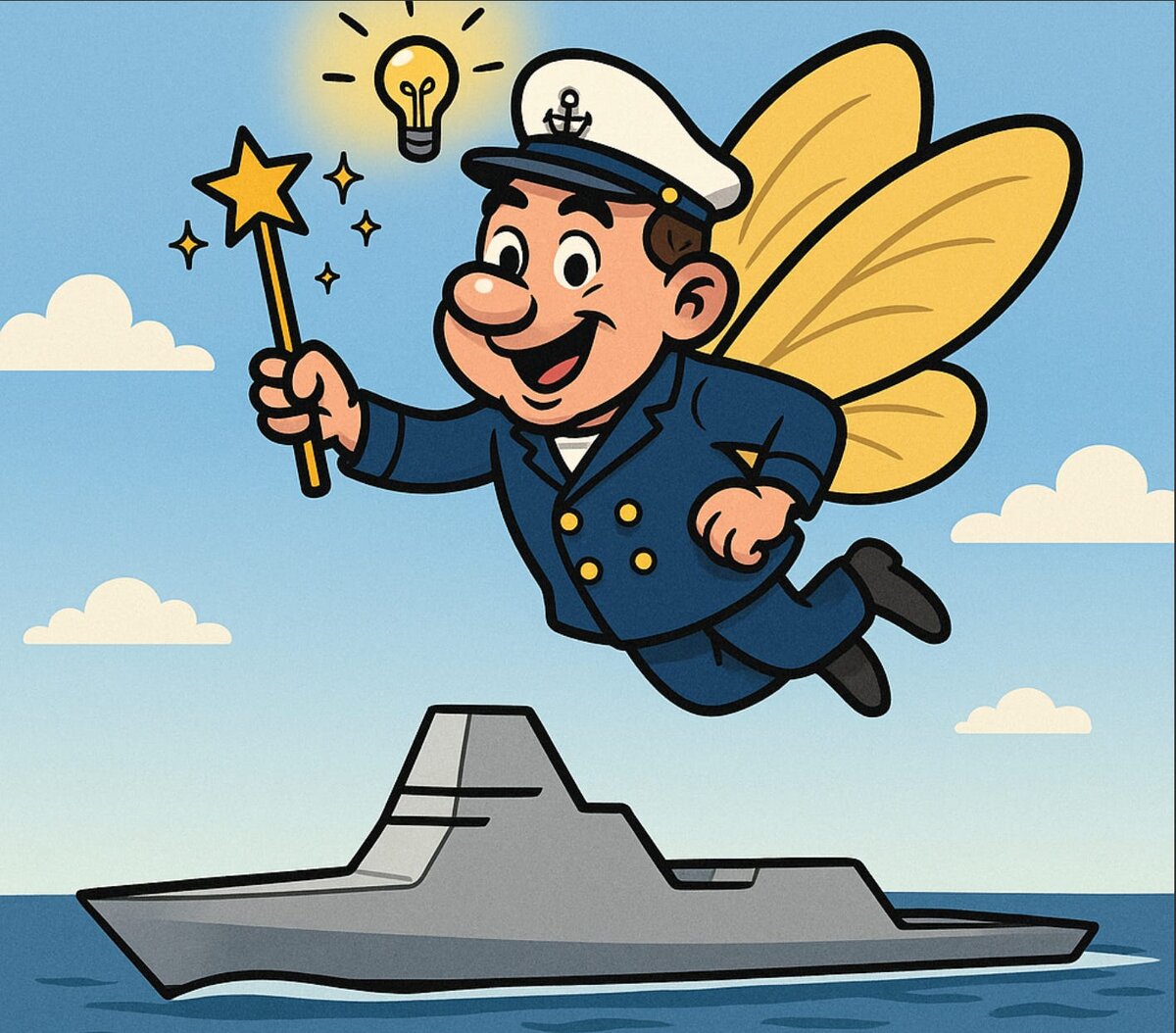
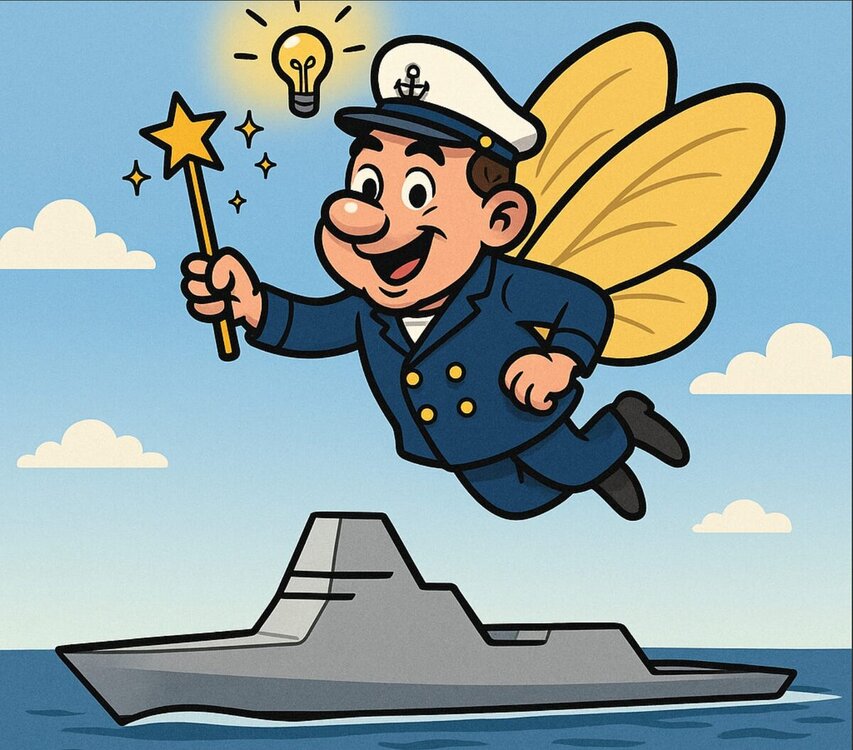
On Monday, the Congressional Research Service came out with its latest, Navy DDG(X) Next-Generation Destroyer Program: Background and Issues for Congress. This is worth your time, as we need to get this right. We have to get this right because we have yet to cut steel on a successfully designed surface warship since Ronaldus Magnus was CINC. The same organizations, processes—and in some cases people—that failed on DDG-1000, LCS, CG(X), and are doing their best to scupper FFG-62, are working on DDG(X), so keep a weather eye on the program. I’m trying to be an optimist, but concerns have been growing roots for years. Low-trust is well-deserved. At first read, I thought we had some good news. If you can judge by the picture in the report, contrary to the concerns I had in January, it looked like the general purpose 5” main gun is back, but note the source…they’re using Sam’s January 2024 image. The image from my January linked to above is newer…so…yeah. Sigh. Also, no gun is mentioned in the report…in spite of every actual combat experience of the post-WWII naval combat—especially the last few years in the Red Sea—show the absolute essential nature of the general purpose gun in real world combat situations…but let’s move on. Let’s review some basics from the report for new readers, The Navy states that the baseline DDG(X) design, like the Fight III DDG-51 design, is to include 96 standard Vertical Launch System (VLS) cells, with an ability to incorporate 12 large missile launch cells in place of 32 of the 96 standard VLS cells. It is also to include two 21-cell Rolling Airframe Missile (RAM) launchers, and possibly also an ability to be built with an additional mid-body hull section, called the Destroyer Payload Module, that would provide additional payload capacity. The Navy states that Note the bold underline I added to the above. I’ll get back to that at the end of today’s post. In the same paragraph, they share the respectful but simple truth of the great Cold War (modified) Burkes. …the requirement for future large surface combatants (LSCs) to be capable of hosting directed energy (DE) weapons, larger missiles for increased range and speed, increased magazine depth, growth in organic sensors, and an efficient integrated power system to manage the dynamic loads. DDG 51 is highly capable, but after over 40 years in production and 30 years of upgrades the hull form does not provide sufficient space and center of gravity margin to host future capabilities. … studies concluded that DDG(X) is required to deliver the necessary margins and flexibility to succeed the DDG 51 Class as the next enduring LSC combining the DDG 51 FLT III combat system elements with new hull form, an efficient Integrated Power System (IPS) and greater endurance, reducing the Fleet logistics burden.... We’ve reached the limits of her design. So far, aligning with Salamander direction and guidance about minimizing technology and program risk as much as possible so to not create FORD CVN type problems…but, what about the IPS? Oh, no. The Navy plans to model the IPS at a land-based test site, but the results may not be available to fully inform the ship’s design prior to detailed design. The second critical technology is the ship’s hull form. The program continues to conduct risk reduction activities for both critical technologies. OK, full stop. What part of the ship’s design is driven by the go-nogo of IPS? Have we learned nothing? As IPS is what will make or break the entire concept of DDG(X) as it is being put forward, it is gobsmacking we still don’t know if it can work. We should put everything else that relies on its performance on hold and throw money at the IPS testing site, figure out how to make it happen, and then pick things up from there. We cannot, again, start cutting steel on an incomplete design. LCS/NLOS, FREMM-to-FFG-62, and other similar goat-ropes the last few decades should explain to everyone why the program should go tools-down until we know if IPS is a go. I think that is clear. Now, let’s look at the “Issues for Congress.” (1) Would a new LSC larger than the Flight III DDG-51 design be consistent with the Navy’s desire to shift to a more distributed fleet architecture that includes a larger number of smaller ships? (2) The Navy in the past has studied options for a lengthened version of the DDG-51 design. Would the DDG(X) be more cost-effective than a lengthened DDG-51? (3) Has the Navy accurately identified the DDG(X)’s required operational capabilities? (4) Why is there a 33% difference between the CBO and Navy estimates of the DDG(X)’s average procurement cost? (5) Would future Navy budgets permit the procurement of DDG(X)s in desired numbers while adequately funding other Navy priorities? (6) Is the Navy taking adequate steps to mitigate technical, schedule, and cost risk in the program? (7) Is the Navy planning adequately for the transition from DDG-51 procurement to DDG(X) procurement? Let me try to answer these, in order. Yes, as a balanced fleet requires large surface combatants, destroyers and cruisers, and smaller warships like frigates. We are morphing our FFG into a DDLG, so … build both. As much as I would enjoy my prophecy that we will build Arleigh Burke DDG until the crack-of-doom to be made true, really the hull has done its duty. We need to advance. You cannot predict the future. If anything, recent history tells us we are bad at even trying. I doubt the “requirements” are all that valid. Heck, these are the people who expected us to believe the 57mm for FFG-62 was based on anything but the most base Beltway blobish slimy reasons. Build for flexibility so our Navy can adjust as the future reveals itself. Because no one really knows. Just assume the higher estimate is closer. Only if we fundamentally change how we allocate the defense budget. No. They haven’t yet, and without firm, hard, and direct leadership—it will repeat the same mistakes because we are using the same system, programs, processes, and people who bought this century’s shipbuilding debacles. I doubt it. We have not done so in decades. Let’s go back to the opening of the paragraph quoted above about IPS from the June 2025 GAO report, The Navy approved changes to the operational requirements for the [DDG(X)] program in August 2024. The program is assessing how the changes affect its schedule and cost estimates and officials did not provide a time frame for when they will update these estimates. OK. Stop. No more letting this guy in the room. Freeze the design. Tell the Good Idea Fairy that time is up. Let’s make sure IPS works, and then start to cut steel. Again, authorize and build more Burkes for a few years until testing is done if that is what is needed. We could always use more. We can’t screw DDG(X) up. We can start by giving the class a proper name, for starters. I have a suggestion, rename the expected DDG-141 and take that name and make it the first ship in the class, USS Ernest E. Evans (DDG-XX). While we are at it, we can rename the also authorized but not yet started Danzig, Mullen, and Mabus. Now, let’s return to the bold italics at the top of the post. In my SEPT 2022 Substack on DDG(X) I stated the following, PS: we still need a cruiser. How do we do that? A successful path to the future is to follow the successes of the past. The Ticonderoga class, using the highly successful Spruance hull, … The greater size and equipment on the CG-47-class cruisers increased displacement from 6,900 tons of the DD-963-class destroyers to 9,600 tons of displacement for the heavier cruisers. …and what did we highlight from Monday’s CRS report? possibly also an ability to be built with an additional mid-body hull section, called the Destroyer Payload Module Bollocks to “possibly”—no, grab a multi-generational design team and tell them, “This ‘Destroyer Payload Module’ is the ‘cruiser module’. We’re building a CG-74 Class cruiser in parallel with the DDG(X). At least for Flight I of this new cruiser, that module will be dedicated to air and space defense weapons. I want people to need an abacus to count the number of VLS cells. Throw in additional space for it to be a flagship if needed. Get to work. Don't argue the matter. The difficulties will argue for themselves.” More. Faster. Leave a comment Share This Substack is reader-supported. To receive new posts and support my work, consider becoming a free or paid subscriber. View the full article
-
It has taken a while, mostly because of the memories of their grandfathers, but after years of hard work by people you may never hear of, one of the most powerful, important, and natural alliances in the Pacific is growing closer together—that of Japan, Australia, and the U.S. Senior U.S., Australian and Japanese flag officers agreed today to further enhance logistics interoperability among their maritime forces. Their intent is to enable deeper maritime cooperation among the three nations, building upon their enduring commitment to stability and security in the Indo-Pacific. Official seal of the Department of the Navy. Note: 18 United States Code, Part 1, Chapter 47, Section 1017, prohibits the use of this Department of the Navy seal by anyone other than bona fide commands and activities of the Department of the Navy and the Department of Defense where appropriate. Secretary of the Navy Instruction 5030.4A of 17 March 1986 restricts the use of this Department of the Navy seal to official use only and to the exclusive use of the Department of the Navy and the Department of Defense. Vice Adm. Jeff Jablon (Deputy Chief of Naval Operations for Installations and Logistics, OPNAV N4), Rear Adm. Naoya Hoshi (Director General of Logistics Department, Maritime Staff Office, Japan Maritime Self Defense Force (JMSDF)), and Commodore Catherine Rhodes (Director General Logistics, Royal Australian Navy (RAN)) took part in the signing ceremony aboard USS America (LHA-6) during a port visit in Brisbane. This is a solid starting point for what I hope is a closer integration of training and planning between the three friends. Japan and Australia may not have a mutual defense treaty, yet, they do have the Japan-Australia Reciprocal Access Agreement, and they both have a mutual defense treaty with the U.S., making us the tie together. Logistics—the most challenging and critical foundation of any war in the Pacific, lays a strong foundation for cooperation in further warfare areas. “Sustainment in depth is a primary objective,” said Vice Adm. Jablon. “We have robust logistics partnerships with Japan and Australia to ensure we can provide the right material and services at the right place, at the right time to mutually support our maritime forces, from day-to-day training during peacetime through contingencies. This arrangement strengthens those commitments and allows us to more easily share information, technologies and processes for greater logistics resiliency.” Reloading missile systems and flexible refueling are among the areas of cooperation outlined in the agreement. This is all just plain good stuff. “Japan is excited about the chance to collaborate more closely with our U.S. and Australian partners,” said Rear Adm. Hoshi. “This new arrangement will allow us to broaden the scope and increase the efficiency of our interactions.” Beyond information and technology sharing through these types of agreements, incorporating logistics activities into training in a realistic manner remains a focus area for U.S. naval forces. Examples include offloading missiles from dry cargo/ammunition ships, rearming cruisers and destroyers, refueling at sea, ship and aircraft repair, airfield damage repair, salvage operations, and medical evacuations. The signing took place just prior to the official kickoff of exercise Talisman-Sabre 2025, during which Australia, Japan, and other partners will participate in many of these activities as feasible. “During Talisman-Sabre and beyond, we have clear opportunities to work trilaterally with our U.S. and Japanese partners on logistics initiatives,” said Commodore Rhodes. “These efforts facilitate our speed of response for the full range of naval actions in the Indo-Pacific, from routine sustainment through crisis.” Whatever needs to be done to expand such trilateral gatherings should be given the highest priority. The press release is good, but the WSJ has a nice companion piece on the topic. In the rugged hills outside this coastal city, Japanese and Australian artillery crews fired in tandem on a distant target. They were assisted by U.S. Marines, who were embedded with the Australian gun teams. The live-fire drill was the culmination of Southern Jackaroo, an expanding annual exercise in the Australian bush in which the three nations’ forces practice working together as allies. Although top officers didn’t call out any foe by name, troops taking part said it was clear that they were training to fight China. … Australia and Japan, both of which have security pacts with the U.S., have emerged as essential U.S. partners in the Pacific. If a war were to erupt, Washington would want Tokyo to sign off on the U.S. using its Japanese bases to confront China and for Australia to send aircraft, ships and troops to Japan to help the fight, some defense analysts say. “If there’s any argument to be made for a collective approach to deterrence in the region, it’s these three countries,” said Jeffrey Hornung, the Japan lead at Rand, a think tank. This is a good time to remember that in spite of all our challenges and missteps, we have a comparative advantage against the People’s Republic of China (PRC), if we properly tend to it and maintain stewardship of the better parts of our inheritance. Japan, Australia, and the U.S. have friends and allies—the PRC has proxies, clients, and subjects. In their 2025 Defense of Japan White Paper, the Japanese Ministry of Defense put it well, The international community is now facing its greatest trial since the end of World War II. The existing order of world peace is being seriously challenged, and Japan finds itself in the most severe and complex security environment of the post-war era. It’s good to have friends at such times. These three democratic nations’ strategic interests in the Pacific align so closely that friction on key issues is rare. All gain by peace and stability, none desire conflict, all face a growing autocratic power that has eyes on either their submission or compliant indifference. Smaller powers look to all three for support as they too try to avoid the demands of the covetous power that is the People’s Republic of China. This Substack is reader-supported. To receive new posts and support my work, consider becoming a free or paid subscriber. Share Leave a comment View the full article

-
Few people in the maritime space have been thinking, writing, and speaking about counter-piracy more than our friend Claude Berube. As a matter of fact, we discussed just this topic in Episode 2 of the Midrats Podcast back in January of 2010. You can access the audio from the Episode, with the late, great Raymond Pritchard as one of the co-hosts, at this link. He was on a roll that year, the following month he was on a great panel at Heritage that, sadly, is no longer available on the internet. In 2012, my Midrats co-host wrote a nice article about a superb collection he co-edited, Maritime Private Security: Market responses to piracy, terrorism and waterborne security risks in the 21st century. So, when Claude brings up the topic of piracy and lawlessness on the high seas, the best bet is to stop what you’re doing and give him a read—even his novels that tie in the subject. Fast forward a decade and a half, over at his Substack on Saturday, he brought up some spot-on commentary on some of the latest news out of the Red Sea. Not all the outlaws on the high seas are the same…even when they are in the same neighborhood. The recent attack on the Eternity C that left crew members dead, kidnapped, or missing and the ship itself on the seafloor was more than another statistic in the Red Sea. For a professional perspective on the entire incident, check Sal Mercogliano’s youtube. I want to focus on a particular aspect - that armed guards were aboard. Among those caught up in the chaos were guards from Ambrey, the world’s largest private maritime security company. … The arrival of private security teams on merchant ships - and in some rarer cases a few companies that offered ships as security escorts - was effective enough that by the mid-2010s Somali piracy was largely under control. For years, that model held. The threat posed by Houthis, however, changes that model. … But the Houthis are not pirates. They’re not motivated by money but by politics. They’re less interested in capturing a ship than in the high-value publicity that a sinking ship offers to their cause. Along the lines of my call at the end of last year to, Arm the Auxiliaries, is it time to, What tools or commercially-available weapons be available to private maritime security companies to counter the Houthi threat. To be honest, I don’t know. I have some thoughts on some technologies but each time I look at it, there’s a cost associated the more complex a solution you find. And with those costs, shipping companies will weigh if it is simply more cost-effective to circumnavigate Africa (itself not so inexpensive) rather than risk a ship transiting the Red Sea conducting legitimate commerce. We’ve already seen changes during the Somali piracy era changed the cost of doing business as well as private security options. No, that isn’t the answer. You know what is an answer? What is your use of your navy if you cannot protect your own merchants? The better answer is state-sponsored counter-measures to protect that commerce. That has been the traditional role of navies, and the US Navy has recent experience responding to the Houthi threat. But the US, under current limitations, cannot be the region’s only guarantor of legitimate maritime commerce. What worked in the Gulf of Aden in 2011 won’t work in the Red Sea in 2025. Flexibility, good intelligence, and a commitment to protecting those at sea are still essential, but the playbook needs to change. If the last fifteen years were about putting armed guards on deck, the next fifteen will be about rethinking what security at sea really means - and who’s responsible for providing it. There’s the nub. The nations that most like to talk about the “international order” seem to have a toxic combination of the lack of will to move beyond talk, and even when they do take action, lack the capacity or even capability. There should be an international answer, but if the only suitable option is the Chinese CONOPS or the European close escort operation, then that will be it. A reason for the lack of an international solution might be simple. An international solution would require U.S. Navy leadership. The U.S. Navy would prefer aggressive Rules of Engagement (ROE). However, European navies might impose restrictive national caveats and ROE. The U.S. could risk conflicts with Iran. Additionally, U.S. actions might be seen as supporting Israel, which many wish to avoid. Thus, we’re left with Operation Hodgepodge. This Substack is reader-supported. To receive new posts and support my work, consider becoming a free or paid subscriber. Share Leave a comment View the full article

-
Take a deep breath, relax, focus, and we’ll get through this together. We don’t have to like what is in front of us, but we do have to accept that it is there. I try to be optimistic, but I’m also a realist. You have what you have, and you have to be an adult about what is placed in front of you. I told you a decade and a half ago, The Terrible 20s were coming. You can only hold back the flood for so long. Math is hard and does not have feelings. Don’t put too much stock in what is said. Look at what is being done. Though most NATO allies have agreed to spend 5% of their GDP on defense, absent a major war, it’s unlikely to happen except in a very few places like perhaps Poland or one of the Baltic republics. They won’t do it because they promised the USA, they will do it because they believe it is in their interest to do so. You see, in 2025, it is expected that the USA won’t even break 3% of GDP on defense. We will probably wind up just at 2.9%. If Uncle Sam isn’t going to break 3%, I don’t see our allies stretching for 5%. We would be lucky if they match us, and we’re drifting to 2.5%. More and more people are starting to see this and speak about it openly. Even The Wall Street Journal Editorial Page is going Salamander. The White House is touting its $1 trillion defense budget for 2026. Mr. Trump has also taken a deserved bow for getting NATO to agree to spend 5% of GDP on defense. But the U.S. isn’t meeting that NATO target. It’s spending roughly half the 6% of GDP it devoted to defense at the height of Ronald Reagan’s military buildup. Even the $1 trillion is a game of three-card monte. The Administration counts in that total about $113 billion for defense in the GOP’s budget reconciliation bill. That money was supposed to turbocharge purchases of ships, aircraft and unmanned technology—above normal defense spending. Yet when the budget bill is excluded, the Administration has proposed a cut after inflation for 2026. Absent more annual GOP bills, which may not be possible if Republicans lose Congress, defense spending could fall to about 2.65% of the economy by 2029 at the end of Mr. Trump’s term. That’s comparable to the European levels that Mr. Trump thinks are so pathetic. Yes, yes, yes…I fully understand the budget bill trick of 2025…that is nice, but it what it is, a trick. It will work for a year—but it does not underscore a baseline. Will the budget battle in an election year match it? The money trick of 2025 delays the hard decisions and the very adult conversation we need to have about how we allocate our budget to best prepare for the expected fight west of the International Date Line—a fight that will be a maritime and aerospace fight. Take shipbuilding. The 2026 request asks for a mere three U.S. Navy ships, though the fleet is 60 short of its goal to deter China. Funding for 16 more ships is included in the GOP budget bill. But no contractor puts up long-term capital to expand production for a one-year plan. Unstable demand from government helped produce the current shipbuilding crisis. Mr. Trump cares about restoring U.S. naval power, but what matters is the scoreboard. America needs to build 2.33 attack submarines a year to meet our own requirements and a commitment to sell hulls to the Australians. The current rate is 1.1. This problem did not creep up overnight. It has been “appreciated” since I wrote the piece linked to above from April of 2010. As you’ll see on the graph at the bottom of the post, we have accepted a bipartisan serial lie we have told to ourselves to make us feel better about “today”, and letting the hard reality of “tomorrow” be someone else’s problem. Well, Shipmate, “tomorrow” is today. The budget pours $3.5 billion into the new F-47 fighter jet, which is needed. Yet F-35 buys are cut to 47 from 74, and a new fighter for the U.S. Navy is on hold. The latter is especially absurd: U.S. aircraft carrier vulnerability in the Pacific is the most discussed military weakness of the decade, and longer-range aircraft on carriers would be a big counter. Mr. Trump likes to invoke Reagan’s peace through strength worldview. But the Gipper made a sustained case about the threats the U.S. faced and the forces required to keep the peace. He explicitly rejected making “defense once again the scapegoat of the federal budget.” The threats to U.S. security today are arguably greater than during the Cold War: A peer competitor in China, an imperial Russia, the risk of proliferating nuclear weapons, and new technology that empowers lesser powers and threatens the U.S. homeland. Congress can fill some of the Trump defense potholes, but reinvigorating the U.S. military requires White House leadership. It would be helpful to note that we are only six months into the Trump second term. He still does not have his full team in place. People are being put in place who are want to attack this challenge, but they are only part of the team and are still getting their footing. That “excuse” is running out of time, however. Once Labor Day gets here, it won’t work anymore. What they need is money, attention, and top-cover. In a world in a frenetic crisis quickening, attention will be hard to get. Without that, you won’t have the money. With no attention or money, you won’t get top-cover because you won’t even be noticed. No one said it would be simple or easy. The President’s party in Congress has comically narrow majority in both chambers. What should be a bipartisan effort to secure our nation’s defense against a rising power is instead being held hostage to…what exactly? Institutional inertia, petty party politics, and programmatic entitlement? On the Navy side, with Executive and Legislative Branch working together, you can fix shipbuilding. There are companies and entrepreneurs who are standing by to make this happen. All it takes is a consistent demand signal, accountable leadership, and political will. As the below shows, our Culture of Untruth™ consistently results in over-promise and under-delivery. I mean, just look at it. Are you satisfied with our people? Proud of our process? Want to emulate our leadership in building our fleet? Which nation’s fleet is being built to fight and win at sea, and which nation’s fleet is inviting humiliation and crisis for the nation it serves? h/t Steve.This Substack is reader-supported. To receive new posts and support my work, consider becoming a free or paid subscriber. Share Leave a comment View the full article
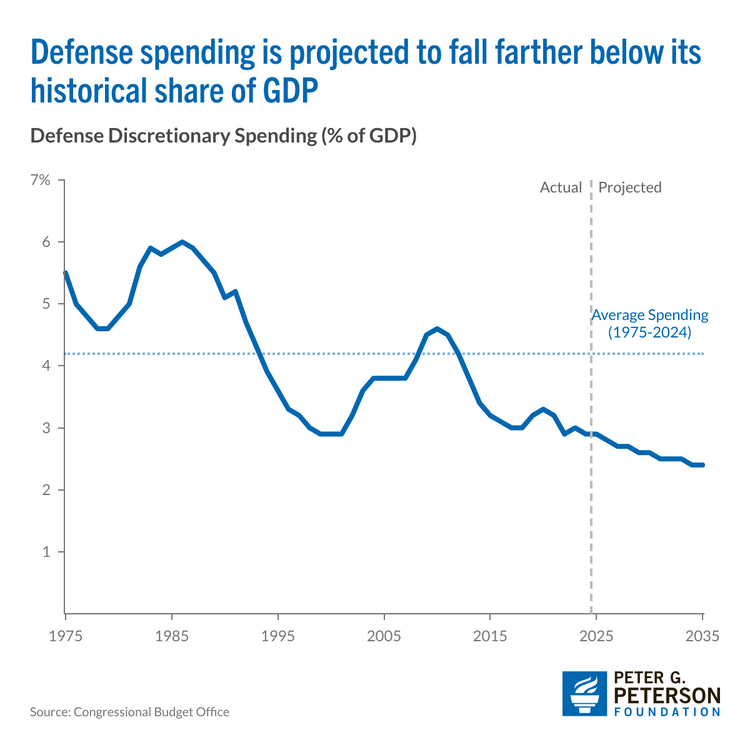
-
Take a break from the heat today to discuss some of the hidden history, and importance, of the Presidential retreat at Camp David with the author of the book, Presidential Seclusion: The Power of Camp David, Charles Ferguson. You can listen at this link, or with the Spotify widget below. After graduating from Georgia Tech and earning his commission, Charles Ferguson served for 11 years in the Submarine force onboard the USS Louisville and as Weapons Officer onboard USS Buffalo with a shore duty at Nuclear Power School in between. He switched to the IRR as Chaplain Candidate while attending seminary at Duke Divinity School and was recommissioned as an Active Duty Chaplain in 2010. As a chaplain he has served with both Navy and Marine Corps commands to include three and a half years as the Chaplain and Historian at Camp David. ShowlinkPresidential Seclusion: The Power of Camp David SummaryThis conversation explores the historical significance and operational dynamics of the Presidential retreat of Camp David. The discussion highlights its origins, the Navy's role in its management, and the unique environment it provides for presidents to make critical decisions. The conversation also delves into the architectural design that facilitates diplomacy, notable guests who have visited, and the personal touches each president has added to the retreat. Additionally, the role of the chaplain and the supportive relationship with the local community are examined, emphasizing the importance of solitude for leaders in high-pressure positions. Chapters00:00: Introduction to Camp David's Significance 05:35: The Navy's Role in Camp David's History 10:27: Becoming the Chaplain and Historian at Camp David 15:22: The Origins and Transformation of Camp David 20:38: The Impact of Camp David on Presidential Decisions 29:15: Notable Guests and Diplomatic Encounters at Camp David 30:53: Architectural Diplomacy at Camp David 34:20: Presidential Modifications and Personal Touches 38:04: The Origin of Camp David's Name 40:58: Management and Operations at Camp David 43:13: The Role of the Chaplain 45:25: The Solitude of Leadership 49:32: Community Interactions and Local Support 53:22: Memorable Moments and Staff Contributions 58:14: The Importance of Setting Conditions for Peace 01:00: Future Projects and Closing Thoughts Leave a comment Share This Substack is reader-supported. To receive new posts and support my work, consider becoming a free or paid subscriber. View the full article