




HG S2 (Intel Bot)
Members
-
Joined
-
Last visited
Never
Everything posted by HG S2 (Intel Bot)
-
The Pakistan Army has begun taking delivery of new Chinese-made Z-10ME attack helicopters, according to imagery and video footage circulating on social media in recent days. The aircraft, seen bearing Pakistan Army Aviation Corps markings, signal the start of a long-anticipated transition away from the aging AH-1F Cobra fleet first introduced more than four decades […] The post Pakistan gets first Z-10ME attack helicopters from China first appeared on Defence Blog.View the full article
-
The U.S. Air Force’s newest light attack and reconnaissance aircraft, the OA-1K Skyraider II, is undergoing developmental testing at Eglin Air Force Base as part of its path toward operational service within Air Force Special Operations Command (AFSOC). According to the Air Force, the aircraft is being evaluated by the 96th Test Wing in partnership […] The post U.S. Air Force tests new Skyraider II attack aircraft first appeared on Defence Blog.View the full article
-
Lockheed Martin has received a $2.06 billion contract modification to produce additional Terminal High Altitude Area Defense (THAAD) interceptors for the U.S. government, the Department of Defense announced. The new award raises the total value of the current production contract from $8.35 billion to over $10.4 billion, with work set to continue through December 1, […] The post Lockheed secures $2B deal to rebuild THAAD stockpile first appeared on Defence Blog.View the full article
-
Raytheon, an RTX business, has introduced a new variant of its Multispectral Targeting System (MTS), designed to enhance visual performance and targeting capability for U.S. Navy helicopters operating in maritime environments. According to a press release from the company, the new system—designated MTS-A HD—offers improved imaging clarity, targeting precision, and operational flexibility. The system is […] The post Raytheon develops new targeting system for Navy helicopters first appeared on Defence Blog.View the full article
-
During a recent visit to St. Petersburg, Russian President Vladimir Putin’s personal security team was spotted with what appears to be a newly developed FPV drone designed specifically for countering hostile unmanned aerial systems. The presence of the drone, visibly carried by a member of the presidential protection unit, has drawn attention due to its […] The post Putin’s guards seen with new anti-drone weapon first appeared on Defence Blog.View the full article
-
There has been a growing awareness over the last couple of years—and especially the last year—about the “rare earth element” challenge. It is more than a challenge, it is a problem. Why a problem? Global supply systems, etc... Those who know the industrial history of WWII will know that despite of their technological skills, the Germans could not produce the number and quality of the weapons they wanted to because they could not source sufficient critical “exotic” raw materials—not to mention just fuel. As a result, they could produce only a few and those they could produce, such as jet engines, had to use lesser materials and did not last as long. The Japanese, as an island nation with few raw materials but human capital, struggled with even the basics once the peacetime “global supply chain” became but a memory. Their problems weren’t that they didn’t know they had a problem accessing materials at the start of the war, as they had stockpiled cobalt, vanadium, titanium, tungsten, chromium, molybdenum, and other exotic metals. The Germans even had access to some usable deposits in some of the conquered lands such as France and the Balkans, the Japanese in China. However, they did not stockpile for a long war, and by 1943 allied interdiction of sea and ground lines of communication made getting materials to their increasingly bombed-out industrial areas exceptionally difficult and inefficient. In 2025, it is the USA and its allies that are Nazi Germany and Imperial Japan when it comes to critical supplies needed to fight any kind of protracted war. The People’s Republic of China (PRC) is the nation that is not just the industrial superpower, they have managed to corner both the supply and the supply chain of the world’s light and heavy rare earth elements—and in many critical cases the ability to process it into usable material. Regulars here know what the PRC has done in shipbuilding. While the USA and its allies focused on handling millions of uninvited, military-aged, unemployable young men from wherever after a couple of decades engaging in fruitless imperial policing actions and nation building for people uninterested and unable to be built, the PRC was focused on its strategic goal: to supplant The West as the leader of the world. They looked at history with a cold, old world eye, and set to work. One of those lines of operation was the raw material that anyone would need to seriously contest them in the military sphere once they were strong enough to stand. It isn’t just the mines and supply chains, it is how the CCP through controlling interest in many companies is prioritizing China. I had a bit of time on the road over the weekend and listened to the MWI Podcast: The US Military’s Critical Minerals Challenge, with Dr. Morgan Bazilian, director of the Payne Institute for Public Policy at the Colorado School of Mines. You can listen to the above link or via the Spotify link below. I thought I was doing a responsible job tracking the issue, but man was I wrong. I learned more in that 1-hr podcast than I have in my readings for the last few years. The bold-faced takeaway for me was that, for a moment, I was reassured to hear we do have a reserve based on expected requirements found from a series of wargames against the PRC, but it is only enough of a reserve to fight for one year. Excuse me? I’ve got news for everybody. The next great Pacific War that might evolve into a world war, it's gonna go for a long time. Expect at least World War II length. We are not ready. All indications show that China has been getting ready for years using the best mercantilist, capitalist, and good old fashioned communist bullying. We are a bit late to the game. Just one of the examples that kept coming up during the interview was MP Materials (MP). You know, the company that owns the only operational rare earth mine in the U.S. at Mountain Pass, California. The Defense Department will become the largest shareholder in rare earth miner MP Materials after agreeing to buy $400 million of its preferred stock, the company said Thursday. MP Materials owns the only operational rare earth mine in the U.S. at Mountain Pass, California, about 60 miles outside Las Vegas. Proceeds from the Pentagon investment will be used to expand MP’s rare earths processing capacity and magnet production, the company said. … Rare earths are used in magnets that are key components in a range of military weapons systems including the F-35 warplane, drones and submarines, according to the Defense Department. The U.S. was almost entirely dependent on foreign countries for rare earths in 2023, with China representing about 70% of imports, according to the U.S. Geological Survey. … U.S. miners are facing a unique threat from “Chinese mercantilism,” Litinsky said. The Pentagon investment in MP could serve as a model for similar deals with other U.S. companies, the CEO said. “It’s a new way forward to accelerate free markets, to get the supply chain on shore that we want and make sure that mercantilism is not going to hurt our ability to do so,” Litinsky said. Remember, MP Minerals owned the only U.S. rare earth mine. However, who was benefiting? As of December 2021, Shenghe Resources, a Chinese company partly owned by China's Ministry of Natural Resources, held approximately 7.7% of MP Materials' stock. MP Mining could produce all the rare earths it wanted, but in the U.S. at least, there wasn’t much they could do with it. They primarily sent their rare earth ore concentrate to the PRC for refining. The refining was done by, you guessed it. Shenghe Resources, owned by the PRC’s Ministry of Natural Resources, which is controlled by the Chinese Communist Party. Bravo Zulu to Interior Secretary Doug Burgum. The Pentagon is buying a newly created class of preferred shares convertible into MP Materials’ common stock, in addition to a warrant convertible at $30.03 a share for 10 years that allows the U.S. to buy additional common stock. Exercising the convertible preferred shares and the warrant would leave the Pentagon holding about a 15% stake in MP Materials as of July 9, nearly twice the 8.61% held by Litinsky and the 8.27% held by BlackRock Fund Advisors, according to FactSet data. MP Materials will build its second magnet manufacturing facility in the U.S. to serve defense and commercial customers with support from the Pentagon. The facility, whose location wasn’t disclosed, is expected to start commissioning in 2028 and will bring MP Materials rare earth magnet manufacturing capacity to 10,000 metric tons annually. This manufacturing capacity is enough to “meaningfully support U.S. defense and commercial needs,” Litinsky told investors on a call Thursday morning. The Pentagon has agreed to buy 100% of the magnets made at the new facility, called 10X, for 10 years after the plant is built to support defense needs and the commercial market. JPMorgan and Goldman Sachs are providing $1 billion to help finance the manufacturing facility. The Pentagon is also guaranteeing a minimum price of $110 per kilogram for 10 years for neodymium-praseodymium oxide, or NdPr, that is stockpiled or sold by MP Materials. NdPr is a rare earth compound used to make permanent magnets. If the market price is below $110 per kilogram, the U.S. will pay MP Materials the difference in a quarterly cash payment, Litinsky said. The Pentagon, in turn, will receive 30% of the upside above $110 per kilogram once MP Materials’ second magnet facility is operational, the CEO said. You can’t fight and win a war when you have to rely on your enemy for the raw material to build weapons. More. Faster. Leave a comment Share This Substack is reader-supported. To receive new posts and support my work, consider becoming a free or paid subscriber. View the full article

-
LIG Nex1 has been selected to lead South Korea’s next-generation Cheongung-3 surface-to-air missile development project, edging out rival Hanwha in a competitive bid for what is being described as a cornerstone of the country’s future air defense strategy. According to information confirmed by the defense industry on July 28, the Defense Acquisition Program Administration (DAPA) […] The post LIG Nex1 to build South Korean next-gen air defense system first appeared on Defence Blog.View the full article
-
South Korea has completed a major upgrade of its Cheongung-I air defense system, transforming it into the more capable Cheongung-II platform, which can now intercept both aircraft and ballistic missiles, the country’s arms procurement agency announced Monday. According to a press release from the Defense Acquisition Program Administration (DAPA), the enhanced system has entered initial […] The post South Korea upgrades air defenses to hit ballistic missiles first appeared on Defence Blog.View the full article
-
Elbit Systems has secured a $260 million contract from Airbus Defence and Space to deliver its J-MUSIC Directed Infrared Counter Measures (DIRCM) system for the German Air Force’s A400M transport aircraft fleet. According to a press release from Elbit Systems, the six-year contract follows a procurement decision by Germany’s Federal Office for Equipment, Information Technology […] The post Germany taps Elbit for A400M missile defense deal first appeared on Defence Blog.View the full article
-
Australia has test-fired its newest long-range missile for the first time, launching the U.S.-made Precision Strike Missile (PrSM) from the Mount Bundey Training Area in the Northern Territory. The missile traveled more than 300 kilometers in four minutes and three seconds, reaching speeds exceeding 4,000 kilometers per hour before striking its target with high accuracy. […] The post Australia tests long-range PrSM missile first appeared on Defence Blog.View the full article
-
We’re getting our first full look at Russia’s ‘Shturm’ robotic tank complex. The new combat system was first identified during recent field trials, where it appeared for the first time in its complete configuration—featuring both a remotely operated assault vehicle and a command-and-control vehicle based on a modified T-72 chassis. Developed by Uralvagonzavod for the […] The post Russia tests new robotic assault tank first appeared on Defence Blog.View the full article
-
Ukrainian drone operators with the Security Service’s “A” Center for Special Operations (CSO “A”) have intercepted a Russian Orion unmanned aerial vehicle in what appears to be the most advanced drone-on-drone engagement recorded to date. The intercept, reported by the Ukrainian defense outlet Militarnyi, was confirmed through video footage published by the SBU. The Orion […] The post Ukrainian drone intercepts Russian Orion first appeared on Defence Blog.View the full article
-
The Japanese Ministry of Defense is preparing to take disciplinary action against numerous members of the Japan Maritime Self-Defense Force (JMSDF), including Chief of Staff Admiral Akira Saito, over an illicit payment scheme involving submarine maintenance contracts. The decision follows revelations that Kawasaki Heavy Industries (KHI) created slush funds through fictitious transactions and used the […] The post Japan to discipline Navy chief over bribery scandal first appeared on Defence Blog.View the full article
-
The Japanese Ministry of Defense confirmed that the Japan Maritime Self-Defense Force (JMSDF) has, for the first time, identified a Chinese Navy submarine rescue vessel of the Type 926 Dakai-class operating near Japanese waters. According to a statement issued by the Ministry of Defense on July 25, the vessel was first spotted around noon on […] The post Chinese new sub rescue ship spotted near Japan first appeared on Defence Blog.View the full article
-
Türkiye and Indonesia have formally concluded a defense agreement for the procurement and local production of KAAN fighter jets. The Defense Industry Agency of Türkiye (Savunma Sanayii Başkanlığı) announced the signing of the commercial contract with Indonesia’s Ministry of Defense during the IDEF 2025 defense exhibition in Istanbul. The agreement covers the delivery of 48 […] The post Indonesia to buy 48 KAAN fighter jets first appeared on Defence Blog.View the full article
-
Polish Prime Minister Donald Tusk said Friday that General Alexus Grynkewich, the newly appointed NATO commander in Europe, confirmed U.S. assessments that Russia could be ready for a confrontation with Europe as early as 2027. “There is no reason to frighten each other, but we must be truly vigilant and focused,” Tusk said in a […] The post Poland warned: Russian confrontation possible by 2027 first appeared on Defence Blog.View the full article
-
Thailand’s Air Force has conducted its first known combat use of South Korea’s KGGB precision guidance kits, adapting standard Mk.82 bombs for long-range strikes during ongoing clashes with Cambodian forces. According to reports, a Royal Thai Air Force (RTAF) F-16 fighter jet used the KGGB—a GPS-guided glide bomb kit developed by South Korea’s LIG Nex1—to […] The post Thailand uses South Korean precision bombs in border fight first appeared on Defence Blog.View the full article
-
Thailand has captured a contested hill along its border with Cambodia amid intensifying fighting between the two countries, Thai media reported on Saturday. Thai troops took control of Phu Makkhuea hill, a ridge in the long-disputed frontier zone near the ancient Preah Vihear Hindu temple. The operation reportedly took place early on July 26, with […] The post Thailand captures strategic ridge in border clash first appeared on Defence Blog.View the full article
-
The Royal Thai Army launched Operation “Trat Pikhat Pairee 1” in response to renewed aggression near Ban Chamrak in Trat Province. Thailand has declared martial law in key eastern provinces following a sharp escalation in border clashes with Cambodian forces, marking the third consecutive day of conflict. At 05:10 AM on July 26, Cambodian troops […] The post Thailand launches operation to repel border assault first appeared on Defence Blog.View the full article
-
Ukraine’s armed forces are facing a pressing need for armored vehicles capable of withstanding battlefield threats, with Ukrainian defense outlet Defense Express reporting that at least 20,000 units with STANAG 4569 Level 2 protection and around 3,000 units with Level 3 protection are required. According to the report, Level 2 armor under the NATO STANAG […] The post Ukrainian military needs 23,000 armored vehicles first appeared on Defence Blog.View the full article
-
Turkey’s top defense and technology officials have confirmed the development of a long-range missile program with a declared range of 2,000 kilometers, signaling a new phase in the country’s ambition to become a regional military power with homegrown capabilities. Minister of Industry and Technology Mehmet Fatih Kacır, in a public statement this week, said, “We […] The post Turkey confirms 2,000km missile program first appeared on Defence Blog.View the full article
-
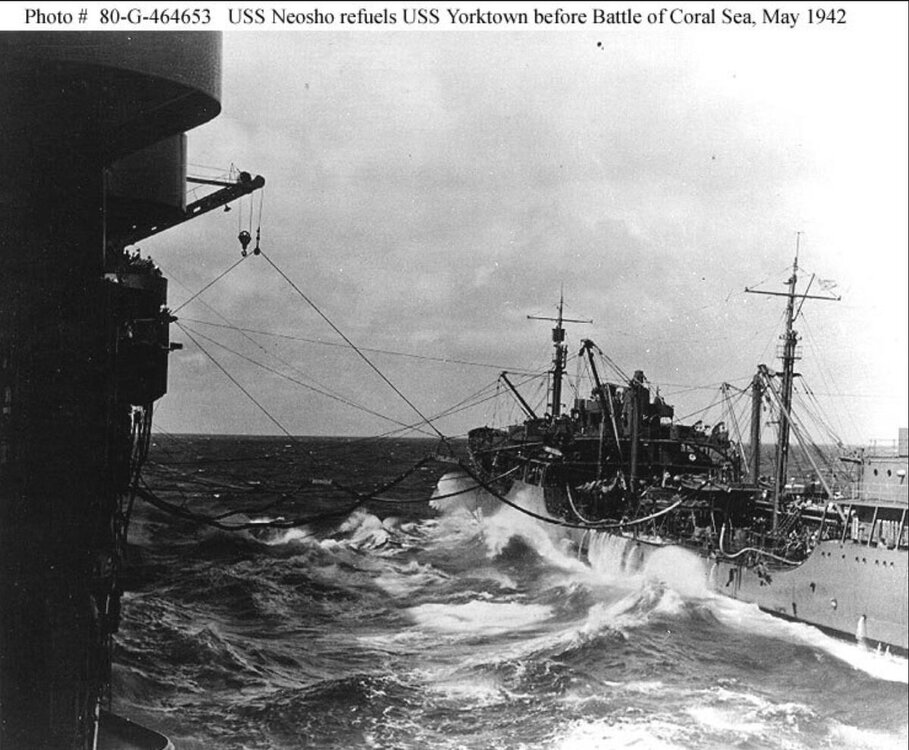
It is only fitting that we do an update this last Friday of July of one of my favorite FbF that I have referred to often over the years. I first mentioned the subject of the FbF on the OG Blog 19 years ago. Finally, a decade ago, I gave her story its own FbF. I’ll do that again today, but first things first. Earlier this month, Secretary of the Navy John C. Phelan made the following announcement: During the Battle of the Coral Sea in World War II, Chief Petty Officer Oscar V. Peterson heroically saved 123 sailors aboard USS Neosho by manually closing critical steam-line valves while unprotected amid smoke and flames. He suffered severe burns and died six days later. He was posthumously awarded the Medal of Honor for his heroic efforts. We are renaming the John Lewis-class fleet replenishment oiler USNS Harvey Milk to USNS Oscar V. Peterson (T‑AO 206) in his honor. This ship, designed to sustain Navy strike groups at sea, will now carry forward his legacy. secnavA post shared by @secnavAttention to Citation: For extraordinary courage and conspicuous heroism above and beyond the call of duty while in charge of a repair party during an attack on the U.S.S. Neosho by enemy Japanese aerial forces on 7 May 1942. Lacking assistance because of injuries to the other members of his repair party and severely wounded himself, Peterson, with no concern for his own life, closed the bulkhead stop valves and in so doing received additional burns which resulted in his death. His spirit of self-sacrifice and loyalty, characteristic of a fine seaman, was in keeping with the highest traditions of the U.S. Naval Service. He gallantly gave his life in the service of his country. Early on with the Midrats Podcast, and replayed a few times, we had author Don Keith on to discuss the tale of the USS Neosho (AO-23) and USS Sims (DD-409) at the Battle of the Coral Sea in his book, The Ship That Wouldn't Die: The Saga of the USS Neosho- A World War II Story of Courage and Survival at Sea. If memory serves me right, Chief Peterson’s story is there along with other Sailors and their inspiring stories of bravery in the face of incredible odds. You can listen to the interview at this link, or via the Spotify widget below. Bravo Zulu SECNAV. Just superb. Now to the FbF for the Neosho and her crew. There is nothing that fits more the description of "unsexy but important" than the fleet oiler. Hidden in the corners of WWII history is a story that is almost hard to believe is actually true. Today we will cover the second part of what we started last week with the story of her escort during the Battle of the Coral Sea, the USS SIMS (DD-409) We are talking about the story of the Pearl Harbor survivor, and in the immediate time following the attack, the only fleet oiler in the Pacfic, the CIMARRON class fleet oiler, U.S.S. Neosho (AO-23). Sent along with her escort and its gimp engineering plant away from the coming battle - instead, through her distraction she became a critical part of it. An enemy scout does a poor job and mistakes an oiler and a destroyer as a carrier and a cruiser ... and the full weight of the enemy falls upon them. I just finished a great book, The Ship That Wouldn't Die: The Saga of the USS Neosho- A World War II Story of Courage and Survival at Sea. Let's go to the official report after the battle. Read it all - especially the officers put on report - but here is the start; 1). On the evening of May 6, 1942, the Neosho, in accordance with instructions from Commander Task Force SEVENTEEN, proceeded on duty assigned with the U.S.S. Sims as escort, to conform with Commander Task Force SEVENTEEN Operation Order No. 2-42. The Neosho was required to pass through a given geographical point, at one hour after sunrise the following morning, which she proceeded to do. At 0811, May 7, 1942, being in the vicinity of this assigned point and not sighting any ships of the Task Force operating in that area, the Neosho proceeded to carry out instructions. 2). At 0810, May 7, 1942, two planes were observed at a distance of approximately ten miles, bearing 020° T, but no positive identification could be made as they were too far away. It was believed at this time that they were planes from one of our carriers. At 0929, a bomb was seen to fall about one hundred yards on the starboard quarter of the Sims, having been dropped from an enemy plane operating singly. The Sims at that time was patrolling ahead of the Neosho, following a specified zig-zag plan. This plane disappeared heading in a northerly direction. General Quarters was immediately sounded. Battle stations were manned continuously until cessation of the engagement with the enemy at 1218. Speed was increased to eighteen knots. At 1005, sighted approximately fifteen enemy planes approaching from 025° T. These planes made no attempt to attack, but flew parallel to the course of this vessel on the port side at high altitude, well out of gun range and disappeared to the northeastward. The Sims opened fire but no bursts were observed. At 1023, seven more enemy planes approaching from 010° T were sighted. These planes flew parallel to this vessel on the port side, crossed the bow, and disappeared to the northeastward, having made no attempt to attack either the Sims or the Neosho. Sims opened fire shortly after sighting. This vessel commenced firing three inch guns when these planes were within range. At 1033, a group of about ten planes approached from 140° T, of which three planes (twin-engine bombers) commenced a horizontal bombing attack on this vessel, others proceeding to the northeastward. At 1035, these three bombers dropped three bombs simultaneously; the direction of the fall of the bombs was observed closely and the ship was swung hard right to avoid being hit; all bombs fell to starboard and were near misses. These three planes were the only planes observed throughout the entire engagement which were other than single engine. 3). At 1201, observed approximately twenty-four enemy planes at high altitude, apparently taking position for dive-bombing attacks on this vessel and the Sims. From 1201 to 1218, this vessel was subjected to continuous dive-bombing attacks from all directions. The 20 mm fire of the Neosho was very effective. At no time during the engagement did the machine gunners falter at their jobs, notwithstanding the fact that two men were killed instantly right in the midst of the forward group, one of them being decapitated by flying fragments. However, despite any courageous tenacity on the part of the gun crews, it was quite obvious that if a pilot desired to carry his bomb home, he could not be stopped. The greatest majority of the planes diving on the Neosho were forced to deliver their attacks at a high altitude; only three or four dove to within a few hundred feet of the masts. Although the three inch fifty caliber anti-aircraft guns fired throughout the attacks it is difficult to evaluate their effectiveness against the enemy. 4). The constant maneuvering of the ship so as to head crosswind, and the effective fire of the 20 mm guns, is considered responsible for the large number of near misses. Three enemy planes are definitely known to have been shot down by this ship, of which one made the suicidal run into Gun No. 4 enclosure. It is believed that at least four other planes received sufficient 20 mm hits to render their return to base questionable. Three planes were observed to swerve away without completing their attack, due to the effectiveness of the 20 mm gun fire. 5). Shortly after the last bomb dropped, the Commanding Officer ordered all hands to "Prepare to Abandon Ship but not to abandon until so ordered." A messenger sent by the Executive Officer from aft came to the Commanding Officer stating that he had been sent to find out what the orders were regarding abandoning ship. The Commanding Officer told him to tell the Executive Officer, "Make preparations for abandoning ship and stand-by." The Commanding Officer had no knowledge of the condition of the Executive Officer. At about 1230, the Commanding Officer ordered the two motor whale boats to be lowered to pick up personnel who had abandoned ship without orders, and to tow all life rafts back to the ship. All undamaged life rafts, seven in number, had been set adrift without orders from the bridge. The many attacks delivered by the dive-bombers were directed at the bridge, and at the after section of the ship containing the engineering installation. With the exception of the 3" gun crews in No. 1 and No. 2 gun enclosures and the forward ammunition and repair parties, all of the ship's personnel were concentrated in these two sections. In the immediate vicinity of the bridge, three direct hits and a number of near misses occurred. In the after part of the ship, two direct hits, a suicidal dive of a plane, and the blowing up of at least two boilers, along with several near misses, occurred. It is believed that the destruction of the escort vessel with no other ships in sight, combined with the violent shocks from the several bomb hits and near misses, in many cases rendered personnel incapable of logical thought. It is known that many of the personnel aft, due to the flame resulting from the suicidal dive, smoke, and escaping steam, believing they were trapped with the ship sinking, jumped over the side. The number of men who were critically burned or injured in the after end of the ship, and who jumped over the side, is not known. The two motor whale boats placed men on the rafts and took as many in the boat as the boat officer in each case considered safe. They did not tow the life rafts back to the ship. When the boats returned to the ship, without life rafts, and loaded in excess of capacity with survivors, many of whom were badly injured and severely burned, it was too near sunset to send them back to attempt to locate, and return with, the drifting life rafts. The sea was rough and it was the Commanding Officer's opinion, as well as that of several officers, that the Neosho probably would not stay afloat throughout the night. The rafts were then out of sight. It was the Commanding Officer's conviction at that time that one of the Task Forces with which this vessel was operating would find the Neosho on the following day, if still afloat, and the rafts would then be located and occupants thereof rescued. A muster upon return of the boats showed that of 21 officers and 267 men, including passengers, on board at quarters that morning, 16 officers and 94 men were accounted for, 1 officer and 19 men were known dead, and 4 officers and 154 men were missing. In addition to the above, there were 15 enlisted survivors of the Sims. During the afternoon the wind had increased to force 5-6 and the sea was moderately rough. In the early afternoon it was difficult to see the life rafts from the bridge with the aid of binoculars, and the boats were seen only intermittently, prior to their return. You may try to hide from war, but war may not hide from you. Be ready This Substack is reader-supported. To receive new posts and support my work, consider becoming a free or paid subscriber. Share Leave a comment View the full article
-
SpaceX’s Starlink satellite internet system suffered a major global disruption Thursday, knocking tens of thousands of users offline for more than two hours and affecting critical military communications across active warzones. According to Downdetector, the outage began on Thursday at approximately 3 p.m. EDT (1900 GMT), with more than 61,000 user reports flooding the crowdsourced […] The post Starlink breakdown reveals frontline weakness first appeared on Defence Blog.View the full article
-
Turkish Aerospace Industries (TAI) has taken a major step toward exporting its domestically developed supersonic jet trainer, HÜRJET, to Europe through a newly signed strategic partnership with Airbus. The agreement, which outlines plans to deliver up to 30 HÜRJET aircraft to Spain, was formalized during the 17th International Defense Industry Fair (IDEF) in Istanbul. According […] The post Spain to buy 30 Turkish Hürjet jet trainers first appeared on Defence Blog.View the full article
-
Japan’s Mitsubishi Heavy Industries has showcased ongoing maintenance and overhaul work on the Type 10 main battle tank at its Chitose facility in Hokkaido. The process, known as “overhaul and repair,” is a critical midpoint intervention in the vehicle’s service life, intended to restore the tank to its original performance level after years of intense […] The post Mitsubishi extends life of Type 10 battle tanks first appeared on Defence Blog.View the full article

