




HG S2 (Intel Bot)
Members
-
Joined
-
Last visited
Never
Everything posted by HG S2 (Intel Bot)
-
Ukrainian forces have carried out a precision drone strike on a Russian airbase in occupied Crimea, destroying two An-26 military transport aircraft and damaging critical radar infrastructure, the country’s defense intelligence agency said. According to a statement from the Main Directorate of Intelligence (GUR), Ukrainian special operations units conducted a raid on the peninsula, targeting […] The post Ukrainian drones destroy two Russian An-26 aircraft in Crimea first appeared on Defence Blog.View the full article
-
Ukrainian air defense units have shot down a Russian Su-34 fighter-bomber that attempted to strike the city of Zaporizhzhia in the early hours of Thursday, the General Staff of the Armed Forces of Ukraine said. In a statement released by the military, officials reported that the aircraft was destroyed as it conducted bombing operations in […] The post Ukraine shoots down Russian Su-34, crew killed first appeared on Defence Blog.View the full article
-
Show LinksTrump says he now thinks Ukraine can win back all territory taken by Russia Operation Granby and stockpiles SummaryIn this episode, the host discusses various pressing national security issues, including the implications of air-launched cruise missiles, the ongoing Gaza conflict, and the historical context of political violence. The conversation… Read more View the full article
-
The U.S. Army has approved a $14.2 million modification to a Barrett Firearms Manufacturing contract for additional MK22 barrel kits. According to the contract notice, Barrett Firearms Manufacturing Inc., Christiana, Tennessee, received modification P00009 to contract W15QKN-21-D-0028 for $14.2 million. The action raises the contract’s total cumulative face value to $64.1 million. Bids were solicited […] The post U.S. Army orders more MK22 multi-caliber kits first appeared on Defence Blog.View the full article
-
Reports that India may seek to acquire Su-57 stealth fighter jets from Russia have sparked reactions across South Asia, where long-standing tensions continue to shape defense planning. In a conversation with Defence Blog, Pakistani military analyst Zarvan Ali described how such developments are viewed in Islamabad. “Everything India procures is considered a danger due to […] The post Pakistan analyst: India’s Su-57 interest is a catch-up move first appeared on Defence Blog.View the full article
-
AM General LLC of South Bend, Indiana, has secured a contract modification worth $50,974,838 for the production of High Mobility Multipurpose Wheeled Vehicles (HMMWVs), the U.S. Department of War announced. According to the Pentagon, the modification covers the procurement of an additional 112 M1152A1B2 and M1165A1B3 Humvee variants. This action brings the total cumulative face […] The post U.S. Army buys 112 more Humvees from AM General first appeared on Defence Blog.View the full article
-
The U.S. Army has awarded Global Military Products Inc., based in Tampa, Florida, a $640 million contract for the procurement of 155mm High Explosive complete rounds. The award was made under the Special Ammunitions and Weapons Systems (SAWS) program. According to the Department of War announcement, bids were solicited online and two offers were received. […] The post U.S. Army signs $639M contract for non-standard 155mm shells first appeared on Defence Blog.View the full article
-
Germany is preparing to expand its future fleet of F127-class frigates, with current planning now pointing to as many as eight ships. Until recently, the expectation had been to procure five vessels with an option for a sixth. According to reporting from hartpunkt, sources familiar with the program now say eight ships are being considered. […] The post Germany set to buy eight new F127 frigates first appeared on Defence Blog.View the full article
-
United Aircraft Corporation has delivered new Su-35S fighter jets to the Russian Armed Forces after completing ground and flight testing, the company announced. The Su-35 is designed to establish air superiority in difficult weather conditions and at long distances from its home base. Russian industry presents the aircraft as a bridge to fifth-generation platforms, combining […] The post Russian military receives new Su-35 fighter jets first appeared on Defence Blog.View the full article
-
New Delhi is reassessing a plan to buy at least two squadrons of Russia’s Su-57 fighter, not primarily for stealth but to close a shortfall in long-range strike and beyond-visual-range engagement, according to reporting from The Print. The report says India is weighing a proposal from Russia that would follow the earlier MiG-series and Su-30MKI […] The post India eyes Su-57 for long-range strike role first appeared on Defence Blog.View the full article
-
Anduril Industries says it has completed the first successful test of its prototype surface-launched Barracuda-500 missile. “To be blunt, existing solutions are too expensive, too exquisite, and too hard to produce,” the company stated in its announcement. “To deter our adversaries, the U.S. and our allies need an affordable, mass-producible way to project power over […] The post Anduril successfully tests surface-launched Barracuda-500 missile first appeared on Defence Blog.View the full article
-
Russian sources have released images showing destroyed and heavily damaged vehicles from the Iskander-M short-range ballistic missile system, indirectly confirming the success of recent Ukrainian strikes. The photographs depict a launcher and several transport-loading vehicles, burned out after a strike on a hangar where the systems had been concealed. At least one launcher and five […] The post Ukraine destroys Russian Iskander missile system in drone strike first appeared on Defence Blog.View the full article
-
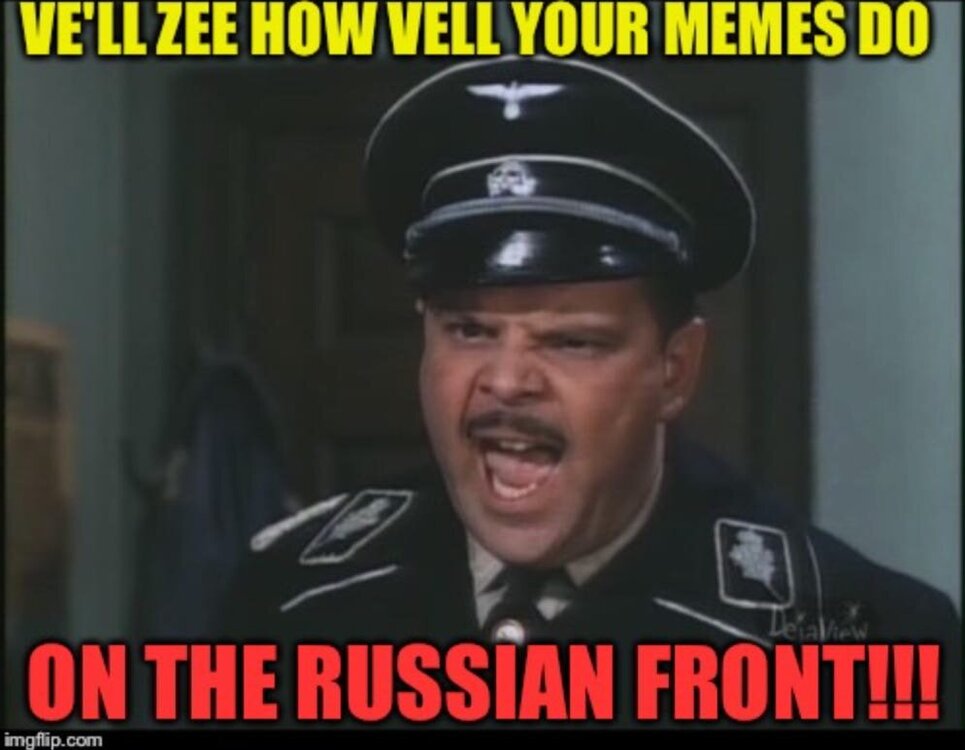
Those who follow me on X know what is coming up. It predates by years the Russo-Ukrainian War for reasons we will dive into later. We are surrounded by error, but specifically here, the habit of NATO, Eurocrats, earnest North Americans, politicians, military personnel, media, and civilians trying to sound serious in the national security arena, constantly looking towards Russia in the east and calling it NATO’s eastern flank. I’m sorry, I don’t care how many times you say it, it simply isn’t. It is NATO’s eastern front. After an exchange earlier this month with The Economist’s (and Midrats Podcast alumnus) Defence Editor Shashank Joshi, I decided I needed to put this out on Substack for future reference. Before we get going, let’s point out to everyone the foundation stone from the great man. I was a JO in the final years of the Cold War. I helped chase Soviets around from the Eastern Atlantic into the Arabian Sea as part of NATO formations and US operations—shifting between US and Allied encryption as a daily habit. I remember the clunky 1990s as NATO attempted to justify itself. I was there as former Warsaw Pact and Soviet Republics joined and integrated with NATO. I spent the last years of my naval career as a NATO staff officer. I was there. I got the extra vacation days. I know the drill. Sal is a free elf now, so I can call a spade a spade, or a front a front, if you will. At no point did we ever take our eyes off the threat to the east, Russia. Sure, the civilian Smartest People in the Room™ and the usual compromised suspects from the State Department would say silly things from their parallel-universe theories, but with the very rare exception those of us in uniform knew why NATO continued to grow and that Russia was going to be back. Of course, as an operational planner, we have our proper way of doing things. Especially in a multi-national environment, words mean things. For those who have English as a second language, proper words are exceptionally important. All the terms of the operational art have very specific meanings. As water is wet and fire is hot, so is the clear understanding of the meaning to two words: front and flank. They are so fundamental and their meanings so assumed universal, that some military dictionaries do not even have adequate definition of them. Many times, the definition of one is given in contrast to the other. You cannot have a flank without a reference to your front. You cannot have a front without a consideration of your flanks. As any good staff officer does, I have dictionaries with me. More than one. Some old, some new, because I will be arguing my native language with German staff officers…and they are good. I miss those arguments, but I digress. I could just tell people to read On War by Carl von Clausewitz, where he discusses fronts and flanks, but that would be too easy. Let’s dive back in. I like this definition of front from the 1779 Universal Military Dictionary from the Inspector of the Royal Military Academy at Woolwich, Captain George Smith. Remember the above, “To front every way, is when the men are faced to all fides (sides).” It will come in handy later. Next, let’s move up a century to 1881 and move across the pond to the American Republic to look at, A Military Dictionary and Gazetteer, by Thomas Wilhelm. As in the 18th Century we started with, even 19th Century English can be a bit of a challenge, but let’s look at the definition of flank when it comes to territory. Flanks of a Frontier. Are certain salient points in a national boundary, strong by nature and art, and ordinarily projecting somewhat beyond the general line. The effect of these flanks is to protect the whole frontier against an enemy, as he dare not penetrate between, with the risk of their garrisons, reinforced from their own territories, attacking his rear, and cutting off communication between him and his base. The key line here is, …ordinarily projecting somewhat beyond the general line. “General line” in that era was your center (front). In the definition of front, it refers the reader to the “strategy” section, specifically the below that is very applicable to NATO in Europe, A theatre of operations of an army may be defined to be all the territory it may desire to invade, and all that it may have to defend. Where several armies are employed, acting in concert, the theatre of operations of each army depends upon the movements of the other armies, and the theatres of operations of each army in this case are usually designated as zones of operations; although this term is also applied to those three divisions of a theatre of operations lying directly in advance of the centre and flanks of a front of operations. The key part here, those three divisions of a theatre of operations lying directly in advance of the centre and flanks of a front of operations. Again, you cannot define a flank without first defining a front (center). “Front” in this dictionary is mentioned 451 times. “Flank,” 288. I’m repeating myself because that is what the Navy taught me to do: always repeat the important things on the test. Let’s move up another 80 years or so and a slightly different view of war, the Soviet (Russian) view, 1965’s Soviet Dictionary of Basic Military Terms. Just do a word search for “front” and “flank.” There is no need to define each term, as their understanding is fundamental to everything else. What about something more up to date? OK. How about the actual doctrine the alliance’s largest partner? Yes, I know, However, Joint Publication 1-02, Department of Defense Dictionary of Military and Associated Terms from 2009. front — (*) 1. The lateral space occupied by an element measured from the extremity of one flank to the extremity of the other flank. 2. The direction of the enemy. 3. The line of contact of two opposing forces. 4. When a combat situation does not exist or is not assumed, the direction toward which the command is faced. There isn’t even a stand-alone definition for flank, the understanding is so basic. Here is as close as we can get. flank guard — (*) A security element operating to the flank of a moving or stationary force to protect it from enemy ground observation, direct fire, and surprise attack. So, now that we’ve set the clear fact of what words actually mean, why is NATO (and those who parrot its patterns) intentionally being foundationally in error? Any student of European diplomacy, bureaucracy, or former NATO staff officer will tell you: for the most silly political reasons. While there is an official reason why everything is a “flank” even the clear “front”, the issue is deeper and sillier than that. I was first introduced to this two decades ago, still wet behind the ears of the strange working of senior NATO staffs. As I mentioned in my exchange with Shashank, I also know the problem with front is done for two reasons: German sensitivity to the use of the phrase “Eastern Front” I had this explained to me by a General Officer my first year. I called it the “Hogan’s Heroes Effect.” He grinned and did not disagree. The influence of the Russia-Dove caucus not wanting to create any long term antagonism towards Russia. There is business to be done, and influences to feed. While #1 is rather silly, #2 is insidious and will come back with a vengeance once the Russo-Ukrainian War, or at least this phase of it, is over. While it is easy simply to dismiss it as academic faculty lounge theory, mercantilist greed, or just plain bad policy, do not for one moment underestimate the penetration of the decision making bodies in Europe by Russian security services. That influence represents a non-zero percentage of the disconnect from reality. As I outlined at the start of this, there is a more official reason as well. This linguistic Potemkin Village exists to support a zombie concept that though archaic in its view, hints at another very real challenge to the alliance. I’m referring to 2015’s, the “360 Degree Concept” that was made flesh in the 2016 Warsaw Summit. It was from the start a political cope to keep the stresses of the East-South issue in the alliance from being an issue. Like calling a biological man a woman, this language warping was and is simply a political expediency to avoid hard, but realistic, work. You can have two fronts, but that was not the decision here. Remember above, you can have a 360 front when surrounded, but you cannot have 360 degree flank. It is the military version of dividing by zero. The best summary of this is Christelle Calmels’s 2020 essay in European Security, NATO’s 360-degree approach to security: alliance cohesion and adaptation after the Crimean crisis. From the abstract, In the mid-2010s NATO allies were facing the resurgence of a Russian threat at their borders, as well as terrorist actions in Europe and the MENA region. This evolving security environment provoked heated talks both within and outside NATO on its adaptation, often depicted as being the sign of irreconcilable disagreements. Conversely, this article argues that the "NATO 360-degree" concept adopted during the Warsaw Summit shows cohesion between the allies thanks to the Alliance's decision-making process. As a security community, member states were incentivised to find common grounds despite their diverging interests, which resulted in this new concept encompassing the "arc of insecurity". Its subsequent implementation also confirms the cohesion hypothesis, despite its obvious refocusing towards the East and collective defence. This article will first present the diverging threat perceptions within the Alliance. It will then focus on the implementation of the "NATO 360-degree" concept, promoted during the Warsaw summit, to finish with an initial assessment of the changes at work. As in all things NATO, you have to get consensus. As the alliance has become larger, consensus has become more difficult. Some alliance members are less worried about Russia as long as the cheap energy flows than they are threats, mostly migration, from the south. In a more academic way, here is how the author outlined the two camps a decade ago. The eastern flank allies: NATO as the primary security provider against Russia The “Bucharest nine” format was created in 2014 at the presidential level by a PolishRomanian initiative (Sejm 2017). It brought together Poland, Bulgaria, Estonia, the Czech Republic, Slovakia, Lithuania, Latvia, Romania, and Hungary to discuss regional security issues and harmonise their positions with regards to the resurgence of the Russian menace at their borders (Interview with 2019-UZG). This regional grouping then progressively institutionalised itself and expanded to ministers, ambassadors and deputy permanent representatives to NATO as exemplified by the first official meeting of foreign affairs ministers, held in Bucharest in November 2016 (Interview with 2019-UZJ, Interview with 2019-UZR). Presented as a consultative format, Bucharest nine gathered several times in capitals and within NATO before the Warsaw summit in a context of Polish activism vis à vis the Alliance’s doctrinal evolutions (Interview with 2019-UZH, Interview with 2019-UZJ, Interview with 2019-UZO). Viewing the organisation as the “anchor” of their security, Bucharest nine countries achieved a united front before the summit on the increased military protection of their territory and the reinforcement of the NATO Command Structure. It led to a political declaration signed in November 2015 on a “strong, reliable and balanced presence” of NATO in the region (Poland in 2018). …. The southern flank allies: a mosaic of interests Before the summit, the international context was not only marked by Russian aggressive actions in its neighbourhood, but also by transnational jihadism rendered more tangible by the Islamic state’s proclamation of the Caliphate in June 2014. In the case of Turkey, the country had to deal with a grave diplomatic incident with Russia, a deterioration of its relationship with the US, as well as internal destabilisations caused by the Syrian refugee crisis and several terrorist attacks targeting its territory (Balci and Tolay 2016, Benhaim 2017, p. 95, Okyay 2017, pp. 837–838, 841–844). Described as being the only NATO country “neighbouring three major crises […] in Syria, Iraq and Ukraine” by its Chief of Defence (NATO 2015c), Turkey undoubtedly occupied a unique position among southern flank allies at that time. Turkey was also isolated diplomatically vis-à-vis its long-standing reluctance towards NATO–EU cooperation while its southern counterparts– all EU members– were pushing for a deepening of the relationship. In that regard, despite regular talks between Turkey and its Mediterranean allies within NATO, the country did not become part of the “Southern quartet” (Interview with 2019UZO). This latter gathered France, Spain, Italy, and Portugal for the first time in May 2016 at the Defence ministers’ level in Toulon. Less publicised than Bucharest nine, it nonetheless was formed to fulfil the same purpose of exchanging views and creating consensus between the southern European allies to promote their interests during the communiqué negotiations. In the article itself, Calmels states the obvious in the introduction—the only place “front” makes an appearance, “This first official mention (June 2015 NATO defense ministers official statement) of the “NATO 360-degree” concept aimed at showing the organization’s will to adapt by bolstering its eastern front defense while not neglecting southern challenges.” See, Carmel rightfully uses “front” here. This is when everyone else needs to realize that, like me, they are not NATO staff officers. Unless you are, you are under no obligation to toe their party line and play their word games. You do not have to adopt their error. Listen, NATO has its reasons for calling a “front” a “flank.” That is its institutional problem that it decides to soak in, based on an alliance argument over a decade old. Other people, properly understanding sound and established definitions and military terminology—with an honest view of what NATO exists for—are under no obligation to join the NATO nomenklatura in their error at the end of 2025. This Substack is reader-supported. To receive new posts and support my work, consider becoming a free or paid subscriber. Share Leave a comment View the full article
-
Embraer and Sierra Nevada Corporation (SNC) announced on September 23 that they have signed an agreement for the purchase of one A-29 Super Tucano light attack and reconnaissance aircraft. The deal, revealed at the Air & Space Forces Association’s Air, Space & Cyber Conference, comes ahead of an anticipated U.S. Foreign Military Sales (FMS) case. […] The post SNC buys A-29 Super Tucano for future FMS case first appeared on Defence Blog.View the full article
-
China has released the first official footage of flight operations from its newest aircraft carrier Fujian, now in the final stages of sea trials before entering service with the People’s Liberation Army Navy (PLAN). The images, published by the PLAN, show not only takeoffs and landings of the older carrier-based fighter J-15T but also the […] The post China’s carrier program enters new phase first appeared on Defence Blog.View the full article
-
His Majesty King Charles III formally welcomed the Royal Navy’s newest nuclear-powered attack submarine, HMS Agamemnon, into service during a commissioning ceremony at BAE Systems’ yard in Barrow-in-Furness. The milestone event marked the sixth Astute-class submarine to join the fleet. The King, departing from naval tradition, personally read the commissioning warrant, declaring the vessel ready […] The post Royal Navy commissions Astute-class attack submarine first appeared on Defence Blog.View the full article
-
Ukraine’s latest generation of naval drones has made its debut on the international stage. According to the defense outlet Militarnyi, the modernized Magura v7.2, along with two other Ukrainian uncrewed surface vessels (USVs), participated in NATO’s REPMUS exercise in Portugal, a three-week multinational training event focused on maritime innovation. The REPMUS series, organized annually by […] The post Ukrainian naval drones spotted in Portugal first appeared on Defence Blog.View the full article
-
Russia’s state-owned defense giant Almaz-Antey says it has sharply increased production of its advanced air defense systems, including the S-400 “Triumf” and S-350 “Vityaz,” amid the ongoing war in Ukraine. In a statement released by the company’s press service, Almaz-Antey said, “The commissioning of new production facilities allowed the company not only to deliver some […] The post Russia ramps up production of S-400 and S-350 systems first appeared on Defence Blog.View the full article
-
Gabler, a German defense company best known for its submarine technologies, has introduced concepts for two new uncrewed surface vessels (USVs) designed for torpedo tube launch. The announcement came on the opening day of the 27th DWT Naval Workshop in Dobbin-Linstow, where the company also revealed its updated corporate identity. The platforms, developed in partnership […] The post Gabler develops torpedo-tube launched uncrewed vessels first appeared on Defence Blog.View the full article
-
Renishaw, a specialist in additive manufacturing, announced it will present its latest defense-focused manufacturing solutions at the Defense Manufacturing Conference (DMC) 2025 in Orlando, Florida, from November 17–20. The company will highlight how its technologies support aerospace and defense applications by improving efficiency, accuracy, and cost-effectiveness across critical systems, from aircraft components to suppressors. According […] The post Renishaw to showcase additive tech at DMC 2025 first appeared on Defence Blog.View the full article
-
Raytheon, an RTX business, announced it has completed a major review of its Advanced Electronic Warfare (ADVEW) prototype, marking a key step in replacing the current electronic warfare suite on the U.S. Navy’s F/A-18E/F Super Hornet fleet. The review validated the prototype’s software integration with flight-representative hardware and confirmed its alignment with government reference architecture. […] The post U.S. Navy Super Hornets to get EW upgrade first appeared on Defence Blog.View the full article
-
Pratt & Whitney announced the development of a new family of propulsion systems designed to power both Collaborative Combat Aircraft (CCA) and advanced munitions. The engines, ranging from 500 to 1,800 pounds of thrust, are intended to combine adaptability, affordability, and speed of delivery as the U.S. military and its allies expand investment in next-generation […] The post Pratt & Whitney develops new engines for future unmanned aircraft first appeared on Defence Blog.View the full article
-
Lockheed Martin’s Skunk Works advanced projects division has introduced its newest unmanned combat aircraft, unveiling an advanced collaborative combat aircraft (CCA) called Vectis, designed to support U.S. and allied air forces in the next generation of air power. According to the company, Vectis is a Group 5 survivable and lethal CCA that brings together Lockheed […] The post Lockheed unveils next-gen unmanned combat aircraft first appeared on Defence Blog.View the full article
-
The U.S. Marine Corps has operated the Navy-Marine Expeditionary Ship Interdiction System (NMESIS) in Japan during Resolute Dragon 25. According to the Marine Corps, the system was employed after a notional fire mission on Camp Hansen, Okinawa, on September 21, 2025. The exercise marks another step in strengthening bilateral defense cooperation between U.S. forces and […] The post U.S. tests unmanned launcher vehicle in Japan drill first appeared on Defence Blog.View the full article
-
Raytheon Missiles and Defense has been awarded a contract modification valued at more than $271 million to continue production of the TOW missile system, one of the U.S. Army’s longest-serving anti-armor weapons. According to a Department of Defense announcement, the $271,377,812 modification (PZ0015) to contract W31P4Q-23-C-0026 covers the full-rate production of the Tube-Launched Optically Tracked […] The post U.S. Army expands TOW missile production first appeared on Defence Blog.View the full article

