HG S2 (Intel Bot)
Members
-
Joined
-
Last visited
Never
Everything posted by HG S2 (Intel Bot)
-
Germany has reached a new milestone in loitering munition development after a successful live-fire test combining the LION STRIKE 110 warhead with the VIRTUS drone, according to statements released by TDW and STARK. As noted by the companies, the demonstration marked the first time the LION STRIKE 110 (LS110) warhead was fired live from the […]View the full article
-
ARX Robotics says it has successfully designed and engineered a fully software-defined land system that can be operated remotely and, if required, autonomously, pointing to a shift in how ground logistics and support vehicles could be used in future conflicts. As noted by the company, the project relies on recent advances in safety-certified drive-by-wire technology, […]View the full article
-
President Donald Trump has unveiled a sweeping naval construction plan centered on a new class of nuclear-armed battleships, a move that would revive a ship type absent from the U.S. Navy for more than three decades and reshape future surface warfare. Speaking at Mar-a-Lago in Florida alongside Defense Secretary Pete Hegseth, Secretary of State Marco […]View the full article
-
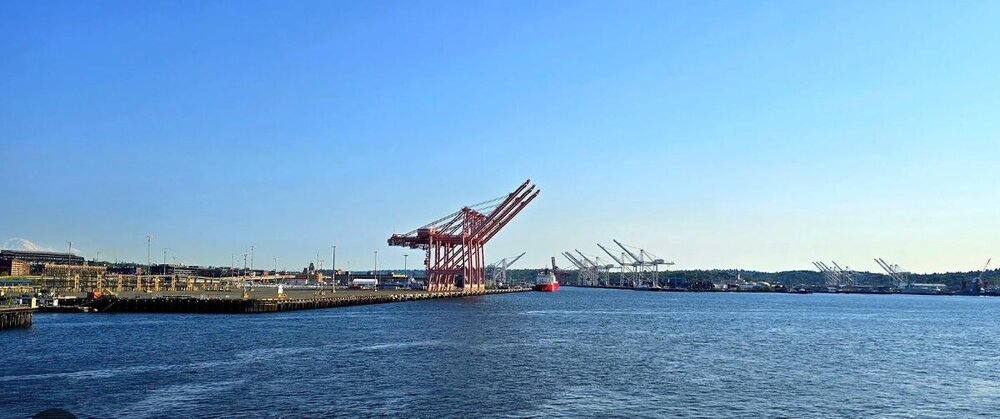
Though written from a distinctly Australian perspective, there is a great article from the Australian Naval Institute, Pax Americana to Pax Sinica, that would be a great way to start your week. What I find most useful is that it efficiently outlines why, from Washington, to Brussels, to Canberra, serious people should not simply shrug their shoulders as the U.S. Navy, foolishly, has allowed itself to become the world’s #2 navy, and fading. It should give you a few strong point to respond to people who don’t want to take the time to fully understand what it would mean for the People’s Republic of China to put its stamp on the world’s oceans that have been given a uniquely productive status by the firm, but gentle hand of Anglo-Saxon power at sea for the better part of two centuries, first by the United Kingdom, then the United States. If we could get a copy of Geoffrey Till’s Seapower: A Guide for the Twenty-First Century, that would help everyone, I believe. Till’s emphasises the relational character of maritime power[ii]; he argues the sea is not merely a physical domain but a political medium where the balance of naval capabilities determines the viability of norms. He identifies two conditions that sustain maritime order: Stable Naval Balances – Naval balance does not necessarily mean parity. Rather, it describes a situation in which the distribution of capabilities discourages unilateral coercion and maintains predictability among actors.[iii] Stability in naval power relations generates restraint, reducing the risk of escalation. Freedom of Navigation – Freedom of navigation is the practical expression of the openness of the maritime commons. Till notes that while international law codifies this principle, its enforcement depends upon naval capability.[iv] The ability to contest blockades, challenge excessive maritime claims, and guarantee passage is therefore central to its preservation. In Till’s conception, navies thus play a dual role: they are both guarantors of security and arbiters of access. Maritime order emerges when balances are perceived as legitimate and when freedom of navigation is respected in practice. Conversely, disorder ensues when power asymmetries tempt coercion or when norms of access are challenged by restrictive interpretations of law and sovereignty. This framework provides the lens through which the shift from Pax Americana to a potential Pax Sinica should be understood. This is a point that navalists understand as second nature, but we seem to keep to ourselves. We think it is self-evident, but like we discussed with John Kuehn on yesterday’s Midrats, we have not been selling the largest benefits of American sea power and the fact that it is a strengthening thread woven through everything the West assumes is part of the natural order. Nothing is granted. Each generation must ensure a stewardship of those positive things previous generations have bequeathed to the future. We are failing at that, and I don’t think we fully appreciate the second and third order effects. The ability to act without fear of maritime challenge reinforced the perception that American hegemony was both natural and enduring. The US Navy became synonymous with American capacity to intervene worldwide, an essential feature of Pax Americana. As Mearsheimer observes, ‘the stopping power of water’[viii] makes maritime dominance crucial for hegemonic states, and the U.S. Navy’s carrier fleet overcame this barrier by extending airpower globally. The casual presidential question reveals that even at the highest levels, the carrier was seen as the default instrument of U.S. geopolitical leadership. Unlike Pax Americana, which upheld freedom of navigation as a universal norm, the emergence of the People’s Republic of China (PRC) as a major maritime power and the green shoots of Pax Sinica risks privileging selective access and hierarchical arrangements. In this order, China could condition access to sea lanes or regional cooperation on political compliance, undermining the universality of maritime openness perceived by the drafters of UNCLOS. The rapid modernisation of the People’s Liberation Army Navy (PLA-N) has altered the dynamics of the Indo-Pacific maritime order. Within two decades, China has transformed from a coastal defence force into a blue-water navy. It now boasts the world’s largest fleet by numbers, including aircraft carriers, nuclear and diesel submarines, advanced surface combatants, and amphibious platforms.[ix] As the PLA-N expands beyond its near-seas focus to embrace expeditionary operations in the Indian Ocean, the South Pacific, and beyond, Beijing promotes an alternative vision of maritime order—one that privileges sovereignty, restricts access, and increasingly contests the universality of freedom of navigation. Australia is a large landmass, blessed with riches, with a small population. That gives her a special perspective. h/t Jennifer Parker.Leave a comment Share This Substack is reader-supported. To receive new posts and support my work, consider becoming a free or paid subscriber. View the full article
-
Ukrainian military intelligence says two Russian fighter aircraft were disabled during a fire at a military airfield near the city of Lipetsk overnight on Dec. 20–21, in what Kyiv describes as a sabotage operation carried out by the resistance movement inside Russia. According to a statement from the Main Intelligence Directorate of Ukraine, the incident […]View the full article
-
Russia’s state defense conglomerate Rostec says its Su-57 Felon fifth-generation fighter has completed its first flight using a new fifth-generation engine, known as “izdeliye 177,” marking what the company describes as a new phase in testing for the aircraft. According to a statement from Rostec, the United Aircraft Corporation and United Engine Corporation have begun […]View the full article
-
Textron Aviation Defense has finalized its first contract to deliver the Beechcraft T-6 Texan II integrated training system to Japan. According to a press release dated Dec. 21, Textron Aviation Defense confirmed it has completed an initial agreement to supply the Beechcraft T-6JP Texan II to the Japan Air Self-Defense Force. The contract was coordinated […]View the full article
-
Lockheed Martin has signed a memorandum of understanding with Hungary’s 4iG Space and Defence Technologies to develop a long-range rocket artillery system tailored to Hungarian military requirements. According to a statement from Lockheed Martin, the agreement focuses on integrating the company’s Artillery Rocket System Launcher Loader Module onto trucks built in Hungary. The resulting system […]View the full article
-
Turkish defense company ASELSAN has completed the integration and live-fire testing of two combat systems for Indonesia’s elite special forces. According to a statement published by ASELSAN Indonesia, the ASELSAN SARP 12.7 mm Remote Weapon Station and the ASELSAN SEDA Gunshot Detection System were successfully integrated on their designated platform and tested with live ammunition. […]View the full article
-
Hanwha Aerospace has expanded its defense cooperation with Estonia through a new memorandum of understanding with local firm GoCraft OÜ, as additional details emerged about Estonia’s acquisition of South Korean Chunmoo multiple rocket launcher systems and related industrial investments. According to a press release dated Dec. 22, 2025, Hanwha Aerospace signed an MOU with GoCraft […]View the full article
-
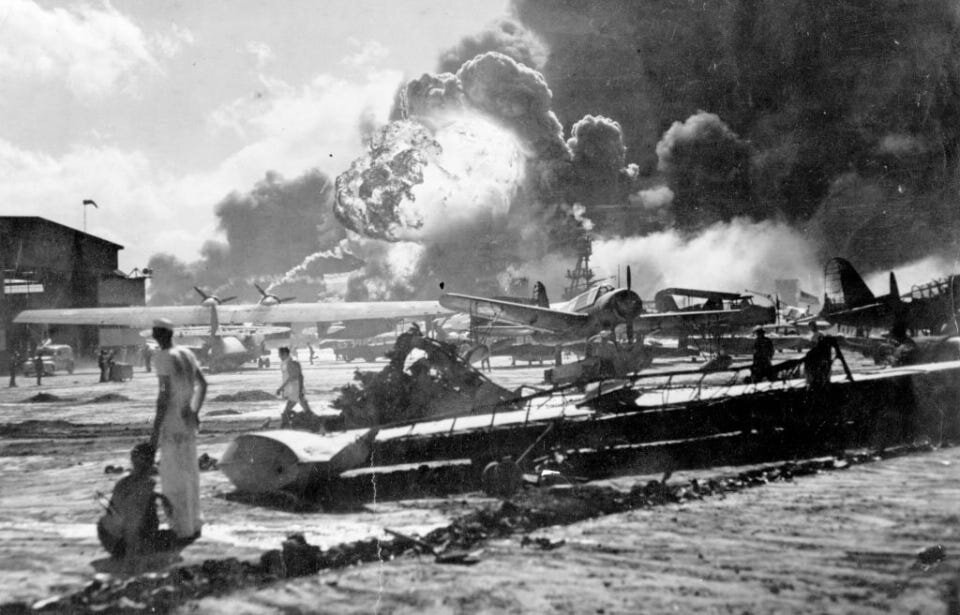
History isn’t just about the past; it’s a guide for today! On this episode, we unravel the myths surrounding Pearl Harbor and what they teach us about current global tensions with returning guest, John Keuhn. Dr. John T. Kuehn is Professor of Military History at the Army Command and General Staff College. He served in the US Navy as a naval flight officer flying in EP-3s and ES-3s, retiring in 2004. He has authored or co-authored seven books and was awarded a Vandevort Prize from the Society for Military History in 2023 for his article “Zumwalt, Holloway, and the Soviet Navy Threat Leadership in a Time of Strategic, Social, and Cultural Change.” His latest book from is Strategy in Crisis (Naval Institute, 2023). You can listen here, or at the Spotify widget below. SummaryIn this episode, Sal, Mark and guest John Kuehn discuss the historical significance of the Pearl Harbor attack, exploring its lessons for modern military strategy and the importance of public support in warfare. They analyze the complexities of the attack, the role of logistics in sustaining naval forces, and the geopolitical implications of sea lines of communication. The conversation also touches on the current state of the U.S. Navy and the strategic calculations of China in the context of potential conflict over Taiwan. Chapters00:00: Introduction and Context of Pearl Harbor 04:22: Understanding the Surprise Attack 10:41: Lessons from Pearl Harbor for Modern Warfare 17:27: The Role of Public Support in War 25:12: The Importance of Selling Naval Power 31:08: Logistics and Sustaining Naval Forces 39:42: Geopolitical Implications of Sea Lines of Communication 46:00: China’s Strategic Calculations and Modern Warfare 56:40: Conclusion and Future Considerations Leave a comment Share This Substack is reader-supported. To receive new posts and support my work, consider becoming a free or paid subscriber. View the full article
-
Egypt has reportedly signed a contract worth about $400 million to acquire 10 Chinese-made WJ-700 unmanned combat aerial vehicles. According to information circulating in Chinese and Arabic defense reporting, the agreement was signed in June 2025. If the deal is fully implemented, Egypt would become the second operator of the WJ-700 following Algeria, marking another […]View the full article
-
Germany has placed its first production order for the RCH155 wheeled howitzer, moving to introduce a new remote-controlled artillery system into service under a long-term framework agreement that could eventually reach 500 vehicles. According to the announcement, the German Armed Forces awarded the order to ARTEC GmbH. The contract covers the first 84 RCH155 systems […]View the full article
-
Raytheon has secured a United States Air Force contract to equip the autonomous X-62A Variable In-flight Simulation Test Aircraft, known as VISTA, with its PhantomStrike fire-control radar, expanding the service’s testing of autonomous combat aviation technologies. According to a press release, Raytheon will integrate the PhantomStrike radar onto the X-62A as part of ongoing Air […]View the full article
-
L3Harris Technologies has been selected to provide assured communications support for the U.S. Air Force’s E-4C fleet as part of the Survivable Airborne Operations Center program, extending the company’s role in one of the military’s most sensitive command-and-control missions. According to a press release, L3Harris Technologies will serve as a subcontractor on the SAOC effort, […]View the full article
-
The United States Army is taking early steps to modernize and sustain its UH-60M Black Hawk helicopter fleet, signaling plans to keep the platform in service well beyond mid-century as operational demands and technology continue to evolve. According to the Army, the Capability Program Executive Aviation, working through its Utility Helicopters Project Office, has issued […]View the full article
-
Boeing has partnered with Anduril Industries in a bid to develop a future air defense interceptor for the U.S. Army, as the service moves forward with plans to address emerging aerial threats through its Integrated Fires Protection Capability program. According to a press release from Anduril Industries, the company will provide the solid rocket motor […]View the full article
-
Airbus Helicopters says it has reached a new stage in the Tiger Mid Life Upgrade (MLU) program with the activation of a full-scale ground test facility designed to reduce risk ahead of flight testing planned for 2026. According to a statement from Airbus Helicopters, the newly activated “Helicopter 0” test bed reproduces the complete Tiger […]View the full article
-
Lithuania has approved plans to acquire 100 Swedish-made CV90 MkIV infantry fighting vehicles as part of a joint procurement with five other NATO allies, a move aimed at modernizing its ground forces and expanding regional industrial cooperation. The decision was approved by Lithuania’s State Defense Council, which also instructed officials to give special attention to […]View the full article
-
Ukraine’s Security Service of Ukraine (SBU) has carried out a second strike in recent days against Russia’s Belbek air base in occupied Crimea, destroying Russian military aircraft and damaging critical airfield infrastructure, according to the SBU press service. In a statement, the SBU said its unmanned systems hit the Belbek facility, resulting in the destruction […]View the full article
-
An unidentified unmanned aerial vehicle has crashed in an empty field in the Manyas district of Balıkesir province in western Türkiye. According to open-source intelligence analysis, the drone was recovered largely intact and transferred to Ankara for detailed examination. Initial assessments suggest the aircraft may be a Russian-made Merlin-VR reconnaissance drone, a long-range, low-noise intelligence, […]View the full article
-
A Danish startup is entering the unmanned logistics market with a family of heavy-lift, high-speed autonomous cargo aircraft designed to move large payloads over medium distances. Acodyne says it is developing an unmanned electric vertical takeoff and landing aircraft aimed at what it describes as the “middle-mile” logistics segment, a space between short-range drones and […]View the full article
-
UAE-based EDGE and Spain’s EM&E Group have signed a technology transfer contract that will allow the FEROX 6×6 armored vehicle to be manufactured in Spain. According to a statement dated December 19, 2025, the agreement is structured between EM&E Group and EDGE entity NIMR, a producer of wheeled military vehicles. Under the contract, EM&E Group […]View the full article
-
Electro Optic Systems Holdings Limited has secured a new order worth $21 million for its R400 Remote Weapon System, expanding the company’s international defense footprint and lifting its contract backlog above $400 million. According to a company announcement, the order covers the supply of R400 Remote Weapon Systems to a customer in North America. The […]View the full article
-
Slovakia has signed a long-term framework agreement with TATRA DEFENCE SYSTEMS for the supply of TATRA FORCE military vehicles across multiple configurations, establishing a procurement pathway valued at more than €1 billion ($1.17 billion). According to information released on December 17, 2025, the framework contract covers TATRA FORCE vehicles in 4×4, 6×6, and 8×8 variants, […]View the full article