All Activity
- Today
-
Bellator joined the community
-
An uncrewed patrol boat just fell out of an airplane at 1,300 feet and splashed down ready to go to work, and the company behind it says nobody has ever pulled that off before. Kraken Technology Group and Capewell announced on July 8 that they completed the world’s first extracted-load airdrop of an uncrewed surface […]View the full article
-
Every precision strike, every navigation-guided munition, and every soldier’s handheld GPS unit ultimately depends on a network of ground stations most Americans will never see, and the Space Force just handed Lockheed Martin $105 million to keep that invisible backbone working for the next generation of GPS satellites. The contract, awarded July 7, covers modifications […]View the full article
-
The U.S. Space Force just handed two young rocket companies a shot at billions of dollars in Pentagon launch business, expanding the exclusive club of firms trusted to carry America’s most sensitive satellites into orbit. Impulse Space and Relativity Federal joined a $5.6 billion contract vehicle called National Security Space Launch Phase 3 Lane 1 […]View the full article
-
Ukraine just secured a German promise to bankroll production of one of its most closely guarded new weapons, a jet-powered strike drone capable of hitting targets deep inside Russian territory, in a deal signed on the sidelines of the NATO Summit in Ankara, Türkiye. Ukrainian Foreign Minister Andrii Sybiha announced the agreement on X, confirming […]View the full article
-
Ukraine’s Air Force says it shot down another Russian fighter jet, announcing the kill in a brief statement that leaned more on bravado than battlefield detail. “Good news from the Air Force! Today we subtracted another Russian air terrorist! Glory to Ukraine! More to come!” the Air Force said in its official statement. The claim […]View the full article
-
Azerbaijan’s Ministry of Defense confirmed on July 6 that the country’s air force has begun operating JF-17 Thunder fighter jets, releasing a video showing two of the Chinese-Pakistani aircraft taking off and landing on training sorties, the first official acknowledgment that the long-promised fighters have actually entered service. OSINT analyst Guy Plopsky examined still images […]View the full article
-
Germany’s military is preparing to become one of the largest owners of a satellite fleet on the planet, second only to Elon Musk’s Starlink, with plans to put as many as 1,200 satellites into orbit by 2030 as part of a sweeping bet that future wars will be won or lost based on who controls […]View the full article
-
A fire broke out at the fuel storage area of Borisoglebsk military airfield in Russia’s Voronezh region overnight on July 8, following a drone attack that also struck other targets across the region and left residents reporting numerous explosions, according to video footage shared by the OSINT community Exilenova+. The footage appears to show flames […]View the full article
-
For nearly seven decades, American presidents tried and failed to get European allies to spend anywhere close to what the United States spends on its own defense, and NATO’s Secretary General says that changed on Donald Trump’s watch. Speaking to reporters ahead of the alliance’s summit in Ankara, Türkiye, Mark Rutte gave Trump direct credit […]View the full article
-
A ceasefire that ended a war three weeks ago collapsed within hours on Tuesday, after gunfire and explosions started flying between the United States and Iran again, and President Donald Trump stood in front of reporters at a NATO summit and simply declared it dead. The immediate spark was a string of attacks on commercial […]View the full article
- Yesterday
-
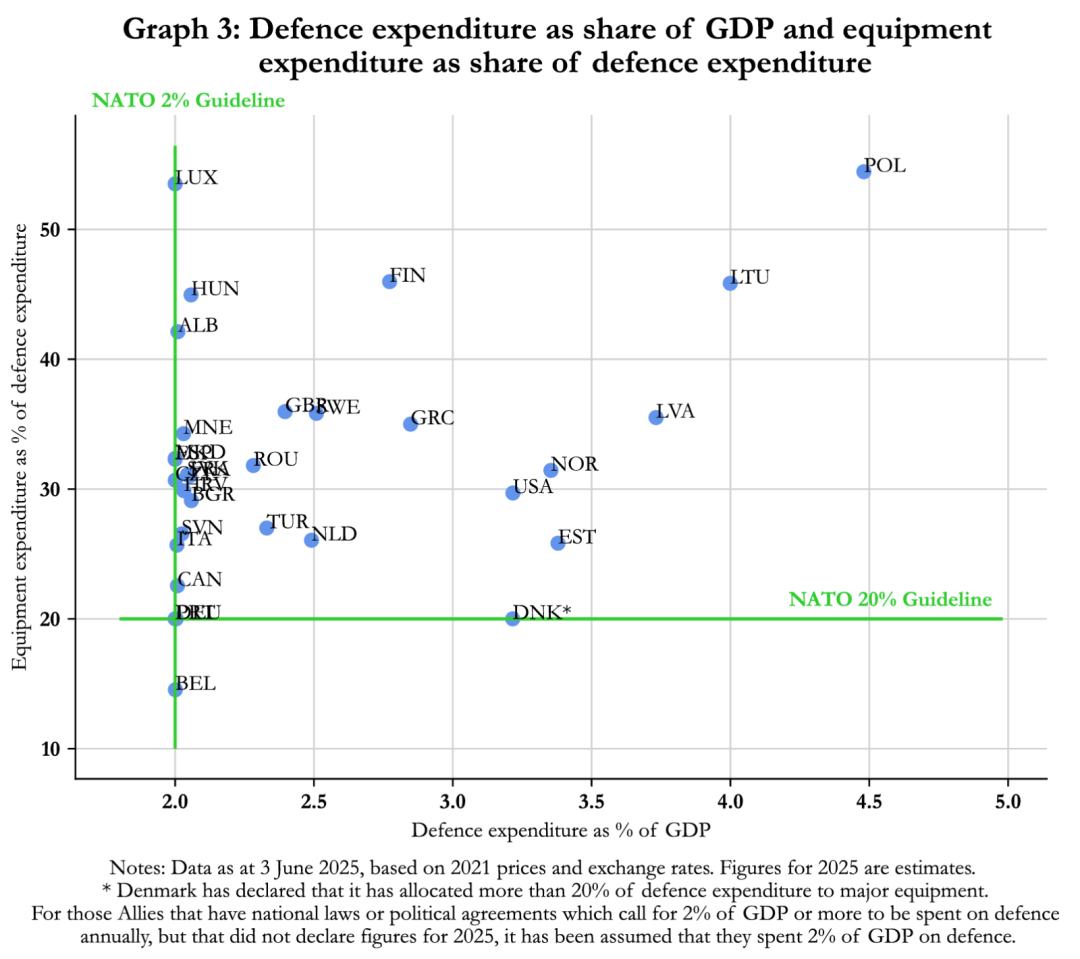
As the NATO Summit is ongoing, I think it is time for me and my American readers to have an adult conversation with each other, like adults. Calm, short, and to the point. If you have honored me with your visits for very long, you will know that for over two decades I have been pointing out the disgraceful level of free-riding our allies in NATO made a habit of. I saw it in person in its worst ways as a NATO staff officer in Europe and Afghanistan, as I wrote about it at the time. Since I returned home, I have returned to the subject on a regular basis. It would be an understatement to say that I have been exceptionally pleased to hear the argument brought to a wider audience over the last decade, and it was President Trump who never let that message go unheard. Agree with him or disagree with him—in whole, in part, or not at all—it has been his pressure, along with the Russian invasion of Ukraine in 2022, that pushed the alliance towards getting everyone to at least a fair share. Some just across the old baseline of 2%, but they’re there. The 2% was the pre-2022 mark, however. There is a new standard. NATO Allies are increasing their investment in defence to ensure that they have the forces and capabilities needed to defend every inch of Allied territory. At the 2025 NATO Summit in The Hague, Allies committed to investing 5% of Gross Domestic Product (GDP) in defence, strengthening their armed forces and ensuring fairer burden-sharing for Allies on both sides of the Atlantic. To that end, European Allies and Canada have been stepping up, increasing their combined defence expenditure by nearly 20% in real terms in 2025 compared to 2024. The 5% Hague defence commitmentAt the 2025 NATO Summit in The Hague, Allies committed to investing 5% of GDP annually on defence by 2035. This 5% commitment includes two essential categories of defence investment: Core defence requirements: Firstly, Allies agreed to allocate at least 3.5% of GDP to resource core defence requirements and to meet the NATO Capability Targets, based on the agreed definition of NATO defence expenditure (see below). Allies agreed to submit annual plans showing a credible, incremental path to reach this goal. Defence- and security-related spending: Secondly, Allies will account for up to 1.5% of GDP on broader defence- and security-related investments, for example to protect critical infrastructure, defend networks, ensure civil preparedness and resilience, innovate, and strengthen the defence industrial base. In 2025, European Allies and Canada increased their defence expenditure by over USD 90 billion (in 2021 prices, or close to USD 139 billion in nominal terms) – a nearly 20% increase compared to 2024. Over the past decade, they have steadily increased their collective investment in defence – from 1.4% of their combined GDP in 2014, to 2.3% in 2025, when they invested a combined total of more than USD 571 billion (in 2021 prices) in defence. The trajectory and balance of spending under this plan will be reviewed in 2029, in light of the strategic environment and updated Capability Targets. This is when we need to start to have our adult conversation. The USA is at the cusp of no longer having the moral high ground to complain about free riding allies in general. Specifically for those nations just hugging the 2% line, sure. We can no longer make a general statement. Denmark, Norway, Estonia, Lithuania, Latvia, and Poland are all doing more than we are from a relative effort point of view. For the record, I am not at all interested in arguing about this graph; it misses the point. We are a large, rich country with well-paid labor, environmental laws, and fairly transparent numbers you can rely on. We are quite happy to trade money for bodies. Apply that against any of these other nations. We also have global responsibilities and alliances—that we take seriously—that these other nations don’t have. No, what we need to understand is that if we want to be known as the, “Leader of the Free World” or want to ensure that the international order evolves in line with our vision—and the interplanetary order is set by our values and requirements—then we must remain the dominant power. If we want to lead our allies, we have to lead from the front. Being tied for #5 with Denmark on “doing our fair share” is not going to cut it…and our standing is about to get worse. Although the United States continues to spend much more on defense than any other country, CBO currently projects that defense spending as a share of gross domestic product (GDP) will decline over the coming years — from 2.8 percent of GDP in 2026 to 2.4 percent in 2036. That is significantly lower than the 50-year average level of defense spending of 4.1 percent of GDP, though subject to change in future appropriation cycles, reflecting lawmakers’ assessments of national security and geopolitical needs. I mentioned earlier we were “on the cusp.” If Congress does not allocate more funds for defense, that cusp will turn over and any complaints we might have about allied contributions to collective defense will at first ring hollow, and then drift into hypocrisy. That is the point where your influence wanes as it always does with declining powers. Decline is a choice. So is this. Only one NATO nation since 2014 has decreased its military spending as a percentage of GDP. That nation is the United States of America. That is while our primary competitor on the world stage, the People’s Republic of China, continue to grow in real and perceived military power. We need to stop making comments about responsible spending towards Brussels, and instead, start directing it towards the Executive and Legislative Branches in DC. We must put our money where our mouth is. Leaders lead and advance. At this snapshot in time, America is not leading, we’re lagging. Leave a comment Share This Substack is reader-supported. To receive new posts and support my work, consider becoming a free or paid subscriber. View the full article
- Last week
-
This photo is our back garden taken through the back door window.
-
The old kangaroos often make our place a retirement home.

-
Canada chooses TKMS as preferred bidder for CPSP submarine fleet (Canadian Defence Review)
-
Picture a robot you could carry up a flight of stairs, remotely towing a military truck that outweighs a fully loaded school bus, and doing it without breaking a wheel. That is the scene an American robotics company says it captured on video from a recent U.S. Army demonstration, and if the footage holds up, […]View the full article
-
Ukraine’s Army Aviation command plans to retire its Soviet-designed helicopter fleet in favor of American-made UH-60 Black Hawks, Brigadier General Pavlo Bardakov, commander of Army Aviation under Ukraine’s Ground Forces Command, told LIGA.net in an interview published last week. Bardakov said the shift away from Ukraine’s existing Mi-8 and Mi-24 helicopters has become unavoidable, because […]View the full article
-
A steady flow of American personnel moving in and out of Wuhan Camp in Longtan, Taoyuan, some driving civilian rental cars and others on foot, has drawn renewed attention to the scale of the U.S. military’s ongoing special operations presence in Taiwan, according to a report circulating from United Daily News (UDN) article and amplified […]View the full article
-
A Chinese Navy submarine fired a nuclear-capable ballistic missile into the Pacific Ocean on Monday, and Tokyo says it “strongly urged” Beijing to call off the test beforehand, the Japan Times reported. The launch, carried out with a mock warhead rather than a live one, hit its intended impact zone according to China’s state-run Xinhua […]View the full article
-
Is it a good idea to start the week with a nightmare? Of course it is. All the cool kids like to talk about the “cyber domain” and the “digital battlespace.” Heck, we try to be cool ourselves here now and then…but there is something we don’t appreciate as much as we should. We know that in 2026 we do not have enough strategic sealift nor enough strategic airlift to move what we need to move if we should find ourselves in a fight west of the International Date Line. Heck, we’re not that sure we can even do a much easier lift to Europe should things get sporty there for more than a punitive expedition. During the latest Iran conflict, we did kind of smoke check our airlift capability…but we should be clear—the Iran strikes were just an exercise compared to what general war in the western Pacific or on continental Europe would demand. Either would be a near run thing. We would have to pray that everything goes just right with the very unsexy things such as trucks, containers, trains, and the fuel that all of them need…before they even get to airlift and sealift. Much of that feeding the large grey ships and aircraft aren’t just dual-use, it is mostly—in the U.S.A.—civilian. Back to our nightmare. When was the last time you talked to someone in the civilian logistics arena about their cyber security? While you ponder that, give the following over at MWI a read, Mobilization as Deterrence: The Strategic Case for a Big Lift 2.0, by Jonathan Buckland. He’s got your very believable nightmare. When the deployment order is given, they pull the trigger. A cyberattack strikes the national rail network. Dispatching systems fail. Trains do not stop moving everywhere, but they stop moving predictably. Routes back up. Crews cannot be properly assigned. Rail yards become parking lots. Simultaneously, municipal water treatment facilities near major mobilization installations are compromised, and regional power grids feeding strategic ports fluctuate. The Defense Finance and Accounting Service is shut down; no soldier receives pay. The system is not physically destroyed; it is delayed, confused, and paralyzed just enough to ensure the US forces arrive too late. At the same time, military logistic planners discover that there are not enough suitable railcars immediately available to move tanks, Bradley fighting vehicles, recovery vehicles, artillery, engineering equipment, and sustainment platforms at the required scale. The brigades exist. The equipment exists. The will exists. But the transportation capacity does not. Then a drone swarm from an offshore commercial vessel hits a major US port. It does not need to sink ships or destroy the entire facility. It only needs to inflict damage to cranes, fuel systems, rail connections, staging areas, or command-and-control nodes. One port becomes unusable. Another becomes overwhelmed with vehicles. A third has limited capacity for heavy military equipment. The problem compounds by the hour. The United States is now fighting a major battle mobilizing on its own soil before it can even deploy. Convoys are delayed before they leave home station. Equipment stacks up at railheads. Ammunition movements are slowed by routing restrictions. Port call timelines collapse. Commercial carriers hesitate. Insurance costs spike. Civil authorities demand answers. Combatant commanders demand timelines. Allies demand reassurance. The president demands options. The standing military is ready to fight, but the nation is not ready to move it. Like the old hippies used to ask, Well, that’s not quite right. One side would arrive, rather quickly I would guess. It is just that, after sweeping aside the minor player, the other major player can’t arrive in any meaningful strength. The opposite of being the firstest-with-the-mostest, we’d be the lastest-with-the-leastest. This is the brutal reality of peer war: The enemy does not have to defeat the joint force in Poland or Taiwan if it can prevent it from arriving in time, in mass, and with the sustainment required to endure. A peer adversary will not wait for American mobilization to unfold uncontested. It will attack the connective tissue of national power: rail, ports, power grids, cyber networks, fuel distribution, shipping capacity, industrial production, and political will. In this scenario, deterrence fails not because America lacks soldiers, tanks, aircraft, or ships. It fails because the adversary correctly calculates that the United States cannot convert its military power into combat power fast enough under attack. Mobilization is no longer a rear-area administrative function. It is the opening campaign of modern war. The central question is no longer whether the United States possesses military power. It is whether the nation can convert that power into deployable combat capability under attack. The answer to that question will shape adversary decision-making long before the first shot is fired. The larger nightmare would be that what few forces we could get forward would be too few and too under-supported, arriving in drips and drabs, if at all. It would be Corregidor and Singapore all over again. It doesn’t have to be this way. All we need to do is be brutally honest with ourselves. No happy talk. No mindless FITREP bullet writing mindset. Just cold, hard truth—followed by corrective action. Buckland has a solid idea. Remember a little over three years ago we called again for a new REFORGER? Buckland has an even better idea. In 1963, the United States conducted Operation Big Lift—a strategic message to Moscow. More than fifteen thousand American soldiers deployed from the United States to West Germany in a matter of days, demonstrating the nation’s ability to rapidly reinforce NATO during the height of the Cold War. The exercise reassured allies, strengthened deterrence, and showcased America’s strategic reach. Yet Big Lift was conducted under conditions that no longer reflect the realities of modern warfare. Personnel flew to Europe, where equipment was already waiting. Transportation networks were uncontested, communications were secure, and the exercise assumed a level of strategic sanctuary that future conflicts are unlikely to provide. Even Operation Desert Shield in 1990, the largest American strategic deployment since World War II, shows us only what mobilization looked like when strategic sanctuary still existed. As the title of his article says, Big Lift 2.0: now more than ever. Big Lift 2.0, a deliberately planned and executed national stress test, would fundamentally redefine military deployment exercises by shifting the baseline operational question from Can we move soldiers? to the realistic, contested challenge of Can we mobilize a corps while an adversary actively attempts to stop us? To execute a national-level stress test of this magnitude, the Department of Defense must transition from dangerously optimistic peacetime assumptions to a realistic, contested operational framework. This requires a progressive crawl-walk-run training campaign. Within the next five years, the military should operationalize these requirements by executing a senior-leader tabletop exercise as the crawl/walk phase, followed by a physical, corps-level deployment as the run phase. The campaign begins with a national mobilization tabletop exercise designed to stress-test senior leadership across the interagency and commercial sectors without the immediate logistical burden of physically moving heavy brigades. This exercise would gather key stakeholders including Army commands, US Transportation Command, the United States Maritime Administration, commercial rail operators, port authorities, the Department of Homeland Security, and allied partners to navigate the deployment of an armored corps within thirty to forty-five days against a peer adversary. Planners would have to navigate hard, asymmetric friction injectors modeled after real-world threat vectors. This includes Volt Typhoon–style cyber disruptions targeting civil power grids, municipal water systems feeding power-projection platforms (installations), and commercial port control systems. To succeed, leaders would have to answer complex questions regarding railcar prioritization, manual and analog port operations, and emergency civil-military coordination when primary power, communications, and utility systems fail. The required end state of this tabletop is not a standard briefing, but a rigorous assessment of national mobilization gaps that directly informs a funded, actionable mobilization campaign plan. Once the strategic and interagency decision-making frameworks are validated, the military must transition to the run phase: a comprehensive, physical mobilization exercise that tracks a corps-level force through five progressively contested phases: Yes, all of this—yes. Head on over if you have not already and give it a full read. Would this be expensive? Hell yes, but it would be the best investment we could make. …and I would do it with almost no notice. Make it the 21st century version of 1941’s Louisiana Maneuvers. The Philippines would be the perfect place to host the exercise Find the weaknesses in your equipment, thinking, everything…but especially in your people. Want to find out where the gundecking has been in logistics? This is a great way to start to find it. Want to purge senior leaders who got where they are by overselling themselves and maneuvering around challenges as opposed to fixing them? This won’t catch all of them, but I would wager a plurality of them. Fear and shame are great motivators. Just make sure no one can PCS between the exercise announcement and the completion of the debrief. In parallel, I’d red-team all IT in the companies and infrastructure we will have to rely on should war come. Learn what is not ready for game day. Fix what we can, then have a primary, backup, and ready spare capability. Leave a comment Share This Substack is reader-supported. To receive new posts and support my work, consider becoming a free or paid subscriber. View the full article

-
Robert Brovdi, the Ukrainian commander known by his call sign Madyar who leads the country’s Unmanned Systems Forces, said on social media that his units destroyed two launchers belonging to Russia’s S-400 Triumf long-range air defense system, along with a Nebo-U early-warning radar. It is worth noting that one of the S-400 launchers was destroyed […]View the full article
-
Photographs and video circulating on social media appear to show a Russian Su-57 stealth fighter trying, and failing, to stop Ukrainian strike drones from reaching Russia’s largest oil refinery on July 6, 2026, a claim that, if confirmed, would mark a rare and embarrassing operational failure for one of Russia’s scarcest and most advanced combat […]View the full article
-
A Ukrainian robotics company released video footage of its heavy unmanned ground vehicle crossing a plowed field at speed, visual proof that a machine built to haul two tons of ammunition, food, or wounded soldiers can actually handle the kind of broken, rough terrain that would stop a human-driven truck cold. Ukrainian developer VATAG posted […]View the full article
-
A Russian surveillance plane flew dangerously close to Britain’s flagship aircraft carrier and dropped a swarm of underwater listening devices nearby before ignoring repeated radio calls, forcing two fighter jets to scramble and chase it away. The UK Ministry of Defence confirmed that while operating in the Norwegian Sea as part of Operation Firecrest, the […]View the full article
-
A South Korean Marine unit sent a robot on four legs walking point ahead of its own troops during a live combat exercise last week, a small but telling sign of how the country’s military is trying to solve a problem that has nothing to do with technology and everything to do with demographics. The […]View the full article
-
A Polish aircraft repair plant that has spent decades overhauling aging Soviet-era jets is about to start building brand-new American cruise missiles instead. Wojskowe Zakłady Lotnicze Nr 2, a Bydgoszcz-based facility that operates under Poland’s state-owned defense conglomerate Polska Grupa Zbrojeniowa, known as PGZ, signed an agreement paving the way for the assembly and production […]View the full article