gemerson
Members
-
Joined
-
Last visited
Files posted by gemerson
-
BRICS Campaign - Scenario #4: Kara-Kai Shakti
A Harpoon Commanders Edition (HCE) scenario for the Indian Ocean 2003 Battleset.
This scenario is designed for play by the RED side.
Scenesetter: (Taken from “The BRICS Conflict – A Brief History of the Third World War (2016 to 2018)”)
A little known fact of the year 2012, was the cause of the Indian blackout that parlyzed the nation on 30 and 31 July. The largest power outage in history was caused by the inadvertant release of a computer virus into India's fragile electrical infrastructure. The digital vector was designed to attack command and control (C2) systems. When a technician was running a series of operational tests in a commuter model, he accidentally released it onto the country's power grid. The cyber warfare agent was part of a secret program to cripple Pakistani C2 systems in the event of war. This fact wasn't learned until years later, when surviving Indian records from the BRICS War were examined.
As the global economy began its meltdown in 2012 - 2013, India started making plans to solidify its position on the Asian Sub-Continent. After all, thought the leaders in New Delhi - it is the 'Indian Ocean.'
After getting the approval of other BRICS members, India began cultivating relationships with several regional minor entities. One paid-off splendidly, while two others produced serious blow-back.
In 2014, Indian Intelligence succeeded in initiating a coup that overthrew the government of President Zillur Rahman. This established a puppet government, which formed a buffer on India's eastern border. India and the new 'President' established the United Indian Alliance (UIA), for the good of all peoples in the greater Indian Ocean region.
At the same time, India attempted to influence and depose the governments of both Sri Lanka and Myanmar. New Delhi thought - if it worked once, surely it would again! Sadly, both scandals broke onto the world stage almost simultaneously and they left an embarassing mark.
For several years Sri Lanka had been a very favorable trade partner with India. The Sri Lankan Navy-Coast Guard had benefited from newer OPVs and other patrol vessels, provided by Indian shipyards. This changed in early 2014, when it was leaked India was unduly influencing these sales through bribes to the Minister of Defence and the senior staff of the Sri Lankan Armed Forces. It seemed the sale of these new naval vessels were being subsidized by more than just 'offsets' to help the Sri Lankan economy. As a result, several days of riots occurred in the streets of Columbo. The people were livid that while they were starving, those in control were being bought-off by India.
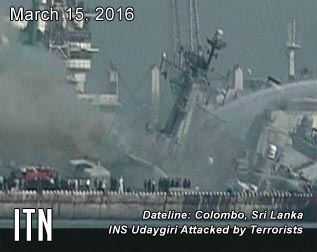
Sporadic protests reached thier boiling-point in the Spring of 2016, when an Indian Navy frigate was attacked by Sri Lankan nationalists. The INS Udaygiri a nilgiri class frigate visited Columbo, carrying dignitaries hoping to negotiating the restart of naval shipbuilding contracts. As the ship was pulling into port, it was rammed by a harbor tug that had been commandeered by nationalists and loaded with explosives. The blast ruptured the hull at the waterline and caused the ship to sink quickly. Many of the crew had been manning the rails and a majority of diplomats were also topside. The blast and flying shrapnel decimated them. Indian media treated the event like their version of the Hindenburg disaster. Almost simulatanously, bombs exploded at each of India major shipyards. The message was quite clear - India was not welcome in Sri Lanka.
The situation with Myanmar was somewhat different. India had been secretly supplying anti-government forces with a variety of arms and equipment. In late 2014, a missionary relief flight was shot down by a SA-24/Grinch, fired by anti-government forces. Several rebels were captured by government forces under UN supervision. Evidence released to the world press indicated the missile came from Indian sources. The Myanmar Junta shouted to the cameras of the world media that india was funding an effort to topple the 'ligitiamte' governmental authority. The Burmese people became drunk on xenophobia and more anti-Indian protests paralyzed the region for days.
(Side note: A postwar forensic investigation of recovered data showed the leaked information were clever forgeries, produced as part of a espionage campaign by Pakistan, to embarass India in the eyes of the world)
The leaders of India were furious at the situation they found themselves in. They pushed for quick and decisive action at several meetings of the BRICS Central Committee, but were rebuffed each time and were asked to be patience. Great opportunity must be siezed at just the right time China's leader stated. Finally in late 2015, the BRICS Executives met secretly in Rio de Janero as the global economic situation was worsening. Plans were finalized to craft the world in an image of their choosing. Brazil would become the leader of a new Pan Latin American Republic (patterned loosely on the EU model, but led by puppets under the control of the large South American nation), Russia would gain control of the emerging Arctic region, China would sieze control of the vast western Pacific, South Africa would develop the African sub-continent and work to reform and develop the starving Saharan region.
India besides teaming with South Africa to develop MENA (Middle East - North Africa) would be the gatekeeper of the world's oil supply in the Arabian Gulf region. The Indian Prime Minister, Nur Ghandi (only distantly related to the famous family, yet extremely capable of capitalizing off it) was pleased. After all she thought - it was the 'Indian Ocean.'
It was agreed that when Venezeula (after being supplied and prompted by Brazil and Russia) attacked neighboring Columbia, India was to initiate a cyber attack on Pakistan and then conduct a follow-up air and ground campaign. Meanwhile at the same time, seizing Sri Lanka and the Bay of Bengal (inluding Myanmar), thus establishing its dominance over those who had embarassed it.
-
BRICS Campaign - Scenario #3: Northern Moves (Part TWO)
A Harpoon Commanders Edition (HCE) scenario for the North Atlantic 2003 Battleset.
This scenario is designed for play by either BLUE or RED sides.
Scenesetter: (Taken from “The BRICS Conflict – A Brief History of the Third World War (2016 to 2018)”)
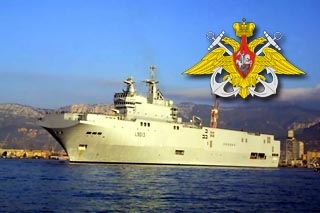
The 60-hours following the kick-off of Operation: Northern Moves was a global whirlwind of activity. Thouroughly out-matched, the Baltic forces of Norway, Sweden, Finland, Poland and the Baltic States were destroyed piecemeal by the naval and air forces of Russia's Northern and Baltic fleets. The Mistral amphibioous assault ships brokeout of the littoral Baltic Sea into the North Atlantic, where they linked up the the RFS Admiral Kuznetsov battle group. Russian air assets stormed over the region, laying waste to most of Norway and Swweden's air capabilities. Although most of the Royal Norwegian Navy (RNoN) was sank in port, the RNoN's submarine force remained relatively undamaged, as several units were at sea conducting training with UK Royal submarines.
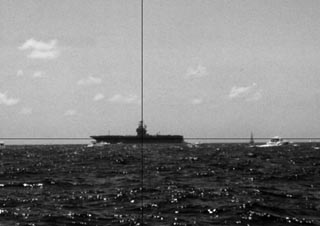
Canada was furious over the closure of the Northwest Passage (NWP). In response the US ordered the Harry S. Truman Carrier Strike Group (CSG) into the region to force the issue. Within hours of changing course northward, a hail of submarine launched anti-ship missiles were vectoring toward the US Navy ships. More than half the missiles were stopped short of their intendd tagets, but those that made it through the layers of standard missiles, ESSMs electronic and mechanical countermeasures and CIWS slammed into two Arleigh Burke class DDGs, sinking them within minutes and the CSG's centerpiece itself. 'Give'em Hell Harry' was in a fight for it's life similar to the old USS Forrestal. More than half the embarked carrier airwing was decimated on the flight deck and hangar bay by missile detonations and the resulting fires. The carrier's LOX (liquid Oxygen) storage unit off the hangar bay was ordered jettisoned, before it could explode and completely destroy the ship. As the ship was fighting for its life, the remaining aircraft were launched from the bow catapults bound for the Azores. The fires took fully 48-hours to get control of and more than 1,000 people lost their lives in the attack and combatting the resulting damage. Still able to maintain a speed of twelve-knots, the ship began limping to Rota, Spain.
With the sweet taste of victory upon its lips, the Russian naval forces quickly moved to take advantage of the situation in the north. The heavy cargo shipped to Greenland contained Club-M missile batteries and advanced surface-to-air missiles systems. Russian Arctic forces quickly assembled the battery nearby, as a means of keeping the NWP closed to all non-BRICS forces. Jan Mayen Island was assaulted by SPETNAZ and airborne forces. The airfield was secured intact and Russian air assets quickly landed, ferrying in equipment to fortify the facility.
Without any viable means of defense, Iceland was quickly surrounded. It was agreed in the planning stage of Northern Moves, to jump past the island nation and let it appropriately whither. Once starved, amphibious forces loitering off the coast would conduct a landing, to capture it intact as well.
Submarines were the force equalizer in the opening days of the BRICS Conflict. Russia had pre-positioned many of its best units under the guise of a training exercise. In the opening hours of hostilities, several units screamed into the Atantic at highspeed, to begin interdicting shipping. At the same time, the US submarine fleet had avoided many of the budget cuts imposed by countless wrangling over the defense budget. Several units were in key positions around the world, as things went from bad to worse.
Russian Naval Headquarters in St. Petersburg:
Fleet Admiral Mikhail "Misha" Stanislav Petrovskiy was pleased with the progress of Northern Moves thus far. Casualties had been minor, but as they said in the west - you have to crack a few eggs, to make an omelet. Pity, one of them had been the Antyey class submarine Omsk. The Oscar II had successfully hit the American carrier group, but had been retaliated against. The guided missile strike platform was lost with all hands. The sailors had did their duty well - the carrier was severly crippled and limping from the field. If the Kuznetsov and Peter the Great could find it, it could be removed from the equation, before it reached the safety of the US base in Rota.
Studying a map of the Atlantic, he knew his current goal was driving a wedge into the ocean and preventing the US from resupplying its few remaining allies in Europe. Canada was a nusance. With the NWP closed and being fortified, the puny resistance by the US's northern neighbor would be inconsequential.
He picked up the telephone receiver and asked his assistant to come into his office. It was time to begin issuing the daily operational orders to the fleet.
-
*** Red Side Only ***
Scenesetter: (Taken from “The BRICS Conflict – A Brief History of the Third World War (2016 to 2018)”)
Historians argue about the affect the claims dispute over the Arctic region had in the conflagration that became known as the BRICS Conflict.
As Europe’s economy melted down in the early years of the 21st century’s second decade, Russia established itself as one of the dominant economic powers in the Northern Hemisphere. In 2011, the International Monetary Fund ranked Russia as having the fifteenth strongest economy (based on its net international investment position (NIIP)). As the financial futures of Germany, Belgium, Netherlands and Denmark plummeted in the crash of 2012; Russia’s ranking rose on the back of it’s petroleum revenues, al low, fixed domestic income tax and global arms sales. In a strategic move, Russia offered to bail out Denmark by paying off its entire national debt – in exchange for its claims on Greenland – an offer it couldn’t refuse.
The move caused uproar in the UN with other Arctic region claimants (particularly Norway, Canada and the US). On the floor of the General Assembly President Vladimir Putin addressed the global political organization, making the solemn promise of keeping the region de-militarized (something NATO didn’t do during the Cold War). Additionally, travel along the Northwest would remain open and free.
With the assembly’s approval of Russia’s acquisition, the largest land deal in recent memory occurred and the opening moves of the coming global war occurred.
Russian Naval Headquarters in St. Petersburg:
Fleet Admiral Mikhail Stanislav Petrovskiy was up very late, going over planning for the upcoming operation. “Misha,” the admiral thought to himself, “You can’t keep doing this.” He glanced at the clock – 0200 and out the window of his office. Although the White Night celebration was three weeks ago, there was still a considerable amount of light outside, at time of year.
He picked up the intelligence reports again and cursed out loud, “Idiotic Venezuelans! What does Brazil thinks it’s doing down there!” He rubbed the stubble on his chin as he thought. The attack by Venezuela’s Navy on the forces of the US Navy and the Colombian fleet had occurred almost three weeks ago – about the same time as White Night. “Funny,” the admiral thought, “It’s interesting how things occur.”
The Venezuelans were supposed to wait until the first shipments of Club-M multi-purpose missiles were delivered and placed, before launching their strike. However, authorities at higher levels must have thought differently. Because of this small change in plans, Misha was ordered to move up the schedule on Operation: Northern Moves, the BRICS bid for power in the northern reaches.
Misha smiled to himself. The plan was challenging, yet beautiful and he said out loud, “Fortune favors the bold.” He didn’t know who had coined the phrase, but when he heard it years ago in Washington, DC as Naval Attaché, he loved it. It was Football, in a soccer world. He had fallen in love with the American’s sports pastime and the embassy proved excellent seat. The beer left something to be desired, but the cheerleaders on the sidelines were quite another thing! Soccer clubs could learn a thing or two from the Americans there! As he studied the sport, he saw in the various moves and plays, applications that could be applied to naval warfare. He had used his love of the sport, in planning this operation.
A two-pronged and preceded by a feint to catch the opposing team off guard, then the Hail Mary pass! As he rubbed his chin, he knew the Baltic was going to be the difficult part. The Scandinavians and the breakaway republics had screamed like stuck pigs over the Mistrals. He knew there would be hell to pay, getting them into open territory for a run to the north.
He knew great rewards are never cheap. Yes, Fortune was a fickle lover and she always spurned the weak at heart. With that, he picked up his pen to begin drafting the operations order.
-
BRICS Conflict #1 (Circa 2016 - 2018) - Monkey's Paw (Battle of the Netherlands Antilles)
BRICS - An economic (and military) alliance between Brazil, Russia, India, China and South Africa. From the present to this hypothetical series of engagements, the alliance had influenced several other nations and influenced a number of clients.
Scene Setter (Taken from "The BRICS Conflict - A Brief History of the Third World War (2016 to 2018)"):
The 2013 attack by the US and Israel on Iran has caused oil and Petroleum prices to sky rocket. OPEC has chosen to keep the prices high in order to help establish a new Persian Republic. As a result of high energy and fuel prices, the Eurozone, US and other western economies, which were in economic trouble in 2011-12 collapsed into a second deep recession, with no end in sight.
The seemingly innocuous economic alliance born in 2011 was now riding a wave of economic influence and geo-political power. The economies (and more importantly, the defense budgets) of Brazil, Russia and South Africa have been capitalizing off of vast oil revenues and have been pouring in from their existing and newly discovered reserves. Both China and India have been enjoying an industrial boom, at the expense of the old order economic powers that have been withering. A large number of second-tier economies in the Asia-Pacific, Sub-Saharan Africa and Latin American economies that have developed or recovered more quickly, have attempted to stay neutral as the storm clouds have been gathering.
In May 2016, as the BRICS alliance and their surrogates attempted to sweep away the old order and establish their place on the world stage, the world war many feared would occur started in the most unlikely of places - the Caribbean Sea.
Background:
When the Netherlands economy crashed with the rest of the Eurozone, it liquidated several territorial holdings in an attempt to save money. In 2014, the Netherlands Antilles in the Southern Carribean Sea was divided between Columbia and Venezuela. Shortly thereafter, a vast oil and natural gas reserve was discovered undeneath the continental shelf in that location. Venezuela's Hugo Chavez immediately claimed the whole area and old animosities between Venezuela and iits Western neighbor Columbia, resurfaced.
Columbia took the peaceful path toward development. They contracted with the US oil companies eager for work, in the struggling post-recession business climate. It was discovered their reserves rivalled Brazil's. Once production began and revenues came poring in, Columbia used its revenues to improve its economic standing in the Latin American region.
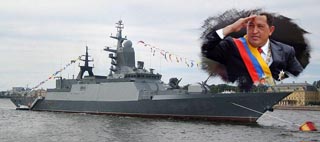
Venezuela on the other began preparations fo take the reserves by force. Chavez, now suffering from another serious bout of cancer signed several agreements with Brazil and Russia, which included contracts for defense infrastructure improvements. In 2015, Chavez lost his fight against cance and died. His successor claimed Columbian spies had poisoned him, causing the cancer. Venezuela began inciting the few anti-government groups left in Columbia , in an effort to foment class warfare. Lastly, Brazil brokered a deal with Russia on Venezuela's behalf or several new naval platforms including a new Steregushchiy class frigate, which was named the Hugo Chavez and two next generation Kilo class submarines, armed with the Club family of missiles. These platforms were delievered in early 2016.
It is now June 2016, the US Navy, now a shadow of its former self as a result of the financial meltdown and forced budget cuts is participating in one of the few regional exercises it now participates in - Carribean Partnership, with the Columbian Navy.
- 296 Downloads
Submitted