

HG S2 (Intel Bot)
Members
-
Joined
-
Last visited
Never
Everything posted by HG S2 (Intel Bot)
-
The United States Department of War is moving to integrate the Patriot Advanced Capability-3 Missile Segment Enhancement (MSE) interceptor onto U.S. Navy destroyers equipped with the Aegis combat system, according to defense budget documents and reporting by Inside Defense. The plan directs $65 million in fiscal year 2026 reconciliation funding to support integration of the […]View the full article
-
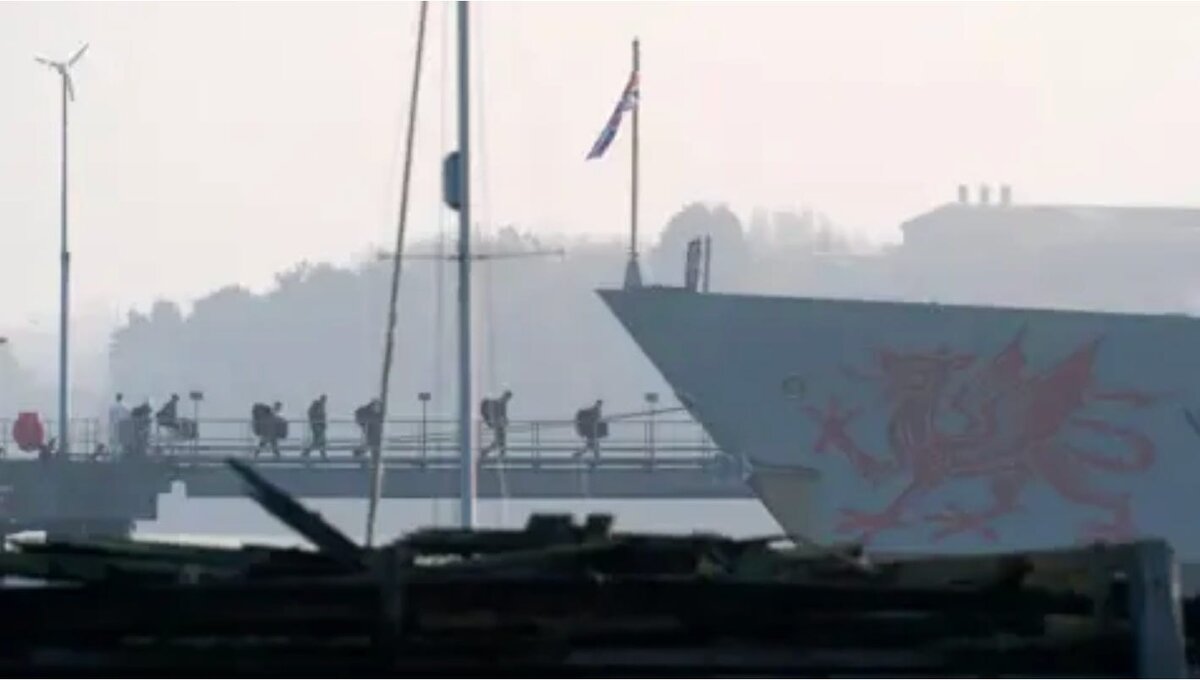
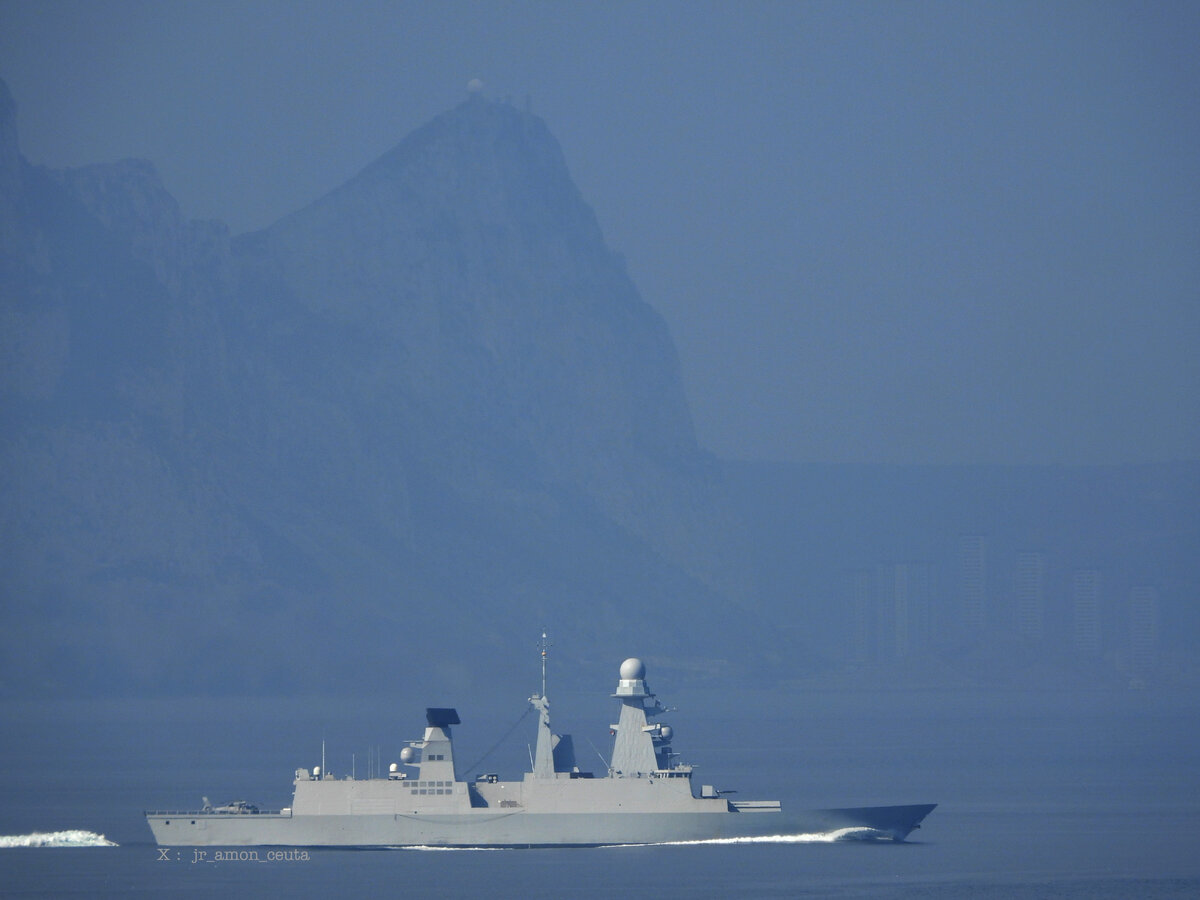
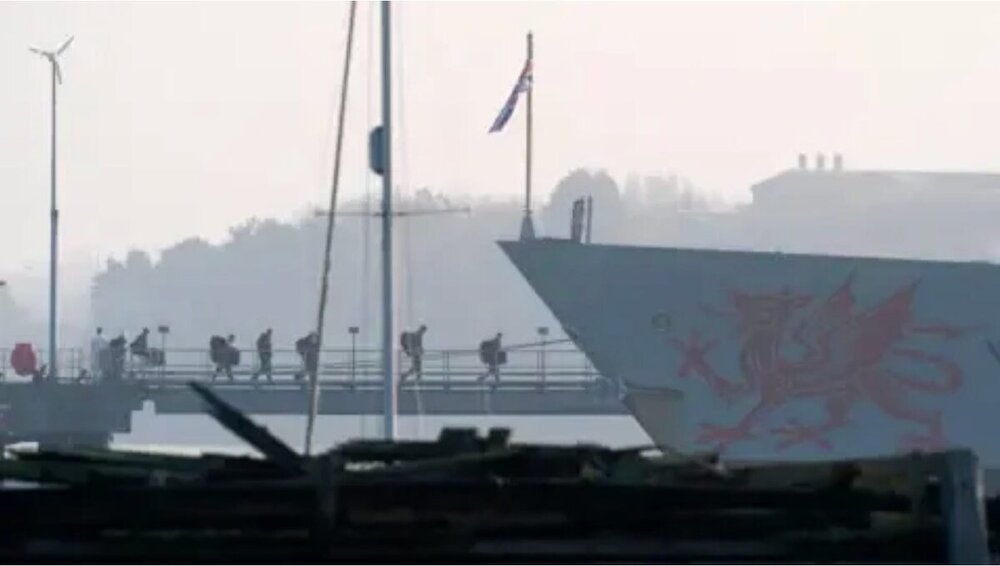
You have to be careful about assumptions, especially those you grew up with that are comforting, convenient, and once seemed so real, so solid, that they just were part of the landscape. They just, were. For over a century, there was one jewel in the special relationship between the United States of America and her mother country, Great Britain. That jewel was the Royal Navy. From the convoys and battleship divisions of the Great War, to Five Inch Friday off the Al Faw almost 90 years later, we always knew that there was another highly capable navy out there we could rely on—the Royal Navy and her Commonwealth. During the interbellum, when the U.S. Navy was on par with the Royal Navy, we knew our friend was strong. Even when we passed her strength as WWII bled her white, we still knew the power she brought to sea. She knew her existence was only secured by a strong navy. She’d never abandon that, would she? During the Cold War, she fought with us sometimes and demurred at others—but regardless, we knew that the closer you came to the North Atlantic, you were in her waters. Regardless of what happened, from the GIUK Gap, north—she would have it covered with our allies, or would be right next to us. From Gibraltar in the west to Cyprus in the east, for centuries no movement was seen or could pass without wondering where the Royal Navy was. Well within living memory, she could sortie a fleet all on her own and retake her territory from a hostile power. That was then. This is now. Let’s put their domestic political issues of today to the side for a moment, and just look at where they are—and where they will be for quite a while. U.S. reality of securing the open seas are a long way from the vanity of denial and delusion such as Mike Mullen’s 1,000 Ship Navy. Even if we have reliable partners, nations have agency. Even if our closest ally of the last century does have the desire to come to our aid at sea—what can she bring? We need to stop pretending we have a Royal Navy we knew in our youth or even that of two decades ago. No, we have something altogether different. Something shrunken. Something weaker. Something that is, in the end, really sad. A symptom of a nation who has lost an enthusiasm for herself or even an understanding of her national interest and led by a ruling class that seems uninterested in stewardship. The state of the Royal Navy—a condition that took decades of neglect to manifest into its form today and will take decades to repair if there is ever the will to do so—has become, as navies can often do, a symbol of the state of the nation it serves. There is a lesson here, not just for the United States, but all nations who consider themselves a naval power. If you fail over and over to properly fund, develop, train, and support your navy, you can coast for quite awhile on the inertia of the hard work and investment of prior generations, but eventually that exhausts itself, and you are left with the husk of your own creation. Yes, I’m looking at you, DC. A token of this problem has revealed itself in all its saddest manifestation. Behold HMS Dragon. Preparations are continuing to get HMS Dragon ready to sail to help protect British troops in Cyprus with confirmation that the earliest she will leave Portsmouth is Wednesday (March 11). The Type 45 destroyer is this afternoon (March 9) at the Portsmouth Upper Harbour Ammunition Facility, and according to tomorrow’s shipping movements she is due to be moved to BOWS S berth in the afternoon. The Royal Navy has said that she will depart some time this week. As previously reported by The News, the government confirmed on March 3 that the UK would be sending the Portsmouth-based warship, one of the Royal Navy’s six Type 45 air defence destroyers, after RAF Akrotiri on Cyprus was hit by a drone. This graphic from The Daily Mail is helpful in understanding not just how small the Royal Navy has become, but how few of its warships are even ready to go to war. If you’re looking for a further fleshing out of the issue, Thomas C. Theiner has a sad tale of woe. Two destroyers and three frigates. HMS Duncan just came back from exercises and for reasons unknown is a worse option than waiting for HMS Dragon to finish fitting out. This is simply one thing: humiliation. The sovereign British bases on Cyprus were attacked by Iran…and the response…well…sigh. Richard the Lionhearted conquered the island first in 1191 just so he could get a break from seasickness on the way to the Crusades (one of my favorite historical maybes), and the British negotiated oversight from the Ottomans in 1878 only to annex it outright in 1914…and yet…well…sigh…the French will have to do it with an assist of the Spanish (!), Italians, and Dutch. One would be hard pressed to find a nation’s ruling elite in the modern era who has so completely failed in the stewardship of their nation’s security. There are rumors that HMS Prince of Wales may be ready for a deployment soon, but there are not enough ships to properly escort her. The Royal Navy will have to go begging to allies. We covered the French deployment yesterday. Yes, as we discussed, it is not sustainable and I’d be curious about their individual unit readiness, but it is a signifiant fleet going to sea. This is not unknown in the United Kingdom. I think, more than most, Jacob Rees-Mogg, outlines the issues well from inside their lifelines. This is a deep-rooted failure of the state to recognize what its duty is. A final postscript to this point, and it isn’t a happy one. It is a very American one. I have great affection for our European allies. I served with them for years. I raised my children in their nations during their most formative years. I will always rise to ask my nation to help them in their times of trouble—but I also have to be realistic towards my own nation’s security requirements. In the next few years, we may very well see this century’s high water mark for European military capabilities, especially at sea. For some, that high water mark is already behind us. Most of our traditional European allies have exhausted their desire to be involved in other people’s conflicts—even when on their doorstep. They no longer concern themselves with larger issues, their ruling elite only concerned with petty social signaling or, increasingly, bending national efforts toward their own personal wealth building. Their deathbed demographics combined with suicidal migration policies have condemned them to a mid-century (which starts in four years for those keeping track) that will be marked by growing sectarian strife, fraying social cohesion, cultural disintegration, and political upheaval. They will be focused on internal challenges with collapsing welfare states, and the resulting movements toward renationalization and subsequent sovereignty conflicts—hot and cold. Whatever the future holds for the U.S. and her friends in the Middle East, the Indo-Pacific, or the Western Hemisphere—we should not expect much of any help from Europe of any significance. In many cases it may not be that they don’t want to, it will simply be that they can’t. Leave a comment Share This Substack is reader-supported. To receive new posts and support my work, consider becoming a free or paid subscriber. View the full article
-
The United States Army has approved the M111 Offensive Hand Grenade for Full Material Release, clearing the weapon for operational use and marking the first new lethal hand grenade approved for service since 1968. The decision allows the Army to begin replacing the aging Mk3A2 grenade series, which has remained in limited use due to […]View the full article
-
The United States has begun relocating Patriot and THAAD missile defense assets from South Korea to the Middle East, according to South Korean media reports. South Korean President Lee Jae-myung acknowledged the movement of United States Forces Korea (USFK) air defense equipment during a cabinet meeting, stating that the redeployment reflects U.S. military requirements tied […]View the full article
-
Iran has used a modified version of its Shahed-101 loitering munition, featuring structural changes and an electric propulsion system, according to reporting cited by the Ukrainian defense outlet Militarnyi. The development reflects ongoing evolution of Iranian one-way attack drones, which have been used in regional conflicts and in Russia’s war against Ukraine. Analysts say design […]View the full article
-
British radar manufacturer Blighter said on March 9 that it signed a contract to supply its ground surveillance radar systems and AI-assisted software to an undisclosed Eastern European army for border protection missions. The agreement will see the company deliver its B400 series ground surveillance radars together with the BlighterNexus AI-assisted software platform, which will […]View the full article
-
Israeli drone developer Aero-Sentinel confirmed on March 9 that it received a new silent unmanned aerial vehicle order from a returning customer in the United States, according to a statement posted by the company’s chief marketing officer. Ofir Avram, chief marketing officer at Aero-Sentinel, announced the order in a public message, saying the company’s systems […]View the full article
-
Israeli Steadicopter announced on March 9 that it signed a services agreement with the U.S.-based company flyAlchemy to support operational deployment and evaluation of its Black Eagle 50E rotary unmanned aerial system in the United States. The agreement is intended to enable flight demonstrations, customer evaluation programs, and mission development activities aimed at introducing the […]View the full article
-
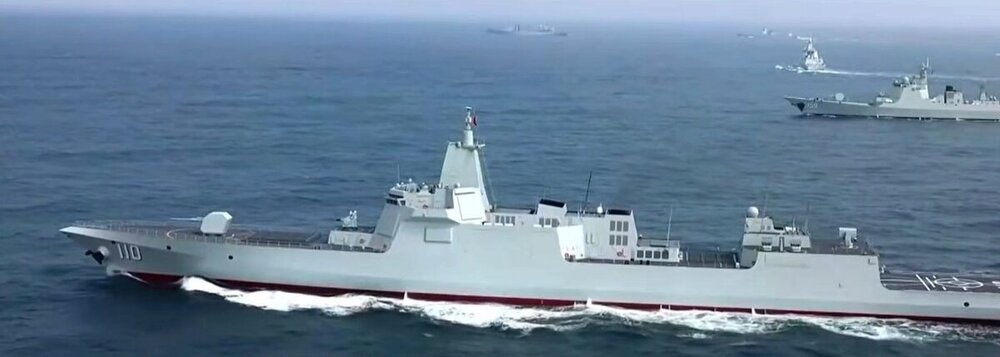
Two newly built Type 055 large destroyers, identified as hull 109 Dongguan and hull 110 Anqing, made their first official appearance during naval training operations, increasing the People’s Liberation Army Navy’s fleet of the 10,000-ton-class warships from eight to ten. The vessels were shown conducting joint training at sea alongside other naval ships in footage […]View the full article
-
A report published by the Chinese newspaper Global Times says China is seeking to expand exports of military aircraft following what the publication described as the first combat success of the export-oriented J-10CE fighter jet during an overseas air battle in 2025. The report indicates that the aircraft’s performance generated increased international attention toward Chinese […]View the full article
-
While the once-great Royal Navy continues to scour the piers for enough duct tape and bailing wire to get a destroyer underway, it appears that—literally—the entire French Navy is getting underway. As she has done before, she is moving east in response to another crisis in Lebanon where there are a lot of French citizens and the general disquiet in the Eastern Mediterrenean. This time, as a side-show to the Israeli-American conflict with Iran, as it appears a final move is going to be made against Hezbollah by the Lebanese. How much of the fleet? Well, it appears that if it can leave the pier, it is going. Via Cap-Hornier, Nearly the entire fleet is at sea: 19 of the 23 main surface fleet ships. The CdG, 3 PHA, 13 frigates, and 2 replenishment ships. The only ships of the French Navy in the naval bases are those in technical stoppage. 2 FREMM, one FLF, and one replenishment ship This is unsustainable, for any navy. Via Xavier Vavasseur at Naval News, The current geopolitical situation in the Middle East is putting a lot of pressure on the French Navy. FREMM frigate Languedoc is tasked with the protection of Cyprus. In addition, France announced that two surface combatants would join the European mission ASPIDES in the Red Sea. One of them could be FREMM frigate Provence which Naval News boarded during DIMDEX 2026 in Qatar in January. All Mistral-class LHDs are currently deployed: Dixmude set sails on 17 February 2026 for the Indo-Pacific as part of the “JEANNE D’ARC 2026” mission. It is unclear if the LHD is still in the Mediterranean or closer to Djibouti. First-in-class ship Mistral is currently participating to NATO exercise COLD RESPONSE 26 in Northern Europe, and Tonnerre just set sails today. According to local eyewitness, most “first rank combatants” have left Toulon naval base and most piers in the naval base are empty. There is a lesson here—a more exaggerated version of the US Navy’s “well, the Nimitz’s last deployment wasn’t really her last…” news earlier this week. Yes, you can on paper have a significant navy, but is she for show, or for fight? You can sortie your entire fleet…once…but then you are all out of options. They do have to come back, but if your mission is not done, who will replace them onstation? What readiness and maintenance bill will need to be paid when the fleet does come back? We all know that when everyone goes to sea, not everything—from a readiness point of view—should have gone to sea. March will be an interesting month. Leave a comment Share This Substack is reader-supported. To receive new posts and support my work, consider becoming a free or paid subscriber. View the full article

-
The Turkish Ministry of National Defense said on March 9 that a ballistic missile launched from Iran and entering Turkish airspace was intercepted by NATO air and missile defense systems deployed in the Eastern Mediterranean. The ministry confirmed that the missile was neutralized before it could reach its intended destination, with debris falling onto unoccupied […]View the full article
-
The United Arab Emirates Armed Forces released footage showing its air defense systems intercepting Iranian strike drones targeting the country. The announcement comes as tensions in the region continue to involve missile and drone attacks targeting military and civilian infrastructure. The UAE government said the interceptions demonstrate the country’s ability to detect and defeat multiple […]View the full article
-
Russia’s Ministry of Defense said Monday that its air defense systems intercepted 754 Ukrainian fixed-wing drones within a 24-hour period, describing the number as one of the largest reported drone engagements since the start of the war. The statement was released through official Russian military channels and included additional claims that other incoming weapons had […]View the full article
-
Ukrainian forces destroyed a Russian Pantsir-S1 air defense system near Melitopol after a long-range strike by a domestically produced FP-2 attack drone, Ukrainian officials said. The strike occurred near the village of Nove, several kilometers from Melitopol, after the drone traveled approximately 90 kilometers to reach the target. According to Ukrainian defense media outlet Militarnyi, […]View the full article
-
The United States military has been observed transporting a detailed mockup of the Russian Buk-M3 air defense system in Alabama, according to images recently circulated online. The replica, mounted on a semi-trailer rather than a self-propelled chassis, appears to be a training asset used to simulate modern Russian surface-to-air missile systems during military exercises. Military […]View the full article
-
The first quarter of 2026 still has three weeks to go, but the assumptions and friend group of the People’s Republic of China has changed dramatically. Recent changes in the assumptions concerning Venezuela, Iran, Japan, and other nations will impact the national security concerns of the West’s greatest challenger on the world stage. Returning to the Midrats Podcast today from 5-6 PM Eastern to discuss will be Dean Cheng. You can listen LIVE at this link, but if you are reading this after the show, just check the substack later Sunday night for the podcast upload. Dean is a Senior Advisor, United States Institute of Peace; Non-resident Senior Fellow, Potomac Institute for Policy Studies; Non-resident Fellow, George Washington University Space Policy Institute. He recently retired after 13 years with the Heritage Foundation, where he was a senior research fellow on Chinese political and security affairs, and wrote on various aspects of Chinese foreign and defense policy. Prior to joining the Heritage Foundation, he was a senior analyst with the China Studies Division (previously, Project Asia) at CNA from 2001-2009. Before joining CNA, he was a senior analyst with Science Applications International Corporation (SAIC) from 1996-2001. From 1993-1995, he was an analyst with the US Congress’ Office of Technology Assessment in the International Security and Space Division, where he studied the Chinese defense industrial complex. He is the author of the book Cyber Dragon: Inside China’s Information Warfare and Cyber Operations (NY: Praeger Publishing, 2016), as well as a number of papers and book chapters examining various aspects of Chinese security affairs. Leave a comment Share This Substack is reader-supported. To receive new posts and support my work, consider becoming a free or paid subscriber. View the full article
-
The United States Navy officially began Operation ICE CAMP Boarfish in the Arctic Ocean on March 7, 2026 after the construction of a temporary base on drifting sea ice and the arrival of two fast-attack submarines, USS Delaware (SSN‑791) and USS Santa Fe (SSN‑763). The three-week operation is designed to test submarine operations and evaluate […]View the full article
-
The Naval Air Systems Command confirmed that it awarded a contract to Rockwell Collins to repair and reconfigure TacNet 1.0 datalink radios used on the Joint Standoff Weapon and Harpoon Block II+ missile systems. The delivery order was issued on September 30, 2025 and listed in a federal award notice published March 6, 2026. The […]View the full article
-
The Drug Enforcement Administration plans to acquire Skydio R10 indoor drones for operational use, according to a special procurement notice published by the U.S. government. The agency intends to purchase the systems through a sole-source contract with Atlantic Diving Supply, a Virginia-based defense equipment supplier. The planned purchase reflects a growing need among law enforcement […]View the full article
-
The United States Army National Guard has launched a procurement effort to acquire several small unmanned aerial systems for training and operational support, according to solicitation documents published March 7, 2026. The request comes from the Tennessee Army National Guard and focuses on lightweight drones that meet the U.S. military’s Blue UAS security certification requirements. […]View the full article
-
Ukraine will send a group of military specialists to the Arabian Gulf on Monday, March 9, to share battlefield experience in countering unmanned aerial vehicles, Ukrainian President Volodymyr Zelensky said in remarks to journalists while awaiting the arrival of Dutch Prime Minister Rob Jetten in Ukraine. The deployment will involve Ukrainian military personnel and defense […]View the full article
-
An analysis published by the International Institute for Strategic Studies outlines Japan’s expected deployment of domestically developed long-range missile systems as part of an emerging “counterstrike” posture. The report describes plans for fielding systems such as the Hyper Velocity Gliding Projectile (HVGP) and the upgraded Type-12 anti-ship missile between fiscal years 2025 and 2027. The […]View the full article
-
United States missiles, drones, and Israeli fighter jets began striking targets inside Iran on Feb. 28 at approximately 9:45 a.m. Iran Standard Time (1:15 a.m. EST), launching a coordinated military campaign aimed at degrading Iranian military infrastructure and air defense networks. The operation was conducted under the Israeli codename Operation Roaring Lion and the U.S. […]View the full article
-
The United States Central Command (CENTCOM) confirmed that Boeing B-52H Stratofortress bombers conducted strikes on Iranian ballistic missile facilities and command-and-control positions during the opening phase of Operation Epic Fury, according to official statements. The confirmation came alongside newly released footage from United States Central Command Public Affairs showing airmen preparing a B-52H Stratofortress for […]View the full article