HG S2 (Intel Bot)
Members
-
Joined
-
Last visited
Never
Everything posted by HG S2 (Intel Bot)
-
Ukraine’s Defense Intelligence Directorate (GUR) said March 24 that its forces destroyed a launcher from Russia’s Bastion coastal missile system in occupied Crimea during overnight strikes. The GUR said the system had been used to launch Zircon hypersonic missiles against Ukraine and confirmed that two Zircon missiles were also destroyed in the attack. According to […]View the full article
-
Spain’s Indra Group and South Korea’s Hanwha Aerospace on March 24 signed a binding agreement in Madrid to jointly develop new tracked self-propelled artillery systems for the Spanish Armed Forces, the companies said. The agreement focuses on building a new family of land platforms based on Hanwha’s K9 artillery system with integrated Spanish technologies. The […]View the full article
-
Lockheed Martin on March 24 said it had completed the first integrated live-fire and vertical-launch test of a HELLFIRE missile from its new GRIZZLY containerized launcher. The company said the test demonstrated the system’s ability to load and launch a missile from a standard 10-foot Tricon container. Containerized systems are being explored as a way […]View the full article
-
The United States Army on March 20 awarded a production contract to AV for its P550 Long Range Reconnaissance unmanned aircraft systems. The systems were procured through the Unmanned Aircraft Systems Marketplace Basic Ordering Agreement, a contracting mechanism designed to speed up acquisition timelines. Officials said the program is intended to provide commanders with organic […]View the full article
-
Czech company TRL Drones announced on Monday that it has launched a new Ground Control Station, or GCS, system designed to support anti-drone protection for the Czech Republic and critical infrastructure across Europe. The company said the software-and-drone solution is now ready after a year of development and is intended to provide what it described […]View the full article
-
Leonardo DRS said Tuesday it had been selected as one of 13 companies awarded a place on the Advanced Technology Support Program V, or ATSP5, a U.S. Department of War engineering solutions contract meant to help the military rapidly field emerging technologies. The Arlington, Virginia-based company said the indefinite-delivery, indefinite-quantity, multiple-award contract carries a total […]View the full article
-
Epirus, General Dynamics Land Systems and Kodiak AI on March 24 unveiled the Leonidas Autonomous Ground Vehicle, or AGV, a new mobile counter-UAS system built to operate either fully autonomously or through teleoperation for defense and homeland security missions. The new system was unveiled at the AUSA Global Force Symposium & Exhibition in Huntsville, Alabama. […]View the full article
-
Mark Felton is a treasure. He has produced an enviable series of historical videos over the years. Pretty much everything he puts out is a must-watch. He also covers current issues, and this episode, to me, was a patriotic act for a British subject, and an important review that should concern everyone in the West. It is a good follow-on to yesterday’s post. Next to the U.S. Navy, the West has always assumed that the Royal Navy would be there to help preserve the assumptions the rest of the planet has about the access to the high seas. In 2026, the first question is not ‘will’ but ‘can’ they Royal Navy be of use. Too many people who should don’t know the state of the Royal Navy. They should. There’s no reason for me to produce something that would just be a less-than-adequate version of what Mark has done. It is a little under 13 minutes. Well worth your time. Share Leave a comment This Substack is reader-supported. To receive new posts and support my work, consider becoming a free or paid subscriber. View the full article
-
The F-35 program fielded no new combat capability during fiscal year 2025 after software problems delayed operational testing across both Technology Refresh 2 and Technology Refresh 3 aircraft configurations, according to the Pentagon’s Director, Operational Test and Evaluation annual report. DOT&E said the latest TR-3 software build, 40R02, was “unsuitable for dedicated OT,” while the […]View the full article
-
The United States Air Force has still not completed initial operational test and evaluation for the KC-46A Pegasus tanker, with the program’s test cycle stretching on from 2019 as key technical fixes remain unfinished, according to the Pentagon’s Director, Operational Test and Evaluation annual report. The report states that DOT&E approved the KC-46A IOT&E test […]View the full article
-
The United States Navy’s MQ-25 Stingray carrier-based unmanned tanker program missed its originally scheduled Milestone C decision after production delays, test-asset delays, and concerns that the available data were not suitable to support the move into the next acquisition phase, according to the Pentagon’s Director, Operational Test and Evaluation annual report. The report states that […]View the full article
-
A United States Marine Corps Marine Air Defense Integrated System (MADIS) assigned to the 3rd Littoral Anti-Air Battalion conducted a live-fire engagement at the National Training Center in Fort Irwin, California, in March 2026. The exercise was carried out by units from the 3rd Marine Littoral Regiment, 3rd Marine Division, as part of ongoing operational […]View the full article
-
The United States has approved a Foreign Military Sales case valued at up to $1 billion to provide submarine combat systems support, technical assistance, and embedded personnel to the United Kingdom as part of the AUKUS security partnership. The notification, released by the Bureau of Political-Military Affairs on March 20, 2026, expands a previously approved […]View the full article
-
Lithuania’s Minister of National Defence, Robertas Kaunas, said a drone that crashed and exploded in Varena district was most likely a Ukrainian unmanned aerial vehicle that deviated from its course, possibly due to electronic warfare interference. The incident occurred near the village of Lavisos, about 30 kilometers from the Belarusian border, according to Lithuania’s Ministry […]View the full article
-
Lockheed Martin has begun final assembly of the first F-35A Lightning II fighter jet destined for the German Air Force at its Fort Worth, Texas production facility. The airframe has entered final assembly with its major structural components joined and positioned for installation of critical systems. The F-35A program is intended to provide the Luftwaffe […]View the full article
-
AZAK said it will present its second-generation unmanned ground vehicle (UGV) at the AUSA Global Force Symposium & Exposition in Huntsville, Alabama, from March 24 to 26, 2026. The Denver-based company confirmed it will bring its latest platform to the event following recent progress in U.S. Army-linked innovation programs. According to the company, the deployment […]View the full article
-
Anyone who has visited major military and aerospace exhibitions such as the Paris Air Show at Le Bourget in France, Farnborough International Airshow in the United Kingdom, IDEX in the UAE, or AUSA in the United States has likely noticed the many display models that stand out for their detail and close resemblance to real […]View the full article
-
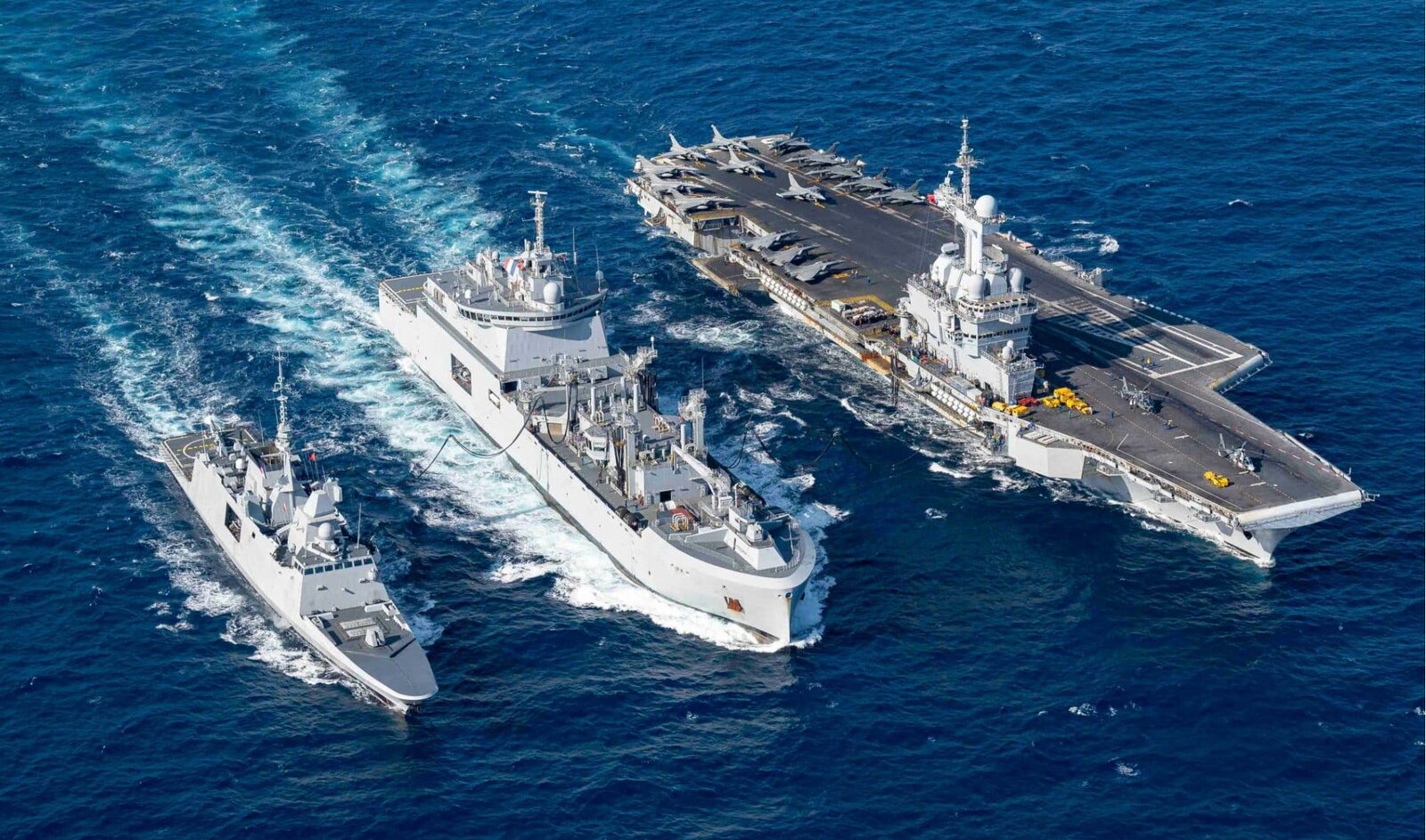
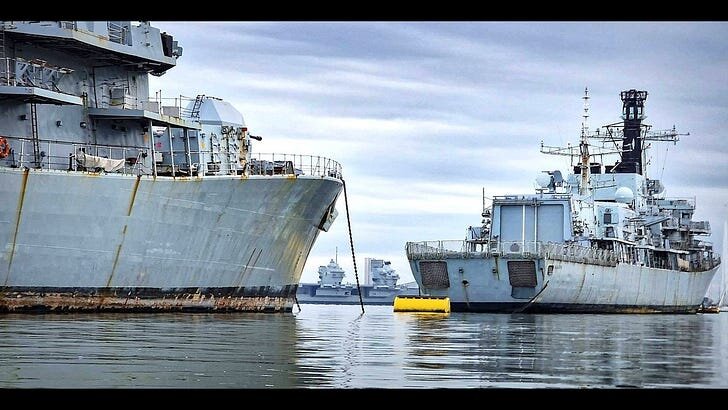
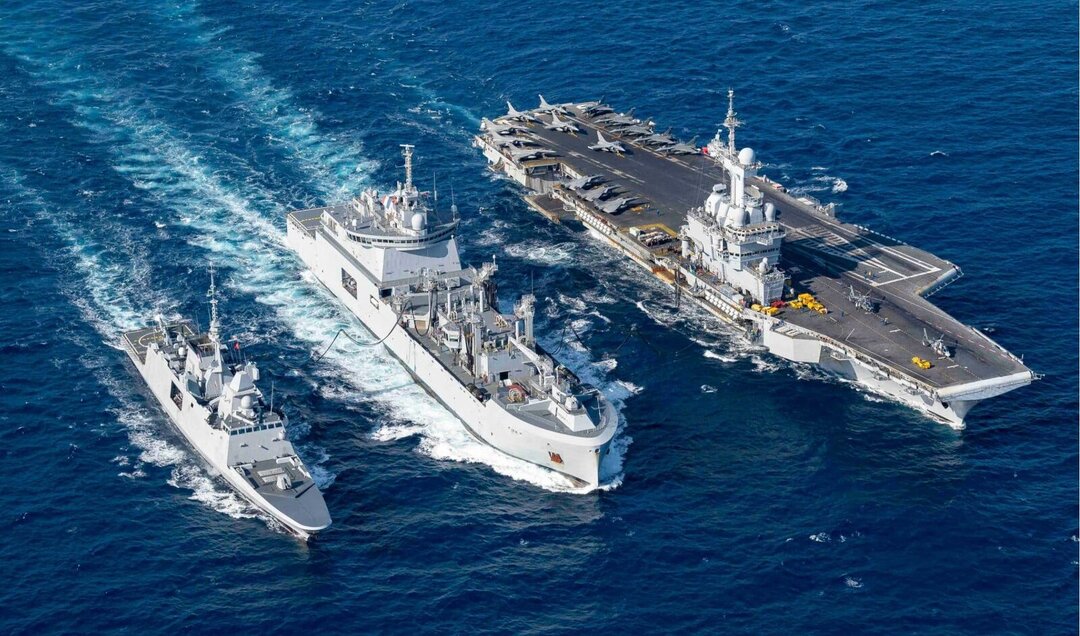
From the “Strongly Worded Letter” department of the Rules Based International Order school, there are more nations signing up to so something to keep the free flow of goods at market price through the global Sea Lines of Communication (SLOC), of which the Strait of Hormuz is one of the most important. Several more countries on Friday joined leading European nations, Japan and Canada in signing a joint statement, opens new tab saying they were ready to join appropriate efforts to ensure safe passage through the Strait of Hormuz and would take steps to stabilise energy markets. This is the full text of the statement from Britain, France, Germany, Italy, the Netherlands, Japan, Canada, Republic of Korea, New Zealand, Denmark, Latvia, Slovenia, Estonia, Norway, Sweden, Finland, Czechia, Romania, Bahrain and Lithuania: That sounds promising, but in the classic European model, it is rarely what it seems. Merz made the remarks to reporters ahead of an EU leaders summit in Brussels, where discussions are expected to focus on the conflict, surging global energy prices, and disruptions in the vital Strait of Hormuz. “I want us to send a clear signal that we are ready to help. But for that to happen, the fighting must cease,” Merz said, emphasizing that Germany would only join such a mission with an international legal mandate. The chancellor welcomed signals from Washington indicating a willingness to pursue de-escalation. “I am particularly grateful that the US president sent a signal last night that he is also prepared to bring about an end to the fighting,” he said, though he noted this would require Iran to abandon its nuclear program and attacks on its neighbors and engage in negotiations. So, yes—Europe’s great powers will do something, but only after it is not needed. This is not dissimilar to the French-led Carrier Strike Group (CSG) to the Eastern Mediterranean after the very limited strikes from Iranian proxies in Lebanon against Cyprus. The Eastern Mediterranean is not where the threat is. As I discussed on Sunday’s Midrats Podcast and Claire Berlinski’s Symposium with Toomas Hendrik, the FRA CSG on paper seems to be a demonstration of strength. What ships are in it? The carrier group includes the air defence destroyer FS Chevalier Paul (D621), a FREMM-class frigate, a fleet oiler for logistics support, and a nuclear-powered attack submarine. The deployment is also supported by allied vessels, including the Spanish Navy frigate ESPS Cristóbal Colón (F105) and the Royal Netherlands Navy frigate HNLMS Evertsen (F805). France has also sent the frigate FS Languedoc (D653) along with a French Army ground-based air defence unit to strengthen protection for Cyprus. So: CVN: 1 (FRA) DDG: 1 (FRA) FFG: 3 (FRA, NLD, ESP) AO: 1 (FRA) SSN: 1 (FRA) Not a bad CSG, but it is a bit light on capabilities for the full spectrum of modern threats, like much of Europe is. None of these ships have the ability to defend against Anti-Ship Ballistic Missiles (ASBM) we have seen in use over the last few years in the Red Sea by Iranian proxies. The Spanish ship is an Aegis ship with 48 MK-41 VLS cells, but is only armed with SM-2 Block IIIA. That is not a weapon designed to intercept ballistic missiles of any type—ASBM or other. The other escorts are solid air defense platforms in their own right against whatever can be launched from Lebanon by Hezbollah. There are no indications at this time any of the Iranian long-range ballistic missiles—that I may write about tomorrow—are configured for the ASBM mode…so on paper, solid group…however… This is a one-shot deployment. The French only have one aircraft carrier. It takes three to four carriers to consistently have one deployed expeditionary (one could argue an Eastern Mediterranean deployment for the French is a relatively low impact deployment comparable to the USN deploying to the Caribbean. The only comparable carrier to the French one are the two British conventional carriers. Other NATO nations have light carriers, but they lack the full capabilities of the French CVN. Indeed, being that only the French have a robust AEW capability, really none of the other European power have an ability—desire aside—to relieve the French CVN in the Eastern Mediterranean. That does not even address how to scrape together enough fully mission capable escorts of any nation. That leads to a second demonstration of the limit of European naval power: national caveats. Anyone who served in AFG and IRQ—or, heck, the 2011 operations against Libya—know that it does not matter so much what kind of asset is assigned to the CJSOR, but which nation it comes from. They may have weapon system X, but they can only use it for Y circumstances in Z location. You can add to that uncertainty that at any moment the ship contributing nation can decide it does not want to play anymore, and, like HMCS Uganda, just decide to go home and let the fighting be done by better men (& women). This by no means should be construed to throw any shade on the individual serving in the European navies. I served with them and know that every one of them would have served with us caveat free—regardless of their personal feelings about the mission—but they serve their nations just as we serve ours, and follow legal orders. They are limited not by desire—or, for the best of them, capability—but by political direction and guidance, and capacity. This brittle military stance is the byproduct of three and a half decades of underinvestment in their defense in general, and their naval power in particular. Especially Great Britain, France, Spain, and Italy—their navies should not only be more capable, they should be much larger. As maritime nations, their national and collective security in 2026 would be much more robust if their leaders in 1995, 2005, 2020, and 2015 has understood the world as it actually is—not what the people sitting on either side of them in Davos wished it to be. And so, that brings us back to the strongly worded letter desiring to do something, at some time, to enable the free flow of hydrocarbons at market prices through the Strait of Hormuz via the ‘Tiffany-strong’ SLOC on the open seas. Where will they get the ships that can address the full spectrum of threats from Shahed drones to ASBM if, as it appears (and in this political environment is probably an entering argument requirement) it will be done outside a U.S. led command structure and USN warships? Looking at the possible ship contributing nations, they better be able to convince the Japanese to send along one of their Maya, Atago, and Kongō class destroyers and their SM-3. Of course, the USN DDGs could slyly hang around, “doing their own thing” and with a wink, get our friends under their umbrella…but a note of caution…like the national caveat issues above, national tasking will take priority. GBR, FRA, ESP, ITA especially, but I’d add GRC, DNK as well — your comparative advantage to your national and collective defense is at sea. Yes, you need a land component, but your navies are not fit for purpose in size or capability. Hedge your collective defense ashore in the capable hands of DEU, POL, and the former Habsburg possessions in Central Europe. You can’t build a proper navy overnight. It takes a few decades. Take a deep breath and invest. The U.S. is leaning in as well and has some neat developments that might help some…and JPN and South Korea can help on the industrial technology side if you ask. This latest Iranian crisis will not last much longer, one way or another, but the shortfalls of European power at sea—that everyone has seen from the Red Sea to Portsmouth—will remain. Let’s hug-out our differences and get to work. Leave a comment Share This Substack is reader-supported. To receive new posts and support my work, consider becoming a free or paid subscriber. View the full article
-
AM General said it will present a new Unmanned Ground Vehicle (UGV) at the Association of the U.S. Army Global Force Symposium & Exposition, scheduled for March 24–26, 2026, in Huntsville, Alabama. The company confirmed the platform will be displayed at the Von Braun Convention Center as part of its latest effort to advance autonomous […]View the full article
-
The Oleksandr Syrskyi, Commander-in-Chief of the Armed Forces of Ukraine, said Russian forces carried out 619 assault operations between March 17 and March 20, 2026, but failed to break Ukrainian defenses and suffered heavy losses during the offensive. Syrskyi said Ukrainian command anticipated the escalation and reinforced frontline units in advance, allowing forces to absorb […]View the full article
-
Ukrainian drone operators have intercepted and destroyed a rare Russian Skat-type reconnaissance unmanned aerial vehicle, according to video and a statement released by Wild Hornets, a developer of interceptor drones. Systems like the Skat-450M are used not only for surveillance but also for guiding strikes, including those carried out with Iskander ballistic missile systems. Wild […]View the full article
-
Germany has financed an additional 15,000 STRILA interceptor drones for Ukraine’s National Guard under a new support package that also includes training, logistics, and further development, the German Embassy in Ukraine said Monday. “Another 15,000 STRILA interceptor drones produced in Ukraine with German funding for the National Guard of Ukraine. The multi-million agreement also provides […]View the full article
-
Lockheed Martin has signed executive agreements with Poland’s Wojskowe Zakłady Lotnicze No. 1 (WZL-1) in Lodz, part of the PGZ Group, to support key components of AH-64E Apache attack helicopters. The agreements, valued at approximately 300 million zloty ($81 million), cover maintenance, repair, and testing of critical systems. According to the agreement, the Lodz facility […]View the full article
-
Japan’s Defense Ministry plans to establish a new coastal defense system built around thousands of drones, allocating about ¥100 billion ($628.7 million) in its fiscal 2026 budget. The planned SHIELD system will include more than 10 types of drones designed for different roles, including attacking enemy ships, gathering intelligence, and protecting radar installations. The concept […]View the full article
-
After a series of great guests, the Midrats Podcast returns this week with the ever popular, “Free-for-All” format! It’s just Mark and me for the full hour as we discuss the latest developments from the Iranian conflict and elsewhere. As always, if you can join us live, hop in the live chat and suggest your own topics, or direct questions to us. 5-6 PM Eastern this Sunday. You can join via this link. If you’re reading this after the show, check the Substack later for the updated podcast links. See you in a few! Leave a comment Share This Substack is reader-supported. To receive new posts and support my work, consider becoming a free or paid subscriber. View the full article