HG S2 (Intel Bot)
Members
-
Joined
-
Last visited
Never
Everything posted by HG S2 (Intel Bot)
-
The United States Navy torpedoed and sank the Iranian Navy frigate IRIS Dana in the Indian Ocean off the coast of Sri Lanka late Tuesday night, according to statements from U.S. officials and Sri Lankan authorities. The strike was carried out by a U.S. submarine and resulted in at least 80 fatalities aboard the Iranian […]View the full article
-
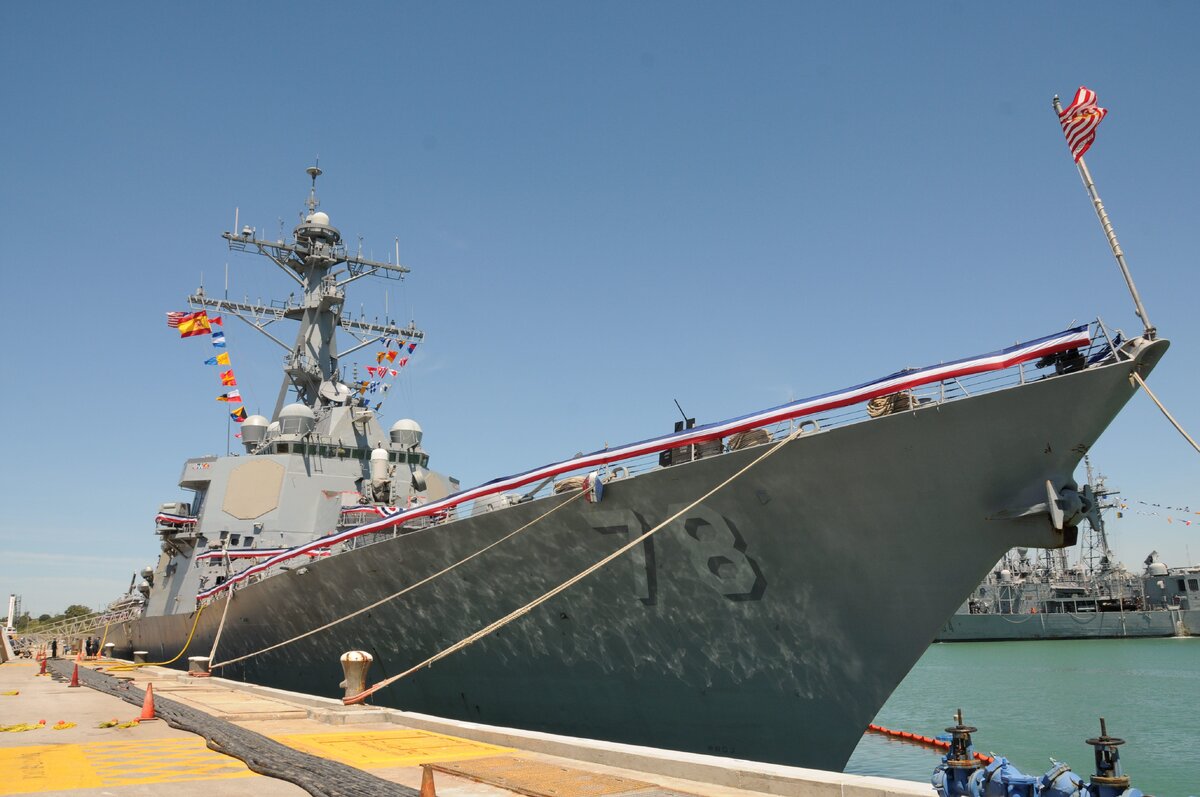
Everyone should be familiar with what a “stress test” is, like your doctor gives you if he thinks you have a problem with your ticker. That or if you served, a “smoke check” with either a piece of equipment or a person. If you really want to find out where there is a weakness in a system is so you can make changes, reinforce, or simply know where the limits are—you need to stress the system to its design limit. The problems will reveal themselves. Even weak and suboptimal systems can get along just fine as long as they are not under stress. Do that too long, and you never really know if the system will function fully as designed when you need it at full performance. Heck, it can get existential if your assumptions are wrong. Along those lines, a good secondary effect of Operation Epic Fury has been to point out where our allies stand. Much of our planning around the globe is centered on the assumed access to various bases hosted in allied nations, and an understanding that we will stand up for them when they need us, and they will stand for us when we need them—or at least not get in our way. Oops. At the end of the day, we really only have use of those bases if the host nation is gracious to allow us. Spain and the United Kingdom, really, have done us a favor here. They’ve reminded us of the fragility of many of our planning assumptions when it comes to overseas bases. You are only an election away. Let’s start with Spain. The Spanish government on Monday said that it had denied the use of its military bases to U.S. forces involved in the attack on Iran, including key refueling aircraft that departed Spain for other countries on Sunday. At least 11 U.S. KC-135T and KC-135R tanker aircraft left the southern Spanish bases of Rota and Morón late Sunday evening, after the left-wing Spanish government objected to an operation it considered outside of international law. “Spanish military bases will not be used for anything that falls outside the agreement with the United States and the United Nations Charter,” José Manuel Albares, Spain’s foreign minister, said Sunday in an interview on Spanish television. He called the U.S.-Israeli operations “unilateral.” The new policy is the latest criticism of the United States from Spain, which has stood out in Europe for its consistent opposition to the Trump administration, including American immigration policies, support for Israel’s war in Gaza and the military operation to abduct and arrest President Nicolás Maduro of Venezuela. Given that the party of Spanish Prime Minister Pedro Sánchez, the Spanish Socialist Workers’ Party, is the same one that joined the Popular Front with the communists in the 1930s—no shock here. The Labour Party in the UK (seeing a trend here) isn’t covering itself with glory. It started where you would expect and has wobbled over the weekend and will probably wobble again. Weak. Sir Keir Starmer has told MPs that the government “does not believe in regime change from the skies”, putting him at odds with President Trump over the joint US-Israeli strikes on Iran. In his first statement to Parliament since the strikes, Sir Keir defended his decision not to permit the use of UK bases for the initial wave of attacks. “President Trump has expressed his disagreement with our decision not to get involved in the initial strikes, but it is my duty to judge what is in Britain’s national interest,” he told MPs. However, the situation changed on Sunday when Iran’s “outrageous” response became “a threat to our people, our interests and our allies”, the PM said. Canada started strong—but then it appears that their Prime Minister got different marching orders from his backers. When Prime Minister Mark Carney of Canada met with reporters for the first time since the start of airstrikes against Iran, he swiftly qualified the statement of support he gave in the immediate aftermath and called for a de-escalation of the conflict. He said that Canada’s support for the military action comes “with regret, because the current conflict is another example of the failure of the international order.” Speaking on Wednesday in Sydney, where he is on an official visit, Mr. Carney said Iran had persisted in its nuclear ambitions in defiance of years of diplomatic efforts. But he also criticized the United States and Israel, which “have acted without engaging the United Nations or consulting with allies, including Canada.” He also made the conflict another case for his call to “middle powers” to strike new alliances. Carney, another man of the left, is quickly turning into one of the worst bad-faith actors on the First World stage. Oh, Canada, indeed. On the other side of the coin, I must admit I am impressed by the German Chancellor. German politicians scrambled to interpret the situation in the Middle East this weekend. Conservative voices in government urged caution in assessing the strikes by Israel and the United States on Iran. Although the German government had long anticipated that US President Donald Trump might act against Tehran’s regime, German politicians were initially as stunned by the events as observers worldwide. On Sunday, German Chancellor Friedrich Merz of the center‑right Christian Democratic Union (CDU) delivered a brief statement to the press. His spokesman, Stefan Kornelius, said Merz had been informed in advance about the military actions and had also spoken by telephone on Saturday with Israeli Prime Minister Benjamin Netanyahu. Over the weekend, Merz met with his cabinet’s security ministers before declaring: “The mullah regime is a terror regime, responsible for decades of oppression of the Iranian people.” He warned that Iran threatens Israel’s very existence and bears responsibility for the terror carried out by groups such as Hamas and Hezbollah. “Together with the United States and Israel, we share the goal of ending the terror of these regimes,” he said. Note that part in the middle, “…Merz had been informed in advance about the military actions…” What does Carney say again, “…United States and Israel…have acted without … consulting with allies…” Huh. Place your bets. NATO Secretary General Mark Rutte is also solid. NATO Secretary General Mark Rutte on Monday praised U.S. and Israeli military action against Iran, saying it was degrading Tehran’s ability to get its hands on nuclear and ballistic missile capability, but he said NATO itself would not be involved. “It’s really important what the U.S. is doing here, together with Israel, because it is taking out, degrading the capacity of Iran to get its hands on nuclear capability, the ballistic missile capability,” he told Germany’s ARD television in Brussels. I hope everyone is keeping score here. I can guarantee you the Trump Administration is. We have about 6,000 Americans of one stripe or another stationed in Rota, Spain alone—mostly related to our destroyers stationed there. Why are they there? Why, they are doing ballistic missile defense for <checks notes> Europe, while Spain only spends 1.4% of her GDP on defense. Hey, that is 0.1% of GDP more than Canada. Ahem. Perhaps Italy would be a better place to station those destroyers. Maybe Portugal. Maybe we can just transfer everyone back to CONUS (my preferred option). Either way, this is a useful exercise. If your bases are not on your territory, you can only use them with the agreement of the host country. When you have entire political parties, mostly of the left, as part of the political systems of our allies, then you have to consider the reality that they may decide that we will not be able to use them when we want to. If you are lucky, they’ll let you leave. If you are unlucky, they won’t. Don’t snicker at the latter. As the leftist parties continue to align themselves with the worst Islamists in their nations, this problem will only become sharper. What is a way to avoid or mitigate this problem with access to foreign bases? You guessed it—a properly resourced and capable Navy backed up with an exceptionally capable and robust logistics and replenishment force. We are a 10 carrier Navy in a 15 carrier world…maybe more. You can add to the risk of precision long-range strike becoming a common threat to all your static bases to the political risk of the nations who host our bases we just assume will always be there for us to use them when our national security requirements need them. This is a gift, regardless of the next election in the UK and Spain, if we are willing to take it. Share Leave a comment This Substack is reader-supported. To receive new posts and support my work, consider becoming a free or paid subscriber. View the full article

-
Chinese armored units have been observed operating Type 96A main battle tanks equipped with the active protection system, according to video footage circulating on Chinese social media. The footage shows several Type 96A tanks being transported while fitted with the APS equipment, suggesting the vehicles belong to an operational military unit rather than a factory […]View the full article
-
India’s Ministry of Defence signed a contract on March 3 with Russia’s state arms exporter Rosoboronexport to procure ship-based vertical launch surface-to-air missiles for the Indian Navy’s Shtil-1 air defense system, according to a report by the news agency UNI. The deal is valued at 2,182 crore rupees, or approximately $238 million, and will supply […]View the full article
-
The United States Air Force conducted a test launch of an unarmed Minuteman III intercontinental ballistic missile late March 3 from Vandenberg Space Force Base in California, according to Air Force Global Strike Command. The missile, equipped with two test reentry vehicles, lifted off at 11:01 p.m. Pacific Time as part of a routine flight […]View the full article
-
The United States Army is converting the Pennsylvania Army National Guard’s 56th Stryker Brigade Combat Team into a Mobile Brigade Combat Team, with the transition scheduled to take effect by March 31, 2026, according to an announcement from Joint Force Headquarters – Pennsylvania National Guard. The change will replace the brigade’s Stryker armored vehicle structure […]View the full article
-
The United States Marine Corps has awarded BlueHalo Labs, a subsidiary of AeroVironment, a $22,8 million contract modification for the procurement of additional Titan SV MPv3 counter-drone systems and spare parts kits to support the service’s Organic-Counter Small Unmanned Aerial Systems (O-CsUAS) program, according to a March 3, 2026 contract announcement. The award modifies a previously […]View the full article
-
The United States Air Force has awarded Lockheed Martin a $1.9 billion contract for the C-130J Maintenance and Training System (JMATS) IV, according to a contract announcement. The agreement covers production, modernization, sustainment, and support of training systems used by crews and maintenance personnel operating the C-130J Super Hercules aircraft. The program addresses the continued […]View the full article
-
Ukrainian long-range drones struck a chemical plant in the city of Kirovo-Chepetsk in Russia’s Kirov region, according to local reports describing a nighttime attack on an industrial facility located more than 1,300 kilometers from the Ukrainian border. The strike reportedly targeted the Kirovo-Chepetsk Chemical Combine, a major industrial complex situated at the confluence of the […]View the full article
-
SRT Marine Systems announced it has signed a new $261 million contract with a sovereign government customer to deliver a national Maritime Domain Awareness (MDA) system, the company said in a statement. The agreement represents a new addition to SRT’s Sovereign Partnership Programme and will provide the customer with an integrated platform for monitoring activity […]View the full article
-
Russian forces likely shot down one of their own military helicopters in the Rostov region during a Ukrainian drone attack late on March 3, according to reports cited by the Militarnyi. The incident reportedly occurred near the town of Millerovo, where Russian air defenses were responding to a large wave of unmanned aerial vehicles. Crew […]View the full article
-
It is D+3, and there is one part of Operation Epic Fury that keeps popping up to top-of-mind for me, the Low-cost Unmanned Combat Attack System (LUCAS). First of all, like I said Sunday, BZ to the staff weenie(s) who came up with that acronym for the best blatant copy-job by the U.S. military since the Springfield 1903 looked at Mauser and said, “Nice gun you have there.” Let’s go back to this announcement from around Christmas time that I’m a little pouty did not come into my scan at the time. Centcom launched Task Force Scorpion Strike four months after Secretary of War Pete Hegseth directed acceleration of the acquisition and fielding of affordable drone technology. The task force is designed to quickly deliver low-cost and effective drone capabilities into the hands of warfighters. The new task force has already formed a squadron of low-cost unmanned combat attack system drones. These drones, deployed by Centcom, have an extensive range and are designed to operate autonomously. They can be launched with different mechanisms including catapults, rocket-assisted takeoff, and mobile ground and vehicle systems. "This new task force sets the conditions for using innovation as a deterrent," said Navy Adm. Brad Cooper, Centcom commander. "Equipping our skilled warfighters faster with cutting-edge drone capabilities showcases U.S. military innovation and strength, which deters bad actors." In September, Centcom launched the Rapid Employment Joint Task Force led by its chief technology officer to fast-track processes for outfitting deployed forces with emerging capabilities. The joint task force is coordinating innovation efforts among service components in three focus areas: capability, software and technological diplomacy. Task Force Scorpion Strike's efforts to build the one-way attack drone squadron are led by personnel from U.S. Special Operations Command Central and align with the joint task force's capability focus area. I cannot find a firm description where the attacks were launched from. Some rumors were that they were fired from a LCS, but I have not seen anything official to that end. I think they might be confused with the pics of USS Santa Barbara (LCS 32) doing a test launch in the Arabian Gulf on Dec. 16, 2025. CENTCOM could barely hold in the news on the first day of strikes. I think everyone is proud not just of the swift timing of it all, but the trollish nature of the capability. The V‑shaped LUCAS drones, developed by SpektreWorks, are reverse engineered Shahed-136, Iranian drones which have been used extensively by Russia in Ukraine and by Iranian‑backed militias across the Middle East. This is when we need to pause and soak it all in. People made fun of it when it first appeared, until they saw what it was. Heck, I still call it the “flying lawnmower” (though there is a jet powered version now). When you look at it holistically, this is an impressive weapon. Yes, it is slow, has a small warhead, and does not have any fancy construction materials in its construction, but that is also its strength. No one expects it, so it is hard to defend against. We’ve had to create new weapons off of old platforms just to find a way to economically defend against them. Imitation is the most sincere form of flattery. Because of its performance in the Russo-Ukrainian War, the Russians are making a clone. Now the USA is as well. We’re not even paying royalties. The math is what is so powerful. Howard Altman over at TWZ has a real solid summary on the same day. The LUCAS drones are designed to be a far less expensive strike weapon than missiles, which not only cost more, but are far more difficult and time-consuming to produce. “Costing approximately $35,000 per platform, LUCAS is a low-cost, scalable system that provides cutting-edge capabilities at a fraction of the cost of traditional long-range U.S. systems that can deliver similar effects,” Navy Capt. Tim Hawkins, a CENTCOM spokesperson, told TWZ back in December. “The drone system has an extensive range and the ability to operate beyond line of sight, providing significant capability across CENTCOM’s vast operating area.” The math. A TLAM costs, what, about $2 million each. The Block V $2.5 million? That means you can buy 71 LUCAS for ~the cost of at TLAM. Want to shoot one down? Don’t even look at a Patriot missile, heck a NASAMS air defense missile is the AIM-120 AMRAAM. That’s $1 million a pop. You can’t have aircraft with the high-demand/low-density anti-drone Hydra rockets all over the place either. It only goes ~100 knots. So. OK, this isn’t a first strike weapon…but it is a strike weapon…one you can send in swarms. Even with its relatively small warhead, it will ruin your fuel farm, ship, warehouse, or vacation home it if gets there. With large numbers, you can strike a wide variety of second and third tier targets or those that are not time-critical, forcing your opponent to either spread already limited defensive assets thinly, or simply allow those targets to be hit. It will force its defensive fighters in the air…or again…force them to take the hits. Whoever that Iranian design team is, well done folks. You approached the problem from a unique perspective and the world is copying you. Let’s get back to the LCS rumor. I’m not content with one launched off the stern. Oh no. This is what I want to see. How many of these containers can we fit on the back of an Independence Class LCS? How many can you fit and still fly a helo off it? How many of these can be carried on a resupply ship? Can they be transferred at sea for expeditionary reloads? Is there any way to leverage the stern door and mission bay? There are what, five LUCAS in each container? That isn’t even a standard length container either. If you can get five containers on the ship, that gives you 25 LUCAS to send downrange. Depending on how a DDG might have their 90 to 96 VLS cells loaded out, that might be a DDG’s worth of TLAM. Can you keep the container and simply reload it with LUCAS in the back of the bay, stacked up like so many Battlestar Galactica Cylon Raiders in a Basestar? That would probably get you even north of 25. How many commercial ships can be converted into auxiliary cruisers with their decks full of these? Modify them. Make them USS, and man them from within the USNR. You see how I’m tying a whole series of threads we’ve discussed over the years here? In summary, more. I want more. BZ to Task Force Scorpion. Now let’s scale this. Leave a comment Share This Substack is reader-supported. To receive new posts and support my work, consider becoming a free or paid subscriber. View the full article

-
The United States Army on March 2, 2026, issued a notice for follow-on Technical Assistance and Field Service Representative support for the PATRIOT Advanced Capability-3, or PAC-3, Defense System covering program years 2027 through 2029. The notice, published by Army Contracting Command at Redstone Arsenal, calls for industry capability statements by March 17, 2026. The […]View the full article
-
Daimler Truck AG announced on March 3, 2026, that its Mercedes-Benz Zetros defense vehicles successfully completed intensive winter testing in the Finnish Arctic Circle, where temperatures dropped to minus 20 degrees Celsius and road conditions were largely icy and snow-covered. The testing campaign was conducted to verify that the Zetros defense vehicle series can maintain […]View the full article
-
The Pentagon’s Missile Defense Agency on March 2, 2026, published new details of its Nimble Options for Buying Layered Effects, or NOBLE, announcement, establishing a five-year acquisition framework running through March 27, 2030. The announcement consolidates multiple contracting authorities under a single structure to support missile defense research, prototyping, and rapid capability development. The NOBLE […]View the full article
-
Germany’s Bundeswehr intends to submit a budget request in the second half of 2026 to conclude a framework contract with KNDS for the procurement of up to 500 MARS 3, also known as EuroPuls, multiple launch rocket systems, according to reporting by hartpunkt journalist Waldemar Geiger. Roughly half of the systems included in the framework […]View the full article
-
German analyst Julian Röpcke renewed his criticism of European defense procurement systems after Ukrainian forces destroyed a Russian Buk-M1 surface-to-air missile system at a distance of more than 100 kilometers in the Zaporizhzhia region. In a post on X, he cited the combat performance and cost of a Ukrainian-made kamikaze drone used in the strike. […]View the full article
-
The United States Navy on March 2, 2026, awarded Northrop Grumman a $225,1 million contract modification to support the E-130J aircraft under the Take Charge and Move Out recapitalization program. The award exercises options for the design, development, and delivery of all E-130J weapons systems training materials and courseware. The modification (P00011) is issued under […]View the full article
-
Jackson-based AdlerAerospace, in partnership with its Czech R&D affiliate TRL Drones, has developed the TALOS-J and TALOS-E interceptor drone systems — a new fixed-wing counter-unmanned aerial system (C-UAS) family designed using operational lessons drawn from battlefield conditions in Ukraine, the company confirmed during an exclusive interview with CEO and Chairman Wilhelm Meya. TRL Drones brings […]View the full article
-
Qatar’s Ministry of Defense said on March 2, 2026, that Qatari air defenses shot down two Iranian Su-24 Fencer swing-wing attack jets and intercepted multiple ballistic missiles and drones targeting the country, according to an official statement released in Doha. The ministry stated that Qatar Emiri Air Force and naval air defense units successfully neutralized […]View the full article
-
As we are at D+2 and spent a full hour yesterday discussing Operation Epic Fury on the Midrats Podcast, I’m not going to review what we know so far—if you’d like Mark and my take, give the episode a listen. What I would like to do is dive into a topic that I hinted at in the show: my historical support for the punitive expedition. The target is valid, and the method has been underused for way too long. I support the strikes on Iran because it firmly fits into a view I have held on the use of national military power for decades, based on thousands of years of military practice. If you are not up to speed with the thousands of Americans dead and maimed by the Islamic Republic and its proxies over the last 47 years, then I have nothing more to discuss with you. While I understand the academic argument of many that before any action takes place, there is a whole series of hoops, barriers, and puzzles of our own creation that we need to go through—I firmly believe that not only are those Constitutionally unnecessary for punitive expeditions in 2026, if done, needed and deserved strikes like we have seen in Iran could not take place without Fortunes were made, institutions funded, and employment justified for legions under the old and failed post-WWII process swamp and GWOT nomenklatura that gave us unending and stillborn conflicts. To go that route again wouldn’t just be folly, it would be a self-destructive folly to refuse to change in the face of evidence. I’ve seen older versions of OPLANS for Iran. Huge, bloody, and frankly undoable. They were only that way because they met the requirements of an old system that everyone nodded their heads to because all the smart people from Johns Hopkins, Harvard, Princeton and all the usual places said we had to do it this way. Enough. Bollocks to all that. They have been measured the last quarter century and have been found wanting. A series of events since October 7, 2023, including the 2024 election, has opened a window to do what we have not been able to do for a whole host of reasons—and there is a debt waiting to be paid. We’ve been here before with Iran. In the modern context, we sank two warships and three speedboats of the Islamic Republic of Iran Navy in 1988 during Operation Praying Mantis as punishment for damaging USS Samuel B. Roberts (FFG 58) and Iran’s mining international waters in the Persian Gulf. We’ve played slap-n-tickle with them here and there while they have brutalized us at every turn when they are not brutalizing their own people. Yes, it’s personal—but part of the reason we have been hesitant is that our national security intellectuals have been stuck in a world view that prevented action, by design. Though not exclusive, the Powell Doctrine’s “Pottery Barn Rule” (that it appears he got from one of Thomas Frack’n Friedman’s columns), made it appear that we could only take action if we took the entire country and then remade it in our image. We know how that operationalized over the last couple of decades. We’ve done plenty of punitive expeditions in our nation’s history—but in the last few decades as a certain pedigree of policy maker held sway over our national security doctrine, it fell out of favor. They failed the nation. Their institutions failed the nation. Their worldview was little more than a self-licking ice cream cone of self-regard. Let me be clear as I was on yesterday’s podcast: we have been lucky we have had so few casualties so far. We are one mechanical failure or magical BB away from having an American held prisoner or worse. Make no mistake, there are worse things that can be done to a living person in that part of the world than simply being a prisoner. I want us to make our point, and then go home as soon as practical. I would be exactly here if it were the Biden Administration or the Harris Administration doing the exact same thing (though they wouldn’t). As mentioned above, I spent enough time in CENTCOM back in the day to know how hard the nut of Iran would be to crack. Big, ugly, bloody. It did not matter how much Iran deserved to be checked, it was just too costly to try. Nation building OPLANS again? No. Not any more. Breaking their things and killing their worst leadership that endangered the USA and her allies? I’m in. Always have been. Let’s go back to something I wrote about in November, 2007 in my Renouncing Empire post on the OG Blog almost 19 years ago while we were still ear-deep in Iraq and Afghanistan. I’ve repeated this on a regular basis through the years, as members of the Front Porch know. Just for full disclosure, regular readers will know that I am not a fan of having hundreds of thousands of military personnel garrisoned all over the world on a permanent basis. As the Europeans and Japanese with their sub-2% and sub-1% military spending shows - it is a bargain for them and a graveyard for the Americans that provide their security. We also have to ask though, will this nation support punitive expeditions? On line with this? No patchwork scheme—and all our present recent schemes…are mere patchwork—will settle the Waziristan problem. Not until the military steam-roller has passed over the country from end to end, will there be peace. But I do not want to be the person to start that machine. (NB: that quote by Lord Curzon, the British viceroy of India at the turn of the last century, is about 100 years old). Perhaps not - perhaps so - but we are not that Roman I am afraid, at least not yet. On the other hand, do we really think we can save the world from itself - chase all the dragons? I don’t think the American people want that either. “At least not yet.” We’re closer in 2026. Look at what I end up describing at an early detailed explanation of Plan Salamander back in December, 2010. Yes, ~16 years ago. In summary: WWII and the Cold War are over; the European Union and economic powerhouses Japan and Korea do not need to be defended mostly by the world’s largest debtor. Return all maneuver forces from overseas, starting with Europe, then Korea, and then Japan. Retain a few Joint/Combined training and logistics facilities. Build and maintain an expeditionary mindset based on our geographic location, global realities, and economic necessity. A bit of the speak softly but carry a big stick approach - without the Imperial decorations. Domestic Base, Global Reach. Reduce the standing Army and focus on the Army Reserve and National Guard with realistic plans for activation as needed (the way this nation was founded and acted most of its existence, natch). Focus majority of expeditionary and first reaction ground forces to Marine Corps as is fitting for a Maritime Power. Heavy, big, fat, and mean on the ground will mostly be in the Army Reserve and National Guard. Have substantial logistics, replenishment, and strategic sea and air lift in the Navy and Air Force reserve. Space, Air, and Sea should be our first and most capable assets. Light, quick, and deadly on first-responder ground forces with a bias towards consequence management and punitive expeditions as needed - a holding force until relieved as required. In July of 2013, you can see the pattern of what I support today. When we do not have a declaration of war with the goal of unconditional surrender, then we need to be clear what our real options are; punitive expedition, targeted assassination (drones seem to do this well), consequence management, etc. Our operations should be nasty, brutish, and short. "No better friend, no worse enemy"; that works for me. If the locals can't take advantage of a chance to improve their lot; not our problem. Leave a calling card that if they irritate us again, the next time we hit harder. Again in June of 2014. If there is another large scale attack on the USA, the American people will only have time for the most punitive of expeditions - one that is exceptionally nasty, brutish, and short. In 2020, I again lamented the path not taken…the path those of us in theater in the months after 9/11/01 thought we were going on. …in early 2002 … we simply could have realized what we were looking at in Afghanistan - something any reader of Hopkirk could tell you - and then with a reasonable cold eye said, "We're just doing a punitive expedition. We don't need to stay here to kill Bin Laden. We have a $10 billion in gold bounty on his head ... and yes we require his head ... or $5 billion for the information leading to his capture by us. There will be double that bounty if either happens in the next 90 days." ... and then just left to the boos and hisses of the internationalists who would never put their life or the lives of their children on the line for Afghanistan. But no, we had the Bonn Agreement and all that followed instead. This is a punitive expedition against a deserving bad-faith actor behaving badly. I support it. I think well meaning people can disagree on our actions. I believe they are wrong, but that is OK. A few years from now it may prove that I am wrong. What I have issues with are those who are all of a sudden 180 degrees off from where they were a few years ago, lack any explanation for their lack of consistency over the years in spite of the argument for their prior position being stronger as Iran has not become more benign, but more malignant. That switch as hard to stomach as those who all of a sudden are “yea war” after years of “not our fight.” One side’s hate of the Trump Administration and the other’s blind love of it seems to have been the primary steering mechanism for their changing opinion of a strike against Iran—regardless of what their previous positions may have been. George Will, as ardent anti-DJT as anyone, is consistent on Iran. Good for him. Not everyone is. It shouldn’t bother me, but it does. Inconsistency without explanation smells wrong for all the reasons you think it does. While I approve of what we’ve done so far, I am going to put a marker down. My support is based on what we see this beautiful March 2nd, 2026. If this degenerates into another long, drawn-out conflict where we put boots on the ground, my opinion will change. If it drags on for weeks of diminishing returns, my opinion will change. The sooner we state, “We’ve made our point. Don’t make us come back.” the better. If the Iranian people want to take this opportunity to change their government, then fine. That’s for them to make their move. We opened the door, but they have to walk through it. We need to be steadfast on this one point: we won’t wait for them. BT BT BT I would be remiss if I did not give a hearty Bravo Zulu to everyone involved in the strikes so far. No other nation’s military could do this. None. Some of that is size and sophistication, but most of it is the quality of our personnel. This Substack is reader-supported. To receive new posts and support my work, consider becoming a free or paid subscriber. Share Leave a comment View the full article

-
Ukrainian forces are increasingly employing German-made HX-2 one-way strike drones along multiple frontline sectors, according to reporting by Ukrainian defense outlet Militarnyi. Militarnyi reported that HX-2 drones developed by German defense technology company Helsing are now being used on several operational axes to conduct strikes inside Russian-controlled rear zones. According to the outlet, the drones […]View the full article
-
United States Central Command confirmed that three U.S. Air Force F-15E Strike Eagle fighter jets were shot down over Kuwait late March 1 during what officials described as an apparent friendly fire incident while supporting Operation Epic Fury, according to an official command statement. In a statement released from Tampa, Florida, U.S. Central Command said: […]View the full article
-
The United States Army has awarded Textron Systems Corporation a prototype agreement for the Low Altitude Stalking & Strike Ordnance (LASSO) program, the company announced last week. The agreement supports the Army’s effort to provide Infantry Brigade Combat Teams (IBCTs) with an organic precision strike capability designed to engage armored vehicles, hardened targets, and concealed […]View the full article
-
Former Russian deputy energy minister Vladimir Milov has published an analysis assessing the current condition of Russia’s defense-industrial sector, concluding that production growth is slowing while financial pressures across military manufacturers are increasing. The assessment, built on publicly available industrial statistics, corporate disclosures, and official statements, challenges the narrative that wartime spending has produced a […]View the full article