HG S2 (Intel Bot)
Members
-
Joined
-
Last visited
Never
Everything posted by HG S2 (Intel Bot)
-
Schiebel Group showcased its CAMCOPTER S-100 unmanned aerial system during NATO’s REPMUS 2025 exercise, underscoring the platform’s versatility, operational maturity, and seamless integration with evolving naval combat systems. The large-scale event, hosted by the Portuguese Navy, brought together allied forces and defense industry partners to evaluate the role of robotic and uncrewed systems in multi-domain […] The post NATO trials feature upgraded CAMCOPTER drone first appeared on Defence Blog.View the full article
-
NATO Secretary General Mark Rutte’s recent comments on Russia’s military capabilities have sparked a wave of ridicule from Russian state-affiliated media, which accused the alliance of shifting its tone to justify a lack of response to repeated airspace provocations. Speaking at the NATO Parliamentary Assembly’s 71st Annual Session in Ljubljana, Rutte said that while Russia […] The post Russia mocks NATO’s response to airspace violations first appeared on Defence Blog.View the full article
-
Russian forces have begun fielding an upgraded version of the Lancet loitering one-way attack drone, according to Ukrainian military sources and experts. The enhanced drone is reportedly striking targets at longer distances and proving more difficult to counter using existing electronic warfare systems. The Lancet, identifiable by its distinctive cross-wing design, has been a fixture on the […] The post Ukrainian frontlines face deadlier Lancet drone variant first appeared on Defence Blog.View the full article
-
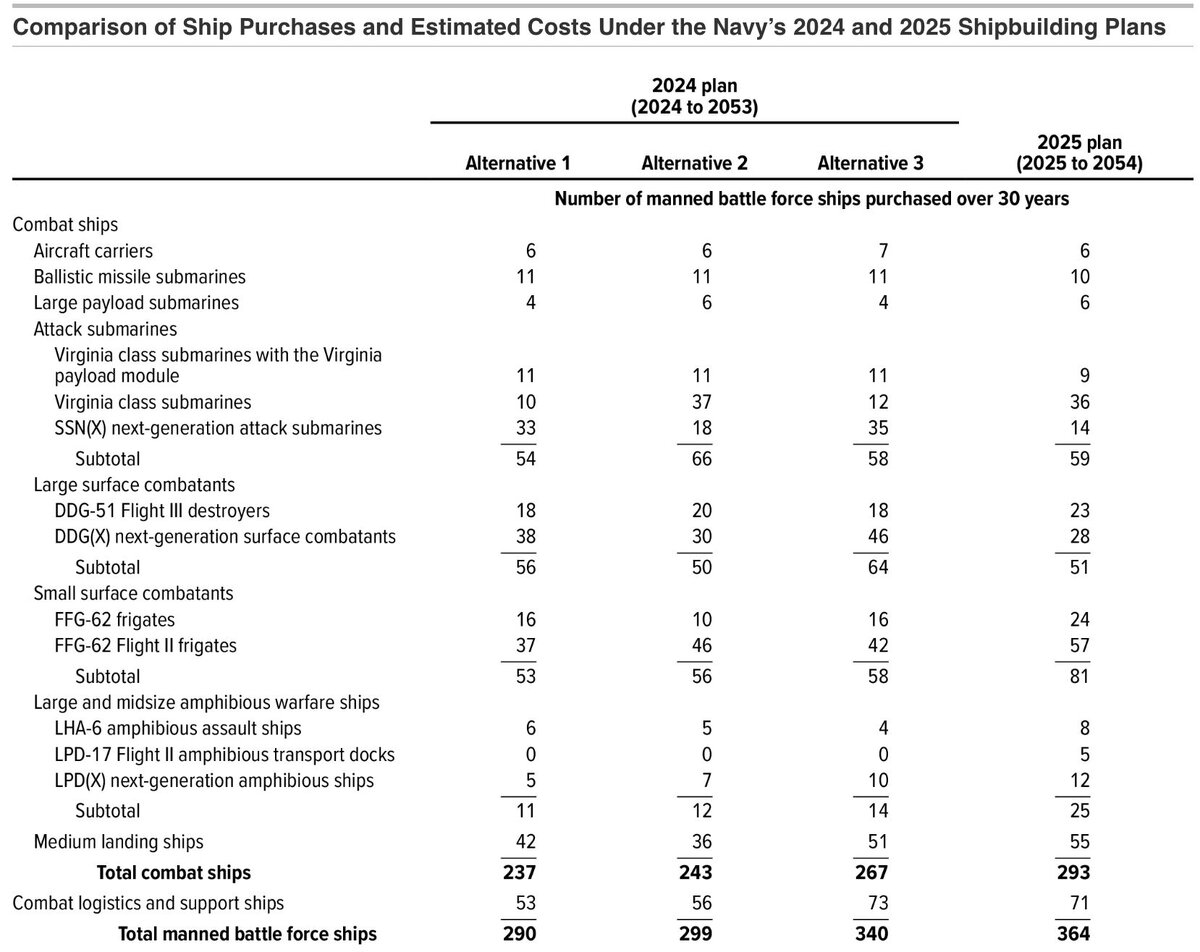
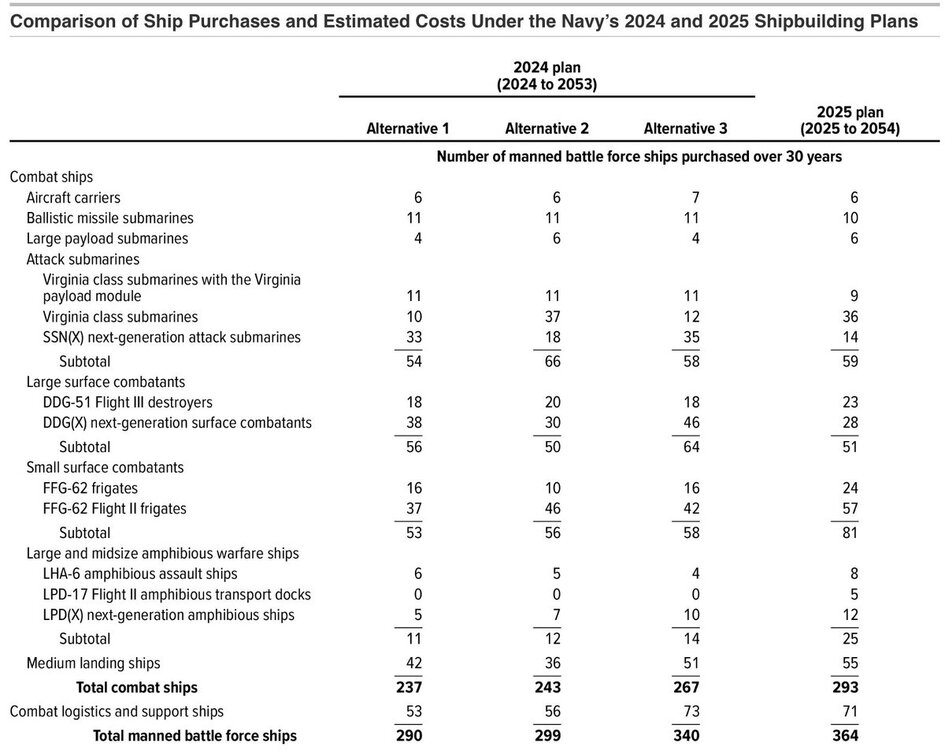
Pick a time, any time, in the last dozen years that there wasn’t a clear bipartisan agreement that this nation needed a Navy to match the strategic challenge on the other side of the International Date Line. From President Obama’s Pacific Pivot 14 years ago, to the Davidson Window, to Trump-45’s 350-ship Navy, to the Trump-47 re-focus on the Pacific. It is all right there. Where a bit under a century ago, in the midst of a global depression, those in Congress and industry saw the same threat for their time. In 1936, they turned into the wind so by the time war was upon them a half decade in the future, they already had a head of steam going to bring the fleet in early 1943 to win that war in under four years. Here we are, in 1QFY2026, wondering where the sense of urgency is. What money are we spending? Well, the Fiscal Year 2026 defense budget allocated $47.4 billion for naval shipbuilding. The total funding is a combination of two separate pieces of legislation: the regular defense budget and a separate reconciliation bill. You would think such largesse would build a fleet, but will it? Will all that money coming from taxpayers and money borrowed in the name of children yet unborn go towards the capital improvement and human capital needed to expand the fleet? Will it? What does recent history tell us? Just to keep things simple, let’s look at destroyers, aircraft carriers, and submarines. The US Navy is building DDGs at a rate of about 1.5 per year, although its goal is to procure two per year through a multi-year contract. I’ve heard recently that it is drifting towards 1.2 per year. Regardless of how much money we give them, we are told, the current production is lower than the goal due to industry challenges like skilled labor and supply chain issues. If you assume that each DDG will last 30 years and take the higher 1.5 number, then you will never get more than 45 “large” surface combatants. Got to 35 years, perhaps a bit more. If we drift below 1.5, no way. What does the latest 30-year shipbuilding plan promise us? I’m sorry…but with our accepted practice of overpromising and underdelivering, we are unlikely to effectively get to 50, much less 64, unless we make the financially unwise drive to get 30+ years out of our already ridden-hard Flight I, II, and IIA DDGs. Arleigh Burke Hull-1 is still commissioned at 34 years—so we will need to stretch service time as much as possible. Keep in mind, like an old car, your maintenance costs are significantly higher the higher the mileage, not to mention you never know when something will just wear out. That doesn’t even bring in the usual and expected delays with the new DDG(X) that we all know will be there as a new warship class. Heck, we can’t even keep up with building a ship designed in the last decade of the Cold War, the Arleigh Burke DDG. Our new designs? Currently, many Navy shipbuilding programs are experiencing schedule delays and cost growth. In early 2024, the Navy conducted a shipbuilding review that showed many programs were behind schedule. The review specifically highlighted the following ships, which have been delayed by varying amounts: The Ford class aircraft carrier CVN-80, the Enterprise, 18 to 26 months; The first Columbia class ballistic missile submarine, 12 to 16 months; The Virginia class attack submarines, 24 to 36 months; and The first Constellation class frigate, 36 months. If you’re not cynical about these numbers, you’re a fool. If you think defense companies are primarily focused on ensuring a properly resourced Navy, you don’t understand how business works. Sure, some employees think they do, but do the corporations as they are presently allowed to operate? No. If they did, you’d see the money going to that end. It isn’t. Let’s dig into an example from industry. (NB: These are the best numbers I can find. If you spot errors or have corrections, please put them in comments with links and I will do a rolling edit. Some of the amounts listed below are estimates as exact total amounts are not publicly available because they depend on the company’s total number of outstanding shares, which can fluctuate. For a specific company, the total dividend paid is calculated by multiplying the per-share dividend amount by the total number of shares outstanding at the time of payment. For a precise total, you would need to check companies’ investor relations or financial reports. At no point is any of this investment advice. I do not directly own stock in any of these companies. However, as someone with a TSP account and various ETFs in my portfolio, I do indirectly. I am not advising anyone to buy, sell, short, or cover any of these companies and I encourage everyone to do research themselves. Don’t sue me.) The Shipbuilding Big SistersThe top shipbuilders for the U.S. Navy are the publicly traded companies Huntington Ingalls Industries (HII), which builds aircraft carriers and surface combatants, and General Dynamics (GD), which operates through its subsidiaries Electric Boat for submarines and Bath Iron Works for surface combatants. General Dynamics NASSCO is also a key contractor, focusing on auxiliary and support ships. The vast majority of their gross income comes from the U.S. government. According to HII’s 2024 Form 10-K filing, of the company’s total revenues were $11.535 billion. Of this amount, $11.527 billion (99.9%) came from U.S. federal government contracts. The remaining $8 million (0.1%) from commercial and state/local government customers. According to GD’s 2024 Form 10-K filing, the company generated total revenues of $47.716 billion. Of this amount, $33.064 billion (69%) came from the U.S. government. $4.772 billion (10%) came from non-U.S. government sources, and the remaining $9.880 billion (21%) came from commercial customers. We are picking these two because they are the two top dogs. Nothing personal here. There are great people working there doing great things, but that isn’t the point. The point here is to help explain part of the problem we are seeing growing the fleet. The problem is multi-causal, but what we will outline below is a sea-anchor on the whole program. Incentives and disincentives—and again—follow the money. What is the one thing we constantly hear from industry about the problem with meeting shipbuilding goals? It is people, trained shipbuilders, right? Really? If HII and GD are in the business of national defense—and as a result directly responsible for ensuring the defense of their host nation, then you would think that there would be a priority of money going towards creating the incentives to grow the trades in shipbuilding, to make working in the shipbuilding industry more attractive to the most talented people in the workforce. Note above I have hyperlinks to the stock pages of HII and GD. These are publicly traded companies. Never forget, they have a fiduciary duty to their shareholders. One example of fiduciary duty is the underlying responsibility of the directors and officers of a corporation to act in the best interests of the shareholders. To become a shareholder, the holder of the share typically exchanges something of value to obtain a share of ownership in the company. Once the exchange has been completed, the directors of a corporation must operate the corporation in a way that meets the financial interests of the shareholder. Any deviation from those duties can result in legal action from the shareholders. Could you make the argument that injecting money into training and salary to attract workers would fit this definition? Well…no. Follow the money. Look at what the leadership teams at HII and GD are directing to meet their definition of fiduciary duty. These are their decisions, their priorities. Agree or disagree, but they impact the larger question, “Are the primary shipbuilders’ priorities fully in line with preparing the nation for war against the People’s Republic of China? If they get more money from the US government, where will it go?” As the primary owners of the companies, who are the top shareholders that are driving corporate decisions? HII Vanguard Fidelity Blackrock State Street GD Longview Investments Vanguard Blackrock Newport Trust Let’s look at buybacks and stock dividends as proxies to this quandary between what national security professionals think our nation’s top shipbuilders should be focused on and investing capital in, and what Vanguard, Blackrock, and their cohorts desire. Companies perform stock buybacks and increase dividends as ways to return value to shareholders (fiduciary duty). Often when they have excess cash but lack productive opportunities for reinvestment, companies will do this. That is the theory. How it is playing out in practice? Not the “productive opportunities” point above. Leadership has to, in essence, look around and say, “Hey, we have this pile of money here. If you don’t have anything better to do with it, let’s use it to boost stock price.” In the face of the need to expand capacity, are the incentives and disincentives for HII and GD there to motivate them to lean in to get ready for the next Great Pacific War? Do they see that is a “productive activity?” It appears not. I’ve dug around some financial statements and have asked AI to help me dig out some figures. The note about corrections up-post applies. BuybacksBuybacks help inflate the price per share of a stock for existing shareholders. They increase demand (the buyback) and decrease supply (retained shares). Econ 101. HIISince 2023, HII has had quarterly stock buybacks totaling $247.16 million across seven reported periods. The company also increased its share repurchase authorization by $600 million in January 2024. HII quarterly stock buybacks since 2023 Q3 2024: $35.35 million Q2 2024: $64.69 million Q1 2024: $86.94 million Q4 2023: $36.74 million Q3 2023: $22.62 million Q2 2023: $7.49 million Q1 2023: $20.37 million In January 2024, HII announced a $600 million increase to its share repurchase program, raising the total authorization to $3.8 billion. The company’s goal is to return free cash flow to shareholders at a time when everyone is pleading poverty for qualified workers to expand capacity. How many more workers could be brought to, or retained in, HII alone for $247 million over the last few years, and $600 million in the future? How do you square that circle? I can’t. GDGD has completed eight stock buyback programs since 2023, with quarterly buyback values listed as of March 31, 2023, and all subsequent quarters through June 30, 2025. For the full year 2023, the company repurchased $434 million in shares and authorized an additional 10 million shares for repurchase on December 4, 2024. The GD stock price as of my writing this is $334.39 per share. GD has 269 million shares outstanding. 10 million shares represents $3.34 billion. GD quarterly buyback data since 2023 Q1 2023: $125.33 million Q2 2023: $290.13 million Q3 2023: $56.93 million Q4 2023: $149.54 thousand Q1 2024: $160.18 million Q2 2024: $36.84 million Q3 2024: $44.39 million Q4 2024: $1.33 billion Q1 2025: $639.10 million Q2 2025: $2.91 million DividendsEveryone knows what dividends are. Sharing profits with shareholders. Also works hand in glove with buybacks. Fewer outstanding shares eligible for dividends, then more dividends per share. HII: 39.24 million shares outstanding with a market price as of this writing of $287.90.From the beginning of 2023 through late October 2025, HII has paid $5.23 per share in dividends. This total is based on quarterly payments of $1.24 (Q2 and Q3 2023), $1.30 (Q4 2023, Q1, Q2, and Q3 2024), and $1.35 (Q4 2024, Q1 and Q2 2025). The total amount of dividends paid in this period varies, as it depends on the number of outstanding shares at the time of each payment. Per share dividend payments (2023 - late October 2025) Q2 2023: $1.24 per share (paid May 25, 2023) Q3 2023: $1.24 per share (paid August 25, 2023) Q4 2023: $1.30 per share (paid December 8, 2023) Q1 2024: $1.30 per share (paid March 8, 2024) Q2 2024: $1.30 per share (paid June 14, 2024) Q3 2024: $1.30 per share (paid September 13, 2024) Q4 2024: $1.35 per share (paid December 13, 2024) Q1 2025: $1.35 per share (paid March 13, 2025) Q2 2025: $1.35 per share (paid June 13, 2025) Q3 2025: $1.35 per share (paid September 12, 2025) GD 269 million shares outstanding with a market price as of this writing of $334.39 per share. Since the start of 2023, General Dynamics paid out $5.30 per share in dividends and $1.4 billion in total. The per-share amount is based on four quarterly payments of $1.32 in 2023, and four quarterly payments of $1.42 in 2024. Per share 2023: Four quarterly dividends of $1.32 each, totaling $5.28 per share ($1.32 x 4). 2024: Four quarterly dividends of $1.42 each, totaling $5.68 per share ($1.42 x 4). People MatterI have to be careful not to dive too deep into HII and GD’s books and I want to talk next about workers. I could spend a month on this topic alone. As much as I’d like to pontificate on executive compensation, I’ll leave that to someone else. I am interested in what we’ve discussed here for two decades and a decade and a half on the Midrats Podcast: the people who actually build the ships. If people are in such high demand, are we putting out money where our mouth is? Are we doing what it needed to bring people into the trades? ZipRecruiter states that the average shipyard worker makes $24 an hour, though other sources say it is $21 an hour. Let’s assume the higher number. Depending on what state you are in, that is just a little under the average manufacturing job. That hourly rate (assuming no overtime) is pulling in roughly $51,000 per year. With a $51,000 annual income and a good credit score, you can likely afford a house in the $150,000 to $200,000 range, depending on your debt-to-income ratio, down payment size, and local interest rates. A 20% down payment on a $150,000 house would be $30,000, and on a $200,000 house would be $40,000. The median sales price of a single-family home in the USA is $410,800. An HII shipyard worker is paid an average of about $26.78 per hour. However, HII hourly pay varies significantly by role, with some positions like welder earning around $22.46 per hour, while others like pipe welders can earn significantly more. Huntington Ingalls Industries hourly pay Average hourly pay: $26.78 Range: $18.79 to $37.67 per hour Welder (average): $22.46 per hour Pipe welder (average): $28 to $30 per hour Average U.S. shipyard worker hourly pay Average hourly wage: $21 per hour Average annual salary: $43,248 GD shipyard workers are paid above the national average hourly wage for similar roles, which makes sense considering where some of their facilities are located. Shipfitter: The average hourly pay is approximately $30.32. Manufacturing Technician: The average hourly pay is approximately $23.29. Rigger: The average hourly pay is about $26.47. Welder: The average hourly pay is approximately $30.33. Electrician: The average hourly pay is around $23.14. It’s important to note that pay can vary based on the specific GD subsidiary, the specific role, and location. Let’s be generous. We are only offering 1.2X the running wage for shipbuilding…a hard, uncomfortable, and often more dangerous job compared to other manufacturing jobs, and we wonder why we can’t get young people to get in line to do the work? What multiple would be needed to get the proper response needed to get workers? 2X, 2.5X, 3X, … 4X? How much more could salaries be increased if the money spent on stock buybacks were instead spent on increasing wages? At the wages they are being offered, they cannot even buy a home that is half the national average? Well, we know shareholders are making a lot of money. All that “extra money” from the government is going to them, not attracting and rewarding workers. What about senior management? Leadership PrioritiesI’ve always found proxy statements useful in seeing what companies have as their priorities for leadership. People matter as they are the ones who are making the decisions. Let’s start with HII’s latest proxy statement. Well, there you go. When it comes to the skills HII is looking for in its directors, “Shipbuilding” is tied for last with HR. Let’s see if we find anything better in GD’s proxy statement. Not much better. Fund word count exercise though. “Shipbuilding” is mentioned once in the proxy statement. “ESG” is mentioned three times. “Diversity” 11. By comparison, HII’s proxy statement mentioned “Shipbuilding” 55 times, “ESG” four, and “Diversity” 3. Future ImperfectSo, now what? Well, at first glance, I’m not sure throwing more money at the Big Sisters is going to move the needle the way we want it to without a multi-year effort to bring in new governance that has different priorities reflecting different incentives and disincentives. I don’t even know if that is possible. HII and GD are in an industry where there is really only one buyer, the U.S. Navy. They are working in a monopsony industry with side gigs. Microeconomic theory tells us that in a monopsony, the single buyer has market power over all sellers as the only purchaser of their good or service. Does it seem that the US Navy and the government it serves is exercising any of the power it has, in theory, to shape what HII and GD are doing with the billions of taxpayer dollars they are giving? Again, I don’t know if that is possible. Well, while they figure that out, perhaps we need to stop sending those big shipbuilding more money than they seem to be able to handle. They are not the only game in town. Our Navy has other needs. We are woefully short of all sorts of auxiliaries, big and small—the “Unsexy but Important”. From large hospital ships, to fleet oilers and strategic sealift to keep the fight going in WESTPAC, and a whole fleet of CONSOL tankers to replace the lost capacity of Red Hills. I’d really love an industry wargame where we ask the question, “What if we divert most of the expanded money to other shipyards besides HII and GD. Clearly they don’t need additional money to support fleet growth. Eventually they will run out of stock to buy back.” That would be fun, but backing out to the big pixels and returning to the workforce, we need a change in attitude. We need to stop looking at the workforce as an expense for a McKinsey consultant squeezing every last penny out of it. No. We need a mindset change. The workers are the foundation of the fleet we need to have. We need the best possible out there. Will there be a marginal increase in expense? Sure…but is cheaper better? We need an attitude towards the workforce that the best bourbon makers have towards corn. Listen to the below about #2 Yellow Dent Corn. Get the vibe? The Navy and the Shipbuilding industry need a combination of a Henry Kaiser and Gary Hingardner from Wood Hat Spirits. We only take the hearts. We make our cuts tight. We get three proof gallons in a bushel. There’s five fifths in a gallon so we’re looking at 15 fifths out of a bushel of corn, and if corn is five bucks, it’s not, it’s below that today, and you get 15 bottles of whiskey, your corn cost is less than the stopper. It’s half the price of the label. The main ingredient. It’s crazy it’s so cheap. We could be spending more money on our corn and not affect their bottom line at all. He pays more for what makes the real difference to the end product…and it isn’t all that much per product to do it right. That is the attitude of a founder/owner who knows his mission and what is important at the end. He’s not an accountant only interested in fractional cents more per share. In the long run, if we want to fix shipbuilding, we need to fix industry. In the short run, perhaps we should look at finding other companies in the industry who are more focused on getting things that displace water, in the water. Leave a comment Share This Substack is reader-supported. To receive new posts and support my work, consider becoming a free or paid subscriber. View the full article
-
Japan’s Ministry of Defense has announced the shipment of an additional 30 Self-Defense Forces (SDF) vehicles to Ukraine. According to a release issued by the ministry on October 14, the shipment includes 28 “1/2-ton trucks” and two high-mobility vehicles, intended for personnel and cargo transport. The latest delivery brings the total number of SDF vehicles […] The post Japan sends 30 more military vehicles to Ukraine first appeared on Defence Blog.View the full article
-
South Korea’s top military officer has raised concerns that North Korea may have received Russian assistance in developing its newly unveiled Hwasong-20 intercontinental ballistic missile (ICBM). During a parliamentary audit session on Tuesday, Chairman of the Joint Chiefs of Staff (JCS) Gen. Jin Yong-sung told lawmakers there is “sufficient possibility” that Russia supported North Korea’s […] The post Russian hand suspected in North Korea’s new ICBM first appeared on Defence Blog.View the full article
-
Ukraine’s Brave1 defense-technology initiative has expanded its “Army of Drones. Bonus” (ePoints) program, a digital incentive system that allows frontline units to exchange verified drone strikes for drones, electronics, and other urgently needed equipment. Brave1, the government-run tech accelerator responsible for fast-tracking new defense capabilities, says the program is reshaping how Ukraine’s armed forces engage […] The post Ukrainian frontline units trade drone kills for more drones first appeared on Defence Blog.View the full article
-
Brisbane-based Skyborne Technologies has unveiled its CODiAQ robotic weapons platform at AUSA 2025, introducing a new class of autonomous ground systems that combine four-legged mobility with modular lethality and AI-assisted targeting. The system — formally named Controller-Operated Direct-Action Quadruped (CODiAQ) — is designed to deliver direct-fire precision using Skyborne’s proprietary payloads while remaining lightweight, low-cost, […] The post Australian firm arms robotic dog with grenade launcher first appeared on Defence Blog.View the full article
-
The Dragon 8×8 Infantry Fighting Vehicle program, once presented as the flagship modernization effort of Spain’s Army, is now facing mounting public criticism following repeated delays, integration failures, and unresolved technical issues. In a sharply worded op-ed titled “Detengan esto, por favor” (“Stop this, please”), defense commentator Jorge Estévez-Bujez calls for the complete shutdown of […] The post Defense analyst slams Spain’s Dragon vehicle program first appeared on Defence Blog.View the full article
-
AM General has introduced the next-generation version of its Hawkeye 105mm Mobile Howitzer System at AUSA 2025, showcasing a newly redesigned artillery platform that reflects direct combat lessons from Ukraine and advances in lightweight fire support mobility. The updated Hawkeye system integrates a restyled tactical truck chassis with a new powertrain and improved architecture, offering […] The post Combat-tested Hawkeye gets new look at AUSA 2025 first appeared on Defence Blog.View the full article
-
Target Arm Inc., a Service-Disabled Veteran-Owned Small Business (SDVOSB), has introduced its Ralar Modular Mission Payload (MMP) drone system at the Association of the United States Army (AUSA) 2025 exposition, presenting a breakthrough in launch-and-recovery technology for small unmanned aerial systems (sUAS) operating in high-risk, mobile environments. According to the company, the Ralar MMP is […] The post U.S. firm develops robot arm to grab drones in flight first appeared on Defence Blog.View the full article
-
Sierra Nevada Corporation (SNC) has unveiled its full-sized Battery Revolving Adaptive Weapons Launcher (BRAWLR) system at the Association of the United States Army (AUSA) exposition, introducing a compact, multi-missile ground platform designed for mobile air defense operations. According to the company, the 7-foot-tall BRAWLR is part of its Expeditionary Adaptive Air Defense (EAAD) family of […] The post SNC unveils modular air defense launcher at AUSA first appeared on Defence Blog.View the full article
-
Elbit America, the U.S. subsidiary of Israel’s Elbit Systems, is showcasing its SIGMA 155mm mobile artillery system concept at the Association of the United States Army (AUSA) exposition, aiming to position the platform as a future solution for U.S. Army long-range precision fires. The SIGMA system, currently entering service with the Israel Defense Forces under […] The post Elbit America offers next-gen howitzer to U.S. Army first appeared on Defence Blog.View the full article
-
Kymeta Corporation announced today that its Osprey u8 satellite terminal has been selected as a multi-orbit communications solution for the U.S. Army’s Next Generation Command and Control (NGC2) Pilot, underscoring the service’s push for resilient, mobile networking capabilities in complex operational environments. The selection of Kymeta’s technology follows Army assessments under programs such as Armored […] The post U.S. Army selects Osprey u8 satellite terminal for resilient comms first appeared on Defence Blog.View the full article
-
Defense technology firm V2X has unveiled its new Tempest combat vehicle at the Association of the United States Army (AUSA) 2025 exposition. According to the company, Tempest is purpose-built for fast, low-profile missions where mobility and survivability are critical. The vehicle can detect, track, and neutralize Class 2 and Class 3 unmanned aerial systems (UAS) […] The post V2X develops missile-armed dune buggy first appeared on Defence Blog.View the full article
-
Sikorsky has debuted its new U-Hawk prototype cargo drone, a fully autonomous utility aircraft developed from the UH-60L Black Hawk, at the Association of the United States Army (AUSA) 2025 exposition. The system eliminates the cockpit, expands internal cargo space, and is designed to conduct long-range, uncrewed missions using tablet-based operator control. According to the […] The post Sikorsky cuts cockpit, turns Black Hawk into drone first appeared on Defence Blog.View the full article
-
Oshkosh Defense has unveiled its new Medium Multi-Mission Autonomous Vehicle (M-MAV) at the Association of the United States Army (AUSA) 2025 Annual Meeting, presenting a next-generation autonomous launcher platform engineered to fire the full suite of MLRS munitions. The M-MAV is based on the company’s FMTV A2 medium tactical truck and has been designed to […] The post Oshkosh rolls out M-MAV rocket launcher first appeared on Defence Blog.View the full article
-
Flyer Defense has unveiled a counter-unmanned aerial system (C-UAS) configuration of its Flyer 72-HD ground mobility vehicle at this year’s Association of the United States Army (AUSA) Annual Meeting in Washington, D.C. The Flyer 72 – Heavy Duty (F72-HD), developed as a lightweight, multi-role platform for U.S. Special Operations Forces, was shown with a new […] The post Flyer unveils drone-hunting vehicle at AUSA first appeared on Defence Blog.View the full article
-
DZYNE Technologies today introduced its new Dronebuster vehicle kits at the Association of the United States Army (AUSA) Annual Meeting in Washington, D.C., expanding its existing counter-drone offerings to mobile platforms. The company says the new systems will bring fast-deploying, vehicle-integrated protection against unmanned aerial systems (UAS) for use across convoys, mobile command posts, and […] The post Vehicle-based Dronebuster system goes public at AUSA first appeared on Defence Blog.View the full article
-
Russian military forces have released footage they claim shows the destruction of a previously unreported Ukrainian air defense system equipped with APKWS (Advanced Precision Kill Weapon System) rockets, according to imagery and descriptions published by Russian sources. The incident reportedly took place 50 kilometers from the frontline, where a Zala reconnaissance drone identified what appeared […] The post Russian drone hits unknown Ukrainian air defense system first appeared on Defence Blog.View the full article
-
A South Korean lawmaker is calling on the country’s Ministry of National Defense to remove remnants of Japanese military terminology still in use within the Republic of Korea Armed Forces. According to documentation submitted by the ministry, numerous terms originating from the Imperial Japanese Army remain embedded in daily military language—decades after the end of […] The post South Korean lawmaker pushes to eliminate Japanese military terms first appeared on Defence Blog.View the full article
-
Integris Composites has been named an official armor partner for American Rheinmetall in the U.S. Army’s XM30 Combat Vehicle program, the company announced ahead of this year’s Association of the United States Army (AUSA) Annual Meeting & Exposition in Washington. The announcement places Integris at the center of a $45 billion Army modernization effort to […] The post Integris to supply armor for new U.S. Army combat vehicle first appeared on Defence Blog.View the full article
-
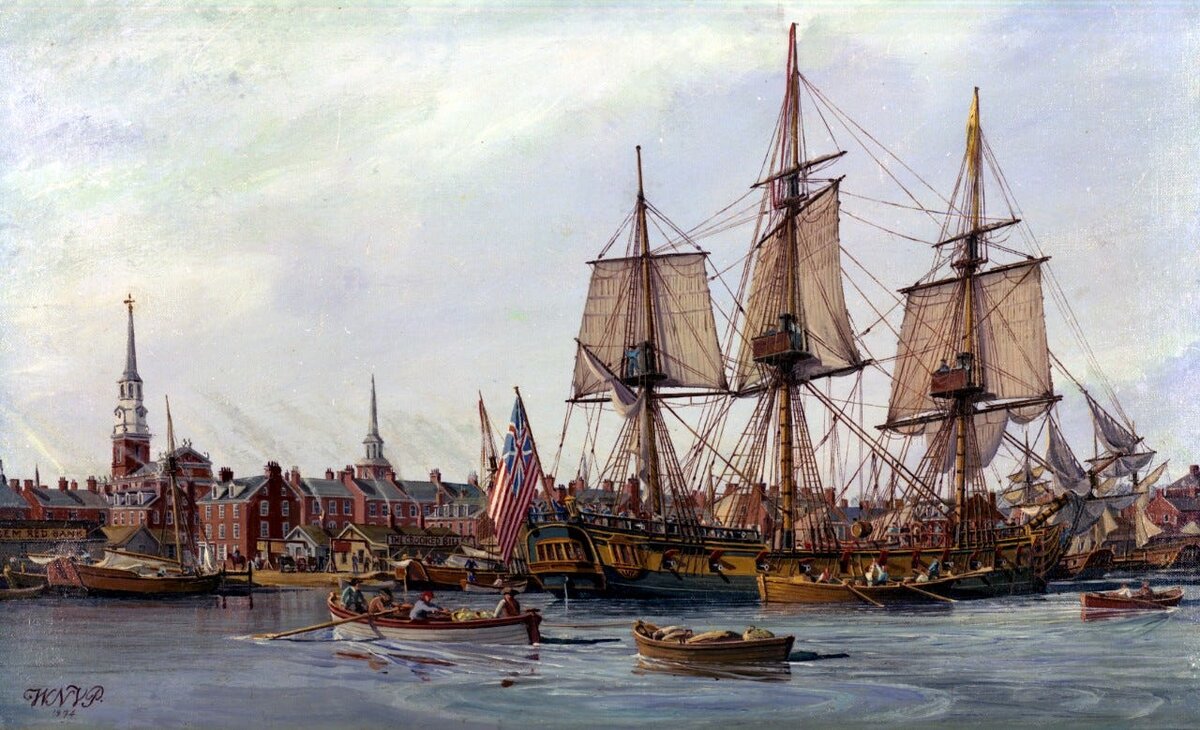
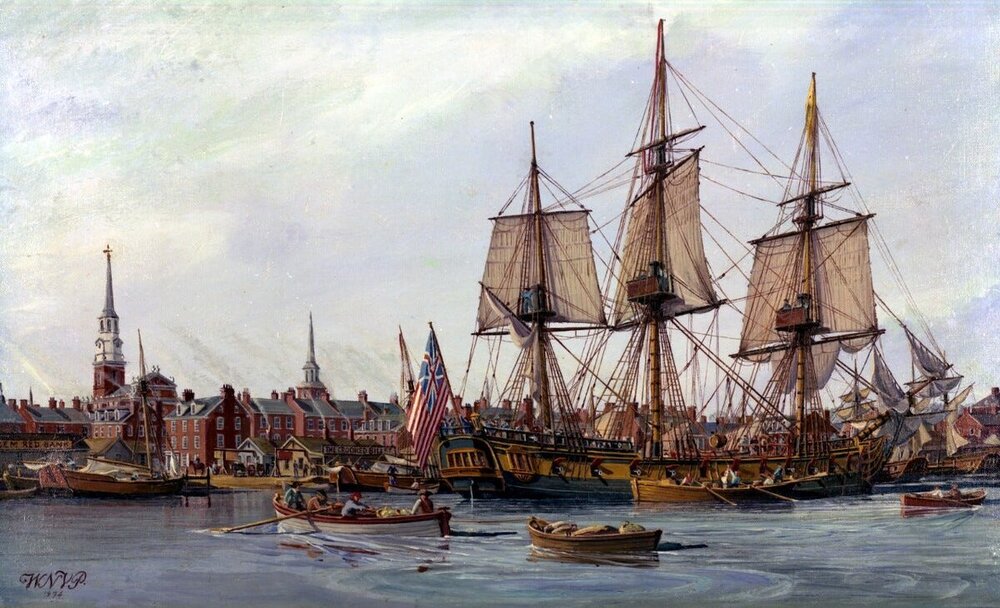
Most should know by now that today is the 250th Anniversary of the founding of the US Navy. The first few months were a rush to get a flotilla fitted out. Did you know the first ship to fly an “American flag?” It was the USS Alfred...though that is not quite right. There was no United States at the time…so more accurately, the Continental Ship Alfred would be more appropriate. …Congress on October 13 to authorize the fitting out of two American warships,[1] one of 10 guns and the other of an unspecified size, to attempt to capture these ships and divert their invaluable cargoes to the ill-equipped soldiers of Washington’s army. Congress decided, on October 30,[2] to specify the second vessel as being 14 guns and to add two more ships to the navy, one of 20 guns and the other slightly larger but not to exceed 36 guns. One of the ship’s owners, Morris, was a member of the Marine Committee when that committee acquired the Alfred. A second ship, also owned by Willing Morris & Co. became the Columbus at the same time. USS AlfredThe Naval Committee of the Continental Congress purchased Black Prince on November 4, 1775, renaming her Alfred after 9th century English monarch Alfred the Great four days later, and ordered her fitted out as a man-of-war. Her former master, John Barry, was placed in charge of her rerigging; Joshua Humphreys was selected to superintend changes strengthening her hull, timbers, and bulwarks as well as opening gunports; and Nathaniel Falconer was made responsible for her ordnance and provisions. Soon four other vessels joined her in the Continental Navy: Columbus, Cabot, Andrew Doria, and sloop Providence. Esek Hopkins, a veteran master of merchantmen from Rhode Island, was appointed commodore of the flotilla. Alfred was acquired on December 3, 1775, Capt. Dudley Saltonstall in command, and became Hopkins’ flagship. On the same day Alfred became the first vessel to fly the “Flag of America” (precursor to the U.S. flag). The ensign was hoisted on the Delaware by Lieutenant John Paul Jones and documented in letters to Congress. The “Flag of America” is still a pretty solid flag. As today is Columbus Day, this is a doubly-maritime day that deserves a hard question. Look at the names of those first ships in addition to Alfred; Columbus, Cabot, Andrew Doria. Why don’t we have warships right now that share those names? Yes, we have a USS Columbus (SSN 762), but she is named after Columbus, Ohio—a place not even incorporated until 1816. We had a light carrier, USS Cabot (CVL-28) that was eventually given to the Spanish. But Alfred and Andrew Doria? Just forgotten. A Navy that values its history should keep these names in our fleet. For our 250th, let’s ponder that now is the time to bring these names back. OK, maybe not the Alfred because she was captured, but you get the idea. Final note: have you been thinking about becoming a paid subscriber to the Substack and getting access to the paid subscriber-only UNCLAS Read Board Podcast? Today only, in honor of the US Navy’s 250th Birthday, 25% off all subscription plans. Click here. This Substack is reader-supported. To receive new posts and support my work, consider becoming a free or paid subscriber. Share Leave a comment View the full article
-
A new fleet of the Chinese People’s Liberation Army Navy has departed from Qingdao, a military port in eastern Shandong Province, to assume escort duties in the Gulf of Aden and waters off Somalia, according to Chinese state media. The deployment, announced by Xinhua on October 11, is the 48th such rotation since China launched […] The post China sends warships to Gulf of Aden first appeared on Defence Blog.View the full article
-
The Midrats Podcast is BACK LIVE this week with an ever-popular Midrats Melee format. We’ll cover the waterfront from the Pacific to the Caribbean and whatever else pops up in between. We’ll go LIVE at 5 pm Eastern this Sunday. You can join us LIVE at this link. The chat room is always open, so if there are questions you have for Mark and me, or a topic you’d like us to pontificate about…hop in the chat room and join the conversation. If you are reading this after the one-hour show, check back later on Sunday when I’ll update the Substack link with the links to the recorded podcast. This Substack is reader-supported. To receive new posts and support my work, consider becoming a free or paid subscriber. Share Leave a comment View the full article