HG S2 (Intel Bot)
Members
-
Joined
-
Last visited
Never
Everything posted by HG S2 (Intel Bot)
-
There is nothing personal here in the use of Admiral Cooper’s picture or in Kimo Fanell’s article over at American Greatness, Restoring America’s Warfighting Ethos: Too Many Ribbons… Clean Up America’s Military Awards Program. It is just an opportunity to point out again a problem that a lot of us continue to hope for action on: the obscene bloat of awards, badges, and pins. The Navy isn’t even the worst offender. The admiral’s appearance, while lawful and within standards, does raise the issue of the Pentagon’s awards system, where America’s senior military officers are able to obtain, let alone wear, that many rows of ribbons, awards, decorations, and badges—the latter of which are worn throughout a career just for being assigned to a command. In other words, how does the existing U.S. military awards program actively promote the Secretary of War’s call to restore America’s warfighting ethos? Unfortunately, the answer is that it does not. No, not even close. Just the opposite, it has now become almost a joke. Let’s go to the Army for a moment. Ignore the ribbons, just look at all the flair. We’re not too far from here. Cooper and Miley are not even the most over-blinged, they are just a couple of the most high profile. The farcical “everyone gets a trophy” issue has to be at its peak. It has been an issue for decades and really can’t keep going like this. Consider that FOGOs from the 1950s, 60s, and 70s received maybe one or two Legions of Merit (LOM) for 30-plus years of service, yet today the Commander of CENTCOM is wearing five LOM ribbons—and his career is far from over. The result of these institutionalized “end of tour awards” and other participation rewards undermines the principle of a merit-based reward system that is based on courage under fire. It is time to end this institutionalized erosion of the American warfighting ethos. Is it time to RETVRN? I know there is a “just the top-3” vibe that is nothing new. It was around when I was a JO, but the problem here is institutional. It is a patronizing mindset that, as a result, inject additional cynicism into the system and dilutes truly exceptional performance in a sea of participation trophies. We need a root-and-branch reform of awards. As a pleasant secondary effect, it will save countless hours of work and personnel effort. Just one example of hundreds of thousands for you to ponder. A friend of mine, now a Chief in a different rating, spent a full deployment to Afghanistan doing absolutely nothing, nothing, but processing joint-award-participation-trophies. That was it. A year processing absolute fiction and hyperbole. In the end, that is what this is: fiction and hyperbole. We can do better. Leave a comment Share This Substack is reader-supported. To receive new posts and support my work, consider becoming a free or paid subscriber. View the full article

-
Sweden is preparing to export up to 150 of its domestically built Gripen fighter jets to Ukraine under a new long-term defense cooperation framework, Swedish Prime Minister Ulf Kristersson announced Wednesday. Following a meeting with Ukrainian President Volodymyr Zelenskyy in Linköping, Kristersson said that Sweden is committed to “exploring all the possibilities in providing Ukraine […] The post Ukraine begins talks for 100+ Gripen fighter jets first appeared on Defence Blog.View the full article
-
Singapore seems to have made a solid decision here. They took the framework of the Danish Iver Huitfeldt and Absalon class frigates and customized the rest to meet their needs. That enabled them to do this: Now that the vessel is in the water, it will move to the Gul Yard for further outfitting, integration, and sea trials. It will then be formally commissioned. The six MRCVs are planned to be delivered progressively from 2028 onward. … The vessel was also built remarkably quickly, with just 12 months between keel laying and launch. This was aided by 3D modeling and digital twinning in the design phase. This meant that the MRCV could be ‘tested’ in a virtual environment and refined before actual construction began, without the need for costly and time-consuming physical prototypes. Additional design input was also provided by Denmark and Sweden, both of which submitted proposals that were fed into the program at an early stage. Minimize risk. Leverage friendly nations’ successful technology and knowledge. Lean in with, but don’t trip over, evolving technology. For comparison, the troubled U.S. Navy Constellation class frigate, derived from the Franco-Italian FREMM frigates, is 151 meters and 7,300 tons. Hull-1 was laid down in April 2024. 12 months later in April 2025, it was only 10% complete. Singapore has quite an impressive navy considering her population is 6.1 million, just a bit more than Denmark, packed into a space only 88% the size of NYC. She spends 3.3% of her GDP on defense. In total dollars, in 2024 that was close to $14.1 billion. That is ~50% more than that of Denmark or Norway. This can be done properly. All it takes is a government that demands performance and executes — doesn’t have lip service — to a culture of accountability. Leave a comment Share This Substack is reader-supported. To receive new posts and support my work, consider becoming a free or paid subscriber. View the full article

-
Russia carried out a series of nuclear-capable missile launches on Wednesday as part of a large-scale strategic forces exercise overseen by Vladimir Putin in his role as commander in chief, according to a statement from the Kremlin. The training involved the launch of multiple intercontinental and cruise missiles designed to test the readiness of Russia’s […] The post Russia simulates “response” in nuclear drill first appeared on Defence Blog.View the full article
-
Russia has begun fielding a previously unseen type of drone over Ukraine, featuring an unusual ring-wing design likely aimed at improving aerial endurance and strike capabilities, according to a Ukrainian military electronic warfare specialist. Serhiy Beskrestnov, also known by his callsign “Serhiy Flesh,” said in a public statement that Russian forces have started using drones […] The post Mysterious Russian drone spotted in combat zone first appeared on Defence Blog.View the full article
-
France’s defense procurement agency, the Direction générale de l’armement (DGA), has spotlighted its multi-domain weapons testing site known as CALAMAR, located at Cazaux. The facility supports the evaluation of France’s most advanced combat systems, including the Rafale fighter, Mirage 2000, Tiger helicopter, guided munitions, anti-bunker bombs, and targeting technologies. In a statement released by the […] The post France showcases CALAMAR range for next-gen weapons testing first appeared on Defence Blog.View the full article
-
Croatian robotics firm DOK-ING and Slovenian turret specialist Valhalla have unveiled a new integrated unmanned ground combat system, pairing the MV-8 Komodo robotic platform with the Mangart 25 AD remote-controlled turret. The joint system made its world debut this week during the SIDEC defense exhibition in Slovenia, backed by support from the Slovenian Armed Forces […] The post New robotic combat vehicle debuts at SIDEC show first appeared on Defence Blog.View the full article
-
The Republic of Korea Navy has launched its first Changbogo-III Batch-II class submarine, the Jang Yeong-sil (SS-087), during a formal ceremony held Wednesday at Hanwha Ocean’s shipyard in Geoje. The vessel is the lead boat in the second batch of South Korea’s indigenously developed diesel-electric submarines and is expected to enhance the country’s underwater deterrence […] The post South Korea launches new indigenous attack submarine first appeared on Defence Blog.View the full article
-
Shield AI, a defense technology company now valued at $5.3 billion, has announced the launch of the X-Bat, its first vertical takeoff and landing (VTOL) autonomous fighter jet designed for combat. The company will unveil the new aircraft on Wednesday, positioning it as a central piece in the future of distributed airpower. According to Shield […] The post Shield AI develops world’s first autonomous VTOL fighter jet first appeared on Defence Blog.View the full article
-
The Security Service of Ukraine (SBU) has unveiled an upgraded generation of its unmanned maritime strike platforms known as “Sea Baby,” which have already played a role in high-profile operations in the Black Sea. The drones were shown publicly for the first time in footage released by the SBU, which emphasized their combat-tested effectiveness and […] The post Ukraine unveils new Sea Baby naval drones first appeared on Defence Blog.View the full article
-
Ukrainian forces have carried out a targeted strike on Russian aircraft stationed at an airfield in occupied Zaporizhzhia, eliminating two light planes recently adapted to intercept Ukrainian long-range drones. The Security Service of Ukraine (SBU) released a video of the operation on October 21, showing the attack taking place roughly 85 kilometers behind the front […] The post Ukrainian forces destroy Russian drone-interceptor aircraft first appeared on Defence Blog.View the full article
-
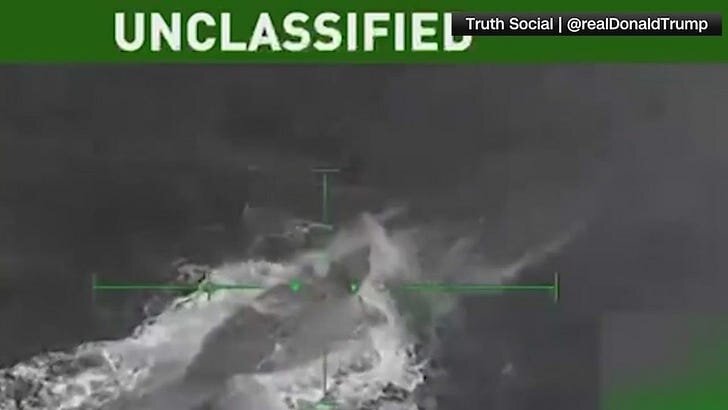
It has been six weeks since we started striking drug boats, and as we hit more, so are the objections rising to the surface. That is good. A free people should discuss and argue the point. Let’s pick up from the post linked to above. Before we start, I think we need to bring an item to the center of the conversation. It is the background to all that follows and a touchstone to all arguments. This, of course, does not include the deaths caused in the drug trade, the murder, torture, kidnapping, random violence and associated companion criminal enterprises both inside and outside the USA by those who feed the demand for drugs. So far this century, over 1 million Americans have died from drug overdoses. As has been true for decades, the primary source for the drugs that feeds America’s habit comes from the south. While cocaine trafficking remains the primary source of revenue for many criminal networks, the production and trafficking of methamphetamine in Central America and the Caribbean has increased in the last two years. The reports note that Costa Rica seized a record 580,000 doses of methamphetamine in 2023, while authorities in Trinidad and Tobago dismantled a methamphetamine production lab that same year. Meanwhile, El Salvador has reported a rise in methamphetamine shipments from Guatemala over the past four years. Although not all countries provided standardized and reliable drug consumption data, the available information suggests that methamphetamine use is rising across the continent. Who are Tren de Aragua? Tren de Aragua (aka TdA) is a violent criminal organization founded between 2012 and 2013 in Aragua, a state in north-central Venezuela. The group originally gained power and influence as a prison gang inside the Tocorón prison in Venezuela under the leadership of its founder, and current fugitive, Héctor Rusthenford “Niño” Guerrero Flores. In the United States, TdA mainly operates within Venezuelan migrant communities. TdA facilitates the smuggling of thousands of Venezuelan migrants into the United States and then extorts the migrants, forcing them into prostitution or other crimes to pay off their smuggling debts. TdA members routinely commit assault, robbery, and murder as part of carrying out these extortion rackets. TdA members also conduct small-scale drug trafficking activities such as the distribution of tusi. In some areas of the United States, TdA members work for larger criminal organizations, conducting murder-for-hire and working as drug couriers, stash house guards, and street level drug distributors. TdA members are suspected and/or charged with a variety of crimes including drug trafficking, murder, kidnapping, extortion, migrant smuggling, human trafficking, prostitution, organized retail crime, robberies, and document fraud. TdA conducts human trafficking operations designed to smuggle primarily Venezuelan migrants through Central America and Mexico into the United States. In cities with large Venezuelan populations, TdA members operate violent extortion rackets resulting in assault, murder, and arson. TdA members also engage in organized retail theft, burglary, and street robbery operations that frequently result in violence. Firearms stolen by TdA robbery gangs are routinely distributed to other TdA members to further violent crime. TdA drug trafficking activity occurs mainly at the street level and involves the distribution and sale of tusi in specific regional markets. Take a moment to think about the last quarter century of the use of the US military to strike everyone across the entire spectrum of people in Iraq and Afghanistan, to President Obama striking American citizens overseas, to the final mistake in Afghanistan against the family of an NGO worker, to a whole spectrum of people from Libya, to Syria, to Yemen…we could go all day. Most of those people did not have anything to do directly with the deaths of Americans in the homeland. At best, tangentially they were a threat, but we killed them. Now we are in the midst of an argument about the strikes against drug runners in the Caribbean related to TdA. I’ve seen well-meaning objections with consistency to prior issues, naked “all things done by Trump are to be opposed” reactionary responses, some who think it is not enough, and others a mix of the three. I have my opinion on the topic, that I’ll get to later, but for now, let’s keep setting the table. Let’s look at this from three levels: legal, ethical, and moral. LegalFoundation: Based on the Constitution, laws, and the Uniform Code of Military Justice (UCMJ). Duty to follow orders: Officers are required to follow orders from superiors, as long as those orders are lawful. Duty to refuse: Officers have a legal and ethical duty to refuse to obey any order that is illegal or unlawful. This is a critical legal and ethical principle. Has the legal framework to strike drug boats, especially those related to TdA, been set? On 20 FEB 2025: Today, the Department of State announces the designation of Tren de Aragua (TdA), Mara Salvatrucha (MS-13), Cártel de Sinaloa, Cártel de Jalisco Nueva Generación (CJNG), Cártel del Noreste (CDN), La Nueva Familia Michoacana (LNFM), Cártel de Golfo (CDG), and Cárteles Unidos (CU) as Foreign Terrorist Organizations (FTOs) and Specially Designated Global Terrorists (SDGTs). TdA is a transnational organization that originated in Venezuela with cells in Colombia, Peru, and Chile, with further reports of sporadic presence in Ecuador, Bolivia, and Brazil. This brutal criminal group has conducted kidnappings, extorted businesses, bribed public officials, authorized its members to attack and kill U.S. law enforcement, and assassinated a Venezuelan opposition figure. The Presidential Determination of 15 SEP 2025: In Venezuela, the criminal regime of indicted drug trafficker Nicolás Maduro leads one of the largest cocaine trafficking networks in the world, and the United States will continue to seek to bring Maduro and other members of his complicit regime to justice for their crimes. We will also target Venezuelan foreign terrorist organizations such as Tren de Aragua and purge them from our country. Earlier this month in a memo to Congress: “Based upon the cumulative effects of these hostile acts against the citizens and interests of the United States and friendly foreign nations, the president determined that the United States is in a noninternational armed conflict with these designated terrorist organizations,” the notice said. At this point, none of this has been challenged as being illegal. There is more to justify this than many of the military operations we’ve seen over the last few decades. The courts may judge differently at some point, but at this point, I don’t see a hook anywhere to state this is illegal. EthicalRichard M. Swain and Albert C. Pierce’s The Ethical Use of Force, from 2017 is useful to understand a topic one can spend a semester, heck a life, studying. The Just War ethical principles are customarily divided into two parts: jus ad bellum, which informs and governs the decision to go to war or to resort to the use of armed force; and jus in bello, which informs and governs the use of force on the battlefield. Michael Walzer has aptly distinguished between the two, saying that the former has an adjectival character (is this a just war?) and the latter an adverbial character (is this war being waged justly?).4 The moral burden of jus ad bellum falls primarily on political leaders, because they are the ones who make the decision to go to war. The military are not off the hook entirely, however, because they provide military counsel to political leaders, on matters such as feasibility (related to the jus ad bellum criterion of probability of success) and on costs and risks (related to the jus ad bellum criterion of proportionality) involved in any proposed action. On the other hand, the moral burden of the jus in bello falls primarily on the military. They are the ones who conduct war. Political leaders are not entirely off the hook here either. The means they provide, and their guidance on acceptable actions, can directly or indirectly influence rules of engagement, which will govern the limits imposed on the men and women on the fighting line, and the corresponding risks to Servicemembers these rules entail. Most formulations of jus ad bellum include the following criteria: Just cause—the reason for going to war must be sufficiently grave. Competent authority—only the duly constituted civil authorities may order the initiation of war. Right intention—those initiating war must not have a hidden or ulterior motive. Probability of success—there should be a reasonable prospect of success. Proportionality—the harm that will be done in the war must not exceed the good that will be accomplished. Last resort—war should be undertaken only if nonviolent means to resolve the issue have failed or are unlikely to succeed. From the ethical point of view, for this ‘noninternational armed conflict with these designated terrorist organizations’ I don’t see a clear ethical issue. Could well meaning people argue the point, sure, but there is nothing black and white about any of this. MoralThis is the tough one. Something can be legal, can align with an ethical use of military force, but for the individual, is it moral? How does their involvement with this align with the individual’s personal and professional conscience, which must align with legal and ethical standards? Let me personalize this a bit. I’ll take two moments in my 21 years on active duty that I’ve mentioned before that still bother me a bit. I had a direct role in both, and they are minor operations. Operation Uphold Democracy: The Clinton Embargo on Haiti (1993-94): - It felt dirty at the time, and it feels even dirtier today. I won’t expend more time on it. All it did was make already poor and miserable people more poor and miserable. It was legal. We followed all the ethical guidelines, but was it moral? For me, no, but I did it anyway. Does that make me a coward? Perhaps. Complicit? Yes. Would I follow those orders again? Probably. Am I at peace with that? No. Operation Desert Fox: I remain very proud of the strikes we made in 1998 in response to Saddam Hussein’s plans to assassinate then-former President Bush. Well over 300 TLAMs (my part of the strike), and we didn’t lose a single aircraft that went feet dry. We broke a lot of things, and we killed a lot of people. Because of higher direction and guidance, we didn’t strike when we would have the greatest effect. No, we knew that we were striking buildings that mostly just had the cleaning crews working or night guards walking around. We struck buildings with sleeping conscripts. Toward the end, we even had a game of seeing how fast we could build a mission. We struck air defense sites that were a danger to no one. We really didn’t hit anyone responsible for planning that attempted strike on Bush the Elder, but we sure killed a lot of people. That “we” has me embedded in it, a small cog in a machine of immense size, but my small cog turned a larger cog, that drove the wheel. How many civilian and military did we kill? We really don’t know. Iraqi and Red Cross put the number at 100 or so, mostly military. The U.S. believes 2,000. Was it legal? Sure. Was it ethical? I think so. Was it moral? Questionable. Would I do it again? Yes. Am I at peace with it? Generally. Am I proud of it? Yes. Does it bother me anyway? Yes. That is part of the profession of arms. If you think too much about what you are doing, and asking others to do, you will soon find yourself in a confused funk. Well, some will, others have no problem or are at peace with where they are. We live in a complicated world with few perfect and clean paths for those who are trying to do good to follow. People have spent thousands of years searching for that path and have yet to find it. We won’t do it here. OK, we’ve spent enough time in the legal/ethical/moral seminar, let’s get back to the Caribbean in 2025: Legal, Ethical, and Moral. For operators, here on 21 October 2025, I am very comfortable with green lights on the Legal/Ethical. Yes, that may change as per a court decision down the road, but we are not down that road yet. Yes, some may disagree with that definition of legality. How they act on that disagreement must be balanced on their other legal and ethical requirements. As you can probably guess, I’m green on the third as well. The TdA have more American blood and misery on their hands than any Haitian did in the 1990s or any Iraqi did in the late 1990s. Can I make the argument on the other side? Of course I can. I’ve heard that argument most of my adult life. I lived it. Look back at the line chart at the top of the post. Look at the relatively small numbers of deaths in 1999. I first got engaged in the counter-narcotics mission seven years earlier when the deaths were +/- the same. As we watched the drug boats, and drug aircraft, work their way north, we caught a few, but most got through. Why? It isn’t easy, and there simply are not enough assets to locate, track, intercept, and board them all on the high seas. On some routes, it is almost impossible. Even back in Clinton’s first administration, in our frustration, we—as only 20-something JOs can—asked why we couldn’t simply sink them? No different than any pirate ship throughout history. Heck, even then, given the impact on the American people (the death toll from the crack wars was peaking), we saw no problem doing this. We saw the results. The Smartest People in the Room™ thought otherwise. So, the cartels went on. Some fiction was written, and that was about it. Four generations of Navy and Coast Guard officers have led been involved in the drug effort in the Caribbean. The data we have is almost comical in its depth and detail. I spent over a year of my life doing the mission—a mission that has not changed much from what I can see in open source. I don’t think I’ve seen this amount of hardware in Puerto Rico in a while, as reported by Ian Ellis. The one thing that has changed is what these people are carrying. In 2025, many estimates are that 90%+ of the marijuana consumed in the USA is grown domestically. These boats are carrying the hard drugs, or the chemicals to make them. Each boat has a body count, a body count of Americans. Those driving those boats know what they are doing and who they are working for. No different from the non-state actors working logistics for Islamic terrorists that we have been blowing up for a quarter-century. So, first let’s address the most ridiculous charge this week: we are attacking fishermen. Gobsmackingly dumb. We know what these boats are. As I stated on X earlier this week; Those are not really “submarines” but I will give Sutton a pass. There are narco submarines, but they are rare. The above are really “semi-submersibles” as you can see in the below video. What is giving many fits…or an excuse to throw a fit…are the strikes at open boats that look like they might be a fishing boat…if you are not curious enough to study up. But trust me, these are not fishing boats any more than a BMW is a Kubota. These are appropriately named go-fasts. You have high-end go-fasts. …and you have low-end go-fasts: Those boats aim to get about 1,000 horsepower, so that would be four 250 hp motors. In the open market in the USA, a 250 hp Mercury outboard will put you back about $25,000. You’re looking at $100,000 in motors alone. Those are not fishermen. They “go-fast” in order to make interception difficult to achieve. The math is hard. Talk to your local SWO or aviator about conducting intercepts. We have been tracking go-fast boats like this in the Caribbean and Eastern Pacific for decades. I did it as a junior officer when Bill Clinton was President. So did a significant cohort of those who came after me...though GWOT put a dent in the effort, I am sure. We know what legitimate fishermen in the Caribbean look like. They don’t look like that. Is there a chance that we might accidentally engage a non-drug runner? Of course. This is a human enterprise. Humans make mistakes. Commands I’ve been in have attacked wedding parties, killing scores of mostly women and children. Those who were on watch and executed these strikes were my friends and colleagues. We woke up the next morning and carried out the plan of the day. It is part of the business. You do your best to avoid it, but it happens. There, that’s the marker I’m putting down. Now, I’ll roll it back to those who oppose it with the same question first asked by LTjg Salamander: What would you do instead to respond to the death toll above? If your answer is just more of other failed policies, I’m not interested. When President Trump was first elected in 2016, a large part of his support came from his promise to the communities most impacted by the march of overdose deaths and terror from cartels that he would act. He did some, but not enough in those four years. In his second term, better understanding both the issue and bureaucracy, as well as the nature of his opponents, he is taking a more aggressive attack on the problem to the edge of what is possible. Again, if you have better ideas, I’m all ears. If you have solid critiques or concerns, then I have ears to listen. If you can’t argue beyond, “This is a Trump effort, so I am naturally predisposed to oppose it.” then I’m probably not all that interested. Also know this, to do nothing is also a choice. It is the choice of acceptance. It is the choice of surrender to violence and chaos. To do more of the same? That is insanity. What is being done there while all eyes are on the narco-pirates of the Caribbean besides TdA? What about Mara Salvatrucha (MS-13), Cártel de Sinaloa, Cártel de Jalisco Nueva Generación (CJNG), Cártel del Noreste (CDN), La Nueva Familia Michoacana (LNFM), Cártel de Golfo (CDG), and Cárteles Unidos (CU) who do a lot of their business ashore? Cappy has some ideas. The net is broadening to previously declared terrorist organizations who are in the drug running business. Not mentioned above, Ejército de Liberación Nacional (ELN) is being hit at sea. Colombia, the United States, Canada, New Zealand, and the European Union all designate the ELN, a left-wing armed group that has been active in Colombia for decades, as a terrorist organization. We are now going to go through a Darwinian cycle. If we are truly making a dent in the target organizations’ business model, they will work to find other ways to make money—via air or other routes—or they will fight back How will that work out? We’re about to find out, as I don’t think they will go into insolvency quietly. Will it be worth it for us? We’ll find out eventually, but I will leave this with you as I wind this up: A government that does nothing against a foreign scourge that has made money off of the deaths of a over a million citizens over a decade is an immoral, corrupt, and unworthy government. Eventually, the people will see that and act. The family members of those who have died in this parade of death? Perhaps voting for someone they normally wouldn’t who promises to take action is part of that act. Leave a comment Share This Substack is reader-supported. To receive new posts and support my work, consider becoming a free or paid subscriber. View the full article
-
India’s defense exports received a boost this month as BrahMos Aerospace signed cruise missile contracts worth ₹4,000 crore (approximately $455 million) with two foreign countries, according to Indian Defence Minister Rajnath Singh. The announcement coincided with the ceremonial dispatch of the first batch of BrahMos missiles from the new BrahMos Integration and Testing Facility in […] The post India signs $455M BrahMos missile export deals first appeared on Defence Blog.View the full article
-
Lockheed Martin has secured a $233 million contract to deliver its IRST21 Block II infrared search and track systems, along with initial spares, to the U.S. Navy and Air National Guard. The award supports deployment across multiple fighter platforms and follows the Navy’s recent declaration of Initial Operational Capability for the sensor. The IRST21 Block […] The post Lockheed wins $233M deal for advanced IRST sensors first appeared on Defence Blog.View the full article
-
Russian military-linked Telegram channels have released the first images of what they claim is a new jet-powered glide bomb, marking a rare visual confirmation of a weapon type previously reported in battlefield use but never seen publicly. The release comes amid growing concerns in Ukraine over stand-off munitions targeting critical infrastructure and rear-area positions. For […] The post Russia shows new jet-powered glide bomb first appeared on Defence Blog.View the full article
-
The French Army’s 35th Parachute Artillery Regiment (35e Régiment d’Artillerie Parachutiste) carried out its first live-fire demonstration with the new PROTEUS counter-drone system at the Canjuers training area on October 18. According to the regiment, it is the first French Army unit to receive PROTEUS systems configured to the latest Standard 1 version. The 4th […] The post French paratroopers test new PROTEUS anti-drone system first appeared on Defence Blog.View the full article
-
Hanwha Aerospace this week presented a new mobile rocket artillery concept, the High-Performance Launch Rocket System, or HPRS, at ADEX 2025. Military expert Mason Yonhak reported that the HPRS was shown for the first time, and that the system represents a lighter, more transportable adaptation of the Chunmoo family intended for coastal defense and expeditionary […] The post Hanwha unveils new HPRS rocket system at ADEX 2025 first appeared on Defence Blog.View the full article
-
South Korean Hanwha Aerospace used the ADEX 2025 exhibition to unveil the K-NIFV, a next-generation infantry fighting vehicle the company says was developed to cut costs, raise domestic content and respond to new threats exposed by the war in Ukraine. Built from the firm’s Redback design, the K-NIFV is being pitched for both export and […] The post South Korea unveils next-gen K-NIFV fighting vehicle first appeared on Defence Blog.View the full article
-
Bell Textron, a major American aerospace manufacturer, has confirmed its readiness to supply its AH-1Z Viper and UH-1Y Venom helicopters to the Armed Forces of Ukraine, Militarnyi reported. The development follows the signing of a Memorandum of Understanding in Washington between representatives of Bell Textron and the Ukrainian government, outlining prospects for industrial cooperation and […] The post Bell Textron ready to supply helicopters to Ukraine first appeared on Defence Blog.View the full article
-
A growing scandal has erupted in Russia surrounding Kremlin television host and chief propagandist Vladimir Solovyov, after accusations surfaced that his foundation misused millions of rubles collected under the pretext of helping Russian troops. According to pro-war blogger Pozdnyakov, Solovyov’s SVR personal foundation collected over 100 million rubles ($1.2 million) from Russian citizens, supposedly to […] The post Russian Army gets $1.2M DIY carts instead of combat buggies first appeared on Defence Blog.View the full article
-
South Korean startup Nearthlab has introduced a new autonomous interceptor drone, KAiDEN, at the ADEX 2025 defense exhibition. The company says the drone is designed to intercept and neutralize airborne threats using high-speed flight and advanced onboard vision AI. According to Nearthlab, KAiDEN reaches speeds exceeding 250 km/h and can detect, track, and strike targets […] The post South Korean startup unveils high-speed interceptor drone first appeared on Defence Blog.View the full article
-
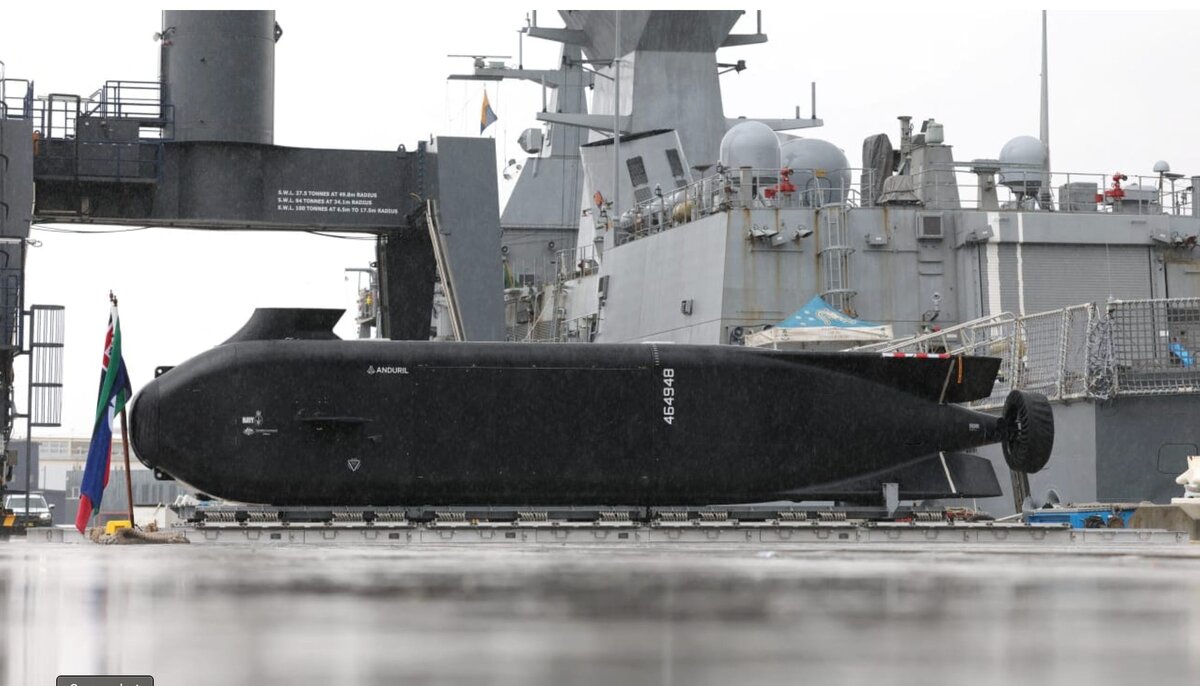
SummaryIn this conversation, Chris Brose, President and Chief Strategy Officer of Anduril, discusses the company’s mission to revolutionize defense technology by integrating commercial innovations into military applications. He emphasizes the need for mass-producible military capabilities, the importance of adaptability in modern warfare, and the challenges posed by the current U.S. acquisition system. Brose also highlights the significance of collaborative combat systems and international partnerships, particularly through the Ghost Shark program with the Australian Navy. He expresses optimism about the future of U.S. defense, advocating for a shift towards a more agile and innovative approach to military production and strategy. You can listen at this link, anywhere podcasts can be found, or via the Spotify widget below. Chapters00:00: Introduction to Anduril and Its Mission 04:26: The Unique Position of Anduril in Defense 09:02: The Shift in Military Strategy and Production Needs 13:11: Designing for Mass Production and Scalability 17:50: Innovations in Collaborative Combat Systems 23:35: The Ghost Shark Program and International Collaboration 28:02: Challenges in the U.S. Acquisition System 34:34: Deployability and Operational Integration of New Systems 39:41: Cost-Effective Solutions for Modern Warfare 45:01: Optimism for the Future of U.S. Defense View the full article

-
South Korean defense firm LIG Nex1 has introduced its next-generation unmanned ground vehicle, the G-Sword, during the ADEX 2025 exhibition in Seoul. The tracked robotic platform is designed for multi-role battlefield operations and features a turret-mounted cannon and the indigenous Raybolt anti-tank missile system. According to company information presented at the event, the G-Sword was […] The post LIG Nex1 unveils armed G-Sword ground robot first appeared on Defence Blog.View the full article
-
Lockheed Martin has introduced its newest unmanned aerial system, Vectis, at the 2025 ADEX defense exhibition in South Korea. Developed by the company’s Skunk Works advanced projects division, the Vectis platform is intended to operate as part of a Family of Systems alongside fifth-generation aircraft, including the F-35. According to the company, the new drone […] The post Lockheed Martin debuts Vectis combat drone at ADEX 2025 first appeared on Defence Blog.View the full article
-
South Korea’s Ministry of Strategy and Finance has rejected the entire proposed budget for upgrading K1 tanks with air conditioning and positive pressure systems, despite internal temperatures reaching up to 50°C (122°F) during summer field evaluations. According to a briefing obtained by Rep. Yoo Yong-won of the National Assembly’s National Defense Committee, during a test […] The post South Korean K1 tank crews endure extreme heat first appeared on Defence Blog.View the full article