All Activity
- Today
-
Russian state defense conglomerate Rostec announced the delivery of a new batch of Su-30SM2 Flanker-C multirole fighters and Su-34 Fullback fighter-bombers to the Russian military, according to a statement from the manufacturer, framing the handover as part of an ongoing effort to modernize a combat aircraft fleet that open-source trackers say has absorbed dozens of […]View the full article
-
The U.S. Air Force jet meant to finally retire a training aircraft older than most of the pilots flying it is running years behind schedule, even as the service quietly started shopping for companies to upgrade the replacement before it has fully entered service. The Air Force posted a notice on July 8 seeking companies […]View the full article
-
A British firm building uncrewed patrol boats for NATO navies just crossed the billion-dollar valuation mark, with Kraken Technology Group announcing the close of a $175 million Series B funding round on July 9 that values the company at $1 billion. The round, led by Digital Transformation Capital Partners, or DTCP, arrives less than a […]View the full article
-
The Belgian government announced plans to acquire the Norwegian-built NASAMS air defense system, according to a press release from manufacturer Kongsberg, signing a cooperation agreement with the Netherlands at the NATO summit in Ankara, Türkiye, that would bring 10 NASAMS batteries into Belgian service as the centerpiece of the country’s first serious rebuild of its […]View the full article
-
NATO has handed three American and European tech companies the chance to reshape how the alliance’s 32 member nations talk to each other during a real air war, awarding contracts to Anduril, Palantir, and French firm Athea SAS on July 7 as part of a competition to build the software backbone for the alliance’s next-generation […]View the full article
-
German engineering firm RENK just locked in more than $308 million in future business keeping one of Europe’s newest tracked infantry vehicles actually moving, extending its transmission supply agreement with Rheinmetall for the KF41 Lynx on July 9. The expanded framework agreement, worth more than €270 million ($308.72 million) including options, covers the supply of […]View the full article
-
A soldier crewing an Army Bradley Fighting Vehicle spots a target through swirling dust or pitch darkness using a sighting system built decades ago, and the Army just committed nearly $56 million to keep engineers refining that system for years to come. DRS Network & Imaging Systems, a subsidiary of Leonardo DRS based in Melbourne, […]View the full article
-
Leidos received a contract modification worth roughly $27.2 million on behalf of USSOCOM to buy what the military calls All Up Rounds, meaning fully assembled, ready-to-fire missiles rather than components or prototypes, for the AGM-190A Havoc Spear Small Cruise Missile program, with the work centered in Huntsville, Alabama, and expected to run through February 2029. […]View the full article
-
The U.S. Naval Sea Systems Command awarded ReconCraft LLC, a boatbuilder based in Anchorage, Alaska, a $24.96 million contract for autonomous low-profile vessels, a category of uncrewed watercraft the military has openly borrowed from the same low-visibility, semi-submersible design smugglers pioneered to avoid radar and visual detection while running narcotics through open water. Autonomous low-profile […]View the full article
-
Key Topics:Reflection on America’s 250th celebration and patriotic observances, including the significance of the World Cup and tall ships. Analysis of Iran’s naval activities and the prospects of extended punitive campaigns in the Gulf. Insights into Ukraine’s ongoing conflict, new missile capabilities, and the normalization of long-range conventional st… Read more View the full article
- Yesterday
-
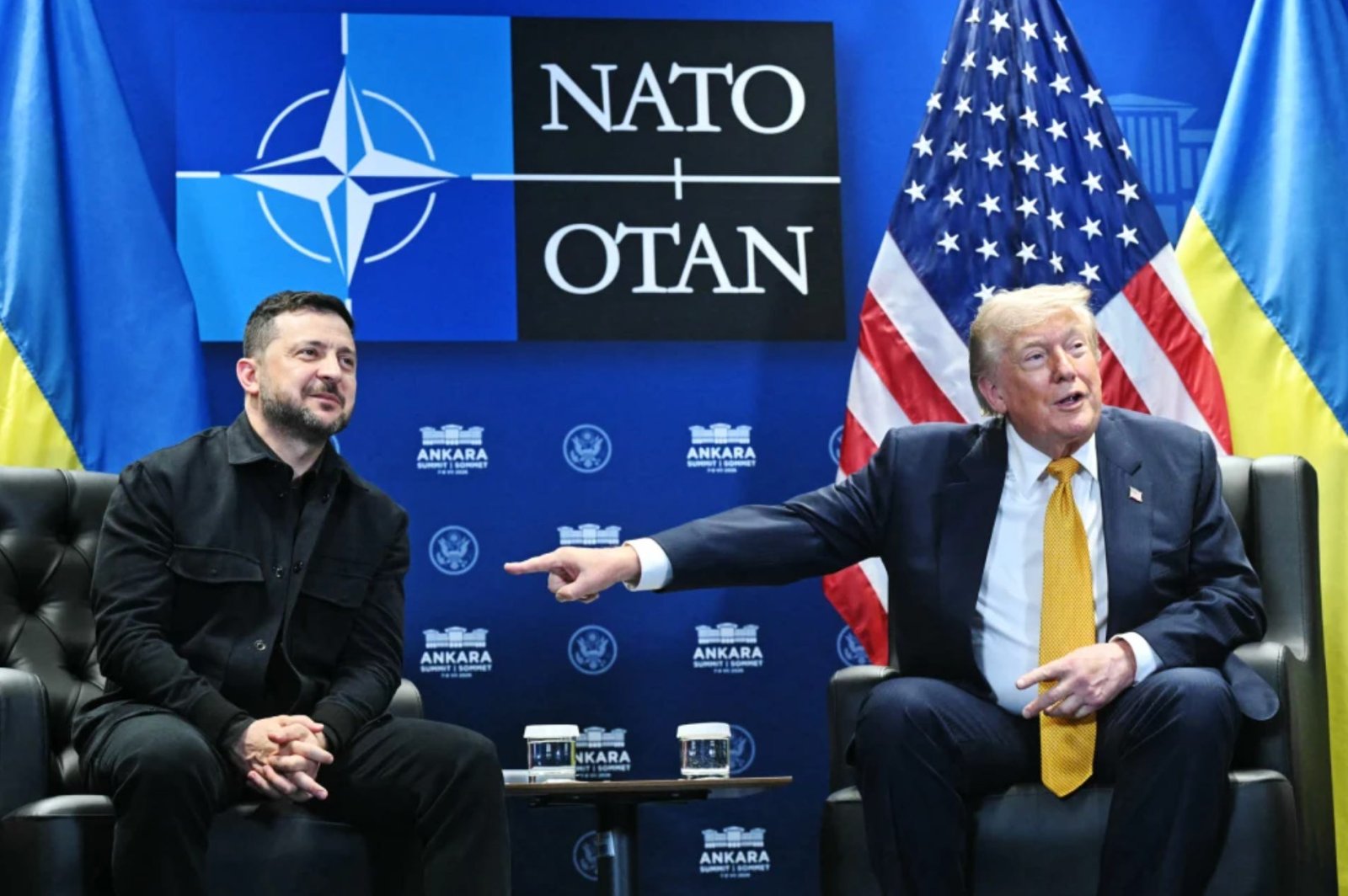
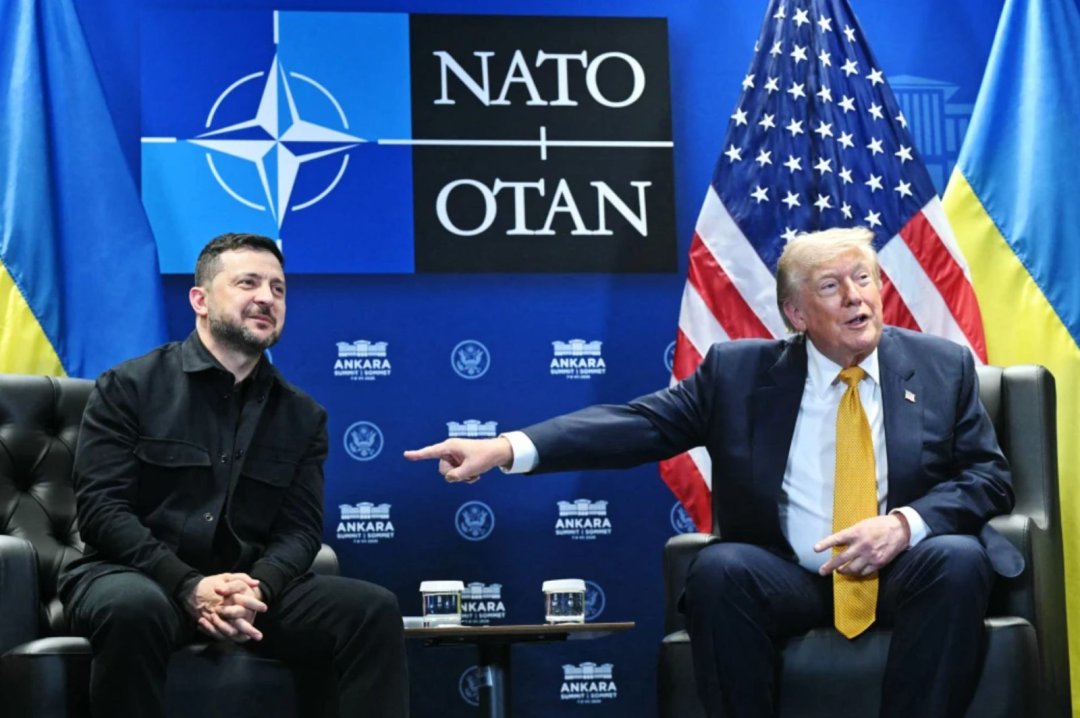
To everything there is a season. Over the last 18 months, a lot of national, personal, and political capital was invested by the present administration to try to get Ukraine and Russia to the negotiation table to stop a war that has been going on longer than WWII. This is not just a war between brothers like the U.S. Civil War, where—as fights between brothers are—things become more brutal and go longer than expected, but it is a war where both sides are limited on what they can do to bring the war to any end outside complete victory. For Ukraine, the war is existential. Should Ukraine lose, she would be lucky to become little more than a rump Belarus after Russian forces conduct a victory parade in central Kiev (no one will spell it Kyiv again). For Russia, it is an attempt to regain what was lost. Should they lose, no Ukrainian army will reach Moscow, but odds are Russia will cascade into something between the 2017 bloodletting and the chaos after the fall of the Soviet Union. Though I appreciate applied optimism, if there was a space for compromise, it is gone. If we have played out the peace option, then for Europe and North America and their support for Ukraine, there are two options: Back away and leave Ukraine to her fate, or Decide to decisively support Ukraine’s effort and accept the risk of a Russian systemic crisis in the future The events of the last few days lead me to think we will see the later option…which has been trending that way since early spring. As that news started to trickle in, I was grinning a bit on behalf of our friend Rebeccah Heinrichs. Some of the items in her July 2nd article in National Review, An Opening for Trump to Secure Peace in Ukraine, seem to be fleshing out. That is an excuse to share the article and show you what I’m referring to. Firstly, she opens with a correct diagnosis of the problem. The root of the problem is that Vladimir Putin is ideologically committed to his hostility against the United States and the West. This is why Trump’s strategy hasn’t worked. He has sought to appear impartial and demand that both sides compromise, focusing on territory in the Donbas, as if the war is a violent real estate dispute between feuding personalities. Putin cannot compromise and is not inclined to compromise. Anything but victory is a death sentence for him personally and the entire structure that supports him. He knows it. His grip on power is firm, but brittle. Only Putin can end the war by, at the very least, accepting a cease-fire. Ukraine and NATO could then focus on rebuilding their stocks and defense industrial capacity to deter further Russian aggression, especially as the U.S. urges Europe to help carry more of the burden of defense. Putin cannot accept a cease-fire, in my opinion as outlined earlier. Ukraine and the West will not have the luxury to rebuild on its timeline. We will have continued war, and we will need to expand capacity. This is a lot more than a Westphallian map exercise. There was a small chance it could have been, but time has proven that chance is no longer in play. What is Plan-B? Trump has shown a willingness to adapt when his plans don’t work, and now is the time to shift the strategy. The only way for Trump to help end the war is by applying pain and pressure to Russia and encouraging Ukraine and the rest of NATO to do the same. Here is where Rebeccah’s drafts are seeping into the ether. From today’s WSJ: President Trump said he supported Ukraine striking targets deep inside Russian territory, calling it an escalation that could help end the war. The comments mark his strongest praise yet of Ukraine’s military strategy and deal a significant blow to Russia’s efforts to keep Trump on its side in talks to end the war. In a marked contrast to past meetings between the two leaders, Trump opened his press conference with President Volodymyr Zelensky by offering warm words and fresh promises of military cooperation with Ukraine, providing a major boon for Kyiv and its supporters in Europe. … “It’s an escalation, but it’s also an escalation that could help lead to an end,” Trump said of backing Ukrainian strikes deep inside Russian territory. He spoke during a session with the Ukrainian president at the NATO summit in Ankara, Turkey, on Wednesday. Back to Rebeccah’s article, she outlines the next logical step. The United States should encourage, not restrict, Ukraine’s bolder operations and should exhort NATO nations to continue supplying Ukraine with weapons, including by purchasing key systems from American companies. Expanded capacity? Lockheed is game: Lockheed Martin welcomes the commitment of the United States, Germany, the Netherlands, Poland and Sweden to explore a dedicated PAC-3® Missile Maintenance Facility in Europe. The joint government-to-government agreement was signed today during the NATO Summit Defense Industry Forum, part of the 2026 NATO Summit in Ankara. …and it appears that the U.S. is prepared to do even more than that: Trump praised Ukraine’s bravery, signaled he would consider granting Kyiv a license to produce U.S. Patriot missile interceptors and said he would consider traveling to Kyiv at the right time in peace talks. Ukraine has run critically low on Patriot missiles, which have been used to intercept Russian ballistic missiles. The shortage left its capital and other cities exposed during deadly large-scale Russian attacks this summer. The path from licensing rights to standing up production lines for Patriot interceptors could take years, and Trump didn’t offer more specifics on the plan. Will they build them in Ukraine proper or in some other European country? How long until warshots are coming out the factory door? No idea at this point, but coming out of the Ankara Summit everyone should be clear—the West’s support for Ukraine is entering a new phase of unknown magnitude or time. Buckle up. Also…keep reading what Rebeccah is writing. She’s sauntering through the zeitgeist like she owns the place. Leave a comment Share This Substack is reader-supported. To receive new posts and support my work, consider becoming a free or paid subscriber. View the full article
-
A torpedo-tube-launched robot built to secretly plant mines from American submarines just got another $14 million push toward becoming operational, as the U.S. Navy exercises new contract options with General Dynamics Mission Systems to keep developing the system. The Navy Sea Systems Command awarded the Massachusetts-based defense contractor a modification worth roughly $13.97 million on […]View the full article
-
The U.S. Army awarded Lockheed Martin a $502 million contract to provide ongoing support services for the Modernized Target Acquisition Designation Sight and Pilot Night Vision Sight system, known in Army circles by the shorthand M-TADS/PNVS, the combined sensor and targeting package mounted on every AH-64 Apache helicopter in the U.S. fleet. The M-TADS/PNVS, also […]View the full article
-
Bellator joined the community
-
An uncrewed patrol boat just fell out of an airplane at 1,300 feet and splashed down ready to go to work, and the company behind it says nobody has ever pulled that off before. Kraken Technology Group and Capewell announced on July 8 that they completed the world’s first extracted-load airdrop of an uncrewed surface […]View the full article
-
Every precision strike, every navigation-guided munition, and every soldier’s handheld GPS unit ultimately depends on a network of ground stations most Americans will never see, and the Space Force just handed Lockheed Martin $105 million to keep that invisible backbone working for the next generation of GPS satellites. The contract, awarded July 7, covers modifications […]View the full article
-
The U.S. Space Force just handed two young rocket companies a shot at billions of dollars in Pentagon launch business, expanding the exclusive club of firms trusted to carry America’s most sensitive satellites into orbit. Impulse Space and Relativity Federal joined a $5.6 billion contract vehicle called National Security Space Launch Phase 3 Lane 1 […]View the full article
-
Ukraine just secured a German promise to bankroll production of one of its most closely guarded new weapons, a jet-powered strike drone capable of hitting targets deep inside Russian territory, in a deal signed on the sidelines of the NATO Summit in Ankara, Türkiye. Ukrainian Foreign Minister Andrii Sybiha announced the agreement on X, confirming […]View the full article
-
Ukraine’s Air Force says it shot down another Russian fighter jet, announcing the kill in a brief statement that leaned more on bravado than battlefield detail. “Good news from the Air Force! Today we subtracted another Russian air terrorist! Glory to Ukraine! More to come!” the Air Force said in its official statement. The claim […]View the full article
-
Azerbaijan’s Ministry of Defense confirmed on July 6 that the country’s air force has begun operating JF-17 Thunder fighter jets, releasing a video showing two of the Chinese-Pakistani aircraft taking off and landing on training sorties, the first official acknowledgment that the long-promised fighters have actually entered service. OSINT analyst Guy Plopsky examined still images […]View the full article
-
Germany’s military is preparing to become one of the largest owners of a satellite fleet on the planet, second only to Elon Musk’s Starlink, with plans to put as many as 1,200 satellites into orbit by 2030 as part of a sweeping bet that future wars will be won or lost based on who controls […]View the full article
-
A fire broke out at the fuel storage area of Borisoglebsk military airfield in Russia’s Voronezh region overnight on July 8, following a drone attack that also struck other targets across the region and left residents reporting numerous explosions, according to video footage shared by the OSINT community Exilenova+. The footage appears to show flames […]View the full article
-
For nearly seven decades, American presidents tried and failed to get European allies to spend anywhere close to what the United States spends on its own defense, and NATO’s Secretary General says that changed on Donald Trump’s watch. Speaking to reporters ahead of the alliance’s summit in Ankara, Türkiye, Mark Rutte gave Trump direct credit […]View the full article
-
A ceasefire that ended a war three weeks ago collapsed within hours on Tuesday, after gunfire and explosions started flying between the United States and Iran again, and President Donald Trump stood in front of reporters at a NATO summit and simply declared it dead. The immediate spark was a string of attacks on commercial […]View the full article
- Last week
-
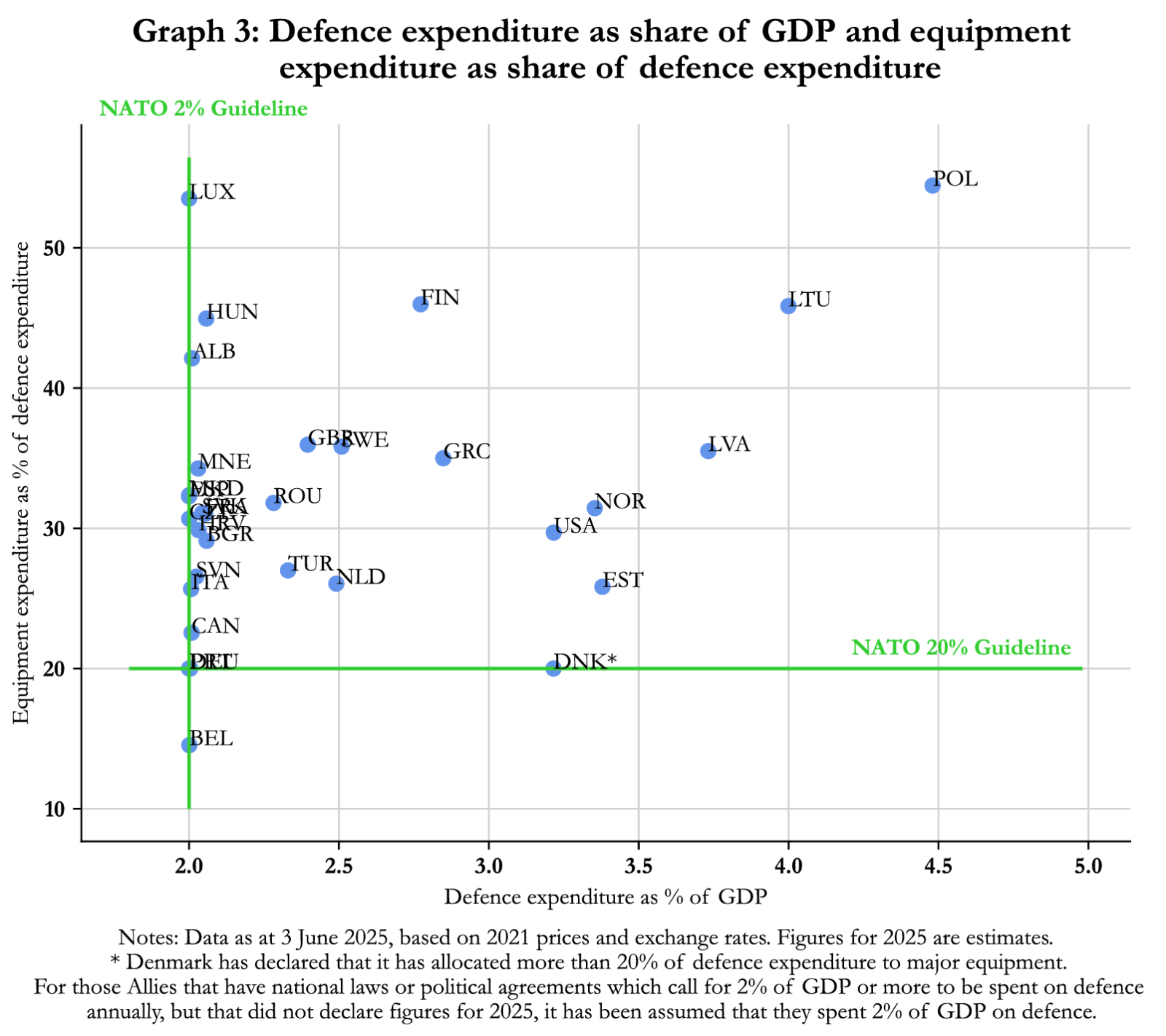
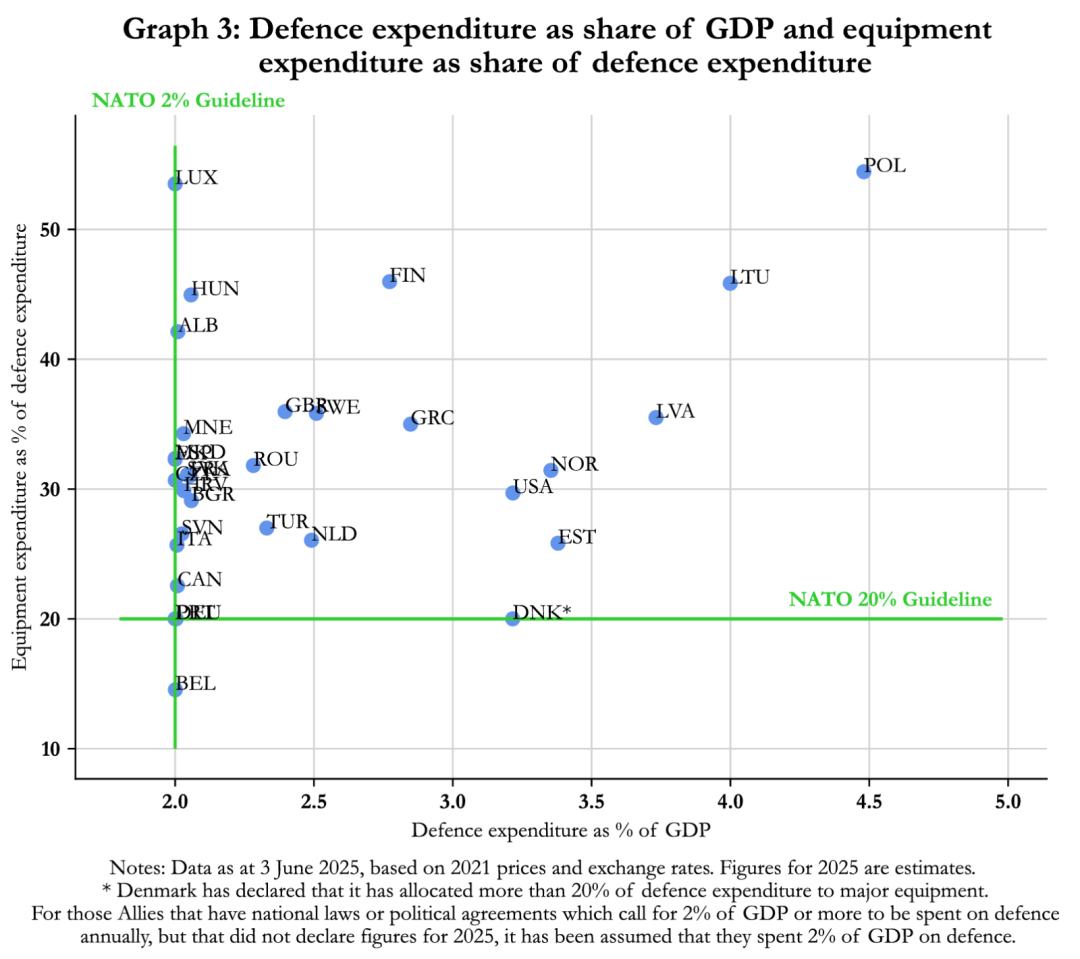
As the NATO Summit is ongoing, I think it is time for me and my American readers to have an adult conversation with each other, like adults. Calm, short, and to the point. If you have honored me with your visits for very long, you will know that for over two decades I have been pointing out the disgraceful level of free-riding our allies in NATO made a habit of. I saw it in person in its worst ways as a NATO staff officer in Europe and Afghanistan, as I wrote about it at the time. Since I returned home, I have returned to the subject on a regular basis. It would be an understatement to say that I have been exceptionally pleased to hear the argument brought to a wider audience over the last decade, and it was President Trump who never let that message go unheard. Agree with him or disagree with him—in whole, in part, or not at all—it has been his pressure, along with the Russian invasion of Ukraine in 2022, that pushed the alliance towards getting everyone to at least a fair share. Some just across the old baseline of 2%, but they’re there. The 2% was the pre-2022 mark, however. There is a new standard. NATO Allies are increasing their investment in defence to ensure that they have the forces and capabilities needed to defend every inch of Allied territory. At the 2025 NATO Summit in The Hague, Allies committed to investing 5% of Gross Domestic Product (GDP) in defence, strengthening their armed forces and ensuring fairer burden-sharing for Allies on both sides of the Atlantic. To that end, European Allies and Canada have been stepping up, increasing their combined defence expenditure by nearly 20% in real terms in 2025 compared to 2024. The 5% Hague defence commitmentAt the 2025 NATO Summit in The Hague, Allies committed to investing 5% of GDP annually on defence by 2035. This 5% commitment includes two essential categories of defence investment: Core defence requirements: Firstly, Allies agreed to allocate at least 3.5% of GDP to resource core defence requirements and to meet the NATO Capability Targets, based on the agreed definition of NATO defence expenditure (see below). Allies agreed to submit annual plans showing a credible, incremental path to reach this goal. Defence- and security-related spending: Secondly, Allies will account for up to 1.5% of GDP on broader defence- and security-related investments, for example to protect critical infrastructure, defend networks, ensure civil preparedness and resilience, innovate, and strengthen the defence industrial base. In 2025, European Allies and Canada increased their defence expenditure by over USD 90 billion (in 2021 prices, or close to USD 139 billion in nominal terms) – a nearly 20% increase compared to 2024. Over the past decade, they have steadily increased their collective investment in defence – from 1.4% of their combined GDP in 2014, to 2.3% in 2025, when they invested a combined total of more than USD 571 billion (in 2021 prices) in defence. The trajectory and balance of spending under this plan will be reviewed in 2029, in light of the strategic environment and updated Capability Targets. This is when we need to start to have our adult conversation. The USA is at the cusp of no longer having the moral high ground to complain about free riding allies in general. Specifically for those nations just hugging the 2% line, sure. We can no longer make a general statement. Denmark, Norway, Estonia, Lithuania, Latvia, and Poland are all doing more than we are from a relative effort point of view. For the record, I am not at all interested in arguing about this graph; it misses the point. We are a large, rich country with well-paid labor, environmental laws, and fairly transparent numbers you can rely on. We are quite happy to trade money for bodies. Apply that against any of these other nations. We also have global responsibilities and alliances—that we take seriously—that these other nations don’t have. No, what we need to understand is that if we want to be known as the, “Leader of the Free World” or want to ensure that the international order evolves in line with our vision—and the interplanetary order is set by our values and requirements—then we must remain the dominant power. If we want to lead our allies, we have to lead from the front. Being tied for #5 with Denmark on “doing our fair share” is not going to cut it…and our standing is about to get worse. Although the United States continues to spend much more on defense than any other country, CBO currently projects that defense spending as a share of gross domestic product (GDP) will decline over the coming years — from 2.8 percent of GDP in 2026 to 2.4 percent in 2036. That is significantly lower than the 50-year average level of defense spending of 4.1 percent of GDP, though subject to change in future appropriation cycles, reflecting lawmakers’ assessments of national security and geopolitical needs. I mentioned earlier we were “on the cusp.” If Congress does not allocate more funds for defense, that cusp will turn over and any complaints we might have about allied contributions to collective defense will at first ring hollow, and then drift into hypocrisy. That is the point where your influence wanes as it always does with declining powers. Decline is a choice. So is this. Only one NATO nation since 2014 has decreased its military spending as a percentage of GDP. That nation is the United States of America. That is while our primary competitor on the world stage, the People’s Republic of China, continue to grow in real and perceived military power. We need to stop making comments about responsible spending towards Brussels, and instead, start directing it towards the Executive and Legislative Branches in DC. We must put our money where our mouth is. Leaders lead and advance. At this snapshot in time, America is not leading, we’re lagging. Leave a comment Share This Substack is reader-supported. To receive new posts and support my work, consider becoming a free or paid subscriber. View the full article
-
This photo is our back garden taken through the back door window.