All Activity
Today
-
The U.S. Army has agreed to help test a weapon that fires interceptors using magnets instead of gunpowder or rocket fuel, betting that ditching traditional propulsion might finally solve a math problem that has been quietly draining America’s missile stockpiles. Auriga Space, a California company building electromagnetic launch technology, and the Army’s Combat Capabilities Development […]View the full article
-
Japan’s military procurement agency has handed a German drone company a foothold in one of the most urgent defense priorities in the Indo-Pacific: figuring out how to shoot down enemy drones before they hit anything. Quantum Systems, a German unmanned aircraft maker, announced Wednesday that Japan’s Acquisition, Technology and Logistics Agency, the defense ministry’s procurement […]View the full article
-
An unmanned fighter jet just fired a live air-to-air missile at a target over the California desert, and a human sitting somewhere else gave the order to pull the trigger. The Department of the Air Force confirmed that a YFQ-44A Collaborative Combat Aircraft, the service’s designation for a new class of autonomous fighter drones built […]View the full article
-
A 17-meter robotic ship built to patrol the ocean alone for nearly two months at a stretch has just rolled off a British production line, and its arrival says as much about where naval technology is headed as it does about the vessel itself. ZeroUSV, a Plymouth-based maker of uncrewed surface vessels, confirmed that its […]View the full article
-
Britain’s military just handed itself a $536 million-a-year budget and a five-point checklist for turning laboratory ideas into battlefield equipment faster than its notoriously slow defense bureaucracy has managed in decades. UK Defence Innovation, the Ministry of Defence’s newly consolidated innovation arm known as UKDI, announced Wednesday the five core themes that will guide how […]View the full article
-
Twenty-five U.S. senators want to know why the Pentagon is still sitting on an investigation into one of the deadliest strikes involving American forces in more than three decades, and they’re giving the Department of War exactly one week to start answering. Senators Elissa Slotkin of Michigan and Kirsten Gillibrand of New York, joined by […]View the full article
-
Ukraine now builds roughly 10 million drones a year, a tenfold jump from the target President Volodymyr Zelenskyy first announced just three years ago, Radio Svoboda, the Ukrainian service of Radio Free Europe/Radio Liberty, reported. Zelenskyy delivered the figure during a ceremony in Kyiv marking Ukrainian Statehood Day, framing it as proof that a goal […]View the full article
-
Germany approved more weapons for export in six months than most countries manage in years, and the country that received the single biggest share of that approval, once again, is not a NATO member at all. It’s Ukraine. Germany’s Federal Ministry for Economic Affairs and Climate Action, the government agency responsible for reviewing and approving […]View the full article
-
After my Monday post about our use of Corsair USV in the attack on the Iranian shipyard/submarine, a very sensible and steady friend sent me a note expressing concern that I was getting a bit too excited. He was concerned that I was joining the gaggle of the drones-uber-alles people. I felt a little insulted that he would think so little of me…but such is the danger of my imperfect writing. Here’s what I replied to his concerns, I am not one of these drones-uber-alles fellas. It’s just an evolution of an existing tool that we can put in the toolbox. It’s not a sexy opinion, It’s not popular, but I think it is the reasonable position. At the Australian Strategic Policy Institute (ASPI), Sean Andrews put together a solid case that I think gets it about spot on. It is moderate, calm, and broad-scoped. The gods of the maritime combat domain smile: At sea, drones are disruptive, but they are not decisive. They complicate the maritime fight, but they do not replace the enduring strategic logic of sea power. Combat in the Black Sea and Persian Gulf demonstrate this. I think a lot of the excitement about drones—a capability that has been steadily evolving for almost a century at this point, longer if you consider fireships as drones—comes from people too steeped in military fiction and too shallowly read in military history. There are also a few high-profile types who are selling themselves or chasing clout, but I think they are the minority. A loud minority, but a minority. There has been a quickening accelerated by the Russo-Ukrainian War. Modern drones have significantly increased their utility due to recent advances in materials and miniaturization of electronics that enable exceptional navigation, control, and automation. Submarines did not get rid of surface ships. Machine guns did not get rid of infantry. Aircraft did not get rid of…everything else. No, they are just new tools in the toolbox, doubly good if your opponent has not been paying attention and is a few years behind you. The debate over whether drones will make navies obsolete has become one of the most persistent and most misleading arguments in contemporary strategy. The imagery is seductive: cheap, fast, expendable drones humiliating billion-dollar warships; swarms overwhelming layered defences; small actors imposing strategic paralysis on larger fleets. But the conclusion that navies are entering their twilight is wrong. Sean sees it the same way. Drones can damage ships, but they can’t fill the roles of navies. They can harass maritime trade but can’t secure it. They can impose risk, but they can’t project sovereignty, uphold maritime order or provide the diplomatic and constabulary presence that underpins a stable Indo‑Pacific. Sea power has always been a much larger idea than naval power, involving a maritime ecosystem of fleets, infrastructure, industry and geography. Drones disrupt parts of that ecosystem; they do not supplant it. … The strategic logic endures. Sea power is not defined by the vulnerability of individual platforms but by the strategic functions that maritime forces perform. First, navies persist because states require secure maritime trade routes. While drones can disrupt shipping, they cannot guarantee its safety. Second, navies support deterrence and coercive presence. Drone swarms cannot signal resolve, uphold freedom of navigation or reassure partners. Third, navies’ diplomatic and constabulary functions make them instruments of statecraft, not just warfighting machines. Lastly, naval warfare is about campaigns rather than single engagements. Drones may win tactical moments, but unlike maritime forces, they don’t have the level of endurance required to sustain strategic outcomes. Globally, navies are adapting. From steam to submarines to radar, the history of naval technology has shown that new systems are absorbed, not simply bolted on. The same will be true for drones. The real shift is conceptual. Navies must operate under conditions of intermittent visibility, persistent surveillance and compressed decision cycles. They must assume that their signatures will be detected and targeted. They must build depth, magazines, repair capacity and industrial surge. And they must generate fleeting, localised windows of superiority rather than relying on continuous dominance. Policy makers and operators would be smart to check their hot-takes off Sean’s. If you’re too far ahead, dial yourself back a bit. If you’re too far behind, you’re missing the story. I think he hits the right balance. Though he is writing from an Australian perspective—another middle-power perspective—I think it applies to navies larger and smaller as they look to what role Robotic Autonomous Systems should have now and will evolve to in the future. …the drone era will come not from choosing between ships and uncrewed systems but from generating a force that can survive intelligence, surveillance, and reconnaissance saturation; sustain itself under fire; and adapt faster than adversaries. Mass, dispersion, industrial depth and maritime logistics – not the drones themselves – will decide who prevails. Drones disrupt, but they do not replace sea power. The future belongs to countries and navies that understand that. Amen. Leave a comment Share This Substack is reader-supported. To receive new posts and support my work, consider becoming a free or paid subscriber. View the full article

-
Somewhere on the flight deck of a future U.S. aircraft carrier, a jet could be preparing to launch into contested airspace nearly 1,900 kilometers (1,151 miles) away, refuel itself mid-flight if needed, evade enemy threats, and strike a target, all without a single pilot strapped inside the cockpit. That’s the future the U.S. Navy just […]View the full article
-
The next major shift in military technology might not look like a stealth fighter or a hypersonic missile. It could look like a laboratory full of scientists trying to control particles so small and so strange that they can exist in two states at once, and the U.S. Air Force just paid one of its […]View the full article
Yesterday
-
The Pentagon has told American metal suppliers it wants to know exactly how much titanium and magnesium the country would need to keep building fighter jets and military hardware if a real war cut off the foreign supply chains both materials currently depend on. The Defense Logistics Agency, the Department of War’s supply and logistics […]View the full article
-
The U.S. Air Force has asked American rocket companies for their best ideas on an engine that could let a single missile take off like a rocket, cruise like a jet, and skip the giant fuel tanks that usually make that kind of flexibility impossible. The Air Force Research Laboratory’s Rocket and Space Propulsion Division, […]View the full article
-
A satellite passing over southern Russia captured the aftermath Tuesday evening, and the image leaves little room for doubt: the Russian border guard ship Izumrud sits partially submerged against its pier, the surrounding dock scorched black from fire, exactly as Ukraine’s navy said it would be after announcing the ship’s destruction earlier the same day. […]View the full article
-
Ghostworks, a boutique shipyard based in Holland, Michigan, introduced MRLN, the Multirole Remote Logistics Node, on July 14 at the Pennsylvania Defense and Innovation Summit, an event hosted by U.S. Senator Dave McCormick at the Army War College in Carlisle. MRLN is not a boat itself but a remote-piloting and autonomy system that installs onto […]View the full article
-
The British military’s newest helicopter fleet finally has an engine, closing a question that even reporters covering the program in real time couldn’t get UK officials to answer for months. GE Aerospace announced July 14 that Leonardo selected its CT7-2E1 engine to power all 23 AW149 helicopters being built for the UK Ministry of Defence’s […]View the full article
-
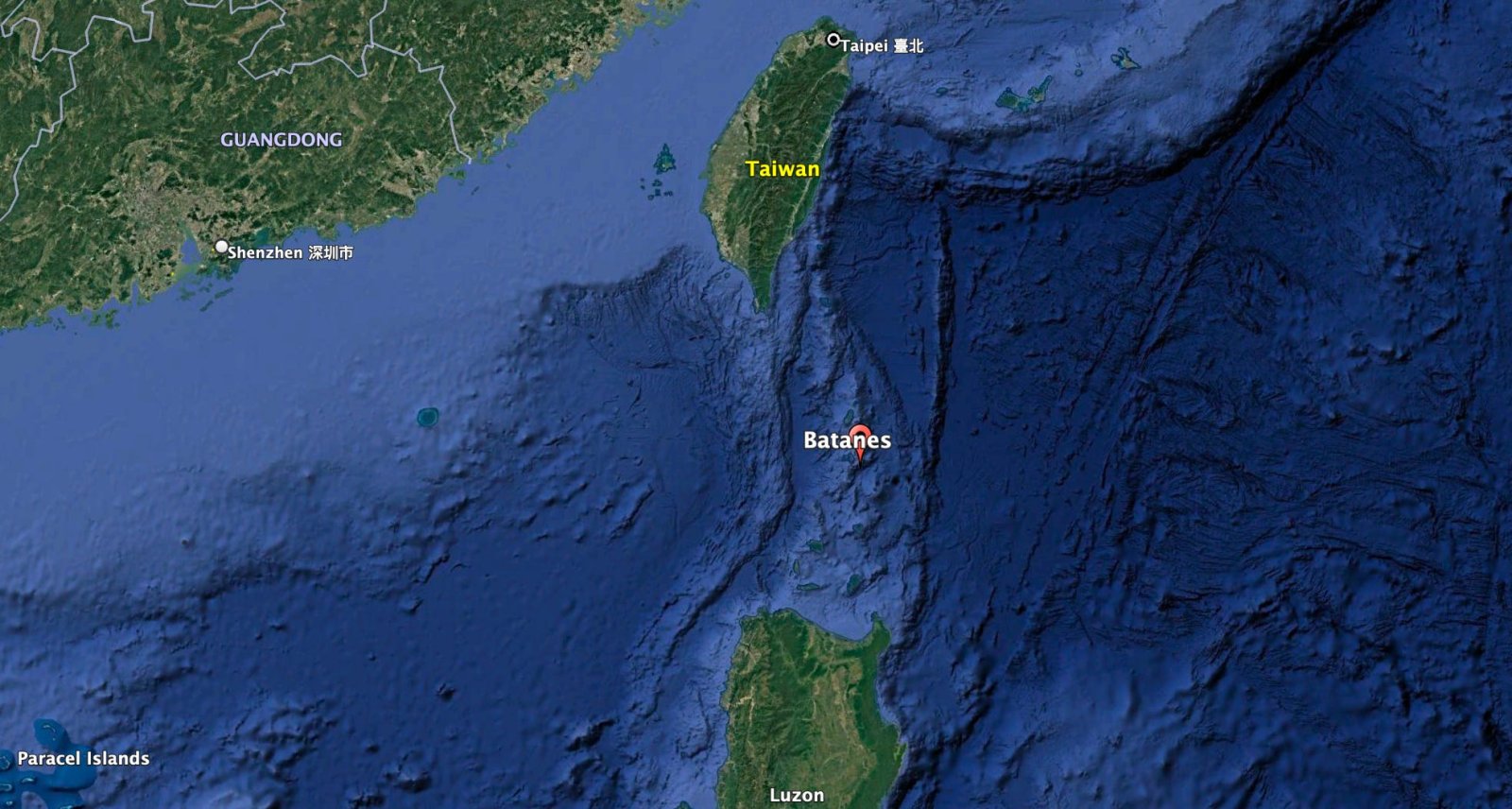
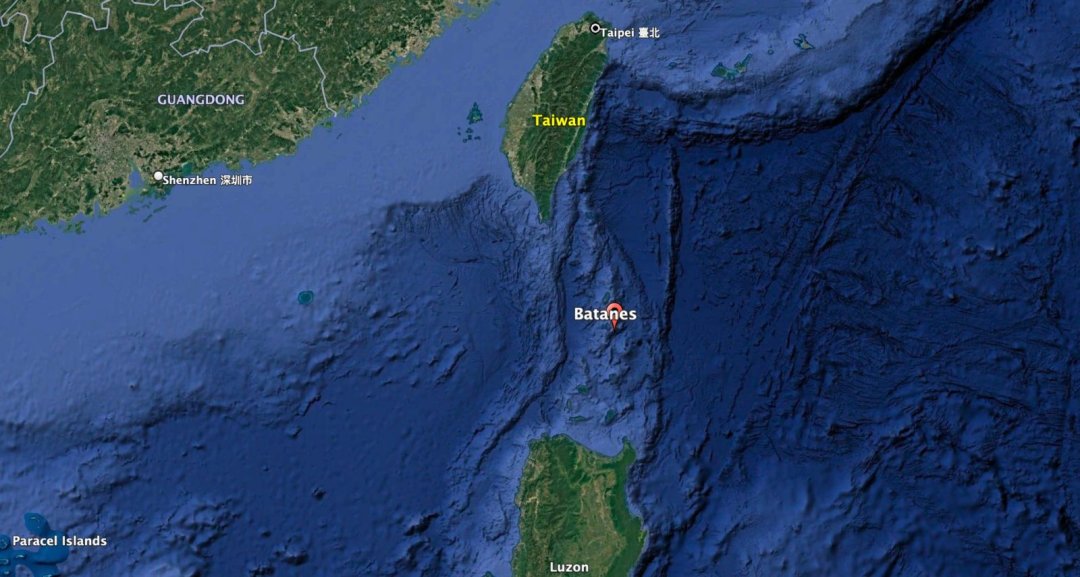
You have to give the People’s Republic of China (PRC) credit for consistency. They like islands. On Sunday’s Midrats Podcast, we touched on this rather brazen act that would be laughable if not serious. The Batanes Islands, which are covered by the so-called maritime delimitation talks between Japan and the Philippines, are legally China's sovereign territory and form a natural geographic extension of China's Taiwan island. China should take corresponding actions to assert its sovereignty over the Batanes, the Global Times learned from Chinese experts and scholars at a symposium. The academic symposium on the sovereignty issue of the Batanes Islands was convened at Jinan University in South China's Guangdong Province, drawing dozens of experts and scholars in maritime affairs from leading Chinese universities and research institutions. Yes, yes, I know…that is from Global Times, but it is helpful to hear from the PRC’s angle. International law scholars systematically argued, from the standpoint of treaty law, that the Batanes Islands do not form part of Philippine territory. Ju Hailong, dean of the School of International Studies at Jinan University, argued that the Batanes Islands fall entirely outside Philippine territorial demarcations laid down by the Treaty of Paris signed in 1898 by the US and Spain. The Treaty of Manila of 1946 confined post-independence Philippine territory to areas south of 20 degrees north latitude, a boundary that excludes the Batanes Islands, which is situated wholly north of latitude 20 degrees. Participating experts also corroborated with factual evidence that the Batanes Islands constitute affiliated islets of China's Taiwan region. Wang Yuanyuan, a research fellow at the Center for South China Sea History and Culture, National Institute for South China Sea Studies, elaborated, "Anthropological evidence confirms that the roughly 10,000 Ivatan residents of the Batanes share cognate languages, analogous customs and identical underground dwellings with the Tao people of Orchid Island in the Taiwan region." Of course. Of course. To be fair, Taiwanese academics have made similar arguments, but if we are going to justify things back a few thousand years, the Italians would like to have a word. In summary, in modern era, they were claimed from obscurity the the Europeans, finalized by Spain. The U.S.A. then got it along with the rest of the Philippines after the Spanish American War, and then they simply went with the Philippines with independence. Why does China want it? Simple: look at the map at the top of the post. The islands stand athwart the Bashi Channel, one of the choke points that constrains the PRC from the open Pacific. That—and the usual PRC hyper-nationalism bordering on old-school imperialism. They live in a crowded neighborhood. What does the Philippines think of all this bluster? For his part, Defense Secretary Gilberto Teodoro Jr. dismissed the claims of the Chinese academics as “baseless and ludicrous.” “In their closed society, their people believe these things. Their citizens have been brainwashed. So, this is a concerning situation, and it is something that must be opposed,” he said. “We should not allow this to go un-responded to. All academics in the world should douse cold water on this theory already. That is nonsense,” the Defense chief added. Teodoro said the claim on Batanes by the Chinese scholars validates his suspicion that China has plans to control the entire Pacific Ocean. “It signals a preconceived intention. It is also not far-fetched to think that this is part of their plan. And it validates what we have been saying—that they have a plan to control the entire Pacific Ocean,” he said. He said the false claims will only strengthen the united action against “China’s irresponsible behavior.” “And who will be to blame if anti-China sentiment develops? They will have only themselves to blame because of what they are doing…It’s no longer believable,” he added. For his part, National Task Force for the West Philippine Sea (NTF-WPS) spokesperson Rear Admiral Jay Tarriela said the push back must be immediate. “Otherwise, if we do not debunk the lies they peddle over and over again, they are going to rewrite history once again,” he said. “For all we know, China might eventually claim the Pasig River,” Tarriela said. As expected, our friend Ray Powell is all over it. What can be done? China is a bully. What do bullies hate? When people call them on their BS. What do bullies fear? When the other kids on the playground team up and stand against them. From Japan down through Australia, the frontline nations in the western Pacific continue to grow closer and closer to each other and to the U.S. More. Better. Faster. The PRC won’t start a war over these islands, but like the Japanese, should one kick off, they are probably on the short list for the early grab. Leave a comment Share This Substack is reader-supported. To receive new posts and support my work, consider becoming a free or paid subscriber. View the full article
-
A consulting firm best known for advising Fortune 500 companies on corporate strategy just landed a nearly $20 million contract to fix one of the U.S. military’s most persistent headaches: getting American weapons into allied hands faster. The Boston Consulting Group received a $19.9 million contract from the Army to help redesign how the service […]View the full article
-
Ukraine’s navy sank a Russian border guard ship near Novorossiysk using an unmanned strike boat. The Ukrainian Navy said its sailors sank the Rubin-class patrol ship Izumrud (354), a Russian Federal Security Service border guard vessel, using the Sargan-3000, a domestically built unmanned surface strike platform that has entered service with Ukraine’s naval forces over […]View the full article
-
Two German defense companies just proved a submarine can fire a scout instead of a torpedo, completing sea trials of an uncrewed boat small enough to launch from a standard torpedo tube and surface on its own to spy on an enemy without ever putting the submarine itself at risk. GABLER, a German firm known […]View the full article
-
France will let Ukraine build its own French-designed cruise missiles, guided bombs, and air defense interceptors on Ukrainian soil, President Emmanuel Macron announced Monday, an offer Reuters reported came alongside confirmation that Ukraine will receive 16 Rafale fighter jets starting in 2028, the first specific delivery window French officials have ever attached to Kyiv’s long-standing […]View the full article
-
Sudan’s army destroyed two Chinese-made combat drones flown by the paramilitary Rapid Support Forces within the same operation, one shot out of the sky with an air-to-air missile and a second wrecked on the ground, according to footage published July 13 by Clash Report, a Turkish-based news outlet that has covered Sudan’s drone war extensively. […]View the full article
Last week
-
Hi Steve, Eric has hit the high points. What version of the game are you running? When you run Winharp32.exe (the Game Engine/GE) a build should appear in the title bar and should read as a yyyy.bbb where yyyy is a four-digit year and bbb is the build, 2009.050 is an example. As Eric posted, 2025.025 is the current build. The platform editor (PE) had significant updates since 2015. 2015 was when I updated it to work even with 64-bit versions of MS Office. In order to make the changes work, in 2015 the minimum Microsoft Access (or MS Access runtime) version required was bumped up to Access XP/2002 from Access 97. I suspect you are running an even older version of the game possibly trying to import a database that is not compatible with that version of the PE (likely the DB is too new for the PE in question). Your next steps are up to you, we can help you determine what will and won't work with your installed version of the game or you can update to current, hopefully on a newer computer (Windows 10 or Windows 11 preferably).
-
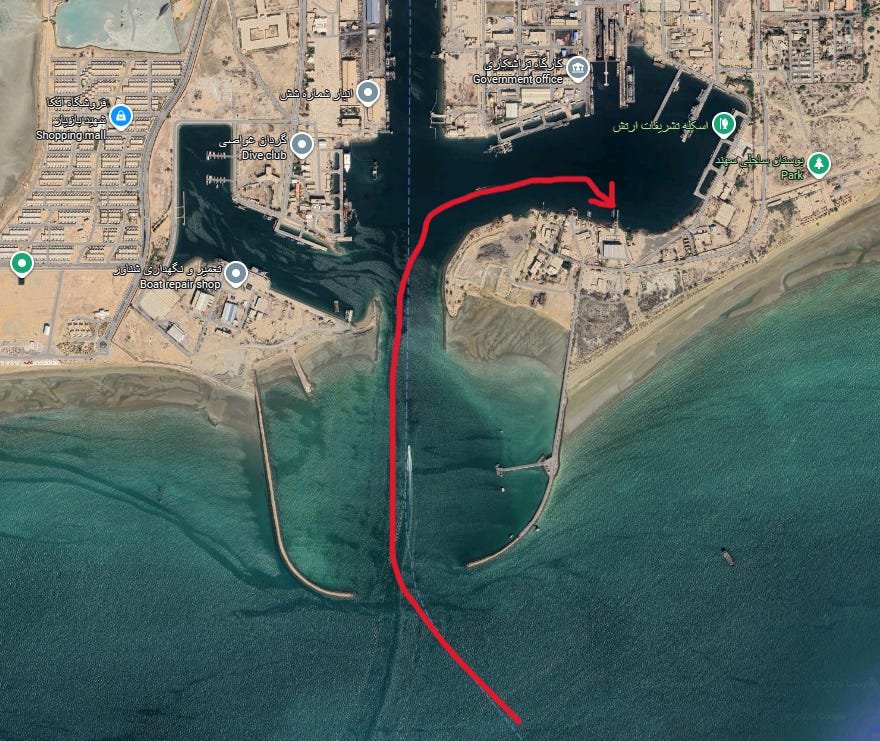
It was only a matter of time…and what a way to do it. Iran: check Submarine: check Shipyard: check Daylight: check “Just another day in the office.” vibe: check I like the matter-of-fact verbiage from DVIDS: Using multiple one-way attack surface drones, CENTCOM forces successfully struck a submarine and ship maintenance facility in Iran, July 12, 2026. Three Corsair unmanned surface vessels hit the port at Bandar Abbas Naval Base, marking the first time American forces have employed sea drones in combat operations. The strikes degraded Iran’s ability to continue attacking commercial shipping. As Mehdi pointed out, just drove right in like we owned the place. You can find it on google earth at N 27.140700, E 056.211584. If the Corsair sounds familiar, it is because we covered Saronic’s boat a month ago. She’s the one that picked up the Apache helo pilots who found themselves in the drink after being shot down—the accidental CSAR at sea. The Corsair is a multi-tool. It can pick up your airmen, and it can also take out your enemy's submarines and shipyard facilities. Just go watch that video again while humming the national anthem. You’ll feel better about everything, I promise. Now that you’re in a great mood, ponder the opportunities now that we’ve broken that attack USV (or surface RAS, whatever) seal. More, better, faster, forward deployed. Taiwan, call your office. If we and the Ukrainians can do it, so can other people. Arm your ships and shipyards accordingly. Ponder how you blind it (other nations’ version of the Corsair), and make it deaf and mute while you are at it…because it is coming our way. Expect a lot more. The US Navy has been building a family of USVs and recently replaced its Modular Surface Attack Craft (MASC) program for the medium unmanned surface vessel (MUSV) marketplace. The requirements for the designs include that the unmanned vessels have a range of 2,500 nautical miles with a speed of 25 knots in rough sea conditions. Each vessel should be able to carry 25 metric tons of containerized payload to carry out a variety of missions including strike, ISR, and transport. According to the US Navy, “the MUSV marketplace creates new opportunities for smaller, non-traditional shipyards to build our future fleet. This initiative represents a strategic shift in naval acquisition, designed to rapidly field unmanned technologies by leveraging mature, existing commercial solutions.” The US Navy recently announced seven companies that will be advancing to the at-sea testing phase: Sea Machines, Leidos, Saronic, Galliano Marine Services, PacMar Technologies, Birdon, and Huntington Ingalls Industries. The companies that successfully complete the at-sea testing, which will be completed by this coming October, will receive $15 million for follow-on production. Pay attention. Sometimes, like Hemingway’s description of bankruptcy, naval weapons developments happen suddenly, then all at once. Big things are moving. Keep in front of it. Leave a comment Share This Substack is reader-supported. To receive new posts and support my work, consider becoming a free or paid subscriber. View the full article
-
I have sent a message to TonyE who is the HUCE master and programmer. He is also available to message on the HarpGamer Discord Chat Room. .