All Activity
Past hour
-
A counter-drone startup tested a low-cost interceptor missile at Yuma Proving Ground this month, loading it into an eight-shot launcher during a homeland-defense experiment involving U.S. Northern Command, NORAD and the Pentagon’s Joint Interagency Task Force 401. Perseus Defense, a company that went through Y Combinator’s 2025 batch, said each Mk-III interceptor it fired cost […]View the full article
-
"AUKUS has forced the United States to confront its "profoundly lacking" capacity to build and maintain naval submarines, but recent progress should inspire confidence in the defence deal, a former top White House official says." AUKUS felt 'too hard' at times, former White House offici...Five years after the pact between Australia, the US, and the UK was announced, three of its key architects assess its progress toward its goals, including arming Australia with nuclear-powered submari
Today
-
U.S. Soldiers and Army capability developers spent two weeks at Fort Benning testing drones that stay tethered to the ground, aiming to give small infantry units a way to see farther and keep radios working even when the terrain or enemy jamming gets in the way. The Maneuver Battle Lab ran the assessment from July […]View the full article
-
A new automated security system helped Marines detect and track a vehicle that strayed toward a live-fire range during a training exercise at Twentynine Palms, California, on Aug. 19, the U.S. Marine Corps said, marking one of the first real-world uses of a system built to replace hours of manual guard duty with radar and […]View the full article
-
British manufacturer MSI-Defence Systems unveiled a new remote weapon station called TERRAHAWK RAPTOR at the DVD 2026 exhibition in Millbrook, calling it the lightest gun mount in its counter-drone product line. RAPTOR is a remote weapon station, a gun turret a soldier can aim and fire from inside a vehicle rather than exposing themselves on […]View the full article
-
Hanwha Aerospace and General Atomics Aeronautical Systems flew the Mojave short-takeoff-and-landing (STOL) drone from a South Korean Army airfield, landed it on a tank maneuver route, and flew it back again during a demonstration at the 2026 Defense Drone Technology Exhibition in Pocheon. The maneuver was meant to show the aircraft can operate from short, […]View the full article
Yesterday
-
The U.S. State Department has approved a possible sale of 48 F-35 fighter jets to Saudi Arabia, a $24.3 billion deal that would make the kingdom just the second country in the Middle East, after Israel, cleared to fly the stealth aircraft. The Defense Security Cooperation Agency notified Congress of the potential sale on Sept. […]View the full article
-
GM Defense delivered its first batch of PAC-3 MSE missile-housing components to Lockheed Martin on Sept. 16, just 22 days after the two companies signed a formal production contract, Lockheed Martin said in a post on X. “The message is clear: we’re moving at the speed of relevance,” Lockheed Martin said. “The future of defense […]View the full article
-
Latvia’s government decided on Sept. 15 to buy Czech-made 155mm wheeled howitzers for the National Armed Forces, choosing the Morana system from Excalibur Army after Sweden’s competing Archer howitzer proved too costly and slow to deliver under the country’s current defense budget. The Cabinet of Ministers based its decision on the cost of the offers, […]View the full article
-
I mentioned @Schizointel’s graphic from last month on the last UNCLAS Read Board Podcast, and it keeps popping into my mind. Only the paying subscribers get access to the UNCLAS Read Board Podcast, so I thought I’d bring it to the Substack, chat about it a bit, and then perhaps it will get out of my head. Probably not, because it is one of the best representations of a regular topic of ours here: we have too small of a Navy. It is also a good representation of what it takes to conduct a blockade and deal with the threat of the once-3rd-rate and now-4th-rate-power of Iran and her proxies. So, here it is. How many ships do you need? Today, let’s just look at our Aegis ships, specifically our Arleigh Burke DDG. Everyone has heard me say it before: it takes three to make one. However, I’ve been counseled by my friend Bryan McGrath that the number is actually higher, five to make one. Let’s compromise between myself and Bryan and let’s call it four to make one. Yes, there will be math. What that means is if you want a ship deployed, you have to have three, four, or five ships non-deployed in post-deployment maintenance, training, or other non-deployed duty, depending upon what confession you’re part of. We’re going with the Church of Four. In the graphic, there are a couple of the last of our Aegis Ticonderoga Class cruisers. They are not long for this world, and soon will no longer show up in anyone’s Carrier Strike Group. If we need ships deployed—especially in a carrier escort or combat role—we will soon just have Arleigh Burke DDGs. We don’t have any frigates, and those that do arrive in the next decade won’t be able to survive forward well by themselves. Our Littoral Combat Ships aren’t fit for purpose in a hostile environment either. So when you’re going into a hostile environment, we’re down to our Arleigh Burkes. A lot of us have kept wondering how many DDGs are needed to sustain the present operations against Iran. It is hard to keep a regular tab on who is where, but a variety of sources keep pushing out a number +/- from 17. When you look at the graphic, from August, that looks like a very good planning number. For the operations against Iran and her proxies, we are not just talking about ships escorting our carriers. We have to include DDGs in the Eastern Mediterranean defending against ballistic missiles coming down on Israel and Jordan that we’ve seen in the last week. We need a few to manage the ongoing challenges from the Houthis in the Red Sea as well. I think how many Arleigh Burke class destroyers did we had in mid-August is a good proxy for this blockade against a 4th rate power and her proxies. The number is 20 if you include the cruisers Smalls and Princeton escorting carriers G.H.W. Bush and Washington. Lincoln, at least in this graphic, doesn’t have a cruiser with her. So, there’s your new normal. For just DDGs, we have the Peterson, Ross, Cook, Shoop, John Paul Jones, Milius, McFall, Higgins, Mason, John Finn, Peralta, Delton D. Black, Mustin, Spruance, Murphy. Gonzalez is alone and unafraid in the Red Sea. The Roosevelt and the Paul Ignatius are showing the flag in the Eastern Mediterranean. That’s your 18. Now for math. If the optimist says that three get you one: 18 x 3, gets you to a requirement for 54 DDGs. For the compromise of four get you one, if it takes four to make one, that’s to 72. So somewhere between 54 and 72. And it’s north of there if you are part of the McGrath School of Math. Guess how many DDGs we have. We have 75. So we are tapped out sustaining operations against a 4th rate power. The People’s Republic of China (PRC) and her Navy are a first rate threat in a much larger in the Pacific. So we would have a much greater demand for ships. What if things get furry and we need to sustain operations west of the International Date Line? Just on a normal rotation with no losses? We can’t send any more against them than we are sending against Iran and her proxies. Sure, we could surge forces forward for a spell, but you cannot sustain that. No one at the end of 4QFY26 really thinks we will have a short war against the PRC? I hope not. If we do, we won’t be able to worry about problems in the Middle East, that’s for sure. NATO? Again, a note to my European friends. Y’all’ve known for twenty years that there’s been a Plan Salamander. The Europeans need to be able to take care of their own waters because the USA still has global requirements, a few of which are more important to America than Europe’s recurring tribal bloodlettings. Should one of them pop up while we’re busy in the Pacific, we’ll help them if they need it, but you won’t get much, and those you do get will be second-rate forces. Think of the Burma Theater in WWII. Harsh? No. Simple math. The US Navy is not going to be able to help anyone anywhere else because we just don’t have a large enough Navy. We just need to accept that fact. As it stands right now, with this blockade—a maritime policing operation if you will—we have minimal to no help by the Europeans, and as we covered last week, they’re not ready for the hardest fight anyway. They should work on that. With DDG(X) being put in a drawer with CG(X), Constellation-class FFGs limited to a short run, and FF(X) not ready to close any shore anytime soon…we wi—as the punchline goes—need to build Burkes until the crack of doom…and faster. The best time to fix this problem was twenty years ago. The second best time is now. Now, that brings us to the hard math problem, except this time I am not going to do your work for you. I have my answer, and I’ve given it to you quite a few times over the years. You have to either remember it or come up with it yourself. I’ll leave plenty of bread crumbs. For you Marines out there, don’t worry—I’ll tell the story with pictures. Assume that we solve the industrial capacity and manpower issues. There are no magic beans. Robotic and Autonomous Systems are augments to, not replacements for manned warships. At least in the foreseeable future, there is very little “substitution” you can expect to squeeze out of them. Where will we get the money? First of all—the 10-year yield has now “renormalized.” It is not ‘high.’ It is simply back to its normal place. Stop coping. It isn’t going to fall again. Why? …and to service that debt that is about to pop even higher… Here we are. Find a path from here to there. Share Leave a comment This Substack is reader-supported. To receive new posts and support my work, consider becoming a free or paid subscriber. View the full article

-
Hanwha Aerospace and Lockheed Martin UK unveiled a Redback infantry fighting vehicle armed with a British-built 40mm turret at the British Army’s DVD 2026 exhibition, pairing an already fielded vehicle hull with a weapons system developed for a different British Army program. The turret carries the CTA International 40mm cannon and, for the first time, […]View the full article
-
Jaguar Land Rover unveiled three variants of a new military vehicle called the Defender Wolf Series II at the British Army’s DVD 2026 exhibition in Bedfordshire on Sept. 16, aiming to replace the Land Rover that has served British forces for more than 70 years. The event, held at the Millbrook proving ground, is where […]View the full article
-
Russia’s United Aircraft Corporation said its Su-57 stealth fighter flew to an air show in Egypt this month using fuel tanks built into its internal weapons bays instead of the external drop tanks fighters typically carry on long ferry flights. UAC said the aircraft made the trip to the El Alamein International Airshow with one […]View the full article
-
Lockheed Martin is pitching the U.S. Air Force on a new version of the F-16 fighter, designated the F-16G, as a way to replace aging Fighting Falcons faster than the F-35 production line can keep up. Multiple people familiar with the aircraft told Aviation Week that the F-16G builds on the current Block 70 F-16, […]View the full article
-
Ukrainian President Volodymyr Zelensky said Ukrainian forces struck a Russian military airfield in Rostov-on-Don overnight into Sept. 17, destroying one An-12 and two An-26 transport aircraft along with three helicopters. Zelensky said Ukraine’s Security Service, the SBU, carried out the airfield strike as part of a broader overnight operation that also hit the Slavneft-YANOS oil […]View the full article
-
The Missile Defense Agency wants industry to build a new mobile radar that can be flown into a war zone aboard a C-17, set up within hours and torn down again in minutes, according to a pre-solicitation notice posted September 16. The program, called Forward Based Mode Radar Next, is meant to replace or supplement […]View the full article
-
The U.S. Navy has ordered the first production run of a new long-range radio system designed to keep ships and units communicating even when satellites are jammed or unavailable. Naval Air Warfare Center Aircraft Division in Lakehurst, New Jersey, awarded MaXentric Technologies a $9.6 million firm-fixed-price order for 12 low-rate initial production kits of the […]View the full article
Last week
-
ARX Robotics UK and General Dynamics Land Systems-UK are launching a collaboration to explore turning the British Army’s Ajax armored vehicle into a command hub for robotic ground “wingmen,” the companies announced Sept. 16, 2026, in London. The initial work will focus on integrating ARX’s Hector uncrewed ground vehicle with Ajax, testing whether crews inside […]View the full article
-
Houthi forces shot down a Royal Saudi Air Force F-15 fighter jet over Marib governorate on Sept. 16, 2026, using a locally manufactured missile, according to Houthi military spokesman Yahya Saree. Houthi military media released images and video of the wreckage, showing armed fighters standing on a large piece of tail section bearing a Saudi […]View the full article
-
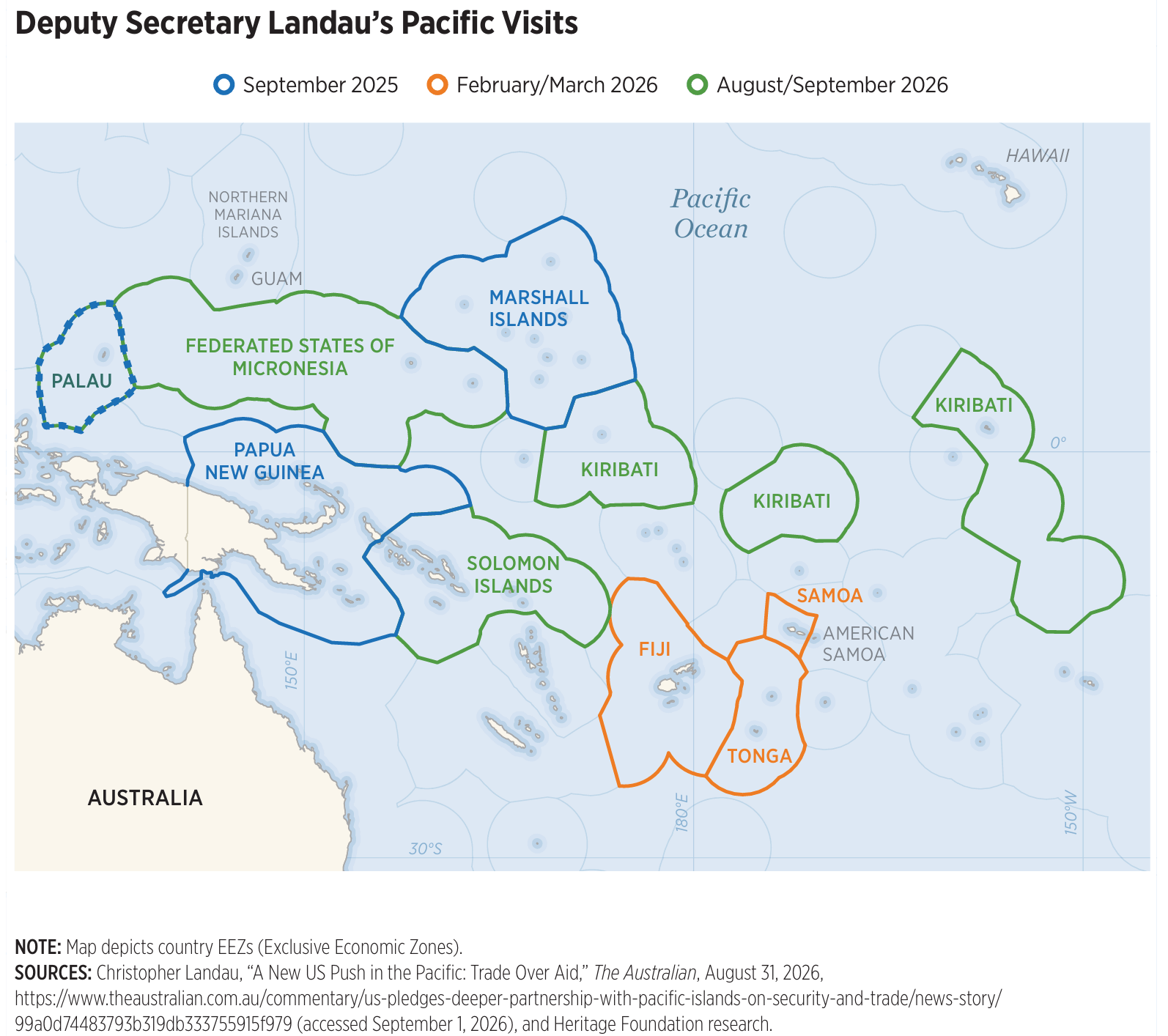
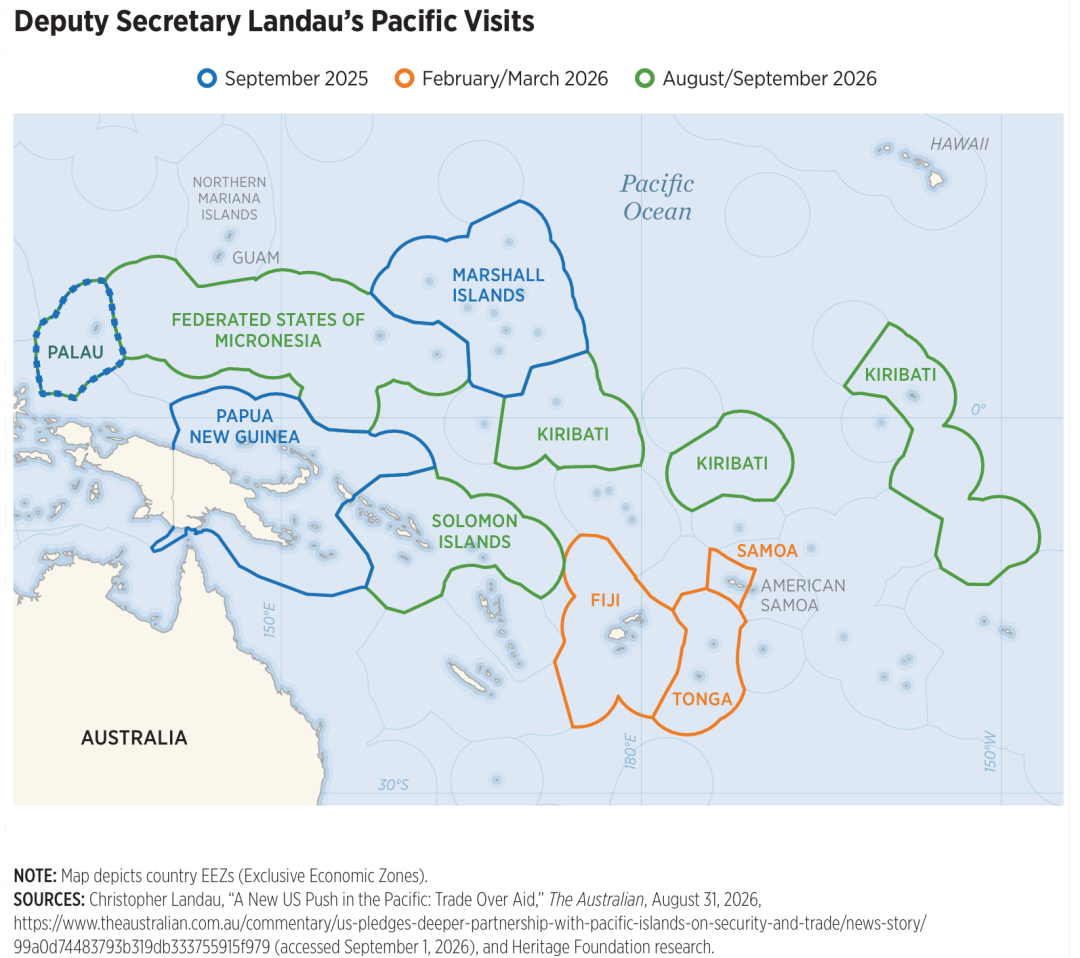
Alarms have been going off for well over a decade about the neglect of the island nations and territories in the Southwest Pacific where tens of thousands of Americans and hundreds of thousands of Japanese died fighting during the last great Pacific war, WWII. Regulars here are familiar with previous articles from 2022 through 2025, in addition to her 2024 visit to the Midrats Podcast, by our friend Cleo Paskal, all demonstrating her consistent advocacy in the area. If you’re new to the topic and want to catch up on the recent history, read the links above and come back. You can set up the podcast for a listen on your next commute. We have a nice bit of supporting fires on the issue via a backgrounder that came out from Heritage yesterday by Andrew J. Harding, “Aloha and Stay Tuned”: The Trump Administration’s Pacific Policy Inventory. It looks like, at last, this critically important part of the Pacific is getting the attention it deserves, On August 6, 2026, U.S. Deputy Secretary of State Christopher Landau personally responded to, on social media, a Foreign Policy article1 critiquing the Trump Administration’s approach to the Pacific Islands.2 Deputy Secretary Landau is correct: Contrary to the claims that the Trump Administration has “sorely neglected” the Pacific Islands,3 the Trump Administration has been active in the Pacific, has a strong vision for the region, and has registered multiple successes. As Deputy Secretary Landau’s social media fact-checking indicates, however, more work is needed to publicly articulate the Administration’s approach, and this Backgrounder seeks to do so. In the words of Deputy Secretary Landau: “Aloha and stay tuned.”4 As a sidebar, that article referenced above is, Trump’s Pacific Island Blind Spot, by Derek Grossman. It is an amazing bit of hackery. It reads as if the islands of the Southwest Pacific suddenly emerged from the sea less than two years ago and that there were no issues at all the last few decades…just nothing. Hackery. Just partisan, in-group-signaling hackery. Back to the Heritagebackgrounder. What has actually been going on since 2025? The Trump Administration has taken multiple steps to turn its national security vision into practical regional policy. The Pacific Policy Inventory serves as one of the most comprehensive publicly available inventories of the Trump Administration’s engagements and announcements since January 2025. (See the appendix.)21 The purpose of this inventory is not merely to catalogue activities but to demonstrate how the Administration’s policy has translated strategic objectives into action with Pacific Island countries. The appendix includes details on the inventory’s methodology and acknowledgements. Inventory Findings. Contrary to claims that the Trump Administration has “sorely neglected” the Pacific Islands,22 the United States has been very active in the Pacific and has introduced and committed to multiple new initiatives. Key findings from the inventory include: More than 100 publicly reported Pacific-related actions and initiatives have been announced, implemented, or expanded across multiple domains since January 2025. More than $2 billion in projected infrastructure activity in Yap, one of the four states of the Federated States of Micronesia (FSM). More than $700 million in publicly announced assistance, infrastructure support, investments, grants, and other initiatives, excluding projects without disclosed values, the projected Yap infrastructure figure, broader Compact of Free Association (COFA) assistance funds, and financing authorities. At least 15 maritime security initiatives. At least 15 digital connectivity, transportation, and infrastructure initiatives. At least seven critical mineral and energy security initiatives. More than 25 Freely Associated States (FAS)–related initiatives and engagements, representing roughly one-quarter of all identified Pacific-related actions and initiatives. More than 15 senior-level engagements, official visits, forums, summits, and related events. Deputy Secretary Landau has traveled to nine Pacific Island countries, including all three FAS, hosted the 2026 U.S.–Pacific Islands Investment Summit, and represented the United States at the 2026 Pacific Islands Forum Leaders Meeting. Are we playing catch up? Sure. Is there a lot more to do? Absolutely, and this is where people writing things like Grossman’s article need to be put in a corner. America’s interests in the Southwest Pacific are bipartisan and will be an ongoing effort for generations, as all diplomatic efforts are. The Southwest Pacific was neglected by both parties for decades. You could replace ‘Trump’ with ‘Harris’ in my writing on this topic today, and it would read the same. I wish that were true for everyone, but it isn’t. It appears that we have a heartbeat and a bit of inertia now in the Southwest Pacific. Everyone in the national security arena, regardless of whether you wear a blue or a red jersey, you should support and encourage all efforts here. Who can oppose these recommendations made by the author of the backgrounder? Recommendations for the United States To optimize U.S. engagement with the Pacific Islands, the President of the United States should: Host a U.S.–Pacific Islands Summit. … Visit a Freely Associated State or U.S. Pacific Territory. … The Trump Administration as a whole should: Continue Pursuing Shared Interests and Delivering Results in Policy Engagements. … Institutionalize the U.S.-Pacific Islands Investment Summit…. Support Humanitarian Efforts as Reasonably as Possible. … The Department of State should: Publish an Annual Pacific Islands Fact Sheet. … If there is a change of party in the winter of 2029, we should all hope that the incoming administration takes this effort and builds on it. If the executive branch remains in (R) hands, then I hope they do the same. Anyway, give the backgrounder a full read. Leave a comment Share This Substack is reader-supported. To receive new posts and support my work, consider becoming a free or paid subscriber. View the full article
-
Flensburg Technology Systems and Germany’s Special Forces Command unveiled the first pre-series TAHR light airborne combat vehicle on Sept. 15, 2026, at the opening of the 10th KSK Defence Symposium in Altensteig-Wart, Germany. FTS presented the vehicle to Brigadier General Andreas Kühne, commander of the Special Forces Command, known by its German acronym KSK. The […]View the full article
-
The first Kaplan APC, an armored personnel carrier Turkish manufacturer FNSS is building for Indonesia, has completed its pre-delivery acceptance tests in Turkey. FNSS and Indonesian state defense manufacturer PT Pindad ran the tests under their Kaplan APC Development and Production Agreement, signed in October 2024 to meet an Indonesian Ministry of Defense contract for […]View the full article
-
Swarmer, an Austin, Texas-based defense technology company, has agreed to buy Ratel Robotics, one of Ukraine’s largest makers of combat ground robots, in a deal that could be worth up to $224 million. Alexander Kamyshin, a former advisor to Ukrainian President Volodymyr Zelenskyy on strategic affairs, first laid out the deal’s structure on X, writing […]View the full article
-
The U.S. Army is putting another $818 million into production of the vehicle meant to replace its Vietnam-era M113 troop carriers, part of a contract with BAE Systems that has now grown past $3.3 billion. The Department of War said the $818 million award is a modification to BAE’s existing contract for the Armored Multi-Purpose […]View the full article
-
The U.S. Army has awarded Lockheed Martin $1.21 billion to keep developing an upgraded version of its long-range strike missile, work that comes as the Army tries to rebuild a stockpile it drained fighting Iran earlier this year. A Department of War announcement said the contract funds early operational capability work on the Precision Strike […]View the full article