




HG S2 (Intel Bot)
Members
-
Joined
-
Last visited
Never
Everything posted by HG S2 (Intel Bot)
-
Australia has test-fired its newest long-range missile for the first time, launching the U.S.-made Precision Strike Missile (PrSM) from the Mount Bundey Training Area in the Northern Territory. The missile traveled more than 300 kilometers in four minutes and three seconds, reaching speeds exceeding 4,000 kilometers per hour before striking its target with high accuracy. […] The post Australia tests long-range PrSM missile first appeared on Defence Blog.View the full article
-
We’re getting our first full look at Russia’s ‘Shturm’ robotic tank complex. The new combat system was first identified during recent field trials, where it appeared for the first time in its complete configuration—featuring both a remotely operated assault vehicle and a command-and-control vehicle based on a modified T-72 chassis. Developed by Uralvagonzavod for the […] The post Russia tests new robotic assault tank first appeared on Defence Blog.View the full article
-
Ukrainian drone operators with the Security Service’s “A” Center for Special Operations (CSO “A”) have intercepted a Russian Orion unmanned aerial vehicle in what appears to be the most advanced drone-on-drone engagement recorded to date. The intercept, reported by the Ukrainian defense outlet Militarnyi, was confirmed through video footage published by the SBU. The Orion […] The post Ukrainian drone intercepts Russian Orion first appeared on Defence Blog.View the full article
-
The Japanese Ministry of Defense is preparing to take disciplinary action against numerous members of the Japan Maritime Self-Defense Force (JMSDF), including Chief of Staff Admiral Akira Saito, over an illicit payment scheme involving submarine maintenance contracts. The decision follows revelations that Kawasaki Heavy Industries (KHI) created slush funds through fictitious transactions and used the […] The post Japan to discipline Navy chief over bribery scandal first appeared on Defence Blog.View the full article
-
The Japanese Ministry of Defense confirmed that the Japan Maritime Self-Defense Force (JMSDF) has, for the first time, identified a Chinese Navy submarine rescue vessel of the Type 926 Dakai-class operating near Japanese waters. According to a statement issued by the Ministry of Defense on July 25, the vessel was first spotted around noon on […] The post Chinese new sub rescue ship spotted near Japan first appeared on Defence Blog.View the full article
-
Türkiye and Indonesia have formally concluded a defense agreement for the procurement and local production of KAAN fighter jets. The Defense Industry Agency of Türkiye (Savunma Sanayii Başkanlığı) announced the signing of the commercial contract with Indonesia’s Ministry of Defense during the IDEF 2025 defense exhibition in Istanbul. The agreement covers the delivery of 48 […] The post Indonesia to buy 48 KAAN fighter jets first appeared on Defence Blog.View the full article
-
Polish Prime Minister Donald Tusk said Friday that General Alexus Grynkewich, the newly appointed NATO commander in Europe, confirmed U.S. assessments that Russia could be ready for a confrontation with Europe as early as 2027. “There is no reason to frighten each other, but we must be truly vigilant and focused,” Tusk said in a […] The post Poland warned: Russian confrontation possible by 2027 first appeared on Defence Blog.View the full article
-
Thailand’s Air Force has conducted its first known combat use of South Korea’s KGGB precision guidance kits, adapting standard Mk.82 bombs for long-range strikes during ongoing clashes with Cambodian forces. According to reports, a Royal Thai Air Force (RTAF) F-16 fighter jet used the KGGB—a GPS-guided glide bomb kit developed by South Korea’s LIG Nex1—to […] The post Thailand uses South Korean precision bombs in border fight first appeared on Defence Blog.View the full article
-
Thailand has captured a contested hill along its border with Cambodia amid intensifying fighting between the two countries, Thai media reported on Saturday. Thai troops took control of Phu Makkhuea hill, a ridge in the long-disputed frontier zone near the ancient Preah Vihear Hindu temple. The operation reportedly took place early on July 26, with […] The post Thailand captures strategic ridge in border clash first appeared on Defence Blog.View the full article
-
The Royal Thai Army launched Operation “Trat Pikhat Pairee 1” in response to renewed aggression near Ban Chamrak in Trat Province. Thailand has declared martial law in key eastern provinces following a sharp escalation in border clashes with Cambodian forces, marking the third consecutive day of conflict. At 05:10 AM on July 26, Cambodian troops […] The post Thailand launches operation to repel border assault first appeared on Defence Blog.View the full article
-
Ukraine’s armed forces are facing a pressing need for armored vehicles capable of withstanding battlefield threats, with Ukrainian defense outlet Defense Express reporting that at least 20,000 units with STANAG 4569 Level 2 protection and around 3,000 units with Level 3 protection are required. According to the report, Level 2 armor under the NATO STANAG […] The post Ukrainian military needs 23,000 armored vehicles first appeared on Defence Blog.View the full article
-
Turkey’s top defense and technology officials have confirmed the development of a long-range missile program with a declared range of 2,000 kilometers, signaling a new phase in the country’s ambition to become a regional military power with homegrown capabilities. Minister of Industry and Technology Mehmet Fatih Kacır, in a public statement this week, said, “We […] The post Turkey confirms 2,000km missile program first appeared on Defence Blog.View the full article
-
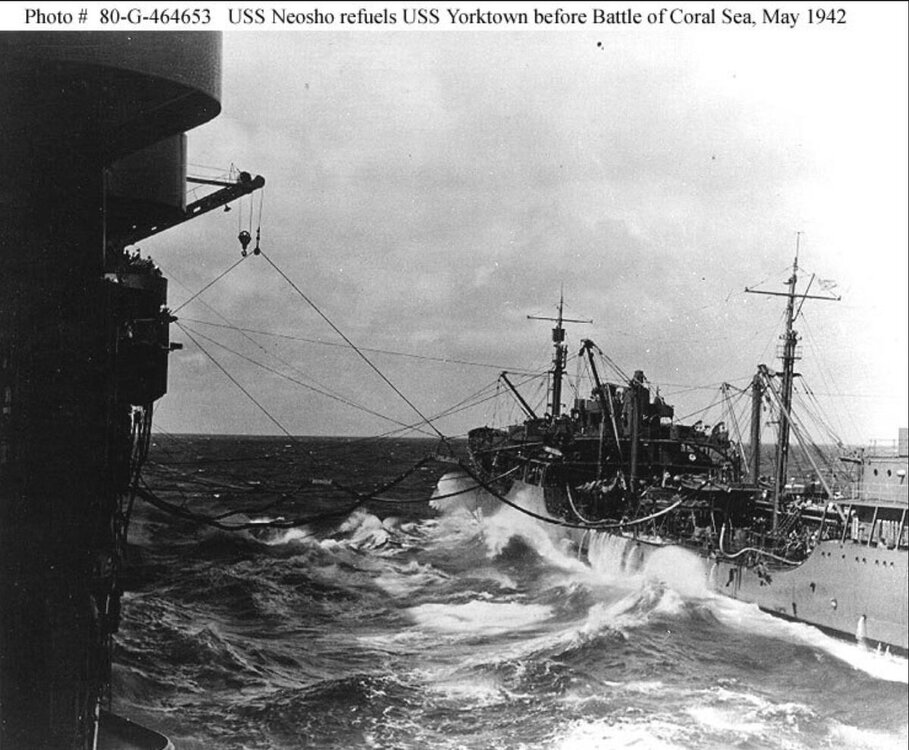
It is only fitting that we do an update this last Friday of July of one of my favorite FbF that I have referred to often over the years. I first mentioned the subject of the FbF on the OG Blog 19 years ago. Finally, a decade ago, I gave her story its own FbF. I’ll do that again today, but first things first. Earlier this month, Secretary of the Navy John C. Phelan made the following announcement: During the Battle of the Coral Sea in World War II, Chief Petty Officer Oscar V. Peterson heroically saved 123 sailors aboard USS Neosho by manually closing critical steam-line valves while unprotected amid smoke and flames. He suffered severe burns and died six days later. He was posthumously awarded the Medal of Honor for his heroic efforts. We are renaming the John Lewis-class fleet replenishment oiler USNS Harvey Milk to USNS Oscar V. Peterson (T‑AO 206) in his honor. This ship, designed to sustain Navy strike groups at sea, will now carry forward his legacy. secnavA post shared by @secnavAttention to Citation: For extraordinary courage and conspicuous heroism above and beyond the call of duty while in charge of a repair party during an attack on the U.S.S. Neosho by enemy Japanese aerial forces on 7 May 1942. Lacking assistance because of injuries to the other members of his repair party and severely wounded himself, Peterson, with no concern for his own life, closed the bulkhead stop valves and in so doing received additional burns which resulted in his death. His spirit of self-sacrifice and loyalty, characteristic of a fine seaman, was in keeping with the highest traditions of the U.S. Naval Service. He gallantly gave his life in the service of his country. Early on with the Midrats Podcast, and replayed a few times, we had author Don Keith on to discuss the tale of the USS Neosho (AO-23) and USS Sims (DD-409) at the Battle of the Coral Sea in his book, The Ship That Wouldn't Die: The Saga of the USS Neosho- A World War II Story of Courage and Survival at Sea. If memory serves me right, Chief Peterson’s story is there along with other Sailors and their inspiring stories of bravery in the face of incredible odds. You can listen to the interview at this link, or via the Spotify widget below. Bravo Zulu SECNAV. Just superb. Now to the FbF for the Neosho and her crew. There is nothing that fits more the description of "unsexy but important" than the fleet oiler. Hidden in the corners of WWII history is a story that is almost hard to believe is actually true. Today we will cover the second part of what we started last week with the story of her escort during the Battle of the Coral Sea, the USS SIMS (DD-409) We are talking about the story of the Pearl Harbor survivor, and in the immediate time following the attack, the only fleet oiler in the Pacfic, the CIMARRON class fleet oiler, U.S.S. Neosho (AO-23). Sent along with her escort and its gimp engineering plant away from the coming battle - instead, through her distraction she became a critical part of it. An enemy scout does a poor job and mistakes an oiler and a destroyer as a carrier and a cruiser ... and the full weight of the enemy falls upon them. I just finished a great book, The Ship That Wouldn't Die: The Saga of the USS Neosho- A World War II Story of Courage and Survival at Sea. Let's go to the official report after the battle. Read it all - especially the officers put on report - but here is the start; 1). On the evening of May 6, 1942, the Neosho, in accordance with instructions from Commander Task Force SEVENTEEN, proceeded on duty assigned with the U.S.S. Sims as escort, to conform with Commander Task Force SEVENTEEN Operation Order No. 2-42. The Neosho was required to pass through a given geographical point, at one hour after sunrise the following morning, which she proceeded to do. At 0811, May 7, 1942, being in the vicinity of this assigned point and not sighting any ships of the Task Force operating in that area, the Neosho proceeded to carry out instructions. 2). At 0810, May 7, 1942, two planes were observed at a distance of approximately ten miles, bearing 020° T, but no positive identification could be made as they were too far away. It was believed at this time that they were planes from one of our carriers. At 0929, a bomb was seen to fall about one hundred yards on the starboard quarter of the Sims, having been dropped from an enemy plane operating singly. The Sims at that time was patrolling ahead of the Neosho, following a specified zig-zag plan. This plane disappeared heading in a northerly direction. General Quarters was immediately sounded. Battle stations were manned continuously until cessation of the engagement with the enemy at 1218. Speed was increased to eighteen knots. At 1005, sighted approximately fifteen enemy planes approaching from 025° T. These planes made no attempt to attack, but flew parallel to the course of this vessel on the port side at high altitude, well out of gun range and disappeared to the northeastward. The Sims opened fire but no bursts were observed. At 1023, seven more enemy planes approaching from 010° T were sighted. These planes flew parallel to this vessel on the port side, crossed the bow, and disappeared to the northeastward, having made no attempt to attack either the Sims or the Neosho. Sims opened fire shortly after sighting. This vessel commenced firing three inch guns when these planes were within range. At 1033, a group of about ten planes approached from 140° T, of which three planes (twin-engine bombers) commenced a horizontal bombing attack on this vessel, others proceeding to the northeastward. At 1035, these three bombers dropped three bombs simultaneously; the direction of the fall of the bombs was observed closely and the ship was swung hard right to avoid being hit; all bombs fell to starboard and were near misses. These three planes were the only planes observed throughout the entire engagement which were other than single engine. 3). At 1201, observed approximately twenty-four enemy planes at high altitude, apparently taking position for dive-bombing attacks on this vessel and the Sims. From 1201 to 1218, this vessel was subjected to continuous dive-bombing attacks from all directions. The 20 mm fire of the Neosho was very effective. At no time during the engagement did the machine gunners falter at their jobs, notwithstanding the fact that two men were killed instantly right in the midst of the forward group, one of them being decapitated by flying fragments. However, despite any courageous tenacity on the part of the gun crews, it was quite obvious that if a pilot desired to carry his bomb home, he could not be stopped. The greatest majority of the planes diving on the Neosho were forced to deliver their attacks at a high altitude; only three or four dove to within a few hundred feet of the masts. Although the three inch fifty caliber anti-aircraft guns fired throughout the attacks it is difficult to evaluate their effectiveness against the enemy. 4). The constant maneuvering of the ship so as to head crosswind, and the effective fire of the 20 mm guns, is considered responsible for the large number of near misses. Three enemy planes are definitely known to have been shot down by this ship, of which one made the suicidal run into Gun No. 4 enclosure. It is believed that at least four other planes received sufficient 20 mm hits to render their return to base questionable. Three planes were observed to swerve away without completing their attack, due to the effectiveness of the 20 mm gun fire. 5). Shortly after the last bomb dropped, the Commanding Officer ordered all hands to "Prepare to Abandon Ship but not to abandon until so ordered." A messenger sent by the Executive Officer from aft came to the Commanding Officer stating that he had been sent to find out what the orders were regarding abandoning ship. The Commanding Officer told him to tell the Executive Officer, "Make preparations for abandoning ship and stand-by." The Commanding Officer had no knowledge of the condition of the Executive Officer. At about 1230, the Commanding Officer ordered the two motor whale boats to be lowered to pick up personnel who had abandoned ship without orders, and to tow all life rafts back to the ship. All undamaged life rafts, seven in number, had been set adrift without orders from the bridge. The many attacks delivered by the dive-bombers were directed at the bridge, and at the after section of the ship containing the engineering installation. With the exception of the 3" gun crews in No. 1 and No. 2 gun enclosures and the forward ammunition and repair parties, all of the ship's personnel were concentrated in these two sections. In the immediate vicinity of the bridge, three direct hits and a number of near misses occurred. In the after part of the ship, two direct hits, a suicidal dive of a plane, and the blowing up of at least two boilers, along with several near misses, occurred. It is believed that the destruction of the escort vessel with no other ships in sight, combined with the violent shocks from the several bomb hits and near misses, in many cases rendered personnel incapable of logical thought. It is known that many of the personnel aft, due to the flame resulting from the suicidal dive, smoke, and escaping steam, believing they were trapped with the ship sinking, jumped over the side. The number of men who were critically burned or injured in the after end of the ship, and who jumped over the side, is not known. The two motor whale boats placed men on the rafts and took as many in the boat as the boat officer in each case considered safe. They did not tow the life rafts back to the ship. When the boats returned to the ship, without life rafts, and loaded in excess of capacity with survivors, many of whom were badly injured and severely burned, it was too near sunset to send them back to attempt to locate, and return with, the drifting life rafts. The sea was rough and it was the Commanding Officer's opinion, as well as that of several officers, that the Neosho probably would not stay afloat throughout the night. The rafts were then out of sight. It was the Commanding Officer's conviction at that time that one of the Task Forces with which this vessel was operating would find the Neosho on the following day, if still afloat, and the rafts would then be located and occupants thereof rescued. A muster upon return of the boats showed that of 21 officers and 267 men, including passengers, on board at quarters that morning, 16 officers and 94 men were accounted for, 1 officer and 19 men were known dead, and 4 officers and 154 men were missing. In addition to the above, there were 15 enlisted survivors of the Sims. During the afternoon the wind had increased to force 5-6 and the sea was moderately rough. In the early afternoon it was difficult to see the life rafts from the bridge with the aid of binoculars, and the boats were seen only intermittently, prior to their return. You may try to hide from war, but war may not hide from you. Be ready This Substack is reader-supported. To receive new posts and support my work, consider becoming a free or paid subscriber. Share Leave a comment View the full article
-
SpaceX’s Starlink satellite internet system suffered a major global disruption Thursday, knocking tens of thousands of users offline for more than two hours and affecting critical military communications across active warzones. According to Downdetector, the outage began on Thursday at approximately 3 p.m. EDT (1900 GMT), with more than 61,000 user reports flooding the crowdsourced […] The post Starlink breakdown reveals frontline weakness first appeared on Defence Blog.View the full article
-
Turkish Aerospace Industries (TAI) has taken a major step toward exporting its domestically developed supersonic jet trainer, HÜRJET, to Europe through a newly signed strategic partnership with Airbus. The agreement, which outlines plans to deliver up to 30 HÜRJET aircraft to Spain, was formalized during the 17th International Defense Industry Fair (IDEF) in Istanbul. According […] The post Spain to buy 30 Turkish Hürjet jet trainers first appeared on Defence Blog.View the full article
-
Japan’s Mitsubishi Heavy Industries has showcased ongoing maintenance and overhaul work on the Type 10 main battle tank at its Chitose facility in Hokkaido. The process, known as “overhaul and repair,” is a critical midpoint intervention in the vehicle’s service life, intended to restore the tank to its original performance level after years of intense […] The post Mitsubishi extends life of Type 10 battle tanks first appeared on Defence Blog.View the full article
-
Thailand and Cambodia exchanged heavy artillery fire on Friday as a rapidly intensifying border conflict entered its second day. The Royal Thai Army reported shelling in multiple areas, including Ubon Ratchathani and Surin provinces, and confirmed it had launched strikes in response to attacks from Cambodian forces. According to a statement from Thailand’s Second Army […] The post Thailand deploys tanks, jets in border showdown first appeared on Defence Blog.View the full article
-
Ukrainian military-affiliated sources report that Russia has begun using its newest air-to-air missile, known as Izdelie 180 or the K-77M, in combat operations over Ukraine. The missile, a modernized variant of the earlier Izdelie 170 (R-77), is believed to feature a two-mode propulsion system, enhanced aerodynamic control surfaces, and a new active radar seeker. According […] The post Russia fields new long-range air-to-air missile first appeared on Defence Blog.View the full article
-
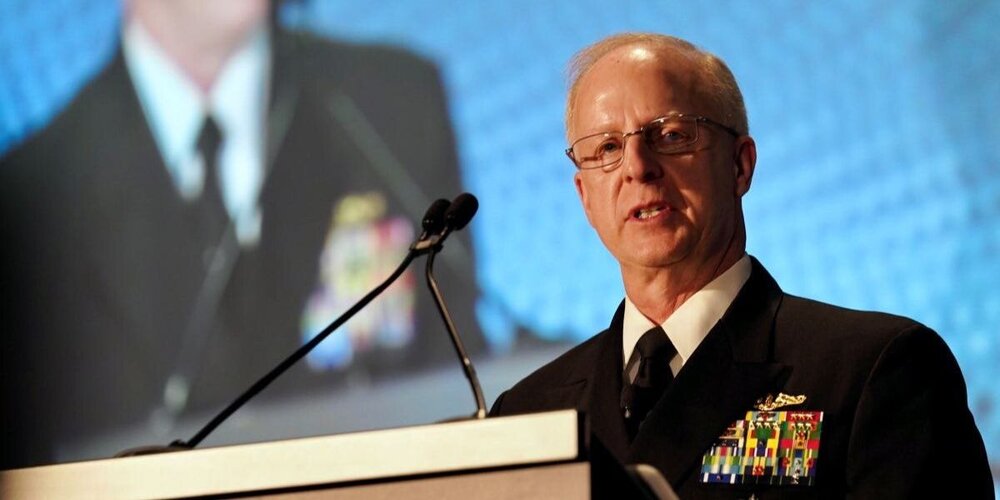
The Senate Armed Services Committee has published the advance policy questions, with answers, for the nominee for appointment to be our next Chief of Naval Operations, Admiral Daryl L. Caudle, USN. If you want to know where he stands or where the center-mass of consensus thinking on topics are, this is about as good of a source as any. Yes, there is a fair bit of boilerplate, but there are some solid answers as well. Even better, it is a serious set of questions. I did word searches for some of the socio-political garbage previous CNOs invested their personal capital in, and none of it is there. To keep things short, I do have a list of Top-5 quotes for you to consider. The first one is, for me, the most important one. It has been eight years since the horrible summer of 2017. It has been 2.11 WorldWars since the last of the collisions of that summer, and yet we are still working through the issues. The report of the post-mishap investigation into the June 17, 2017, collision between the USS Fitzgerald and a Philippine-flagged container ship found that the collision was avoidable and resulted from an accumulation of “smaller errors over time,” ultimately resulting in a lack of adherence to sound navigational practices. Similarly, the report of investigation into the collision of the USS John S. McCain and merchant vessel Alnic MC on August 21, 2017, also was avoidable and resulted primarily from crew complacency, over-confidence, and lack of procedural compliance. 37. What has the Navy done to counter the “smaller errors over time” and the “complacency, overconfidence, and lack of procedural compliance” that resulted in these otherwise “avoidable” collisions? Simply said, the Navy is embracing, assessing, and leveraging near misses using the best practices honed over decades by Naval Reactors versus only responding to corrective actions following a significant incident or mishap. Prior to these collisions, the Navy reviewed each incident as a standalone issue and established a working group to directly tackle and address the deficiencies without holistic extensions of the problems or ruthlessly executing all corrective actions to closure. As a direct result of the collisions in 2017 and the fire that destroyed USS BONHOMME RICHARD (LHD-6) in 2020, the Navy implemented sweeping changes with a targeted objective of increased safe operations through rigorous compliance with safety standards, increased focus on improving overall fleet manning and training, improving long-term sustained readiness and establishing a stronger culture of operational excellence. In October 2021, the Navy established the Learning to Action Board (L2AB), which supports the implementation of critical recommendations and measures sustainment and effectiveness of those recommendations over time. The L2AB, co-chaired by the Undersecretary of the Navy and the Vice Chief of Naval Operations, has overseen a cross organizational review and completion of 90 percent, or 349, investigation findings from nine major incident investigations in order to implement more holistic and enduring solutions. The team has matured into the establishment of the Office of Warfighting Advantage (OWA), which aims at working with Assessment Partners such as the Naval Safety Command, the INSURV Board, the Navy Inspector General, and Fleet Commanders through their Fleet Improvement Offices to identify risks and operational gaps early in order to avoid mishaps. Additionally, this office is focused on improving the Navy’s ability to self-assess, self-correct and continuously improve through enhanced organizational learning at all Echelons and can be credited with the combined reduction of 20 percent in simple fires and 93 percent in major fuel related fires Navy-wide over the last four years, as well the restructuring, streamlining, and simplification of the Navy’s shore-based infrastructure chain of command, and comprehensive overhaul of Sailor Quality of Service policies and programs. If confirmed, I am committed to leveraging the partnerships forged by the Office of Warfighting Advantage to continue to improve unit readiness and safeguard operational excellence, prioritize programmatic and materiel changes necessary to continued improvement of ship operational safety, leadership development and Quality of Life for our Sailors. Finally, I am committed to further developing our ability to leverage the massive data the Navy acquires through the various formal assessment 14 and reporting processes to better predict and forecast areas for deep dives to prevent mishaps from occurring in the first place. AI and large language models (LLMs) will be essential to this effort. 38. If confirmed, specifically what more would you do to correct for the deficiencies that were found to have caused these two collisions? The Navy has made sweeping changes to the training and continuous assessment processes across the Surface Fleet over the last decade. All Navy homeports now have established seamanship and navigation simulators where bridge and combat information watch teams are qualified by courses and instructors certified to the International Maritime Organization’s Convention on Standards of Training, Certification and Watchstanding. In addition, all officer training pipeline schools have been revamped with focused training and accountable assessments in these areas from Division Officer to Commanding Officer that must be passed before assignment. The Navy has also invested heavily in our System of Systems approach ensuring greater integration and realistic training across our ship control systems. If confirmed, I will work to ensure that those efforts are accelerated and fielded to support our Sailors and watchstanders. Finally, the Navy continues to evaluate our Force Generation and Readiness processes to ensure we can meet the dynamic needs of our Nation under any circumstances with acceptable levels of risk. If confirmed, I will continue to assess and improve our ability to generate forces to meet the readiness requirements of our peacetime presence needs and future combat missions. Finally, I will continue to accelerate and enhance the work being done by the OWA. This organization continuously looks across the enterprise, working with Assessment Partners and Fleet leadership, to identify issues early and often before they become incidents by leveraging near miss data and formal assessment data sources. The OWA supports breaking down some of the stovepipes in learning, training and assessing that led to the collisions and establishes processes to accelerate lessons learned across communities. Again, 2.21 WorldWars. This should not be a top-shelf discussion topic in 2025. That it is one, should be a note of caution to all the work we need to do in order to get OPNAV to move a bit faster than the speed of smell. The second topic is one that, as I outlined last fall, I non-concur with. The Nuclear-Armed Sea-Launched Cruise Missile (SLCM-N) program, reintroduced in the 2018 Nuclear Posture Review to counter Russian and Chinese regional nuclear threats, gained legislative momentum with the Fiscal Year 2024 National Defense Authorization Act (NDAA), which mandated its development and initial operational capability by 2034 despite initial cancellation in 2022. Recent Congressional funding reflects bipartisan support. 60(a). Do you support the SLCM-N program as a necessary enhancement to U.S. theater deterrence? Yes. I fully support the development of the SLCM-N program. SLCM-N will provide the President with enhanced flexible response options, which will support deterrence of limited nuclear use and high-consequence non-nuclear strategic attacks against U.S., allied, and partner vital interests. 60(b). Given Congressional backing and the deteriorating global security environment highlighted in 2024 testimony, what steps would you take to accelerate the SLCM-N’s timeline to meet the 2034 operational goal? If confirmed, I am committed to seeking the necessary resources to develop SLCM-N to the Congressionally mandated IOC of 2034. Further, I am committed to working with select stakeholders, such as Strategic Systems Program, to accelerate facets of the SLCM-N program as applicable. This subject is infuriatingly short of a discussion of the opportunity cost of bringing back SLCM-N into the U.S. Navy—especially a desire to put it on surface ships. Any scenario where we need to “support deterrence of limited nuclear use and high-consequence non-nuclear strategic attacks” can be ‘serviced’ by our manned bomber force or SSBN. If you missed it, see my Monday Substack for more detail. The third topic makes me want to consider day-drinking as an option. 80. What is your assessment of the root cause of the announced three-year delay to the Constellation-class frigate program? While delays in shipbuilding programs are always the sum of several challenges, I understand the main drivers associated with the three-year delay in the Constellation-class Frigate program primarily stem from the iterative design change process and, to some extent, the shipyard’s underperformance. Specifically, a systemic overstretch and capacity deficit combined with the inherent technical complexities of developing a new, advanced warship. Requirement creep has been a common narrative in recent programs. There are also challenges such as workforce shortages, excessive workload on the shipbuilder, and design maturity issues, all of which are symptoms reflecting an underlying strain on our nation's ability to concurrently design and construct multiple complex naval platforms. The Constellation-class frigate program is an example of these common themes. 81. At what point should we consider expanding frigate production to a second source? As to whether the Navy will pursue a second shipbuilder to produce Constellation-class Frigates, I will defer to the Secretariat for that issue. I am aware an assessment team recently reviewed the details of the Frigate Program. Based on this review, recent visits to Fincantieri Marine Group, and a thorough data-informed analysis of the Frigate Program metrics and milestones, the Secretary of the Navy is currently evaluating options for the way ahead. First of all, the FREMM is not a “new, advanced warship.” Hell, it isn’t even the latest in frigate design. The same people who failed the Navy and the nation with LCS, DDG-1000, and CG(X) have done everything they could to turn an 85/15 program into a 15/85. It is criminal. Simply criminal. There is a lot of blame shifting and deflection in that answer, which is unfortunate. It was caused by the U.S. Navy which has failed to reform itself. That being said, absolutely we need to be building the Frankenfrigate from two yards, not one. The fourth issue seems esoteric, but it’s not. In March 2023 testimony before the Senate Armed Services Committee, Secretary of Defense Austin stated that, with respect to losing “S-band” spectrum, “it be devastating, … it would take us somewhere north of 20 years to try to recover from -- from the loss of that -- that spectrum. Parts of that spectrum are vital to our national defense and the protection of the homeland. And -- and, you know, in order to describe exactly -- well, you know what the -- what the specific platforms are, but we would have to go to a classified session to speak in detail about this. But I would tell you that this is not something you can fix overnight once you break it. It’ll take 20 years plus to recover from that.” Discussions about the U.S. Navy potentially losing access to the S-band spectrum (2-4 GHz), critical for systems like the Aegis SPY radar, have intensified since 2023 due to commercial pressure for 5G expansion, with Pentagon leaders warning that sharing or vacating this band could disrupt military operations. 131. What Navy systems might be affected by this loss of “S-band” spectrum, in your view? Loss of access to the S-band spectrum would pose an unacceptable risk to our Navy’s ability to successfully conduct its missions and to our nation’s defense. The Navy’s core homeland defense architecture—including the Aegis SPY radar and other systems contributing to the Golden Dome—is anchored in the 3.1 to 3.45 GHz mid-band range. Vacating this spectrum jeopardizes our ballistic missile defense capability and undermines national readiness. Beyond these systems, S-band supports a wide range of mission-critical functions: precision-guided missiles, secure communications, air traffic control, weather radars, and radio frequency signature characterization. Our six Major Range and Test Facility Bases in CONUS depend on this spectrum to develop, test, and validate the next generation of naval technologies. Preserving DoD primacy in this band is essential to the Navy’s ability to effectively train, operate, modernize, and fight. Once the Navy’s access to the spectrum is compromised, the path to recovery spans decades. We cannot afford that timeline. 132. Were DOD required to “vacate” or leave the spectrum “S-Band” instead of sharing, what would be the potential operational and monetary costs to the Navy, in your view? Spectrum is a finite and non-renewable strategic asset. Forcing DoD, and specifically the Navy, to vacate the S-band would impose profound operational risk across critical missions, including homeland defense. Our premier radar systems, including Aegis SPY and the Golden Dome architecture, rely on the unique characteristics of the 3.1 to 3.45 GHz band to enable threat detection, tracking, and missile defense. Loss of access would degrade radar performance, impair target discrimination, and compromise command-and-control across the Joint Force. Development and fielding of substitute capabilities would take decades and cost hundreds of billions without guaranteeing equivalent performance. Preserving this spectrum is not simply a technical requirement—it is a strategic imperative. 133. How long would it take for the Navy to move its systems to a different area of the spectrum, in your view? The Navy’s use of the S-band is based on optimal propagation characteristics, detection fidelity, and the practical constraints of shipboard integration. There is currently no viable alternative band that offers comparable performance. Hypothesizing, if technically possible, relocating systems to other areas of the spectrum would take decades, if at all, requiring wholesale system redesigns, hardware replacement, and significant ship alterations. Such a shift would impose significant operational and financial costs. Spectrum cannot be seen, felt (unless properly powered, natch), smelled, or touched…but it is as critical as iron, coke, chromium, and steel. It is hard to explain to even technically-minded people. I’m not sure who has the charter to address Caudle’s concerns, but give them all the support they need. Finally we have one of my hobby horses. The NDAA for FY 2017 modified the Joint Qualified Officer (JQO) system established by the Goldwater-Nichols Act in two significant ways. First, it broadened the statutory definition of “joint matters” to expand the types of positions for which an officer can receive joint duty credit. Further, it reduced from three years to two the minimum tour length required for joint duty credit. 176. What is your assessment of the effectiveness of the FY 2017 modifications to the JQO system? Overall, I assess this was a positive change. The Goldwater-Nichols Act modifications of 2017 have allowed the Navy to balance career timing and an officer’s primary warfare specialty when assessing JQOs proportional time in a joint tour to the overall career prior to Flag selection. The overall types of positions which were expanded are not all encompassing as the variance of experience vastly depends on the type of joint duty the specific service member lands in following Flag selection. 177. In your view, are the requirements associated with becoming a JQO, and the link between attaining joint qualification and eligibility for promotion to flag officer rank, consistent with the operational and professional demands of Navy line officers? Yes, professional demands are routinely balanced by detailers and the service members themselves as joint training and the associated requirements to become a JQO are spread over an officer’s career through touch points where professional demands, the needs of the Navy, and the development goals of the officer allow. 178. In your view, what additional modifications, if any, to JQO prerequisites are necessary to ensure that Navy officers are able to attain both meaningful joint and Navy-specific leadership experience and adequate professional development? I believe JQO prerequisites are currently aligned appropriately and managed to allow specific experience. If confirmed, I will work with the Secretary of the Navy to weigh any need for changes and make recommendations. The entire Joint process extruded from the archaic Cold War dead hand of Goldwater-Nichols serves nothing but itself. It warps the system. It is inefficient, and is here because its here because its here because its here. There is no objective measure to show that it is a net positive on our Navy or military as a whole. Joint delenda est. So, there we go. Since Richardson isn’t around, I don’t see why Caudle won’t be confirmed…so give the full statement a read. It’s and 80/20 read for me…and that is enough to press 100. h/t C.Leave a comment Share This Substack is reader-supported. To receive new posts and support my work, consider becoming a free or paid subscriber. View the full article
-
South Korea is moving closer to deploying a next-generation unmanned aerial system designed to fly alongside its KF-21 Boramae fighter jet, aiming to expand the Republic of Korea Air Force’s (ROKAF) air combat capabilities through human-machine teaming. A recent demonstration video released by Korea Aerospace Industries (KAI) showcased a conceptual air combat mission involving the […] The post South Korea develops AI-controlled drone to fly with KF-21 fighter first appeared on Defence Blog.View the full article
-
A South Korean Air Force C-130 transport aircraft prompted a response from Japanese fighter jets earlier this month after it entered Japanese airspace without prior authorization, according to South Korean defense officials. The incident occurred on July 13 as the aircraft was en route to Guam for training. Military officials said the crew encountered severe […] The post South Korean C-130 plane triggers Japanese jets scramble first appeared on Defence Blog.View the full article
-
France’s next-generation military helicopter, the H160M Guepard, has completed a flight milestone at Airbus Helicopters’ Marignane facility, according to an announcement from the Direction générale de l’armement (DGA) on July 24. Developed as part of the Light Joint Helicopter (HIL) program, the Guépard is intended to provide a modular, multi-role rotorcraft platform across all three […] The post France’s next-gen military helicopter makes its first flight first appeared on Defence Blog.View the full article
-
The Royal Malaysian Air Force (RMAF) will dispatch a team to Kuwait in September to evaluate 38 retired F/A-18 Legacy Hornet fighter jets as part of a possible acquisition program, according to Malaysian defense officials. General Datuk Seri Muhamad Norazlan Aris, the newly appointed Chief of the Royal Malaysian Air Force, confirmed that the U.S. […] The post Malaysia to inspect Kuwait’s retired F/A-18 Hornets first appeared on Defence Blog.View the full article
-
Denmark has purchased MBDA France’s VL MICA air defense system, according to a statement released by the Danish Defence Acquisition and Logistics Organization (FMI). The contract, signed as part of the Danish military’s accelerated investment strategy, will deliver two “fire units” of the VL MICA surface-to-air missile system. The acquisition is part of an early-phase […] The post Denmark buys VL MICA air defense system first appeared on Defence Blog.View the full article
-
Thailand has reportedly used its Ukrainian-made T-84 Oplot main battle tanks in combat for the first time. Local media and defense observers in Thailand say the Royal Thai Army employed the tanks during an assault on Cambodian military positions in the area near the Thai-Cambodian border. Sompong Nondhasa, a prominent Thai defense commentator, posted online: […] The post Reports: Thai Oplot tanks deployed to Cambodian border first appeared on Defence Blog.View the full article

