

HG S2 (Intel Bot)
Members
-
Joined
-
Last visited
Never
Everything posted by HG S2 (Intel Bot)
-
The United States Air Force has awarded Strategic Test Solutions LLC a $1.87 billion service contract to support operations and maintenance at Eglin Air Force Base in Florida, according to an official contract award notice released this week. Strategic Test Solutions LLC, based in Huntsville, Alabama, received a contract valued at $1,868,902,857 for the Eglin […]View the full article
-
Thailand’s Army has confirmed a direct tank engagement with Cambodian armored forces during recent fighting along the Thai-Cambodian border, after videos circulated on social media showing a Thai M48A5 tank engaging multiple Cambodian T-55 tanks. The footage was first published by Thai sources on social media, showing a Thai Army M48A5 main battle tank firing […]View the full article
-
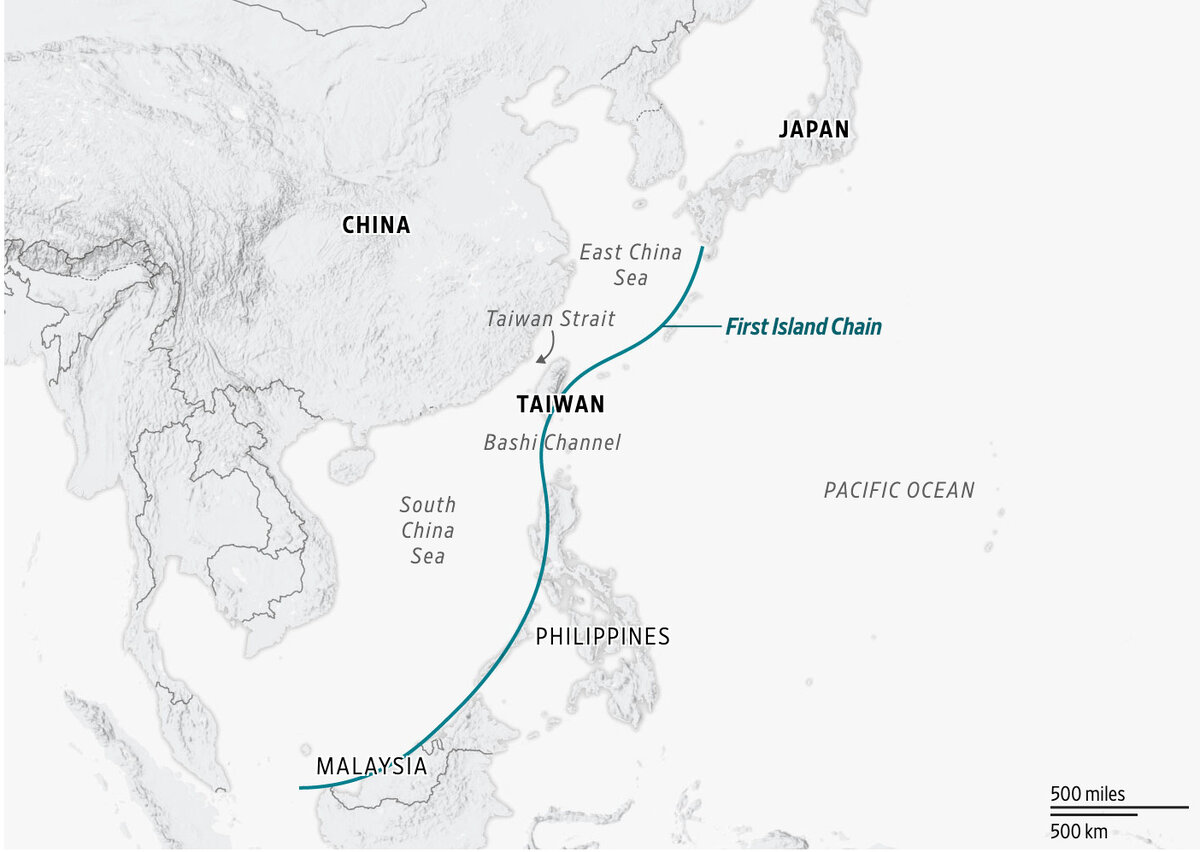
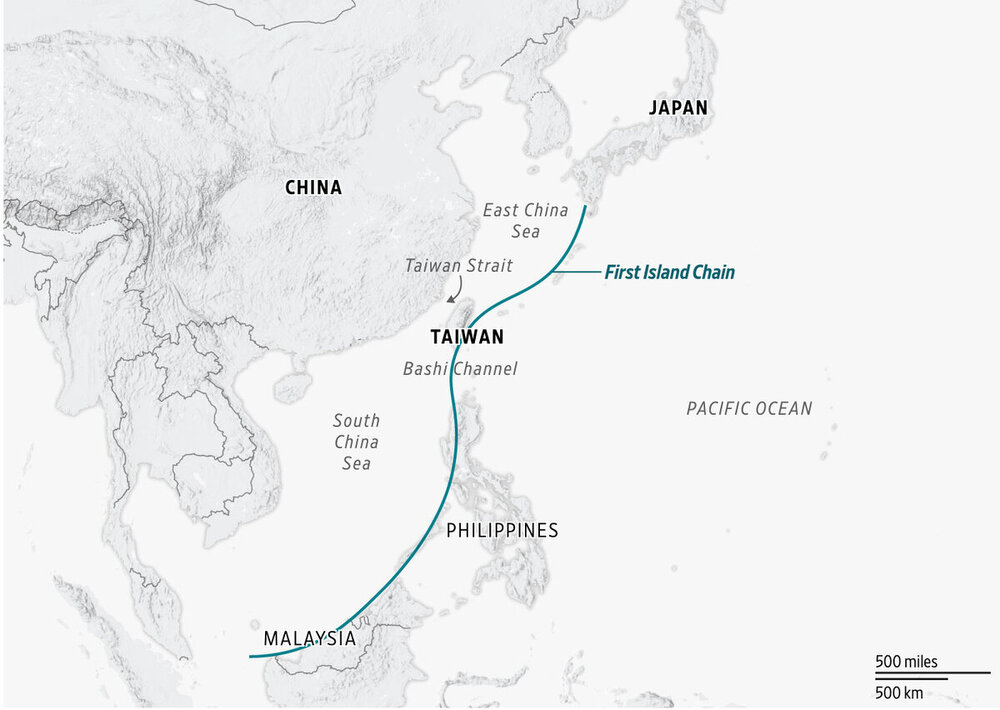
If you’ve been looking for a more substantial reason for the latest news coming from Japan, you’re thinking right. The last month or so since the new Prime Minister, Sanae Takaichi, took office, you’re hearing a lot of superficial symptoms of a larger issue. Hardline conservative Sanae Takaichi was voted in by parliament as Japan’s first female prime minister on Tuesday, emulating her hero, Britain’s late leader Margaret Thatcher, after a whirlwind few weeks of political wrangling. … She is a regular visitor to the Yasukuni shrine, which honours Japan’s war dead - including some executed war criminals - and is viewed by some Asian neighbours as a symbol of its past militarism. She also favours revising Japan’s pacifist postwar constitution, and suggested this year that Japan could form a “quasi-security alliance” with Taiwan, the democratically governed island claimed by China. That last bit got a lot of attention, but should it? There are still no signs of a diplomatic breakthrough between Tokyo and Beijing following Japanese Prime Minister Sanae Takaichi’s November statement on Japan’s potential role in a Taiwan contingency. During a meeting of the budget committee in the lower house of Japan’s Diet on November 7, Takaichi said that if China conducted a naval blockade of Taiwan, it would constitute a “survival-threatening situation”, which could prompt Japan to exercise the right of collective self-defense. The content of her remarks was neither new nor surprising: Takaichi has long been a steadfast supporter of Taiwan, and her characterization of a Taiwan crisis as a “threat to Japan’s survival” closely mirrors the stance of her late mentor, Shinzo Abe. Despite China’s strong response, Takaichi has not walked back her comments. Her party’s Vice President Taro Aso recently reiterated his support, noting that she had “merely stated Japan’s position in a concrete manner.” While Beijing may not be able to get over WWII, almost everyone else is. As the WWII generation is almost gone, so are their ghosts and phobias. In their place, natural and enduring concerns are rising to the surface and exerting themselves. In the Western Pacific, the rise of China, a society of representative government taking root, nationalism, reliance of the free flow of goods at market prices, and geography—all are shaping modern relationships. The last few decades’ increasingly positive relationship between Japan and Taiwan is just one manifestation of this growing movement. Taiwan’s memory of its colonial rule by Japan is, well…complicated…more positive than the Korean-Japanese history. A friend of mine recently moved to Japan. He and his Japanese girlfriend vacationed in Taiwan recently. The one thing he noticed was that without fail, if they were trying to talk to someone who could not speak English, his girlfriend would switch to Japanese and, sure enough, they were off and running. To a person, everyone was happy to meet an American and a Japanese. I don’t think this is just one or many anecdotal reports. As both nations face the same primary enemy, that should drive the relationship closer. There is more than rhetoric backing up the Prime Minister’s comments about using their military if needed. Japan’s Cabinet on Friday approved a record defense budget plan exceeding 9 trillion yen ($58 billion) for the coming year, aiming to fortify its strike-back capability and coastal defense with cruise missiles and unmanned arsenals as tensions rise in the region. The draft budget for fiscal 2026 beginning April is up 9.4% from 2025 and marks the fourth year of Japan’s ongoing five-year program to double annual arms spending to 2% of gross domestic product. … Takaichi’s government, under U.S. pressure for a military increase, pledged to achieve the 2% target by March, two years earlier than planned. Japan also plans to revise the ongoing security and defense policy by December 2026 to further strengthen its military. This could not come at a better time. Japan’s military is exceptionally professional. Anyone who has worked with them will tell you. We cannot fight and win in the Western Pacific without our Japanese bases, and if they can grow to a 2%+ of GDP military as well, more the better. Her economy may be 15% the size of the American economy and 20% of the Chinese economy, but her quality…exemplary. Her social cohesion, almost uniquely strong. What is driving this story…with some echoes of what brought us to war with each other in the middle of the 20th century—geography. Yes, it is behind the paywall, but if you want to see the deeper reason Japan appears to have broken through the post-WWII pacifist wall, the article by Niharika Mandhana and Daniel Kiss in WSJ, See How a Chinese Attack on Taiwan Would Be Japan’s Problem, does an exceptional job, mostly through a fundamental—maps. Let’s start there. In the last few years, when people thought of the “First Island Chain”, their eyes were in the South China Sea. Look north, and you find the Taiwan-Japan connection. A large portion of global trade passes through the South and East China Seas. Chokepoints like the Bashi Channel sweep Taiwan’s edges. A successful Chinese conquest of Taiwan would enable Beijing to dominate the region’s strategic waterways, project military power widely into the Pacific and more aggressively pursue its contested maritime and territorial claims. “The balance of power in Asia would be tipped quite decisively in favor of China should Taiwan fall into China’s hands,” said Robert Ward, Japan chair at the International Institute for Strategic Studies. Looking seaward, China is “sort of hemmed in” right now, he said, referring to the First Island Chain—a string of archipelagoes off the country’s east coast made up largely of a trio of U.S. partners: Japan, Taiwan and the Philippines. China “clearly wants to break out of that,” Ward said. It is the center of the line holding China in. When you look just north of Taiwan, it is easy to see how it would be hard for Japan not to be brought in. In a conflict, Taiwan’s fate would become quickly intertwined with the U.S.-Japan security alliance. To repel a full-scale attack, Taipei would need America—its main defense partner—to join the fight. To fight effectively, American forces would need Japan. Whether the U.S. would intervene directly in a clash is an open question. Washington maintains a policy of what it calls “strategic ambiguity” to keep China guessing. Geography presents particular challenges for Japan. A sweep of Japanese islands called the Ryukyus arcs southwest, stopping just short of Taiwan. The island of Yonaguni, more than 1,200 miles from Tokyo, is less than 70 miles from Taiwan. My comment earlier about the essential nature of US bases in Japan? If we could not use them in a fight against China, I’m not sure we have many options. A 2023 report on a Taiwan wargame by the Center for Strategic and International Studies, co-written by Heginbotham, described Japan as the linchpin. “The United States must be able to use its bases in Japan for combat operations,” it said. One island in particular, Okinawa, is blanketed with military facilities and training areas. Kadena Air Base, located on it, houses a range of aircraft at any given time, including jet fighters that would be needed to sink Chinese ships in the Taiwan Strait and fight Chinese warplanes in the air. A new missile-toting Marine Corps unit designed for an island-hopping fight is also based on Okinawa. China, of course, knows this, and they have designed their rocket forces specifically to put those bases under threat. As we’ve discussed here before, such maps are the best sales pitch for naval power you can find. Yes, ships can be targeted at sea…but they move. Those big land bases and supply depots…they’re static. Build more. Faster. Everyone. Leave a comment Share This Substack is reader-supported. To receive new posts and support my work, consider becoming a free or paid subscriber. View the full article
-
Turkey has moved a large convoy of armored vehicles into Syria through the Bab al-Hawa border crossing, according to overnight footage circulating online that shows dozens of military vehicles entering Syrian territory from Turkey. The footage, which emerged overnight, shows a sustained flow of armored vehicles crossing into northern Syria via Bab al-Hawa, one of […]View the full article
-
Saudi Arabia carried out an airstrike on Yemen’s Mukalla Port after determining that ships carrying armored vehicles and weapons for UAE-backed separatist forces were present at the facility, according to a report by Clash Report. The strike targeted vessels described as transporting military equipment from the United Arab Emirates intended for the Southern Transitional Council, […]View the full article
-
Soldiers from the 1st Battalion, 2nd Stryker Brigade Combat Team conducted a week of day and night live-fire gunnery at Yakima Training Center, Washington, using an experimental Stryker vehicle equipped with a 30mm autocannon, the U.S. Army confirmed. The training event, held in a full operational environment, focused on live-fire qualification with the Stryker-mounted 30mm […]View the full article
-
India on Dec. 29 conducted the first successful flight test of the Pinaka Long Range Guided Rocket, validating a maximum strike range of 120 kilometers during a trial at the Integrated Test Range in Chandipur, according to an official statement issued in New Delhi. The maiden test of the Pinaka Long Range Guided Rocket, designated […]View the full article
-
The United States on Dec. 29 approved a possible $1.8 billion Foreign Military Sale to Denmark for up to three P-8A multi-mission maritime patrol and reconnaissance aircraft and related systems, with Congress formally notified of the decision. According to the notification, the determination was made by the U.S. State Department, and the Defense Security Cooperation […]View the full article
-
The United States has awarded Boeing a ceiling $8.58 billion contract to design, produce, and deliver new F-15IA fighter aircraft for the Israeli Air Force, according to a newly issued contract award notice released on December 29. The hybrid contract covers the design, integration, instrumentation, testing, production, and delivery of 25 new F-15IA aircraft, with […]View the full article
-
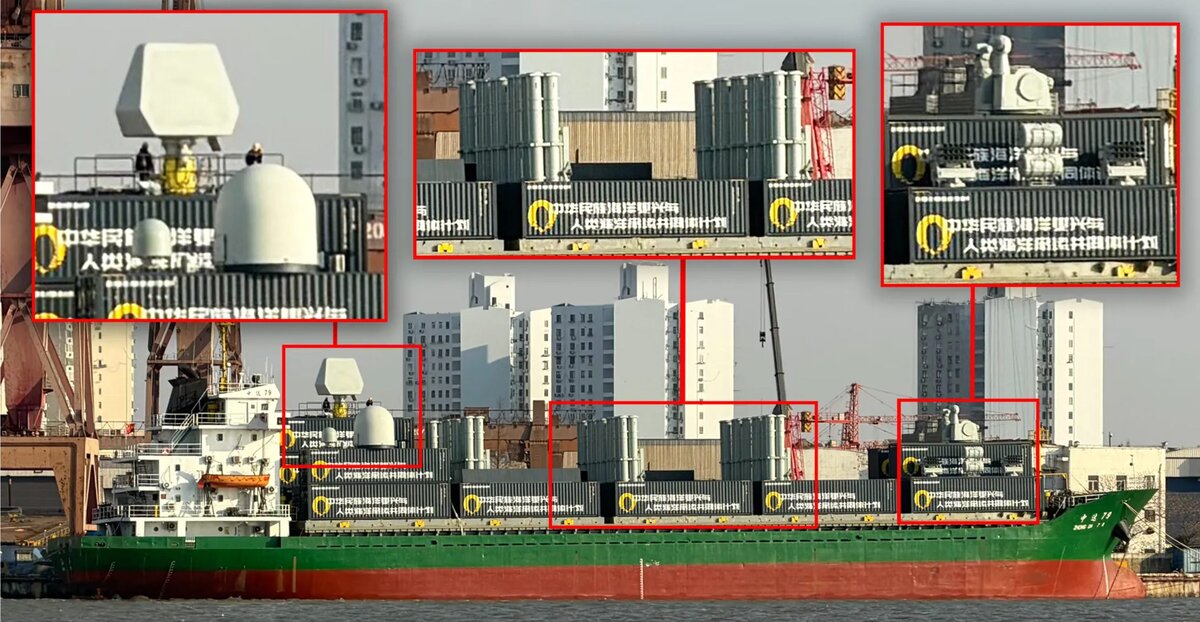
Sometime, hundreds of thousands of years ago during the Early or Middle Paleolithic Era in a coastal area, lake, or river system, our primitive ancestors discovered the use of a dugout canoe to fish and transport what they could hunt or gather from the surrounding forest. At some point, they discovered that another band of humans were harvesting from their best fig tree and were fishing from their river. They were barely holding on as it was; they could not afford to let others come in and take one of their most reliable food sources. Two of the younger men found out where the outsiders were camped. It was half a day upriver, but impossible to get to by land. So, a wise village elder decided instead that they would get all of their canoes together with as many men as they could carry and would arrive in the outsiders’ camp in the middle of the night. Kill all the men older than 5 winters and any women over 15 winters. Keep the rest as slaves. There you had the first conversion of a civilian vessel for military purposes. We humans have been doing this for hundreds of thousands of years since. That is one reason why I grinned at the slightly hyperbolic reaction in some quarters to the “in front of God and everyone” pictures from the People’s Republic of China (PRC) of what, simply put, is an auxiliary cruiser. What should have been shocking to everyone is that we have not seen this until now. I’ll outline why in a moment, but let’s make sure everyone is looking at the same thing. As expected, Tyler Rogoway over at TWZ has one of the best summaries about what we can see out there. Near the bow of the vessel, high-up mounted above two containers, we see an Type 1130 30mm close-in-weapon system (CIWS) for last-ditch defense against incoming threats, especially cruise missiles. One container lower, on both sides, we see Type 726 decoy launchers mounted on top of another pair of containers. The large cylindrical pods appear to be emergency life rafts, likely required because of the expanded crew size to make a concept like this work. Then we get to the real eyebrow raiser, a deck literally covered with containerized vertical launchers. Installed five wide and three deep, each packing four large launch tubes, this arrangement gives the vessel a whopping 60 vertical large launch cells. This is two-thirds the VLS capacity of a Arleigh Burke class Flight I or II destroyer. I have always been a supporter of auxiliary cruisers. I won’t repeat my arguments again. If you are so inclined, head on over to my OCT 2024 article, Auxiliary Cruisers: Now More Than Ever. In October of 2020 we even discuss the topic on The Midrats Podcast with Chris Rawley. In general, there are two reasons why a nation would have auxiliary cruisers in their fleet. At the initiation of hostilities, a nation does not have enough warships to conduct required missions. As something beats nothing, civilian ships are requisitioned and armed with whatever is readily available and are asked to do the best they can and hold the line until better ships arrive. A desire to be a bunch of sneaky bastards. In the finest naval tradition of flying under a false flag, disguising yourself as something rather harmless, in order to get close to the enemy to do damage in a way an easily identifiable warship would not be able to do. At the edge of living memory, there are two representatives of these two types of auxiliary cruisers. I’ve written about both types over the last couple of decades. For Type-1 you have HMS Jervis Bay, for Type-2 Kormoran. Which type does the PRC’s ship represent? Auxiliary cruisers are most effective in the opening days and months of a war. After that, they usually don’t last that long. The PRC has the world’s largest navy, but what they lack is good power projection capabilities to attack enemies’ far-flung military assets. In oceans awash with container ships…if you have good OPSEC and can get a dozen or so properly located near ports and bases, you could make D+0 a mess, buying you time. Heck, your Q-Ships might even be able to make it back home…or some of them. Maybe. That would be the Type-2, but I’m thinking something quite different. If you’re familiar with what I’ve written before and listened to the podcast with Chris, what I see as a requirement for U.S. Navy auxiliary cruisers is of the Type-1 variety. Specifically, we simply do not have enough VLS cells to bring the fight to the enemy. As OPNAV cannot or will not deploy an effective way to reload VLS in an expeditionary manner, we will fight with what we bring with us from across the Pacific. Our DDG’s VLS cells will be—if we are smart—overburdened with Standard Missiles for the air threat, with precious few filled with TLAM for strike ashore. Yes, Type-1 auxiliary cruisers will barely be able to conduct point defense for themselves, but if they sail with the DDG they come under her umbrella, and then those 50-60 VLS cells become, in essence, the Honorverse missile bus everyone has been asking for over the last decade. That is what the U.S. Navy needs, the Type-1, and I think that is what the PRC is thinking as well. Yes, they may have some fun Type-2 surprises for D+0, but if they want to fight a quick, exceptionally violent war to gain what they see as their territory (Taiwan, most likely COA), then they need a large first salvo from their fleet. Even though their shipyards are at full capacity, if they need more, sooner, in volume…then loading up container ships for one time use is not the worst idea. That is for the PRC to focus on. What should we do? The recent attention to the topic is an opportunity to return to a flashing-red requirement: arming the unsexy but important—in addition to getting more VLS forward faster via auxiliary cruisers. This requirement almost magically has a solution to the expected manning follow-on question, in that it matches up with an underutilized resource sitting right in front of us. All the other services, especially the Army and USAF, recapture the investment in their active force by having extensive combat capability in the Reserves and National Guard. What about the U.S. Naval Reserve (USNR)? Oh, boy. As I’ve outlined for years, if we are talking about arming the auxiliaries or creating our own auxiliary cruisers, the USNR is the exact place they should be. What would these detachments look like from a manning perspective? As our friend Matt Hipple mentioned, at a baseline, an officer, chief, and maybe six guys to do the military part on top of the ships “civilian” manning. Matt is a bit more aggressive than I am, and I have a role in life as the greybeard, so to give a bit of wiggle room, let’s make that two officers, two chiefs and 12 guys. 16 naval reservists per ship, max. Ask for 16, the Navy will give you 10. BA/NMP/etc…the rest will show up after mobilization. (call me. my seabag is packed) What if we had a dozen per coast in the naval reserve? 192 naval reservists per coast for a nation of 340 million. Looks like rounding-error risk hedging. Matt’s initial offering of 8 personnel? I think that is the correct number for the USNR teams assigned to the self-defense systems our unarmed USNS auxiliaries would need. What do we not have at the moment? We are cold-iron right now for both the hardware and the crews to do this. Yes, most of our USNS are fitted for but not with - but unless something has been done in the background, we are not ready to do the actual fitting should war come. This is probably one of the easiest things our Navy could do—but alas—as with so many things, there is not proper advocacy inside the DC-centric Navy to push this priority to the front. If you have evidence to the contrary, please DM/email/put in comments. Using this same mindset towards arming our auxiliaries, we should look at the USNR to man a fleet of auxiliary cruisers. What would the manning requirement be for these? Not much. I’d like to see that study…but I would offer this: they need to be USS with 100% military personnel. They will go in harm’s way. There will be losses. We barely have enough merchant mariners to man what USNS we have. Arm the auxiliaries. Commission auxiliary cruisers. No new technology needs to be developed. No new weapons systems. A little supporting systems reconfiguring, sure. Some imaginative personnel policies and investments, yes. Really rounding errors. Risk=minimal. Reward=high. It is still an institutional failure this wasn’t done years ago, but that is the past. We cannot do anything about that. What we can control is what we do now. Final note: one of my favorite parts of this whole episode is that several sources translated the Chinese text on the shipping containers. Of course, they knew this would be done…so they picked well: “The Maritime Renaissance of the Chinese Nation and the Concept of a Shared Ocean Future for Humanity” “Marine revival of the Chinese nation and a shared oceanic future for mankind” “Plan for the maritime revival of the Chinese nation and the community of shared future for mankind in the ocean” “Strive for the maritime revival of the Chinese nation and a community with a shared future for mankind in the ocean” Cheeky bastards. Respectfully approved. Every day, the odds of a Great Pacific War increase in my mind. Right now, I give it a 65% chance. The PRC is unquestionably planning for a fight, and they are doing so gleefully. We should be doing the same. Chop, chop. History is anxious. Leave a comment Share This Substack is reader-supported. To receive new posts and support my work, consider becoming a free or paid subscriber. View the full article

-
Taiwan’s Ministry of National Defense on Monday confirmed that its armed forces closely monitored Chinese military aircraft and naval vessels operating near the island, releasing imagery showing Taiwanese F-16V fighters tracking People’s Liberation Army aircraft during ongoing Chinese drills. In a briefing held at 4:45 p.m. local time, the Ministry of National Defense of the […]View the full article
-
Kazakhstan has revealed plans to launch domestic production of a light tank based on the Tulpar infantry fighting vehicle after President Kassym-Jomart Tokayev visited defense manufacturing facilities in Astana, including the Besqaru plant. During the visit, Tokayev toured production workshops at Besqaru, a company engaged in the production and technical maintenance of wheeled and tracked […]View the full article
-
Taiwan’s Ministry of National Defense on Monday reported detecting dozens of Chinese military aircraft and naval vessels operating around the island on the first day of abruptly announced Chinese military exercises. In a statement, the Ministry of National Defense of the Republic of China (Taiwan) said the activity was observed as the People’s Liberation Army […]View the full article
-
China’s People’s Liberation Army on Monday publicly displayed H-6 long-range bombers armed with air-launched cruise missiles during Justice Mission-2025 exercises around Taiwan, according to official imagery and statements released by the PLA Eastern Theater Command. The aircraft shown during the drills were H-6 bombers equipped with two air-to-surface missiles assessed by open-source analysts to be […]View the full article
-
A Russian defense analyst has publicly proposed leasing North Korean Su-25 ground-attack aircraft for use in the war in Ukraine, citing the weapons configuration displayed on the aircraft during a recent North Korean military event. The proposal was outlined by Vladimir Khrustalev, a Russian expert on North Korea’s military-industrial complex and nuclear weapons, following celebrations […]View the full article
-
North Korea on Sunday test-fired two strategic long-range cruise missiles into the sea, with leader Kim Jong Un overseeing the drill, according to state media reports released Monday. According to Korean Central News Agency, the missile launches took place over the Yellow Sea and were intended to assess the readiness and combat capability of long-range […]View the full article
-
China’s People’s Liberation Army on Monday launched the “Justice Mission-2025” military drills around Taiwan without prior warning and announced upcoming live-fire exercises that will restrict air and maritime traffic in five designated areas starting Tuesday, prompting immediate condemnation from Taiwanese authorities. Taiwan’s Presidential Office, Foreign Ministry, and Ministry of National Defense responded within hours, describing […]View the full article
-
China’s People’s Liberation Army Eastern Theater Command on Monday began large-scale joint military drills around Taiwan, code-named “Justice Mission 2025,” involving ground, naval, air, and rocket forces, according to China’s state media. According to a report from Xinhua News Agency, the drills started on Dec. 29 and are being conducted in the Taiwan Strait as […]View the full article
-
China’s People’s Liberation Army Rocket Force uses mobile intercontinental ballistic missile launchers disguised as civilian cranes produced by Zoomlion, according to images and descriptions circulated this week. The disclosure centers on mobile launch platforms for China’s Dongfeng series ballistic missiles that are concealed to resemble commercial crane vehicles. The approach is intended to mask the […]View the full article
-
The Russian Defense Ministry on Sunday published footage claiming a successful drone strike on a Ukrainian An-26 transport aircraft parked at an airfield in Mykolaiv, far from the active front line. According to the released video, the aircraft was hit directly on the apron at an airfield approximately 80 kilometers from the line of contact. […]View the full article
-
The United Kingdom and Germany have signed a £52 million ($70 million) contract to jointly procure a new mobile artillery system capable of firing while on the move, the two governments confirmed this week. Under the agreement, the UK will receive one Early Capability Demonstrator (ECD) of the RCH 155 artillery system, while Germany will […]View the full article
-
Russian Foreign Minister Sergey Lavrov said Moscow would support China in defending what he described as its state unity and territorial integrity if the situation in the Taiwan Strait were to escalate, according to an interview published by TASS. “Proceeding from the fact that the Taiwan issue is an internal matter of the People’s Republic […]View the full article
-
Türkiye has completed a flight test that demonstrated autonomous formation flying by two unmanned combat aircraft, according to information released by Baykar. During the test, the third prototype of the Bayraktar KIZILELMA, designated PT3, and the fifth prototype, PT5, took off consecutively and conducted a coordinated flight using intelligent swarm autonomy algorithms developed by Baykar […]View the full article
-
A Chinese naval amphibious ship group has carried out multi-subject, combat-oriented training in offshore waters, testing integrated air defense, electronic warfare, and amphibious assault operations, according to a report published by the PLA Daily. The report said multiple vessels, including the Type 075 Hubei ship, formed a task group and sailed to a designated sea […]View the full article
-
An official Chinese military media outlet has released footage showing a YJ-20 hypersonic anti-ship missile being launched from a Type 055 large destroyer of the People’s Liberation Army Navy, marking the first time a live firing of the missile from a warship has been shown publicly. The video was released Sunday by China Military Bugle, […]View the full article