All Activity
Today
-
Israeli surveillance systems maker ESC BAZ demonstrated a new line of patrol and assault vehicles for the Israel Defense Forces’ 96th Division, the company said in a LinkedIn post. The vehicles are built for reconnaissance, intelligence gathering, security missions and first-response operations, and the demonstration included counter-drone technology developed with Israeli firm SmartShooter. ESC BAZ […]View the full article
-
Chinese state television has aired the first semi-official acknowledgment of the country’s massive intercontinental ballistic missile silo fields in a documentary marking the 99th anniversary of the People’s Liberation Army. The program, produced by China’s national broadcaster CCTV, features an army engineer describing years of work building what he calls “houses for missiles” in the […]View the full article
-
Lockheed Martin’s Skunk Works division has finished restoring an F-117 Nighthawk stealth jet, known as Aircraft 818 and nicknamed “The Overachiever,” for permanent display at the Smithsonian’s National Air and Space Museum. The company said the aircraft will go on exhibit at the museum’s Steven F. Udvar-Hazy Center later this fall. The move adds another […]View the full article
-
Israeli drone maker Steadicopter has cleared a regulatory hurdle needed to expand operations of its Black Eagle 50E unmanned helicopter in the United States, the company announced Sept. 15, 2026. The aircraft completed an airworthiness validation process run by the Nevada Unmanned Aircraft Systems Test Site, based at the University of Nevada, Reno. The Nevada […]View the full article
-
A Dutch shipbuilder has landed the job of designing where submarine crews will sleep, eat and live during long stretches under the sea. Royal IHC and France’s Naval Group signed a contract Sept. 15, 2026, covering the living quarters on board the Royal Netherlands Navy’s new Orka-class submarines. It sounds like a modest piece of […]View the full article
-
Photos and video from Exercise Thunderstruck 3.0 show Oklahoma National Guard convoy vehicles fitted with wire mesh cage screens, a low-cost defense against first-person-view drones that Ukrainian forces have used on the battlefield since 2022. The exercise, held September 12 at Camp Gruber Training Center, centered on unmanned systems and drone threats. Images from the […]View the full article
-
Lost in the 25th Anniversary remembrance weekend of 11 SEP 2001 was the fact that there were significant changes on the ground in the festering sore on the other side of the Arabian Peninsula from the Persian Gulf, Yemen. Bridget Toomey at FDD’s Long War Journal has a good summary. On September 10, the Houthis seized the strategic port city of Mocha on Yemen’s southern Red Sea coast. The next day, the Iran-backed group pushed south, culminating with the capture of the remaining Red Sea coast and Perim Island in the middle of the Bab al Mandeb Strait, the strategic chokepoint at the southern entrance to the Red Sea. The Houthis also seized the Hanish Islands, an archipelago in the southern Red Sea roughly 100 miles north of Bab al Mandeb. Control of the coast and islands would give the Houthis a direct hold on the Red Sea chokepoint through which significant international shipping flows. However, on September 13, the Yemeni Armed Forces media center announced that government troops had recovered some territory near Bab al Mandeb. The Houthis rapid advance down Yemen’s west coast came after the Iran-backed group began a substantial campaign against forces of the internationally recognized government of Yemen on August 6. The southern west coast and islands were held by the National Resistance Forces (NRF), a government-aligned paramilitary organization led by Tariq Saleh, vice president of the Presidential Leadership Council (PLC), Yemen’s eight-man executive body. We’ll get back to that in a moment, but I’d like to set the table a bit first. Yemen is like a few other nations that history warns everyone just not to mess around with too much. Russia is one. We’re familiar with what happens when you ignore the warnings about Afghanistan. You can put Vietnam on that list, and China too. There is never enough juice worth the squeeze to justify a general war against any of them unless you think you are really ready—and able—to pay the price. Many in the West forget what happened in Yemen 60 years ago. Here’s the executive summary: The civil war between the Egyptian-backed republican government forces and the Saudi-sponsored royalist opposition served as a two-level proxy war, with the Soviet Union funding the Egyptians and the United States funding the Saudis. Amidst all this, the USAID mission was ransacked by a mob, which carted away a safe filled with confidential materials. Moreover, the mission had, in the words of one interviewee, committed “the most horrific security violation” by making copies of highly classified materials in contravention of regulations. Fortunately, those were not stolen but were destroyed quickly once American staff were able to return to the building. The civil war dragged on for eight years, tying down 60,000 Egyptian troops during the 1967 Arab-Israeli War, which many believe contributed to the Arab defeat. For this reason, in addition to the million-dollar per day cost to the Egyptian government to station troops in North Yemen, the war is known as “Egypt’s Vietnam.” The Wiki summary of the butcher’s bill is pretty good. Now, as we like to do, let’s go to the map room. Here’s the map in 1967, right before Egypt (black) decided it had enough. Here is the map effective 14 SEP 2026. History is sticky. In any event, when everyone decided they had enough in 1970, both Egypt and Saudi Arabia were worse off for their efforts. The Saudis have been at it again since 2015, with little success. Keep that in mind when people (and I fall into this trap now and then too) decide that they hope that the Arabs led by Saudi will fix it. Yes, the Houthis have made gains, but everyone should cool their jets when it comes to wanting to get even further tangled in this mess. The Yemeni always seem to fight harder and are more resilient than those on the outside who think they can impose their will. I would hope the experience of this nation over the last 35 years from Somalia to Iraq to Afghanistan has soaked in by now. We don’t need boots on the ground. We don’t need to take islands in the Red Sea. We unquestionably don’t need to do anything more than make the rubble bounce, should it please us. Mocha’s strategic importance comes from its geography. The port city is roughly 50 miles north of Bab al Mandeb and historically served as an important trade hub. Before the Houthis’ seizure, it was also the headquarters of the NRF, which used the west coast and islands to monitor Houthi maritime activity and conduct major interceptions of Houthi weapons smuggling. Perim Island, also known as Mayun, was also controlled by the NRF and served as a key base for the force to monitor the Red Sea, especially for Houthi smuggling through Bab al Mandeb or across the Red Sea from Africa. Perim sits within the maritime chokepoint, which is only around 20 miles wide. The eastern channel is roughly 2 miles wide and used by local and smaller vessels. The western channel, which is used by international shipping, is roughly 16 miles wide. The Hanish Islands play a similar role by allowing government-aligned forces to monitor Houthi maritime activity and serving as a base for counter-smuggling operations. The UAE previously invested in infrastructure on the islands, including airstrips. Prior to the Houthi campaign against commercial shipping begun in late 2023 over the war in Gaza, over 9 million oil barrels per day (bpd) transited Bab al Mandeb. While the Houthis’ maritime attacks led oil transits to drop by over half in 2024 and 2025, Iran’s closure of Hormuz led to a jump in oil products transiting Bab al Mandeb to over 7 million bpd in June, according to data from the maritime intelligence firm Kpler. Most of this total was Saudi exports rerouted from the Persian Gulf to the Red Sea via the cross-kingdom East-West pipeline. There is a history here that goes back for decades—even centuries if you want to go into Arabian tribal history—which you don’t want to. Yes, the Houthis are Iranian proxies, but they are not fully controlled by Iran, just as North Vietnam was in the communist bloc, though not fully controlled by the Soviet Union. They have their own interests, grievances, and priorities. On September 10, Riyadh closed the pipeline after attacks from Iran-backed militias in Iraq, likely conducted in coordination with the Houthis. The Houthis previously announced a maritime blockade of Saudi Arabia on July 20 and have since attacked the kingdom’s oil facilities and ships. Control of the southern Red Sea coast and Perim Island better positions the group to choke off exports via Bab al Mandeb, though Riyadh can route some oil north through the Suez Canal. As Reuters reported on 13 SEP, that’s not a good thing for anyone. Saudi Arabia will run out of oil stocks for exports if it doesn’t restart its major pipeline to the Red Sea within days, leading to a loss of up to 4% of global supply, Saudi oil buyers and traders said. A further decline in Saudi flows will worsen the global supply crunch, which has already pushed global fuel prices to record highs, spurred inflation around the world and sent U.S. bond yields to the highest levels since the 2008 financial crisis. The free flow of oil at market prices and uncontested access to the open seas, well, those are in our interest and everyone else. A Yemeni source affiliated with the country’s armed forces said that military leaders requested air support from Saudi Arabia, the sponsor of Yemen’s internationally recognized government, to counter the advancing Houthis, but none came. American officials told Axios that Saudi Crown Prince Mohammed bin Salman requested that the United States conduct airstrikes against the advancing Houthis on September 10, but President Trump declined. Instead, the United States is providing Saudi Arabia with intelligence and targeting data. “The Houthis called us, and they don’t want to fight with us,” Trump told reporters on September 12. “They would much prefer not having us involved, and they’re letting most ships go through. There’s just one country that they’re not too happy with, and we’ll get that straightened out,” he added. The Trump administration previously conducted Operation Rough Rider, a roughly seven-week bombing campaign against the Houthis, that struck over 1,000 targets between March and May. Rough Rider ended with a May 6 ceasefire between the United States and the Houthis that amounted to an agreement not to attack each other but failed to protect international shipping. The Houthis attacked two commercial vessels within two months of the agreement. Monday night, as I write this, the Saudi cities of Yanbu and Jeddah are both issuing warnings of an attack from Yemen. All that is ashore and should be dealt with by the Saudis. Sounds like we’re trying to keep it that way. US Vice President JD Vance said Monday that Washington has been engaged in “direct conversations” with the Houthis and is “on top” of the situation following the Iran-backed group’s seizure of the strategic island of Mayun, also known as Perim, in the Red Sea, Anadolu reports. Speaking to reporters at Joint Base Andrews before departing for Kansas, Vance was asked whether he was concerned about the Houthi takeover and how the US planned to respond. “We’ve been in constant contact with the Emiratis, the Saudis, and others who are affected in the region,” Vance said. “It’s something the United States administration is very much on top of. “We’ve also been engaged in direct conversations with the Houthis themselves, so we actually feel like we are on top of the situation,” he said. Time to focus. We will not enforce our will on Yemen. Sixty years ago, even the Egyptians using poison gas couldn’t. Saudi Arabia, with the occasional assist by UAE, has been trying for the last 11.5 years to little effect. There is no support with the American people to do more than what we have already done against the Houthis. Those proposing more are just setting the nation up for folly. Even the “low risk” option, isn’t. The U.S. throwing Marines onto uninhabitable islands on a whim would, in a broader context, only be of benefit to those who wish our nation and our interests ill. If the Houthis go against our interests—consult the book on punitive expeditions—except keep feet wet. If they don’t and want to talk, talk. Leave a comment Share This Substack is reader-supported. To receive new posts and support my work, consider becoming a free or paid subscriber. View the full article

-
The U.S. Navy has awarded Boeing a $562 million contract to begin low-rate production of the MQ-25A Stingray, the service’s first carrier-based unmanned refueling drone. The Fixed Price Incentive contract covers three Lot 1 aircraft and includes advance funding to buy long-lead components for three more Lot 2 aircraft. Boeing expects to deliver the first […]View the full article
-
The Defense Advanced Research Projects Agency will hold an Industry Day on September 30 in Arlington, Virginia, for a new program aimed at building next-generation electronic-support systems that can watch across wide swaths of the radio spectrum without needing to digitize and process every signal they detect. The program is called BEAMERS, short for Beam-Space […]View the full article
-
Denmark accused a Russian warship of firing two emergency flares at one of its military helicopters over the Baltic Sea, the government said Monday, Sept. 14, 2026. The helicopter was tracking the vessel as part of what Denmark described as a routine monitoring operation when the flares were fired. The Danish government summoned the Russian […]View the full article
-
Diehl Defence and Elbit Systems demonstrated their SkyStriker loitering ‘kamikaze drone’ system in a live test in early September 2026, the companies announced Sept. 14. The demonstration focused on the weapon’s range and a “hand-over” function that worked at a distance of 80 km (50 miles). SkyStriker was launched from a canister, located a target, […]View the full article
-
lrsaytho joined the community
Yesterday
-
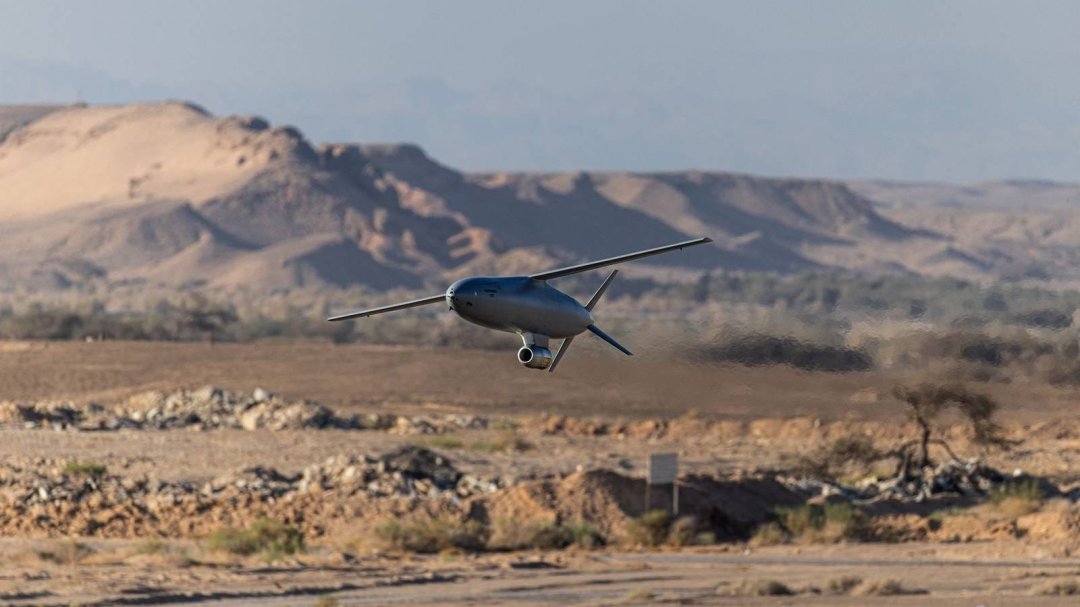
As we like to point out, if you pay proper attention, small and medium-sized wars will show you what works, what doesn’t, and probably what you will need should war come your way at some point in the future on a larger scale. Prior to WWI, you had the Boer Wars. Prior to WWII, you had the Spanish Civil War. Right now, we are blessed—or cursed, depending on your focus—with a flood of lessons in the offensive use and defense against swarms of the many, affordable, and massed long-range attack drones, cruise missiles, and conventional ballistic missiles. The Russo-Ukrainian War since 2022 and the U.S.-Israeli conflict against Iran and her proxies since the Hamas invasion of Israel in October 2023 are sending clear signals on what the war in the second quarter of the 21st century demands. There was a minority opinion for decades that there was a missing capability/capacity gap, but it was tut-tut’d away by The Smartest People in the Room™. The War Gods of the Copybook Headings have proven TSPITR’s™ (pronounced ‘T-spit-ter’) peacetime theories wrong. Actual war has shown an insatiable appetite for three simple requirements: Range Scalability Affordability We have Tomahawk Land Attack Cruise Missiles (TLAM). They are great, but they are few, expensive, and a challenge to scale. Same with our other exquisite weapons such as ATACMS, PrSM, etc…but that is what we have at hand. That is what we bought, and we have not bought/cannot buy enough. Bad thing about that is, once you use up those, your only other option is to deliver weapons via manned systems up close and personal, with all the dangers that come with it. Not every target needs a TLAM/ATACMS/PrSM, etc. …and when you have to rack-and-stack your target set, some targets don’t make the cut simply because you only have so many weapons to send downrange at a time. In a contested air environment with a modern air defense system—as we will have to deal with against the People Republic of China—then a certain percentage of your few-and-expensive weapons will never make it to their target. How do you address the issues in the above two paragraphs? We’ve discussed the Shahed/LUCAS “flying lawnmower” here earlier this year. A couple of months ago we touched on another attention getter, Ukraine’s FP-5 Flamingo and what it brings for the Ukrainians: Accuracy. Affordable, scalable accuracy. Where is America’s Flamingo, or something close to it, given that we can only make so many of our exquisite weapons? Well, we seem to have our own version on the way…and we’re bringing Israel and Germany along for the show. US defence contractor Covenant plans to set up a production facility for long-range cruise missiles in the German state of Saxony, the company said on Wednesday. “We will be producing roughly 1,000 in our first year and then scaling to 5,000,” Covenant chief Abigail Denburg said, outlining the company’s “target for annual production.” Covenant also operates a production facility in Texas to supply the US armed forces, as well as a location in Israel. “Covenant’s facility in northern Israel supports engineering and manufacturing, and the company draws heavily on Israeli defence tech talent,” the Jerusalem Post reported. According to Israeli newspaper Haaretz, “a foreign cargo aircraft” picked up equipment in Israel ahead of a secret weapons test in Morocco last month. Production of the Anthem cruise missile for European customers is to begin next year at the German facility to be set up near Leipzig. It isn’t as large in size or warhead as the Flamingo, but it can carry a 200-kilogram warhead with precision, while offering a reported range of 1,500 kilometers. Some of the specifics vary depending on the source, but here’s the 85% solution for comparison. That storage and handling aspect is critical… and, in a way, sexy. To mass fires, you need mass…sustainable and suitable for storage and ease of maintenance. The team at Covenant seems to have done the right thinking. The TLAM carries a 450-kilogram warhead and can carry that a bit further, but not all that much further. NAVAIR says each TLAM costs $3.64 million, while the Anthem is supposed to be less than a million (though land and not sea-based). You win wars with a high-low mix. We need a low-mix, and many of our allies cannot afford all that many “high”. Just like we pointed out last week in the anti-ballistic missile arena, our allies need to get in this game. They have work to do there, but Anthem gets them in the game of affordable and scalable deep strike. Its missile, called Anthem, is a ground-launched cruise missile carrying a payload of more than 200 kilograms (441 pounds). In a fight, it would be used in high volumes to work alongside other long-range missiles like the 1,000-mile (1,609 kilometers) range Tomahawk cruise missile produced by RTX’s Raytheon unit and the 600-mile Lockheed Martin Joint Air-to-Surface Standoff Missile-Extended Range (JASSM-ER). Nice additional tool in the toolbox…and, yes, it works in all sorts of ways west of the International Date Line. Anthem is powered by a solid rocket motor for takeoff and a heavy-fuel jet engine for cruise flight. Covenant says it has flown the missile more than 200 times over the past year in tests. Executives said the missile was built with an eye toward the Pacific. “We were designed for the China fight,” said Covenant President Abby Denburg. Taiwan, call your office. They have already answered some of my follow-on questions. Covenant said it deliberately avoided sole-source suppliers, lining up three solid-rocket-motor providers with a fourth in the works, and locking in long-term agreements for more than 4,000 jet engines over the next two years. The company’s Dallas plant, spanning 105,000 square feet (9,754 square meters), opens on Wednesday and is expected to reach full-rate production of 5,000 missiles a year. Covenant operates a similar-sized facility in Saxony, Germany, which will also have a 5,000-unit-per-year capacity. A smaller site in northern Israel will make 2,000 units a year. Just as an oh-by-the-way thought, it shares the external engine with the Flamingo, just underneath, different to most cruise missiles we are used to seeing. There has to be a good engineering/cost reason for this. If you know it, share in comments. One of the best operationalizations of the requirements at the top of the post that I’ve seen manifested about Flamingo/Anthem in spoken form comes from Covenant’s President and Chief Growth Officer, Abby Denberg. Might as well go to the top. As a side note, I can see why they recruited her. She is an exceptional talent. She adds a bit more in this interview. Cost, for small and large militaries, matters. Yes, there are tradeoffs, but the folks at Missile Matters outline a perfect example. Estonia, for example, was approved between 2022 and 2025 to purchase up to 200 ATACMS short-range ballistic missiles. It could afford three to four times as many low-cost cruise missiles of the types discussed here, yielding a deeper arsenal that could also reach into Russia’s strategic depth rather than being confined to frontline targets. To be clear, ATACMS’ ability to service time-sensitive targets is a quality in itself that states may want regardless of arsenal depth. But depth is a quality of its own, and one that was previously beyond Estonia and most of its small-state peers. This may change soon. This appears fairly turnkey, especially with 200+ flights already complete. There will be no black-pilling. Good things are happening. Leave a comment Share This Substack is reader-supported. To receive new posts and support my work, consider becoming a free or paid subscriber. View the full article
-
Lockheed Martin is building four more of its newest combat drones, the company announced September 14, doubling down on a program that’s still more than a year away from ever leaving the ground. The news came from the company’s secretive Skunk Works division, following a major Air Force conference near Washington, D.C., where Skunk Works also […]View the full article
-
Open-source analysts say wreckage from a short-range ballistic missile turned up in northern Yemen this week, and they believe it points to a weapon type Saudi Arabia has never been confirmed to use before. The debris, identified as the booster stage of a Chinese-made DF-15A, was found in the Raghwan district of Marib Governorate, according […]View the full article
-
A U.S. Navy warship built to carry Marines ashore just wrapped up a stop at one of America’s most important Pacific outposts. USS San Diego (LPD 22), an amphibious transport dock, departed Naval Base Guam on September 12, 2026, after transiting Apra Harbor during what the Navy described as routine operations in the U.S. 7th […]View the full article
-
The Massachusetts Air National Guard’s 104th Fighter Wing formally welcomed the F-35A Lightning II to Barnes Air National Guard Base on September 13, 2026, marking the aircraft’s arrival after a transition process that began more than three years ago. The ceremony drew Massachusetts Gov. Maura Healey, military officials and representatives from Kenya and Paraguay, whose […]View the full article
-
The littoral combat ship USS St. Louis (LCS 19) left Naval Station Mayport on September 13 to take over U.S. Northern Command’s mission patrolling waters near the U.S. southern border, the U.S. Navy said. The ship relieves USS Cooperstown (LCS 23), which returned to Mayport on August 31 after a four-month deployment to the region. […]View the full article
-
mgpzqmic joined the community
-
kzxkqsvx joined the community
-
oztuwlfy joined the community
-
An Eitan wheeled armored personnel carrier fitted with Hetz Dorban, an Israeli-developed hard-kill active protection system, was photographed during a recent training exercise, according to images published on the Israel Defense Forces’ website in August 2026. The system is marketed internationally under its commercial name, Iron Fist, by Elbit Systems. Hetz Dorban uses radar and […]View the full article
-
Retired Gen. David Petraeus said the Russian drone that struck a train near Ukraine’s border with Poland on September 13 was a jet-powered version of Russia’s Geran/Shahed attack drone, adding a detail Ukrainian officials had not specified in their own statements on the strike. Petraeus, a former CIA director and retired four-star U.S. Army general, […]View the full article
-
Photos published by military observer Massimo Frantarelli show a Russian Navy corvette in Kronstadt painted to resemble a waterfront building, with outlines suggesting windows and doors on its hull, alongside netting rigged over the deck to blunt drone strikes. The image, credited to M. Mishin and dated August 22, shows the ship at the Leningrad […]View the full article
-
A Russian satellite built to maneuver alongside and inspect other countries’ spacecraft up close fell back to Earth on September 12, but the object that came down may not have been the real satellite, according to Jonathan McDowell, an astrophysicist at the Harvard-Smithsonian Center for Astrophysics who tracks satellite activity. The satellite, Kosmos-2558, launched from […]View the full article
-
Not totally new info but interesting in combination. https://www.edrmagazine.eu/pas-2025-schiebel-presented-updated-specifications-of-the-camcopter-s-300-uav https://lockheedmartinau.mediaroom.com/index.php?s=2429&item=122701
Last week
-
Under heavy cloud cover, Russia fired a massive barrage of Geran-2 attack drones, the Russian-built version of Iran’s Shahed-136, at western Ukraine early Sunday. The Ukrainian General Staff said Russia launched 863 drones at Ukraine over the previous 24 hours, one of the largest barrages of the war. French open-source analyst Clément Molin wrote on […]View the full article
-
A long-endurance surveillance drone built by Maryland-based Platform Aerospace was spotted taking off from a Jordanian air base used by U.S. forces on September 13, 2026, according to flight-tracking data shared by an open-source intelligence account. The MenchOsint described it as the first known sighting of the aircraft, known as Vanilla, operating from Jordan. The […]View the full article
-
Ukraine’s Defense Forces struck a Russian chemical plant in Volgograd overnight on September 10-11, 2026, using FP-5 “Flamingo” cruise missiles, according to Fire Point, the Ukrainian company that manufactures the weapon. Fire Point said the missiles hit their target directly and sparked a large fire at the facility. The target, Volgogradpromproekt, is a specialty chemicals […]View the full article