All Activity
Yesterday
-
U.S. Central Command forces struck and disabled three Iranian oil tankers on September 5, hours after Iran’s Islamic Revolutionary Guard Corps fired ballistic missiles at two U.S. Navy warships patrolling the region, according to a CENTCOM statement. Both American vessels, an aircraft carrier and a guided-missile destroyer, evaded the Iranian missiles, and no U.S. personnel […]View the full article
-
Ukraine’s Ministry of Defense has confirmed that a Swedish-supplied Saab 340 airborne early warning aircraft (AEW&C), known as the ASC 890, has been flying combat missions over Ukraine since March 2026, according to information the ministry released detailing the country’s expanding fleet of Western combat aircraft. Sweden first announced it would transfer the aircraft in […]View the full article
-
XTEND has deployed its first XOS-powered AtlasROVER ground robot to a customer in the Asia-Pacific region, the company’s public parent, JFB Construction Holdings. It’s the first such deployment since XTEND completed its acquisition of Latvia-based robotics company Atlas earlier this year. The deployment extends XTEND’s software platform, called XOS, beyond the aerial drones it was […]View the full article
-
The Bureau of Alcohol, Tobacco, Firearms and Explosives, a U.S. federal agency, is moving to buy a single armored vehicle from Roshel LLC on a sole-source basis, saying its current fleet of armored trucks has aged to the point where some units date back to 2008 and are becoming too unreliable to drive long distances. […]View the full article
-
Aeon, a Texas-based defense manufacturer, disclosed new technical details about its Zeus tactical missile system in a public post from Chief Growth Officer Wes Shover, including a stated speed of more than Mach 0.65 and a 6-pound (2.7-kilogram) warhead payload. The Defence Blog first reported on Zeus in April, when Aeon founder and CEO Naweed […]View the full article
-
New satellite images have surfaced showing China’s largest known stealth drone undergoing testing at a secretive air base in China’s Xinjiang region, according to analysts tracking the program on social media. Aviation researcher Andreas Rupprecht posted on LinkedIn that two new images had leaked showing the aircraft, known unofficially as the WZ-X, at what appears […]View the full article
-
Russia’s Rubicon Center for Advanced Unmanned Technologies claims its operators used more than 1 million First-Person-View (FPV) drones and struck over 280,000 targets in Ukraine between January 2025 and August 2026, according to a statement the unit posted to its official Telegram channel. The figures come only from Russia’s elite drone unit itself and have […]View the full article
-
HMS Queen Elizabeth is due to leave Portsmouth Naval Base at 6:20 p.m. on Saturday, September 5, carrying more than 800 sailors on a three-month deployment around British and northern European waters, according to UK Defence Journal. The deployment is the first extended sea period for the 65,000-tonne carrier since it took on a new […]View the full article
-
The U.S. State Department has approved a possible $5 billion sale of Joint Direct Attack Munition kits to Saudi Arabia, notifying Congress on September 4 of a deal covering more than 10,000 guidance kits and bombs. It is one of the largest single munitions packages Washington has cleared for a foreign buyer in years, and […]View the full article
-
The U.S. State Department has approved a possible $750 million sale of 60 AGT-1500 tank engines to Saudi Arabia, notifying Congress of the deal on September 4. The engines, along with spare parts and years of contractor support, would go toward sustaining Saudi Arabia’s existing fleet of M1 Abrams tanks rather than funding new tank […]View the full article
Last week
-
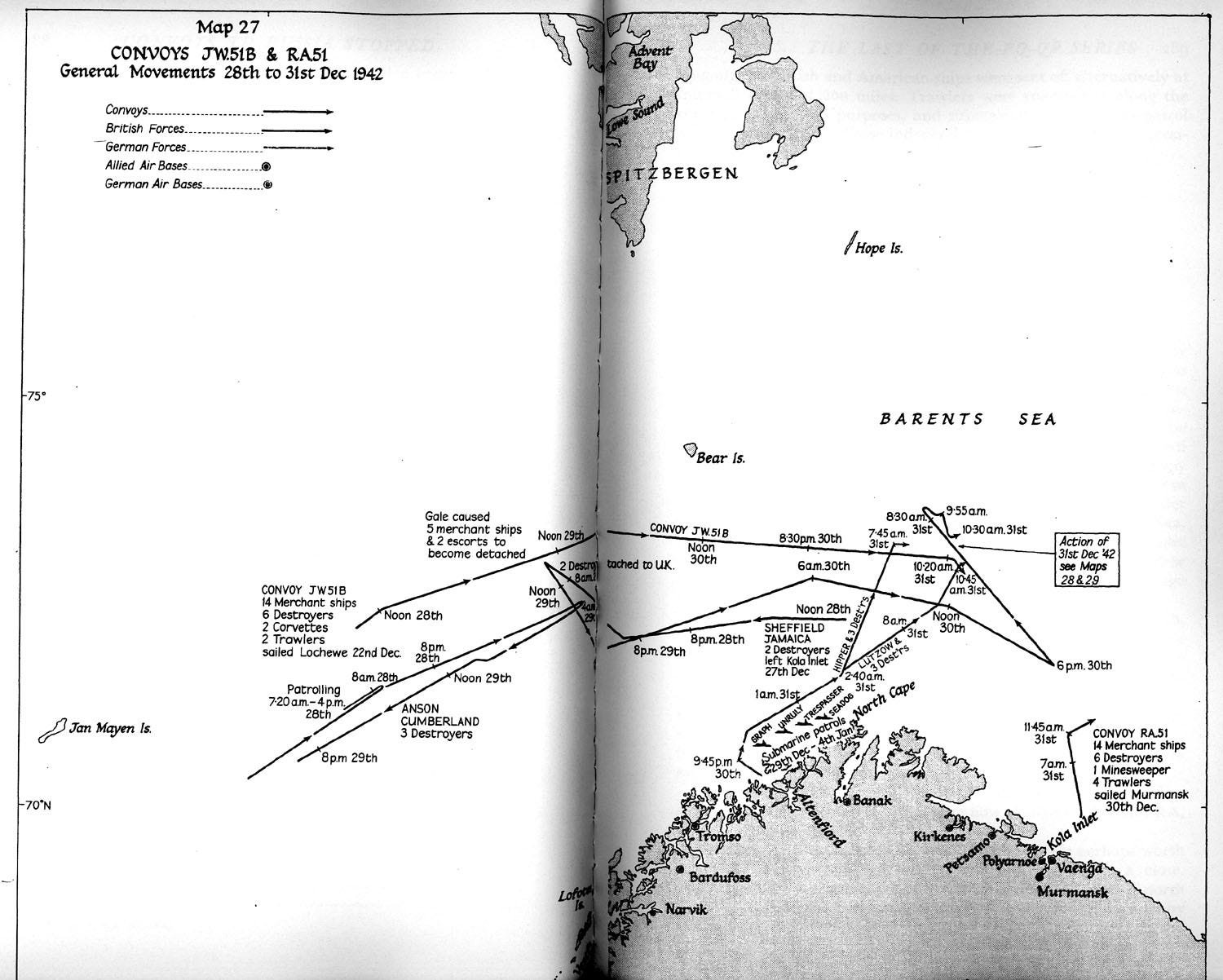
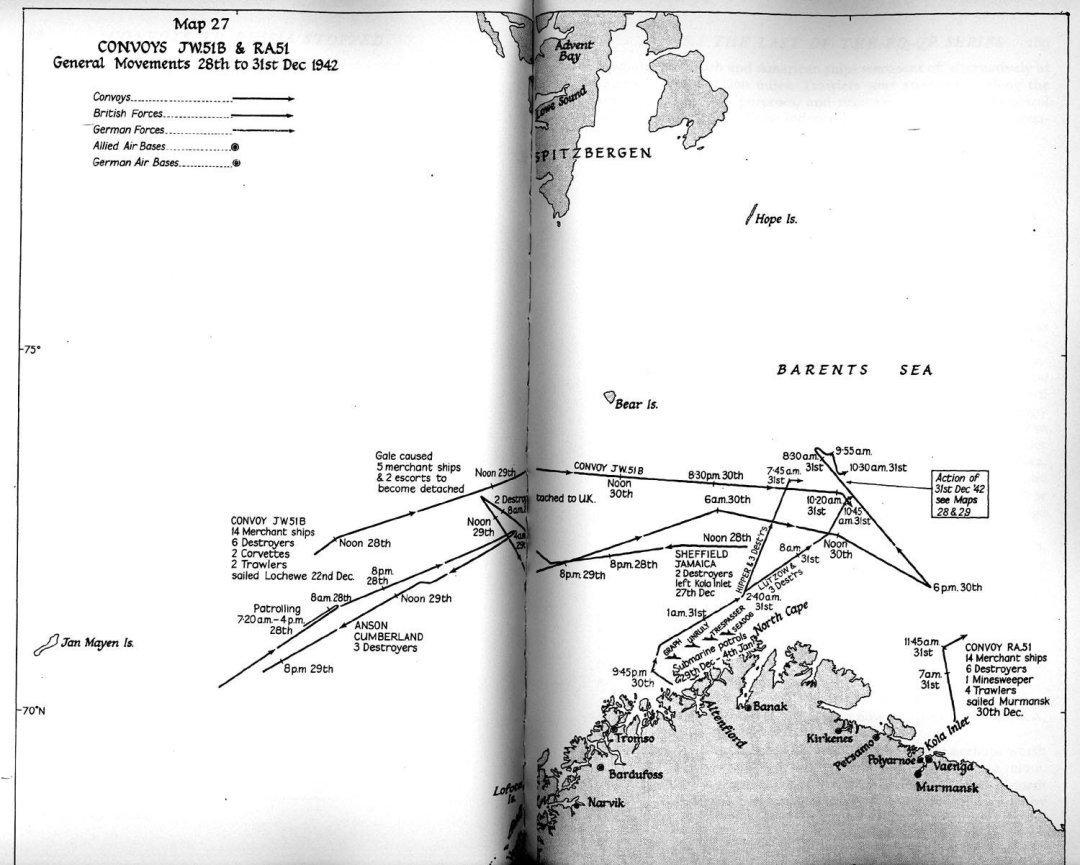
First of all, let’s head to the chartroom. That’s right kiddies…we’re heading to the Battle of the Barents Sea, at the top of the world, in winter. There are a whole host of stories here, but let’s focus on one ship and her Captain: HMS Onslow (G17) and then-Captain and eventually, Rear-Admiral Robert St Vincent ‘Rupert’ Sherbrooke, VC, CB, DSO, DL—41 years of age at the time of the battle. In December 1942, Onslow took part in Arctic Convoy JW 51B, joining the convoy on 25 December, with Captain Robert Sherbrooke taking charge of the convoy's close escort of six destroyers, two corvettes, one minesweeper and two trawlers. Five merchant ships, together with the destroyer Oribi and one of the trawlers, were separated from the convoy by bad weather shortly afterwards. On 30 December, the convoy was spotted by the German submarine U-354, and in response a German force consisting of the heavy cruisers Lützow and Admiral Hipper and six destroyers set out from Altafjord to intercept the convoy. First of all, let’s look at the players. Onslow was an O-class destroyer. Displacement: 1,610 long tons Length: 105.2 meters Armament 4 × single QF 4.7 in (120 mm) guns 1 × single QF 4 in (102 mm) AA gun 1 × quad 2 pdr (40 mm (1.6 in)) AA gun 4 × single 20 mm (0.8 in) AA guns 1 × quadruple 21 in (533 mm) torpedo tubes 4 × throwers and 2 × racks for 70 depth charges Her largest opponent in this battle: Hipper, lead ship of the Admiral Hipper-class cruisers. Displacement: 18,200 long tons Length: 202.8 meters Armament 8 × 20.3 cm (8 in) guns 12 × 10.5 cm (4.1 in) SK C/33 guns 12 × 3.7 cm (1.5 in) SK C/30 guns 8 × 2 cm (0.79 in) C/30 guns 12 × 53.3 cm (21 in) torpedo tubes The German force split into two, with Hipper and three destroyers attacking from the northwest and Lutzow and the other three destroyers from the south, with the intention that the escort would be drawn off to the first attacker, leaving the convoy unprotected. The Germans attacked on 31 December, in the Battle of the Barents Sea. Sherbrooke in Onslow led the other destroyers in dummy torpedo attacks against Hipper in order to force the cruiser to keep from closing, while laying a smoke-screen to protect the convoy. After about 40 minutes, Onslow was hit by three shells from Hipper and near missed by a fourth, and badly damaged. Two guns were put out of action and a serious fire started, while 17 members of Onslow's crew were killed, and 23 wounded, including Sherbrooke. Later, Achates sank after being hit by Hipper, and Obedient damaged, before the arrival of the British cruisers Sheffield and Jamaica changed the course of the battle, damaging Hipper and sinking the destroyer Friedrich Eckoldt before the Germans withdrew. The convoy had been saved, for the cost of the loss of Achates and the minesweeper Bramble. Sherbrooke was awarded the Victoria Cross for his actions in the battle. Attention to citation: Captain Sherbrooke, in H.M.S. Onslow, was the Senior Officer in command of the destroyers escorting an important convoy [JW 51B] bound for North Russia. On the morning of 31st December [1942], off the North Cape, he made contact with a greatly superior enemy force [led by the heavy cruiser Hipper and the pocket battleship Lützow] which was attempting to destroy the convoy. Captain Sherbrooke led his destroyers into attack and closed the Enemy. Four times the Enemy tried to attack the convoy, but was forced each time to withdraw behind a smoke screen to avoid the threat of torpedoes, and each time Captain Sherbrooke pursued him and drove him outside gun range of the convoy and towards our covering forces. These engagements lasted about two hours, but after the first forty minutes H.M.S. Onslow was hit, and Captain Sherbrooke was seriously wounded in the face and temporarily lost the use of one eye. Nevertheless he continued to direct the ships under his command until further hits on his own ship compelled him to disengage, but not until he was satisfied that the next Senior Officer had assumed control. It was only then that he agreed to leave the bridge for medical attention, and until the convoy was out of danger he insisted on receiving all reports of the action. His courage, his fortitude and his cool and prompt decisions inspired all around him. By his leadership and example the convoy was saved from damage and was brought safely to its destination. Hitler was so pissed off at his surface navy he fired Admiral Raeder and any idea of a usefulness in the war for surface ships, replaced him with Admiral Dönitz—and the rest is history. Fullbore. If you want to see some more on the larger battle, Drachinifel put together a great video on it. h/t Peter K.Leave a comment Share This Substack is reader-supported. To receive new posts and support my work, consider becoming a free or paid subscriber. View the full article
-
Russia’s 80-Missile Nuclear Battlecruiser Set to Return After Nearly 30 Years in Repair (United 24 Media)
-
The U.S. Navy has awarded General Dynamics Missions Systems a $194.1 million contract modification for engineering support work on the Nuclear-Armed, Sea-Launched Cruise Missile program, according to a Department of War contract announcement. The cost-plus-fixed-fee modification adds to a previously awarded unpriced letter contract and covers technical and engineering support for the missile’s Fire Control […]View the full article
-
The U.S. Marine Corps has awarded Dynetics a $40.8 million contract modification to build 14 additional Medium Range Air Defense Radar production-representative systems, according to a Department of War contract announcement. The hybrid other transaction agreement modification also funds depot-level technical manual support, program management, engineering change proposals, logistics support and software support. It further […]View the full article
-
The U.S. Army has awarded Northrop Grumman an $862.8 million contract to manufacture and deliver M1156 precision guidance kits, according to a Department of War contract announcement. The firm-fixed-price, indefinite-delivery/indefinite-quantity contract covers manufacturing, inspection, testing, packaging and delivery of the kits and their variants. Northrop Grumman was the only company to submit a bid after […]View the full article
-
The U.S. Navy will commission its newest guided-missile destroyer, the USS Ted Stevens (DDG 128), on October 3 in Whittier, Alaska, according to a release from Commander, Naval Surface Force, U.S. Pacific Fleet. The ceremony will be the first Navy ship commissioning held in Alaska since 2013, when the USS Anchorage (LPD 23) was commissioned […]View the full article
-
President Donald Trump said Wednesday the United States has “virtually unlimited amounts of Mid to High Grade Ammunition” and is manufacturing munitions “at levels never seen before,” pushing back against months of reporting that the war with Iran has strained U.S. weapons stockpiles. Trump made the claims in a Truth Social post published at 7:56 […]View the full article
-
The U.S. Navy is running open-ended combat deployments in the Middle East without access to most of its regional supply bases, forcing ships to resupply at sea roughly every five to six days rather than pulling into port, The New York Times reported. Iran struck the Navy’s logistics hub in Bahrain on February 28, the […]View the full article
-
Remember when we raised the issue of lasers earlier this year? Half decade ago, I wrote this, Lasers are not “new” – they have been growing in power and efficiency incrementally for decades. Each year they are and will increase along the same path. As they do, they will carve out more and more of a utility wedge for defensive and naturally offensive operations. Will they be a wonder weapon that will solve our problems? No. The torpedo wasn’t either … but it did change behavior, tactics, and design of warships. There is another warning from the history of torpedo development; you cannot classify technology or math. Smart nations with resources will see something that works and will then buy or produce something similar … or even better than what you have. As we prepare to send more lasers downrange, we also need to start thinking about what we need to do to build resiliency in the face of receiving fire as well. The enemy – whoever that might become – gets to shoot back. Lasers are not new, it is just that only in the last decade have they moved past the pivot point to being operationally useful. As a byproduct of how systems get installed, in rapidly improving systems, those we have deployed and exercised with are not “the best”, they were just what was ready years prior when installation was authorized. We are “there” now from a technology point of view, and the events of the last few years of combat from the CENTCOM AOR to Eastern Europe tells us we need to quicken our schedule. I think as an institution, our Navy is there as well. The image at the top? That is the same one I used in 2021, and it caught my eye when I saw it again yesterday. We already have some preliminary designs that have gotten some good use forward, but what can help give it the push it needs to get installed on a greater number of ships? Well, the Chief of Naval Operations on Wednesday had an op-ed at WaPo on…lasers...and he used the same image. Admiral Caudle, over to you. Naval warfare is entering an era when the central question may no longer be who possesses the most exquisite weapon, but who can sustain combat power longest under repeated attack. Pure, unadulterated Salamanderesque thinking right off the top—of course I think he is thinking right. A defender who fires multimillion-dollar interceptors against inexpensive drones may win the immediate engagement while losing the larger campaign of endurance. Missile inventories, the number of weapons a ship can carry and how quickly U.S. industry can produce replacements all matter in a prolonged maritime fight. A clear message this decade: you have to plan for sustained combat at sea against the enemy. The time of one-off engagements/incidents is gone…well, they never really left, we just managed to avoid them. Lasers offer the possibility of shifting part of naval defense away from finite stored munitions toward shipboard electrical power. Properly integrated, this shift could allow warships to defeat certain lower-cost threats at the speed of light and at a marginal cost measured more in fuel, power generation and maintenance than in defensive missile expenditures. A diversity of weapons systems. You need the exquisite, but you don’t need ONLY that. There is no single answer. No magic beans…but a diverse toolbox? Essential. It worked for our grandfathers’ warships…it will work for ours. Lasers are not magic weapons. They are line-of-sight systems whose effectiveness depends on atmospheric conditions, beam stability, target composition and dwell time, or how long a beam must remain focused on a target to damage or destroy it. A missile carries its destructive energy with it after launch. A laser, by contrast, depends on the performance of the entire ship: power generation, the ability to deliver steady electrical power, cooling systems, equipment that keeps the beam accurately focused, the condition of lenses and mirrors, the connection to the ship’s sensors and defensive systems, and crew proficiency. Engineering, personnel, training. Part of the argument domestically this year has to be about the changing of technology and the essential need for compute that data centers require, and the energy to produce it. Just like in the early industrial revolution, you needed coal. If you cannot generate enough compute, you lose the economic fight. At sea, it appears that if you cannot generate enough energy, you will lose the war at sea. A ship’s electrical power will increasingly become a measure of its combat power. Future ships with greater electrical capacity will be better able to integrate advanced sensors, directed energy weapons, electronic warfare systems and tactical computing. Ships without sufficient reserve electrical power and cooling capacity will struggle to accommodate future combat systems as power and cooling become as consequential to combat effectiveness as ammunition, speed, range and payload. Cooling may ultimately prove decisive. Even highly efficient lasers generate enormous waste heat. A system converting 30 percent of the electrical energy it consumes into a usable beam must dissipate the remaining 70 percent as heat. The question is whether it can fire repeatedly against multiple incoming threats without overheating, degrading the laser’s effectiveness or affecting other critical ship systems. How much change is needed to our ships? Can you make the changes you need at their next maintenance availability? Can old hulls hold new tech to a sufficient degree? Maybe, but what I do know is that we need to do what we can with what we have now, and it appears the CNO sees it the same way. Directed energy requires a resilient industrial base capable of producing advanced optics, power electronics, semiconductors, cooling systems and shipboard equipment that can be maintained and repaired by sailors at scale. It also requires a fleet able to employ these systems under combat conditions. … The fastest path forward is not to wait for perfect megawatt-class systems. The Navy should proceed incrementally, starting with containerized laser systems — modular, self-contained units that can be added to existing ships with fewer major modifications and manageable power and cooling demands. That containerized system is what we discussed earlier this year, as linked above. It is the “good now,” as opposed to the “ideal sometime”. The end of the article is simply superb. I couldn’t ask for a better mindset. Very well grounded. …the Navy must resist overselling what lasers can achieve. Atmospheric effects will remain an issue. So will competition among ship systems for electrical power and the demands of maintaining complex laser equipment. Commanders will trust these systems only after they repeatedly demonstrate reliability under realistic conditions at sea and as part of an integrated combat system. Directed energy will not independently redefine naval warfare. But fleets that master it technically, tactically and industrially will gain a major advantage when confronting large numbers of simultaneous incoming threats — a challenge increasingly likely to define modern combat at sea. The future advantage may belong not simply to the fleet with the most advanced weapons, but to the fleet that can absorb attacks, preserve its firepower and keep fighting. Directed energy can help give our sailors that advantage. And in a prolonged fight at sea, endurance is combat power. Let’s get to it. Leave a comment Share This Substack is reader-supported. To receive new posts and support my work, consider becoming a free or paid subscriber. View the full article

-
U.S. Special Operations Command has awarded Boeing a $55.4 million order to supply Active Parallel Actuator Systems and related parts for the MH-47G special operations helicopter fleet, according to a Department of War contract announcement. The order, issued under a basic ordering agreement, will be performed primarily at Boeing’s Ridley Park, Pennsylvania, facility and is […]View the full article
-
The U.S. Air Force has awarded Sierra Nevada Corp. a $31.8 million contract to design a modification kit that would convert standard C-130J Super Hercules aircraft into ski-equipped LC-130Js, according to a Department of War contract announcement. The Colorado-based company will perform non-recurring engineering work, covering the design, development and analysis of the kit, at […]View the full article
-
Russia’s state defense conglomerate Rostec says it will unveil a new, previously undisclosed weapon on its Su-57E export fighter at an airshow in Egypt next week, the company said in a statement. The Su-57E, an export version of Russia’s fifth-generation Su-57 fighter, is scheduled to fly at the El Alamein International Airshow 2026, running September […]View the full article
-
Ukraine’s Kramatorsk Heavy Machine-Tool Building Plant, the maker of the Bohdana self-propelled howitzer, says it has not received a state order in nine months and may have to halt production and furlough workers if a new contract does not arrive soon, the company’s representative told Oboronka in an interview published September 3. The plant, known […]View the full article
-
Show LinksOperation Economic Outcast is a recipe for success against Iran, Richard Goldberg USS Abraham Lincoln Commander Dan Keeler arrives in Pattaya, Thailand U.S. Navy Ships deployed in Iran conflict graphic, @Schizointel The Guns at Last Light: The War in Western Europe, 1944-1945, Rick Atkinson Germany says Russia behind Leipzig airport drone attack S… Read more View the full article
-
Over the course of the last 18 months or so, you’d have to have been at an extended ibogaine, psilocybin, and 5-MeO-DMT retreat not to suffer through the gnashing of teeth and rending of clothes as the Department of War moves to a resize and align the American General Officer and Flag Officer (GOFO) cadre. It is nothing like what is going on in the People’s Republic of China (PRC). The PRC isn’t a nation at war, even a low-boil war—so what is going on there isn’t all that germane when looking at what is going on in the U.S. What is the next large-ish power that is at war? Russia. How are things looking with their GOFO cadre? Lucky for us, the Center for Naval Analyses (CNA) put out last month a study just on that. Everyone should take a moment to add to their Labor Day reading list CNA’s The Future of Russia’s Military Elite Promotions, Careers, and Advancement in the Russian Senior Officer Corps. The lead author is a regular guest of the Midrats Podcast, Dmitry Gorenburg, so you know it’s good. This paragraph from the second page of the executive summary caught my attention: Commanders are demoted, but bureaucrats are arrested. Most commanders are removed from their position, some retire, and others shifted to other commands. Meanwhile, MOD bureaucrats are likely to be not only removed from their position but also arrested and prosecuted. The few cases of operational commanders being placed under arrest are highly heterogeneous, with no clear pattern. So, when a military operation goes sideways, accountability is focused at the top, and not just those operationally forward—but those charged with supporting the fight in the rear? Huh. In our expanded definition, we categorize three types of officials: military elites with command positions, military elites in the MOD bureaucracy, and civilian elites in the MOD bureaucracy or MOD-aligned industrial complex. We derived four findings from this dataset: • Most removals of military elites in command positions are dismissals from their post or retirement (whether natural or forced) rather than arrests. Military elites who have been arrested are almost uniformly MOD bureaucrats with military ranks. • Most civilian upper tier elites captured in the dataset are associated with the May 2024 removal of Sergei Shoigu from his longstanding position as minister of defense. Some of these elites were dismissed or shuffled around to new positions; others have been arrested. The process of removing Shoigu-affiliated elites continued well into 2025. • The vast majority of public, upper tier elite removals occurred in 2024, immediately after the reshuffle. These removals were a mix of dismissals and arrests for corruption. • The majority of the general officers who were dismissed are at the colonel general or general of the Army rank, which suggests that they held key operational commands and reflects potential punishment for poor wartime performance. … Until 2024, nearly all removals were dismissals from command positions.60 These dismissals occurred in a steady stream after the initial failure of the Russian invasion of Ukraine in spring and summer 2022 and across the first half of 2023, as depicted in Figure 8. Command removals in 2022 and 2023 were associated largely with perceived poor wartime performance, although barring a public statement, we cannot conclusively verify each individual removal. This ambiguity is one reason why we capture all removals regardless of assessed or reported motivation. Here’s what happened in 2024. The year 2024 began with a small number of dismissals in the winter and spring (primarily from command positions). One notable example is Admiral Nikolai Yevmenov, the CinC of the Russian Navy. His removal is difficult to characterize; he was approaching retirement age but may also have been removed for the poor performance of the Black Sea Fleet.68 The major wave of removals occurred in the period immediately before, during, and after the May 2024 cabinet reshuffle. During this reshuffle, Shoigu was removed from his position, and many of the members of his network within the MOD were either similarly removed from their positions or arrested under corruption charges.69 In Appendix E: Removals Summary Table, we provide a list of all removals in the dataset who are affiliated with Shoigu. The part of Shoigu’s patronal network that has been targeted in wartime purges is somewhat amorphous but has been widely reported on in Russian media.70 The network represents the accumulation of loyalists spread throughout the MOD bureaucracy in particular over Shoigu’s tenure as minister, which lasted more than a decade.71 Among its highest status victims so far have been the civilian MOD bureaucrats Ruslan Tsalikov, First Deputy Minister of Defense (removed June 2024, arrested March 2026); Timur Ivanov, Deputy Minister of Defense for Construction (arrested April 2024); and General of the Army Pavel Popov, Deputy Minister of Defense for Innovation Research (removed June 2024, arrested August 2024). The purge consisted primarily of deputy ministers and personal aides to Shoigu, although Russian commentators claim that the 2025 removal of General of the Army Oleg Salyukov, former CinC of the ground forces and Deputy Commander of the Joint Group of Forces in Ukraine, was due to his association with Shoigu. After Salyukov’s removal, he retired and was sent to the Security Council, which Shoigu now chairs.72 Because Salyukov was close to retirement, whether this should be considered political removal or natural retirement is difficult to determine. How many senior leaders have we let go for poor battlefield performance since 2001? How many have been otherwise invited to pursue excellence elsewhere prior to their PRD? It would be real interesting to see a U.S. version of this chart for GOFO since 2001. …then show the number of Field Grade (O4-06) relieved for cause over the same period. Don’t snicker about the arrested numbers. I know of at least one U.S. four-star removed and then arrested…the former Vice Chief of Naval Operations was arrested on federal bribery and conspiracy charges in 2024. The report has 166 pages of discussion not just of how the Russians clean house of their GOFO, but also of some patterns in their awards and promotions—but the part on GOFO accountability is what got my attention. Worth a read…a lot will sound very familiar to you…and there is some good insight that might explain some of the underperformance of the Russian military since 2022. Especially their short command tours reminds me of some of the problems we had in Vietnam that we repeated in GWOT. Russian military culture is very different from the American military culture, but there is a not-insignificant degree of overlap to the point that there is value in reading about it. If nothing, they are closer to the U.S. than the PRC. Highly recommended. h/t S.Leave a comment Share This Substack is reader-supported. To receive new posts and support my work, consider becoming a free or paid subscriber. View the full article