HG S2 (Intel Bot)
Members
-
Joined
-
Last visited
Never
Everything posted by HG S2 (Intel Bot)
-
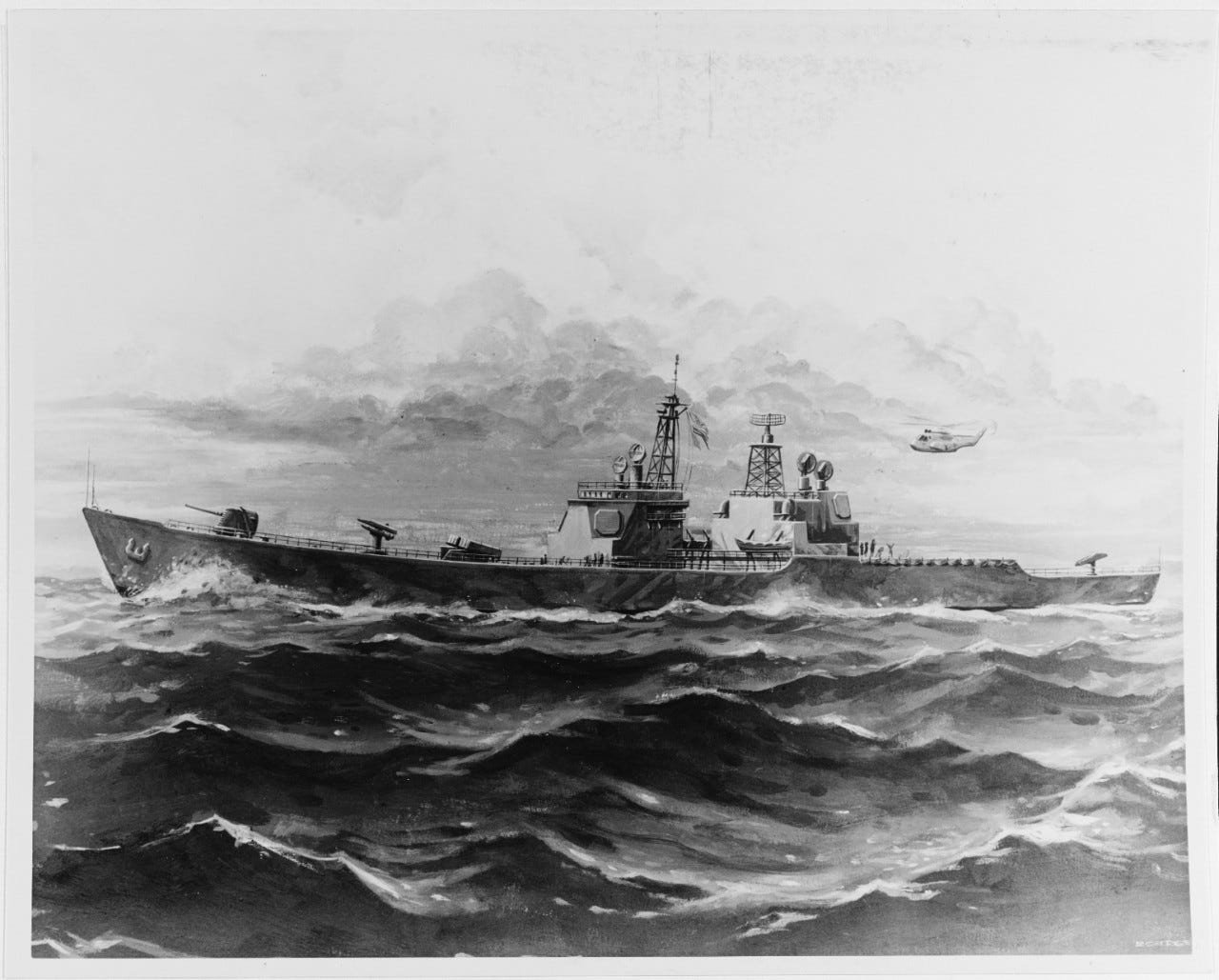
Navies are expensive. This is true, however, the logic stands that the most expensive navy to have is one that can be defeated by the other navy that was better built, supported, and led. To avoid that, you spend a lot of money on the ships, the Sailors in them, the people ashore who maintain them, the naval infrastructure that supports them, and the leaders that will take them into battle. In times of peace, the opportunity cost of that kind of navy gets a lot of attention. Heck, the naval treaties of a century ago were less about world peace than they were as a mutual agreement between politicians to spend less money on ships and instead have more money to keep their bulging populations fed, employed, and off the protest circuit. From the Jeff Boats of two centuries ago, to 2026’s arguments about the proposed BBG-1, the core of the argument is similar: big capabilities have big per-unit price tags. The blinking at the initial bet of $17 billion for BBG-1 is getting an almost audible gasp from some quarters. You get what you pay for. I don’t want to reargue the BBG-1 case again. We’ve already done that here. Before we knew it was going to be a conventional ship, I made a guess about how to argue for a BBGN-1 in October of last year. Two months later, with the announcement of BBG-1, we chatted about it some more. If you’re new here, click the above and catch up. No. I want to instead talk about that capability requirement that, just on the edge of institutional memory, we forgot about, but it seeped into our plans anyway. We’ve forgot it because we are too busy trying to paper over the disasters of surface ship programs this century to make the argument—much less research our own history. It is time to reset expectations by revisiting the accounting decisions decades ago in times of significant budget stress that brought us here. Put on you bell-bottoms, let your hair grow, get the mirrored ball spinning—we’re going back to the 1970s. Take for a moment and think about how we have fought our wars this century. The 21st century wars have been fought with the weapons developed at the end of the 20th century. I think most can agree that two of the most important players in the maritime and air components were the Tomahawk Land Attack Missile (TLAM) and the B-1B Lancer (Bone). Yes, there are others, but we can all agree that for their respective components, they would be in the top-3 or top-5 of reasonable people’s list. Correct? Now, picture that they were never here, that instead of being developed, upgraded, and deployed to such great effects—they were canceled in the 1970s and instead were just dusty and fading drawings in the corner of some program manager’s office. You don’t have to imagine too much. Hell, the Bone didn’t survive the Carter Administration but was revived by Ronaldus Magnus. Ironically, TLAM did survive and prosper, mostly as a lower cost way to achieve the nuclear effects a canceled B-1 would leave behind. Neither, however, found their highest and best use as nuclear delivery platforms. Just the opposite, both programs evolved into conventional-only weapons programs because they were good at delivering effects with little booms as well as they were with the big boom. Could we have fought the wars we’ve had since if the Bone had never been brought back and TLAM was sidelined? Sure. We’d have no choice. However, those fighting the conflict would notice the missing capability. Less capable systems would be used to fill the gap and make it happen. Not as well. Not with less risk, but it would get done. Hard budget times will leave some things on the cutting room floor. In recent memory, the U.S. military had two significant drawdowns, the post-Vietnam drawdown in the 1970s we touched on above, and the Peace Dividend Era after the fall of the Soviet Union. In the two decades in between, we had an interesting connection to a lost capability built in one drawdown, and lost in the other. Large nuclear powered surface combatants. One advantage nuclear aircraft carriers have over their conventionally powered sisters is the simple fact that they can go very fast for a very long time. So fast that they eventually will outrun their conventionally powered escorts. While in the 1990s when the Soviet Union was no longer contesting the high seas, that was a manageable issue. In the 1970s when the Soviet Union was rising to its maximum reach at sea that we saw in the 1980s, there was no such luxury. You needed escort ships that could keep up with the aircraft carrier. When USS Enterprise (CVN 65) hit the fleet, everyone knew about this problem. As such we had a whole series of nuclear powered surface ships. Wiki has a good list. Notice the decommissioning list timeline? The Jesus Jones Era with the Clinton administration’s view of the peaceful, and profitable, rise of China, and the internationalization of the open seas in a brave new world where the greatest concern was midnight basketball in Detroit. Time to sober up. It’s 2026. Let’s look at what was planned for these ships, some that still had decades of service life left, before the world woke up from history for a few POM cycles. This was not considered fanciful. This was what considered a requirement to properly escort nuclear powered aircraft carriers in a contested ocean. Though the New Threat Upgrade that ships received were … pretty darn good … there were plans to upgrade some of the CGN to Aegis. Even the oldest, USS Long Beach (CGN 9) was looked at for an Aegis conversion. …but the accountants killed that. Even the youngest of that nuclear cohort were looked at for conversion to Aegis too, the Virginia Class CGN’s. The accountants won the argument again. The 1996 Navy Visibility and Management of Operating and Support Costs (VAMOSC) study determined the annual operating cost of a Virginia-class cruiser at $40 million, compared to $28 million for a Ticonderoga-class cruiser, or $20 million for an Arleigh Burke-class destroyer, The reality was, of course, that the tactical world they were created for was not as important now, and lower-and-less was the driving force rather than higher-and-best with what they thought they saw the future as from the 1990’s perch. The high-low mix was just going to be low. It wasn’t supposed to be that way. Did you ever wonder what ship this is on the Aegis Combat System Program Office’s insignia? That’s no hypothetical warship. That right there is a Strike Cruiser (CSGN) in all her 17,200 Aegis-powered tons glory, with SM-2, Harpoon, TLAM, and my baby, the MK-71 8” gun I have been fanboi’n about since 2005. Profile look familiar? Less revolutionary than evolutionary, isn’t it? The CSGN, first looked at in the 1970s as a follow-on to the Virginia Class, and best described in the 1976 Naval War College paper by then LCDR Keith M. Arndt, USN. THE STRIKE CRUISER Admiral James L. Holloway, Jr., Chief of Naval Operations, has defined the two principal functions of the Navy as sea control and power projection. In his most recent annual Posture Statement to Congress, Admiral Holloway presented a most succinct and articulate statement of the integration of national strategy, Navy missions and functions, and the resulting requisite naval force structure.¹ This statement was the synthesis of a number of primary considerations: When Admiral Holloway assumed his present position he was met by Congressional objections that the Navy was building too many defensive ships.² The passage of Title VII of the Fiscal Year 1975 Defense Authorization Bill requires that all major warships of the strike forces be nuclear powered unless the President certifies to Congress that it is in the national interest to do otherwise.³ Congress has mandated that the Secretary of Defense submit a five-year new construction and conversion program for the Navy each fiscal year.⁴ On budgetary grounds, officials in the Pentagon and Congress have questioned whether the Navy will ever reach a 600-ship fleet if it insists upon allocating so much of its shipbuilding budget to expensive nuclear-powered ships.⁵ The Navy’s long-range shipbuilding plan has evolved into the pursuit of a balanced fleet of approximately 600 ships. The attainment of this objective is to be accomplished through a high-low mix of ships: a relatively small number of high-value surface combatants with greatly increased offensive and defensive capabilities, and a larger number of less sophisticated ships—primarily with an ASW mission to neutralize the Soviet submarine threat.Since World War II, the Navy’s primary offensive punch has been delivered by carrier-based tactical aircraft. Surface combatants, including large nuclear cruisers, have been primarily equipped to function in the escort role. With declining carrier force levels, the reappearance of a strong naval adversary, the same overall global commitments, and no forecast decrease in potential crisis areas, the Navy needs a balanced and effective force of surface combatants.In recognition of these requirements, the Navy has identified the need for a class of major, multi-purpose, nuclear-powered surface combatants. The Strike Cruiser has been conceptualized to fulfill this need and is the first step in attaining the high-end portion of the mix. Ship Characteristics—As conceptualized. The Strike Cruiser is to be a large ship intended to regain the offensive at sea. With its balanced capability it is intended to increase the United States naval capacity to destroy enemy ships and land targets in the face of an intensive enemy multi-threat environment. The CSGN is considered to be a greatly improved successor to the “California” and “Virginia” class CGNs and is conceptualized to have the following characteristics:⁶ Displacement: Approximately 14,000 tons, fully loaded Length: Approximately 600 feet overall Beam: Approximately 85 feet Missiles and Launchers: Two twin combination SM-2/ASROC/HARPOON launchers firing Standard medium-range surface-to-air missiles, HARPOON surface-to-surface missiles, and ASW rockets (ASROC). Approximately six tubes for surface-launched cruise missiles (SLCM). The SLCM specifics are in doubt but have generally been described in the press as a conventional warhead, subsonic missile with a range of 300–2,500 miles.⁷ Guns: Two 20 mm Vulcan/Phalanx CIWS and possibly an 8” or 5” lightweight gun. ASW Weapons: ASROC and two triple 12.75” torpedo tubes. Aircraft: Two advanced ASW helicopters or V/STOL aircraft. Main Engines: Two geared turbines, two shafts. Reactors: Two pressurized water-cooled reactors. Speed: 30+ knots. Electronics: Probable SQS-53A sonar and the AEGIS integrated air defense system. The significant features of the AEGIS system are remarkably short reaction times and a capability for simultaneous multiple engagements. Design Features Standard displacement hull with overall size being driven primarily by the requirements of the nuclear propulsion plant and the AEGIS system. The weapons systems will probably be designed on a modular basis, allowing common canister loading and relatively easy replacement and retrofitting of future systems. Postulated Employment While little information is available on the planned future employment of the Strike Cruiser, if one looks closely at the conceptual weapon and sensor suite, several alternatives become readily apparent. Although none of these roles are particularly unique to the Strike Cruiser, the magnitude of the breadth and depth of the capability in a single hull is noteworthy. The Strike Cruiser will be capable of operating: independently; as the major unit of a cruiser task force; in support of other task forces; and even with merchant convoys. With the capability to operate “in harm’s way” independently, the Strike Cruiser will be a valuable tool of national policy. Such a highly capable ship would be most appropriate for peacetime presence missions. The capability to employ an effective naval policy when dealing with third-world countries is becoming increasingly desirable in order to deter opportunism prior to the emergence of an actual crisis. Once a crisis occurs, the presence of a Strike Cruiser may be preferable to a carrier task force—either to signal a less provocative intervention or to actually attack land targets with reduced risk (both in terms of value of units and without the political consequences of lost pilots). As the major unit of a cruiser task force, the Strike Cruiser could perform the above missions and more. By adding additional surface combatants, direct-support nuclear submarines, and possibly a V/STOL support ship, the task force could do a credible job of effecting local air, surface, and subsurface superiority. With the reduced number of aircraft carriers, the cruiser task force becomes an attractive alternative. One or more Strike Cruisers operating with a carrier task force would augment and complement the offensive and defensive capabilities of the force. The advantages to be realized by such an employment include: increased difficulty for the enemy to effect a saturation attack; relieving the carrier of force defensive responsibilities; adding to the offensive punch of the force; and contributing to the survivability of the force in a threat-intensive environment. The Strike Cruiser would assume a more defensive role when operating with amphibious or logistic task forces. The role would be one of providing anti-air and anti-surface missile defense. The Strike Cruiser would also have the capability, once in the amphibious operating area, of striking land targets and providing tactical air defense for the amphibious task force.In the convoy escort role the Strike Cruiser would again assume a defensive posture and become a deterrent to adventurism by enemy units. ¹ This statement was the synthesis of a number of primary considerations. ² Congressional objections that the Navy was building too many defensive ships. ³ Title VII of the Fiscal Year 1975 Defense Authorization Bill. ⁴ Five-year new construction and conversion program. ⁵ Budgetary questions regarding the 600-ship fleet and nuclear-powered ships. ⁶ Successor to the California and Virginia class CGNs. That outlines, pretty much, what BBG-1 is supposed to do. You can call it a Strike Cruiser, you can all it a Battleship, you can call it your Aunt Fanny—I don’t care. What I do know is that the mission set for BBG-1 isn’t made out of whole cloth and it isn’t just a grasp at the old battlewagons of old. No. This is the—sadly non-nuclear—Strike Cruiser that we identified a need for the last time the U.S. Navy was challenged on the high seas. We tried to get there with the canceled CG(X) program, but its supporters could not make their argument as to why they were building the beast they wanted to build. They lost the money argument of the 1970s and 1990s all over again. In a way, the Japanese see the same requirement, but with more of a focus on ballistic missile defense concerns with their 14,000 ton Aegis System Equipped Vessel (ASEV). Should BBG-1 fail to sustain support or not, as you can see with what will become DDG(X), we are trying to patch over requirements of a blue water navy on the cheap like we did with the Ticonderoga CGs—which were the less expensive and less capable option to what the Navy wanted, which was a CSGN. This is where the argument should be centered. Leave a comment Share This Substack is reader-supported. To receive new posts and support my work, consider becoming a free or paid subscriber. View the full article

-
A startup’s drone just deployed armed FPVs from the air during a live-fire exercise of the 101st Airborne Division at Fort Polk. Petrel Technologies validated its AERO Sky hybrid VTOL unmanned aircraft alongside the 101st Airborne Division during a Joint Readiness Training Center exercise at Fort Polk last week, with multiple armed First-Person View drones […]View the full article
-
Poland is testing the counter-drone technologies it intends to deploy along its eastern border — and one of the systems that showed up at the Central Air Force Firing Range in Ustka last week listens for drones rather than looking for them. Operational tests for Poland’s Eastern Shield program, known in Polish as Tarcza Wschód, […]View the full article
-
A Silicon Valley AI startup just raised $100 million to build what it describes as the artificial intelligence brain for unmanned warfare. Scout AI Inc. announced an oversubscribed $100 million Series A financing round to accelerate development of Fury, its foundation model for unmanned warfare. The round was co-led by Align Ventures and Draper Associates, […]View the full article
-
AM General showed up to Modern Day Marine with two vehicles and a clear message: the company that built the HMMWV for four decades is now building the unmanned systems that will operate alongside whatever comes next. At Booth 2007 of the Walter E. Washington Convention Center in Washington, D.C., AM General displayed its next-generation […]View the full article
-
On April 14, teams from MBDA and Safran Electronics & Defense conducted the inaugural live test of THUNDART, a new long-range artillery rocket developed entirely within France, with support from the Directorate General of Armament Missile Testing division, known as DGA EM. The test took place at the Île du Levant test range and validated […]View the full article
-
Ukrainian drone operators reached deep into Russian territory on April 29, striking two Russian military helicopters on the ground in Voronezh Oblast. The operation was a joint effort by combined crews of the 429th Unmanned Systems Brigade “Achilles” and the 43rd Separate Army Aviation Brigade, planned and executed in coordination with Special Operations Center “A.” […]View the full article
-
Japan’s Self-Defense Forces are participating in Balikatan 26, the U.S.-Philippine hosted multinational exercise, and the capabilities they brought to the training reflect a force increasingly oriented toward the kind of joint, combined operations that the Indo-Pacific security environment demands. The Japan Joint Staff released imagery showing the Japan Maritime Self-Defense Force’s US-2 amphibious aircraft conducting […]View the full article
-
A Ukrainian company has built a heavy electric robotic ground vehicle designed for the kind of terrain and threat environment that the war in Ukraine has made grimly familiar — and the Mamont prototype addresses the battlefield realities that off-the-shelf systems were never designed to handle. Armolab, a Ukrainian developer, has unveiled the Mamont — […]View the full article
-
BAE Systems has started delivering a GPS receiver that the U.S. military has needed for years — a field-installable, M-Code capable replacement for the Defense Advanced GPS Receiver that slots directly into existing mounts without touching a cable, a wire, or a line of vehicle software. The company announced on April 28, 2026, that its […]View the full article
-
Largest Turkish defense electronics company posted its strongest quarterly export performance in years on April 28, 2026 — and the numbers behind ASELSAN’s first-quarter results suggest a company that has moved well beyond its domestic market roots. ASELSAN, the most valuable company listed on Borsa İstanbul, reported inflation-adjusted revenue of 34.3 billion Turkish lira for […]View the full article
-
General Dynamics showed up to Modern Day Marine 2026 with three business units, two booth numbers, and enough hardware to stock a small army — from a next-generation 8×8 reconnaissance vehicle with a 30mm cannon to an assault bridge mounted on an unmanned ground vehicle scheduled to begin testing in July. The company’s presence at […]View the full article
-
Two unmanned systems companies have combined GPS-denied mapping with radiation detection in a single integrated package — giving CBRN teams the ability to see inside contaminated spaces in three dimensions, in real time, without sending a person in. Emesent and Teledyne FLIR Defense announced a partnership that puts Emesent’s Hovermap LiDAR payload onto Teledyne FLIR’s […]View the full article
-
Textron Systems and its subsidiary Howe & Howe pulled the wraps off a new unmanned ground vehicle at Modern Day Marine on April 28, 2026 — a wheeled robotic platform built specifically around the Marine Corps’ vision of how autonomous systems should fight alongside its existing armored fleet. The vehicle is called the RIPSAW M1, […]View the full article
-
A NASCAR team just rolled a six-wheeled military platform onto the Modern Day Marine show floor — and it already has a Lockheed Martin missile test on its resume. Richard Childress Racing Enterprises, LLC, known across motorsport as the organization behind one of NASCAR’s most storied racing programs, brought its 6-Wheeled Adaptable Platform to Modern […]View the full article
-
Patriot3, a Virginia-based small business that has spent years building specialized equipment for special operations forces and law enforcement worldwide, brought its full maritime and ground operations portfolio to Modern Day Marine this week — sharing a booth with Canadian sensor specialist Shark Marine Technologies and putting some of its most ambitious platforms in front […]View the full article
-
American Rheinmetall brought a full slate of unmanned systems and next-generation squad weapon systems to Modern Day Marine. The centerpiece of the display is Rheinmetall’s Mission Master Silent Partner Hotel, designated MMSP-H, a fully autonomous ground vehicle that operates on land and water. The platform carries 2,200 pounds of payload on land and 880 pounds […]View the full article
-
Two separate contracts awarded within days of each other are pouring more than $163 million into the Reagan Test Site at Kwajalein Atoll — the remote Pacific range where the U.S. military tests ballistic missiles, tracks reentry vehicles, and validates the interceptors designed to shoot them down. The more recent award, dated April 27, 2026, […]View the full article
-
Japan’s Defense Minister met with the team behind one of the country’s more unconventional defense startups — a company building military drones out of cardboard — and the conversation signals where Tokyo thinks its unmanned future is headed. Shinjiro Koizumi, Japan’s Minister of Defense, held a meeting with representatives of Air Kamui, a startup that […]View the full article
-
Finnish-made Sisu GTP 4×4 armored vehicles have appeared in the inventory of Ukraine’s Special Operations Forces, a development that raises immediate questions about how they got there — because Finland has never publicly announced transferring them. Ukrainian military historian Andriy Kharuk first reported the appearance of the Sisu GTP 4×4 in Ukrainian Special Operations Forces […]View the full article
-
Spain unveiled the industrial blueprint for its next generation of fighter pilot training on April 28, 2026, as an Airbus-led consortium presented the full programme structure for the Spanish Air and Space Force’s new Integrated Combat Training System — a contract awarded in December 2025 that will retire the country’s aging F-5 fleet and replace […]View the full article
-
It is well past time that we had a frigate SITREP, specifically the gray-hulled version of the Legend-class Cutter we are going to build for our Navy. No reason to rehash my concerns and assumptions—click the frigate hypertext above if you need to catch up, but…let me just say…though I’m glad she’s on the way and we’ll find good use for her, I hope Flight I is a short run. I know hope is not a plan, but back in December, I had this little bit of hope: I suspect that already there is work being done on a Flight II, which will incorporate the multi-mission capability of the patrol frigate proposed over a dozen years ago … While looking over the FY27 budget request, it appears that my hope is well placed. Here’s the important bit if it is too much to read the fine print above. Frigate will take the same validated flight-upgrade approach as our Arleigh Burke DDG-51 program - incorporating improvements over successive flights to evolve the ship’s capabilities over time. Flight I Frigates will have minimal adaptations from the existing NSC to start production as quickly as possible. The limited modifications of the NSC baseline to the Flight I Frigate requirements incorporate Navy weapons, combat systems, and communications programs of record, add a flexible weapons station in lieu of the NSC stern boat ramp, add a port-mid-ships boat davit, incorporate shipbuilder recommended producibility enhancements, and change to standard Navy grey paint. Studies for future flights will consider expanded capabilities including Vertical Launch Systems, and Anti-Submarine Warfare systems. FF(X) RAS C2 is enabled through use of Navy warfare system programs of record including the FF(X) combat system and eventually Aegis based Integrated Combat System (ICS), communications systems, and design reservations dedicated to future RAS C2 systems. Yes. As we were hoping, smart people in hard jobs have looked at the last successful surface ship program, the Arleigh Burke, and said, “Yes, that process worked. Let’s do that.” This isn’t easy work, but it’s not hard to benchmark success. When will we see Flight I, Hull-1? Looks like 30 June 2030, 1,531 days from now. Using our patented unit of time when looking at Navy programs, the WorldWar™, it will be 1.12 WorldWars™ from today until we have that ship delivered…at the earliest. This is already a mature design, already delivered, so that should not be delayed. Yes, I know. OK, that goes at the speed of smell, but at least it’s moving. When will we see Flight II? Looks like it will still be in the design phase through 30 SEP 2031. Sigh. 5 years too late. We should give the FF(X) Flight II project to Mike Gallagher’s band of merry engineers and move that timeline to 30 SEP 2026, but that’s just me. Sidebar: The last FF in the USN was USS Moinester (FF 1097). DE-1098 through 1107 were planned, but canceled. So, are we going to have FF(X) Hull-1 be FF-1098 or FF-1108? h/t Virtual Bayonet. Leave a comment Share This Substack is reader-supported. To receive new posts and support my work, consider becoming a free or paid subscriber. View the full article

-
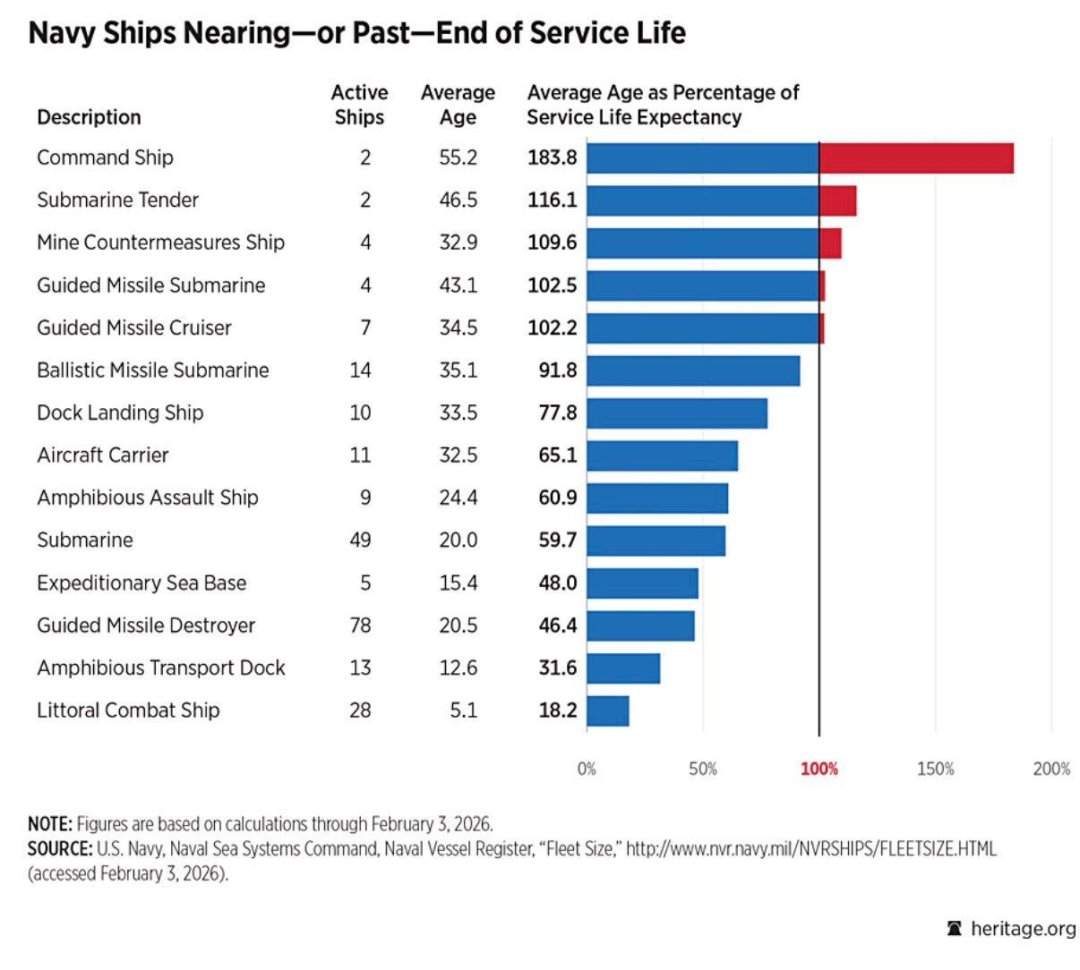
Last week we started things off with a discussion of the 18 battle force and 16 non-battle force ships. Let’s look back at that. It may have taken nine years, but there was a post of mine from 2017 that finally got a smile: On the list of "unsexy but important" are many items from icebreakers, to command ships, to hospital ships, that every POM cycle get left on the cutting room floor by the gaggle of cats chasing laser pointers we have in charge of building our fleet. When you look at the list from last Monday and the news from last summer about icebreakers, we seemed to have one ship that still is not getting the investment it needs—command ships. We’re running out of time. Even “Golden Fleet” documents that include such Salamander requirements like destroyer tenders right keep missing something that the new realities of war that we have learned in the last half-decade have shown are not a luxury, but a requirement for warfighting success—our command ships. As Brent Sadler mentioned over the weekend, Today there are only two of these ships in the Navy - the Mount Whitney (LCC 20) as 6th Fleet Flag Ship in Europe, and the Blue Ridge (LCC 19) as 7th Fleet FlagShip in Japan. … These existing flag ships have modern communications and staffs capable of running a prolonged war from sea - making it a harder target for cyber attacks, strikes and terrorist attacks - a valuable feature in modern warfare characterized by increased importance of connectivity with unmanned assets, dispersed logistics ships, and the strictest of communications requirements of frontline warships. The argument for command ships has never been stronger. In the age of precision warheads on conventional S/M/R/ICBM & the whole constellation of attack drones/cruise missiles, the utility of static shore-based higher headquarters is not just questionable; it is suicidal. We will not be given many more clear warnings as we saw over the last few months with the limited Iranian attacks against our land-based facilities in Bahrain and Saudi Arabia, just to mention two. Never forget, the Chinese have already dialed in every static U.S. military facility inside the range of their rocket forces. While there are threats to anything afloat, in today's threat environment, command ships should be many and redundant in number. Not two replacements, but four. We don't even have to design a new ship. We have the LPD-17 design ready to go as a baseline. Slight mods...and there you go. Other designs can work as well, but the LPD-17 is a proven design, hardened, and easier to add additional self-defense systems to…including anything you can put in a MK-41 VLS cell. We don’t need to continue to appreciate the problem. We don’t need multi-million to billion-dollar studies. No. We just need to accept that previous generations dithered and we will not. Heck, I even know where to get $1.85 billion from to get things started. Cut steel. Leave a comment Share This Substack is reader-supported. To receive new posts and support my work, consider becoming a free or paid subscriber. View the full article
-
Ukraine’s military intelligence directorate has published a detailed technical breakdown of a previously obscure Russian cruise missile developed specifically for the Su-57 stealth fighter, revealing not only the weapon’s architecture and capabilities but the extensive network of foreign components — American, Chinese, Swiss, Japanese, German, Taiwanese, and Irish — that made it possible to build. […]View the full article
-
Elbit Systems inaugurated a new unmanned aerial systems production facility in Chitila, Romania on April 27, 2026 — and marked the occasion by flying the Watchkeeper XR over Romanian skies for the first time, turning a ribbon-cutting into a live capability demonstration for Romanian government and military officials watching from the ground. The Chitila facility […]View the full article