HG S2 (Intel Bot)
Members
-
Joined
-
Last visited
Never
Everything posted by HG S2 (Intel Bot)
-
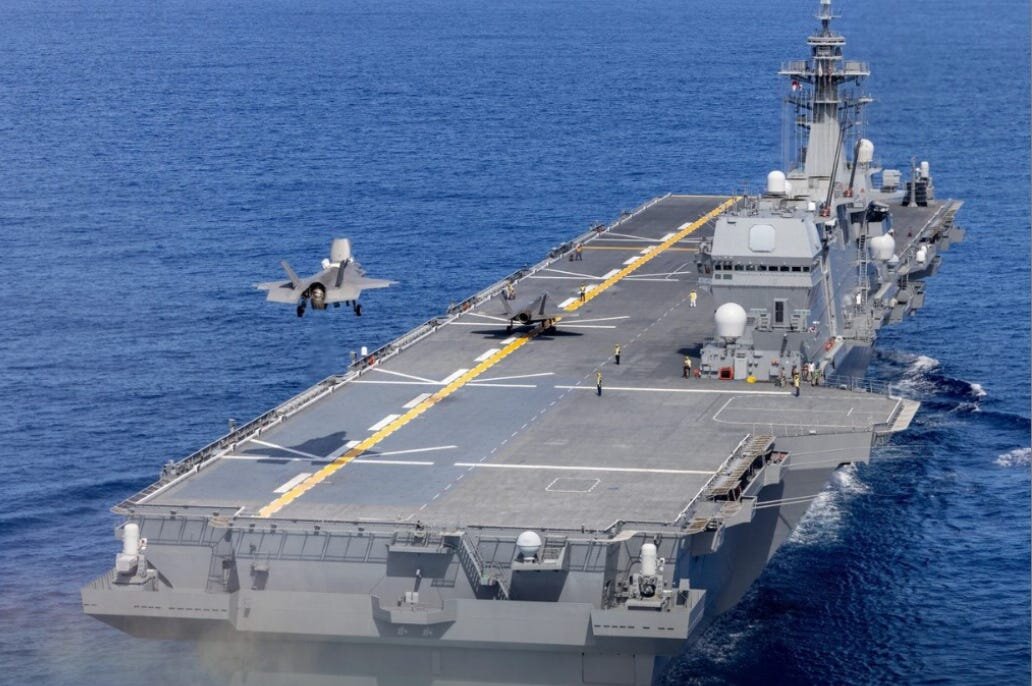
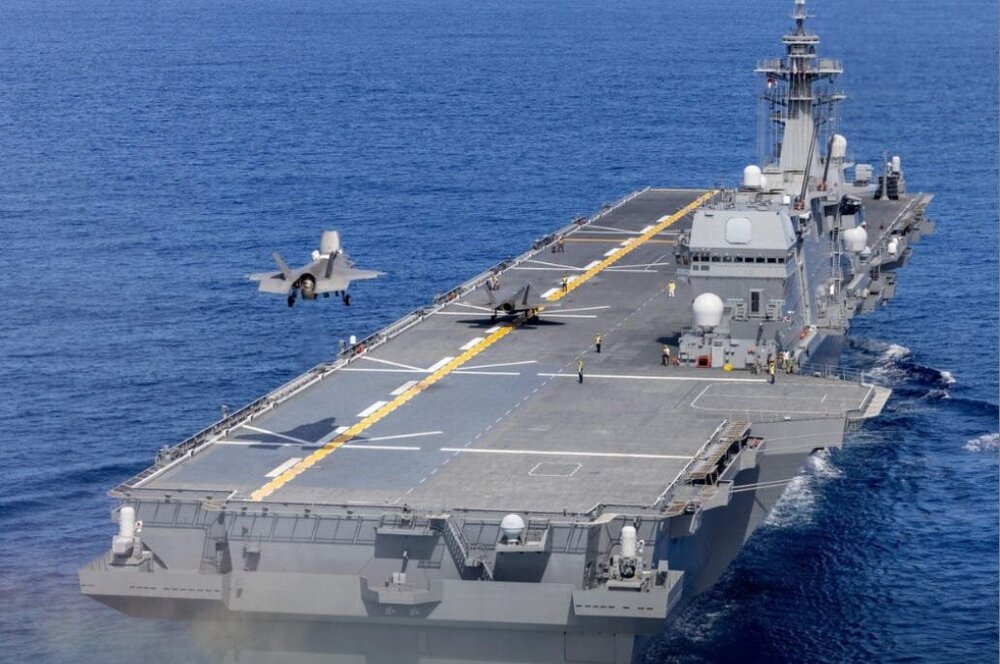
For a long time running, it has been an eye-rolling joke how off-the-rails, political, and nonsensical ship naming and classifications conventions have become. The classic example is from many of the navies in Europe where everything has to be a frigate. Even when clearly some are destroyers or even light cruisers: frigate. All over the place, civilian politicians who are high on the emotion and low on the reason scale of things—and are beset with almost no knowledge of sea power or naval history—think they can make everything soft-soft by not seeming too “belligerent” with their <checks notes> military. They are haunted by other generations’ ghosts and bad academic lounge thinking. Whatever. It is all rather silly. Alas, far too many are invested in this self-defeating and cringe-worthy approach to proper classification systems—or are just beset by ignorant habits. That means there is not much that can be done. However, from Japan we have indications that, even in a small way, things might be turning in this area. It may be almost a year old, but it is news to me. Via Yoshihiro Inaba at Naval News, The Japanese Ministry of Defense has revised the hull classification symbols for Japan Maritime Self-Defense Force (JMSDF) vessels effective October 2024. The change adds two new symbols, “CG” and “CVM,” which will be applied to upcoming ship types. … Until now, hull classification symbols have included general-purpose destroyer (DD), guided-missile destroyer (DDG), helicopter destroyer (DDH), as well as smaller coastal escort destroyer (DE) and multi-role frigates (FFM). Last year’s directive added two new symbols: “CG” and “CVM.” Naval News interviewed the JMSDF Office of Public Affairs to clarify what these new codes signify. Oh. A PAO…this will be fun. Even though some nations get fainting spells calling a ship that is clearly one a “destroyer”, calling a ship a “cruiser” seems almost impossible. Japan is just shrugging at the old fears. Rightfully. First, “CG” stands for “Cruiser Guided-missile” — a guided-missile cruiser — and will be applied to the Aegis system-equipped vessels (ASEV) scheduled to enter service in 2027 and 2028. Good for them. Our USN’s white elephant Zumwalt Class DDG should have been designated CA as an attack cruiser, and our Flight III DDG should be CG…so Japan steals a march on us here. As a side-note, the ASEV is going to be 14,000 tons…so yes, that’s a cruiser. Heck, the TICONDEROGA CG was only 9,800 tons. The pocket battleship Graf Spee was 14,800 tons. When it comes to their “DDH” that’s where they get too clever. Yes, a Japanese Navy with carriers will have some eyes twitching, but not here. I want them to have more of them, and larger ones. Their latest class, the IZUMO with its sister ship KAGA, are clearly light carriers, AKA CVL. When I saw “CVM” I thought they would try something new as in “multi-purpose aircraft carrier, CVM.” Well, I was close. The other new symbol, “CVM,” at first glance appears analogous to U.S. Navy nomenclature and might be read as a “multi-purpose aircraft carrier.” However, the JMSDF Office of Public Affairs says the acronym expands to “Cruiser Voler Multipurpose,” and in Japanese the type is being called 航空機搭載多機能護衛艦 — literally, an “aircraft-carrying multi-role cruiser.” … The lead ship of the Izumo-class, Izumo, entered service in 2015, and the second ship, Kaga, entered service in 2017; both were originally operated as helicopter destroyers (DDH). However, modifications carried out from fiscal 2020 onward added the capability to operate the F-35B short-takeoff/vertical-landing (STOVL) fixed-wing fighter, and that operational change has led to the assignment of the new CVM classification. As for the “Cruiser” element of CVM, JMSDF officials explained that the term replaces “Destroyer” to reflect the larger hull size compared with conventional destroyers. The middle term “Voler” is the French verb meaning “to fly,” and was chosen to indicate the vessel’s capability to operate aircraft, including fixed-wing types. OK, fine. If that is what you need to do for PR/PAO reasons. It will make the French happy, for once, perhaps. More. Larger. Faster. This Substack is reader-supported. To receive new posts and support my work, consider becoming a free or paid subscriber. Share Leave a comment View the full article
-
As the Trump administration prepares to release its first National Defense Strategy (NDS), debate in Washington is sharpening over the role of nuclear weapons in America’s alliances, particularly in Asia. Jennifer Kavanagh, a senior fellow and director of military analysis at the think tank Defense Priorities, said that while U.S. troop levels in South Korea […] The post South Korea nuclear option enters U.S. debate first appeared on Defence Blog.View the full article
-
South Korea is moving forward with the construction of its national satellite navigation infrastructure, selecting Jeju Island as a hub for the Korean Positioning System (KPS). The Korea Aerospace Administration (KASA) and Jeju Province signed an agreement on September 22 to establish ground-based facilities that will support the operation and management of the system. According […] The post South Korea builds its own GPS-style navigation system first appeared on Defence Blog.View the full article
-
British fighter jets have flown their first NATO air defence mission over Poland, a move aimed at reinforcing the Alliance’s eastern flank after Russian drones violated Polish airspace. The Royal Air Force said the Typhoon fighters, operating under NATO’s Eastern Sentry mission, patrolled Polish skies to deter and defend against aerial threats. Two Typhoon jets […] The post British Typhoons patrol Polish skies first appeared on Defence Blog.View the full article
-
Russia has begun equipping its 152 mm 2S19M2 Msta-S self-propelled howitzers with improvised protective cages and electronic warfare antennas in an effort to extend the battlefield survivability of its artillery. The modifications were observed on howitzers deployed by the “Center” grouping of forces in the Pokrovsk direction. Images circulating from the front show the howitzers […] The post Russia equips new 2S19M2 howitzers with cages and EW gear first appeared on Defence Blog.View the full article
-
Ukraine’s Defense Intelligence announced that its special unit “Phantoms” struck Russian aircraft in occupied Crimea on September 21, hitting two Beriev Be-12 amphibious planes and a Mi-8AMTSh-VN helicopter. The operation was carried out with strike drones, marking the first recorded destruction of Be-12 aircraft in history. “On September 21, 2025, in the territory of temporarily […] The post Ukrainian drones destroy Russian Be-12 flying boats first appeared on Defence Blog.View the full article
-
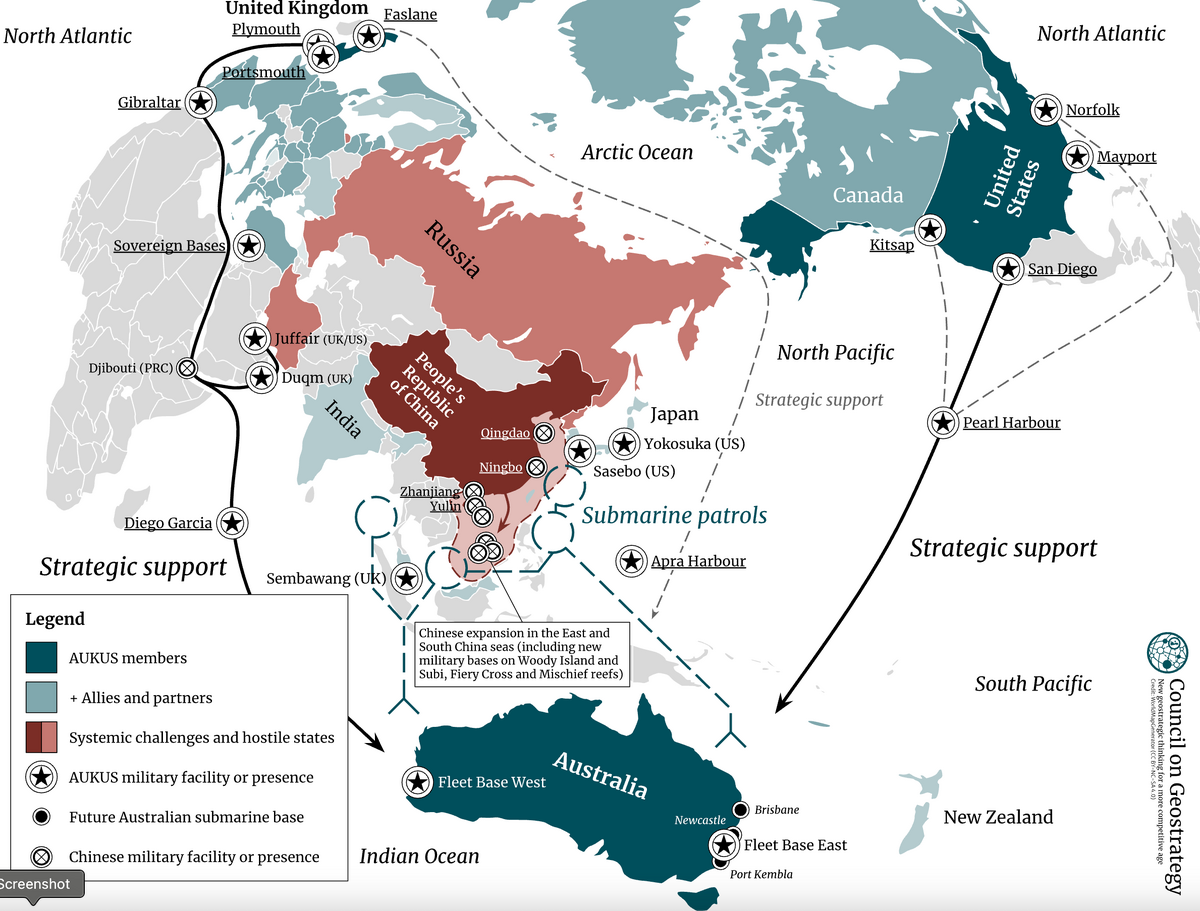
Yes, September is Australian Appreciation Month on the Midrats Podcast. Building on our discussion earlier this month with Liz Buchanan, we are returning to the perspective from the Antipodes with returning guest, Gray Connolly. From Afghanistan, to the Antarctic, we’ll have a broad-reaching discussion of allied national security concerns from the Australian perspective. You can listen at this link, or via Spotify widget below. Gray Connolly served as a Naval Intelligence officer in the Royal Australian Navy. He graduated from the Royal Australian Naval College and holds the King’s Commission. Gray is a graduate in Arts (Honours - History) from the University of Sydney and in Law (Dean’s Merit List) from the University of New South Wales. Gray served previously in Asia and the Middle East, including service in the South China Sea, the Indian Ocean, the Arabian Sea, the Gulf of Oman, the Persian Gulf, East Timor, and the Middle East. Gray served in the Iraq War (two deployments) and Afghanistan. Gray is now a Barrister-at-Law in Sydney. He has advised the Australian Government on national security and public law matters and served as a Senior Member of the federal Administrative Appeals Tribunal. He keeps a blog at “Strategy Counsel” and his Twitter is @GrayConnolly All of Gray’s comments and opinions are his alone and do NOT represent the view of the Australian Government. SummaryIn this episode of Midrats, the discussion revolves around Australia's national security, particularly in the context of the AUKUS agreement, its relationships with major powers like China and India, and the importance of alliances. Gray shares insights on the public support for AUKUS, the challenges posed by Australia's geographic isolation, and the historical context of Australia's military contributions. The conversation also touches on the complexities of Australia's relationship with Indonesia and the implications of China's influence in Antarctica. TakeawaysAUKUS is popular among Australians, reflecting a bipartisan agreement. Australia's geographic isolation necessitates strong military capabilities. The AUKUS agreement is crucial for Australia's national security. Australia's resource management is complicated by economic dependencies. Alliances are vital for Australia due to its size and population. Australia values its historical military contributions to global conflicts. The Australian character emphasizes internationalism and support for allies. China's influence in Antarctica poses significant concerns for Australia. Australia's relationship with Indonesia has improved over the years. Cricket serves as a cultural bridge between Australia and India. Chapters00:00: Introduction to MidRats and Australia Appreciation Month 02:30: AUKUS Agreement: A National Security Perspective 03:50: Public Support for AUKUS in Australia 06:20: Australia's Resource Management and Economic Dependencies 08:28: The Importance of Alliances in National Security 10:00: Australia's Geographic Challenges and Military Needs 11:04: Australia's Commitment to the Alliance 12:32: The Impact of European Defense Spending on Australia 13:00: Australia's Historical Military Contributions 15:22: The Australian National Character and Internationalism 18:23: Concerns Over China's Influence in Antarctica 40:06: Australia's Relationship with Indonesia 55:04: Australia's Growing Ties with India Leave a comment Share This Substack is reader-supported. To receive new posts and support my work, consider becoming a free or paid subscriber. View the full article

-
Serbia has unveiled a new heavy rocket system, the Sumadija/Vila, during its recent “Strength of Unity” military parade. The system, developed by Yugoimport-SDPR, represents a modular long-range launcher designed to strike high-value targets deep behind enemy lines. According to information released at the event, the self-propelled launcher can be configured with different payloads depending on […] The post Serbia unveils new heavy rocket system first appeared on Defence Blog.View the full article
-
Serbia has showcased its most advanced main battle tank to date, the M-84AS3, during the “Strength of Unity” military parade. The event highlighted Belgrade’s ongoing efforts to modernize its armored forces while maintaining a complex balance between aspirations for European Union membership and defense cooperation with partners ranging from France and Israel to China and […] The post Serbia shows new M-84AS3 tank with active protection system first appeared on Defence Blog.View the full article
-
Serbia has publicly displayed newly acquired Russian electronic warfare systems, including the Krasukha-2, during a recent military parade in Belgrade. The presentation marked the first public acknowledgment that Serbia had received the systems from Russia, despite ongoing international sanctions tied to Moscow’s full-scale invasion of Ukraine. According to information released during the parade, Serbia showcased […] The post Serbia receives Krasukha jamming systems from Russia first appeared on Defence Blog.View the full article
-
Serbia has presented a new family of 4×4 armored vehicles, known as “Alexander the Unifier,” during the “Strength of Unity” military parade held on the Day of Serbian Unity, Freedom and National Flag. The event marked the premiere of the multi-role platforms, displayed in both tactical armored vehicle and loitering munition carrier configurations. According to […] The post Serbia debuts new multi-role armored vehicle first appeared on Defence Blog.View the full article
-
Ukraine has released footage of its F-16 fighter jets in combat, marking the new demonstration of their operational use against Russian missile and drone attacks. The Ukrainian Air Force said the aircraft played a decisive role in intercepting cruise missiles and unmanned aerial vehicles during a large-scale Russian strike on September 20. According to the […] The post Ukraine shows F-16s in combat footage first appeared on Defence Blog.View the full article
-
Ukraine’s new Inguar-3 armored vehicle has entered service with the National Guard and already faced a battlefield test, surviving a direct strike from an FPV drone. Video circulated on social media showed the vehicle continuing its mission after the attack, with the crew unharmed. Reports said the drone impact caused a fire at the point […] The post Ukrainian Inguar-3 survives FPV drone hit first appeared on Defence Blog.View the full article
-
Russia has unveiled its newest multiple launch rocket system, the Sarma, a 300mm heavy launcher mounted on the KamAZ-63501 armored chassis. The system was displayed by the Motovilikha Plants during a recent visit by Vladimir Putin. According to information released at the event, the Sarma MLRS was developed as an evolution of the earlier KAMA […] The post Russia unveils new heavy rocket launcher first appeared on Defence Blog.View the full article
-
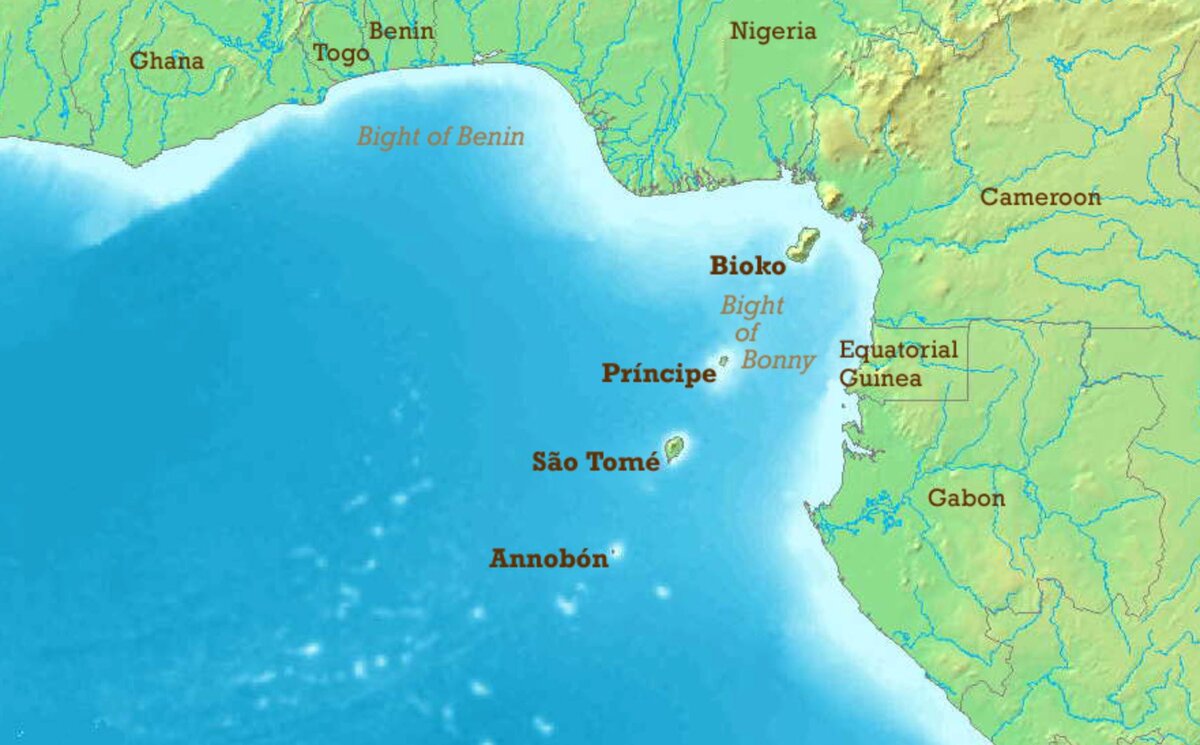
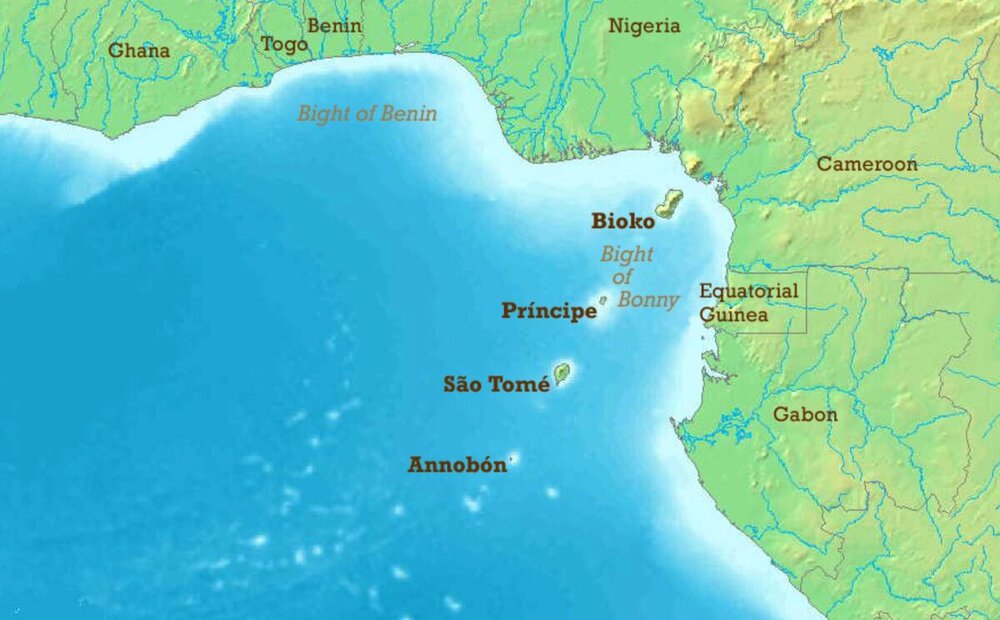
When people think of the U-boat war in the Atlantic, they think of the North Atlantic: cold, windy, grey, foreboding. Three of the best movies on the topic, The Cruel Sea, Das Boot, and Greyhound, only reinforce this view. There was a lot more to the war than that. Far from sideshows, other theaters were critical points in the Axis’s attempt to choke supplies to Europe. Gaylord T. M. Kelshall’s superb book, The U-Boat War in the Caribbean, does the best job in pointing out that theater from the mouth of the Mississippi River to where our focus is today. There was also the Southern Atlantic and African theaters. How much of the war was fought there? Here’s a map where U-boats were sunk, and by whom. It was a four-year campaign. From Trinidad to South Africa, a lot of allied shipping was lost. It was hard to keep a U-boat at sea. Food, fuel, and weapons can run out faster than your men’s endurance. The most dangerous part of the deployment was often directly proportional to how close you got to Europe. It would only be logical that the Axis would look for some way to resupply their submarines at sea. Likewise, it would be logical that the Allies would try to stop them. Unconventional war wrapped around unconventional thinking. Amazing actions by amazing people…remembered by few. But not today. Operation Postmaster. First, as we always want to do, let’s go to the chartroom. The second largest island off Africa, off the coast of Nigeria, was once known as Fernando Po, now Bioko. Once part of Spanish Guinea, now Republic of Equatorial Guinea. Did you catch that? During WWII, a Spanish colony. Officially neutral, but all Spanish territory was, well, flexible. That was of use to the Axis … and a problem for the Allies. Wiki, as linked above, has the best summary—so we will steal generously from them. In 1941 the British Admiralty started receiving reports that German submarines were using the rivers in Vichy French parts of Africa as a base for refuelling. The unit selected to investigate the reports was the Small Scale Raiding Force (SSRF) also known as No. 62 Commando. … under the command of Major Gus March-Phillipps. Maid Honor, a 65-ton Brixham yacht trawler, left Poole harbour on 9 August 1941, bound for West Africa. The five man crew were under the command of March-Phillipps. … After Maid Honor's arrival in Freetown the search for the German submarine bases started. Sailing into the many rivers and deltas in the area, they failed to locate any submarines or evidence of a submarine base. If this plot sounds familiar, you’re not imagining things. Its framework was the foundation of the rather silly recent movie last year, Guy Ritchie’s, The Ministry Of Ungentlemanly Warfare. While the commandos were searching for the German submarine bases, SOE agents had become aware of three vessels in the port of Santa Isabel on the Spanish island of Fernando Po 30 kilometres (19 mi) off the coast of Africa near the border of Nigeria and Cameroon. The three ships were the Italian 8,500-ton merchant vessel Duchessa d'Aosta, the large German tug Likomba, and a diesel-powered barge Bibundi. Duchessa d'Aosta had a working radio which was considered a threat, with the potential to provide details of Allied naval movements. … SOE agent Leonard Guise kept the ships under observation, and in August 1941 submitted a plan to seize Likomba and disable Duchessa d'Aosta. Approval for the military operation in a neutral port was given by the Admiralty on 20 November 1941. This is all going on prior to the U.S. entry in the war and things were not looking too great for the United Kingdom. To transport the raiders to the island, two tugs, Vulcan and Nuneaton, were provided by the Governor of Nigeria, Sir Bernard Bourdillon. The raiding force would consist of 32 men: four SOE agents, 11 commandos from the SSRF and 17 men recruited from the local population to crew the two tugs. The mission suffered a blow when the British General Officer Commanding (GOC) West Africa Command, General Sir George Giffard refused to support the mission. He declined to release the 17 men required, stating it would compromise some unnamed plans he had in mind, and that the act would be seen as piracy and could lead to repercussions. Responding to the concerns of the GOC West Africa, the Admiralty suspended the operation. The Foreign Office was also not in favour of the operation, nor was the British Embassy in Madrid, which was concerned about the possible reactions of the Spanish government. The final go-ahead, eventually supported by the Foreign Office, was not given until 6 January 1942, on the grounds that, while suspicion of British involvement in the raid was inevitable, what counted was the avoidance of any tangible proof. As a safeguard the Admiralty also dispatched HMS Violet, a Flower-class corvette, to intercept the vessels at sea, which would provide the cover story that they had been intercepted while trying to make their way home to Europe. Everyone has a reason to say “no” to a good mission…but for those who matter, a good mission sells itself. Also, if your big guns are a Flower-class corvette… SOE agent Richard Lippett had obtained employment with the shipping company John Holt & Co (Liverpool), which had business offices on the island. ... He became aware that the crew of Duchessa d'Aosta were in the habit of accepting invitations to parties ashore and had held their own party aboard ship on 6 January 1942. … The raiders left Lagos in their two tugs on the morning of 11 January 1942, …. They approached Santa Isabel harbour and at 23:15 and 23:30 hours on 14 January 1942; both tugs were in position 180 metres (590 ft) outside the harbour. Onshore, Lippett had arranged for the officers from Duchessa d'Aosta to be invited to a dinner party; 12 Italian officers and two German officers from Likomba attended. Fiction is never as good as real history. Remember, there is no such thing as a normal watch in a boring backwater. The boarding parties assembled on the decks of the two tugs as they entered the harbour. Vulcan, with March-Phillipps and his second in command Appleyard on board, headed for Duchessa d'Aosta. As they approached, a few men could be seen on the after deck of the merchant vessel, but they seemed to take no notice of the tug other than to shine a torch in its direction. At the same time, folbots under the command of Hayes from Nuneaton, were being paddled towards Likomba and Bibundi, which were moored together. Challenged by a watchman on Bibundi, they persuaded him with their reply that it was the ship's captain coming back on board. The men from the canoes boarded Bibundi, and the two-man crew on watch jumped overboard. After attaching explosive charges on the anchor chain, the commandos guided Nuneaton alongside Likomba to take her and Bibundi in tow. With that taken care of, now for the big prize. As soon as they were ready, the charges were detonated, releasing the anchors, and Nuneaton started to tow Likomba out of the harbour. Eleven men from Vulcan had managed to board Duchessa d'Aosta; while one group attached charges on the anchor chains, another searched below-decks, collecting prisoners. Blowing the anchor chains, Vulcan started to tow Duchessa d'Aosta out of the harbour. The explosions had alerted the population of the town, who started to gather on the pier, but no attempts were made to stop the ships from leaving. Several anti-aircraft emplacements opened fire at imagined targets, believing the explosions to have been caused by an aerial attack, but the six-inch guns protecting the harbour from attack from the sea remained silent. From entering the harbour to leaving with the ships under tow, the operation had taken 30 minutes, without any losses to the raiding party. Yes, the Spanish had a hissy fit, but all in all…it was a superb performance from what today we would call “Special Forces” — the type of mission U.S. Navy SEALs might do. Like we covered earlier, this was “early” in the war, though for the UK, year three. Such talented people had a long war, and eventually the odds catch up to everyone. After the raid March-Phillipps was awarded the Distinguished Service Order, Hayes was awarded the Military Cross, and Appleyard a Bar to his Military Cross; Lippett and Guise were each appointed Member of the Order of the British Empire. Another commando, and the only professional sailor on the raid, Private Anders Lassen, was the first man to board Duchessa d'Aosta. For conspicuous efficiency in getting the ship under way, Lassen was given a commission in the field,[12] and the immediate award of the Military Cross. March-Phillipps was killed during Operation Aquatint in September 1942. On the same mission, Hayes evaded capture and crossed the Spanish border, only to be handed over to the Germans who kept him in solitary confinement for nine months before he was executed by firing squad on 13 July 1943. Appleyard later joined the Special Air Service, and on the same day that Hayes was executed Appleyard was reported missing when his plane failed to return from a mission. Lassen also joined the Special Air Service; he was awarded two bars to his MC and promoted to major. He was killed in Italy in 1945, and awarded a posthumous Victoria Cross for his actions there. Lassen was reportedly the only non-Commonwealth (he was Danish) officer awarded the VC in WWII. Amazing stories you can find down history’s abandoned alleyways. Also important lessons for today. Leave a comment Share This Substack is reader-supported. To receive new posts and support my work, consider becoming a free or paid subscriber. View the full article
-
Ukraine has presented a new generation of robotic warfare with the debut of the VATAG heavy uncrewed ground vehicle (H-UGV), unveiled at the Brave1 Defense Tech Valley 2025 summit on September 16. According to Defense Express, the system integrates artificial intelligence and advanced control technologies to perform a wide spectrum of battlefield missions. The VATAG […] The post Ukraine unveils AI-driven heavy ground robot first appeared on Defence Blog.View the full article
-
The U.S. State Department has approved a possible Foreign Military Sale to Poland of Javelin Missile Systems and related support, a package estimated at $780 million. The Defense Security Cooperation Agency (DSCA) delivered the required certification to Congress on September 18, clearing the way for the deal. According to the agency, Poland has requested 2,506 […] The post Poland cleared to buy 2,500 Javelins first appeared on Defence Blog.View the full article
-
China has reached a new threshold in its fifth-generation fighter program, confirming the People’s Liberation Army Air Force (PLAAF) now fields at least 300 Chengdu J-20 stealth aircraft. The expansion underscores Beijing’s rapid pace in deploying advanced combat aircraft and places China second only to the United States in operational fifth-generation fleets. The confirmation came […] The post China closes gap with U.S. in fifth-gen fighter race first appeared on Defence Blog.View the full article
-
Russia’s efforts to modernize its airborne early warning and control aircraft have hit a pause, as United Aircraft Corporation (UAC) delays a decision on launching serial production of its A-50 radar planes. The announcement was made by Sergey Korotkov, general designer and deputy general director of UAC, in an interview with TASS. According to Korotkov, […] The post Russia to delay production of A-50 radar plane first appeared on Defence Blog.View the full article
-
North Korean leader Kim Jong Un has overseen testing of the country’s new series of tactical uncrewed combat aerial vehicles, according to state-run outlet KCNA. During the inspection, Kim reportedly directed defense and aerospace authorities to focus on integrating artificial intelligence into both the drone control systems and broader combat operations. While no technical details […] The post North Korea accelerates AI drone push first appeared on Defence Blog.View the full article
-
With people talking about who is getting canceled where and for what back in the news, it had me thinking of all the gnashing of teeth and rending of clothes we’ve read this year about President Trump’s team shaping the uniformed leadership, moving along a few senior uniformed personnel who had a track record, that, well, indicated they probably would not have the full trust and confidence of the CINC. All Presidents do this in their own way, but from the sounds of things over the last six months, you’d think anyone who wasn’t a documented contributor to the Trump ‘16, ‘20, and ‘24 campaigns for President and could not dance to Y.M.C.A. was being fired, forced to retire, or being given orders to Diego Garcia. The memo went out: “It’s a PURGE!” From Vox: …the circumstances and timing of the purge raise troubling questions about whether the White House is seeking a military that’s motivated not just by the nation’s security, but also by the administration’s political agenda. Reuters: The Trump administration has conducted a sweeping purge of U.S. military and intelligence officers and diplomats that it says is part of an effort to slash the size of the U.S. government, shrinking the federal budget and punishing what it describes as the “politicization or weaponization” of intelligence. Sen. Tammy Duckworth (D-IL): Installing loyalists at the top of the military is the kind of thing autocrats do when they are trying to seize control of government. Trump is aiming to ingrain a culture of fear that makes it harder for our service members to speak truth to power and uphold their oath to support and defend the Constitution. What we saw happen with the nomination of Caine is not an aberration. It is part of a deliberate purge of expertise from our military that is eroding the very institution the American people rely on to keep them safe. My Republican colleagues need to stop enabling Trump’s dictatorial tendencies and start doing more to protect the service members who’ve sacrificed so much for the rest of us. It is all so silly. Again, as CINC, the President must have uniformed leaders he has confidence in. As Papa Salamander and Millington told me many times, “No one owes you a job, Sal.” History is full of real purges, and not all purges are that bad. Let’s look at the definition a bit. purge, verb, ˈpərj purged; purging transitive verb 1 a: to clear of guilt b: to free from moral or ceremonial defilement 2 a: to cause evacuation from purge the bowels b (1): to make free of something unwanted purge a manhole of gas purge yourself of fear (2): to free (something, such as a boiler) of sediment or relieve (something, such as a steam pipe) of trapped air by bleeding c (1): to rid (a nation, a political party, etc.) by a purge (2): to get rid of the leaders had been purged intransitive verb 1: to become purged 2: to have or produce frequent evacuations 3: to cause purgation noun 1: something that purges especially : purgative 2 a: an act or instance of purging b: the removal of elements or members regarded as undesirable and especially as treacherous or disloyal So, we are looking at the transitive verb 2.c and the noun 2.b, mostly the later. the removal of elements or members regarded as undesirable and especially as treacherous or disloyal Especially considering the experience of the Trump 45 Administration, is anyone really surprised about this? Would anyone else do anything different? I don’t care too much for the phrase “purge”, because let’s be clear, if this is a purge, it is a historical insult to the word. In most political purges, almost no openly hostile public actors survive the initial wave or two—especially highly influential ones. Almost none are allowed to depart with their dignity, property, or life intact. Let me give you two, actually three examples that prove one of three things: The purge is real, but only has so much bandwidth and you’ll simply have to wait. The purge is kindler and gentler. There is no purge, just proper aligning staff with the principal. Could be some a combo of the three, or none. I reserve the right to be wrong, but I think my odds are better than even. Here are your three examples to consider. Rear Admiral Derek Trinque, USNFor those who were around during the high-water mark of the Red Guards of Miltwitter (which I roughly call 2018-2022), with all its canceling, accusations, denunciations, mob actions, virtue signaling, struggle sessions, the demanding cadre of adherents of the Party, the swallowers of slogans, amateur spies and nosers-out of unorthodoxy—Trinque was much in the mix, providing top-cover and leadership for more junior operators. From complaints about the naming of roads or other bothersome Southern traditions, to whatever The Current Thing™ was during the time, he was there. We had a few exchanges during the troubles, generally cordial. As with many of the core cadre, when the tide shifted, he eventually deleted his X account and took his commentary to more secure locations, though some have archived part of the record. If anyone would have been purged, I would have thought he would be on the short list. This article came out only two years ago. Trinque — whose promotion was announced by the Defense Department in February — has routinely promoted radical, left-wing views and denigrated those who hold non-leftist opinions, particularly as it relates to Covid. On Aug. 17, 2021, for example, Trinque “endorsed” an Aug. 2, 2021, New York Times article that encouraged insurance companies to “penaliz[e]” individuals who chose not to get the Covid shot. ... On numerous occasions, Trinque has displayed an obsession with tearing down Confederate monuments and installations named after Confederate figures. In a February 9, 2021, tweet, for instance, Trinque claimed “driving through the south can be depressing” due to the prevalence of “Confederate flags, Fort Lee, and JEB Stuart memorial highway.” Regarding Marxist organizations such as Black Lives Matter, Trinque issued a tweet a few days after the Jan. 6, 2021, riot at the U.S. Capitol suggesting there is a “difference” between the latter and BLM’s violent rioting in the summer of 2020. He also demanded, “Leaders: your people need to hear from you re: the attack on the Capitol.” …(he) promoted an April 2022 press release from the Brooklyn Public Library announcing the launch of “Books Unbanned,” an initiative designed to combat parental efforts to keep pornographic works out of libraries and further legacy media’s phony “book ban” narrative. So, what has happened to Trinque in the Trump administration? Earlier this summer, he was given the plum orders to be Director, Surface Warfare (N96) at the Office of the Chief of Naval Operations. Yeah. That should do for the uniformed side of the house. What about the civilian examples? The Pronouners of Disipline Well, we’ve written a lot about the goings-on at US Naval Academy and Naval War College (NWC). Especially at NWC, I could list a half-dozen fellow members of the Red Guards of Miltwitter at its peak—most of which have shifted their flag to BlueSky, but they are not generally well known. However, if you are looking for an exceptionally bad example, it would be hard to pick worse examples than this from the Humanities Department at USNA (also known for quasi-Hatch Act violations and hiring historians mostly known for scholarship on history through a gendered lens), And now it is coming to light that at least two civilian professors at the Naval Academy may be violating constitutional rights under the First and 14th amendments. Two professors in the academy’s English Department have required students to state their “preferred pronouns” at the beginning of each class, according to students who complained to me. At first, students played along, but eventually they refused to engage in this disturbing behavior. Instead of dropping the issue, the professors essentially taunt and harass the students to state their preferred personal pronouns instead of moving along and teaching the class. As far as it is known, both of these professors are still teaching at Annapolis. Though not out in open source, their names are known. Purge? Not really. Heck, the Superintendent of the Naval Academy during the height of wokeness, Vice Admiral Yvette M. Davids, USN, is now the Deputy Chief of Naval Operations for Operations, Plans, Strategy and Warfighting Development, (N3/N5/N7). So, yeah…everyone take a powder. We’re almost at the end of FY25 and what we’ve seen so far has been little more than securing the perimeter. Leave a comment Share This Substack is reader-supported. To receive new posts and support my work, consider becoming a free or paid subscriber. View the full article
-
China unexpectedly canceled the public debut of its latest stealth unmanned combat aerial vehicle during a high-profile military parade on September 3. The drone, which closely resembles the U.S.-made XQ-58A Valkyrie, was visible during rehearsal footage but was ultimately pulled from the final event. Defense analyst Andreas Rupprecht shared an image of the platform on […] The post China pulls stealth drone from parade at last minute first appeared on Defence Blog.View the full article
-
The Royal Navy has formally cleared the Malloy T-150 uncrewed air system (UAS) for operational deployment, concluding a two-year test campaign involving Royal Marines and 700X Naval Air Squadron. The aircraft is now ready to support front-line missions, according to ukdj report. The T-150 will be used to transport ammunition, weapons, food, medical supplies, and […] The post Royal Navy clears heavy-lift drone for front-line use first appeared on Defence Blog.View the full article
-
Sweden has signed a contract to purchase the Polish-made Piorun man-portable air defense system (MANPADS), expanding its inventory of short-range air defense capabilities. The deal was announced by the Swedish Defence Materiel Administration (FMV) in a statement on September 9. According to FMV, the agreement was finalized in July and is valued at approximately 3 […] The post Sweden buys Polish-made Piorun air defense systems first appeared on Defence Blog.View the full article
-
Japan Steel Works (JSW) has delivered the first domestically produced AMV 8×8 armored personnel carrier to the Japan Ground Self-Defense Force (JGSDF), according to a report by Nikkei. The AMV, originally developed by Finland’s Patria, was selected to replace the JGSDF’s aging Type 96 wheeled armored personnel carriers. The vehicle offers improved mobility, protection, and […] The post Japan delivers first locally built AMV to ground forces first appeared on Defence Blog.View the full article