




HG S2 (Intel Bot)
Members
-
Joined
-
Last visited
Never
Everything posted by HG S2 (Intel Bot)
-
Ukrainian forces have destroyed an Iranian-made Shahed-107 attack drone using a STING interceptor drone during active combat operations, according to a report by the Ukrainian defense outlet Militarniy. The interception was carried out by fighters from the Sky Wars unit of the 47th Mechanized Brigade “Magura,” who used the STING drone interceptor to shoot down […]View the full article
-
Royal Navy warships and aircraft were activated to shadow Russian naval vessels during a two-day operation in the English Channel, the UK Ministry of Defence confirmed, as Russian forces transited waters near Britain en route to the North Sea. Portsmouth-based patrol ships HMS Mersey and HMS Severn were deployed alongside a Wildcat helicopter from 815 […]View the full article
-
Japan confirmed that a Russian IL-20 intelligence-gathering aircraft conducted a surveillance flight near the country’s western approaches on January 23, according to Defense Minister Shinjiro Koizumi. In a statement released on Friday, Koizumi said the Russian aircraft flew from the continental direction into the Sea of Japan, proceeded southwest, then changed course off the coast […]View the full article
-
The United States has delivered the first MC-55A Peregrine aircraft to the Royal Australian Air Force, L3Harris Technologies confirmed on January 24, 2026. The aircraft was handed over by the U.S. Air Force following completion of integration and mission system testing, according to the company. The delivery is part of Australia’s Peregrine program, which is […]View the full article
-
The United Kingdom has selected seven defense companies to develop prototype uncrewed aircraft that will operate alongside Apache attack helicopters, advancing a British Army program aimed at integrating autonomous systems into frontline aviation operations. The UK Ministry of Defence confirmed that the companies were invited to the next stage of Project NYX, a program designed […]View the full article
-
China has shipped a batch of Type 59 130mm towed artillery systems to a foreign customer, with images confirming the weapons loaded aboard a cargo vessel and prepared for export, according to open-source visuals recorded during offloading operations. Footage circulating on social media shows multiple Type 59 artillery pieces secured on wheeled carriages and covered […]View the full article
-
Russia used Tu-22M3 Backfire-C bombers to launch a salvo of heavy Kh-22/Kh-32 cruise missiles toward the Kyiv region on January 24, marking the first recorded use of these weapons against targets near the Ukrainian capital. Ukrainian air defense forces reported that Russia fired 12 Kh-22 or Kh-32 missiles toward a target on the outskirts of […]View the full article
-
United States missile manufacturing is failing to keep pace with the tempo of modern warfare, raising concerns about how quickly the military can replace precision weapons in a high-intensity conflict. To examine where the bottlenecks lie and how they affect readiness, Defence Blog sought comment from John Borrego, Senior Vice President of Aerospace and Defense […]View the full article
-
Russia has used export-version surface-to-air missiles intended for foreign customers to strike ground targets in Ukraine, according to an investigation published Friday by Defense Express. Fragments recovered after recent strikes show that Russia fired 48N6E2 missiles, an export variant of the long-range interceptor used by the S-300PMU2 Favorit and S-400 air defense systems. As reported […]View the full article
-
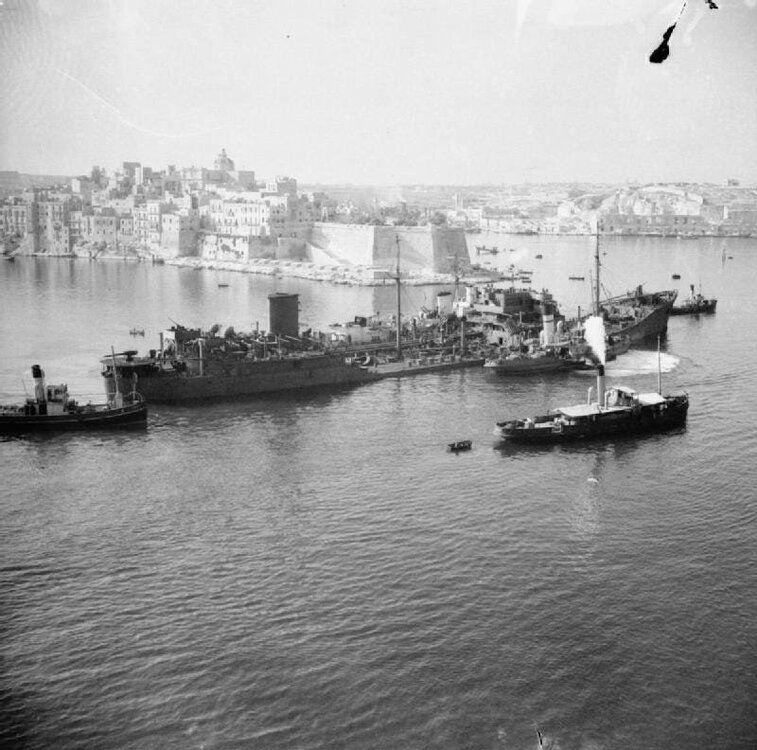
Though the Americans are now in the fight, still on every front; desperation. At every morning brief, more ships sunk. The enemy surrounds you as you starve. Your ships and aircraft sit idle for lack of fuel and parts. Through waves of attacks, a relief convoy comes ... and you wait. Do they know your desperation? Will they make it? What can be done? Well, in comes, Captain Dudley Mason - the master of the former U.S. and now U.K. tanker SS Ohio - and his crew and convoy. For the details, let’s look at the citation for his George Cross and the award to two of his crew, Frederick August Larsen, Jr., Junior Third Officer and Francis A. Dales, Deck Cadet-Midshipman on SS Santa Elisa/SS Ohio. A little note about those two men, they were not originally part of the crew of the Ohio. They had been rescued from the SS Santa Elisa when it was sunk. Then they volunteered to man the guns on the Ohio. Via WWIIToday: During the passage to Malta of an important convoy Captain Mason’s ship suffered most violent onslaught. She was a focus of attack throughout and was torpedoed early one night. Although gravely damaged, her engines were kept going and the Master made a magnificent passage by hand-steering and without a compass. The ship’s gunners helped to bring down one of the attacking aircraft. The vessel was hit again before morning, but though she did not sink, her engine room was wrecked. She was then towed. The unwieldy condition of the vessel and persistent enemy attacks made progress slow, and it was uncertain whether she would remain afloat. All next day progress somehow continued and the ship reached Malta after a further night at sea. The violence of the enemy could not deter the Master from his purpose. Throughout he showed skill and courage of the highest order and it was due to his determination that, in spite of the most persistent enemy opposition, the vessel, with her valuable cargo, eventually reached Malta and was safely berthed. The George Cross citation is very brief, as is the British custom. More detail is available with Larsen and Dales’ Merchant Marine Distinguished Service Medal citation; His ship was a freighter carrying drums of high-octane gasoline, one of two American ships, in a small British convoy to Malta. Orders were to “get through at all costs.” Heavily escorted, the convoy moved into the Mediterranean, and before noon of that day the enemy’s attack began. From then on the entire convoy was under constant attack from Axis planes and submarines. Assigned the command of an anti-aircraft gun mounted on the bridge, Dales contributed to the successful defense of his ship for three days. At 4:00 A.M. on the morning of the fourth day, torpedo boats succeeded in breaking through and two attacked from opposite sides. Sneaking in close under cover of the darkness one opened point-blank fire on Dales’s position with four .50 caliber machine guns, sweeping the bridge and killing three of his gun crew in the first bursts. The other sent its deadly torpedo into the opposite side of the freighter. Neither the heavy fire from the first torpedo boat nor the torpedo from the second drove Dales and his crew from their gun. With only flashes to fire at in the darkness, he found the target and the first boat burst into flames and sank. But the torpedo launched by the other had done its deadly work. The high-test gasoline cargo ignited and the American ship was engulfed in flames. Reluctantly, orders were given to abandon her. Two hours later, the survivors were picked up by a British destroyer, which then proceeded to take in tow a tanker [SS Ohio] that had been bombed and could not maneuver. After five hours constant dive-bombing, the tanker was hit again–her crew abandoned her–and the destroyer was forced to cut her loose. But the cargo she carried was most important to the defense of Malta, and it had to get through. The rescue destroyer and another destroyer steamed in– lashed themselves on either side of the stricken tanker–and dragged her along in a determined attempt to get her to port. Dales and four others volunteered to go aboard the tanker and man her guns in order to bring more fire power to their defense. The shackled ships, inching along and making a perfect target, were assailed by concentrated enemy airpower. All that day wave after wave of German and Italian bombers dived at them and were beaten off by a heavy barrage. Bombs straddled them, scoring near misses, but no direct hits were made until noon the next day, when the tanker finally received a bomb down her stack which blew out the bottom of her engine room. Though she continued to settle until her decks were awash, they fought her through until dusk that day brought them under the protection of the hard fighting air force out of Malta. Here’s the twist. How did they get the Ohio back to port with this much damage? Because of the vital importance of her cargo (10,000 tons of fuel which would enable the aircraft and submarines based at Malta to return to the offensive), she could not be abandoned. In a highly unusual manoeuvre, the two destroyers (HMS PENN and HMS LEDBURY) supported her to provide buoyancy and power for the remainder of the voyage. Mission focused; mission first. Fullbore. Leave a comment Share This Substack is reader-supported. To receive new posts and support my work, consider becoming a free or paid subscriber. View the full article
-
The UK Ministry of Defence has awarded BAE Systems a £453.5 million ($613 million) contract to begin full production of the ECRS Mk2 radar for Royal Air Force Typhoon aircraft. The contract follows a completed program of testing and evaluation and represents the next phase of the UK’s long-term investment in Typhoon capability. The Ministry […]View the full article
-
The Italian Army has received its first new-generation SAMP/T NG and GRIFO air defense systems, marking the initial deployment of Italy’s modernized layered air and missile defense architecture, the defense outlet Militarnyi reported on Friday. The handover includes the first SAMP/T NG (New Generation) medium- and long-range air defense systems as well as GRIFO short-range […]View the full article
-
NATO defense officials have confirmed that European allies, led by the United Kingdom and Scandinavian countries, currently carry the primary responsibility for Arctic military operations, as the United States lacks sufficient forces and experience for sustained activity in the High North, according to The Times. The assessment follows recent allied exercises and internal NATO evaluations […]View the full article
-
A Taiwan-based security expert has called on Ukraine to apologize for past transfers of military equipment and advanced technologies to China, following recent remarks by Ukrainian President Volodymyr Zelenskyy that criticized the flow of Taiwanese electronic components into Russia’s military industry. Mei Fu-hsing, director of the Taiwan Strait Security Research Center and a U.S.-based analyst, […]View the full article
-
The United Kingdom has deployed Royal Air Force Typhoon fighter jets to Qatar as part of a defensive mission in response to regional tensions, the British government said in a press release on Friday. The deployment involves 12 Squadron, the joint RAF–Qatar Emiri Air Force Typhoon unit, which has moved aircraft to the Gulf region […]View the full article
-
The Indian Army has flagged off the first batch of Armoured Recovery Vehicles (ARVs) repaired at its newly established Tank Medium Repair Facility in Ladakh, marking the start of frontline maintenance operations at the world’s highest armored repair site. The facility, located in the high-altitude Ladakh region, is designed to provide on-site repair and restoration […]View the full article
-
The United States Air Force conducted Exercise Dragon Shield at Beale Air Force Base, California, in 2026, testing the ability of maintenance units to launch and recover U-2 Dragon Lady aircraft under simulated contested conditions, the service said in a released update. The exercise focused on the 9th Aircraft Maintenance Squadron (AMXS), which was tasked […]View the full article
-
The United States has increased deliveries of weapons systems, ammunition, and military equipment to the Middle East since late 2025, with U.S. Air Force transport aircraft conducting intensified flights from the continental United States to European logistics hubs and onward to bases in Jordan, Israel, Qatar, and Saudi Arabia, according to open-source flight tracking and […]View the full article
-
The United States Air Force has confirmed that the 56th Rescue Generation Squadron (RGS) has received its final HH-60W Jolly Green II helicopter, completing the unit’s transition to the service’s newest combat rescue platform, according to a service update released this week. The final aircraft was delivered to Aviano Air Base, Italy, where the 56th […]View the full article
-
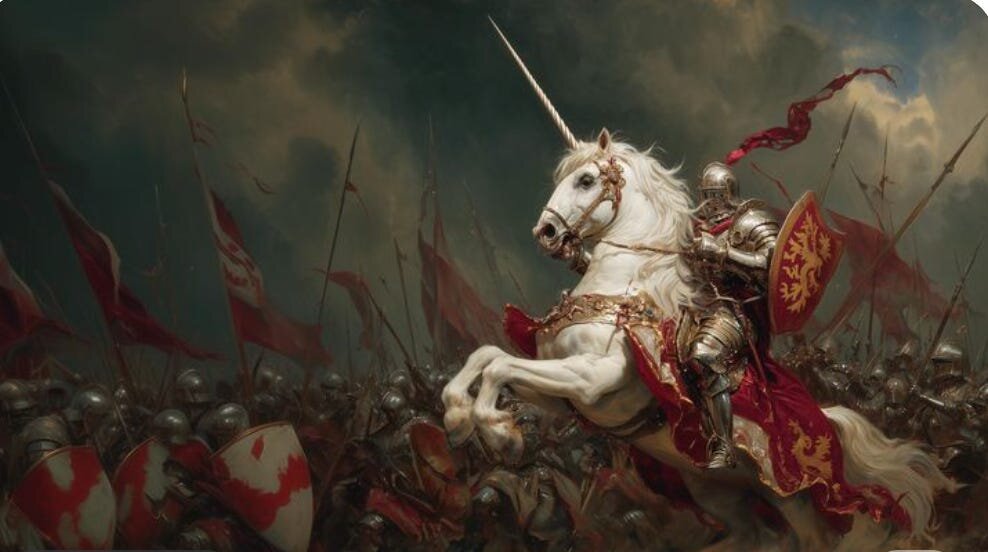
Those who are selling a short, fast, and successful war are selling a lie. It seems every generation thinks they have found a way to fix the problem. Over and over, from Europe in 1939 to Europe again in 2022, the quick and successful war that was briefed devolved into a consuming slog. You can win a consuming slog, but you have to be able to mobilize and industrialize your way through it—and you need to start doing that years before the war starts. The fleet that showed up in 1943 did not start in 1941—it began in 1936, 1938, and 1940. A decade and a half after President Obama’s “Pacific Pivot”, we still talk a big game about being ready for the next Great Pacific War west of the International Date Line. We’ve had our slap fights through various copes like “Deterrence by Denial” v. “Deterrence by Punishment”, etc. Even after four years of the Russo-Ukrainian War of 2022, when we were warned again about the dangers of optimism filters, have we yet turned into the storm we have been running from? Are we ready for it? No—we are not ready for it. We are still structured for the Cold War and the long peace of exquisitely made and very profitable weapons that work really well…but have nothing behind them in depth and scale. We did not win the last world war that way—but the argument still has not been won to convince the national security complex that we need to remember how we did win that war, and will have to do so again to win the next world war. We are making progress, but we are not yet there. Good arguments are being made to warn of this corner we’ve put ourselves into. Heritage Foundation’s TIDALWAVE report is one, and a recent Substack by Palantir’s Greg Little and Aaron Jaffe over at First Breakfast is another. Let’s dive in there. Designs that can tolerate variation and substitution proliferate. Designs that can’t are redesigned or abandoned. The lesson is simple and uncomfortable: the United States doesn’t scale by asking industry to stretch to meet perfect designs. It scales by aligning designs to industrial strength. Here’s where this gets uncomfortable. If a modern weapon system depends on a bespoke material, a limited supply base, or a certification regime that freezes design for a decade, then it may be technologically impressive—but it is strategically brittle. In a contested industrial war, elegance is not resilience. A system that cannot tolerate supplier substitution, component swaps, or rapid redesign is not “high-end.” It is pre-failed the moment production is disrupted or losses exceed peacetime assumptions. We often describe these bad outcomes as manufacturing problems or supply-chain shocks. And yes, we need investment to expand industrial capacity and deepen critical supply chains. But at root these are design decisions—made early, reinforced by incentives, and rarely revisited. And then we act surprised when scale never materializes. … Too many in the Department of War still operate on the assumption that if we simply fix acquisition policy, streamline contracts, and empower program offices, the rest of the system will somehow align. It won’t, and Secretary Hegseth’s acquisition transformation recognizes this. Even if every acquisition reform memo is executed perfectly, the department is still missing something fundamental: a way to operate the war machine as a single, connected system. Today, weapon design lives in one world. Manufacturing capacity lives in another. Supply chains live in spreadsheets. Sustainment data arrives late. Readiness has little connection to its industrial inputs. Learning happens—but slower than the fight evolves. This is a coordination problem. We have a winning template. Heck, we invented it. America’s rapid wartime evolution was spurred by a collaboration between government and manufacturers to maximize the use of their existing capabilities. At Willow Run, Ford—the automobile company—adapted aircraft designs to the logic of automotive assembly, using standardized parts, simplified subassemblies, and repeatable processes. By 1944, a B-24 bomber was rolling off the line nearly every hour. Ford optimized for throughput, not perfection—and throughput won the war. This story was repeated across the American industrial base. At the Detroit Arsenal, Chrysler applied the same logic to tank engine production. The Sherman tank wasn’t designed to win one-on-one duels against the most advanced enemy armor. It was designed to be built quickly in enormous quantities and to be easily repaired in the field. The result was a tank that could be produced and replaced faster than adversaries could destroy it. This design-for-scale philosophy is not a complete relic of World War II—it’s re-emerging today where speed and volume matter most. Anduril’s Barracuda cruise missile is a modern example of this same logic. Rather than designing a missile optimized solely for performance and then struggling to manufacture it, Barracuda was designed from the outset to be compatible with high-volume production, using components, processes, and tolerances that allow it to be built on current automotive manufacturing capabilities. The result is a system explicitly designed for mass production, rapid replenishment, and iterative improvement. Unlike WWII, we are facing as our competitor a nation that not only has a greater population than ours, by a factor of four, but has a larger manufacturing base. The script has been flipped. We need to put down the plate of lotuses, and pick up the trade school brochure. We don’t just need to increase capacity in mass, we need to make what we have work faster. We can do this, we just need the will to do it. As they describe later on, they believe ShipOS, which we discussed with Palantir’s Mike Gallagher and Matt Babin on the Midrats Podcast earlier this month, is one way to solve this coordination problem. They end with some hard truth…something fully endorsed here. …can this weapon be built, repaired, and replenished faster than it will be destroyed? If the answer is no, no amount of acquisition reform, contracting flexibility, or urgency memos will save it. In a fight defined by attrition, adaptation, and industrial endurance, the winning systems will not be the perfect ones on paper but the ones that can be produced, replaced, and improved the fastest. America didn’t win past wars by hunting unicorns. We won by designing for scale—and then scaling relentlessly. There’s your formula. Now, we need action. Leave a comment Share This Substack is reader-supported. To receive new posts and support my work, consider becoming a free or paid subscriber. View the full article
-
The Norwegian Armed Forces, alongside about 3,000 United States Marines and other U.S. and NATO units, will conduct Exercise Cold Response 26 in northern Norway in March 2026, with allied forces beginning cold-weather training deployments as early as January, U.S. and Norwegian officials confirmed. The exercise is a Norwegian-led, routine winter drill designed to test […]View the full article
-
Textron Systems said on January 20, 2026, that it has been awarded a $163.4 million contract to deliver 65 COMMANDO Select Mobile Strike Force Vehicles to support Ukraine under the U.S. Ukraine Security Assistance Initiative, using the Foreign Military Sales mechanism, according to a company announcement. The three-year, firm fixed-price contract was awarded through the […]View the full article
-
South Korea has launched a 1.9 trillion-won ($1.29 billion) program to develop a new class of aircraft designed to jam and disrupt enemy air defense networks, the Defense Acquisition Program Administration (DAPA) announced. DAPA said the project, known as Block-I, will focus on developing large, dedicated electronic warfare aircraft capable of degrading an adversary’s integrated […]View the full article
-
Japanese defense experts have publicly assessed that South Korea’s navy now holds qualitative advantages over Japan’s Maritime Self-Defense Force, signaling a shift in the balance of naval power in Northeast Asia, according to recent analyses circulating in Japanese security circles in January 2026. The assessment reflects a growing view inside Japan that traditional measures of […]View the full article
-
South Korea’s Defense Acquisition Program Administration (DAPA) said on January 22 that the Republic of Korea Marine Corps’ amphibious maneuver helicopters have maintained readiness levels above target requirements, following a review of operational performance and logistics support conducted in Daejeon. The meeting, held at DAPA headquarters, brought together representatives from the Marine Corps, Korea Aerospace […]View the full article
