




Use game version 2022.027 (matrix patch) or later in Westpac Battleset with Database HCCW 140314
The "Landing at Pontian" (17 August 1964) was an amphibious landing made by a small body of Indonesian troops in the Pontian District, Johor, Malaysia. The landing took place during the Indonesia-Malaysia confrontation, an undeclared war fought between Malaysia and Indonesia during the early 1960s over the creation of a Malaysian Federation encompassing parts of northern Borneo, areas that Indonesia sought to increase its own power in Southeast Asia.
On 17 August 1964, Indonesian President Sukarno announced a 'Year of Dangerous Living' as a part of his country's Independence Day celebrations. To reinforce his point, Sukarno had ordered that a force of Indonesian troops and exiled Malaysian-Chinese land in mainland Malaysia to kick off a campaign of such invasions to create guerrilla bases in enemy territory and stir up Communist sympathizers. The effort was a failure, as targeted Malaysians proved unreceptive to Indonesian efforts and the invaders were swiftly rounded up by Anglo-Malaysian security forces.
The landing shocked the British, who had not expected such a strong and prominent step from the Indonesians, but did not incite them to respond to Sukarno's escalation of tensions. The absence of violent reply stiffened Sukarno's burgeoning resolve, and led him to continue with more landings, amphibious and airborne, throughout the fall and winter of 1964.
The landings at Pontian, though small in scale, and unsuccessful in nature, caused a huge political crisis for Britain. The Malaysian government was infuriated, and accused the Indonesians of "blatant aggression," threatening to strike (through Britain) at their bases in Sumatra, simultaneously putting immense pressure on London to act. Though Sukarno had suffered a minor defeat, he had still managed to put the British in an extremely awkward position: if they did not retaliate, they would be seen to have lost face and to lack enough resolve to risk escalating the crisis. Retaliation, however, might bring the Confrontation towards open war, which the British were understandably unwilling to consider. The debate whether or not to act raged on in Cabinet backrooms. Lord Anthony Head proved an influential voice in the conversation, stating that interrogation had shown that more raids were impending, which would stretch British forces between the Malaysian Peninsula and Borneo, forcing an unwanted reinforcement of Southeast Asia. Head advocated preventative strikes against Indonesian bases should another raid occur.
Before the British could decide upon a policy, however, Sukarno struck again, making an airborne assault Labis in the night of 1-2 September. Though the raid was a catastrophic failure, with one of the transport planes crashing en route, and the remainder of the troops arriving scattered with little food and battered morale, the move further infuriated the Malaysians, who in turn put pressure upon the British to act. The next day, colonial secretary Duncan Sandys authorized on-site naval commander Admiral Varyl Begg to plan for strikes against Indonesian bases in Sumatra.
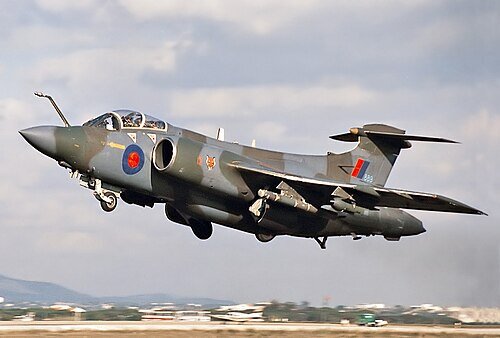
In this scenario the British begin their actions of retaliation in Sumatra without waiting for further Indonesian attacks.
What's New in Version 1.1.0
Released
The Indonesian ASuW attack TU-16 has have been replaced with a similar USSR plane to fix a database missile missile fault.