All Activity
Past hour
-
jhony rhinson joined the community
Yesterday
-
A team of engineers have proved that a helicopter design older than most of their grandparents can still out-fly the strangest, most futuristic drone shapes engineers could dream up. The Defense Advanced Research Projects Agency, the Pentagon’s advanced research arm known for funding technologies that eventually reshape entire industries, announced that its Lift Challenge had […]View the full article
-
Soldiers from two of the U.S. Army’s most closely watched combat divisions spent a week at an Alabama training range flying different drones head to head, then got to pick which ones actually make it into their units, according to a report from the Army’s Capability Program Executive Aviation. The evaluation, held at Clarke Range […]View the full article
-
U.S. and Moroccan forces have proven out a brand-new weapons testing range in North Africa by firing a low-cost, long-range cruise missile across it, the first live-fire event ever held at the site, according to a report by Army Capt. Jordan Beagle of U.S. Africa Command. The demonstration ran from August 3 to 7 at […]View the full article
-
DroneShield, an Australian counter-drone technology company that has spent years building systems to detect and defeat hostile uncrewed aircraft, announced Tuesday the launch of RfRecon, a portable device designed to do something most current sensors cannot: not just detect radio frequency activity, but explain what it means, in real time, from a single handheld platform. […]View the full article
-
A pre-revenue air taxi startup has bought its way into the defense drone business, and Boeing is the one that sold it the keys. Archer Aviation, the Silicon Valley company racing to put electric flying taxis over American cities, announced Monday that it has signed a definitive agreement to acquire three Boeing subsidiaries in a […]View the full article
-
It’s been almost nine months since the last Long Game post. We’re overdue. For a while I thought I might stop the Long Game series I started in 2004, after all, the Long is Now…but I was mistaken. The People’s Republic of China (PRC) is still playing a long game…and we—and that includes me—just keep getting distracted. I had the following exchange with Brent Sadler at about the 52-minute mark toward the end of last Sunday’s Midrats Podcast that reminded me that, even in 2026, we’re still thinking like it’s 1996. Sal: It seem like it just happened a little while ago when they said, “Hey, there are there are PRC police stations right here in New York City.” It’s fairly high profile. It’s dropped into the background again. But there was also news that broke a couple weeks ago, and this is old news, but people are getting shocked over it. Smithfield Foods (is) owned by China. And so much of Chinese business is involved in the U.S. in real estate, agriculture, infrastructure. And it’s not benign. And it’s something that American companies cannot do in China themselves. And it is very much related and impacting national security. When we we saw this winter, the fact that CCP aligned individuals owned property right on the approach to the one airfield we have our B2s on. … out here in the provinces, it seems like the energy of having a mature conversation about what the the PRC is doing here inside of our lifelines…seems to have faded into the background a bit. Brent: No, you’re right about that. The China Select Committee, Mike Gallagher, so very much engaged with him and at the time Elaine Luria on getting two commissions, or committee special. This one has survived and there’s a sentiment and s up on the hill that this committee will probably be off ramped, and I think that’s a significant mistake. And so I’m working to continue to elevate and as long as they keep doing good work that’s meaningful and is and and is to the point and backed up by facts, the better. So the other thing is going after like paid protesters that tie back to back to the CCP,. For example, is one thing that you’re starting to see a lot of traction. But if you didn’t have the select committee, a lot of that, a lot of unfair stock listing, unfair trade practices, the threat from the Chinese on elite capture. You know, we had a mayor in California that was arrested as an agent of China. So it’s very real. The United Front Department is specifically the CCP’s tool for recruiting Americans to their cause. And with the rise of socialism, unfortunately, this is even more important. And so the committee, there’s there is a concern that it will be off-ramped. Ro Khana is not showing much desire to keep it going. The Republican chair for it, Moolenaar does, but he hasn’t been as as visible. Not by lack of effort, just hasn’t been as visible. I think partly that’s because the issues in Iran. but the work that they do is critical. I think the committee needs to continue. Certainly, there’s much work left to be done, to say the least. Our inability to maintain resolve—and a similar lack of clear-eyed focus by our allies—just calls into question the seriousness of our leaders. This isn’t the Coffee Klatch era, and yet…we have this going on in the UK, as reported in the Daily Telegraph. Royal Navy spy drones used by Britain’s elite special forces secretly sent data to China, The Telegraph can reveal. The cameras on the K3 Scout surveillance drones had components made in China which were secretly transmitting information to a device in the country. The Royal Marines have been using the £12m fleet since March and the Ministry of Defence (MoD) was forced to remove all internet connectivity from the cameras after discovering the breach Again, this is 2026. Am I the only one who read the Govini Report? It’s just embarrassing, amateurish, and unprofessional at this point. Nothing in any NATO nation’s military should have electronics made in the PRC. Any reliance on raw materials from the PRC should already be on the offramp. There can be no excuse…but the unseriousness gets worse. The balance of readers here I assume have held a security clearance of some kind. In the course of a career, you get A LOT of training on, in essence, counter-intelligence hygiene, on how to spot your own vulnerabilities and to see when you are the target of an intelligence operation of one kind of another. The higher up you go, and the more ‘entertaining’ your job is/was, the more other nations’ intelligence agencies want to get in your head, or the more terrorists want to kill/kidnap/exploit you. It is more than, “If you are a 4 and she is a 10, you’re an asset” We all carry stuff in our heads that we can’t get rid of. The longer you’ve been in, the more “interesting” your jobs have been, the more stuff you keep locked in a series of boxes in your head that you are supposed to take to the grave with you…or it some cases, just having a few of those lockboxes in your nogg’n helps your way to the grave. Our most senior officers especially have things in their nogg’n that don’t need to leak out. I guess no one is taught about Captain John Philip Cromwell, USN anymore. The below—the willful exposure of our gullible retired senior leadership to what is laughably clear to be a PRC intel operation—should be a national scandal. The amount of hours PRC intelligence operatives have been granted to conduct varsity-level elicitation is just gobsmacking. All of these people should know better. To give credit where credit is due, when I first saw this post by Natalie Winters, I squinted a bit and wasn’t really that sure about it. But…I’ve actually had the pleasure of being introduced to Natalie by our mutual friend Tom Sauer and we made small talk for a couple of minutes before she headed off to do more important things. She immediately struck me as having a sharp intellect…so I went back and read the whole thread. She pulled no punches and came right off the top rope: Top American generals formed a secret backchannel with a CCP military intelligence front that instructed them: “We wish you would advocate positions” favorable to China. Some ended up on China’s payroll. Read the whole thread. I feel bad that it took Natalie to bring this above the background noise to the point that Secretary Hegseth now has it in his scan as of last week. It is not new news…it is just news that was ignored. When you see some of the names involved, it makes sense. Check this out from Spring 2020’s Marine Corps University Press’s Journal of Advance Military Studies article by Professor Kerry K. Gershaneck titled, Political Warfare The People’s Republic of China’s Strategy “to Win without Fighting” Of particular concern to the U.S. military is the PRC’s highly successful employment of political warfare operations to co-opt retired senior U.S. military officers to lobby on behalf of PRC objectives and to undermine U.S. national security objectives.44 The PLA has successfully co-opted retired U.S. military flag and general officers through organizations such as the Chinese Association for International Friendly Contact (CAIFC) and other programs such as the Sanya Initiative.45 Established in December 1984 as a political warfare platform, CAIFC’s “main function is establishing and maintaining rapport with senior foreign defense and security community elites, including retired senior military officers and legislators.”46 CAIFC routinely sponsors retired U.S. officers for free visits to the PRC for what amounts to political indoctrination sessions. According to Mark Stokes and Russell Hsiao, “CAIFC facilitates influence operations through PRC foreign affairs, state security, united front, propaganda systems, and military systems.”47 To entice American and other foreign retired military officers, “CAIFC serves as a window to China’s broader business community.” In some cases, foreign retired officers have been required to “agree to publish editorials supporting China [sic] position and criticize U.S. regional policy in exchange for business development support in China.”48 The Sanya Initiative began in February 2008 as a PRC initiative to influence senior retired U.S. flag and general officers to support PRC security interests. At the first meeting at Sanya Resort on the PRC’s Hainan Island, senior PRC political warfare and intelligence officers led the PLA side, and U.S. participants were led by retired Admiral (and former Vice Chairman of the Joint Chiefs of Staff) William A. Owens. According to a Congressional Research Service report on the Sanya Initiative, “The PLA side asked the U.S. participants to help with PRC objections to U.S. policies and laws: namely the Taiwan Relations Act (TRA), Pentagon’s report to Congress on PRC Military Power, and legal restrictions on military contacts in the [National Defense Authorization Act] NDAA for FY2000.”49 Meetings were subsequently held during 2009, in Honolulu, Hawaii; Washington, DC; and New York City. As a result, Owens (who had business interests in China as a managing director of AEA Investors in Hong Kong) published an opinion piece opposing the Taiwan Relations Act as harmful to the relationship with a rising great power—China—that has increasing wealth and influence in the world.50 Owens and certain other U.S. officers continued to meet with senior CCP officials and to support PRC security objectives in discussions with members of Congress and DOD officials.51 That point about Owens is not made up. Heck, he’s proud of it. Put on your Red Hat, remember all your counterintelligence briefings, and give his Wikipedia page a read. Retired four-stars make an ungodly amount of money in retirement pay alone…but that is not enough for some. Let’s go back to Natalie’s thread. She’s naming names. I’m so disgusted that I’m more than happy to list them here. Why have Owens get all the love? I’m not even going to list what their final jobs were in the military. You all know the names. Peter Pace Bill Owens John Abizaid George Casey Ray Odierno Jonathan Greenert Ronald Fogleman Norton Schwartz Dennis Reimer Joseph Prueher Timothy Keating John Keane Walter Sharp Charles Jacoby Charles Wilhelm Robert Van Antwerp Stephen Lanza Karl Eikenberry …and of course, we all know who the guy in the middle is. Read Natalie’s longer post on this decade+ intel operation. Of course, there is a cameo by Hillary Clinton, some walkabouts of the U.S. Naval Academy…and many of the usual suspects. What do you do with this? In 2009, Owens became a consultant to Huawei, the Chinese telecommunications company that was already facing scrutiny in Washington over national security concerns. He later founded Amerilink Telecom Corp., a Virginia-based company created to market Huawei equipment in the United States. According to the Financial Times, Huawei was Amerilink’s first customer, and Owens acknowledged he began consulting for the company before launching the venture. Amerilink was not merely a reseller. A U.S.-China Economic and Security Review Commission report found that the company worked as both a distributor and consultant for Huawei, helping the company pursue business in the United States. During Huawei’s effort to win part of Sprint Nextel’s network contract, Amerilink proposed serving as an intermediary that would address Washington’s security concerns by independently testing Huawei equipment and overseeing its deployment. … Owens continued publicly defending Huawei after the Sprint effort failed. Speaking at a 2014 China conference, Owens said: “I object to the way Huawei was treated in the United States because it’s unfair.” He argued that American policy toward Huawei had been driven by politics rather than evidence. His public advocacy extended beyond Huawei. In November 2009, Owens authored an essay titled “America Must Start Treating China as a Friend.” In it, he argued that the United States should rethink its approach toward Beijing and questioned continued American arms sales to Taiwan, writing that Washington should reconsider policies that Chinese leaders viewed as hostile. At the same time, Owens maintained a significant business presence in Asia. He served as chairman and senior partner of AEA Investors Asia, a Hong Kong-based private equity firm, and later led Red Bison Advisory Group, whose public materials described advising companies and developing partnerships involving enterprises in China. He’s like something out of a novel or spy movie…and not one of the good guys. As a cherry on top, he’s associated with all sorts of the usual suspects on the left like Issue One. I mean, really people. It is all just too spot on. I’m not the only one seeing this, am I? CUSEF’s later materials show the operation continued after the original Sanya branding faded. In its 2023 and 2024 reporting, the foundation described a “U.S.-China Military-to-Military Dialogue” involving retired American four-star generals and admirals meeting Chinese counterparts in an annual, closed-door setting. Fun CUSEF detail. Google “Sanya Initiative”. This is one of the returns. If you try to click it, you get this. Huh. Somehow, Stimson got involved around 2020 as well? Are they still? …and yes, I understand the good-faith idea around these exchanges…but it is a bad idea, a wrong idea, and an idea—if you understand how the PRC intelligence services work—an idea that only makes sense to useful idiots, incurious people wanting to feel important again, or the compromised. The PRC is dead serious about kicking the U.S. out of its position in the world. We act like we don’t know—or care—that they do. Having our own retired GOFO willingly allowing themselves to be open to compromise is, again, a national scandal. A.Maze.Ing. Leave a comment Share This Substack is reader-supported. To receive new posts and support my work, consider becoming a free or paid subscriber. View the full article

-
A California aerospace firm building giant swarms of unmanned aircraft has landed a deal with the Air Force to prove it can manufacture those aircraft faster and cheaper than anyone else in the industry. Swarm Aero, a defense technology company that develops large uncrewed aerial vehicles designed to operate in coordinated fleets, announced more than […]View the full article
-
Money is flowing into defense technology at a pace that would have seemed unthinkable a decade ago, and the people writing the checks are not just Pentagon program managers anymore. Individual investors, boutique venture funds and family offices are increasingly betting on drone makers, artificial intelligence startups and companies building weapons for a war in […]View the full article
-
The Swedish Armed Forces will receive 45 heavy recovery and technical rescue vehicles built entirely in Poland, a deal that marks one of the few instances in which Sweden has turned to a manufacturer outside its own borders for this kind of specialized military hardware. Szczęśniak Pojazdy Specjalne, a family-owned vehicle manufacturer based in Bielsko-Biała […]View the full article
-
A defense company that just unveiled a laser powerful enough to shoot down threats from a fighter jet cockpit also posted a record $32 billion order backlog, and the two facts are not unrelated. Elbit Systems, an Israeli defense technology company that develops everything from night vision goggles to unmanned aircraft, reported second quarter 2026 […]View the full article
-
A Ukrainian company that built its drone-detection network by listening for the sound of incoming Shahed attack drones has tried something its own engineers had never planned for, and it worked well enough to change how the technology might be deployed across NATO’s eastern flank. Zvook, a Ukrainian defense and space manufacturing company headquartered in […]View the full article
Last week
-
Sometimes, history whispers to you during small and medium-sized wars. It won’t force you to listen or even understand, but it is a loud enough whisper that you know it is there. These are not private whispers, only for you. These are understandable by anyone making an effort to hear them. More often than not, it is not a good-news whisper. No, it is an uncomfortable whisper, an inconvenient whisper, an expensive whisper. You don’t have to think about the implications of this whisper, but other people may. These whispers from small to medium-sized wars are, on occasion, riddle-strewn prophecy, but more often than not they are clear and direct about what you should expect in the next big war. The various military actions following the October 7th invasion of Israel by Hamas, and the Russo-Ukrainian War of 2022, are thick with lessons. There is a lot of interesting information from this interview by RBC-Ukraine with Deputy Chief of Ukraine’s Defense Intelligence, Major General Vadym Skibitskyi. Yes, yes, yes…consider the source, etc…but what he is saying vibes well with what we’ve seen elsewhere in open source. His comments about the Russians’ suspension of AS-24 Killjoy (Kinzhal) and the modernized AS-4 Kitchen (Kh-32) production are interesting, as well as the 11,000 Shahed drones-per-month production and the long-awaited Russian Starlink equivalent are interesting, but they are not what got my attention. Here is the money quote that the U.S. needs to ponder. The SS-N-27 Sizzler (AKA Kaliber) is a functional equivalent of the U.S. Tomahawk Land Attack Cruise Missile. They have become so combat ineffective that, even though other missiles are going direct from the factory to launch at Ukraine, the SS-N-27s are being pushed into reserve like so many pre-dreadnoughts in 1914. I emphasize that for a reason. The Ukrainians have figured out how to shoot down close to 100% of them before they reach the target. Let’s say that is a bit inflated, and instead put that at 75% for planning purposes. You can bet your house that the People’s Republic of China (PRC) already has the “how” being looked at by their people. Why? Simple. They know that U.S. military planning relies in large part on certain planning assumptions about the TLAM. The U.S. has had decades of exceptional success using TLAM against second-rate to fourth-rate militaries. Like the sun rising in the east, we just assume that it is there. In many ways, we have designed a fleet around it. It is so ubiquitous that it has created almost a monoculture. It is the Cavendish banana of weapons systems…IYKYK. Did you hear that whisper from the Pontic Steppe? What if our assumptions about our preferred 1970s-era performance TLAM are dangerously dated? “They are not really drawing down their stockpiles. Almost everything being used now is coming straight off the production line. The only exception is the Kalibr missiles - most of them are currently being allocated to other Russian fleets, since all new Russian warships and submarines are equipped with these systems. In effect, those missiles are going into reserve stockpiles. In addition, our interception rate for Kalibr missiles is nearly 100% when air-defense missiles are available.” If by 2030 the PRC has the capability to shoot down 75% of any TLAM that goes feet-dry from Hainan to Shanghai, how would that change our OPLANs? What about 50%? 25%? At what point does the intercept rate of our TLAM introduce so much volatility into our warplans that the math just does not work anymore. Then what? Don’t forget the toolbox metaphor. You need a diverse toolbox, you need variety. You don’t know exactly which tool you will be at the next crisis. You need to have the desire to future-proof your arsenal as a core concept. The Cult of Efficiency will always push the accountant. Accountants are important, but ensure the warfighter remains in front of them. Keep the supporting-vs-supported relationship sound. Do you now understand my continual advocacy for Conventional Prompt Strike (CPS)? The whisper is just reinforcing what I—and others—have been feeling for years. Oh, I almost forgot…for over two years, I have been asking us to stop calling CPS, “CPS”. It should be called, “Drakon“. H/t Rob Lee.Leave a comment Share This Substack is reader-supported. To receive new posts and support my work, consider becoming a free or paid subscriber. View the full article

-
A West Point cadet has spent three weeks helping Army engineers solve a math problem that could determine how many enemy drones an American air defense system can shoot down before it runs out of ammunition. Cadet Alex Anteen, a member of the U.S. Military Academy’s class of 2028, worked alongside scientists at the Army’s […]View the full article
-
Cameras mounted on Royal Navy surveillance drones bound for special forces missions in the Gulf were secretly transmitting signals to an IP address inside China, The Telegraph reported, citing an investigation by the newspaper’s Richard Holmes. The drones in question are Kraken K3 Scout uncrewed surface vessels, roughly 8.4-meter (28-foot) unmanned speedboats built by the […]View the full article
-
A mysterious Chinese warship that has spent years testing stealth technology just showed up with something new bolted to its deck, and naval watchers cannot agree on whether it is designed to disorient people or fry electronics. Open-source images circulating on social media this week show China’s unnamed experimental corvette, a stealthy test vessel that […]View the full article
-
A British air defense startup that did not exist until late 2024 just landed a $300 million funding round that values the company at $3.4 billion, a valuation that puts it on par with established defense primes despite having built its first missile from a blank sheet of paper less than two years ago. Cambridge […]View the full article
-
Russia’s prized “unstoppable” hypersonic missile has gone dark, and Ukrainian military intelligence says Moscow pulled the plug on purpose to feed a different weapon entirely. Vadym Skibitsky, deputy head of Ukraine’s Defense Intelligence Directorate, known by its Ukrainian acronym HUR, told the outlet RBC-Ukraine that Russia halted production of its Kh-47M2 Kinzhal ballistic missile back […]View the full article
-
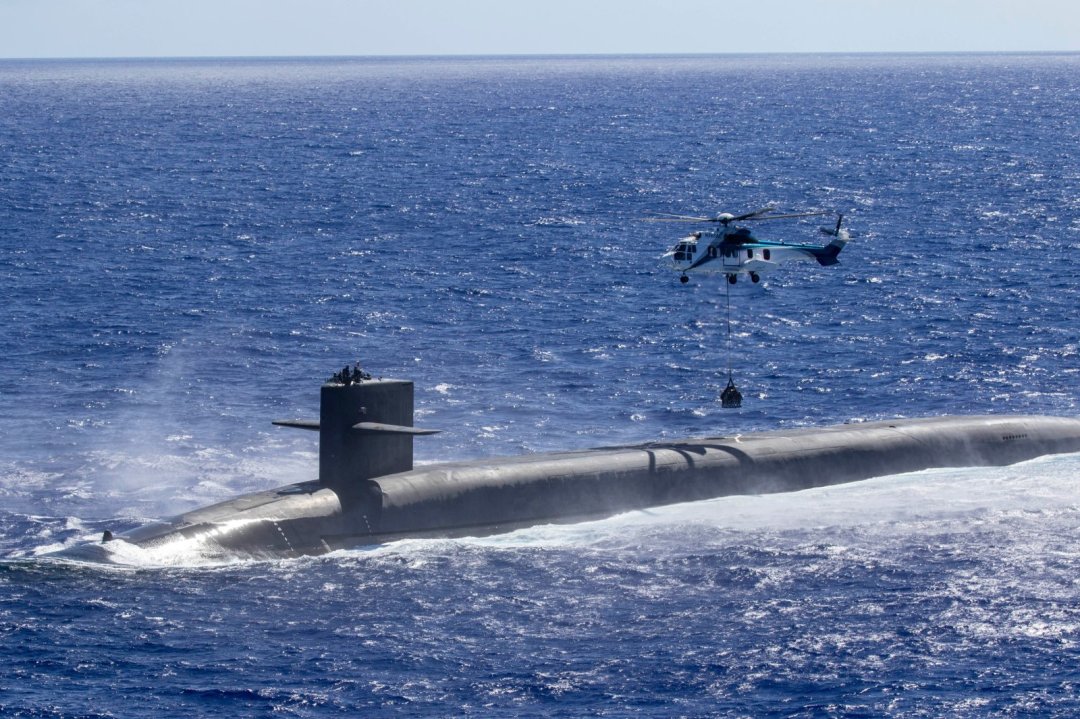
Panels, seminars, conferences, reports, speeches, and emotion do not build a navy. Even shipyards do not build a navy. In the American system of government, if you want a navy you have to go up to Capitol Hill and get Congress to fund it. Without money, everything else is just a PDF. What is the state of play in bringing the argument for sea power to Congress? Returning to the Midrats Podcast just in time for the Senate’s August recess will be Brent Sadler, CAPT, USN (Ret.). You can join us LIVE today from 5-6 PM Eastern at this link. If you can’t make the live show, check the Substack later Sunday for all the podcast links and make us part of your commute listen. Brent is a Senior Research Fellow for Naval Warfare and Advanced Technology in the Douglas and Sarah Allison Center for National Security at The Heritage Foundation, and a retired U.S. Navy Captain. Leave a comment Share This Substack is reader-supported. To receive new posts and support my work, consider becoming a free or paid subscriber. View the full article
-
A patch of forest and lakeshore in northern Michigan has become one of the most important pieces of real estate in the U.S. military’s race to catch up with China on drone warfare. Camp Grayling and the National All-Domain Warfighting Center, a sprawling military training complex in Michigan’s northern Lower Peninsula, has been selected by […]View the full article
-
An Israeli drone maker best known for building some of the quietest tactical aircraft in the sky is now pouring fresh money into scaling up how many of them it can actually build, ramping up serial production at home while pushing into new markets across Europe and Asia, Israel Defense reported in an article by […]View the full article
-
A Florida company that started out printing furniture with giant robotic arms is now applying that same technology to something considerably more consequential, building drone boats for the U.S. military layer by layer instead of piece by piece. Haddy, a digital manufacturing company based in St. Petersburg, Florida, announced on Saturday that it has produced […]View the full article
-
A small Indian defense company has built a weapon that looks like it walked straight off a battlefield in Ukraine, a portable, gun-shaped launcher that fires its own miniature drone to physically hunt down and destroy enemy aircraft in midair. Picraft Technology Pvt. Ltd., a private Indian defense technology company, developed the system, called Harpy […]View the full article
-
A soldier in the California desert flips a switch, and a small drone lifts off the ground carrying the ability to see through darkness and, if commanders choose, to strike a target without ever putting a human pilot in harm’s way. That was the scene at Fort Irwin, California this summer, where soldiers from the […]View the full article
-
A Russian tank that Ukrainian and Western observers had already written off as another failed experiment in anti-drone armor may actually have done exactly what it was built to do, just not enough of it. New battlefield testimony from a combat drone specialist who spoke directly with the Ukrainian unit involved in the fight suggests […]View the full article
-
A Russian air defense battery that had been launching missiles at Ukrainian cities for days finally went up in flames, and Ukraine’s drone operators are taking credit for putting it there. Ukraine’s Unmanned Systems Forces, a dedicated branch of the country’s military built specifically around drone warfare, struck a Russian S-400 Triumf air defense position […]View the full article