All Activity
Past hour
-
Historical Review of Nuclear Submarine Design and Production in Russia (by Christopher P. Carlson)
Today
-
Houthi media released footage this week showing a Rajum quadcopter dropping a munition onto a Royal Saudi Land Forces M1A2S Abrams main battle tank at a forward position in Marib, Yemen, followed by an explosion and a fire that engulfed the vehicle. The video has not been independently verified, and neither the Saudi-led coalition nor […]View the full article
-
Ukraine’s military intelligence agency, the Main Directorate of Intelligence, known as HUR, said Friday that Russia has built a secret military complex of biological laboratories on an island in the Tver region, where it experiments with dangerous viruses and other pathogens on behalf of the armed forces. HUR identified the facility as the “Center for […]View the full article
-
No more complaining about a long Sea & Anchor detail. What a great story about a frigate ... and three hurricanes. Read the full thing, but here is how it starts; THE 24-gun frigate H.M.S. Experiment was built in 1740 by Henry Bird of Rotherhithe. She sailed on her maiden voyage on 21 July 1740 from Spithead to join Vice-Admiral Vernon’s squadron in the West Indies. Her captain was James Rentone, who had piloted Vernon’s squadron into Portobello Harbour and had been given the honour of bearing the news of Vernon’s victory to the king. George II had rewarded him with a present of 200 guineas and the promise of a 6o-gun ship. Under his command H.M.S. Experiment had nearly completed her passage to the West Indies when she received her first taste of what a hurricane could do. By her reckoning she was in latitude 16° 34’ N, longitude 43° 04’, west of Madeira. Her log reads: Saturday 30 August 1740 The first part fresh gales and squally, the latter a very hard Gale of wind at NNE and NE with a great swell from the ESE. At 6 p.m. took all the reefs in the topsails, furld the foretopsail, bunted the courses, brought too under main topsail and got down the topgallant yards: at 1 a.m. handed maintops’!, lower’d the main and foreyards and reef’d the courses: at daybreak the gale continued increasing and, having no hopes of its breaking, about r o a.m. cut away the topmasts to save the lower masts: soon after the mizon mast went away at the lower part of the hounds: the sea made a breach over the ship and we kept one pump constantly going, the wynch of the other being broke render’d it useless: lost one of the swivell guns over board by the fall of the foretop mast and had one of the lower studding sail booms wash’d away and severall other things of the deck harness, barr’l with beef 45 pd. and sev’l casks. Sunday 31 August 1740 The first part a violent storm of wind from NE to East with a very great sea making a breach over us, the latter part the gale somewhat abated: at 4 a.m. the foresail being split in pieces cut him away from the yard and lost most part of the canvas: at 8 a.m. bent a new foresail and set the reef’ d courses. On that afternoon her company raised a jury maintopmast and let the reefs out of the courses. On the next day they got up a fire-boom for a foretopmast and a maintopgallant yard for a topsail yard. At daybreak on 3 September they sighted Antigua and sailed into English Harbour. There Captain Rentone delivered the Duke of Newcastle’s letters to General Mathews and wrote to the Admiralty a description of the hurricane which adds a little to the log-book entry. I made a great deal of water, my comings being very low and the tarpaulings, tho’ double battened, being insufficient to keep it from getting down in a very great quantity for 14 hours which the gale continued without the least intermission and one of my pumps disabled by the wynch breaking so that I had but one to depend on and that almost constantly going and if the gale had continued many hours longer, the least increase of water would have made it very difficult to save the ship. Hat tip Society for Nautical Research.Leave a comment Share This Substack is reader-supported. To receive new posts and support my work, consider becoming a free or paid subscriber. View the full article

-
Saab has released the first public look at its concept for a Collaborative Combat Aircraft, an unmanned fighter designed to fly alongside crewed jets. The video shows an aircraft marked A3-01, featuring a delta-wing design, a single jet engine, and two intakes positioned on either side of the fuselage. The airframe shows visible attention to […]View the full article
-
The U.S. Navy is asking industry for ideas on a replacement for the Evolved SeaSparrow Missile, the ship-defense weapon used by a dozen NATO navies to shoot down anti-ship missiles and aircraft. The Naval Sea Systems Command posted a sources sought notice on Aug. 20 seeking companies capable of designing, building, and supporting what the […]View the full article
-
POLARIS Spaceplanes has flown its COBRA prototype for the first time, covering more than 20 km in what the German company described as a smooth flight. The German aerospace firm announced the milestone in a social media post, saying additional test flights are planned in the coming months and that video footage would follow in […]View the full article
-
Ukraine’s Defense Forces have added the Alexa Spatium, a jet-powered drone built to intercept small aerial, ground, and surface targets, to their arsenal, according to a Ukrainian defense outlet on Aug. 21. The turbojet-powered aircraft was developed by Ukrainian engineers specifically to counter fast, low-flying threats in combat conditions. Its primary targets are Russia’s Shahed-type […]View the full article
-
General Atomics has won a $42.9 million U.S. Navy order for spare parts supporting the electromagnetic catapults and arresting gear on the service’s in-service Ford-class carriers. The order, designated N0001926F1037, was issued against an existing basic ordering agreement, N0001926G1008. It covers insurance spares and rotable pool spares for the Electromagnetic Aircraft Launch System, known as […]View the full article
-
A second Boeing KC-46 “Gideon” aerial refueling aircraft landed at Nevatim Airbase and joined the Israeli Air Force’s 46 Squadron, the service said Friday. The aircraft is the second of six KC-46 tankers Israel’s Ministry of Defense has purchased through the Pentagon’s Foreign Military Sales process. It joins the “Gideon” Squadron, formally Squadron 46, which […]View the full article
-
General Dynamics Ordnance and Tactical Systems Defense Research Institute Inc., of Anniston, Alabama, has been awarded a $41.57 million contract modification to build 559 warhead cases and 559 fuzewells for the U.S. Navy’s Tactical Tomahawk missile. The modification, designated P00016, adds the work to a previously awarded firm-fixed-price contract, N6893619C0039. It covers production and delivery […]View the full article
-
Ukrainian drone maker Airlogix has agreed to establish a joint venture with Finnish technology company Innokas in Finland, Oboronka reported, citing a company statement. Airlogix Chief Financial Officer Oleksandr Androshchuk and Innokas CEO Janne Kostamo signed a letter of intent at the DALO Industry Days 2026 defense exhibition in Denmark. The planned production facility would […]View the full article
Yesterday
-
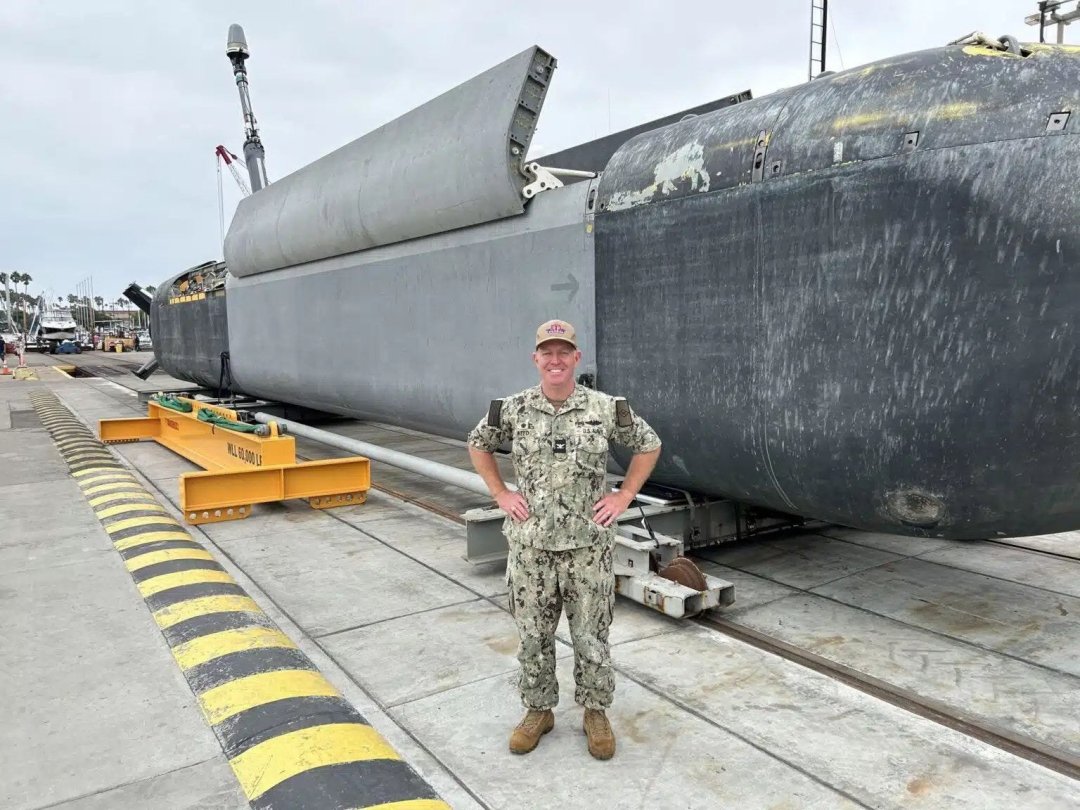
One of my favorite corners in the maritime world is that corner room few people visit, the “Unsexy but Important.” Taking up some of the space in that corner is one area of naval warfare that the U.S. Navy simply has shrugged at—mining—especially offensive mining. We don’t have mine layers, really. Not surface ones, and in the aviation and subsurface communities, it is a tertiary mission no one really wants to do. From the air, facing a modern integrated air defense system, putting offensive air-laid minefields up close to the enemy’s Sea Lines of Communication in the number to make an effective field is, well, suicidal. Yes, our submarines can lay mines…but when you look at the waters around the People’s Republic of China…I’m not sure the juice is worth the squeeze with our HUGE SSN’s to lay a few mines. As StrikePod points out, that is not the future. ▶︎ Submarine Launched Mobile Mine (SLMM) SLMMs are essentially torpedoes that transit to a preprogrammed waypoint, sink to the seabed, and lie in wait like a standard mine. The status of the SLMM inventory is unclear, but after a planned phase-out in 2012, the program was saved by then Chief of Naval Operations Admiral Jonathan Greenert, and an improved version of the weapon based on the Mk48 is said to be under development. According to mine warfare expert Scott Truver, however, “the Navy is repurposing excess Mk67 Submarine-Launched Mobile Mine (SLMM) warheads to make Clandestine Delivered Mines (CDMs) to be delivered by Orca unmanned vehicles.” The Navy’s FY2022 budget proposal confirms this is the case (3231 - Maritime Mines), but whether this indicates a total conversion and phasing out of the SLMM program is unknown. The Submarine Launched Mobile Mine (SLMM). SLMMs are a possibility for XLUUV deployment, but given that they can be safely deployed from manned platforms at standoff range, they would likely be kept in reserve for high-risk wartime operations in highly contested areas. ▶︎ Clandestine Delivered Mine (CDM) Little is known of the CDM, but it has been under development for at least five years. The one image of a CDM in circulation suggests that it is a standard bottom mine, and, given its small size (roughly 4.5 feet in length, 1.5 feet in diameter), designed for use in very shallow water, or possibly the surf zone. The Clandestine Delivered Mine (CDM). Naval Surface Warfare Center Panama City Annual reports from 2016 and 2017 indicate that the CDM was undergoing integration testing with the Large Displacement UUV (LDUUV), aka Snakehead. While this suggests that the CDM mission set may be different from the deep water mining for which the XLUUV is designed, this doesn’t necessarily rule out deployment from the Orca. In fact, the Navy’s FY2022 budget proposal (PE 0604601N - Mine Development) states that the “Clandestine Delivered Mine (CDM) provides a capability required by Joint Emergent Operational Needs Statement (JEONS) by converting legacy mining systems for delivery by Extra Large Unmanned Undersea Vehicles (XLUUV).” ▶︎ Hammerhead The Hammerhead is a moored, encapsulated torpedo mine, purpose-built for deployment from an XLUUV. With its Mk54 lightweight torpedo, sophisticated sensors, high-density energy module, advanced processing, and acoustic communication capability, the Hammerhead is designed to deploy to the seabed for many weeks or months, awaiting activation to engage Red submarines. In addition to acting as a kinetic effector, a Hammerhead could, in theory, be employed as a sensor. A minefield of Hammerheads could act as an underwater wireless sensor network that is integrated into the larger “Undersea Constellation” and leveraged for distributed ISR or for Distributed Maritime Operations (DMO). More significantly, however, acoustic communication would enable the Hammerhead to be deployed while inactive and remotely activated at the outbreak of armed conflict, thereby complying with international law regarding the mining of international waters during peacetime. U.S. Navy illustrations of the Hammerhead mine. Note: The illustration on the right features the Mk46 torpedo used in the Hammerhead’s progenitor, the Mk60 CAPTOR mine, however the Hammerhead will utilize the Mk54. At the moment, the development timetables for the Hammerhead and Orca are largely aligned, with the Hammerhead expected to be fielded in 2023, along with the first two (of an initial run of five) Orcas. But given the technological challenges and inherent complexity of autonomous mine laying operations, delays for Orca are likely, and given that the Hammerhead program will benefit from prior art (the Mk60 CAPTOR) and is a Maritime Accelerated Acquisition (MAA), it is possible that the Hammerhead will be fully tested and in production before the Orcas are ready to join the fleet. Would it be possible, then, to lay Hammerheads using manned systems? It would be a highly risky endeavor in time of war. But what if they could be laid in time of peace, without the need for an XLUUV, and without risk to manned platforms? This could be possible by leveraging acoustic communication, Ohio-class SSGNs, the opaque, gray-zone nature of the undersea domain, and international law. Knowing all the above—and with my very reactionary, “If you can’t tell me how you can weaponize this three ways in 30 seconds, I don’t think we can be friends.” I was instantly triggered the first time I was briefed about the Orca XLUUV. I’ve seen her before, but I’ve never seen her weapons bay open. Just look at that well of promise via Naval News. The U.S. Navy, working with teams from the Program Executive Office for Unmanned Small Combatants (PEO USC), completed the service’s first long-range mission with a Boeing and Huntington Ingalls-built Orca Extra Large Uncrewed Undersea Vehicle (XLUUV). The transit, which took the uncrewed submarine across the East Pacific, finished in July according to a statement released from Rear Admiral Chris Cavanaugh, Commander, U.S. Submarine Force, Pacific Fleet. The XLUUV patrolled for over 1,000 nautical miles — a first in the program’s history as the Pentagon looks to rapidly ramp up uncrewed operations in the Pacific to supplement crewed aircraft, ships, missile launchers and submarines as major force multipliers. It isn’t so much how far she is going, but what she’s taking with her. Orca will deploy with Hunter, a payload for the XLUUV which provides advanced, expeditionary mining capabilities in contested and denied environments. “The Hunter program seeks to develop an innovative concept for the delivery of advanced undersea payloads from extra-large unmanned underwater vehicles (XLUUVs),” DARPA’s website reads. Its acquisition strategy will be formalized in late 2027 or early 2028. It was nice to see this article from the UK Defence Journal address a well-known issue with all autonomous systems that simply is not talked enough about: What do you do when they break down? The Ministry of Defence is looking for a system to recover autonomous underwater vehicles that have broken down at sea, capable of lifting a craft up to seven metres long and three tonnes in weight, the department stated in a market engagement notice. The notice, identifier was published on 18 August 2026. Estimated contract dates run from 1 February 2027 to 1 February 2029, with a tender notice expected around 31 October 2026, and the department says delivery could fall within the 2026/27 financial year subject to funding, approvals and lead times. It really begs the question: What are we doing now if things don’t come back? The safety case is set out as the department says the system “is intended to reduce reliance on improvised recovery arrangements and improve operational resilience where the primary recovery system is unavailable or unsuitable. The system should reduce personnel exposure at the vessel edge, help mitigate the risk of person overboard incidents, and reduce the likelihood of damage to the AUV or host vessel.” … Recovering an uncrewed submersible in a seaway is among the harder routine tasks in maritime autonomy. A vehicle that has lost propulsion cannot position itself alongside, one that has lost communications cannot be commanded to surface at a chosen point, and a three-tonne object moving independently of the ship in a swell is a hazard both to itself and to anyone leaning over the side to catch it. Crews have historically improvised with poles, lines and grapples, which is precisely the practice the department is trying to end. As we expand our use of sea-based Robotic and Autonomous Systems, we are going to have to retain an ability to salvage those systems that go silent or simply break. As we intend to use these systems at war, we will need a uniformed service to do this, as they will go in harm’s way and will be a target. No civilian contract personnel or USNS will work at war. They will need a basic ability to conduct self defense. I’d recommend SeaRAM, OTO Melara 76mm Super Rapid, and MK 38 Mod 4 25mm RWS. Time to Make ARS Great Again. The Brits need them. American unquestionably need them. Leave a comment Share This Substack is reader-supported. To receive new posts and support my work, consider becoming a free or paid subscriber. View the full article
-
The U.S. Air Force is seeking industry information on building a full training package for its incoming E-7 Wedgetail aircraft, including a flight simulator, two maintenance trainers and a support center, according to a Request for Information published August 19. The RFI, issued by the Air Force Life Cycle Management Center’s Simulators Division at Wright-Patterson […]View the full article
-
U.S. Army Contracting Command at Redstone Arsenal has issued a request for information seeking contractors capable of providing total system sustainment for the HAWK missile system, according to a Sources Sought notice. The Army said it is not committed to issuing a solicitation or awarding a contract as a result of the announcement. Responses are […]View the full article
-
The U.S. Air Force Research Laboratory has opened a solicitation for Relentless Wolfpack, a program intended to demonstrate that weapons from different vendors can coordinate against targets in contested airspace, according to a call published under the PACER Broad Agency Announcement. The call, issued by AFRL’s Air Warfare Directorate at Eglin Air Force Base, seeks […]View the full article
-
The U.S. Army has increased its procurement objective for the Infantry Squad Vehicle to 11,582 vehicles, an 18-fold jump from the program’s original 649-vehicle target, according to Jacqueline Hames of the Army Acquisition Support Center. The Infantry Squad Vehicle is an ultra-light tactical vehicle that carries nine passengers along with their equipment. The Army launched […]View the full article
-
The Office of Naval Research has awarded Agrippa Industries a contract worth nearly $19 million to develop a low-cost, attritable logistics vessel for military operations, according to the Department of War’s daily contract announcements. The firm-fixed-price contract falls under the Scalable Commercial Attritable Logistics Adapted to Expeditionary Systems effort. Agrippa, based in Palo Alto, California, […]View the full article
-
The U.S. Navy launched an Aegis Readiness Assessment Vehicle Six (ARAV-6) target from Pacific Missile Range Facility, Hawaii, on August 6 as part of Pacific Dragon 2026, according to U.S. 3rd Fleet. Pacific Dragon is a biennial exercise hosted by U.S. 3rd Fleet in the Hawaiian Islands Operating Area, designed to improve how participating forces […]View the full article
-
A U.S. Marine Corps KC-130J Super Hercules refueled U.S. Air Force A-10 Thunderbolt II aircraft during the Advanced Tactics Aircrew Course at Rosecrans Air National Guard Base in St. Joseph, Missouri, on August 13, marking the first time the joint refueling capability was integrated into a course sortie, according to the 139th Airlift Wing. The […]View the full article
-
The U.S. Army has awarded ThinKom Solutions an Other Transaction Agreement worth up to $49 million to deliver and test a mobile high-power microwave weapon designed to counter drones. The agreement was issued by the Army’s Program Manager for Advanced Counter-Unmanned Aircraft System Effects, part of Portfolio Acquisition Executive Fires. Initial funding covers one of […]View the full article
-
Castelion, a hypersonic missile developer based in Torrance, California, has raised $1 billion in a Series C funding round that values the company at $13 billion. The round includes $800 million in equity financing and $250 million in committed financing for a revolving credit facility, the company said Aug. 19. JPMorganChase’s Strategic Investment Group, Andreessen […]View the full article
-
SummarySal discusses election integrity, military deployments, naval readiness, and current political issues affecting the military and national security. Chapters00:00:Introduction and overview of election integrity and military topics 02:07: Florida’s election system reform and its impact on confidence 04:02: The state of U.S. Navy deployments and fleet … Read more View the full article

Last week
-
Footage has emerged showing the rollout of a new Il-78MK-90A aerial refueling tanker, apparently built in export configuration, according to posts circulating on Russian social media and aviation channels. Social media users have claimed the aircraft was built under an export contract to supply 20 Il-78 tankers to China, but The Defence Blog could not […]View the full article
-
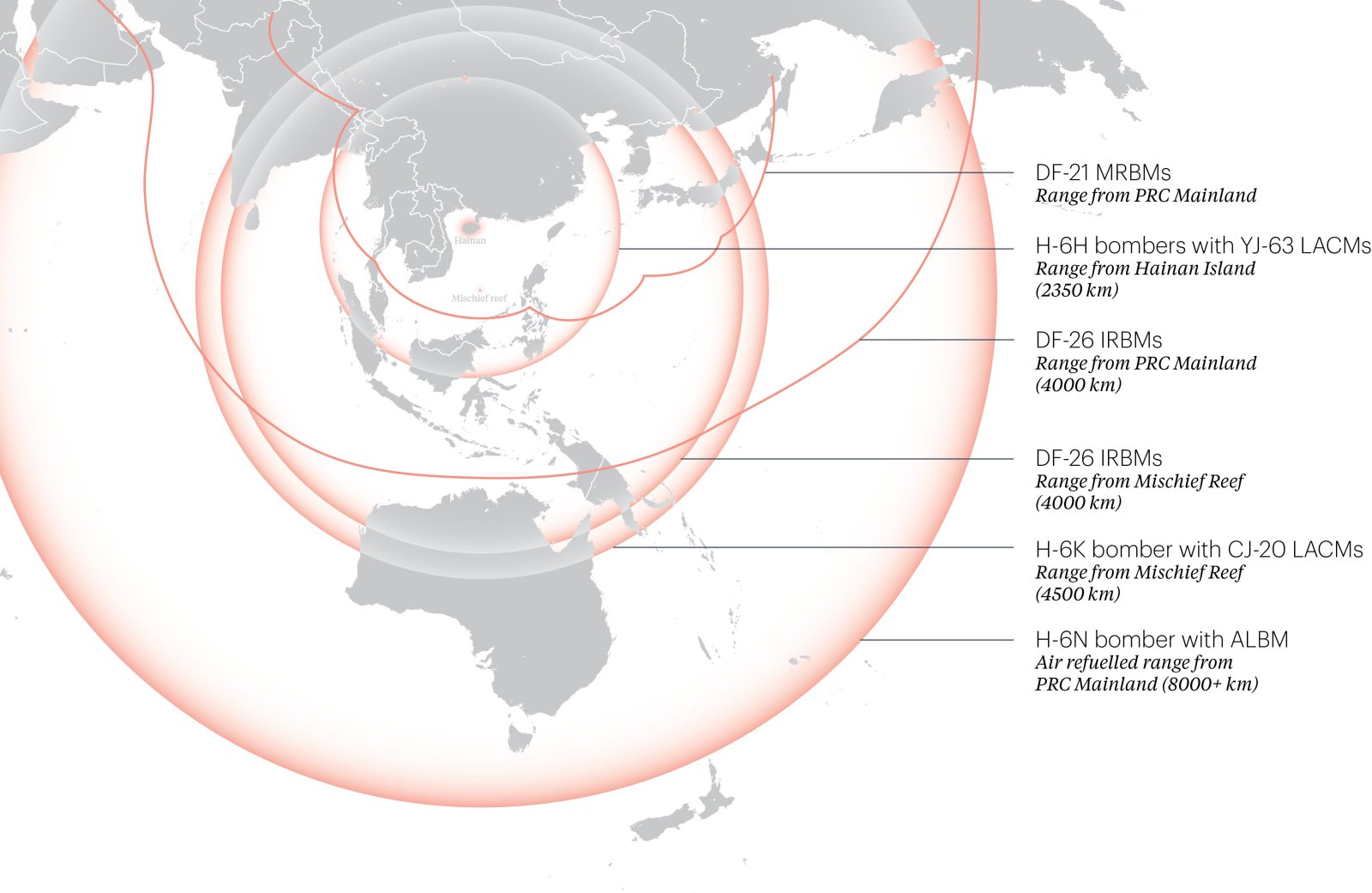
In my unending attempt to keep a well-rounded and diverse information flow, I was bouncing around and came across this quote from The West Australian. Privately, US officials are also alarmed at the protection levels of Australian bases, including HMAS Stirling and RAAF Base Darwin, where significant numbers of US personnel and military assets will be operating. Earlier this month a conservative and influential Trump-aligned think tank urged Australia to spend billions buying US-made missile interceptors to defend key bases from Chinese military attack. “At least three THAAD batteries and hundreds of interceptors to defend key bases, such as RAAF Base Darwin, from PLA attack, reducing the inventory and cost burden on U.S. inventories of scarce munitions and enhancing Australia’s ability to defend itself,” the Heritage Foundation’s Jim Fein recommended. The Heritage Foundation report also called for the US Congress, Australia and Japan to fund “additional Indo–Pacific infrastructure improvements to harden them against ballistic missile attack, especially intermediate-range ballistic missiles”. The referenced report came out on August 4th if you want to give it a full read. If you’re curious about where the U.S. already has bases in Australia, or plans to have them (see HMAS Sterling near Perth for the AUKUS bit), this map is helpful to compare with the chart of the People’s Republic of China’s long-range strike capabilities that Fein is concerned about.. It isn’t just the American Heritage Foundation ringing the bell. Digging around a bit got me to the Australian United States Study Centre (USSC) report that gives a great Australian perspective. …in mid-2025, Richard Marles acknowledged that “China’s ever expanding war machine poses the greatest risk to Australia and the region’s stability.”11 He also publicly acknowledged that “Australia’s continental geography would become an issue in the event of a US-China conflict.”12 Defence of the homeland is now a significant priority for the Australian Defence Force (ADF) and the nation. The last time this was a serious consideration was during the Second World War, when northern Australia was a major target, which saw at least 111 air raids between February 1942 and November 1943. The first and most significant of these raids was on 19 February 1942, when 188 aircraft bombed Darwin across two raids, the first by carrier aircraft at 9:57 am and the second by land-based bombers at 10:40 am. This combined raid dropped “115,000 kilograms of bombs…two and a half times the number of bombs and 83 per cent of the tonnage dropped on Pearl Harbour on 7 December 1941.”13 It was followed up with air raids during 1942 and 1943 across northern Australia, including Exmouth Gulf, Broome, Port Hedland, Wyndham, Derby, Horn Island and Townsville, and the submarine raids on Sydney and Newcastle in June 1942. They’ve been here before. ADF military capabilities must therefore manage the strategic risk. Key amongst these is the People’s Liberation Army Rocket Forces. This includes the DF-26 Intermediate Range Ballistic Missiles (IRBM) that can reach northern Australia from China’s artificial island bases in the South China Sea. Their new DF-27 IRBM, equipped with a hypersonic glide vehicle (HGV) warhead, is believed to have moved from development into deployment. This missile has a range of 5,000 km to 8,000 km and is “believed to be primarily [designed]…for regional conventional strikes during conflict.”17 The DF-27 brings virtually the entire Australian continent under risk.18 The People’s Liberation Army Air Force (PLAAF) H-6K bombers can range Australia with CJ-20 Land Attack Cruise Missiles (LACM) and Air-Launched Ballistic Missiles (ALBM). The PRC has also undertaken a major expansion of its submarine fleet, specifically its nuclear-powered guided-missile submarines (SSGNs). Over the last 15 years, the People’s Liberation Army Navy (PLAN) has built 12 new submarines, including four Type 093A Shang III class SSGNs, which provide a new class of anti-surface warfare and land-attack capabilities. The expansion of the PLAN’s SSN capability is part of its transition “from defense on the near seas to protection missions on the far seas.”19 It is estimated that China has built seven or eight Type 093B SSGN submarines, equipped with 12 vertical launch missile cells — including those for the YJ-21 hypersonic missile — in the past three years. That will wake you up. Well, I hope it does. What is one of the greatest lessons from the Russo-Ukrainian War of 2022 and the ongoing conflict between Israel and the U.S. and Iran and her proxies? Simple: the normalization of the use of conventionally armed ballistic missiles with precision warheads. How have the good folks Down Under responded in a period longer than they fought in WWII? Currently, the Australian Army has very limited GBAD capabilities, with only two batteries of modern mid-tier National Advanced Surface-to-air Missile Systems (NASAMS) being brought into service. NASAMS is one of the world’s most advanced surface-to-air missile (SAM) systems, combat-proven against large UAVs, helicopters, aircraft and cruise missiles. Australia’s ground-based ballistic missile capabilities are, however, basically non-existent. What is being done? Well, some nice problem appreciation and conferences. Work has also developed tri-laterally in the Indo-Pacific to advance coordination in the Indo-Pacific. The AJUS countries — Australia, Japan and the United States — have agreed to establish a regional IAMD network to develop advanced capabilities. During the Japan Official Visit in April 2024, the United States and Japan announced their intention to partner with Australia to build a regional architecture that incorporates the three countries’ sensors, with plans to test this network during a live-fire exercise in 2027.82 Similarly, the United States and Australia announced during the Australian official visit in October 2023 that they would partner with Japan to develop collaborative combat aircraft that would team with manned fighter aircraft and perform support missions, such as aerial refuelling and intelligence, surveillance and reconnaissance.83 The partners have made incremental yet steady progress toward achieving this capability. This provides an excellent platform to advance regional IAMD coordination. … While the direction and intent of the review are clear, the DSR had one major failing: it left off a specific set of recommendations consistent with the text in the body of the document. The Australian Government’s direction to Defence to focus on the DSR’s recommendations and bureaucratic politics has contributed to a lack of funding for IAMD and an inadequate prioritisation in the 2024 National Defence Strategy (NDS) and Integrated Investment Plan (IIP). The 2026 NDS and IIP are an opportunity to rectify this erroneous position. Drafting aside, the intent of the DSR is clear, and the mission essential. The text of the DSR is clear — the current approach is not fit for purpose, and the need is urgent. IAMD must be “accelerated,” the focus must shift to delivering “minimum viable capability,” through “off-the-shelf options.”93 None of this has happened since the DSR was released. There is already a line out the door for PAC-3, SM-3, SM-6, THAAD, and a pony for Christmas. In comparison to the other options that are assessed below, such as the Typhon/Vertical Launch System (VLS) and THAAD options, the Patriot system emerges as the most viable option for the ADF. The use of a VLS option — a system that operates on navy ships — would require a land-based solution, such as the experimental US Army Typhon system. This system is not a widespread, in-service option, with only two developmental batteries currently being fielded. The system includes large semi-trailer-sized launchers and battery operations centres, severely limiting its mobility and deployability with ADF transport assets. … AEGIS ashore system consists of AN/SPY radar, “located in a deckhouse that also supports the system’s command and control capabilities [with] Co-located…e fixed launchers for the current version of the SM-3 ballistic missile interceptor, the Block IB, as well as SM-6 air defense missiles.”124 The main issues with this system are its costs, limited development, and that it is a fixed system, negating mobility. Recent conflicts have demonstrated the vulnerability of fixed systems, and the cost was the principal reason for Japan suspending its development of this program. The two sites for Japan were to cost approximately A$1.367 billion each, with the total cost of the system coming to A$4.55 billion.125 Of note, Japan decided to mitigate risk by leaving Aegis Ashore behind and moving forward with their clunky-sounding Aegis System Equipped Vessels (ASEV), which is really just an air defense cruiser focused on strategic defense. Very smart move by the Japanese. More flexibility and survivability that only going to sea can give you. The THAAD system comprises missiles, ground-based radars (GBR), mobile launchers, support equipment, and a command-and-control centre. It is a more high-end, limited availability, and more cost-prohibitive system. Its approximate life-cycle cost is US$23 billion.126 It is limited in applicability to BMD, and the cost per missile is exceptionally expensive. A single interceptor costs between US$12 million and US$15 million.127 It is mainly used in the United States as part of the missile defence shield, known as the Golden Dome, for theatre ballistic missile defence aimed at deterrence against rogue nuclear missile strikes by countries such as North Korea. In comparison to other options, the Patriot missile system offers the best MOTS option for medium-range air defence and defence against short- and medium-range ballistic missile defence, as well as manoeuvring hypersonic missile defence.128 Unlike most other options, it is an in-service and off-the-shelf option, offering a combat-proven record, a continuing development cycle and a relatively cost-effective system (compared to other options). Patriot can fire a range of missile options from the shorter-range PAC-2 and intermediate PAC-3-CRI, and the longer-range PAC-3 MSE. The U.S. Navy had some great plans for their navalized version of the PAC-3 to fill the gap due to limited production capability of the SM-3 and SM-6, but I think history has other plans. The Free World’s demand for PAC-3 is simply too great. The Navy probably lost its window for an early batch and will have to wait for expanded production capabilities. I think I’ve given everyone enough to read today. My pull quotes are only a small part of a much larger article. The executive summary: the PRC has an answer for AUKUS, and AUKUS has to think about more weapons systems than just submarines. Australia is not a safe-space. She needs serious defense. Should war come to the Pacific, Australia will be hit—early, often, and hard. Australia needs to get in the air defense business as soon as practical, with the best around Perth. Want to knock Australia out of the war quickly or at a minimum cause internal unrest? In strangely anti-nuclear Australia, sink a SSN pierside with a hypersonic missile and crack open the reactor…that would do it. I would also recommend the USSC report that came out at the end of last week and includes among its authors Midrats Podcast alumni Bryan Clark, Advancing trilateral integrated air and missile defence between Australia, Japan and the United States. From my seat, there cannot be enough integration of U.S., Australian, and Japanese defense concerns. They are both superb militaries and good friends, and our interests in the Western Pacific have 90% overlap. So easy to sell. So important. Leave a comment Share This Substack is reader-supported. To receive new posts and support my work, consider becoming a free or paid subscriber. View the full article