All Activity
Today
-
A British engineering company that spent decades building Formula 1 race cars has announced it will start delivering a weapon that flies faster than 460 mph, carries a 300-kilogram (661-pound) payload, and never comes back from its mission. MGI Engineering, a defense firm based in Witney, Oxfordshire, announced that its TigerShark autonomous strike drone is […]View the full article
-
Out of 61 Russian cruise missiles fired at Ukraine in a single wave, Ukrainian air defenses shot down 54, and F-16 fighter jets alone accounted for 38 of those kills, Militarnyi reported, citing a statement from Yevhenii Karzhau, deputy commander of Ukraine’s Air Force. The figures place the American-made jets at the center of one […]View the full article
-
augustie joined the community
Yesterday
-
One of my evergreen arguments is over the use of, “kids” to describe those who serve. I’m sorry, 18, 19, and even 25-year-old men and women are just that, men and women. We all put our lives in their hands every day, I find the paternalistic “kid” a bit insulting and can cause some to expect less of them. Perhaps it is just me being pedantic, it probably is. “Kids” is better than “boy” and “girl,” I suspect—but maybe it isn’t just me, maybe it is just “us.” We don’t expect much from our young men and women as a society compared to what was expected just a few generations ago. Adult college graduates—especially the young men—still living at home. They have the car, clothes and the external trappings of an adult, but they live as small children with no plan or drive. Waiting for the roast-duck of life to fly in their mouth, making excuses for their own timidity and poor decisions. Don’t even get me started with the men and women in their early twenties, smart and well educated, who can’t even deal with different opinions or little words that seem to send them into a spiral. Do they behave as such because we let them, or do we encourage them to never rise to adulthood? Either way, it is mostly the fault of poor leadership from their elders. Back to boys and girls—but in this case let’s look at the term “boy” as it was used just over 100 years ago. A first class boy, or as it were, a Boy First Class; At the outbreak of war, Jack’s father Eli, an ex-soldier, re-enlisted as a Private in the 57th Coy. Royal Defence Corps. It was The Royal Navy that appealed to Jack and at the age of 15 he took references from his Headmaster and his employer along to a local recruitment office and enlisted. He was sent to Keyham Naval Barracks in Plymouth for his basic training where he earned sixpence a week as a “Boy Second Class”. He passed out as Boy First Class J. T. Cornwell J/42563 and when he left Keyham, (referred to in naval terms as H.M.S. Vivid) he was posted to H.M.S. Lancaster which was moored at Chatham. Jack was later ordered to join the fleet at Rosyth in Scotland and on the 2nd of May 1916 he joined the newly commissioned H.M.S. Chester. The Battle of Jutland began on the 31st of May 1916, the first shots being fired at 14:28. H.M.S. Chester was stationed ahead of the fleet in The North Sea. Lookouts reported distant gunfire and her Captain ordered “Action Stations” before setting off at full speed to investigate. Close ahead they encountered four German cruisers. Jack took orders via headphones from his Officer on the bridge. He was fully responsible for setting the gun’s sights and his speed and precision would determine whether they were to hit or miss their target. The German cruisers opened fire and Jack’s gun was one of the first to be hit before it could be brought into action and he suffered a serious wound to his chest. H.M.S. Chester simply could not match the firepower of the four enemy cruisers. A report from the Commanding Officer of H.M.S. Chester: “Boy (1st Class) John Travers Cornwell of the “Chester”, was mortally wounded early in the action. He nevertheless remained standing alone at a most exposed post, quietly awaiting orders till the end of the action, with the gun’s crew dead and wounded all round him”. H.M.S. Chester sustained severe punishment, being hit seventeen times. She was ordered back to the port of Immingham on the Humber. Jack was taken to hospital in Grimsby and attended by Dr. C. S. Stephenson, but he could not be saved and died of his wounds on June 2nd, 1916. His body was brought back to East Ham in a naval coffin and his family buried him in a private ceremony at Manor Park Cemetery, in a communal grave numbered 323. When the story of Jack’s heroism and somewhat humble burial was publicised, it was decided, due to strong public opinion that Jack should have a burial fit for a hero. On the 29th of July 1916, Jack Cornwell’s body was exhumed and carried by gun carriage from East Ham Town Hall to Manor Park Cemetery where he was reburied with full naval honours. In the procession, along with members of the family were: Mr. R. Banks Martin the Mayor of East Ham, Sir John Bethell M.P.,The Bishop of Barking, boys from Walton Road School, local cadets and scouts and boy sailors from H.M.S. Chester. The Admiralty was represented by Dr. Macnamara M.P. On the 15th of September 1916, the official citation appeared in The London Gazette stating that John Travers Cornwell had been posthumously awarded the Victoria Cross by King George V. What about his mother? On the 25th of October 1916 Jack’s father Eli died whilst on active service. The following month, on the 16th of November 1916, Jack’s mother received her son’s V.C. from The King at Buckingham Palace. By 1919, Jack’s mother Lily, was living in reduced circumstances and working in a sailors’ hostel to supplement a very small pension awarded for her son. She was found dead at her home in Commercial Road, Stepney, on the 31st of October 1919 aged 48 and never saw the memorial erected on her son’s grave. She shares a grave with Jack and Eli at Manor Park Cemetery, although her name is recorded as Alice. The memorial stone was unveiled on the 31st of December 1920, by Dr. Macnamara M.P. with members of the family present and A.H. Wiseman, the Mayor of East Ham. The Boy Scouts and Sea Scouts provided a guard of honour. Finally, a little note for you next time you are in London. It’s right across from Captain Bligh’s house; The gun that Jack manned from H.M.S. . Chester, was taken to the Imperial War Museum in March 1936 and is still on display today, along with Jack’s medals which were deposited in the museum by Jack’s stepsister Alice Payne on the 28th of November 1968. Now I am mad at myself. When I was at the IWM, I walked right past his gun. When you get a chance, take up my slack and visit a bit of what a “boy” can do. Fullbore. First posted APR2016.Leave a comment Share This Substack is reader-supported. To receive new posts and support my work, consider becoming a free or paid subscriber. View the full article

-
The U.S. Army has put more money behind a flying bomb that can circle over a battlefield for an hour, watch its target the entire time, and abort the strike mid-flight if something looks wrong, one day after the weapon proved it could pass every test the Army threw at it. Mistral Inc. and Uvision […]View the full article
-
A seven-ton U.S. Marine Corps supply truck can now creep past enemy positions in near silence, running purely on battery power with its diesel engine switched off entirely, and the company that built that capability is about to show it off in Michigan. Eaton, an intelligent power management company, announced its Mobility segment will display […]View the full article
-
Poland’s state-owned defense conglomerate is convening its entire arms industry around one table next week to answer a question with real stakes for the continent’s future: can Polish factories help Europe build a missile shield without depending on Washington to do it? Polska Grupa Zbrojeniowa, known as PGZ, Poland’s state-controlled defense holding company that oversees […]View the full article
-
A laser sight small enough to mount on a rifle just got its moment on Capitol Hill, and the story behind how it got there says a lot about how the Pentagon is trying to fix a problem that has quietly killed off some of America’s most promising defense technology for years. B.E. Meyers & […]View the full article
-
Indonesia cut the first piece of steel for its own submarine on Aug. 7, 2026, marking the moment the Southeast Asian nation moved from training its engineers in France to actually building a warship on home soil. The steel-cutting ceremony took place at PT PAL’s shipyard in Surabaya, officially launching construction of Indonesia’s first Scorpène […]View the full article
-
ASELSAN, a Turkish state-affiliated defense electronics company, announced that its TOLUN-P munition is mission-ready, describing the weapon as delivering precision deep strike capability against hardened battlefield targets including armored vehicles, bunkers, and structures protected by reinforced concrete. The company said TOLUN-P combines GNSS and INS guidance, satellite positioning paired with an internal inertial navigation system […]View the full article
-
Taiwan’s Army deployed M1A2T Abrams tanks to Taoyuan International Airport for the first time during the third day of the Han Kuang No. 42 exercise, Taiwan’s annual live combat drill, joining Yunpao wheeled armored vehicles in a defense exercise built around a specific nightmare scenario for Taiwanese planners: Chinese forces attempting to seize the airport […]View the full article
-
A South Korean tank crew scrambled out of their vehicle and ran for safety early Thursday after flames broke out inside one of the military’s frontline main battle tanks during a live-fire training exercise just a few miles from North Korea, though officials confirmed nobody was hurt. A K1E1 tank operated by South Korea’s Army […]View the full article
-
A ballistic missile alert sent Japan’s government scrambling into emergency mode on the evening of Aug. 6, triggering crisis meetings at the highest levels within minutes of the launch, even though the missile ultimately posed no direct threat to Japanese territory. Japan’s Ministry of Defense and Cabinet Secretariat announced that North Korea launched at least […]View the full article
-
Japan’s government has used its most authoritative annual security document to declare that China and Russia are no longer just cooperating occasionally near its shores, they are actively strengthening coordinated military activity, Nikkei reported. Japan’s Ministry of Defense published its 2026 Defense White Paper on Aug. 4, expressing new alarm over deepening military cooperation between […]View the full article
Last week
-
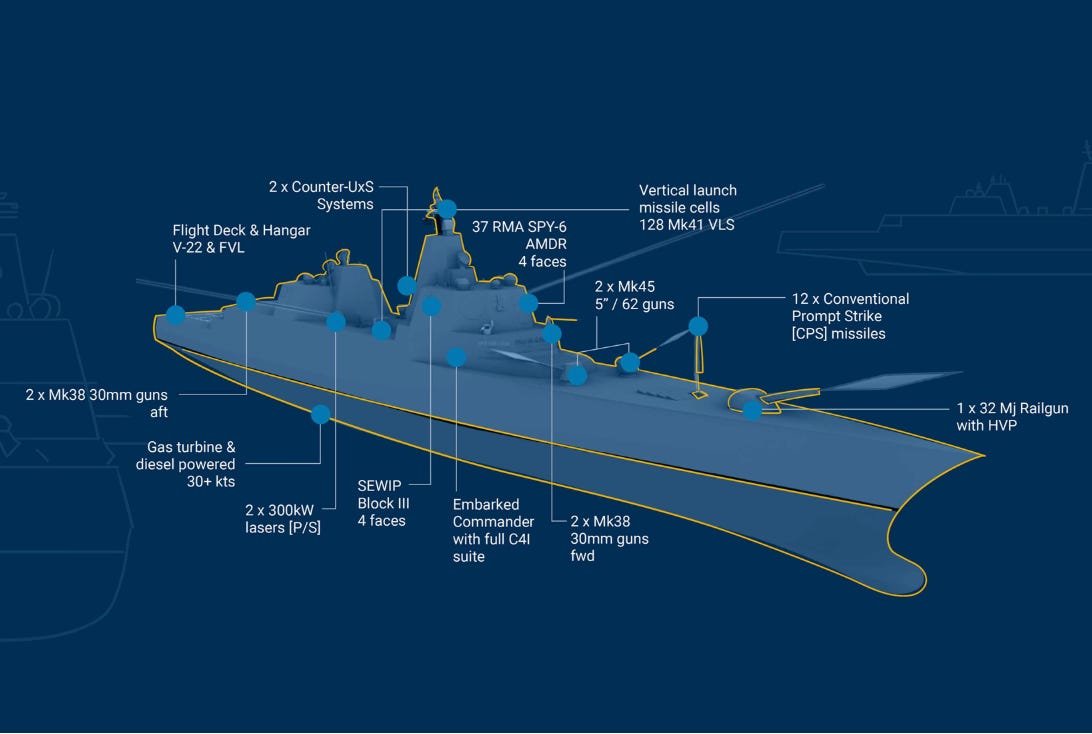
One of the least helpful aspects of the modern-day battleship debate is the fact it has been so highly politicized. Whenever an announcement of a milestone comes up, the first thing that has to be done in the search for useful information is to filter out the rabid partisans on the left and right who will support or oppose anything strictly through a partisan lens. Both sides have two subspecies: mindless partisans to just call names and flick spittle about, and the professional partisans who will make an argument based on fact or well-founded opinion…filtered, but useful in the broader discussion. One of the more valuable reference documents on most issues involving warship development continues to be the Congressional Budget Office (CBO). Yes, yes, I know the critiques, but their record is better than most. No need to plow into that again, I will just reference you to the interview we did on the Midrats Podcast with Eric Labs back in February of this year. Well, if you’re looking for a good reference document on the state of play of BBGN-1, this is your week. Yesterday, the CBO put out their report, The Navy’s New Battleship Program: Costs and Implications for the Shipbuilding Industrial Base. What is good about it from my point of view at least, is it gives you a set of about as objective facts as you can find inside a commute of DC. As such, it gives you the opportunity to discuss choices. There are a lot of choices and decisions to be made about fleet design, some of them involving BBGN-1 that we’ve made here which you can find at the first hyperlink at the top of this post. Before we get to some pull quotes, I want to lead with a point I originally put at the end of this post. To a fault, I look for patterns, habits, recurring issues. If significant changes are not put into a system with regards to people, policy, or procedures, then the odds are that past patterns, habits, and recurring issues will reappear. As you would expect from CBO, you have a numbers based argument, a foundation that has enabled the disastrous Cult of Efficiency and Transformationalists to create a disgraceful breaking yard of failed and cancelled programs. LCS, DDG-1000, CG(X), FFG-62. Poor program management and weak-hand leadership destroyed the utility of three of them, lack of vision, control, and salesmanship killed the 4th before a design was ever even finalized. The result was billions of dollars spent for limited to no combat utility, generations of advanced designs never making it to the fleet, and an industrial base flat-footed in the face of the greatest challenge to our nation on the high seas in four decades. Speaking of billions… The total cost of the Navy’s new nuclear-powered battleship program would be about $275 billion (in 2026 dollars) over the 2027–2056 period. The first ship would cost about $23 billion. For the 15 ships that would be purchased through 2056, the cost would average slightly more than $18 billion per ship. How does that compare to the other large nuclear powered warship? The only Navy ships whose costs are comparable to CBO’s estimate for the BBGN are the Ford class nuclear-powered aircraft carriers. The Navy currently has 11 Nimitz class aircraft carriers and 1 Ford class aircraft carrier, with 3 more under construction. CBO estimates that future Ford class ships under the Navy’s 2027 shipbuilding plan would cost about $22 billion each. Aircraft carriers do not carry missiles, unlike surface combatants and most submarines, but they have an air wing composed of several dozen aircraft that can fly hundreds of sorties over days or weeks to launch bombs and missiles. An aircraft carrier is not really a warship without its carrier airwing. Baking the cost of the aircraft should be done, otherwise it is like estimating the cost of a surface ship without factoring in the cost of VLS cells and gun mounts. Let’s be conservative and state that a low-end carrier airwing has: a mix of 44 F/A-18E/F and F-35C, 5 EA-18G, 4 E-2D, and eight MH-60S with the MH-60R distributed amongst the small boys and of course, the supporting COD Ospreys who are usually ashore. If you just count the carrier based aircraft, that gives you: 44 Super Hornets at $67.5 million each = $2.97 billion 5 Growlers at $68 million each = $340 million 4 Hawkeyes at $80 million each = $320 million 8 Seahawks at $30 million each = $240 million That exceptionally low-balled figure for the capital costs of an airwing adds up to $3.87 billion per carrier additional cost to deploy, for a follow-on FORD Class unit cost of $25.87 billion compared to the follow-on BBGN ships estimated $18 billion. Last October before the announcement of BBGN-1, I made a few guesses that actually didn’t turn out too off the mark. One of them was a planning proposal benchmark that we should expect a BBGN-1 to cost about 2/3 the cost of a Ford CVN. $25.87 x .6667 = $17.24 billion. My estimate for the cost back last October—done with a gun to my head, was not that bad. As such, no one is allowed to blanch at the cost of BBGN. See the good stuff you get for free by reading CDR Salamander every day? If that doesn’t encourage you to become a paid subscriber, I don’t know what will. NB: I am not going to use the cost of the initial ship, there are all sorts of issues involved with that cost for every class that skews discussion. It is the follow-on ship cost that matters.One more comment on that last pull quote, specifically nuclear power. Our carriers are nuclear powered and can, ahem, go much faster then any of their escorts…and keep at it for a very long time. However, because they don’t have a single escort that can keep up with them in contested seas, they cannot take full advantage of their speed. Instead, they must slow to the best speed their conventionally powered escorts can sustain…and at those speeds those escorts will consume exorbitant amounts of fuel, further tethering the strike group to their few and fragile oilers. After announcing the program, the Navy indicated that it would award sole-source contracts to Leidos Gibbs & Cox for assistance with surface ship design engineering and to Bath Iron Works and Ingalls Shipbuilding for assistance with designing the ship. Bath and Ingalls currently build many of the Navy’s surface combatants and amphibious warfare ships. In its budget submission to Congress, the Navy estimated that the first ship of the class, known as the lead ship, would cost $15.1 billion (in 2026 dollars) and that the average cost of the second and third ships would be $10.2 billion. Those estimates were for a conventionally powered ship—that is, one without nuclear propulsion. … By comparison, CBO estimates that for a conventionally powered battleship with a full-load displacement of 35,000 tons, the lead ship would cost $21.3 billion, and the 14 follow-on ships would average $15.9 billion each, for a total of $243 billion. The total cost of $275 billion estimated for the 15 nuclear-powered ships would be about 13 percent greater. Switching to nuclear power would reduce the battleship’s operating costs over time by eliminating the need to purchase fuel. CBO does not have enough information to estimate those potential savings, which would depend on the final design of the ship and the specifications of the conventional propulsion plant it otherwise would have used. Nuclear power is worth it…and as we discussed earlier…is a long-standing requirement. We’ve gotten this far without reminding everyone of the scale of BBGN-1, so let’s reestablish that baseline understanding. The battleship would have a full-load displacement of 35,000 tons or more, a length of 840 to 880 feet, and a sustained speed in excess of 30 knots.3 The Navy revealed those specifications before deciding to use nuclear propulsion on the ship, a change that would significantly increase the cost of the ship and affect its design. If built to those specifications, the ship would be the largest surface combatant in the world and larger than any surface combatant built for the Navy since World War II.4 It would be more than three and a half times the size of the Navy’s Arleigh Burke class guided missile destroyer and more than twice the size of the Zumwalt class guided missile destroyer A few notes on the above. 128 VLS cells is what we had with the TICO CGs. There is expanded news here that I will cover with the sidebar at the end of this post…but stick with me here and don’t get distracted. We’ll get there in a bit. I remain unhappy with just 12 Conventional Prompt Strike missiles, but compromises must be made. That damn SLCM-N is still there. It is a bad idea, distraction, and unappreciated cost inflator. Again, just say “no” to the nuclear autists. One of the more important details of this discussion is hidden in page 5, and I want to make sure no one misses it: …the final assembly of the ship would be performed by Newport News Shipbuilding. That shipyard is the only new-construction shipyard already certified for work on nuclear-powered surface ships. The battleship’s final assembly would take place at Dock 12, which is currently used to build aircraft carriers.10 Newport News Shipbuilding is behind schedule on constructing three aircraft carriers, as well as many submarines. Adding the final assembly of a nuclear-powered battleship to the shipyard’s workload could lengthen the delays for those programs, in addition to delaying the construction of the battleship itself. Dock 12 is the Achilles' Heel of American sea power. This simple fact is unappreciated and it should give you nightmares. It is our version of the dry docks at St. Nazaire, and we should hope that no one has a Cambletown ready to head up the James River. This next paragraph is very hard to argue with, and can be disheartening: Given the history of the DDG(X) and the ongoing delays in producing ships, a clean-sheet design of a much larger ship is unlikely to be ready in time for production to begin in 2028. A ship as large as the BBGN would require significantly more work to design and more detailed digital models than the DDG(X) would have needed. To address concerns about the relatively short timeline for developing the BBGN’s design, the Navy plans to incorporate “modern digital engineering, advanced production practices, and [artificial intelligence]-enabled design tools to reduce cost and schedule risk from the outset.”17 But the Navy’s inability to complete designs for simpler ships, such as the FFG-62 Constellation class guided missile frigate, in a timely way suggests that the service will face challenges with the BBGN. The reality is, if we stick with the same people, processes, and procedures that we have so far this century, we will have this problem. Please tell me that there are plans to bring in the good folks from Palantir with ShipOS, and we’re not going to plow away with our legacy “system” that has failed us over and over. The Navy’s DDG-1000 destroyer … experienced substantial cost growth because of other factors, including construction that started early in the design phase and reliance on a number of technologies that were still being developed. If the Navy and shipbuilders incorporated producibility features into the BBGN’s design and avoided the challenges that affected the DDG-1000, the BBGN’s cost by weight could be lower than CBO estimates. “If” is carrying a lot here, and I hope it does…but we could help ourselves if we don’t make the mistake of the Transformationalists earlier this century. …if the Navy moves too quickly to start building, it runs the risk of cost growth from concurrency—that is, from starting construction before the ship’s design is complete. A substantial overlap between design and construction has caused construction problems and cost growth in other Navy and Coast Guard shipbuilding programs, including the littoral combat ship and the Constellation class frigate. …and yes, I acknowledge that the Constellation class frigate (PBUH) was not part of the Age of Transformationalism™, but it used the same people, processes, and procedures of them…with the expected results. There’s your CDR Salamander CBO Report Quicklook. There’s a lot more info there. You really should give it a read. Sidebar: Did you catch note 5? Lockheed Martin has developed a new method for building the Mark 41 system that could increase the number of missiles in a set physical space on a ship by 25 percent. Thus, a missile field on a DDG-51 class destroyer that contains 64 missile cells today could in the future be replaced with a system that contains 80 missile cells. If that method was used on the battleship, the 128 planned missile cells could potentially become 160 cells or, in the absence of CPS missiles, as many as 200 VLS cells. I got the brief on this earlier this year. I believe I have mentioned this before, but were I Emperor the one thing I would require is that every Arleigh Burke DDG that is going into the yard for an extended maintenance period should have this upgrade. Every Arleigh Burke presently under construction should as well. We have a problem—too few ships with too few VLS cells. There is a way to accelerate correction of the latter as we work on the former. I am simply gobsmacked as to why this isn’t happening. This Substack is reader-supported. To receive new posts and support my work, consider becoming a free or paid subscriber. Leave a comment Share View the full article

-
A small Israeli defense startup has put a mystery device through a brutal round of real-world stress testing, and the company is being unusually candid about exactly which parts still need work. Erez Defense Solutions, a company based in Hod HaSharon, a city in central Israel roughly 20 kilometers (12 miles) northeast of Tel Aviv, […]View the full article
-
A German company that makes the transmissions and propulsion systems inside tanks, armored vehicles, and warships has posted its best order intake in company history, and the surge traces directly back to militaries around the world rushing to rearm. RENK Group AG, a Germany-based manufacturer that builds gear units, transmissions, and propulsion systems for military […]View the full article
-
A rocket that has flown more than 1.7 million times in the last decade alone just got a second, third, and fourth supplier, and the Army says that redundancy could mean the difference between running out of ammunition and staying ready for whatever comes next. Firehawk Aerospace, a Texas-based rocket propulsion company, announced that the […]View the full article
-
South Korea has handed its first mass-production contract for a multipurpose military robot to Hanwha Aerospace, and the real story behind that decision has less to do with cutting-edge robotics than with a shrinking pool of young men available to serve in uniform, according to GlobalData, a data and analytics firm that tracks defense industry […]View the full article
-
Eight robotic vehicles have spent six straight days working around the clock in one of the most punishing deserts on Earth, capping off a month-long deployment, and British soldiers never had to risk their own lives to keep them running. ARX Robotics UK, a defense technology company building autonomous ground vehicles, announced it completed Project […]View the full article
-
Three Taiwanese-built drones have searched a stretch of contested airspace together, coordinated by artificial intelligence rather than a room full of human pilots, and the demonstration marks the moment Taiwan’s own defense engineers proved they can run that technology without American hand-holding. Shield AI, a California-based defense technology company, and Taiwan’s National Chung-Shan Institute of […]View the full article
-
A defense contractor’s founder just accused one of the country’s most trusted business newspapers of running a story it knew wasn’t true, and the fight broke out in full public view on social media rather than behind closed doors. Palmer Luckey, the founder of Anduril Industries, a California-based defense technology company known for building autonomous […]View the full article
-
Show LinksNatalie Winters’s report on the GOFO China Trade Heritage’s report, Theater Missile Defense Inventory: Inadequate for a U.S.–China Conflict SummarySal reflects on the current state of national security, personal relationships, and geopolitical tensions, emphasizing the importance of preparedness, understanding human motivations, and the impact o… Read more View the full article

-
A very strange and rather short article came out yesterday from Richard Fontaine, the CEO at the Center for a New American Security (CNAS). I shouldn’t have to say this, but I will: this isn’t personal, this is professional. I had to double-check the publication date as it just read, well, strange. But no, August 4th, 2026. Its title, Japan isn’t rearming. It’s adapting to a new era. It is something if it were written by someone else, I might ignore…but Richard isn’t just some rando anon pounding away on Substack…so here we go. In the name of all that is holy. I know Richard has been in DC a long time and is well soaked in the Beltway NATSEC miasma…but someone has to put a marker down, might as well be me. I’ll get to the substance in a minute, but let’s discuss word choice, clarity, avoiding hyperbole, and directness. Yes, even with all my inadequacy as a writer, even I feel more than comfortable “going there.” From the first time I was told to write my own FITREP in the final years of the Cold War to spending almost half my active duty career on U.S. and NATO staffs, I understand the dark art of finding the words to not say what you want to say, or worse, try to craft an alternative universe with words for whatever reason personal, professional, or to just answer the mail. I also learned that if you find a topic enthusiastically inserted into a larger article that is only tangentially or remotely related to the main topic at hand, then that is a signal of an author’s real obsession that they would prefer to write about, as opposed to what they are obliged to write about. So, we have the topic of Japan’s final stretch past the 20th century adhesions that has kept her unnecessarily off the global stage. An important topic. A serious topic. A trend we first glimpsed in the days right after the attacks of 2001. A quarter century later and well-past the summer solstice of 2026, when you look west of the International Date Line, Japan is one of the most popular nations in the Pacific rim from Taiwan to New Zealand. Even the South Koreans have softened their view of Japan, in a fashion, especially when it comes to defense issues. There are only two nations who are worried about Japanese military power, the People’s Republic of China (PRC) and North Korea. With that set, let’s dive into a few of Richard’s comments. Japan is indeed undergoing a defense revolution today, but it’s not rearmament. The SDF has for years represented an advanced, highly capable military force. While it is growing stronger, more important than the additions are what is being removed. Tokyo is systematically eliminating the self-imposed constraints that hobbled Japanese defense for decades. It is adapting to a new, more threatening Indo-Pacific security environment and greater global uncertainty. Washington should welcome and assist this transformation. Just stop. It isn’t just Richard who does this. Everyone, just stop. You know you are not speaking clearly. We know you are not speaking clearly. You know that we know that you are not speaking clearly—and yet you continue not to speak clearly and we pretend not to notice. Just stop. This got tiresome during the Age of Transformation™ and is just silly. Japan is not undergoing a “revolution.” You could say, “evolving”…maybe, but what she is doing is something I and others have been asking for over the better part of two decades: she is acknowledging that this is the 21st century—indeed we are now entering the 2nd quarter of the 21st century—and it is time that she leaves the ghosts of the mid-20th century behind and take her rightful place as a full member of the free world. She is returning. You do not have to be at “0” in order to rearm. The “Washington should” begs the question—who in Washington isn’t? Indeed, who in Washington, Canberra, Wellington, Manila, Taipei, and even Seoul and Hanoi are not generally giddy that Japan is building up her defensive capability in the face of an increasingly aggressive PRC? For decades after World War II, Japan was pacifist but certainly not unarmed. Tokyo spent, for example, a higher percentage of its GDP on defense in the 1950s than it does today. By 1989, largely as a result of the strong yen, Japan briefly had the world’s third-largest defense budget. In the early 1990s, the ground SDF was about a fifth larger than it is today, and it once had nearly twice the number of tanks it now possesses. Claims that Japan is rearming today suggests that Tokyo was unarmed in previous decades. Nothing could be further from the truth. Where to start here? Goodness, I will have to go to bullets (no pun intended): When you have the world’s 2nd to 4th largest economy, even if you spend 1% or less on defense, you will have a strong defense. Anyone who has served in the Pacific over the last half century has exercised with the Japanese. I’m still recovering from a few nights in Waikiki with their Navy in RIMPAC 2002. No serious person has ever thought Japan was unarmed, toothless, or without talent or skill. No one. In the early 1990s, every Western or Western-adjacent nation allied to the U.S. had a much larger military and an ungodly amount of tanks…then the Soviet Union evaporated, everyone thought a rising China was good for their 401K, and the Peace Dividend era did the rest. Again…no serious or informed person has thought Japan was unarmed for decades. The U.S. rearmed in the 1930s…but before 1936, we were not unarmed. This is just silly. It would be helpful if he named names here, because I have not seen it. Let’s review the graph. No one was disarmed, however, there was a difference in effort relative to the U.S. Here’s a similar graph for the U.S. over a similar timeframe. Fun historical note about the spike for both nations in the Korean War Era: everyone here does realize that Japanese contributed to the fight, lost ships and men during the Korean War, right? If not, read up. Back to the article. I am beginning to wonder, did Richard’s intern write this article? In 2022, Japan’s National Defense Strategy sounded the alarm in uncommonly direct terms. “Amid the most severe and complex security environment since the end of WWII,” it said, “Japan needs to squarely face the grim reality and fundamentally reinforce Japan’s defense capabilities.” The combination of China’s growing power projection and its aggressive foreign policy…focused minds in Tokyo. Russia’s invasion of Ukraine in 2022 further alarmed Japanese political leaders and defense planners. Suddenly the unthinkable—the forcible conquest and annexation of sovereign territory—was possible, then in Europe but perhaps tomorrow in Asia. The stimulus for Japan’s defense revolution has only increased in intensity since then. China continues to grow in military strength and ambition, and North Korea remains a stubborn and nuclear-armed provocateur. And then there is the United States, Japan’s sole ally and the guarantor of the country’s security. American reliability and focus are newly in doubt. The hyperbole, again. Once more to the bullets: The 2022 NDS did not emerge from the head of Zeus. This has been building in Japan for quite some time. Again, I vaguely remember a conversation with a JMSDF LCDR at 2am in a cloud of —well if you have been on liberty with the Japanese, you understand—on this exact topic. No one thought in January 2022 that “forcible conquest and annexation of sovereign territory” was “unthinkable”. Am I the only one around during the breakup of the Soviet Union and the Balkans’ cascading challenges during the 1990s? NATO gave me a medal for helping with the “forcible conquest and annexation of sovereign territory” after all. Has anyone besides me paid attention to Africa this century? The DC nomenklatura’s desire to find some way to throw-poo-at-DJT seeps in everywhere. America has spent a decade—and the last 18 months pissing off all sorts of Europeans—in an attempt to finally manifest Obama’s pivot to Asia to bolster our Pacific allies. The last sentence in the above quote is just out of place in the context of Japan. Wildly. “American reliability and focus are newly in doubt.“ is simply not supported by the facts when it comes to Japan. In other places, well meaning people can argue here and there, but in Japan in a security context? A silly exaggeration. Speaking of an inability to focus on the topic without finding some way to run off on a “throw-poo-at-DJT” tangent, what exactly does this disjointed and non sequitur laden paragraph have to do with the price of tea in China? The Trump administration has had an inconsistent approach to the alliance. At the operational level, the two countries have never worked together more closely. President Donald Trump oscillates between praise for Prime Minister Takaichi Sanae and criticism of Japan for ripping off the United States. The administration imposed tariffs on Japan and demanded that it raise defense spending as well as clarify its role in a Taiwan contingency. After Takaichi publicly did so, China retaliated with a raft of punitive measures that elicited mostly silence from Washington. Japan strives to focus American attention and resources on the Indo-Pacific but watches as yet another costly and inconclusive war in the Middle East absorbs Washington’s attention. A poll last year showed that more than 75 percent of Japanese did not believe the United States would defend their country. Next time I think that too often I drift off topic to the detriment of one of my posts, I will think of this paragraph and then not feel so bad about myself. Tokyo’s pursuit of a more powerful, less-constrained military serves two purposes simultaneously. Japanese leaders seek to demonstrate their value to the alliance, helping assure America’s continued commitment. But a stronger military also helps Japan hedge, both against the region’s rising threats and the possibility of U.S. inconstancy. Takaichi’s moment of domestic political dominance has freed the Liberal Democratic Party to unshackle its defense policy. And it is doing so quickly. OK, this is a good paragraph. There are a lot of things that Japan is doing almost in plain sight—and has for decades—as a hedge. The Japanese are smart. This is well known and accepted. We would do no less. The acquisition of new defense capabilities has been particularly striking. Japan has bought long-range strike weapons, including Tomahawk missiles that allow it to hit targets more than 1,000 kilometers away. It effectively has two aircraft carriers and F35 aircraft that can fly from them. Japan is developing a hypersonic glide vehicle, working on joint development of a sixth-generation fighter, and seeks nuclear-propelled submarines. As global demand for missile interceptors vastly outstrips supply, Japan is manufacturing Patriots—and selling them to the United States. If the U.S. were “inconsistent”, “inattentive”, or “unreliable”—would U.S. built and designed weapons in this paragraph and the close coordination our defense industry with theirs on product development even exist? No. Of course not. The article returns to soundness, but again, this is not revolutionary. This is just a natural return. Budgets continue to rise, and Takaichi pledged to hit the previous target—spending 2 percent of GDP on defense—two years early. Japan will be just under this figure at the end of 2026 and is sketching out future increases. Today, Japan has become the world’s tenth-biggest defense spender. The organizational framework is changing as well. Japan last year established a new Joint Operations Command that will allow for quicker, more effective decision-making and planning. In April, Japan relaxed its longstanding ban on the export of lethal weapons and has sealed a multibillion-dollar deal to sell warships to Australia. Its newly announced National Intelligence Bureau represents the first centralized intelligence agency in Japan since 1945. Japan and the United States have begun a dialogue on extended nuclear deterrence. And by the end of this year, three key strategic documents—the National Security Strategy, the National Defense Strategy, and the Defense Buildup Program—will be rewritten and reissued. Perhaps most ambitiously, Takaichi in May called for a debate on revising the Japanese constitution, ensuring that it is “updated to reflect the demands of the times.” The final paragraph almost reads as if I wrote it…except for… Above all, however, the United States should welcome Japan’s emergence as a “normal” country, one that is active not just at home but in its region and that has a defense posture and policy befitting a key American ally. Tokyo today is not rearming but relaxing the many constraints that tied down its military. Eight decades after the worst war in history, and at a time of rapid geopolitical disorder, the United States should help usher in Japan’s adaptation to a new era. Why the “should”? The U.S. has been encouraging this for a very long time. I don’t know anyone who is not a China-dove/shill who is worried about Japan’s increasing defense posture. Why the hesitancy to say they are, “rearming”? Like I started this post with, this is silly word-games. I’m sorry, but when you double defense spending in under half a decade, you are “rearming”. Heck, right now the U.S. is “rearming” to refill our already shallow magazines that have become even shallower in the last few months. So, folks help me here—what was driving Richard to write this article in a way to bob-and-weave like this? It seems like a missed opportunity that trips all over itself. What am I missing? Leave a comment Share This Substack is reader-supported. To receive new posts and support my work, consider becoming a free or paid subscriber. View the full article
-
UAE-based defense company has shown off a drone built to watch the sky nonstop, and footage of the aircraft reveals it shares its entire airframe with a hobbyist plane sold to private pilots for decades. EDGE Group, the state-owned Emirati defense conglomerate based in Abu Dhabi that builds everything from missiles to unmanned ground vehicles, […]View the full article
-
The U.S. Army Contracting Command at Redstone Arsenal in Alabama published a notice on Aug. 4, 2026, announcing its intent to award a sole-source contract, meaning a deal negotiated with only one company rather than opened up to competitive bidding, to Boeing for the production of up to 12 new AH-64E Apache attack helicopters, the […]View the full article