




HG S2 (Intel Bot)
Members
-
Joined
-
Last visited
Never
Everything posted by HG S2 (Intel Bot)
-
In less than two years since launching its Collaborative Combat Aircraft program, the U.S. Department of the Air Force has flown a prototype platform, underscoring a shift in how the service develops and fields new weapon systems. The unmanned aircraft, designated YFQ-42A, was developed with General Atomics and conducted its first flight at a California […] The post U.S. Air Force prototype uncrewed fighter jet takes flight first appeared on Defence Blog.View the full article
-
A tragic accident struck Thursday evening when a Polish Air Force F-16 fighter jet from the Tiger Demo Team crashed during rehearsals for Air Show 2025, killing the team’s commander. The crash occurred at approximately 7:25 p.m. local time at Radom Airport. Witnesses described the jet suddenly nosediving over the runway and striking the ground […] The post F-16 fighter jet crashes in Poland, pilot killed first appeared on Defence Blog.View the full article
-
Russian forces have claimed their successful strike against a launcher of Ukraine’s Neptune coastal defense missile system. According to reports, Russian reconnaissance drones operating near the village of Liubytske in the Zaporizhzhia region identified a Neptune launcher as it prepared to fire. Within minutes, Russian forces directed a 9M723 Iskander-M ballistic missile with a fragmentation […] The post Russia hits Ukraine’s Neptune missile launcher first appeared on Defence Blog.View the full article
-
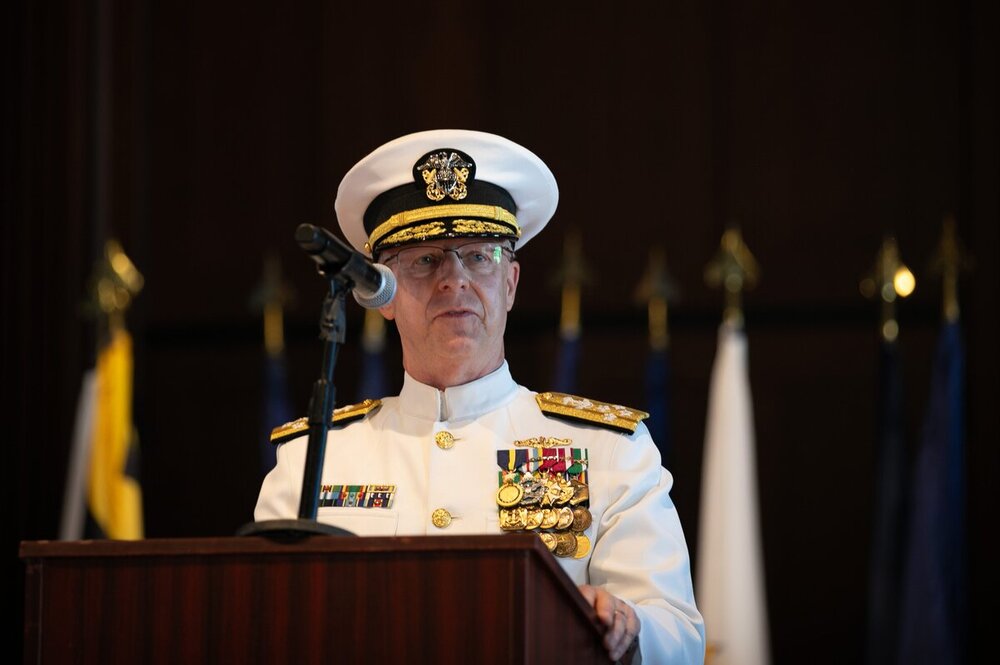
If you haven’t had a chance to read the new Chief of Naval Operations’ (CNO) opening comments upon taking the job earlier this week, take a moment to give it a read. We all like bulleted lists, so let me pull this out of the middle By the time my tenure ends, I want to be judged by the results we achieve together, plain and simple. Platforms delivered and repaired on time. Fully manned and combat ready ships. Ordnance production meeting contracted demand. Backlogs in repair parts eliminated. Sailors trained to the highest levels of mastery. I’d like to focus on the second bullet, “Fully manned and combat ready ships“. The CNO’s duties are defined in 10 U.S. Code § 8032 - Chief of Naval Operations. Specifically, look to para (b)(1) of the above. (b) Under the authority, direction, and control of the Secretary of the Navy, the Office of the Chief of Naval Operations shall— (1) subject to subsections (c) and (d) of section 8014 of this title, prepare for such employment of the Navy, and for such recruiting, organizing, supplying, equipping (including those aspects of research and development assigned by the Secretary of the Navy), training, servicing, mobilizing, demobilizing, administering, and maintaining of the Navy, as will assist in the execution of any power, duty, or function of the Secretary or the Chief of Naval Operations; So, yes, the buck on “fully manned …” falls squarely in his lap. Let’s be clear and honest with each other—the events of the summer of 2017 were just one example, but we have accepted poorly manned ships—really institutional Sailor abuse—for the entire time I’ve been associated with the US Navy—roughly four decades. The LCS Manning CONOPS. “Optimal Manning.” 100-hour work weeks. etc, etc. We all know the drill of the little tricks we play with each other and ourselves to explain away why we refuse to man our ships so they cannot just take care of themselves and not be a danger to themselves and others, but also not degenerate into eyesores and floating retention issues. Can we properly man our Navy? Sure. It just takes honesty and will. I had a great exchange with a reader I’ve been exchanging notes with for a VERY long time, and much of the below, with his permission, came from him. He is a much more efficient writer and knows the manpower wrinkles better than anyone. If the CNO and those on his staff want to attack “fully manned”, they should digest the below…as should we all. A lot of entities, both inside OPNAV (N1, N8 and N9) and outside OPNAV (OSD Comptroller, CAPE (hissss…booooo), SECNAV, and Fleet Forces Command) have significant influence on the funding of the Military Personnel, Navy (MPN) account. In theory, the CNO should have heft inside the OPNAV lifelines. Outside, notsomuch. What about the final number of what our ships, squadrons, submarines, and other misc commands need to properly serve their nation? The Navy Manpower Analysis Center (NAVMAC) has an excellent process for determining the manpower requirements—a precise number by rate, rating, and NECs driven by the Required Operational Capability and Projected Operational Environment (ROC/POE) as issued by SECNAV. So, what it takes to fully man a ship, squadron or submarine is KNOWN. This isn’t a secret. This isn’t something we need a commission and a POM cycle to research. CNO said one of his metrics for success is "fully manned and combat ready ships." Well, we can get there if, again, we have the easy part, the will. The hard part will be honesty. Honesty about how we had been doing manning in the past, and why. Yes, that is needed. Just “moving on” will not do. If not exposed to fresh air and light, the bad habits of old will only bloom again when a new leader comes on the scene who desires to rise on the backs of institutional Sailor abuse, as was once, “The way we’ve always done things.” He’s the CNO. He can rise no further. This is his run. If I may Admiral Caudle, “Go Pack Go!” First, define our terms. What's needed is CNO's definition of "fully manned". Is it: Fully funding the known requirement? Fully funding what is necessary to meet the current FIT/FILL goals by deployment (which add up to significantly less than fully manned to the NAVMAC determined requirement)? Can we find a case in the last 30 years when OPNAV submitted a budget that fully funded the MPN account (total #s by paygrade - Top 6) to reflect the NAVMAC determined afloat manpower requirement? I don't believe we have. Ever. When a ship gets their "fair share" (# by rate and rating) of the available pool of Sailors, many will say that the ship is fully manned - after all, they got their fair share of what's available; that is, of what's been funded. A key factor is that NAVMAC's ship manning documents are UNCLAS and available to all. If I'm a Work Center Supervisor on a Flight II DDG, I can, in effect, read in great detail what the Navy has stated is the right number of Sailors who should be assigned to my ship and what skill sets/experience they should have. You know what you actually have, but you also know what you should have...and yet you are being told you are “fully manned.” Is that a mistake, spin, or a lie? We say that people are our #1 asset—our comparative advantage—and they are, but are we putting our money where our PR is? If not, why? If you do the math, to fully fund the MPN requirement in a Navy budget with a fixed topline, you will likely have to fund a great deal less of many other requirements out there which seem to be higher ranked in importance than “our #1” (or to be fair, #2 on the CNO’s list above). CNO stated on Day 1 that he wants fully manned ships; the OPNAV budget does not currently reflect CNO's metric for success if fully manned means manned to the Ship Manpower Document (SMD)-determined requirement. How, and defined by what, will the CNO and his staff—with the top-cover from the SECNAV one would hope—focus money and effort towards “fully manned?” We will find out in the next few months. Leave a comment Share This Substack is reader-supported. To receive new posts and support my work, consider becoming a free or paid subscriber. View the full article
-
Russia has carried out a naval drone attack against Ukraine’s Simferopol reconnaissance ship in the Danube delta. The Russian Ministry of Defense said the strike was carried out by naval drones believed to have been launched from occupied Crimea or pre-positioned at the mouth of the river. The ministry did not release further details on […] The post Russian naval drones strike Ukraine’s recon ship first appeared on Defence Blog.View the full article
-
The U.S. State Department has approved a potential Foreign Military Sale of AIM-9X Sidewinder missiles and related equipment to the NATO Support and Procurement Agency (NSPA) on behalf of Belgium, Italy, and Romania. The Defense Security Cooperation Agency (DSCA) delivered the required certification notifying Congress of the possible $103.9 million deal on Tuesday. According to […] The post U.S. clears $104M Sidewinder sale to NATO allies first appeared on Defence Blog.View the full article
-
The first CV90 infantry fighting vehicle (IFV) built for the Czech Army has rolled off the production line in Sweden. Representatives of BAE Systems Hägglunds formally presented the vehicle in Örnsköldsvik to Czech Defense Minister Jana Černochová and Swedish Defense Minister Pål Jonson. The Czech acquisition of the CV9030CZ Mk.IV, widely used by NATO allies, […] The post First Czech CV90 rolls out of Swedish plant first appeared on Defence Blog.View the full article
-
Footage released by Russia shows a U.S. Navy P-8A Poseidon maritime patrol aircraft flying over the Black Sea equipped with a rarely seen intelligence-gathering system. The video, filmed from the cockpit of a Russian Su-35S fighter, highlights the Poseidon carrying the AN/APS-154 Advanced Airborne Sensor (AAS), one of the Navy’s most secretive radar pods. The […] The post Russian fighter intercepts U.S. spy plane with secret sensor first appeared on Defence Blog.View the full article
-
The Royal Malaysian Air Force (RMAF) is continuing its evaluation process before making a final decision on whether to acquire surplus F/A-18 Hornet fighter jets from Kuwait, despite reports claiming the deal had been abandoned. RMAF chief General Datuk Seri Muhammad Norazlan Aris, in comments to the New Straits Times, rejected speculation that the plan […] The post Deal not dead: Malaysia still assessing Kuwaiti F/A-18s first appeared on Defence Blog.View the full article
-
On August 28, 2025, the Main Intelligence Directorate (GUR) of Ukraine confirmed that its special operations forces carried out a coordinated drone attack against a Russian Project 21631 Buyan-M small missile ship. The vessel, a known Kalibr cruise missile carrier, was operating near the Temryuk Bay area off the coast of temporarily occupied Crimea. According […] The post Ukraine hits Russian Kalibr carrier in Azov Sea first appeared on Defence Blog.View the full article
-
As Ukraine continues to use low-cost homemade drones to ignite Russian oil refineries, Moscow unleashed one of its most destructive missile and drone barrages on Kyiv in months, striking civilian neighborhoods in the heart of the capital. In the overnight assault of August 28, Russia fired hundreds of weapons — including ballistic and cruise missiles […] The post Ukraine’s cheap drones hit refineries, Russia bombs Kyiv first appeared on Defence Blog.View the full article
-
There was something in the air about JCIDS in the spring. I’d encourage you to review my Substack from March then come back. I’ll do one of my favorite things and quote myself from the above post. The process has become the product. It is no longer fit for purpose, if it ever was. As we have often discussed, the accretions encumbered acquisition process that has become the greatest impediment to a military prepared to face the world’s threats. No serious person without a stake in the current system supports keeping it. It stifles innovation, is comically bureaucratic, and is intentionally designed to get between those who have to fight our wars and the equipment they need to fight them. I had no idea what I was going to write about until this came through my scan last night via Anastasia Obis over at FNN. Amid a push to streamline and accelerate acquisition, the Defense Department is dismantling its decades-old Joint Capabilities Integration and Development System (JCIDS) process and overhauling how the DoD sets and validates military requirements. In an Aug. 20 memo, Defense Secretary Pete Hegseth and Deputy Defense Secretary Steve Feinberg directed the Vice Chairman of the Joint Chiefs of Staff to immediately start the “disestablishment” of JCIDS and ordered the Joint Requirements Oversight Council (JROC), which oversees the process, to stop validating service-level requirements to the “maximum extent permitted by law.” Instead of the JROC validating service-level requirements through the JCIDS process, the services will now be responsible for determining and validating its own requirements. I cannot begin to tell you how important this is. …the services will now be responsible for determining and validating its own requirements. For over two decades here and over at the Midrats Podcast, we have begged for something to be done about the dead hand of Goldwater-Nichols and the Cult of the Joint on our military in general, but our Navy specifically. You cannot overstate how much of a groundbreaking development this is. To make it stick, Congress will need to act, but this is unquestionably a step in the right direction of reform. From shortening timelines, decreasing bureaucratic bloat, and even more importantly—increasing accountability—this is superb. This doesn’t mean the nomenklatura and rent seekers whose rice bowls are being overturned and cheese is being moved won’t resist and try to warp reform in their favor, but that is a fight worth having. A good fight. BZ to all who brought us here, and best of luck in fighting for a better system. Many more steps to take, but the journey has started. Behold what we are trying to leave behind. Just look at this slide from a little under a decade ago. Heck, review the entire slide deck. No sane person can defend this. Good riddance. Next, CAPE. Leave a comment Share This Substack is reader-supported. To receive new posts and support my work, consider becoming a free or paid subscriber. View the full article

-
Electronic Warfare (EW) has become one of the most decisive tools in modern drone warfare, with jamming now shaping battlefields from Ukraine to Israel’s borders. Aviv Bar Zohar, a leading counter-UAS expert, told Defence Blog that while current EW systems disrupt or disable most GPS-based drones, new navigation technologies are beginning to challenge that advantage. […] The post Expert: Jamming dominates, but drones adapt first appeared on Defence Blog.View the full article
-
The U.S. Army has begun production of the second tranche of its Short Range Reconnaissance (SRR) Unmanned Aircraft Systems, pushing forward efforts to modernize battlefield intelligence and reconnaissance capabilities. The Army announced that Teal Drones and its Black Widow system are among the vendors selected to manufacture the SRR platform, which will equip the service’s […] The post U.S. Army expands production of short range recon drones first appeared on Defence Blog.View the full article
-
Malaysia has canceled its plan to acquire F/A-18C/D Hornet fighter jets from the Kuwait Air Force, according to a report by Malaysian news site Twentytwo13, citing sources familiar with the decision. The outlet said the cancellation stems from multiple factors that made the transfer complicated and ultimately unworkable. Among the primary concerns were aircraft availability, […] The post Malaysia drops plan to buy Kuwait F/A-18 fighter jets first appeared on Defence Blog.View the full article
-
Taiwan’s National Chung-Shan Institute of Science and Technology (NCSIST) has confirmed it is partnering with U.S. defense company Kratos to develop a low-cost cruise missile program based on the MQM-178 Firejet target drone. The project, described as a joint development rather than a commissioned military program, is aimed at both domestic demonstration and potential foreign […] The post Taiwan develops low-cost cruise missile first appeared on Defence Blog.View the full article
-
The U.S. Marine Corps is increasing its reliance on logistic drones to support front-line units, turning to a combat-tested system already in service with Ukraine. The Tactical Resupply Vehicle 150 (TRV-150), designed by the U.K.’s Malloy Aeronautics, has now reached operational use within Marine Corps logistics units following a series of training and integration milestones. […] The post U.S. Marines expand use of TRV-150 logistic drones first appeared on Defence Blog.View the full article
-
The U.S. Army has officially fielded the newest version of its Soldier Borne Sensor reconnaissance drone, earning high praise from Soldiers who trained with it for the first time this month. The system, developed under Program Executive Office Soldier, is designed to give troops real-time intelligence while keeping them out of direct danger. Officials said […] The post U.S. Army fields new pocket-sized recon drone first appeared on Defence Blog.View the full article
-
Polish defense company MACRO-SYSTEM has unveiled its GNOM loitering munition during live demonstrations at DALO Industry Days and Uncrewed Innovation Day in Denmark. In a statement, the company said: “During the DALO Industry Days and the Uncrewed Innovation Day demonstrations in Denmark, we had the opportunity to showcase our GNOM loitering munition in action. We […] The post Polish firm showcases ground kamikaze drone first appeared on Defence Blog.View the full article
-
At Uncrewed Innovation Day 2025, defense technology firms MDSI and Armadrone conducted a live demonstration of advanced drone warfare integration, showcasing the controlled release of a precision-guided munition from an uncrewed aerial platform. The trial featured Armadrone’s PUNISHER drone carrying MDSI’s precision-guided munition, known as MAILMAN, in a test that emphasized seamless interoperability and accuracy. […] The post Punisher drone tests MAILMAN munition in Denmark first appeared on Defence Blog.View the full article
-
Ukrainian military intelligence has taken delivery of a U.S.-made UH-60 Black Hawk helicopter, purchased through a nationwide crowdfunding campaign organized in the Czech Republic. The handover marks the culmination of a year-long effort led by the volunteer initiative Dárek pro Putina (“A Gift for Putin”), which raised more than 72.6 million Czech crowns—about $3.2 million—from […] The post Czech volunteers buy Black Hawk for Ukraine first appeared on Defence Blog.View the full article
-
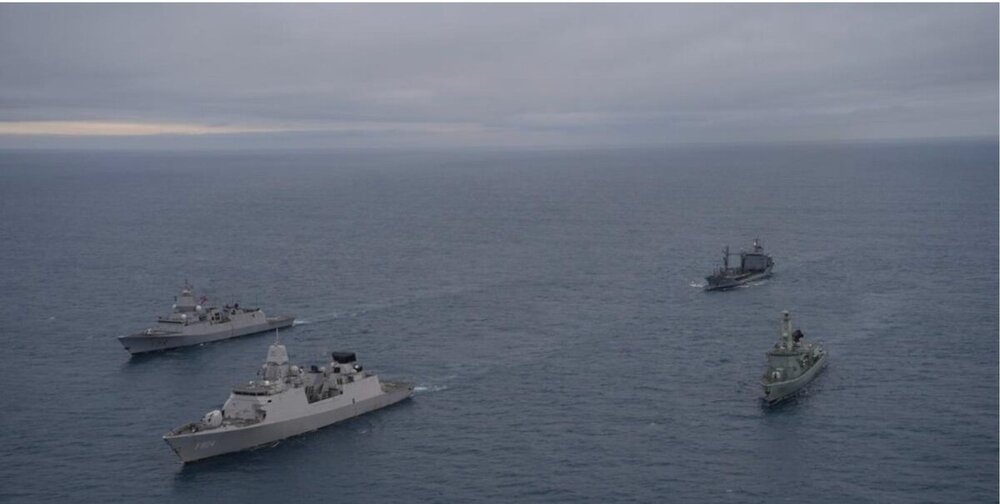
NATO last month, to absolutely no fanfare, published a revision to the Alliance Maritime Strategy. Don’t feel bad if you’re finding out about it first here—you’re not alone. You can search NATO’s website, but you can’t find it—at least I couldn’t. Head over to my friends at NATO’s Maritime Command in Northwood, nothing there either. If it weren’t for the friendly hippies at Human Rights at Sea, we wouldn’t have the copy you can download here. I’m not sure who is responsible for action in para 2, but Shipmate…it’s been a month. This is a solid, compact briefing document that we should be handing out like pamphlets at the church door on Sunday. Someone needs a closed door counseling session over this. Bad enough that—as any NATO staff officer will tell you—the decision was made to publish this in the middle of summer. Absolutely nothing gets done in NATO from July 1 to September 15th, and again from December 15 through January 15th. Perhaps that is why, but come on…no excuses. Enough of that, let’s move on. This is a revision to a standing document, so there is some overlap. The previous Maritime Strategy, even more compact, was—and I am not kidding here—promulgated 11 MAR 2011, well over 14 years ago. The world has changed a bit? Maybe. Anyway, I asked AI (specifically Grok) how much of the 2025 revision was copy-n-paste from 2011. I’m not being snarky, it is just that I used to do things like this for NATO, I know how this goes, and it’s OK. A significant portion of the 2025 Alliance Maritime Strategy—approximately 30-40% based on a comparative analysis of structure, phrasing, and content—appears to be roughly lifted from the 2011 version, with minor modifications for modernization, rephrasing, or integration of contemporary elements like emerging disruptive technologies (EDTs), multi-domain operations, and updated policy references. This is most evident in the sections detailing the contributions to core tasks (deterrence and defence, crisis prevention and management, cooperative security), which closely mirror the 2011 strategy's articulation of roles (deterrence and collective defence, crisis management, cooperative security, maritime security). For example: The "Cooperative Security" section in the 2025 document (paragraphs 21-23) is nearly verbatim from the 2011's "Cooperative Security: Outreach through Partnerships, Dialogue and Cooperation" (paragraphs 13-14), with small tweaks such as removing "prevent conflicts and" or changing "what nations conduct themselves and have the added value" to "the actions Allies conduct themselves, while adding the value." The "Crisis Prevention and Management" section (paragraphs 19-20) heavily draws from the 2011's "Crisis Management" (paragraphs 11-12), including similar lists of operations (e.g., demonstrations of force, maritime interdiction, counter-terrorism, non-combatant evacuation) and descriptions of maritime force capabilities (e.g., "maintain credible, rapid response maritime forces able to operate in littoral environments often with degraded conditions" vs. "continuing to maintain modern, credible, rapid response joint forces able to operate in environments with degraded communications"). The "Deterrence and Defence" section (paragraphs 15-18) includes several lifted or closely adapted phrases from the 2011's "Deterrence and Collective Defence" (paragraphs 9-10), such as emphasizing superior naval, amphibious, and strike forces for rapid and decisive effects, control of sea lines/lanes, force entry, projecting striking power from the sea, and sea-based missile defence contributions. The 2011's separate "Maritime Security" role (paragraph 15) seems integrated into the 2025's crisis and deterrence sections, with overlapping ideas like maritime interdiction, protection of freedom of navigation, countering terrorism/piracy, and safeguarding critical infrastructure/sea lines of communication. The "Implementing the Alliance Maritime Strategy" section (paragraphs 24-30) echoes the 2011's "Implementing the maritime strategy through continued alliance transformation" (paragraphs 17-18), starting with nearly identical opening phrasing ("To meet the challenges set out above...") and stressing the NATO Defence Planning Process for transforming capabilities, though expanded with 2025-specific focuses like warfighting readiness and industrial capacity. The "Conclusion" (paragraphs 31-33) shares conceptual parallels with the 2011's conclusion (paragraphs 19-20), including steering transformation via the Defence Planning Process and evolving capabilities, but is more concise and forward-looking without directly listing roles. In contrast, the 2025 strategy's "Introduction" (paragraphs 1-5), "The Strategic Environment" (paragraphs 6-13), and "Vision" (paragraph 14) are substantially revised and show little direct lifting. These sections incorporate updated geopolitical realities (e.g., explicit threats from Russia, terrorism, China, authoritarian alignments, climate change as a threat multiplier) absent from the 2011 document's more general descriptions of global interdependence, economic vulnerabilities, and transnational crimes.Overall, the 2025 version updates the 2011 framework to align with NATO's 2022 Strategic Concept and current priorities, but retains core operational language and structure, suggesting a deliberate evolution rather than a complete rewrite. AI is pretty good, but I have a few things I want to add to it. As regulars know, I like word counts as they tell stories. So, let’s compare 2025 to 2011. 2025Atlantic: 10 Russia: 9 Crisis: 8 Terrorism/ist: 7 Nuclear: 7 China: 3 Climate: 3 Humanitarian: 2 Mine: 1 Iran: 1 Korea: 1 Migration: 1 Arctic: 0 2011Atlantic: 3 Russia: 0 Crisis: 11 Terrorism/ist: 3 Nuclear: 2 China: 0 Climate: 1 Humanitarian: 2 Mine: 2 Iran: 0 Korea: 0 Migration: 0 Arctic: 0 Pacific: 0 India/Indian Ocean: 0 Americas: 0 You can see right off the bat that 2025 is a much more serious document. Russia, China, Atlantic, and nuclear are all break outs. Sadly, "climate” also is a soft-breakout we’ll quote later for general mockery because …. WHERE IS ARCTIC!?!?!?! “High North” does get one mention, but that is about it. Let’s get some pull-quotes from the 2025 revision. Read the 2011 if you’d like, but it’s not required. From the introduction: Strong and direct. Not bad for a NATO document and a firm departure from the 2011 edition. Excellent description of sea power. As a matter of fact, I think everyone should use this as an elevator-speech benchmark, if not steal verbatim. Not a fan of the “360-degree approach” that keeps popping up. NATO really does not have such a thing. Sure, it says it does, but does it, really? What about the areas to the west of the North American members of the alliance, into the Pacific? I don’t see that posture in the 270° direction from Brussels as we see in the 090° into the Eurasian landmass. I remain firmly to the proposition that this 360-degree approach is simply a self-contradictory cope to distract from what is the clear purpose of NATO, to counter the Russian Federation’s threat to Central and Western Europe. Don’t get me wrong, I’d love to see a Standing NATO Maritime Group 3 created to roam the northern Pacific, but we don’t live in the Salamander-modified alliance, so we will simply have to accept that all other missions that are not directed contra-Russia are secondary missions and, at best, the Pacific is tertiary. Again, for NATO this is solid. I bet more than a few of you are wondering where the mention is of the People’s Republic of China (PRC) who in the last 14 years have emerged as a malign influence on alliance security…but wait. She’ll show up. Concise. To the point. Well done. (NB: if you want to hear more about Russia, make sure and listen to the latest Midrats Podcast with Dmitry Gorenburg from last Sunday). It is important to remember that when the 2011 document was written, the war in Afghanistan still had tens of thousands of non-USA NATO forces in place. In Europe, terrorism is much more common than in North America (for now). I’m glad this remains a top-tier concern in this document. Well, look who makes an appearance. Less strange than the “0” of Russia in the 2011 document, it is amazing how much the PRC threat has emerged in the international mind since then. Especially in Europe, in 2011, the China Doves, now almost an extinct species especially in North America, were still the driving force in areas controlled by The Smartest People in the Room™. Welcome to the party, folks. NATO is the sword and shield of The Enlightenment. We should look at it as such. There is a clash of civilizations going on. Acknowledge and embrace it. Imperfections and all, would you want the future defined by the ideals of Europe and North America, or by China or Muscovy with their allies? It’s easy to forget that Europe’s neo-pagan Green parties still have the impact they do. With governmental bureaucracies riddled with them and their fellow travelers, this isn’t unexpected. It is also, with the mention of the “High North”, the closest we got to having the Arctic mentioned…we’ll call it a draw. “By increasing maritime…mass…” translates to, “We all need larger navies.” For an alliance that has an ocean in its name, this should be a given, but when you look at the threadbare navies in the alliance, I guess we do need to push the point. To finish things up, I want to pull paras 17 and 23, as they are something everyone should feel comfortable stealing and reusing. Solid staff work here. There is a lot more there. It isn’t a long document, and really doesn’t have to be. I’d just like to leave this pebble in everyone’s shoe to close. Look at what was left out of the 2011 document that is front and center in the 2025 revision. 14 years from now is 2039. It will be here sooner than you think. What challenge will be facing the alliance in 2039 that isn’t front and center in 2025? I have an idea…look south. h/t Dr. Bruns.This Substack is reader-supported. To receive new posts and support my work, consider becoming a free or paid subscriber. Share Leave a comment View the full article
-
Raytheon, an RTX business, and the U.S. Navy have successfully conducted the first live maritime test of the AN/SPY-6(V)4 radar. The test took place at the Pacific Missile Range Facility in Barking Sands, Hawaii, where the Advanced Radar Detection Laboratory hosted multiple trials over open water. During the events, the radar tracked air and surface […] The post U.S. Navy conducts first maritime test of SPY-6(V)4 radar first appeared on Defence Blog.View the full article
-
BAE Systems has announced the delivery of its 1,000th infrared seeker for the U.S. Army’s Terminal High Altitude Area Defense (THAAD) program. The delivery was made to Lockheed Martin, the prime contractor for THAAD, for integration onto the interceptor missile. The seeker provides advanced sensing and guidance that allows the missile to detect, track, and […] The post BAE Systems delivers 1,000th THAAD seeker first appeared on Defence Blog.View the full article
-
Boston-based Blue Water Autonomy has announced the close of a $50 million Series A funding round led by GV, with participation from Eclipse, Riot, and Impatient Ventures. The investment brings the company’s total raised to $64 million since April 2025, when it completed a $14 million seed round. The company said the funding will allow […] The post Boston startup secures $50M for U.S. Navy’s autonomous warship first appeared on Defence Blog.View the full article


