All Activity
- Past hour
-
One of America’s most iconic warplanes went down Monday morning at a military base in the California desert, setting off a large fire visible from miles away and triggering an immediate emergency response. Edwards Air Force Base, the sprawling flight test installation located in the Mojave Desert roughly 160 km (100 miles) north of Los […]View the full article
- Today
-
A Cold War-era tank first fielded in 1965 is about to get a new brain, a new gun system, and a new purpose on one of the most dangerous battlefields in the world. Defense analyst Jeff, writing for Defense Archives on Monday, reported that a Cockerill spokesperson confirmed to him at Eurosatory 2026 in Paris […]View the full article
-
The vehicle that Finnish defense company Patria and German transmission manufacturer RENK Group unveiled at Eurosatory 2026 in Paris on Monday is designed to go where commanders decide it should go and do what they need it to do without putting a single soldier in harm’s way to make that happen, because nobody sits inside […]View the full article
-
Thirty-six tank-busting rounds, a 105mm cannon, three crew members, and a vehicle light enough to fly aboard an Airbus A400M military transport. That is what John Cockerill Defense and Arquus brought to Eurosatory 2026 in Paris when they pulled the covers off the FENRIS, a wheeled fire support vehicle designed to fill the gap that […]View the full article
-
A supersonic bomber that Russia uses to launch cruise missiles at Ukrainian cities came down in a field near the Siberian city of Svirsk on Monday, adding another hull to a list of losses that the Kremlin can ill afford and has no practical way to replenish. Russia’s Aerospace Forces confirmed that a Tu-22M3 long-range […]View the full article
-
Nobody has to be inside it, and that is entirely the point, because on today’s battlefield a crewed turret is a target and the soldier behind the gun is the first to die when it gets hit. At Eurosatory 2026, the defense trade show running this week in Paris, Germany’s Rheinmetall unveiled the CT-025 20, […]View the full article
-
Russia sank the original Henichesk in 2022, striking the minesweeper with cruise missiles launched from occupied Crimea while it was covering the withdrawal of special forces troops near the Kinburn Spit, and on Monday Ukraine got the name back in the only way that matters at sea: on the bow of a warship flying the […]View the full article
-
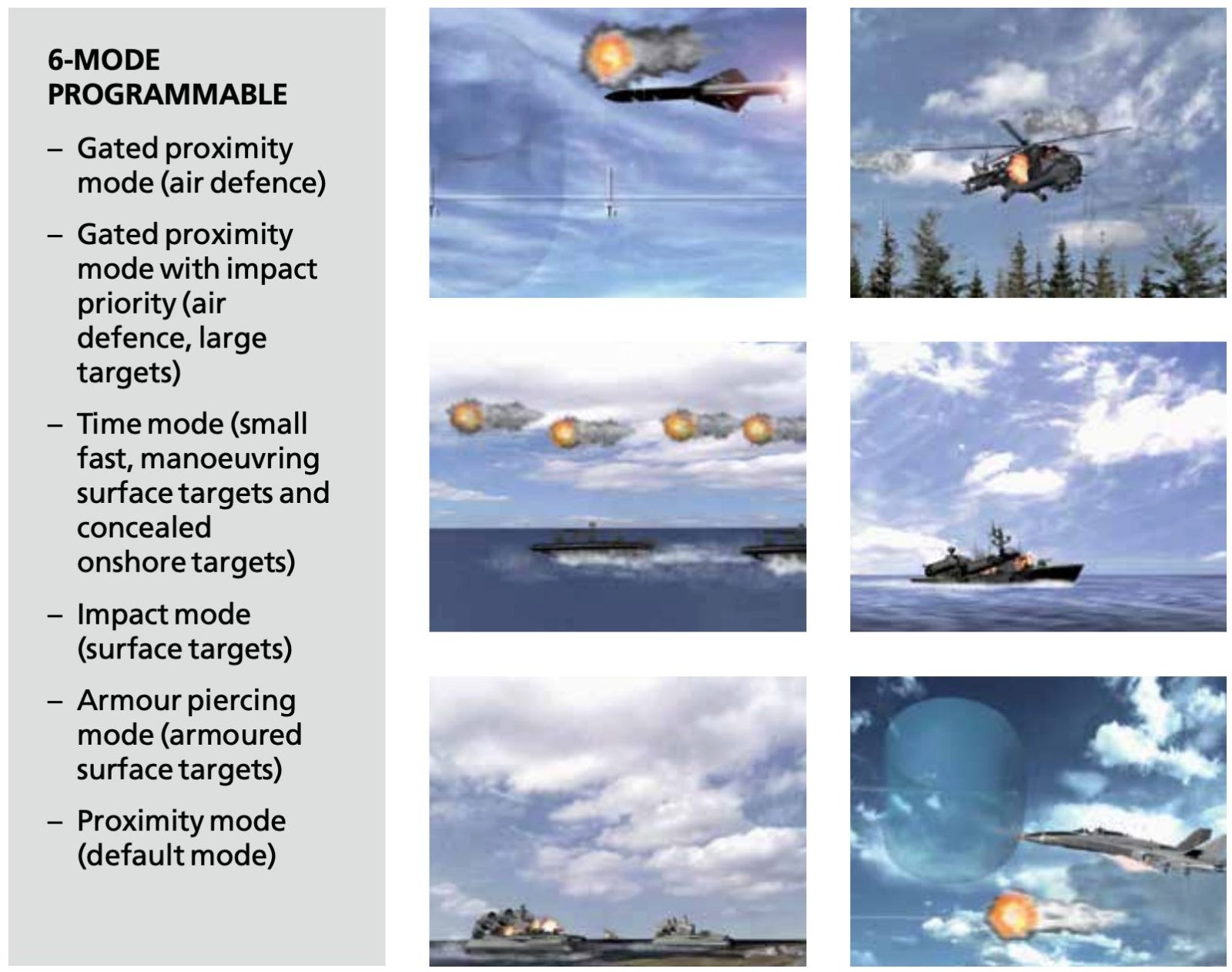
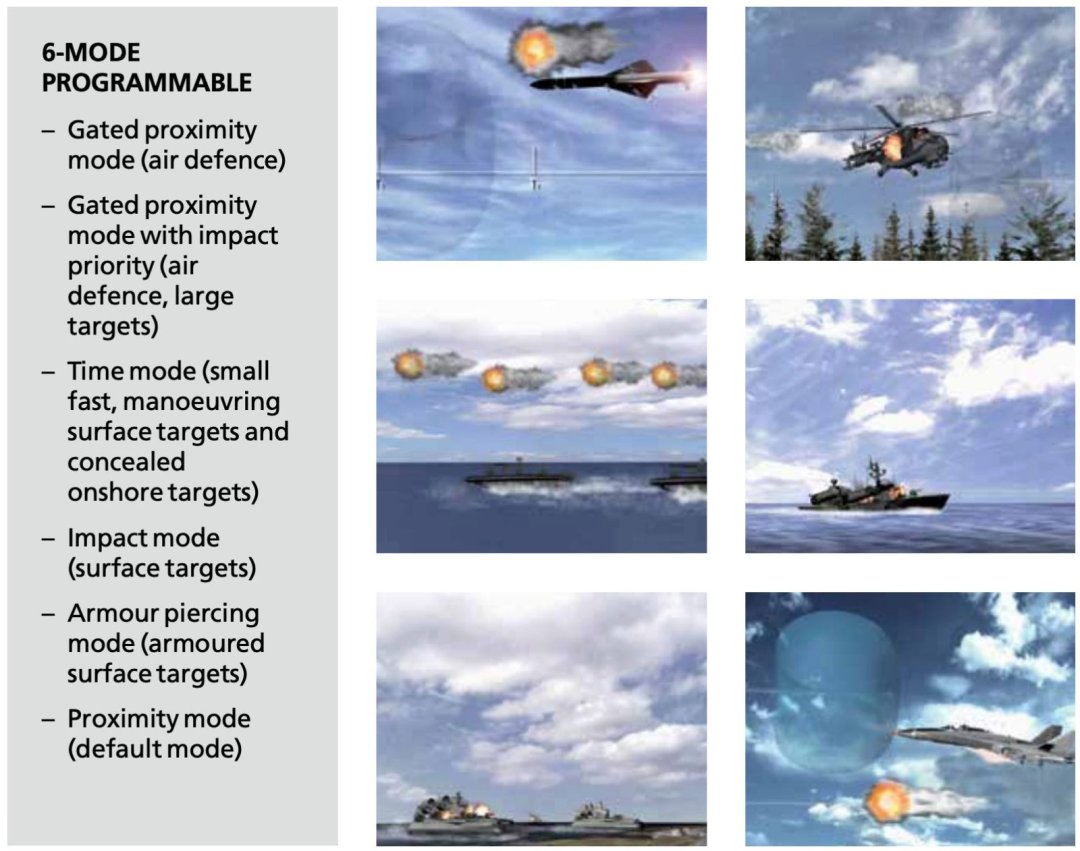
Back in the first week of May, we had the second edition in what has become a series about what options exist on the table to get additional weapons on ships: Yes, Reality Demands More Guns, Larger Guns, Everywhere. It was a follow-up to March’s Up-arm the Fleet? With What? A principal concern I have was outlined in a previous article in November 2024, Arm the Auxiliaries. If you are new to the issue, give the above a read and then come back. In addition to the primary concern, the secondary concern is our existing ships that are already armed, but do not have the best mix of weapons to address the new reality—the many cheap, unsophisticated, but deadly swarming threats now appearing both in the air and on the surface. For generations, the threat was always the few, exquisite, sophisticated, and fast. We built those, and built to defend against them. That threat is still there, but now we have new threats that cannot be ignored. Due to structural integrity, moment arms, survivability, and a whole host of engineering issues—you just can’t willy-nilly go about putting weapons all over the place. You do have options ready to go, but in the previous posts I failed to mention an old girl who is having quite a renaissance—and soon we will be seeing a lot more of. You naval history nerds are going to get all misty-eyed on me, but we’ll just have to work through it. Ladies and gentlemen, find a little topside space, and welcome onboard the Bofors 40 Mk4 Naval Gun. The low weight and compact Bofors 40 Mk4 gun system with its high rate of fire and ability to switch between optimized ammunition types – including the intelligent 40mm 3P all-target ammunition – provides high survivability and tactical freedom at all levels of conflict. … Control: Computer-controlled burst pattern On-mount muzzle velocity radar Remotely-operated with gyro-stabilised local control backup Firing: 6-mode programmable all-target ammunition Short firing sequences: 300 rounds per minute. Superb accuracy 100 rounds ready to fire with the possibility to shift between different types of ammunition Air burst capability for small boat defence That 6-mode capability is…something. The incoming Type 31 frigate for the Royal Navy, and a few export customers, has two of these in addition to its 57mm main mount (NB: really should be at least 76mm, but you know my biases). Look where these are located on this ship. It shows some flexibility on where these can be installed on other ships. There is so much confidence in the modern evolution of this almost century-old weapon that the Type 31 does not need a CIWS-SeaRam etc. Our friend Chuck covered it a bit over a year ago: The 40mm/70 has a long and successful history. The earlier 40mm/56 was the best medium caliber anti-aircraft gun of WWII. The air cooled single 40mm/56 mount was used on Coast Guard cutters post war including 125 foot Active class cutters and B-class 95 foot Cape Class patrol boats. Twin and quad water-cooled mounts were used on larger cutters e.g. 255s, 311s, 327s, and icebreakers. The US Navy moved from the 40mm to the 3″/50 at the end of WWII because it did not have room for a proximity fuse. Miniaturization now allows the 40mm to have the same sophisticated sort of 3P fuse available for the 57mm Mk110. Our ships need more defensive weapons, and due to their flexibility and utility, guns will be a major part of that. When the next Great Pacific War comes, we will put weapons anywhere we can on every kind of ship you can think of—all while cursing those who spent decades ignoring this requirement. This clearly should be in the mix. If we were smart, especially with our unarmed auxiliaries, we would not wait for war to start doing this. If you review what Navy Lookout and BAE Systems outline about its footprint requirements, you can get an idea about where we could put them. Turret Diameter: The base support ring is approximately 1,850 mm (72.8 inches) in diameter, which evenly distributes recoil forces. [1] Height: The above-deck mount has a low profile standing under 2 meters (78.7 inches) tall. [1] Deck Penetration: Because the gun stores up to 100 rounds inside the turret itself, it can function purely as a “bolt-on” system with zero deck penetration. If you choose to configure it with an under-deck penetration for a larger magazine, the penetration is only about 590 mm (23.2 inches). [1, 2, 3, 4] Weight: Weighs approximately 2,300 kg (5,100 lbs) excluding ammunition. A fully loaded mount with 100 ready-to-fire rounds weighs about 2,500 kg (5,500 lbs). [1, 2] To end things up, British Naval History crew at YouTube have a great summary. All it takes is for people to stop appreciating the problem and instead, take action. Leave a comment Share This Substack is reader-supported. To receive new posts and support my work, consider becoming a free or paid subscriber. View the full article
-
Shield AI, the San Diego-based defense technology company that has been supplying AI piloting software to U.S. military aircraft since 2019, is showcasing X-BAT at Eurosatory 2026. Eurosatory 2026, a major international defence and security exhibition held in Paris from June 15-19, gives Shield AI one of its most prominent European stages yet for a […]View the full article
- Yesterday
-
It has been a bit more than six years since then Commandant of the Marine Corps, General David Berger, USMC, initiated what became known as Force Design 2030 (now just known as Force Design). What followed was a controversial change to the structure of the United States Marine Corps intended to address the challenge posed by the People's Republic of China in the western Pacific. Now more than halfway to the original 2030 target, and informed by events from Ukraine and Southwest Asia since 2020, both long-standing critics of the design and other voices are readdressing the changes—and the critique—to see if it remains the right path. Joining the Midrats Podcast this Sunday from 5-6 PM Eastern will be General Anthony Zinni, USMC (Ret.). You can listen live at this link. If you can’t catch us live or are reading this after the show, reload the substack page later Sunday night for the uploaded podcast audio. General Zinni’s record of 35 years of service in uniform covers the breadth of service from the Vietnam War to his tour as Commander of U.S. Central Command (CENTCOM) from 1997 to 2000. Following his retirement from active duty, General Zinni continued to serve in senior diplomatic roles, including as the U.S. Special Envoy to Israel and the Palestinian Authority (2001–2003) and later as Special Envoy to Qatar (2017–2019). He is the author of several books, including the New York Times bestsellers Battle Ready (with Tom Clancy) and The Battle for Peace, as well as Leading the Charge and Before the First Shots Are Fired. Additionally, he continues working in academic positions and as a speaker on geopolitics, ethical leadership, and America’s role in the world. Leave a comment Share This Substack is reader-supported. To receive new posts and support my work, consider becoming a free or paid subscriber. View the full article
-
Somewhere in a desert exercise or an Arctic field camp, a U.S. Navy microbiologist or hospital corpsman can now pull out a portable DNA sequencer, run a sample, and identify harmful pathogens in less than 30 minutes and provide data that can help detect unknown or potentially genetically modified biological threats. The U.S. Naval Research […]View the full article
-
Flying a military helicopter in combat means managing a constant stream of radio chatter from multiple sources simultaneously, often while navigating at low altitude, coordinating with other aircraft, and making time-sensitive tactical decisions. For decades, U.S. Army aviation pilots have handled all of that through a single mono audio channel in their headsets, meaning every […]View the full article
-
Michigan National Guard soldiers loaded a HIMARS rocket artillery launcher onto a C-130J transport aircraft in Michigan and flew it more than 3,200 km (2,000 miles) to the California desert, where they executed simulated precision strikes before extracting, completing a long-range joint Army-Air National Guard HIRAIN training event as part of the Army’s premier combat […]View the full article
-
A nuclear-powered attack submarine completed its scheduled maintenance period at Pearl Harbor Naval Shipyard nearly a month ahead of schedule, handing the U.S. Pacific Fleet a combat-ready boat 29 days earlier than planned at a moment when undersea readiness in the Indo-Pacific has become one of the Navy’s most closely watched metrics. USS Colorado, a […]View the full article
-
A submarine squadron that the U.S. Navy decommissioned fourteen years ago has been reestablished, this time not in Hawaii where it once operated but at a Royal Australian Navy base near Perth, in one of the most concrete steps yet taken to turn the AUKUS security pact from a diplomatic agreement into a working military […]View the full article
-
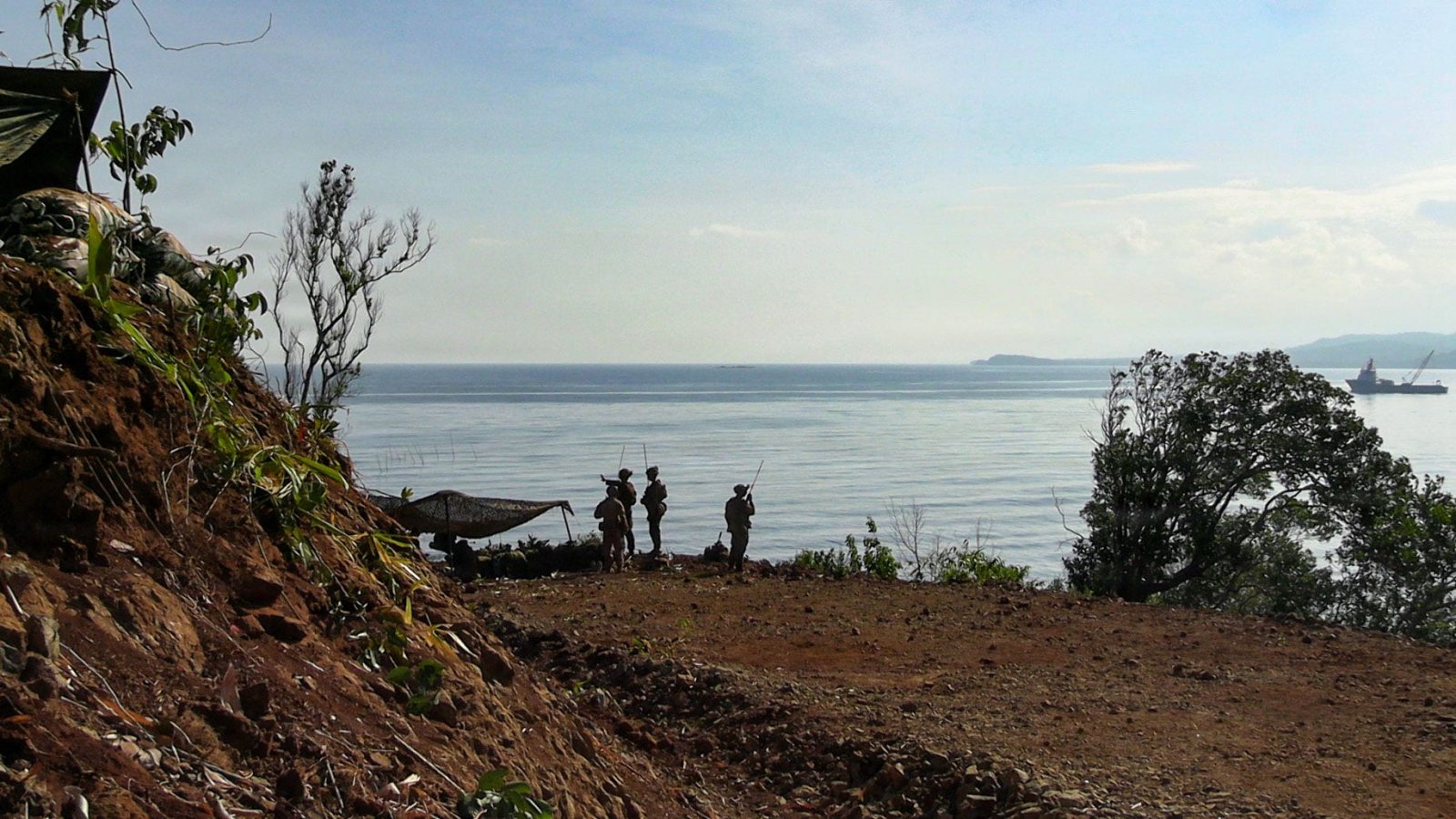
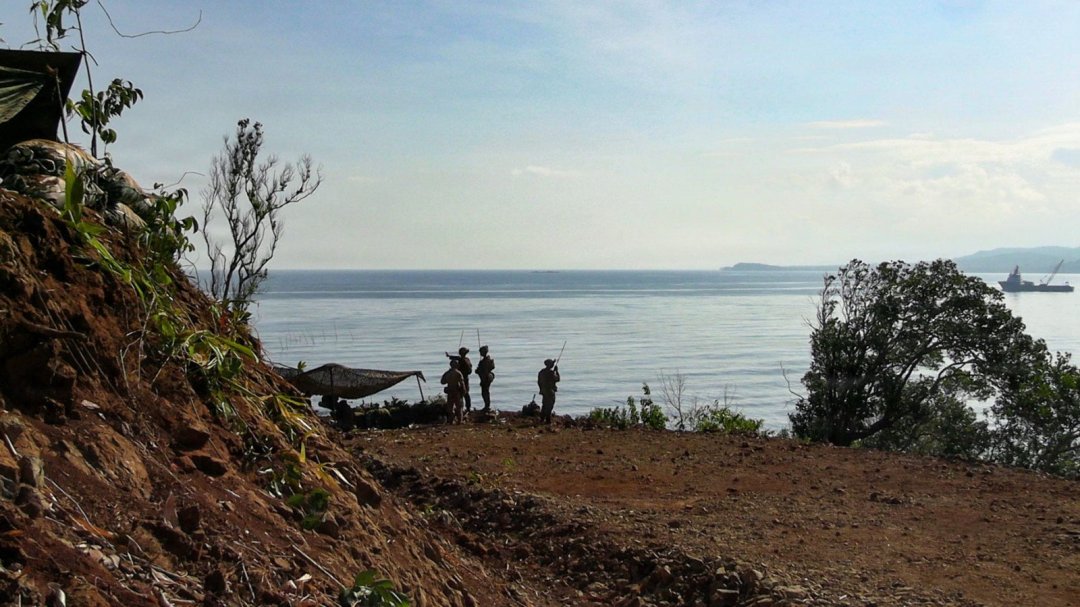
A swarm of autonomous boats operated by U.S. Army soldiers spread across a Philippine waterway during Exercise Salaknib 2026, screening a military cargo ship and relaying real-time surveillance data to commanders ashore as American and Philippine forces conducted a combined maritime security demonstration in Casiguran Sound in the northern Philippines. The mission showcased how U.S. […]View the full article
-
Soldiers from a Michigan Army National Guard unit spent June 10, 2026 at Camp Grayling firing one of the most iconic heavy machine guns in American military history through a brand-new optic system that no other unit in the entire U.S. Army had fielded before them. The 126th Theater Public Affairs Support Element, a Michigan […]View the full article
-
In what Air Force officials described as the earliest such integration in modern test history, an operational test pilot flew the B-21 Raider alongside a developmental test pilot at Edwards Air Force Base in California, signaling that America’s next-generation nuclear bomber is transitioning from proving it can fly to proving it can fight. The flight […]View the full article
- Last week
-
A factory in Louisiana is producing armored vehicles for Ukraine for the first time, as Textron Systems announced that full vehicle builds of the Mobile Strike Force Vehicle have begun at its Slidell manufacturing facility. The $163.4 million contract is funded through the Ukraine Security Assistance Initiative via the Foreign Military Sales mechanism, covering 65 […]View the full article
-
A matte-black Mitsubishi Delica D:5 minivan bearing no license plates, no unit markings, and a rooftop loaded with cameras, sensors, antennas, and a loudspeaker was photographed operating near Japan’s largest Ground Self-Defense Force live-fire exercise in Shizuoka Prefecture on June 7, 2026, according to Japanese military photo journalist Masaya Takewaka, writing for Transport News. The […]View the full article
-
Two of Europe’s largest defense companies are about to put their first jointly developed main battle tank on public display, revealing a new chapter in European armored warfare that has been building since the Italian Army decided its aging Ariete tank could no longer carry the weight of the country’s ground combat ambitions. Leonardo Rheinmetall […]View the full article
-
Russia has sharply accelerated its use of jet-powered attack drones against Ukraine in 2026, with its forces already launching 1,400 such weapons since January, compared to just 180 recorded throughout all of 2025, according to Militarnyi, the Ukrainian defense outlet that reported the figures from a briefing by Colonel Alexander Zaruba, Chief Researcher at Ukraine’s […]View the full article
-
Swedish fighter jets launched twice in a single Friday to intercept Russian military aircraft operating near Swedish airspace over the Baltic Sea, in what Stockholm’s top military commander described as a serious pattern of Russian behavior threatening both territorial integrity and NATO alliance security. The Swedish Armed Forces confirmed on June 13, 2026 that its […]View the full article
-
Hypersonic weapons have long been the most expensive category of precision strike munitions in any military’s arsenal, costing tens of millions of dollars per round and taking decades to develop. The U.S. Navy is now betting on a different model entirely, awarding Castelion Corp., a defense technology startup based in Torrance, California, a $23.4 million […]View the full article
-
The United States Air Force has awarded $400 million in construction contracts to seven Spanish companies to maintain and improve Morón Air Base, a strategically critical installation in southern Spain, even as the base sits at the center of one of the most significant diplomatic ruptures between Washington and a NATO ally in recent memory. […]View the full article