All Activity
Past hour
-
icylricy joined the community
Today
-
wwkagfzd joined the community
-
rkgzwnmp joined the community
-
Turkish Air Force F-16 fighter jets have completed a short deployment to Latvia’s Lielvārde Air Base, where they helped guard the country’s airspace around its parliamentary elections, Latvian Defense Minister Raivis Melnis said on Oct. 9. Melnis visited the Turkish unit at the base on Friday to thank it for the deployment. The Latvian Ministry […]View the full article
-
A Ukrainian drone has destroyed a Russian Pantsir air defense system on top of a “Flakturm,” one of the purpose-built anti-aircraft towers Russia has been putting up to stop Ukrainian drones, according to new footage released by the Security Service of Ukraine’s Alpha special operations unit. The video shows the strike on the elevated platform, […]View the full article
-
Mitsubishi Heavy Industries launched Japan’s newest attack submarine, Shogei, at its Kobe shipyard on Oct. 8, the seventh boat of the Taigei class built for the Japan Maritime Self-Defense Force. The 3,000-ton diesel-electric submarine was named and floated out in a ceremony at the yard in Kobe’s Hyogo Ward. MHI will now complete outfitting of […]View the full article
-
Japanese Defense Minister Shinjiro Koizumi lodged a strong protest with Adm. Samuel Paparo, commander of U.S. Indo-Pacific Command, on Oct. 9 over the arrest of a U.S. Marine on suspicion of robbing and killing a woman on Okinawa. The two met at Japan’s Ministry of Defense in Tokyo during Paparo’s visit, the ministry said. Koizumi […]View the full article
-
Japan’s Ministry of Defense has signed a contract to buy interceptor drones from Ukrainian manufacturer SkyFall, Defense Minister Shinjiro Koizumi said, making Japan one of the first countries outside Europe to order Ukrainian drones built to shoot down Russian attack drones. Koizumi announced the deal at a press briefing but did not say which SkyFall […]View the full article
-
Turkish defense electronics maker ASELSAN has shown its GÖKALP interceptor drone destroying a target drone in mid-air by flying straight into it, in a live demonstration at the company’s Oğulbey Technology Base in Ankara. In the test, ASELSAN’s AURA radar picked up the incoming target drone and passed tracking data in real time to a […]View the full article
-
tskhlogj joined the community
-
kivlmtjc joined the community
-
kxmiyuwp joined the community
-
kwqueiob joined the community
-
The U.S. Navy plans to have Boeing redesign parts of the computer that controls weapons and external stores on its F/A-18 and EA-18G fleet, after concluding that the current unit can no longer be supported because key components are no longer available. Naval Air Systems Command’s PMA-265, the program office for the F/A-18 Super Hornet […]View the full article
-
The U.S. Navy has asked defense companies for feedback on how it plans to structure a future contract for its Gun Weapon Systems program, the engineering effort behind the guns mounted on its warships. Naval Surface Warfare Center Dahlgren Division in Virginia posted the request for information on Oct. 9. It asks potential vendors to […]View the full article
-
jcgpncbe joined the community
-
nldllcxq joined the community
-
The U.S. Air Force has awarded Ophir Corp. of Littleton, Colorado, a $34.6 million contract to repair the laser system that warns B-2 Spirit crews when their stealth bomber starts leaving a visible condensation trail. The firm-fixed-price contract, announced Oct. 9, covers repairs of the B-2 Pilot Alert System, with work done in Littleton and […]View the full article
-
Zeebrugge. If you have been there, or visited its inner city of Bruges, you know what a beautiful and peaceful place it is - as most all of Belgium is today once you get out of the large cities like Brussels, Liege, etc. In 1918, though, Belgium was a nightmarish slaughterhouse where the bodies of millions were blended into the beaten earth—where like Okinawa and Iwo Jima over a quarter century later—the living earth would move with a blanketed mass of maggots. In one of history's subtle hints she will give you early if you wish to listen, Britain found herself on the edge of starvation due to a threat few understood or even knew of at the beginning of the war - the submarine. Something new, unexpected, and decisive needed to be done. By 1918, the Great War had entered a decisive phase. While Russia had been knocked out of the war, its place had been taken by the United States, which now provided a fresh pool of manpower and industrial capacity to the Allied cause. The transfer of these resources however was threatened by the continuing war at sea and the U-Boat menace that also threatened Britain's link with the continent. The early advance by the German Army in 1914 had meant that the Belgian ports of Ostend and Zeebrugge had been overrun and with the expansion of the port facilities, the Germans were in a position to threaten the very lifeline that supplied the Allied armies in France. The two ports were connected by a canal network with the city of Brugges that also gave access to the open sea. Brugges in turn, was connected to Germany by the railway network and partially completed U-Boats were shipped from Germany, to be finished at Brugges and then make their way to the open sea by means of the canal system. The canals formed a triangle and inside this, the Germans had built a series of airfields from which they conducted air raids on Britain and fortified the entire length of the coast with light and heavy artillery batteries. The Royal Navy did not attempt to bombard these ports until 12 May 1917 when it bombarded Zeebrugge in order to put the lock system out of action and used a smoke screen to hinder German observation. While the bombard failed in its task, the Germans stepped up defensive measures and as the war progressed, the front line drew ever closer to Ostend, bringing it within range of the Royal Marine heavy howitzer battery in France, forcing the Germans to transfer many of its facilities to Zeebrugge. One of the objectives for the Third Battle of Ypres (Passchendaele) was the expulsion of the Germans from Flanders and to capture the ports of Zeebrugge and Ostend. The battle however failed to achieve the intended breakthrough and so any attempt to expel the Germans from these ports or to deny them the use of these facilities meant that any future attempt would have to made from the sea. The mounting losses in the war at sea caused the Royal Navy to look at the problem. A suggestion by Admiral Keyes that the ports might be blocked by sinking a ship in the entrance was initially rejected but as the war dragged on, the Royal Navy returned to the idea and it was decided that it might be done with the use of several ships, although the exact position would have to be chosen with care so that it would not be possible to get around the ships or to dredge around them to create additional channels and their bottoms would have to be blown to sink them as quickly as possible and prevent drifting. So, as is often done in this line of work, the word went out. Volunteer for a mission you know nothing about—odds are you won't come back. You will be trained quickly, sloppily with a pick-up team. You execute. As the ships were approaching the entrance to the port, some protection would be afforded (in the case of Zeebrugge) by the Mole, which extended in an arc across the entrance to the channel. It was over a mile in length and some 100 yards wide, having extensive storage facilities and hangers for seaplanes. A railway connected the Mole to the shore and was used to transfer men, equipment and stores. As the planning for the operation got underway, a special Royal Marine battalion (mainly volunteer) was formed in February 1918 to eliminate the battery that was situated at the end of the Mole and would threaten the block ships as they approached the canal. Lt Col F E Chichester was appointed to command the battalion but was succeeded by Major B N Elliott. The battalion consisted of a headquarters, a machinegun section, a mortar section, three rifle companies and medical support staff. The troops were to be conveyed to Zeebrugge in HMS Vindictive, assisted by the Iris and the Daffodil, two Mersey ferry boats that had been provided for this operation. Once they had reached Zeebrugge, Daffodil was to push Vindictive against the Mole until she could be secured and disembark the troops. The ships were modified for this task. Special ramps were fitted to Vindictive so that the storming parties could reach the Mole, while Iris and Daffodil had been fitted with ladders to that their parties could climb up onto the Mole. Vindictive was strengthened and armoured against the storm of fire she would receive and additional armament fitted so she could support the troops as the moved onto the Mole. By April 1918, the preparations for the raid had been completed, the men trained for their tasks and the shipping collected for the operation. Three block ships were to be sunk in the Zeebrugge canal entrance, HMS Thetis, HMS Intrepid and HMS Iphegenia. The first time the force sailed, 11 April 1918, the weather conditions changed as they neared Zeebrugge, which forced a postponement, but on the eve of St George's Day, 22 April 1918 the force sailed and during the passage, Admiral Keyes signalled "St George for England". Commander Carpenter on the Vindictive replied, "May we give the dragon's tail a damned good twist." By 23.20 on 22 April, the monitors had opened fire on Zeebrugge. Twenty minutes later, the motor launches that had accompanied the force began to make the smoke screen. One minute after midnight, St George's Day, Vindictive arrived alongside the Mole after which Daffodil arrived alongside her to push her against the Mole. By this point the smoke screen had begun to lift and the defensive fire was intense. In the approach to the Mole, many of the ramps fitted to Vindictive were damaged and only two could be used to allow the storming parties to disembark on the Mole. The ladders fitted to Iris were damaged as well and so the troops had to transfer to Vindictive to land. Once on top of the Mole, they had to endure intense German machinegun fire in order to get to the battery and while they failed to knock it out, they prevented it from firing on the blocking ships and so succeeded in their mission, something for which they suffered heavy casualties for. The distraction caused by the motor launches and Royal Marines enabled the block ships to approach the canal entrance without too much difficulty. Thetis ran into problems when one of its propellers got caught in a net, forcing her to collide with the bank. She had to be sunk some distance from the entrance but performed admirable work in helping to direct the remaining two ships into the canal entrance itself. Both Intrepid and Iphigenia were able to be sunk in the correct positions, thus blocking the canal. Two submarines, C1 and C3 were packed with explosives and rammed into the viaduct, demolishing it, thus isolating the Mole from the shore. The crews from the submarines and the block ships were picked up by the motor launches despite heavy fire from the German batteries. By 00.50 on 23 April the recall had sounded and by 01.00 the survivors were all aboard. A quarter of an hour later, Vindictive had cleared the protection of the Mole and was undergoing intensive fire from the Germans but managed to come through it. The raid on Ostend at the same time proved to be a failure but another attempt was tried the next month and Vindictive was used as a block ship in that operation. The Royal Marines had been on the Mole for just an hour and the force had displayed such courage and devotion to duty that it gave great encouragement to the Allied forces at such a dark hour in the war. The 4th Royal Marine Battalion was awarded two Victoria Crosses with another six being awarded for the action at Zeebrugge and three being awarded for the actions at Ostend. At Deal, on 26 April 1918, a ballot was held as to who should receive the awards, with Captain Bamford and Sergeant Finch winning. In order that the gallantry of the battalion would be remembered, it was decided that no other marine battalion should be named the 4th. In a day when entire nations ponder abandoning the battle against an existential threat to their very existence because of the casualties suffered at Zeebrugge in a matter of minutes, it can make you wonder if we can even try to understand what these men did and why. We can try. That is what the study of history is. That is why what we have done to the study of history from elementary school through college and as adults is a crime in itself and a shame on our culture. And in the end; Much was made of the raid. Keyes was knighted, and 11 Victoria Crosses were awarded. The Germans, however, made a new channel round the two ships, and within two days their submarines were able to transit Zeebrugge. Destroyers were able to do so by mid-May. Did it make a difference? Of course it did. Did the pundits of the day nitpick it to death? No, they understood that war from the Strategic to the Tactical is a dark room you step into. No, it has only been nit-pic'd once the pundits were safely behind the wall of freedom that those who bled built. First posted NOV08.Leave a comment Share This Substack is reader-supported. To receive new posts and support my work, consider becoming a free or paid subscriber. View the full article

Yesterday
-
Every one-on-one meeting slot at the U.S. Air Force’s upcoming industry day for a new F-16 mission computer is already booked, and the service has now restricted access to the event’s sensitive briefings to companies certified to handle export-controlled military data. The Air Force Life Cycle Management Center’s F-16 program office will host the event […]View the full article
-
The U.S. Army will brief defense companies in Huntsville, Alabama, on Oct. 27-28 about its plans for a new short-range air defense system built on a pallet that can be loaded onto almost any vehicle, giving light and fast-moving units their own protection against drones, helicopters and attack aircraft. The industry day covers Maneuver-Short Range […]View the full article
-
Forterra and Hypercraft are showing a driverless off-road vehicle built for military resupply at the Association of the U.S. Army’s annual meeting in Washington, pairing Hypercraft’s Razorback unmanned ground vehicle with Forterra’s AutoDrive self-driving system and a counter-drone turret from 9 Mothers. The companies say the vehicle is aimed at contested logistics, moving supplies through […]View the full article
-
German drone maker STARK and Thales Australia have agreed to fit STARK’s Cascade loitering munition to the Bushmaster armored vehicle, giving the Australian-built truck a launcher for one-way attack drones that the company says can hit targets up to 100 km (62 miles) away. The two companies signed a memorandum of understanding on Oct. 7 […]View the full article
-
Latvia’s armed forces have taken delivery of their first Hunter infantry fighting vehicle, a tracked armored vehicle based on General Dynamics European Land Systems’ ASCOD design, about 20 months after the country signed its first contract. The vehicle was handed over on Oct. 7 in the presence of Defense Minister Raivis Melnis, and GDELS said […]View the full article
-
The U.S. military’s V-22 Osprey program office and manufacturer Bell Boeing have brought 14 new companies into the tiltrotor’s supply chain as they work to keep the aircraft flying past 2055, after years of gearbox failures, fatal crashes and flight restrictions that have kept large parts of the fleet on the ground. The new suppliers […]View the full article
-
The U.S. Army has taken delivery of its first new locomotives in more than a decade, part of an effort to replace a rail fleet in which more than a third of the active engines are older than their 65-year expected service life. The Army’s Tank-automotive and Armaments Command, known as TACOM, said its rail […]View the full article
-
The U.S. Navy has put the destroyer USS Arleigh Burke (DDG 51) into dry dock at Navantia’s shipyard in Cadiz, Spain, the first time one of its Europe-based destroyers has been dry-docked in the region since the Navy began stationing them in Spain more than a decade ago. The ship entered the dock on Oct. […]View the full article
-
The U.S. Marine Corps has picked SteerBridge Strategies, a small veteran-owned company in Vienna, Virginia, to work on artificial intelligence tools meant to predict aircraft maintenance needs and manage aviation spare parts, after a selection process the service said took 34 days from approved requirement to vendor notification. The Marine Corps’ aviation acquisition office at […]View the full article
-
The U.S. State Department has approved a possible $300 million sale to Australia of the systems and support it needs to plan Tomahawk cruise missile strikes, adding mission-planning capability to the long-range missiles the Royal Australian Navy began acquiring in 2023. The package covers a Theater Mission Planning Center with its associated communications systems, the […]View the full article
-
The U.S. Department of War and the Missile Defense Agency have awarded Raytheon a multiyear contract worth up to $6.3 billion to build and sustain Standard Missile-3 Block IB interceptors, the ship- and land-launched missiles the U.S. Navy uses to shoot down ballistic missiles in space. The contract runs five years with two additional option […]View the full article
Last week
-
BLADE, the robotics company formerly known as HDT, said its Hunter WOLF unmanned ground vehicle has been selected for the second phase of GroundBreaker 1, a U.S. Department of War demonstration in which service members will put industry-built ground robots through field trials at Camp Grafton, North Dakota, on Oct. 19-23. The company said Hunter […]View the full article
-
The Javelin Joint Venture, the Lockheed Martin and Raytheon partnership that builds the Javelin anti-tank missile, says it has nearly doubled its annual production capacity for complete Javelin rounds over the past two years to keep up with demand from the U.S. military and foreign customers. Lockheed Martin announced the milestone on Oct. 8 but […]View the full article
-
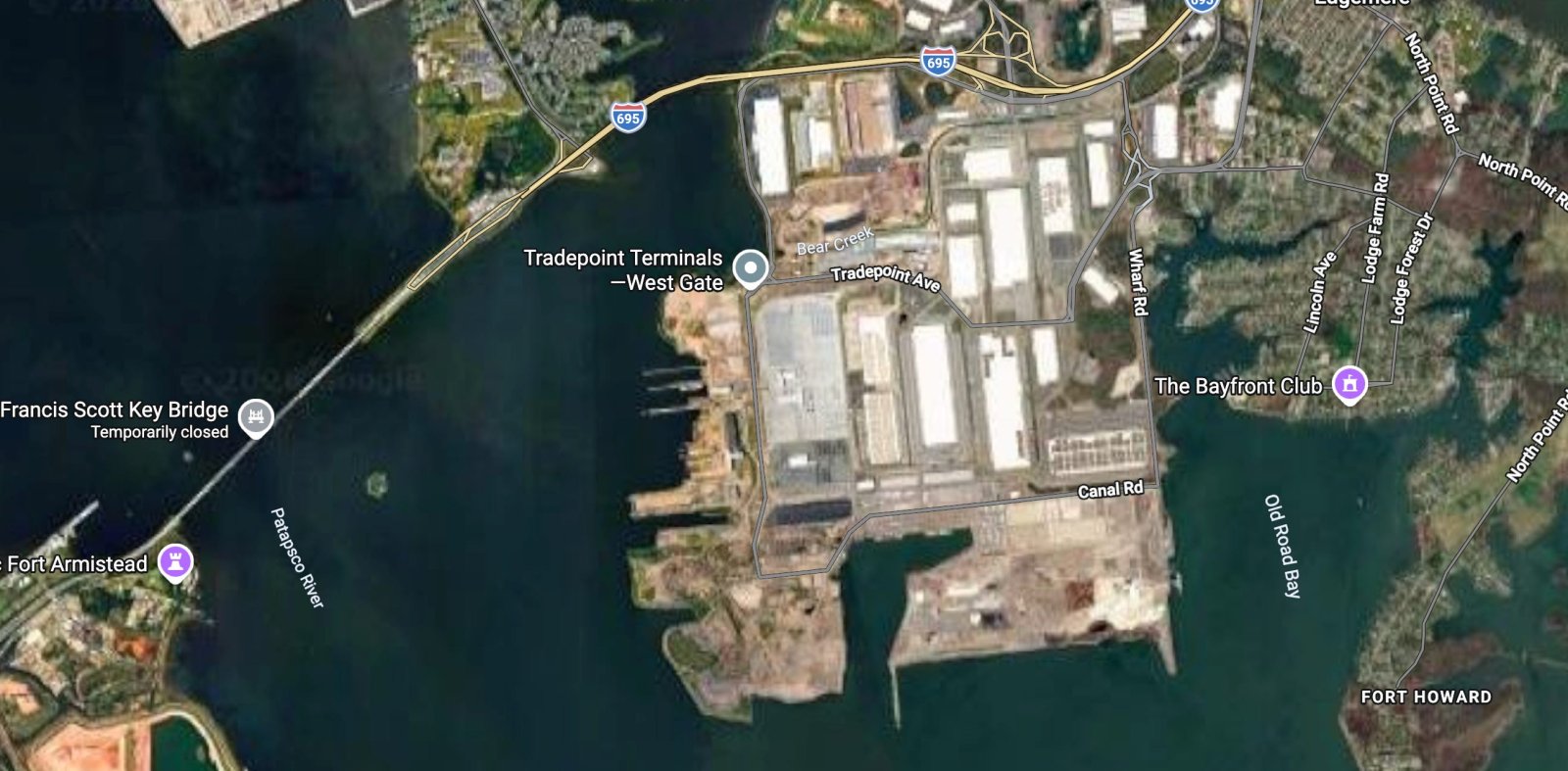
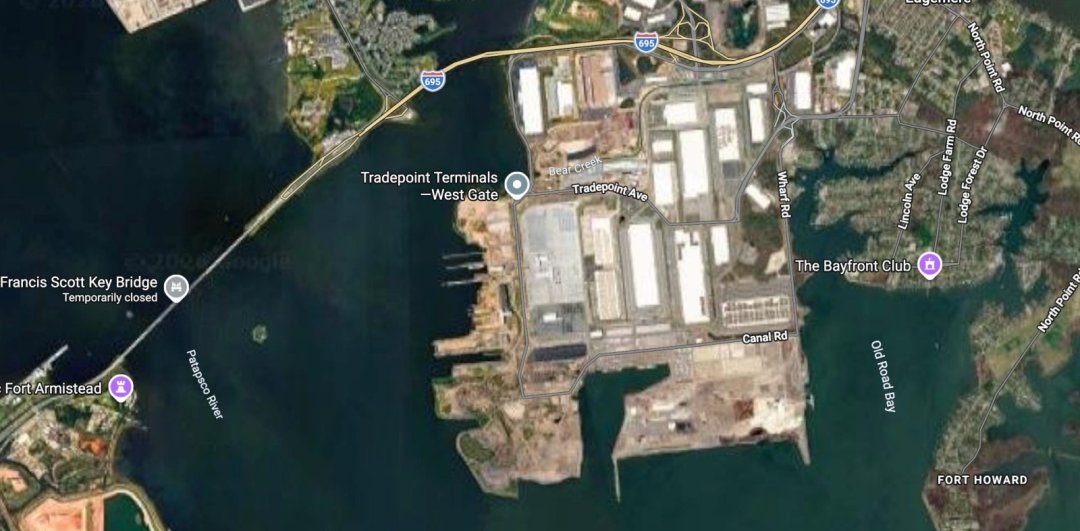
The Sparrows Point Shipyard outside Baltimore has a history dating back to 1887. She is one of the many neglected and underused monuments to a once great industrial power just waiting for the right people with the right vision to return. I think we have it. Via Howard Altman and the good people at TWZ, …the Trump administration on Tuesday announced that Anduril is building a new two-million-square-foot facility in Baltimore designed to help speed up the production of Virginia class nuclear-powered attack submarines. The plant, dubbed Arsenal-2, will eventually produce components like torpedo tubes and spherical air flasks, which will then be sent to the two shipyards that build nuclear submarines, General Dynamics Electric Boat and Huntington Ingalls Industries’ Newport News Shipbuilding. Anduril’s plan to build complex submarine components is a huge leap for a company with a shipbuilding portfolio consisting of a limited number of smaller craft. The submarine component plant announcement was made as the Navy is struggling to keep up with its goal of producing two of these boats per year amid a wider issue of construction and delivery delays across the service. However, it will be years before the first Anduril-produced components are placed on a submarine… … “Today’s $6.6 billion investment represents the president’s commitment to restoring American maritime dominance by constructing new vessels in communities like Baltimore and across the country,” White House spokesperson Anna Kelly told a group of reporters, including from TWZ, at a Tuesday morning press conference. Those funds include a $3.7 billion investment from Anduril to build and staff the new facility, and a contract worth up to $2.9 billion awarded to Anduril by the Navy to produce the components. … “Today’s $6.6 billion investment represents the president’s commitment to restoring American maritime dominance by constructing new vessels in communities like Baltimore and across the country,” White House spokesperson Anna Kelly told a group of reporters, including from TWZ, at a Tuesday morning press conference. Those funds include a $3.7 billion investment from Anduril to build and staff the new facility, and a contract worth up to $2.9 billion awarded to Anduril by the Navy to produce the components. As Anduril is a privately held company, we can safely assume that none of that $2.9 billion from the government will be put towards stock buybacks. Ahem. Anyway, the Primes cannot get to 2.0, so we need more industrial capacity. If Anduril can bring it, bring it in style. So much is going on. If you are having trouble keeping up with all the good news happening in the shipbuilding space, you’re not alone. This next bit is incredibly smart. Before Arsenal-2 is up and running, Anduril said it plans to “manufacture critical Virginia class submarine components at a new 160,000-square-foot facility in Orange County, California, purpose-built to support key submarine construction processes and SUBSAFE-qualified production qualification [efforts].” The Orange County facility will give Anduril “a two-year operational head start to develop and validate manufacturing methods, production workflows, and quality systems before Arsenal-2 comes online,” the company noted. “It will support prototyping and production of Virginia-class test assets and critical maritime components, including torpedo tubes, while allowing Anduril to recruit and train the early workforce on the systems and standards that will ultimately scale at Arsenal-2. Once Arsenal-2 comes online, the Orange County facility will continue supporting broader maritime manufacturing efforts across Anduril’s industrial network.” In case you are wondering what Arsenal-1 is… Arsenal-2 follows the development of Anduril’s Arsenal-1 plant in Ohio, first announced two years ago. That five-million-square-foot facility, once fully up and running, will be able to “produce tens of thousands of autonomous weapons systems addressing the urgent needs of the United States and our allies,” the company said at the time. BZ to the New York Post … nice summary video. I would be remiss if I did not point out this one aspect of this project that gives me pause: the State of Maryland has a pernicious political and regulatory environment, not to mention labor rules. I assume this has been mitigated to an acceptable level in back-room discussions. That’s my planning assumption. If not…ick. I’m going to have to do a ‘Gulf of America’ post next week just to review with you what’s happening in Texas and Louisiana, but there is exciting “creative friction” happening all over the national security space. Here’s another example. As I mentioned on yesterday’s UNCLAS Read Board Podcast, you absolutely have to give a listen to the Ruthless Podcast interview with Joe Lonsdale on Rebuilding American Shipbuilding, AI, Data Centers, and America’s Industrial Boom. His comments about the Pentagon bureaucracy and the Primes are so spot on…you just need to hear it from him. The interview starts at about the 41 minute mark. This Substack is reader-supported. To receive new posts and support my work, consider becoming a free or paid subscriber. Leave a comment Share View the full article
-
The Spanish Army has received its first Aracne counter-drone systems, delivered to the 71st Anti-Aircraft Artillery Regiment, which serves as the army’s lead unit for defending against drones. The army announced the delivery on Oct. 8. The system is built to detect drones, identify them and choose a response, and the regiment has already completed […]View the full article