All Activity
- Today
-
A British laser weapon capable of destroying drones for roughly $13 a shot is on track to be installed aboard Royal Navy destroyers in 2027, making the UK the first European NATO member to field an operational shipborne directed-energy weapon, and the system’s makers used a major NATO industry forum in Portsmouth last week to […]View the full article
-
Ukraine is on the verge of test-launching its first domestically produced long-range ballistic missile capable of striking Moscow, the founder of the company building it said in a rare on-camera interview filmed inside one of the firm’s production facilities, according to the Ukrainian YouTube channel Pressing. Denys Shtilerman, chief designer and co-founder of Fire Point, […]View the full article
-
Russian media published footage of a Geran-4 kamikaze drone striking a Ukrainian Air Force MiG-29 as the aircraft prepared for a mission at an airfield in southern Ukraine, destroying it completely. Ukrainian sources confirmed the aircraft was lost but said no personnel died in the strike. Separately, the Ukrainian Air Force Command confirmed in an […]View the full article
-
A Ukrainian robotic ground vehicle took a direct hit from an enemy FPV drone, shrugged off the shrapnel damage, and kept driving until it delivered nearly a ton of supplies to front-line positions, Militarnyi reported. The same vehicle later struck a mine on the return leg of a subsequent mission and was lost, too damaged […]View the full article
-
With the first operational B-21 Raiders scheduled to arrive at Ellsworth Air Force Base in 2027, the U.S. Army Corps of Engineers has awarded a $44 million construction contract to build the permanent outdoor shelters that will protect America’s most advanced stealth bomber from the harsh South Dakota winters, extending its service life and keeping […]View the full article
-
The U.S. Marine Corps Systems Command in Quantico, Virginia awarded Seattle-based Overland AI a $20 million contract to supply unmanned ground vehicles and accompanying software in direct support of the Marine Air Defense Integrated System, the Corps’ primary mobile air defense capability, with deliveries required by October 2027. The Marine Air Defense Integrated System, known […]View the full article
-
Boeing secured a contract worth up to $2 billion from the U.S. Space Force on June 25 to build two new satellites that will extend the life of the military’s primary secure voice communications network, knocking out the constellation’s original builder, Lockheed Martin, in the process. The program is called the Mobile User Objective System […]View the full article
-
The CEO of AM General stepped into a rapidly widening political fight on June 26, publishing a public statement defending his company’s handling of the JLTV A2 program as Congress moved to slash funding, the Marine Corps hunted for a backup supplier, and lawmakers in Washington called the program a readiness crisis in the making. […]View the full article
-
RENK America, the Muskegon-based subsidiary of German defense giant RENK Group AG, announced June 26 that the Army Contracting Command at Detroit Arsenal had awarded the company a new five-year production contract for its HMPT 800 hydromechanical transmission. The deal is the fourth consecutive multi-year contract in the same series, meaning the Army has now […]View the full article
-
Thick smoke was still rising over Volgograd’s Krasnooktyabrsky District on the morning of June 27 when open-source analysts began piecing together what had just happened to one of Russia’s most critical defense manufacturing sites. According to the monitoring Telegram channel Exilenova+, FP-5 Flamingo cruise missiles struck the Titan-Barrikady plant at least three times, with footage […]View the full article
- Yesterday
-
DARPA, the Pentagon’s advanced research agency responsible for some of the most consequential technological breakthroughs in American military history, has issued a request for information targeting metals producers, ceramics manufacturers, and composites makers with an unusual proposition: share your production data, and we will give you AI tools that make your factory perform better than […]View the full article
-
The U.S. Air Force is preparing to sole-source a contract to Lockheed Martin Space Systems to integrate America’s nuclear warhead reentry vehicle into the new Sentinel intercontinental ballistic missile, a critical step in transferring the country’s ground-based nuclear deterrent from the aging Minuteman III system that has stood watch since the 1970s to the weapon […]View the full article
-
It has been just a couple of years since I last posted this FbF. That is quite a bit sooner than most encore postings, but there is a new movie out about it, so I figured it was time to tell the story again. First, the trailer. I’m not sure where it will be streaming in the U.S., but I’ll keep an eye out for it. Watch the trailer first, then read the extended story below. The war is about to begin. You are in command of your Navy's newest ship and are leading the attack on another nation's capital. Decades before others thought they had discovered such concepts as "Shock and Awe" and "Decapitation Strikes" - you are on the tip of the spear of an attack that will seize the Head of State of the target nation before they even have a chance to resist. Your opposition? A weak nation with a weak military - a nation you hold in contempt as the arrogance of their self-declared neutrality has lulled them into thinking they were beyond the reach of the most feared warriors the world has ever known. They are so weak that you are sailing right into their nation's capital. The only thing they oppose you with are obsolete, static defenses that even your Grandfather would dismiss. It is a great day for victory. Will your nation be able to stay out of this war? Which side will try to seize your capital? Will they keep for themselves? Your nation just wants to be left out of everyone else's wars. You have no claim on anyone's land or treasure. You insult no one. You just want to be left alone. You are old - well past you life expectancy. When you started your service, most nations were just getting their first steel warships, there were no cars, trains were a rare treat - and the only things that flew flapped their wings. Your command is over a hundred years old, your weapons are older than the fathers of the raw recruits you have running around your battlements. Your main guns are 50 years old. This is your Command though - your young soldiers make up for their lack of experience by the bravery that comes from bravado and ignorance. That will be good enough. You have one trick though. One thing the enemy, whoever they are, do not know about. Thing is, your "secret weapon" is 40 years old. You feel old; but heck your secret weapons once belonged to an empire that no longer exists - but that's OK - your people are known for keeping their equipment in good shape. You are worried. Even though the officer in charge of your secret weapon is out sick, you had a small boat pick up a retired Commander who, 31 years ago, once worked on them. He showed up last night. He will have to do - even though he looks like a museum ship in his old, ill-fitting uniform. Sigh, you go to war with what you have - not what you wish you had. To complete your mood, you have no orders. The approaching naval force already forced their way past the outer forts and had received both warning shots and live rounds. They did no stop. They sent no signal. As the fleet of ships continue towards the capital, you make a decision; you consider them enemy warships and will engage them as such. Knowing your job, you turn to your men and state; "Either we will become heroes or we will be court-martialed. Let's just do our duty for our country." And so, it starts. The total German naval attack comprised 1 heavy, 1 armoured and 1 light cruiser, 14 destroyers, 14 torpedo boats and miners and 41 freighters and tankers. Hitler's planned to take the Norwegians by surprise and forcing them to surrender within hours (like he did in Denmark). But the first surprise he encountered was when the pride of his Navy, the brand new heavy cruiser "Blücher" - that was to spearhead the surprise attack on the nation's capital - at 4 AM, at full speed, no lights. The heavy cruiser Blücher now moved slowly with darkened lanterns towards the old fortress built in 1847, obviously believing they could just sneak past. Erichsen stood at the main battery with his men to demonstrate that he as the boss was in the front line. As the German ships appeared from the darkness and morning fog, the loomed like giants ahead. A nervous, newly graduated lieutenant fiddled with the range finder and reported, "Distance 3,000 meter". "Nonsense!", Erichsen grumbled and shouted, "Distance 1,200 meter - Gun no. 1, Fire!" He never calculated to get off more than two shots with the museum-aged guns and his untrained men (some of them were the cooks!), so he had to get a hit! By sheer luck, the first 28-cm shell hit the Blücher's forward gunnery control station, effectively disabling the ship's forward guns. The second main battery round hit the aircraft hangar, destroying the ship's Arado Ar 196 reconnaissance seaplanes and igniting aviation fuel and infantry munitions stored on deck. There was only time for the main battery to fire these two rounds, due to their slow reload time. After losing its fire control system the Blücher was rendered unable to effectively respond to the fortress' bombardment. Blucher's main 20,3 cm guns never opened fire. While fire was raging aboard the Blücher, the secondary Norwegian coastal batteries pelted her with guns ranging in calibre from the two small 57 millimetre pieces at Husvik, designed to protect the fortress' missing naval mine barrier, to the three 15-cm guns of the Kopås battery on the eastern side of the fjord. The larger guns wrought havoc on board the cruiser while the 57-mm guns were successful in suppressing the fire from her light artillery as the Blücher slowly slid past the fortress. All in all thirteen 15-cm rounds and about thirty 57-mm shells hit the German cruiser as it passed the guns of the fortress' secondary batteries. After passing the line of fire of the fortress' gun batteries the cruiser was burning and severely damaged, but its captain still had hope of being able to save his ship. At this point, however, the Blücher entered the sights of Kommandørkaptein Anderssen and two of his three torpedo tubes at a range of only 500 meters. The torpedoes the retired officer was aiming at the pride of the Kriegsmarine were 40-year-old Whitehead weapons of Austro-Hungarian manufacture. These torpedoes had been practice-launched well over 200 times before being fired in anger, and no-one was certain if they would function or not. As Kommandørkaptein Anderssen pushed the firing mechanism the weapons showed themselves to work perfectly, first one and then another torpedo raced out of their tube at three meters below the surface towards the ghastly-looking burning warship. The first torpedo hit near the Blücher's forward (Anton) turret, and the second in the engine room, leaving her drifting out of control in the narrow fjord. The third torpedo tube was left loaded in case more ships were to follow close behind Blücher. After firing the two other tubes were reloaded and readied for the next target. With all engines knocked out by the second torpedo hit, the cruiser anchored near the Askholmene islets to try and fight the ferocious fires raging throughout the vessel. The Blücher's torpedoes were also fired against land to avoid them being brought to explosion by the uncontrolled fires aboard. The crew's struggle would still prove hopeless when the fires reached the midship ammunition hold for the 15-cm guns and a huge gap appeared in the ship's side. At 06:22 a.m. the Blücher sank bow first into the depths of the Oslofjord, taking hundreds with it below. After the ship had disappeared from the surface large quantities of oil floated up and covered the close to two thousand sailors and soldiers fighting for their lives in the freezing water. This oil rapidly caught fire, killing further hundreds of Germans. All in all, some 800–1000 Germans died, going down with the ship or burning or freezing to death in the fjord. That is it. You have done what you could. But there is still work to do. While the Blücher had been sunk the remaining naval force destined for Oslo had long since turned around and retreated back down the fjord. Not knowing of the torpedo battery, the commander of the Lützow assumed the flagship had hit mines and at 04:40 decided to turn back and land the invasion forces out of range of Oscarsborg. Before the force made its escape the fortress had managed to damage the Lützow,the 15-cm guns of the Kopås battery scoring three hits and knocking out the ship's forward ("Anton") 28-cm gun turret. After pulling out of range of the fortress guns the Lützow employed her remaining "Bruno" turret to bombard the defenders from a range of 9-10 kilometers down the fjord. The fortress was also subjected to heavy Luftwaffe bombing later on the same day, to which the fortress could only reply with two 40-mm AA guns, but again without Norwegian casualties. One of the anti-aircraft guns became unserviceable after only 22 rounds; the other gun kept up its fire until 1200 hrs, but to little effect. After a break in the attacks the Luftwaffe bombers returned at 1330 hrs and soon strafed the remaining Norwegian AA gun, forcing the crew to seek shelter in the nearby forrest at around 1400 hrs. In all, the fortress was subjected to around nine hours of air attack. But you know that it is far from over. Your nation is small and weak - there is much more coming. Although the naval attack on Oslo had been thwarted by the actions of Oscarsborg, the city was seized by forces that was airlifted in to Fornebu Airport. In light of the capture of the capital, and with news of German landings at the village of Son south of Drøbak, Colonel Eriksen decided that further fighting without adequate infantry support was in vain. The fortress was surrendered intact on the morning of April 10. So old man; what did you and your old equipment buy for all your efforts? How will history judge you? The effect of halting the German fleet was huge. On board Blücher were troops specially designated to capture the King, the Norwegian government, the Storting (Norwegian Parliament) and the national gold reserve. The delay made it possible for all these to escape from Oslo. If the King and government had been captured, it is most likely that Norway would have capitulated fairly soon to reach a deal with the German similar to that gained by the Danes. Instead, the Storting was able to convene at Elverum and give the government a wide authorization to continue until a Storting could again assemble. In fact, the Norwegian government was able to continue the defense of Norway until it had to go into exile in London. Never assume the "old" can be dismissed. Do not discount old officers and inexperienced men who are fighting in their home waters. Do not assume away challenges with fairy dust and hopes.The Norwegians during the Battle of Drøbak sound.Fullbore. UPDATE: From the 2016 movie, The King's Choice; Share Leave a comment This Substack is reader-supported. To receive new posts and support my work, consider becoming a free or paid subscriber. View the full article

-
America’s missile defense testing program has a logistics problem, and the Pentagon wants industry to solve it: the Missile Defense Agency, the organization responsible for developing and testing America’s shield against ballistic missile attack, has issued a formal solicitation seeking mobile launch platforms that can fire test missiles from virtually anywhere on earth at dramatically […]View the full article
-
The U.S. Air Force has awarded a contract worth up to $95 million to study how laser weapons affect their targets and how to analyze that data more effectively, accelerating a research effort that sits at the foundation of America’s push to field directed energy weapons as a primary defense against the drone and missile […]View the full article
-
Raytheon has secured a $1.1 billion contract modification to produce nearly 2,000 AIM-9X Sidewinder air-to-air missiles for the U.S. Navy, Army, Air Force, and foreign military customers, cementing the latest production lot of America’s premier short-range dogfight missile as global demand continues to outpace manufacturing capacity. The contract, awarded to Raytheon’s Tucson, Arizona facility and […]View the full article
-
Two American defense technology companies have partnered to integrate a 360-degree passive infrared sensing system into a close-in counter-drone platform, combining LightPath Technologies’ all-around optical awareness capability with Picket Defense Systems’ Inferno RTC to create a more persistent detection solution against the first-person-view and AI-enabled drones that have become the defining aerial threat of modern […]View the full article
-
The U.S. Defense Secretary Pete Hegseth personally watched American laser weapons and high-power microwave systems destroy targets at the U.S. Army’s White Sands Missile Range in New Mexico on June 23, 2026, in what Laser Wars, the defense technology publication that broke the story, described as the first publicly known instance of a sitting U.S. […]View the full article
-
A Spanish defense firm has completed live flight testing of its BANDIT-X drone interceptor before military operators in Slovakia, demonstrating the full operational cycle of the system in what the company’s co-founder described as a validation milestone that separates real capability from the concept renders and commercial presentations that dominate the counter-drone industry. ARMMO Defense […]View the full article
-
The United States military risks suffering a “robotic blitzkrieg” if it continues treating autonomous systems as supplements to existing doctrine rather than as the central instruments of a new era of warfare, argues a serving U.S. Army strategist whose Land Warfare Paper published by the Association of the United States Army lays out one of […]View the full article
-
The U.S. Army and the Defense Logistics Agency have placed more than $40 million in new helmet orders with Team Wendy Ceradyne, the American helmet division of British protective equipment company Avon Technologies, under a contract that has been equipping American soldiers with next-generation head protection since its original award in September 2021. The delivery […]View the full article
- Last week
-
thrawn joined the community
-
A Finnish defense communications company has secured a place on the United Kingdom’s largest tactical communications procurement framework, gaining access to a purchasing vehicle valued at approximately $10.5 billion that will govern how British armed forces buy military radio and communications systems for the next eight years. KNL, a defense communications subsidiary of Telenor Group, […]View the full article
-
Polish, Lithuanian, and French troops are conducting a large-scale military exercise in northeastern Poland focused on defending one of NATO’s most vulnerable geographic chokepoints, deploying unmanned ground robots alongside tanks, artillery, and infantry fighting vehicles in scenarios designed to test whether allied forces can hold a 65-kilometer (40-mile) land corridor that military planners have identified […]View the full article
-
Britain has delivered its 100th Boxer armored infantry vehicle to the British Army, hitting a landmark production milestone for one of the most significant land warfare modernization programs in the country’s recent defense history, with all vehicles built at two manufacturing facilities on British soil. The 100th Boxer Mechanised Infantry Vehicle rolled off the production […]View the full article
-
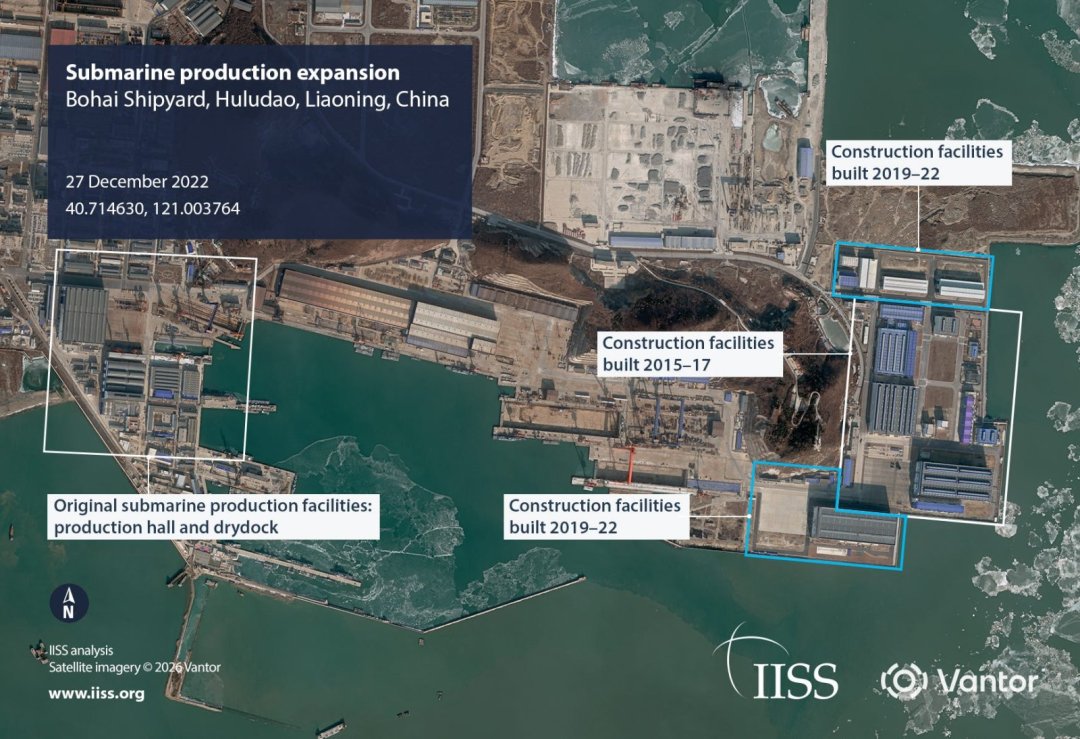
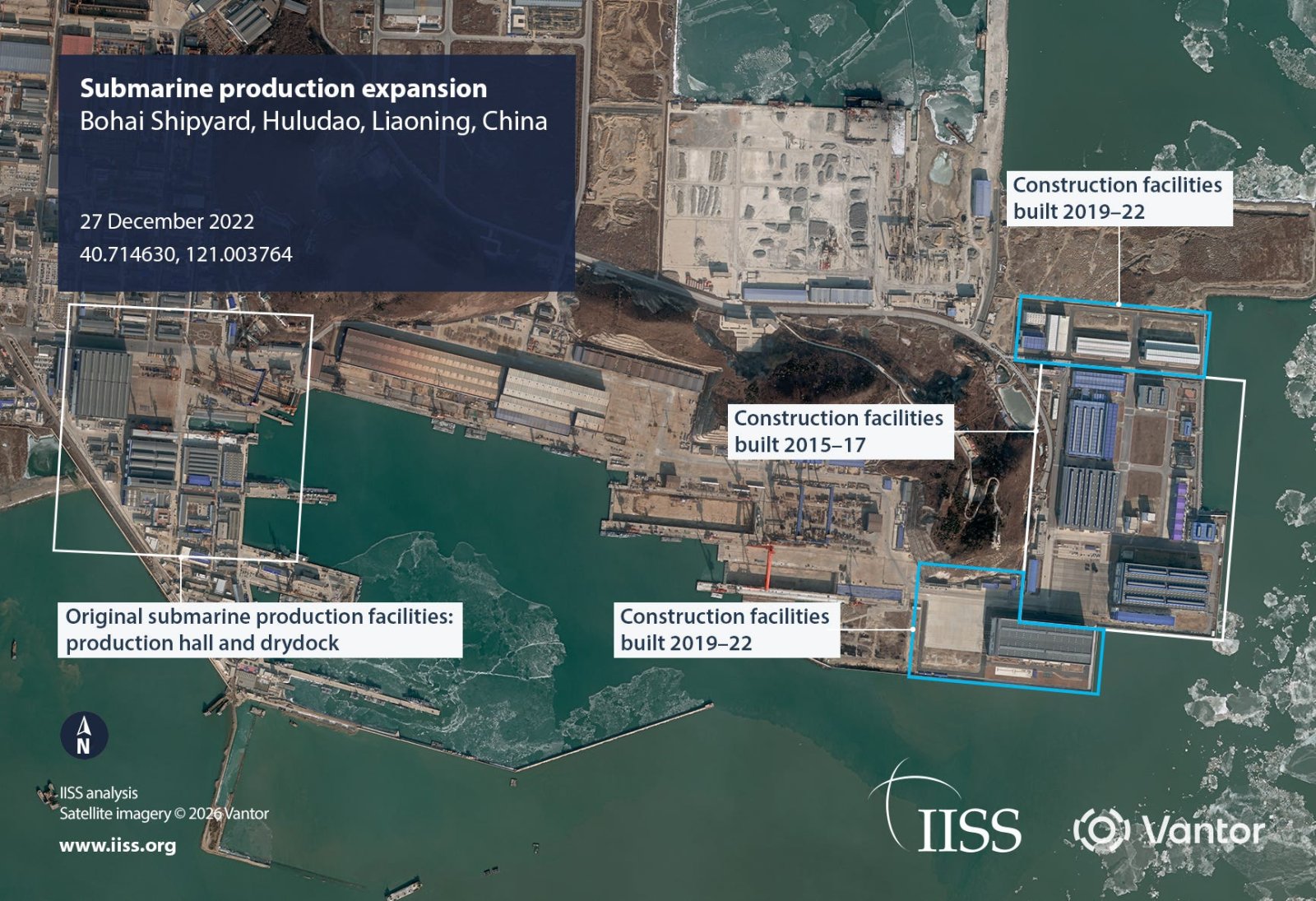
The Chinese are not playing games. Great graphic by HI Sutton over at Naval News on the state of play in the submarine world. Wake up everyone. Conventional non-nuclear submarines remain a key pillar of China’s submarine force, but the focus is changing to nuclear boats. Until very recently the sole shipyard building nuclear submarines was at Huludao in the north of the country. Now two shipyards on the Yangtze River, the Wuchang shipyard in Wuhan and the JN yard in Shanghai, have joined. Wuchang appears likely to focus on the Type-041 Zhou class ‘mini-nuke’ while JN has begun construction of much larger boats. The first nuclear powered boat launched at JN was a new class of attack submarine, known for its very small fin (sail), which is as-yet unnamed. An identical submarine was launched in Huludao just days apart. Exact details of the new class, and how it relates to the also new Type-095 have yet to emerge. Given the three yards now building nuclear submarines, the focus of construction is expected to shift to nuclear boats. China can already launch several each year, which a reasonable estimate now increasing to around six per year. This is triple the rate the United States is aiming for. At the same time, China’s yards in the south of the country seem focused on uncrewed submarines. Although conventional submarines will remain a major force component for at least a decade, they are likely to become smaller and less emphasised part, displaced by more nukes at the top end and large uncrewed platforms at the lower end of their remit. One little detail that keeps bugging me a bit. When you combine known phenomena, with the rapidly expanding capabilities of quantum computing and … he11 … quantum sensing…we may wake up sometime soon and have to completely rethink undersea warfare. As expected, Brent is feeling the same thing. Our SSN cannot/will not be able to do the job all by themselves. Air and surface ASW will have to be ready to play when the whistle goes. If we think, like we do with MIW, that our allied nations can step in to help in warfare areas we’ve neglected, we’re fooling ourselves. Allies are nice, but as the recent Iranian conflict proved…they have agency and may not be where you want them, when you want them, with the kit you need. As a side note: a lot of people have, rightfully, been concerned about our missile inventory. Last year I had a chance to speak to an officer of one of our NATO allies who works in the ASW world. I have an inkling about how many days of ASW weapons we have ourselves in a contested environment (using Royal Navy expenditures on false contacts etc during the Falklands Conflict), and I won’t comment further on this net on that topic, but if we are going to rely on our NATO allies in a pinch, we are deluding ourselves. Let me just say, it may have ASW LWT launch capabilities, but that does not mean it carries them, or may even have some on the base they are flying out of. When some say, “Well, we have some depth charges…” they are not making a joke. That being said…well…best not discussed on this net…as with most things ASW. In closed hearings and in the SCIF, people need to be asking hard questions in this warfare area. The PRC is going to contest it—their build rate makes that clear. Leave a comment Share This Substack is reader-supported. To receive new posts and support my work, consider becoming a free or paid subscriber. View the full article