All Activity
- Yesterday
-
The U.S. Marine Corps needs roughly 40 amphibious warfare ships to sustain its goal of keeping three Marine Expeditionary Units deployed simultaneously, and it currently has 32. That gap, laid out publicly by Marine Lt. Gen. Jay Bargeron at the Modern Day Marine exhibition in Washington, D.C. on Wednesday, frames one of the most consequential […]View the full article
-
Pyka announced on April 27 that its DropShip autonomous aircraft completed its maiden flight, a milestone that the Alameda, California-based company said sets a new benchmark for rapid development of advanced autonomous systems. DropShip is a Group 3+ autonomous aircraft built for contested logistics and multi-mission operations. It carries a maximum takeoff weight of 1,400 […]View the full article
-
The U.S. Army Secretary Daniel Driscoll visited U.S. Army Garrison Ansbach in Germany on April 30, where commanders from the 52nd Air Defense Artillery Brigade and 12th Combat Aviation Brigade briefed him on counter-unmanned aerial systems tested and implemented over the past year, and among the systems on display was the Merops AS-3 Surveyor counter-drone […]View the full article
-
An Australian-built submarine drone just crossed the Pacific. C2 Robotics commissioned and christened its Speartooth Large Uncrewed Undersea Vehicle in a formal ceremony marking the first delivery of the platform to the United States. Rather than the traditional bottle of champagne swung by a dignitary, Speartooth was christened by a robotic arm — with a […]View the full article
-
Green Berets from 1st Special Forces Group (Airborne) remotely launched and controlled unmanned surface vessels during Exercise Balikatan 2026, using them to deliver shaped charges against a target vessel off the western coast of Itbayat, Philippines, on April 24 — and the drone boats they operated bore a striking resemblance to one of the most […]View the full article
-
KIHOMAC’s founder and CEO Ki Ho Kang took to social media on Friday to share flight test footage of Agami, the company’s fixed-wing drone developed under Project Liberty, a program specifically designed to demonstrate that military-grade UAVs can be produced at wartime scale without the bottlenecks that have plagued American drone manufacturing for years. The […]View the full article
-
U.S. President Donald Trump just gave Allen Control Systems the most public endorsement a defense startup could ask for. Speaking at the White House, Trump praised the Austin-based company’s Bullfrog autonomous weapon station, calling it “that new very special machine gun that knocks them out of the air like flies.” Allen Control Systems posted the […]View the full article
-
Britain’s newest drone-killing missile just proved itself in the desert, according to the latest UK government report. Cambridge Aerospace’s Skyhammer interceptor missiles and launchers successfully completed trials in Jordan less than two weeks after the UK Ministry of Defence signed a multi-million-pound contract with the veteran-led startup. The tests took place at one of Deep […]View the full article
-
Askari Defense has been selected as a semifinalist in the U.S. Army’s xTech|Adaptive Strike competition, and the Atlanta-based company is heading to the National Training Center to put its Rift Alpha interceptor drone through its paces alongside the soldiers it was designed to protect. The selection marks a concrete step forward for a small firm […]View the full article
-
Sierra Nevada Company’s BRAWLR air defense system made a notable public appearance at Exercise FLEX 2026, when senior U.S. military commanders, including the four-star head of U.S. Southern Command, got a close look at the weapon system integrated aboard a Textron Systems’ multi-mission uncrewed surface vessel. The visit brought together Marine Gen. Francis L. Donovan, […]View the full article
- Last week
-
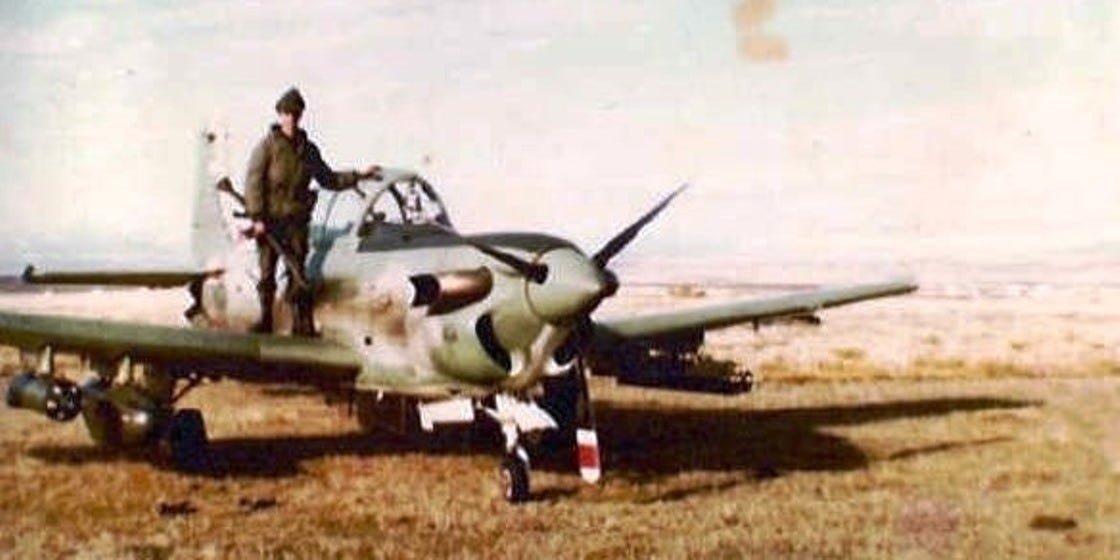
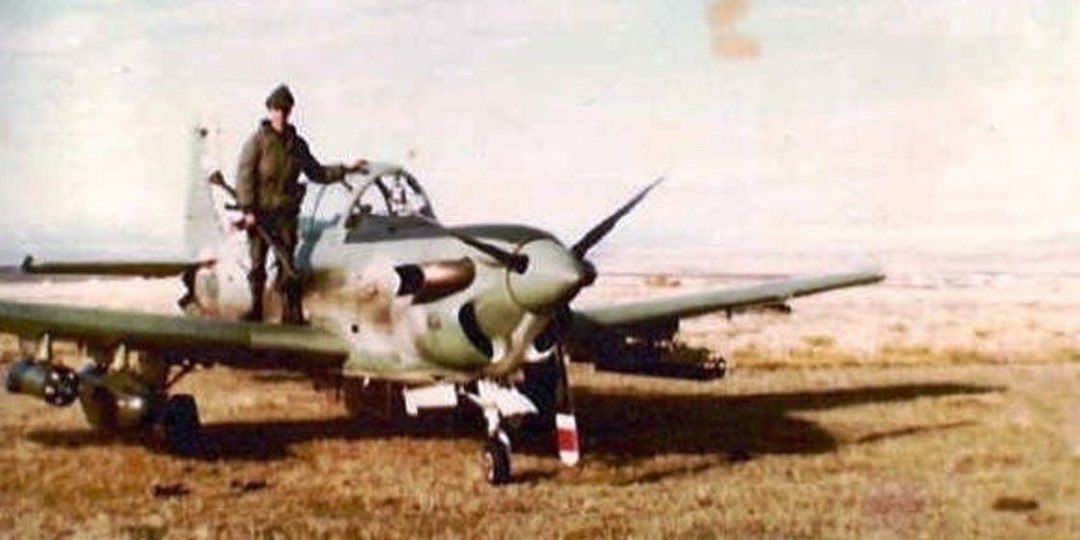
With the Falkland Islands War back in the news, thought ti would be fun to bring back a FbF from 2017 on a nice, tidy OP by our British friends. A great story via our friends at ThinkDefence about an exceptional side-show to The Falkland Island war. Pebble Island lies to the north of West Falkland and in 1982, its 25 inhabitants were mainly involved with tending 25,000 sheep. Its small airstrip was subject to a daring raid by the SAS. It did have an airstrip, though, or more accurately, four, three of grass, and the other on the beach. On the 24th of April, Naval Air Station Calderon (as it was called) was established there. ... HMS Hermes was detached along with HMS Glamorgan and HMS Broadsword. The SAS and personnel from 148 (Meiktila) Commando Forward Observation Battery made for a raiding force totalling 45 and were loaded aboard four 846 NAS Sea Kings for the flight into the assembly point at Phillips Cove. HMS Glamorgan fired on the western edge of the runway to provide a diversion and draw in Argentine forces. Shortly after, the main attack commenced; Then our own mortar opened up, lighting the whole place up like it was a bright daylight. The mortar man was having a lot of trouble. Every time he fired the bloody thing, the whack kicking the base plate further into the ground. There was virtually no enemy fire on us, so the boys got stuck into the planes. They split into seven two-man teams. It was a bloody big trip and they had a lot of ground to cover. It’s not as if the planes were all parked in a neat row. They were all over the strip. And all the time the boys were running against the clock. Five planes were destroyed using the explosive charges that they had with them. The Pucara was the tallest of the aircraft. As they approached each plane, one bloke would give the other a leg up on to the wing. Once up, he then leaned down and hauled the other one up to join him. The Skyvan was not a problem. The Mentors were very small, and with one great leap, the guys got themselves on the wings. (Ramsey, SAS: The Soldier’s Story) Aircraft had cables ripped out and fuel tanks punctured with small arms fire and grenades. It was all over by 03:35 and the SAS teams withdrew to their waiting helicopters, the job well done. Six Pucara, four T-34C and one Skyvan were damaged or destroyed. That, my friends, is a nice, efficient OP. Share Leave a comment This Substack is reader-supported. To receive new posts and support my work, consider becoming a free or paid subscriber. View the full article
-
Hi All, Been away a while. Appears I have a bunch of catching up to do. Wanted to share a brief summary of a problem to see if anyone has had the same experience. Will upload a scenario to demonstrate the issue over the weekend. Issue: Two pairs of SCUD missiles are launched from a RED land unit over water. Target is a BLUE airfield. The SCUDs are traveling about 3800 knots at VHIGH altitude. I have an AEGIS equipped Kongo class (BMD capable) loaded with SM-3 Block 1A slightly north of the SCUD travel path with both air and surface radar energized. The Kongo initially shoots three SM-3's with the targets about 68 nm out. Usually, the 3 SM-3's hit one of the four targets. The Kongo will next shoot 3 SM-2MR Block IIIA's. I assume the switch to a SM-2MR missile occurs because the SCUDs are within the SM-2MR envelope at this point. About 60 percent of the time there is one hit. Afterward, because the SCUD's velocity is higher than the SM-2MR and the SCUDs are passing the Kongo, a SM-2MR cannot catch the SCUD. As such, I would think the model would switch back to the SM-3. However, the Kongo will continue to fire 3 SM-2MR's at a time, which apparently "self destruct" as soon as they are launched. The occurs until the SM-2MR inventory is used up at which time the Kongo would again start using the SM-3 or the SCUD is outside the range of the SM-2MR and then the unit would start using the SM-3. Any ideas? Scenario to follow. Thanks in advance and Happy May. George
-
The United States Army has delivered its first Armored Multi-Purpose Vehicle (AMPV) equipped with a 30mm cannon to the 1st Cavalry Division, marking the initial fielding of a more heavily armed variant of the platform, the division confirmed in a recent announcement. The first new combat vehicles have been received by the division’s units as […]View the full article
-
Norway’s first Leopard 2A8 NO main battle tanks arrived at Rena camp in Østerdalen on April 30, 2026. The new main battle tanks came equipped with Trophy active protection systems, making them among the most survivable tanks fielded by any NATO nation. Two of the 54 Leopard 2A8 NO tanks Norway has ordered from German […]View the full article
-
A Utah defense technology company has launched an autonomous ground vehicle that carries 2,400 pounds of payload, travels 280 miles on a single charge, and exports 38 kilowatts of power to charge drones, run directed energy weapons, and sustain forward command posts. It’s all without a human on board. Hypercraft, based in Provo, Utah, announced […]View the full article
-
There is a point an officer’s career when they take a double take, and ask the question, “Why is that amphib commanded by an aviator?” The excuses one hears…well…here’s a change, and it makes sense. For LHA/LHD, LPD, and LSD, welcome to full-time SWO-dom. You have to pay attention to a letter from the CNO that comes out of the gate as direct and as clear as: Amphibious ship readiness and operational availability for years have been below Navy standards of acceptable levels. There are a lot of parallel threads in this letter that ask great questions from what it takes to have a ship ready for war, to the questionable “fleet up” concept, to…what looks like…what does your aviation community and pilot/NFO status have to do with your chance of making Flag? That’s too much for one post, but this does have me asking the question: for the classes of amphibs, how many aviators have been COs? Looking through just the LHA/LHD’s for a sample size, it looks like it is a 50/50 split between Surface Warfare and Aviation getting these Major Command at Sea billets. Port and starboard, generally. The vast majority of Aviation types were helicopter pilots, but there was a Maritime Patrol and Reconnaissance (P-8) bubba thrown in there as well for flavor. I know some VAW fellas have skippered amphibs too. Huh. See a trend here? I do. The same blinkered mafia that skillfully killed the VA and VF communities for their own interests, have…well…you can follow the bread crumbs from there. More importantly than Aviation’s tribal wars, let’s go back to that CNO pull-quote. The CNO is a nuclear submariner (perfect neutral party, CNO or not, for this Surface v. Aviation issue). He doesn’t do much of anything without mathematical rigor backing it up. There has to be a statistically significant readiness signal between SWO and Aviation skippered ships. Has to be. <puts on foil lined watch cap> It can’t be something cynical such as with the cruiser decommissionings cutting back on the SWO Major Command at Sea opportunities. The DDGs converted to Captain from Commander commands should be helping that. I mean, there’s a non-zero chance of that. After all, that is the community that made sub-100 Sailor commands Commander commands (see LCS manning CONOPS). <takes off foil lined watch cap> No, there has to have been a mess hiding under the rug for, as he states, “years” that no one was willing to point out and take action on. I will assume this is the case, and as such, BZ for taking action. What that mess was that prompted this action would be a great question for Congress to demand answers to. How long, where, and why. It would also be interesting to see a full statistical breakout of potential to Flag selection in the aviation community by community and pilot/NFO designator. Go back 20 years. That should give you a valid enough sample. If there is a statistically significant difference? If so, then hard questions should be asked as to “why?” In the end, great letter by the CNO. Continuous improvement, etc. Easter Egg: for those former N1/Flag Secretary types who still beat themselves up over some mistakes you made in official documents with your boss’ name on it, let it go. You’re not alone. It happens to the best of us. This was a letter from the CNO to…everyone…and it misspelled “Commodore.” Additionally, as was pointed out to me right after this posted, it is “prospective”, not “perspective”. Not quite “Quality Learing Center”, but worth a giggle. Leave a comment Share This Substack is reader-supported. To receive new posts and support my work, consider becoming a free or paid subscriber. View the full article
-
General Dynamics European Land Systems has successfully demonstrated an acoustic drone detection system on the ASCOD infantry fighting vehicle. This is a passive, vehicle-integrated sensor that locates FPV attack drones in real time without emitting any signal that an enemy could detect. The system, called CASTLE, was developed in cooperation with Microflown AVISA and demonstrated […]View the full article
-
An Israeli AI defense company has cleared a major operational hurdle for its drone detection system. Axon Vision, listed on the Tel Aviv Stock Exchange under the ticker AXN and headquartered in Israel, announced on April 30, 2026, the successful completion of operational demonstrations and evaluation activities for its EDGE ClearSky drone detection system. The […]View the full article
-
A California antenna company has officially announced a High Power Microwave weapon that can fry drone electronics without firing a round, and it is already small enough to mount on an Infantry Squad Vehicle. ThinKom Solutions, headquartered in Hawthorne, California, announced on April 30, 2026, the self-funded development of Alecto, a mobile High Power Microwave […]View the full article
-
The German Bundeswehr successfully tested AI-enabled drone swarms last week, with European defense technology company STARK demonstrating its loitering munition and command and control software in a live exercise that integrated reconnaissance and strike capabilities into a single operational sequence. STARK participated in the trials with its Virtus loitering munition and Minerva command and control […]View the full article
-
U.S. Air Force Special Warfare Airmen tested a commercial off-the-shelf kinetic counter-drone interceptor in Arizona earlier this month. The proof-of-concept event brought together Airmen from the 48th Rescue Squadron, 7th Air Support Operations Squadron, and 316th Civil Engineer Squadron Explosive Ordnance Disposal at the Arizona Army National Guard Florence Military Reservation. The exercise integrated a […]View the full article
-
Lithuania is buying a second HIMARS battery, expanding a procurement agreement with the United States that now covers additional launchers, munitions, training, and logistics support — and pushing the combined value of both batteries to approximately $778 million. The Lithuanian Ministry of National Defense and the U.S. Defense Resources Agency signed the contract amendment covering […]View the full article
-
U.S. Army soldiers evaluated an autonomous 81mm mortar system mounted on an Infantry Squad Vehicle during a live-fire exercise at Fort Magsaysay in the Philippines. The exercise was part of Balikatan 2026, the annual U.S.-Philippine combined arms exercise that has become one of the Indo-Pacific’s most tactically substantive training events. The soldiers conducting the evaluation […]View the full article
-
Show Links:Substack posts Did China Culminate and No One Noticed? I’ll take LCC-21, 22, and yes, 23 and 24, thank you So, the SECNAV has Departed CVN Status The Day of Battle: The War in Sicily and Italy, 1943-1944, by Rick Atkinson SummarySal discusses current naval operations, geopolitical developments, and strategic insights, including the state of the US … Read more View the full article
-
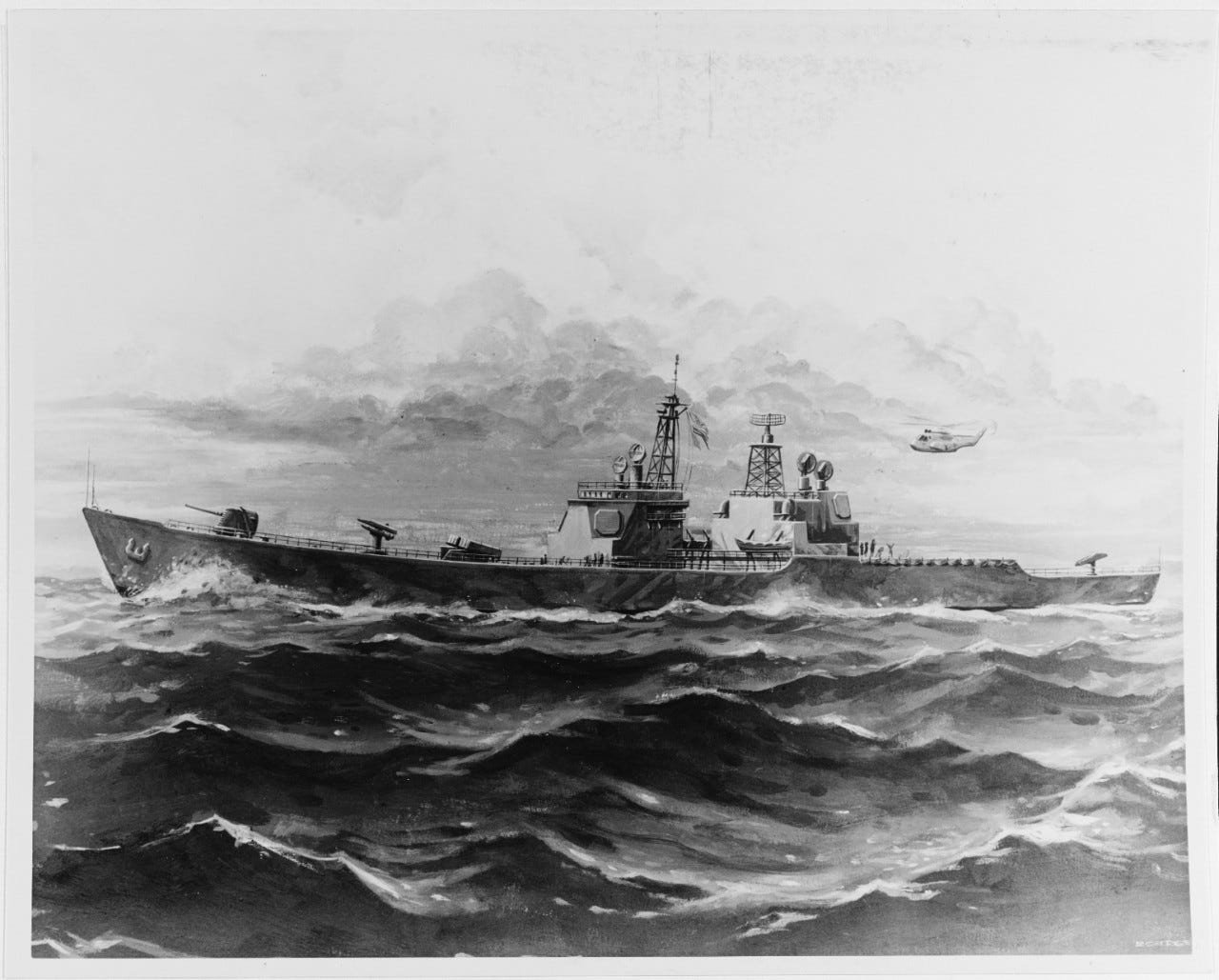
Navies are expensive. This is true, however, the logic stands that the most expensive navy to have is one that can be defeated by the other navy that was better built, supported, and led. To avoid that, you spend a lot of money on the ships, the Sailors in them, the people ashore who maintain them, the naval infrastructure that supports them, and the leaders that will take them into battle. In times of peace, the opportunity cost of that kind of navy gets a lot of attention. Heck, the naval treaties of a century ago were less about world peace than they were as a mutual agreement between politicians to spend less money on ships and instead have more money to keep their bulging populations fed, employed, and off the protest circuit. From the Jeff Boats of two centuries ago, to 2026’s arguments about the proposed BBG-1, the core of the argument is similar: big capabilities have big per-unit price tags. The blinking at the initial bet of $17 billion for BBG-1 is getting an almost audible gasp from some quarters. You get what you pay for. I don’t want to reargue the BBG-1 case again. We’ve already done that here. Before we knew it was going to be a conventional ship, I made a guess about how to argue for a BBGN-1 in October of last year. Two months later, with the announcement of BBG-1, we chatted about it some more. If you’re new here, click the above and catch up. No. I want to instead talk about that capability requirement that, just on the edge of institutional memory, we forgot about, but it seeped into our plans anyway. We’ve forgot it because we are too busy trying to paper over the disasters of surface ship programs this century to make the argument—much less research our own history. It is time to reset expectations by revisiting the accounting decisions decades ago in times of significant budget stress that brought us here. Put on you bell-bottoms, let your hair grow, get the mirrored ball spinning—we’re going back to the 1970s. Take for a moment and think about how we have fought our wars this century. The 21st century wars have been fought with the weapons developed at the end of the 20th century. I think most can agree that two of the most important players in the maritime and air components were the Tomahawk Land Attack Missile (TLAM) and the B-1B Lancer (Bone). Yes, there are others, but we can all agree that for their respective components, they would be in the top-3 or top-5 of reasonable people’s list. Correct? Now, picture that they were never here, that instead of being developed, upgraded, and deployed to such great effects—they were canceled in the 1970s and instead were just dusty and fading drawings in the corner of some program manager’s office. You don’t have to imagine too much. Hell, the Bone didn’t survive the Carter Administration but was revived by Ronaldus Magnus. Ironically, TLAM did survive and prosper, mostly as a lower cost way to achieve the nuclear effects a canceled B-1 would leave behind. Neither, however, found their highest and best use as nuclear delivery platforms. Just the opposite, both programs evolved into conventional-only weapons programs because they were good at delivering effects with little booms as well as they were with the big boom. Could we have fought the wars we’ve had since if the Bone had never been brought back and TLAM was sidelined? Sure. We’d have no choice. However, those fighting the conflict would notice the missing capability. Less capable systems would be used to fill the gap and make it happen. Not as well. Not with less risk, but it would get done. Hard budget times will leave some things on the cutting room floor. In recent memory, the U.S. military had two significant drawdowns, the post-Vietnam drawdown in the 1970s we touched on above, and the Peace Dividend Era after the fall of the Soviet Union. In the two decades in between, we had an interesting connection to a lost capability built in one drawdown, and lost in the other. Large nuclear powered surface combatants. One advantage nuclear aircraft carriers have over their conventionally powered sisters is the simple fact that they can go very fast for a very long time. So fast that they eventually will outrun their conventionally powered escorts. While in the 1990s when the Soviet Union was no longer contesting the high seas, that was a manageable issue. In the 1970s when the Soviet Union was rising to its maximum reach at sea that we saw in the 1980s, there was no such luxury. You needed escort ships that could keep up with the aircraft carrier. When USS Enterprise (CVN 65) hit the fleet, everyone knew about this problem. As such we had a whole series of nuclear powered surface ships. Wiki has a good list. Notice the decommissioning list timeline? The Jesus Jones Era with the Clinton administration’s view of the peaceful, and profitable, rise of China, and the internationalization of the open seas in a brave new world where the greatest concern was midnight basketball in Detroit. Time to sober up. It’s 2026. Let’s look at what was planned for these ships, some that still had decades of service life left, before the world woke up from history for a few POM cycles. This was not considered fanciful. This was what considered a requirement to properly escort nuclear powered aircraft carriers in a contested ocean. Though the New Threat Upgrade that ships received were … pretty darn good … there were plans to upgrade some of the CGN to Aegis. Even the oldest, USS Long Beach (CGN 9) was looked at for an Aegis conversion. …but the accountants killed that. Even the youngest of that nuclear cohort were looked at for conversion to Aegis too, the Virginia Class CGN’s. The accountants won the argument again. The 1996 Navy Visibility and Management of Operating and Support Costs (VAMOSC) study determined the annual operating cost of a Virginia-class cruiser at $40 million, compared to $28 million for a Ticonderoga-class cruiser, or $20 million for an Arleigh Burke-class destroyer, The reality was, of course, that the tactical world they were created for was not as important now, and lower-and-less was the driving force rather than higher-and-best with what they thought they saw the future as from the 1990’s perch. The high-low mix was just going to be low. It wasn’t supposed to be that way. Did you ever wonder what ship this is on the Aegis Combat System Program Office’s insignia? That’s no hypothetical warship. That right there is a Strike Cruiser (CSGN) in all her 17,200 Aegis-powered tons glory, with SM-2, Harpoon, TLAM, and my baby, the MK-71 8” gun I have been fanboi’n about since 2005. Profile look familiar? Less revolutionary than evolutionary, isn’t it? The CSGN, first looked at in the 1970s as a follow-on to the Virginia Class, and best described in the 1976 Naval War College paper by then LCDR Keith M. Arndt, USN. THE STRIKE CRUISER Admiral James L. Holloway, Jr., Chief of Naval Operations, has defined the two principal functions of the Navy as sea control and power projection. In his most recent annual Posture Statement to Congress, Admiral Holloway presented a most succinct and articulate statement of the integration of national strategy, Navy missions and functions, and the resulting requisite naval force structure.¹ This statement was the synthesis of a number of primary considerations: When Admiral Holloway assumed his present position he was met by Congressional objections that the Navy was building too many defensive ships.² The passage of Title VII of the Fiscal Year 1975 Defense Authorization Bill requires that all major warships of the strike forces be nuclear powered unless the President certifies to Congress that it is in the national interest to do otherwise.³ Congress has mandated that the Secretary of Defense submit a five-year new construction and conversion program for the Navy each fiscal year.⁴ On budgetary grounds, officials in the Pentagon and Congress have questioned whether the Navy will ever reach a 600-ship fleet if it insists upon allocating so much of its shipbuilding budget to expensive nuclear-powered ships.⁵ The Navy’s long-range shipbuilding plan has evolved into the pursuit of a balanced fleet of approximately 600 ships. The attainment of this objective is to be accomplished through a high-low mix of ships: a relatively small number of high-value surface combatants with greatly increased offensive and defensive capabilities, and a larger number of less sophisticated ships—primarily with an ASW mission to neutralize the Soviet submarine threat.Since World War II, the Navy’s primary offensive punch has been delivered by carrier-based tactical aircraft. Surface combatants, including large nuclear cruisers, have been primarily equipped to function in the escort role. With declining carrier force levels, the reappearance of a strong naval adversary, the same overall global commitments, and no forecast decrease in potential crisis areas, the Navy needs a balanced and effective force of surface combatants.In recognition of these requirements, the Navy has identified the need for a class of major, multi-purpose, nuclear-powered surface combatants. The Strike Cruiser has been conceptualized to fulfill this need and is the first step in attaining the high-end portion of the mix. Ship Characteristics—As conceptualized. The Strike Cruiser is to be a large ship intended to regain the offensive at sea. With its balanced capability it is intended to increase the United States naval capacity to destroy enemy ships and land targets in the face of an intensive enemy multi-threat environment. The CSGN is considered to be a greatly improved successor to the “California” and “Virginia” class CGNs and is conceptualized to have the following characteristics:⁶ Displacement: Approximately 14,000 tons, fully loaded Length: Approximately 600 feet overall Beam: Approximately 85 feet Missiles and Launchers: Two twin combination SM-2/ASROC/HARPOON launchers firing Standard medium-range surface-to-air missiles, HARPOON surface-to-surface missiles, and ASW rockets (ASROC). Approximately six tubes for surface-launched cruise missiles (SLCM). The SLCM specifics are in doubt but have generally been described in the press as a conventional warhead, subsonic missile with a range of 300–2,500 miles.⁷ Guns: Two 20 mm Vulcan/Phalanx CIWS and possibly an 8” or 5” lightweight gun. ASW Weapons: ASROC and two triple 12.75” torpedo tubes. Aircraft: Two advanced ASW helicopters or V/STOL aircraft. Main Engines: Two geared turbines, two shafts. Reactors: Two pressurized water-cooled reactors. Speed: 30+ knots. Electronics: Probable SQS-53A sonar and the AEGIS integrated air defense system. The significant features of the AEGIS system are remarkably short reaction times and a capability for simultaneous multiple engagements. Design Features Standard displacement hull with overall size being driven primarily by the requirements of the nuclear propulsion plant and the AEGIS system. The weapons systems will probably be designed on a modular basis, allowing common canister loading and relatively easy replacement and retrofitting of future systems. Postulated Employment While little information is available on the planned future employment of the Strike Cruiser, if one looks closely at the conceptual weapon and sensor suite, several alternatives become readily apparent. Although none of these roles are particularly unique to the Strike Cruiser, the magnitude of the breadth and depth of the capability in a single hull is noteworthy. The Strike Cruiser will be capable of operating: independently; as the major unit of a cruiser task force; in support of other task forces; and even with merchant convoys. With the capability to operate “in harm’s way” independently, the Strike Cruiser will be a valuable tool of national policy. Such a highly capable ship would be most appropriate for peacetime presence missions. The capability to employ an effective naval policy when dealing with third-world countries is becoming increasingly desirable in order to deter opportunism prior to the emergence of an actual crisis. Once a crisis occurs, the presence of a Strike Cruiser may be preferable to a carrier task force—either to signal a less provocative intervention or to actually attack land targets with reduced risk (both in terms of value of units and without the political consequences of lost pilots). As the major unit of a cruiser task force, the Strike Cruiser could perform the above missions and more. By adding additional surface combatants, direct-support nuclear submarines, and possibly a V/STOL support ship, the task force could do a credible job of effecting local air, surface, and subsurface superiority. With the reduced number of aircraft carriers, the cruiser task force becomes an attractive alternative. One or more Strike Cruisers operating with a carrier task force would augment and complement the offensive and defensive capabilities of the force. The advantages to be realized by such an employment include: increased difficulty for the enemy to effect a saturation attack; relieving the carrier of force defensive responsibilities; adding to the offensive punch of the force; and contributing to the survivability of the force in a threat-intensive environment. The Strike Cruiser would assume a more defensive role when operating with amphibious or logistic task forces. The role would be one of providing anti-air and anti-surface missile defense. The Strike Cruiser would also have the capability, once in the amphibious operating area, of striking land targets and providing tactical air defense for the amphibious task force.In the convoy escort role the Strike Cruiser would again assume a defensive posture and become a deterrent to adventurism by enemy units. ¹ This statement was the synthesis of a number of primary considerations. ² Congressional objections that the Navy was building too many defensive ships. ³ Title VII of the Fiscal Year 1975 Defense Authorization Bill. ⁴ Five-year new construction and conversion program. ⁵ Budgetary questions regarding the 600-ship fleet and nuclear-powered ships. ⁶ Successor to the California and Virginia class CGNs. That outlines, pretty much, what BBG-1 is supposed to do. You can call it a Strike Cruiser, you can all it a Battleship, you can call it your Aunt Fanny—I don’t care. What I do know is that the mission set for BBG-1 isn’t made out of whole cloth and it isn’t just a grasp at the old battlewagons of old. No. This is the—sadly non-nuclear—Strike Cruiser that we identified a need for the last time the U.S. Navy was challenged on the high seas. We tried to get there with the canceled CG(X) program, but its supporters could not make their argument as to why they were building the beast they wanted to build. They lost the money argument of the 1970s and 1990s all over again. In a way, the Japanese see the same requirement, but with more of a focus on ballistic missile defense concerns with their 14,000 ton Aegis System Equipped Vessel (ASEV). Should BBG-1 fail to sustain support or not, as you can see with what will become DDG(X), we are trying to patch over requirements of a blue water navy on the cheap like we did with the Ticonderoga CGs—which were the less expensive and less capable option to what the Navy wanted, which was a CSGN. This is where the argument should be centered. Leave a comment Share This Substack is reader-supported. To receive new posts and support my work, consider becoming a free or paid subscriber. View the full article