All Activity
Today
-
The U.S. Air Force is seeking industry information on building a full training package for its incoming E-7 Wedgetail aircraft, including a flight simulator, two maintenance trainers and a support center, according to a Request for Information published August 19. The RFI, issued by the Air Force Life Cycle Management Center’s Simulators Division at Wright-Patterson […]View the full article
-
U.S. Army Contracting Command at Redstone Arsenal has issued a request for information seeking contractors capable of providing total system sustainment for the HAWK missile system, according to a Sources Sought notice. The Army said it is not committed to issuing a solicitation or awarding a contract as a result of the announcement. Responses are […]View the full article
-
The U.S. Air Force Research Laboratory has opened a solicitation for Relentless Wolfpack, a program intended to demonstrate that weapons from different vendors can coordinate against targets in contested airspace, according to a call published under the PACER Broad Agency Announcement. The call, issued by AFRL’s Air Warfare Directorate at Eglin Air Force Base, seeks […]View the full article
-
The U.S. Army has increased its procurement objective for the Infantry Squad Vehicle to 11,582 vehicles, an 18-fold jump from the program’s original 649-vehicle target, according to Jacqueline Hames of the Army Acquisition Support Center. The Infantry Squad Vehicle is an ultra-light tactical vehicle that carries nine passengers along with their equipment. The Army launched […]View the full article
-
The Office of Naval Research has awarded Agrippa Industries a contract worth nearly $19 million to develop a low-cost, attritable logistics vessel for military operations, according to the Department of War’s daily contract announcements. The firm-fixed-price contract falls under the Scalable Commercial Attritable Logistics Adapted to Expeditionary Systems effort. Agrippa, based in Palo Alto, California, […]View the full article
-
The U.S. Navy launched an Aegis Readiness Assessment Vehicle Six (ARAV-6) target from Pacific Missile Range Facility, Hawaii, on August 6 as part of Pacific Dragon 2026, according to U.S. 3rd Fleet. Pacific Dragon is a biennial exercise hosted by U.S. 3rd Fleet in the Hawaiian Islands Operating Area, designed to improve how participating forces […]View the full article
-
A U.S. Marine Corps KC-130J Super Hercules refueled U.S. Air Force A-10 Thunderbolt II aircraft during the Advanced Tactics Aircrew Course at Rosecrans Air National Guard Base in St. Joseph, Missouri, on August 13, marking the first time the joint refueling capability was integrated into a course sortie, according to the 139th Airlift Wing. The […]View the full article
-
The U.S. Army has awarded ThinKom Solutions an Other Transaction Agreement worth up to $49 million to deliver and test a mobile high-power microwave weapon designed to counter drones. The agreement was issued by the Army’s Program Manager for Advanced Counter-Unmanned Aircraft System Effects, part of Portfolio Acquisition Executive Fires. Initial funding covers one of […]View the full article
-
Castelion, a hypersonic missile developer based in Torrance, California, has raised $1 billion in a Series C funding round that values the company at $13 billion. The round includes $800 million in equity financing and $250 million in committed financing for a revolving credit facility, the company said Aug. 19. JPMorganChase’s Strategic Investment Group, Andreessen […]View the full article
-
SummarySal discusses election integrity, military deployments, naval readiness, and current political issues affecting the military and national security. Chapters00:00:Introduction and overview of election integrity and military topics 02:07: Florida’s election system reform and its impact on confidence 04:02: The state of U.S. Navy deployments and fleet … Read more View the full article

Yesterday
-
Footage has emerged showing the rollout of a new Il-78MK-90A aerial refueling tanker, apparently built in export configuration, according to posts circulating on Russian social media and aviation channels. Social media users have claimed the aircraft was built under an export contract to supply 20 Il-78 tankers to China, but The Defence Blog could not […]View the full article
-
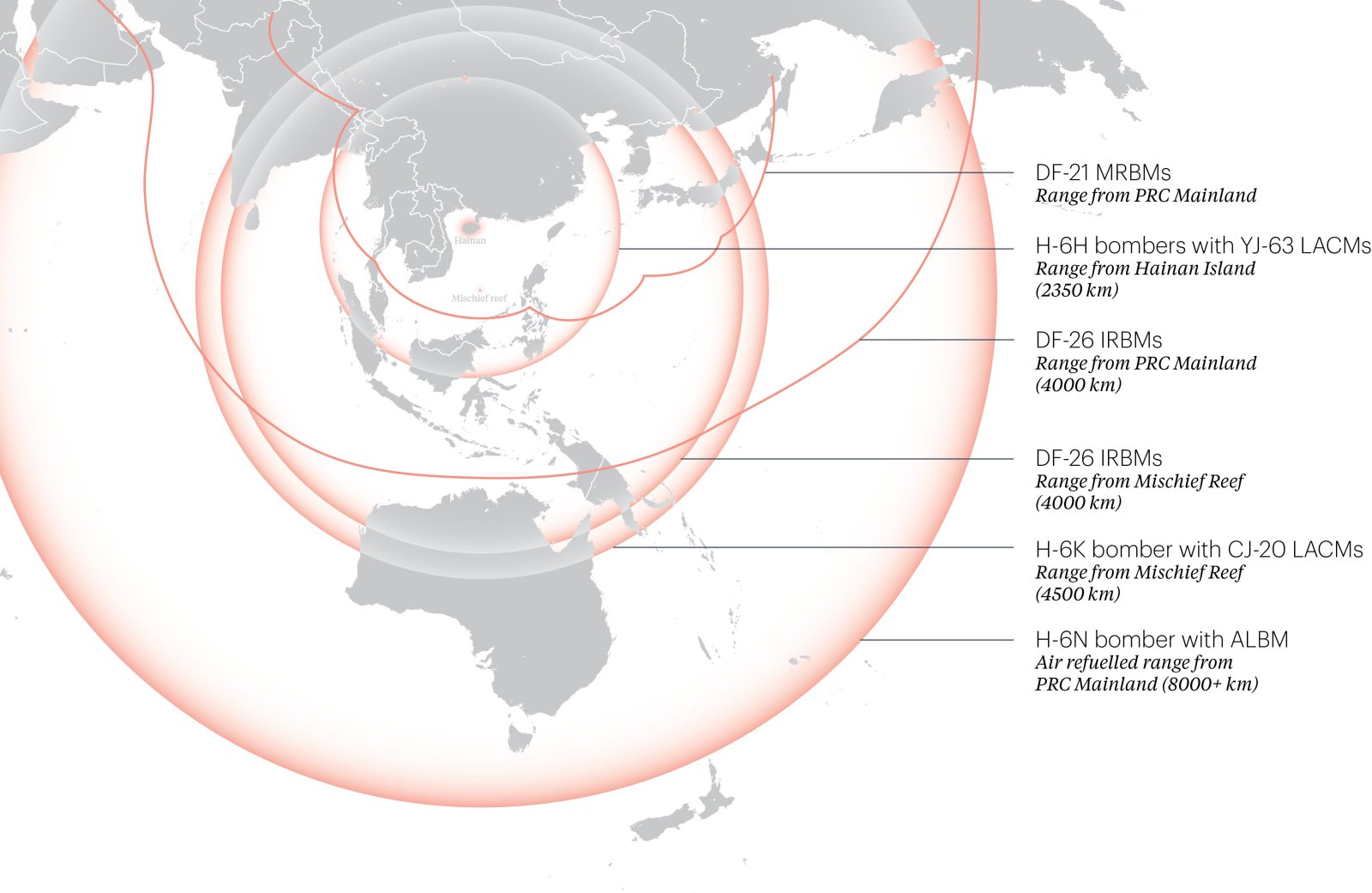
In my unending attempt to keep a well-rounded and diverse information flow, I was bouncing around and came across this quote from The West Australian. Privately, US officials are also alarmed at the protection levels of Australian bases, including HMAS Stirling and RAAF Base Darwin, where significant numbers of US personnel and military assets will be operating. Earlier this month a conservative and influential Trump-aligned think tank urged Australia to spend billions buying US-made missile interceptors to defend key bases from Chinese military attack. “At least three THAAD batteries and hundreds of interceptors to defend key bases, such as RAAF Base Darwin, from PLA attack, reducing the inventory and cost burden on U.S. inventories of scarce munitions and enhancing Australia’s ability to defend itself,” the Heritage Foundation’s Jim Fein recommended. The Heritage Foundation report also called for the US Congress, Australia and Japan to fund “additional Indo–Pacific infrastructure improvements to harden them against ballistic missile attack, especially intermediate-range ballistic missiles”. The referenced report came out on August 4th if you want to give it a full read. If you’re curious about where the U.S. already has bases in Australia, or plans to have them (see HMAS Sterling near Perth for the AUKUS bit), this map is helpful to compare with the chart of the People’s Republic of China’s long-range strike capabilities that Fein is concerned about.. It isn’t just the American Heritage Foundation ringing the bell. Digging around a bit got me to the Australian United States Study Centre (USSC) report that gives a great Australian perspective. …in mid-2025, Richard Marles acknowledged that “China’s ever expanding war machine poses the greatest risk to Australia and the region’s stability.”11 He also publicly acknowledged that “Australia’s continental geography would become an issue in the event of a US-China conflict.”12 Defence of the homeland is now a significant priority for the Australian Defence Force (ADF) and the nation. The last time this was a serious consideration was during the Second World War, when northern Australia was a major target, which saw at least 111 air raids between February 1942 and November 1943. The first and most significant of these raids was on 19 February 1942, when 188 aircraft bombed Darwin across two raids, the first by carrier aircraft at 9:57 am and the second by land-based bombers at 10:40 am. This combined raid dropped “115,000 kilograms of bombs…two and a half times the number of bombs and 83 per cent of the tonnage dropped on Pearl Harbour on 7 December 1941.”13 It was followed up with air raids during 1942 and 1943 across northern Australia, including Exmouth Gulf, Broome, Port Hedland, Wyndham, Derby, Horn Island and Townsville, and the submarine raids on Sydney and Newcastle in June 1942. They’ve been here before. ADF military capabilities must therefore manage the strategic risk. Key amongst these is the People’s Liberation Army Rocket Forces. This includes the DF-26 Intermediate Range Ballistic Missiles (IRBM) that can reach northern Australia from China’s artificial island bases in the South China Sea. Their new DF-27 IRBM, equipped with a hypersonic glide vehicle (HGV) warhead, is believed to have moved from development into deployment. This missile has a range of 5,000 km to 8,000 km and is “believed to be primarily [designed]…for regional conventional strikes during conflict.”17 The DF-27 brings virtually the entire Australian continent under risk.18 The People’s Liberation Army Air Force (PLAAF) H-6K bombers can range Australia with CJ-20 Land Attack Cruise Missiles (LACM) and Air-Launched Ballistic Missiles (ALBM). The PRC has also undertaken a major expansion of its submarine fleet, specifically its nuclear-powered guided-missile submarines (SSGNs). Over the last 15 years, the People’s Liberation Army Navy (PLAN) has built 12 new submarines, including four Type 093A Shang III class SSGNs, which provide a new class of anti-surface warfare and land-attack capabilities. The expansion of the PLAN’s SSN capability is part of its transition “from defense on the near seas to protection missions on the far seas.”19 It is estimated that China has built seven or eight Type 093B SSGN submarines, equipped with 12 vertical launch missile cells — including those for the YJ-21 hypersonic missile — in the past three years. That will wake you up. Well, I hope it does. What is one of the greatest lessons from the Russo-Ukrainian War of 2022 and the ongoing conflict between Israel and the U.S. and Iran and her proxies? Simple: the normalization of the use of conventionally armed ballistic missiles with precision warheads. How have the good folks Down Under responded in a period longer than they fought in WWII? Currently, the Australian Army has very limited GBAD capabilities, with only two batteries of modern mid-tier National Advanced Surface-to-air Missile Systems (NASAMS) being brought into service. NASAMS is one of the world’s most advanced surface-to-air missile (SAM) systems, combat-proven against large UAVs, helicopters, aircraft and cruise missiles. Australia’s ground-based ballistic missile capabilities are, however, basically non-existent. What is being done? Well, some nice problem appreciation and conferences. Work has also developed tri-laterally in the Indo-Pacific to advance coordination in the Indo-Pacific. The AJUS countries — Australia, Japan and the United States — have agreed to establish a regional IAMD network to develop advanced capabilities. During the Japan Official Visit in April 2024, the United States and Japan announced their intention to partner with Australia to build a regional architecture that incorporates the three countries’ sensors, with plans to test this network during a live-fire exercise in 2027.82 Similarly, the United States and Australia announced during the Australian official visit in October 2023 that they would partner with Japan to develop collaborative combat aircraft that would team with manned fighter aircraft and perform support missions, such as aerial refuelling and intelligence, surveillance and reconnaissance.83 The partners have made incremental yet steady progress toward achieving this capability. This provides an excellent platform to advance regional IAMD coordination. … While the direction and intent of the review are clear, the DSR had one major failing: it left off a specific set of recommendations consistent with the text in the body of the document. The Australian Government’s direction to Defence to focus on the DSR’s recommendations and bureaucratic politics has contributed to a lack of funding for IAMD and an inadequate prioritisation in the 2024 National Defence Strategy (NDS) and Integrated Investment Plan (IIP). The 2026 NDS and IIP are an opportunity to rectify this erroneous position. Drafting aside, the intent of the DSR is clear, and the mission essential. The text of the DSR is clear — the current approach is not fit for purpose, and the need is urgent. IAMD must be “accelerated,” the focus must shift to delivering “minimum viable capability,” through “off-the-shelf options.”93 None of this has happened since the DSR was released. There is already a line out the door for PAC-3, SM-3, SM-6, THAAD, and a pony for Christmas. In comparison to the other options that are assessed below, such as the Typhon/Vertical Launch System (VLS) and THAAD options, the Patriot system emerges as the most viable option for the ADF. The use of a VLS option — a system that operates on navy ships — would require a land-based solution, such as the experimental US Army Typhon system. This system is not a widespread, in-service option, with only two developmental batteries currently being fielded. The system includes large semi-trailer-sized launchers and battery operations centres, severely limiting its mobility and deployability with ADF transport assets. … AEGIS ashore system consists of AN/SPY radar, “located in a deckhouse that also supports the system’s command and control capabilities [with] Co-located…e fixed launchers for the current version of the SM-3 ballistic missile interceptor, the Block IB, as well as SM-6 air defense missiles.”124 The main issues with this system are its costs, limited development, and that it is a fixed system, negating mobility. Recent conflicts have demonstrated the vulnerability of fixed systems, and the cost was the principal reason for Japan suspending its development of this program. The two sites for Japan were to cost approximately A$1.367 billion each, with the total cost of the system coming to A$4.55 billion.125 Of note, Japan decided to mitigate risk by leaving Aegis Ashore behind and moving forward with their clunky-sounding Aegis System Equipped Vessels (ASEV), which is really just an air defense cruiser focused on strategic defense. Very smart move by the Japanese. More flexibility and survivability that only going to sea can give you. The THAAD system comprises missiles, ground-based radars (GBR), mobile launchers, support equipment, and a command-and-control centre. It is a more high-end, limited availability, and more cost-prohibitive system. Its approximate life-cycle cost is US$23 billion.126 It is limited in applicability to BMD, and the cost per missile is exceptionally expensive. A single interceptor costs between US$12 million and US$15 million.127 It is mainly used in the United States as part of the missile defence shield, known as the Golden Dome, for theatre ballistic missile defence aimed at deterrence against rogue nuclear missile strikes by countries such as North Korea. In comparison to other options, the Patriot missile system offers the best MOTS option for medium-range air defence and defence against short- and medium-range ballistic missile defence, as well as manoeuvring hypersonic missile defence.128 Unlike most other options, it is an in-service and off-the-shelf option, offering a combat-proven record, a continuing development cycle and a relatively cost-effective system (compared to other options). Patriot can fire a range of missile options from the shorter-range PAC-2 and intermediate PAC-3-CRI, and the longer-range PAC-3 MSE. The U.S. Navy had some great plans for their navalized version of the PAC-3 to fill the gap due to limited production capability of the SM-3 and SM-6, but I think history has other plans. The Free World’s demand for PAC-3 is simply too great. The Navy probably lost its window for an early batch and will have to wait for expanded production capabilities. I think I’ve given everyone enough to read today. My pull quotes are only a small part of a much larger article. The executive summary: the PRC has an answer for AUKUS, and AUKUS has to think about more weapons systems than just submarines. Australia is not a safe-space. She needs serious defense. Should war come to the Pacific, Australia will be hit—early, often, and hard. Australia needs to get in the air defense business as soon as practical, with the best around Perth. Want to knock Australia out of the war quickly or at a minimum cause internal unrest? In strangely anti-nuclear Australia, sink a SSN pierside with a hypersonic missile and crack open the reactor…that would do it. I would also recommend the USSC report that came out at the end of last week and includes among its authors Midrats Podcast alumni Bryan Clark, Advancing trilateral integrated air and missile defence between Australia, Japan and the United States. From my seat, there cannot be enough integration of U.S., Australian, and Japanese defense concerns. They are both superb militaries and good friends, and our interests in the Western Pacific have 90% overlap. So easy to sell. So important. Leave a comment Share This Substack is reader-supported. To receive new posts and support my work, consider becoming a free or paid subscriber. View the full article

-
Poland’s Ministry of National Defense said Wednesday that its armed forces maintain various air and missile defense capabilities to protect designated targets, including cities, pushing back against public criticism that Polish urban centers lack air defense coverage. The ministry did not name the source of the criticism directly, but the statement follows weeks of political […]View the full article
-
Israel struck the Abu al-Duhur military airbase in northwestern Syria’s Idlib province early Tuesday with eight airstrikes, an attack U.S. Ambassador to Türkiye Tom Barrack said carried real risk of triggering direct military confrontation between Israel, Türkiye and Syria. “The Turkish forces did not know that Israeli aircraft were making their way to this specific […]View the full article
-
Hanwha Defense USA has won a U.S. Army contract to deliver six prototype K9 Mobile Howitzers (MH) for the Army’s Mobile Tactical Cannon program, with an option for 12 more, the company announced Tuesday. It is Hanwha’s first major U.S. Army contract. The award follows a public campaign Hanwha has run for nearly a year […]View the full article
Last week
-
REGENT Craft’s autonomous Seaglider drone, Squire, took part in a 13-day military experimentation event called Silent Swarm in Michigan, testing electronic warfare payloads alongside uncrewed systems from across the U.S. military, the Rhode Island-based company announced Tuesday. Silent Swarm ran July 13 to 24 across Michigan’s Northern Lower Peninsula and the Alpena Combat Readiness Training […]View the full article
-
The U.S. Army has awarded Nightline Inc. a $12.8 million contract to supply commercial equivalent AN/PVS-14 night vision monoculars to Lithuania, according to a Department of War contract announcement. The Tennessee-based company will provide the devices along with extended warranties, accessories, test sets and tool sets. The award carries a total cumulative face value of […]View the full article
-
The U.S. Navy has awarded Textron Systems a $231.5 million contract modification to build two more Ship to Shore Connector hovercraft, according to a Department of War contract announcement. The modification adds two LCAC-100-class craft to an existing contract and is funded entirely through fiscal 2026 Navy shipbuilding and conversion funds. Textron will perform most […]View the full article
-
The U.S. Navy has awarded Lockheed Martin a $73.9 million contract modification to procure, test and deliver Indra Rigel radar electronic countermeasures systems for four Multi-Mission Surface Combatant ships being built for Saudi Arabia, according to a Department of War contract announcement. The award modifies an existing contract and will be funded entirely through Foreign […]View the full article
-
The U.S. Army has awarded Elroy Air a $46 million contract to develop an autonomous, hybrid-electric VTOL aircraft for modular cargo delivery, according to a Department of War contract announcement. The Phase III Small Business Innovation Research award covers development of a Group IV unmanned aircraft system, a Pentagon classification for larger drones weighing more […]View the full article
-
It is easy to forget how long the China Doves and the China Lobby—wait, I repeat myself—held absolute control of power and influence over the full spectrum of the American political nomenklatura. Bush-41 and Bush-43 were both supporters of a rising China. The Clinton Administration was LITERALLY the Coffee Klatch Era. Obama “welcomed China’s rise” … and everyone this century has been too distracted to slow the creeping influence and control of the People’s Republic of China (PRC) from the South China Sea to the Southwest Pacific. Only in the last decade has there been a real shift where the China Doves have lost the dominant position in most of the national security nomenklatura, but not totally. You can see it in the strangest places, and off-frequency messages from people, media figures, various institutions—and of course the usual leftists cadres—a strange mix of apologia for the PRC and in some cases, outright support. I’m not saying people are compromised, but it looks that way now and then. The PRC still has deep penetration in Congress, our economy, and academia. In the West, the U.S.A. has, more than others, woken up to the threat…but we are in the lead. The stragglers are the issue. Amongst many of our allies and friends, the PRC still has its full-spectrum campaign underway. In some places like Canada, it is even encouraged. Chinese economic and financial incentives are just too seductive and most Western political systems are even more immune to accountability than ours…and unquestionably are more opaque. Just like many of the self-loathing Left during the Cold War were more than happy to make excuses for and cuddle up to the Soviet Union, we are seeing that pattern again with the West’s self-loathing Left and the PRC. As discouraging as this can be to watch from a distance, you can see a pushback starting to grow. Slowly, mostly because of a combination of cocksure Wolf Warrior Diplomacy and simple ham-fisted bungling, the PRC’s actions have become simply too obvious for fair-minded patriots to ignore. As we saw in the U.S. starting over a decade ago, the strongest voices are starting to be heard from the wilderness about what the PRC is up to. Over in the United Kingdom, Ian Duncan Smith outlines their challenge well. The revelations in The Telegraph that China is accused of secretly funding pro-Palestine demonstrations in Britain – channelling funds to far-Left activist groups to sow chaos on our streets – should send a chill down the spine of every minister in Whitehall. Yet none of this is new. No one in the security establishment, or those of us in politics who have been warning about it, will be remotely astonished. For far too long, Western governments were lulled into a dangerous stupor by the siren song of the so-called “Golden Era” of relations with China. This Government hasn’t learnt either, thawing relations with Beijing in a desperate and naïve hope for growth. Beijing’s dangling of the money bag—not unlike the success the Russians have had with Germany—is hard for unserious and weak-of-character people in serious jobs to ignore. Too many policymakers convinced themselves that commercial integration would inevitably lead to political convergence. Instead, Beijing saw in our good faith an opportunity to deepen their infiltration of our institutions, manipulate our public square, and weaponise our open society against us. For totalitarian regimes, our freedoms are an existential challenge to their authority and a weakness to exploit. The potential secret funding of pro-Palestine demonstrations reflects a deliberate, methodical execution of a military doctrine that the Chinese state published a quarter of a century ago. I know the balance of the readers of CDR Salamander are familiar with this, but for those who are not, when you get done here, read up. In 1999, two senior officers in the People’s Liberation Army, Qiao Liang and Wang Xiangsui, authored a seminal text titled Unrestricted Warfare. Their thesis was simple yet radical: classical military conflict was no longer the primary means to defeat an adversary. Instead, warfare would be expanded across every conceivable domain of human activity – including political subversion and the exploitation of social division. As Liang and Xiangsui made crystal clear, modern conflict requires “using all means, including armed force or non-armed force, military and non-military, and lethal and non-lethal means to compel the enemy to accept one’s interests”. Qiao later summarised the core tenet of this total-war philosophy even more bluntly: “The first rule of unrestricted warfare is that there are no rules, with nothing forbidden.” Just look at the scale of China’s global cyber-attacks on Western nations. This doctrine accounts for exactly the kind of activity uncovered in these covert funding networks. By covertly backing fringe political groups, encouraging protests outside military sites like RAF bases, and amplifying divisive narratives that Western leaders are “bought”, Beijing aims to weaken our resolve and fracture our domestic peace. The PRC is doing this throughout the West and any other nation where they want access and influence. It is a full-spectrum attack—right out there in the open. Also, just look at how China has become the central power in the rise of the totalitarian states. Russia, for example, couldn’t have continued the war in Ukraine without Beijing’s support. It is believed the Chinese have also supported Iran’s IRGC, particularly in its supply of drones for Russia. And don’t forget China’s huge support for the brutal regime in Myanmar. On the civilian front, China is clearly attempting to undermine our markets. Heavily subsidised Chinese electric vehicles are pouring onto British roads. These are not merely cars; they are high-tech data hubs equipped with advanced sensors, capable of gathering vast troves of mapping data – and could potentially contain “kill switches” that could paralyse transport networks at the push of a button during a diplomatic crisis. Sadly, as the rest of Nato wakes up to the threat, Britain heads in a different direction – to “Project Kowtow”. Give the article a full read. Once you are done with that, are you up to speed on the PRC’s new embassy in London? Leave a comment Share This Substack is reader-supported. To receive new posts and support my work, consider becoming a free or paid subscriber. View the full article

-
Latvian unmanned systems manufacturer NEWT21 has completed an EU-funded project to move its FOG and RAY unmanned surface vehicles from prototype to production-ready status, the company announced on Tuesday. The project, formally titled “Modernisation of an Unmanned Surface Vehicle (USV) and Preparation of the Production Process,” carried the reference number 1.2.1.1/3/25/A/005. NEWT21 said the work […]View the full article
-
Australia and Japan have completed the first successful field trials of a jointly developed high-energy laser system, called Boobook, at test sites in South Australia, Australia’s Department of Defence announced Tuesday. The trials took place at the Cultana Training Area and the Defence Science and Technology Group’s Edinburgh facility. Boobook is the first co-development project […]View the full article
-
Marine Group Boat Works has delivered a new Range Support Vessel to the Naval Air Warfare Center Weapons Division for operations on the Point Mugu Sea Range off Southern California, the San Diego-based shipbuilder announced Monday. The aluminum vessel was built at MGBW’s Chula Vista, California, shipyard to support weapons testing and evaluation on the […]View the full article
-
Thirteen Democratic senators sent Defense Secretary Pete Hegseth a letter Monday demanding written answers about conditions aboard the USS Abraham Lincoln, whose deployment has stretched past 250 days with more than 200 of those days without a port call. The letter was led by Sens. Gary Peters and Elissa Slotkin, both Michigan Democrats, and signed […]View the full article