All Activity
Past hour
-
tpqbmxez joined the community
-
lsllaudq joined the community
Yesterday
-
BLADE, the robotics company formerly known as HDT, said it has submitted its Hunter WOLF unmanned ground vehicle for the U.S. Army’s Infantry Last Tactical Mile initiative, a prototype effort to use robotic vehicles for resupply and casualty evacuation near the front line. The company was one of six vendors the U.S. Army selected for […]View the full article
-
BAE Systems will build electronic warfare systems for three more production lots of the F-35 Lightning II under a new contract from Lockheed Martin, the company said on Oct. 6. The contract covers AN/ASQ-239 systems for F-35 Lots 20 through 22, along with systems to retrofit and modernize older aircraft already in service. BAE Systems […]View the full article
-
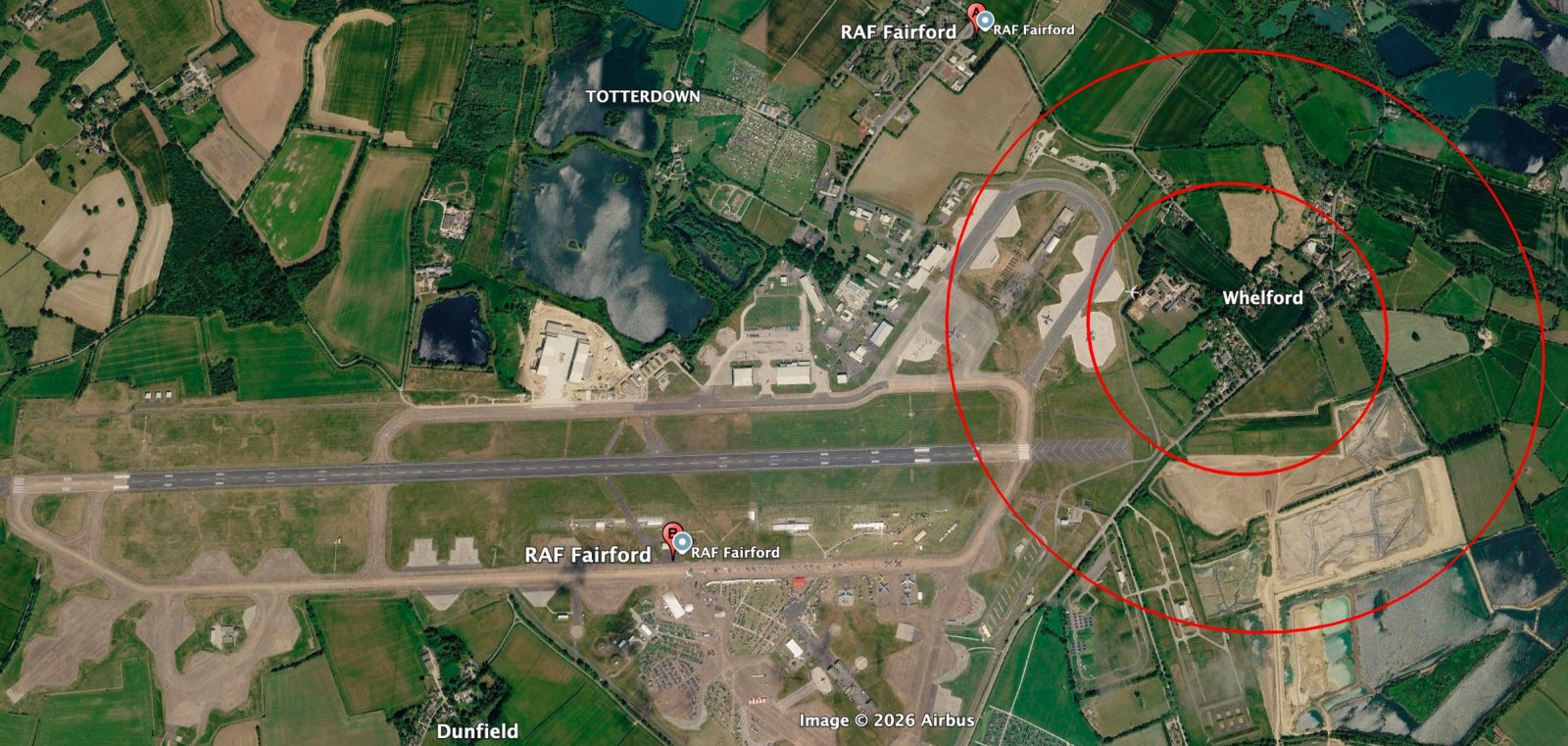
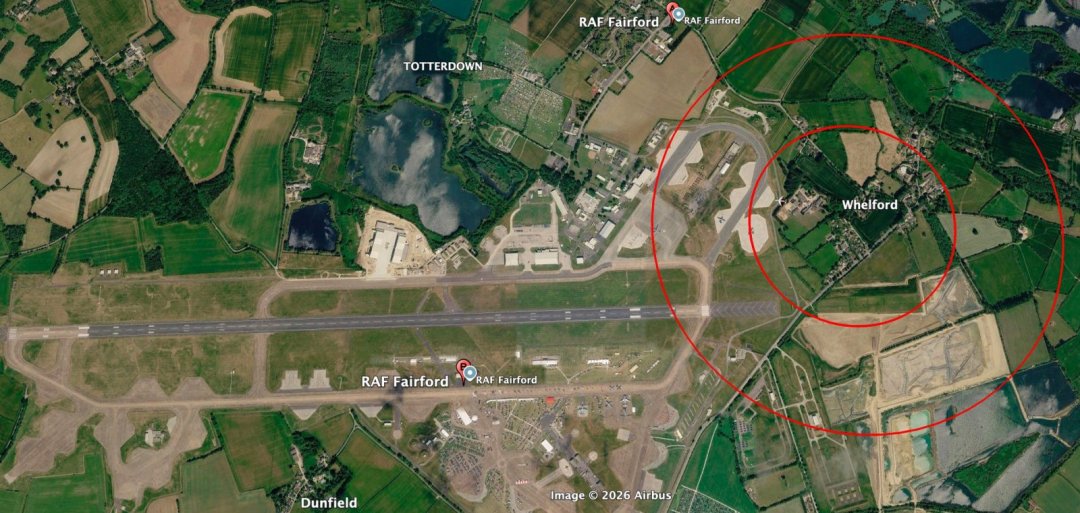
To say that the reporting of the last few days about the sudden departure of our B-1B bombers from RAF Fairford has been frustrating—for me at least—is an understatement. Airfield security has been a pebble in my shoe for a very long time. I assume everyone is familiar with my post from 11 months ago a bout the wake-up call at Whitman AFB? If not, give it a read, then come back. Let’s all get our reference point first from last week. Five men who were arrested on suspicion of explosive and terrorism offences after a major incident was declared at an RAF airbase in the west of England have been released on police bail. Three vans were spotted near RAF Fairford in the early hours of Sunday morning and the police were called. A major incident was declared, and everyone in the small village of Whelford was evacuated. The head of Counter Terrorism Policing has stressed that the five men remain under investigation and must adhere to strict bail conditions. It has since come to light that the first of two 999 calls was made by one of the arrested men. A dual UK-Iranian national, aged 25, has also since been arrested on suspicion of preparing terrorist acts. Investigators are exploring “multiple lines of enquiry”, Assistant Commissioner Laurence Taylor said on Monday, including whether proxies or individuals were working on behalf of a foreign state - knowingly or not. Like all professionals do, let’s go to the map room. This is what the geometry looks like. OK. Soak that in a bit. Whelford is one of the few little residential areas around this base where our literally irreplaceable heavy bombers were operating from. The parking apron they are using? There it is, right around where the “RAF Fairford” label is. Now, let’s give you some scale. The smaller circle is 500 yards from where the vans and “fellas” were. The larger circle is 1,000 yards. Put on your force protection hat. Remember Operation Spider Web from over a year ago and what it was warning us about? I know for a fact that there has been a rather heated argument over whether we are simply taking too many risks with some of our “There’s nothing dangerous about this airfield! Why, four generations of my family have been flying out of here.” attitude. Habits, inertia, etc. We Americans make some assumptions about distance that is simply not a reality overseas, especially in Europe. Let me give you an idea of what the USAF is used to when it comes to controlling the land around your strategic assets. The issues about Whitman AFB that we discussed last year? Here is what those 500 and 1,000 yard radius circles look like from the CCP’s trailer park. One of the two airbases that B-1Bs are based out of in the U.S. is Dyess AFB outside Abilene, TX. The 500 and 1,000 yard radius circles are applied here—using the Whitman-standard-mobile-home-park launch area outside the base boundaries. We are spoiled. It is as if no one really did a good Red Hat from a force protection point of view and assumed we’d be as safe “over there” as we are “here”. Complacent, comfortable, and … well … its England … how much safer can it be? That is an assumption best left to the past. FY2027’s Jolly Old England is not your grandfather’s Jolly Old England. From letting those found in Fairford out on bail early, to the whole Diego Garcia issue, to their neglect of their military readiness, to their flooding themselves with undigestible hordes of military-aged males from parts of the world who hold the West in contempt…the whole stew is starting to smell a bit off. Old assumptions no long apply. What should the Navy be thinking about? As the members of the Front Porch know, I’ve always been a fan of Strategic Homeporting going back decades, not just for our aircraft, but for our fleet. I hate fleet concentration areas simply because it makes the enemy’s targeting challenges easier. Master air bases simply ensure compounded strategic risk in an era of transnational terrorists, millions of illegal aliens, and drone technology. Accountants love consolidate mega-bases as much as our enemies. Let’s look around a few of our CONUS Navy bases. Compared to Fairford, NAS Oceana is a little better, but not much. On the other side of town, Naval Base Norfolk is even better from the marina parking lot on Willoughby Spit. Ahem. Even my favorite force protection nightmare, Naval Base San Diego, looks like Fort Knox compared to Fairford. Now, if you really wanted to put a dent in the U.S. Navy air ASW, surveillance and reconnaissance, then the trailer park across from NAS Jacksonville…well…yeah. So, does everyone have a better handle on why we had to bug out of RAF Fairford? We could go through a whole host of other legacy NATO bases and get equally ugly results. What to do? Disperse our most critical assets across more bases. Yes, it makes logistics, maintenance, more difficult and expensive…but that is cheaper than losing assets on the deck that are no longer in production. Rededicate ourselves to the concept that institutionalized #1: strategic homeporting. Packing everyone in one spot is just stupid. Take base security seriously. The United States Air Force Security Forces need to make the Royal Air Force’s RAF Regiment look like mall cops and should have full control over the air defenses of its bases, from last-100-yard gun systems up to Patriot batteries clawed back from the Army. NAVAIR needs to benchmark what the USAF does with its bases, especially naval airbases. The Secretary of the Navy and the Chief of Naval Operations must, at every opportunity, bring up the lessons of the last few years about the disadvantages of large, static bases as a primary way to project power. Remind everyone of the flexibility, security, and national ownership of having your assets afloat—from C2 to strike. Assets at sea are not fully secure, but they are harder to kill. We live in a new tactical, operational, and strategic environment. Distribute risk. Mitigate threats. No, it isn’t sexy. It isn’t cheap. It isn’t fun, but it must be done. Leave a comment Share This Substack is reader-supported. To receive new posts and support my work, consider becoming a free or paid subscriber. View the full article
-
The U.S. Navy has awarded Northrop Grumman a $66 million order to retrofit MQ-4C Triton surveillance drones already in service with the U.S. Navy and the Royal Australian Air Force, bringing both fleets up to a common configuration. The firm-fixed-price delivery order covers engineering work, materials and spare parts to install 17 engineering change proposals […]View the full article
-
The U.S. Navy has awarded Lockheed Martin a $209 million contract modification to keep building the AN/SLQ-32(V)6, the electronic warfare system that warns U.S. Navy surface ships of incoming anti-ship missiles and the radars guiding them. The U.S. Department of War announced the award, made Sept. 30. The modification includes options that, if exercised, would […]View the full article
-
Russian tank maker Uralvagonzavod says it has completed testing of an upgraded BREM-80 armored recovery vehicle that lets its crew hook up and tow damaged tanks without leaving the vehicle, a change the company says came directly from combat experience in Ukraine. The company, part of Russia’s state-owned Rostec corporation, announced the end of the […]View the full article
-
The U.S. Army’s 1st Cavalry Division has started fielding the M2A4E1 Bradley Fighting Vehicle, the first Bradley version fitted with an active protection system designed to destroy incoming anti-tank missiles, rockets and drones before they hit the vehicle. The division said in a social media post that its 6th Squadron, 9th Cavalry Regiment, is receiving […]View the full article
-
France test-fired its newest submarine-launched nuclear missile, the M51.3, from a ballistic missile submarine for the first time on Oct. 6, with President Emmanuel Macron watching from a French Navy frigate off the coast of Brittany. The missile was launched from the submarine Le Vigilant off Finistère and came down in the North Atlantic several […]View the full article
-
The U.S. Army has awarded Anduril Industries a contract worth up to $1.8 billion over five years to roll out its Next Generation Command and Control network, known as NGC2, starting with I Corps, the Army headquarters responsible for much of its force in the Pacific. The initial base period of the contract is valued […]View the full article
-
The U.S. Navy has awarded Ursa Major two contracts worth a combined $137 million to develop and qualify solid rocket motors for two new missiles: a small air-to-air missile for fighter jets and a ship-launched interceptor meant to eventually replace the Standard Missile family. The Colorado company announced the awards on Oct. 5. The larger […]View the full article
-
Buntar Aerospace, a Ukrainian maker of reconnaissance drones and battlefield AI software, has raised $16 million to expand production and enter foreign markets, bringing its total funding to $30 million. The round was led by Freedom Fund VC and an international private equity fund that the company did not name. Gardar Venture Capital, Iron Wolf […]View the full article
Last week
-
It is easy to be cynical about published strategies. Often they don’t quite align with what actually happens (history has her own plays), or they distract themselves with unimportant or irrelevant “latest thing” socio-political posturing. While everyone’s eyes have been focused over the last half-year on U.S. and Israeli actions against Iran, does everyone remember where military action this year started? Venezuela. Let’s step back a bit and look at a couple of quotes from documents we discussed in detail over the last year, the National Security Strategy (NSS) and the National Defense Strategy (NDS). As the NDS is subordinate to the NSS, let’s start there. After years of neglect, the United States will reassert and enforce the Monroe Doctrine to restore American preeminence in the Western Hemisphere, and to protect our homeland and our access to key geographies throughout the region. We will deny non-Hemispheric competitors the ability to position forces or other threatening capabilities, or to own or control strategically vital assets, in our Hemisphere. This “Trump Corollary” to the Monroe Doctrine is a common-sense and potent restoration of American power and priorities, consistent with American security interests. Our goals for the Western Hemisphere can be summarized as “Enlist and Expand.” We will enlist established friends in the Hemisphere to control migration, stop drug flows, and strengthen stability and security on land and sea. We will expand by cultivating and strengthening new partners while bolstering our own nation’s appeal as the Hemisphere’s economic and security partner of choice. Look at that last part. The three are intertwined. The same cartels that control the drugs flooding the U.S. are also the ones who are making bank on each illegal alien that crosses the southern border. …control migration, stop drug flows, and strengthen stability and security on land and sea. So, how do you “operationalize” this concept? Let’s look to the NDS. In recent decades, our nation has been overwhelmed by a flood of illegal aliens. At the same time, narcotics have poured across our borders, poisoning hundreds of thousands of Americans. Narcotics traffickers in our hemisphere have profited enormously off this evil and are rightly designated as foreign terrorist organizations (FTOs)… At sea, we have seen direct action against drug-running boats and their resupply vessels in the Caribbean and eastern Pacific. Ashore, there have been hints here and there, but now we are seeing combined operations out in the open. Via CBS, U.S. troops helped Ecuador dismantle a local branch of Mexico’s notorious Jalisco New Generation Cartel (CJNG), arresting more than 30 members, Ecuador’s interior minister said Thursday. Quito, a Washington ally, is enthusiastically cooperating with President Trump’s crackdown on organized crime across Latin America. Thursday’s early-morning operation “was conducted jointly with U.S. troops and the Drug Enforcement Administration (DEA),” Ecuadoran Interior Minister John Reimberg wrote on X. Over 30 Ecuadorans were arrested for allegedly belonging to the group with a “direct connection to the CJNG,” he said. The minister said the group was involved in trafficking cocaine from Colombia, the world’s largest producer, to international markets via ports in southwestern Ecuador. Some 320 Ecuadoran police officers and 50 uniformed personnel from the U.S. Southern Command took part in the operation spanning several cities, he said. While I think there are some good faith arguments against attacking drug boats (as I’ve stated from the start, I support this direct action that I used to dream about in the 1990s, when I was chasing these people on the high seas), it is hard to argue against the coordinated action with South American nations. Heck, even Marine Raiders are getting in on the action. After all, it is the money via demand from the U.S. (and Europe) that is enabling these cartels destroying the rule of law in other nations. It is only fitting that we invest our resources to help mitigate this negative secondary effect. Political shifts to the right in South America are opening the door to more cooperation with the U.S. against these cartels. This is a gain for everyone. President Daniel Noboa tied the raids to his speech at the U.N. General Assembly a day earlier, where he said “no state can confront alone an enemy that crosses borders.” So much potential here, and we are only getting started. Cappy has a good 30-minute summary of the action, with more detail than you will find anywhere else. This Substack is reader-supported. To receive new posts and support my work, consider becoming a free or paid subscriber. Share Leave a comment View the full article

-
mrbkrowo joined the community
-
The U.S. Navy is lining up a five-year engineering support contract for the redesign of the F-35’s mission planning software, the ground-based system pilots use to plan sorties and load data into the stealth fighter before takeoff. The Naval Air Warfare Center Weapons Division in China Lake, California, said in a sources sought notice published […]View the full article
-
Japan has put its longest-range missile system on public display for the first time since deployment, showing the Type 25 surface-to-ship guided missile launcher to local residents at the Japan Ground Self-Defense Force’s Camp Kengun in Kumamoto on Oct. 3. Four vehicles, including the missile launcher and an ammunition carrier, were lined up inside the […]View the full article
-
The U.S. Navy has awarded Northrop Grumman a $29.2 million contract for early production of the AN/WSN-12 inertial navigation system, a shipboard navigator that keeps track of a vessel’s position without GPS, with Canada and Australia paying for most of the order. The contract covers low-rate initial production units and maintenance assistance modules, along with […]View the full article
-
New video from Camp Fuji shows Japan’s Type 25 Hyper Velocity Gliding Projectile launcher driving onto a firing site, raising its missiles into launch position and packing up again, giving a rare look at how the country’s first domestically built long-range strike missile is operated. The three-minute clip was posted on X by Japanese military […]View the full article
-
New footage shows the U.S. Army’s next-generation M1E3 Abrams tank and two prototypes competing to replace the Bradley infantry fighting vehicle firing live rounds, one of the first public looks at the vehicles in action. The footage was shared on LinkedIn by Alexander Miller, chief technology officer to the U.S. Army chief of staff. Miller […]View the full article
-
The U.S. Air Force has added $12.1 million to a contract with Scale AI to develop artificial intelligence agents for the E-4C Survivable Airborne Operations Center, the new “doomsday plane” meant to keep U.S. leaders in command of the military, including nuclear forces, if ground command centers are destroyed. The modification raises the total value […]View the full article
-
Northrop Grumman’s YFQ-48A Talon Blue, the company’s self-funded entry for the U.S. Air Force’s drone wingman program, has made its first flight, flying entirely on its own from taxi to landing in Mojave, California. The company announced the flight on Oct. 3. It said the aircraft taxied, took off, flew a series of maneuvers and […]View the full article
-
swn94 joined the community
-
Russia’s new Shturm uncrewed tank failed in its first major outing, losing its control link again and again during the Tsentr-2026 strategic exercise and finally getting stuck in mud, even with a human driver at the controls. The remotely operated vehicle, built on a T-72 tank chassis, repeatedly dropped the radio link that connects it […]View the full article
-
The first photo of Leonardo’s Hystrix 40 ADS, a land-based counter-drone gun built around the Italian company’s Marlin 40 naval turret, has appeared online, showing the system during testing. The image was posted on X by the account A-129 Mangusta, which said it was sent by a follower and showed the system recently undergoing tests. […]View the full article
-
Epirus has plugged its Leonidas high-power microwave drone killer into a wider U.S. Army command-and-control network during Operation Jailbreak Falcon Fury, an Army effort to make counter-drone sensors, weapons and software from different makers work together. The California company said on X that it joined the event to show how Leonidas can link sensors and […]View the full article
-
A U.S. Navy MQ-4C Triton surveillance drone ended up stuck at the end of a runway beside the St. Johns River at Naval Station Mayport, Florida, a photo released by open-source account TheIntelFrog shows. The image, posted on X, shows the large unmanned aircraft off the end of Runway 5, the strip that runs toward […]View the full article
-
U.S. Southern Command has deployed unmanned systems to Naval Station Guantanamo Bay in Cuba, the first step toward a training and mission-support site there for its new Autonomous Warfare Command. Marine Gen. Francis L. Donovan, the SOUTHCOM commander, saw the systems during a visit to the base, the command said in a post on X. […]View the full article
-
A Russian T-90M tank used its Arena-M active protection system to shoot down attacking drones during the Tsentr-2026 strategic exercise, in a staged attack on a tank column at the Chebarkul training range in Russia’s Chelyabinsk region. In the demonstration, several types of drones, including fixed-wing models and standard first-person-view (FPV) quadcopter drones, simulated a […]View the full article