All Activity
- Today
-
Alloy Surfaces Company, based in Aston, Pennsylvania, was awarded a $300 million modification on June 12, according to a latest contract notice, covering continued production of a family of infrared decoy flares used to protect American military aircraft from missiles that track heat instead of radar. The new funding brings the total value of the […]View the full article
-
Europe’s biggest missile maker has agreed to help Ukraine build a successor to the weapon that sank Russia’s cruiser Moskva, the flagship of its Black Sea Fleet. MBDA signed a memorandum of understanding with Ukrainian defense company LUCH at Eurosatory in Paris on June 16, 2026, agreeing to jointly pursue what both companies call disruptive […]View the full article
-
A tank that first rolled off a French production line in the 1960s just showed up at Eurosatory with no crew inside it and a robot turret on top, and the company behind the conversion wants it to represent something bigger than a single old tank getting a second life. S2M Equipment and KNDS France […]View the full article
-
Portugal is doubling down on a bet it made just a year ago: that the best way to watch its own coastline and territory is to own the satellites doing the watching, rather than renting someone else’s. ICEYE, the Finnish company that operates the world’s largest synthetic aperture radar satellite constellation, announced that CTI Aeroespacial, […]View the full article
-
A small British company best known for catching drones in mid-air nets just landed a much bigger job: helping Australia’s military spot the things before anyone needs to catch them at all. OpenWorks Engineering said its Vision Guard system has been selected for evaluation under Australia’s Land 156 counter-drone program, part of the country’s $1.3 […]View the full article
-
A Brazilian ammunition giant just took a step toward the U.S. medium-caliber market, and it picked an American partner to get there. CBC Global Ammunition and Paligen Technologies, a U.S.-based engineering and manufacturing firm, announced a Strategic Alliance Agreement on June 16, 2026, during Eurosatory, the defense exhibition in Paris. The deal sets up a […]View the full article
-
The French Army has placed an order for several thousand FN Evolys machine guns from Belgian manufacturer FN Herstal, marking a major production order for the FN Evolys since the weapon debuted five years ago. The deal was signed at the Eurosatory defense exhibition in Paris, with French Defense Minister Catherine Vautrin and Belgian Defense […]View the full article
-
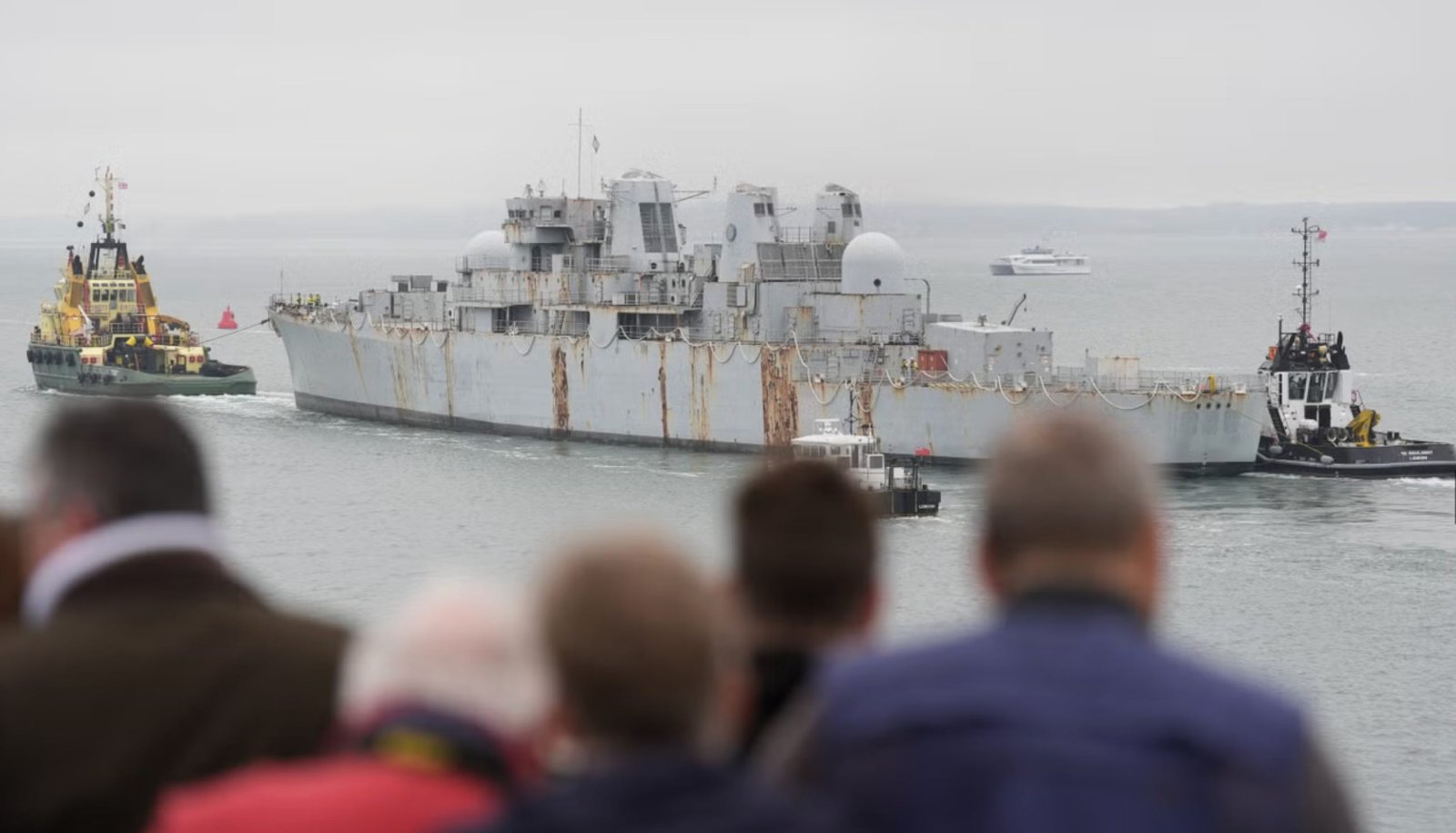
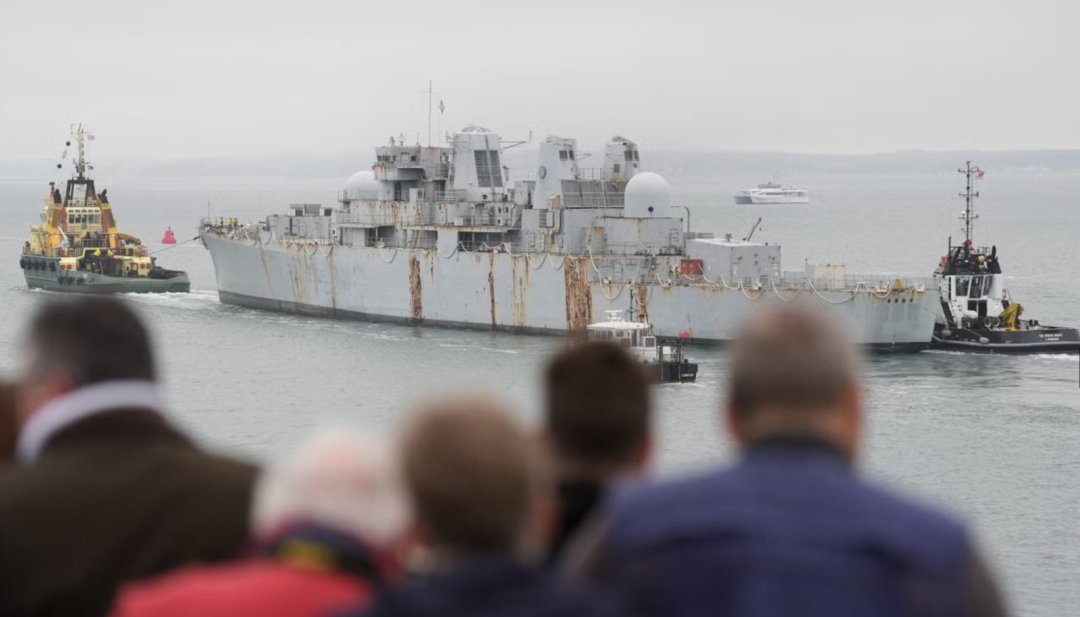
Last night I bumped into something I wrote in my second month of blogging in August 2004 about a contemporary article by Eliot Cohen in WaPo titled, The Thin Red Line, Getting Thinner. It was about Tony Blair’s expected cuts announced that year. What happens to the military in Great Britain matters not just to them, but to the U.S.A. and the entire Western security system. What Cohen said almost 22 years ago rings even more true today. …the real significance of this erosion of British strength, and the stake the United States has in stopping it. First, Britain is the only considerable state that can send substantial forces in the field to operate alongside ours. Others -- the Australians or the Norwegians, to take two very different examples -- have superb niche capabilities, but only the British have the size and sophistication to take on large military tasks. If Iraq has taught anything, it has been the extreme desirability of bringing along a coalition, with all of its awkwardness, to a large geopolitical problem. But to have a coalition one needs at least one large partner. The issue is not just capability in some narrow, mathematical sense but the legitimacy and reassurance that comes from knowing a substantial partner is in the fight with us. And the American military has gotten to be so good, so technologically advanced and so tactically adept that only a handful of militaries can operate alongside ours and hope to keep up. Foremost among those who can are the Brits. Second, Britain brings to bear real military expertise. Particularly in the field of counterinsurgency, its soldiers have the hard-won knowledge of decades of frustrating small-war experience, in Northern Ireland and elsewhere. Their soldiers and generals have learned a great deal about pacifying distant trouble spots, knowledge from which the Yanks could and have benefited. But as we have learned in the Persian Gulf, numbers of boots on the ground count in this kind of fight -- even when it comes to training indigenous forces. Finally, Britain is a European power. In NATO it is unique among the militarily serious states. France is hostile to us; Germany is increasingly so, and has debilitated its armed forces by putting them on starvation rations for the past decade. Spain has tilted to France, and Italy, despite pockets of excellence, is an uneven power. The other states are either too small or as yet too poor and inexperienced to provide both muscle and leadership in complex fights. A few years later in 2010, I re-emphasized another aspect as to why keeping an eye on what is happening in the Mother Country is so important: One thing that kept coming to mind last week in San Diego, was the goings-on in the mother country. Some of the challenges the United Kingdom is experiencing now are about a decade ahead of us, methinks - if not closer. If the decline mattered when the above was written—and it did; I remember it well—then what about now? It took a couple of years for the cuts announced in 2004 to hit, and it looks like most of the first round was in by the end of 2006. 20 years ago. By 2006, the British Armed Forces had dropped to: Army: 108,000 Royal Navy: 39,000 Royal Air Force: 49,000 Let’s just see what the Royal Navy looked like at the time. I may be off a frigate or destroyer here or there, but I think this is a solid list. The major ships commissioned in active service in 2006: Aircraft Carriers: 2 2 Invincible class - HMS Illustrious (R06) and HMS Ark Royal (R07) Destroyers: 8 8 Type 42 - HMS Exeter (D89), HMS Southampton (D90), HMS Nottingham (D91), HMS Liverpool (D92), HMS Manchester (D95), HMS Gloucester (D96), HMS Edinburgh (D97), and HMS York (D98). Frigates:18 4 Type 22 - HMS Cornwall (F99), HMS Cumberland (F85), HMS Campbeltown (F86), HMS Chatham (F87). 14 Type 23 - HMS Argyll (F231), HMS Grafton (F80), HMS Iron Duke (F234), HMS Kent (F78), HMS Lancaster (F229), HMS Monmouth (F235), HMS Montrose (F236), HMS Northumberland (F238), HMS Portland (F79), HMS Richmond (F239), HMS Somerset (F82), HMS St Albans (F83), HMS Sutherland (F81) and HMS Westminster (F237). Submarines: 13 4 Vanguard Class SSBN - HMS Vanguard, HMS Victorious, HMS Vigilant, and HMS Vengeance. 7 Trafalgar Class SSNs: HMS Trafalgar, HMS Turbulent, HMS Tireless, HMS Torbay, HMS Trenchant, HMS Talent, and HMS Triumph. 2 Swiftsure Class SSNs: HMS Superb, and HMS Sceptre. Where are we in 2026? Aircraft Carriers: 2 2 Queen Elizabeth Class - HMS Queen Elizabeth (R08) and HMS Prince of Wales (R09). Destroyers: 6 6 Type 45 - HMS Daring (D32), HMS Dauntless (D33), HMS Diamond (D34), HMS Dragon (D35), HMS Defender (D36) and HMS Duncan (D37). Frigates: 5 5 Type 23 - HMS Kent (F78), HMS Portland (F79), HMS Somerset (F82), HMS St Albans (F83) and HMS Sutherland (F81). Submarines: 10 4 Vanguard Class SSBN - HMS Vanguard, HMS Victorious, HMS Vigilant, and HMS Vengeance. 6 Astute Class SSN - HMS Astute (S119), HMS Ambush (S120), HMS Artful (S121), HMS Audacious (S122), HMS Anson (S123) and HMS Agamemnon (S124). I’ll avoid the complication of digging up the data, but in 2006, the Royal Navy had a higher readiness rate in addition to having more ships on paper. I don't think you will find anyone of substance who will disagree with the statement that, while individual ships in 2026 are generally more advanced than their 2006 equivalents, the quantity and day-to-day readiness of the fleet is considerably worse. The Royal Navy in 2026 has far less ability to sustain multiple operations or surge in a crisis compared to 2006. We’ve seen that play out this year in spades. So, that is the state of our most reliable European allied navy. Keep that in mind, and be nice to every Japanese person you meet. Leave a comment Share This Substack is reader-supported. To receive new posts and support my work, consider becoming a free or paid subscriber. View the full article
-
falconos200 joined the community
-
The single most important military headquarters in the Pacific got its old name back, and the decision quietly closes the book on a label that lasted only eight years. The Department of War announced Tuesday that U.S. Indo-Pacific Command, the four-star headquarters responsible for American military operations across roughly half the planet, will officially revert […]View the full article
-
A Leonardo-owned vehicle maker has revealed an uncrewed light tank designed to fight directly alongside crewed armor, the UK Defence Journal reported, marking one of the more striking unveilings at this year’s Eurosatory defense show in Paris. IDV, the Italian manufacturer behind the platform, calls it the CL2X, and the company is showing it off […]View the full article
-
Thales has unveiled a new way to shoot down cheap drones without burning through expensive ammunition to do it, unveiling the LGR275 Proxy at the Eurosatory defense show in Paris. The system is a 70 mm laser-guided rocket fitted with a proximity sensor, built specifically to knock small unmanned aircraft out of the sky at […]View the full article
-
Thales and Renault Group are joining forces to mass-produce a French kamikaze drone, betting that the country’s largest carmaker can do for loitering munitions what it has long done for hatchbacks: build them at scale and at optimized cost. The two companies signed a partnership agreement on June 16, 2026, to jointly develop and industrialize […]View the full article
- Yesterday
-
Germany and Ukraine signed agreements that include €750 million ($870 million) for 200 Bohdana self-propelled artillery systems on Zetros chassis, and those systems now have a confirmed name and barrel specification: defense analyst Jeff, reporting from Eurosatory 2026 in Paris on Tuesday, wrote that a representative from Ukrainian Armoured Vehicles [was likely referring to Ukrainian […]View the full article
-
The satellite communication network that Ukrainian forces depend on to coordinate everything from drone strikes to artillery fire has a new enemy, and Ukraine is already destroying it. Ukrainian defense advisor Serhii “Flash” Beskrestnov, a widely followed open-source intelligence analyst who tracks electronic warfare developments along the front, has publicly identified a Russian electronic warfare […]View the full article
-
Lockheed Martin announced the HIMARS FLEX on June 16, a modular evolution of the M142 High Mobility Artillery Rocket System that introduces a dual-pod launcher configuration capable of carrying double the munitions of the standard single-pod HIMARS, adds the ability to fire air and missile defense interceptors including the PAC-3 from the same chassis, and […]View the full article
-
The shoulder-fired missile that Ukrainian soldiers have used to destroy hundreds of Russian tanks is about to become the subject of one of the most significant American weapons procurement planning exercises in years, as the U.S. Army Contracting Command issued a sources sought notice on June 15, 2026, asking defense manufacturers to identify whether they […]View the full article
-
The United States Naval Research Laboratory, the scientific and technology development arm of the Navy and Marine Corps, has received a transportable satellite tracking antenna system from the Space Force’s Space Systems Command, transferred from a unit called System Delta 81 to NRL’s Blossom Point Tracking Facility in Welcome, Maryland, in a move that quietly […]View the full article
-
REGENT Craft, the Rhode Island company building what it calls an entirely new category of maritime transportation, announced June 16 that it has completed a 255,000-square-foot manufacturing facility in North Kingstown, Rhode Island, purpose-built for a vessel that travels like a boat, lifts onto underwater foils like a racing yacht, and then takes off to […]View the full article
-
Washington has approved Brazil’s request to purchase 100 FIM-92K Stinger Block I missiles to enhance the country’s short-range air defense capability, in a transaction valued at $330 million that upgrades South America’s largest military’s ability to protect its own airspace, with the State Department saying the sale would support Brazil’s territorial security and counter narco-terrorist […]View the full article
-
A Canadian startup has completed the design of what it describes as the first all-electric motorcycle purpose-built for military intelligence and reconnaissance missions, and the vehicle is now ready for trials with the Canadian Armed Forces, bringing a platform that operates below 50 decibels of acoustic noise, survives temperatures from minus 45 degrees Celsius to […]View the full article
-
Singapore has requested, and the U.S. has approved, a possible $73 million Foreign Military Sale package covering fire control system upgrades for the city-state’s fleet of HIMARS rocket artillery, a move that will significantly enhance one of Southeast Asia’s most capable ground-based precision strike systems and deepen the military technology relationship between Washington and one […]View the full article
-
Kalyani Strategic Systems Limited, the defense subsidiary of Indian industrial giant Bharat Forge, and Paramount, the South African-founded global aerospace and defense group, chose the opening of Eurosatory 2026 in Paris on June 16 to jointly unveil the Simha 4×4, a next-generation modular multipurpose vehicle developed by Kalyani Strategic Systems Limited and Paramount, aimed at […]View the full article
-
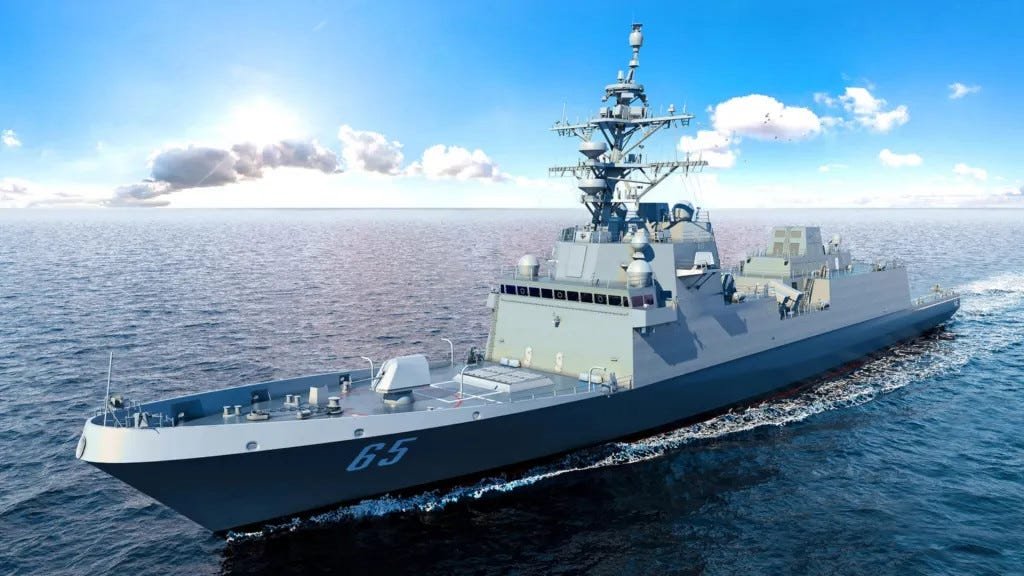
Remember, we must revisit the failures of the past in order that they shall not be repeated. Well, that’s the theory. Of all the disastrous series of failures this century to build a surface combatant, none were as unnecessary and avoidable as the failure of the Constellation Class FFG. Over six years ago, we found out that we were going to build a U.S. version of the Franco-Italian FREMM in a push to finally get a proper frigate into the fleet. I was ecstatic…but wary. Throughout the process, we had indications and warnings that the same institutional circus and its convoy of clown cars, which begat LCS, CG(X), and DDG-1000, had a hand on the wheel of what was then FFG(X). The primary warning was the shoehorned 57mm requirement that was put in there only as a way for the LCS builders to compete to…well…we all know the story. Going from 80/20 to 20/80 was simply sabotage. We knew that, but didn’t have the primary source information to really pin it down, just secondary indications. If it wasn’t rank incompetence, it was intentional. Yes, I know the bureaucracy ran with the brain of an Ottoman, the efficiency of a DMV, and a lust for diktat of a Soviet, but it could not have been set up to fail more than it was. SECNAV Phelan’s cancelling of the program was inevitable. We finally have some inside information from the builder of their side of the story. I’ll cover it in a minute and will end up with a bit of optimism, but if you will allow me—I need to rage just a little bit. Our fleet’s need for a frigate to replace the Oliver Hazard Perry Class was as clear as day. The Littoral Combat Ship (LCS) was a theory of an answer to a different question, so the blob tried to make the trusting believe we did not need a frigate just so they could get the funds for their personality driven kludge of bad theory, the LCS. A core of us knew that was wrong, but we lost the argument. We were not alone, but in the mid-00s there were not that many of us. Here on the CDR Salamander Front Porch, we were on the leading edge in calling out the catastrophic failure of the LCS concept and the need for a frigate NOW back in the first decade of this century. As we knew early on, the more of these that came into the fleet, the less people would be able to defend everything from the manning CONOPS to the tactical utility of the entire pair of classes. For the new folks, here was the Front Porch’s stand that I reviewed again last year. As a matter of fact, let’s look back at how I started an October of 2007 post. Let me beat that drum a little harder - license build a EuroFrigate NOW!!! Do it while we still have time - time to keep the Fleet numbers treading water and have enough shipyards open. A revolutionary project on PPT is just that - on PPT. An evolutionary project (see pre-WWII Cruiser development and the history of Carrier development as an example) results in ships pier-side and ships underway. Good officers have bought the line over this decade that LCS with all its toys will let them cover 10x more water than the old SPRUcans did - and do it better? ADS was to be one of the keys in doing this. We have put all our eggs in that gilded crap-basket of an LCS - thanks to Sid, we have the proof much of the oversold ASW capability increase portion has gone poof. With ADS gone we now have, well, an poorly configured, expensive, undermanned Corvette. The final form of Plan Salamander came together about 2010: Fast track a true multi-mission EuroFrigate design to be license built here for a run of no less than 12 and no more than 24 ships until a domestic design comes on line as the DDG replacement. NANSEN or ABSALOM would be a nice start. Not perfect - but good. The full execution of Plan Salamander to license build a EuroFrigate was not successful, as the cancelling of the Constellation Class proved. Why? That is best explained by a bi-partisan panel of political appointees and retired senior leadership that we will never see. I’ll save you the trouble. The base problem was that those same people given stewardship over the future of the surface force, faced with cascading failures, never sent the right people with a pair of pliers in one hand and a blowtorch in another over to NAVSEA and OPNAV. No. We continue to let the Janissaries run things as before. Why? That is a story that needs to be told. I have my theories, but perhaps for a different day. What did this look like on the industry end? In a refreshingly open interview by Howard Altman at TWZ with George Moutafis, CEO of Fincantieri Marine Group, we have a better view than before. When you know when you need something delivered and at what pace, then enable the right level of decision-making. Because otherwise – I don’t want to sound this the wrong way – but perfection sometimes is the enemy of more than good enough. Classic NAVSEA. A Good Idea Fairy with a 3,000 nm screw driver. The exact mindset that allowed the LCS CONOPS to get past the PPT, created VLS cells on LPD-17 that were never filled, built an entire class of ships based on a gun with unaffordable, bespoke ammunition, and hobbled the FORD class with cascading technology risk forced on hull-1. I think the initial and envisioned approach was a healthy one. Had we kept on track with what was, back then, the principles that led to the selection – but also how it was originally set up – we probably would have kept closer to the original design. And thus allowing [us] to be closer to the original schedule. And thus allowing [us] also to build the vessel that was desired, without delays or major changes. Correct. This is what we begged for. As we build our version of the already operational FREMM, if we want perfect—we can design its replacement—but take what we have now and displace water. But no. That would just underline the failure of those who begat LCS, DDG-1000 etc. Unlucky for us, the same institutions and, in some cases, the same people who were involved with LCS became involved with the Constellation Class.. …from the get-go, when the award was made, it was made because there was a review of the requirements, a review of the design, and a review of all the elements that led to recognition that the parent design possessed exactly the right features to represent the path forward. So collectively, we had marched on that path. We might find ourselves in a different situation right now, but like I said, it’s one thing asking somebody to change their M.O. and adopt a new approach without fully empowering them or doing something drastic to signal that type of transformation. And it’s another where we said ‘we will try this new approach.’ But there was a lot of follow-through that was needed. Everybody has developed experiences in certain ways, and everybody – especially when you have folks that have been doing it for decades – has developed their own rules of thumb and approaches to dealing with certain situations. It’s not easy to pivot an entire structure to a new idea or a new approach. So like I said, probably it was the right idea, but a little bit ahead of its time. The man is the CEO of a company that has a lot of business with and coming from the U.S. Navy. He has to be careful. Read between the lines. It is all there. I’ll play around with the highlighting feature to let you know the parts that raise one of my eyebrows. At this point of the interview, there is a discussion that there is now some change in the process, and I assume the people, to avoid what we saw most of this century. Read the full article for the details, but here’s a hint. So I’m hopeful that this new approach of the PAE [Navy Portfolio Acquisition Executives] setup will be an enabler to adopt the lessons learned: of how to move fast, of how not to mess with a design especially when it’s meeting and exceeding requirements, of how to manage change – not in the rollout of a change, but in the decision-making of whether to adopt change or not. So a lot of those new ideas that they’ve been trying to apply are promising to that effect. Trust but verify. Like we’ve seen with the defenestration of DEI through DOW, a lot of people have just changed their job titles and the name on their door, but continue to brew their bad stew. We’ll see. Leave a comment Share This Substack is reader-supported. To receive new posts and support my work, consider becoming a free or paid subscriber. View the full article
- Last week
-
One of America’s most iconic warplanes went down Monday morning at a military base in the California desert, setting off a large fire visible from miles away and triggering an immediate emergency response. Edwards Air Force Base, the sprawling flight test installation located in the Mojave Desert roughly 160 km (100 miles) north of Los […]View the full article
-
A Cold War-era tank first fielded in 1965 is about to get a new brain, a new gun system, and a new purpose on one of the most dangerous battlefields in the world. Defense analyst Jeff, writing for Defense Archives on Monday, reported that a Cockerill spokesperson confirmed to him at Eurosatory 2026 in Paris […]View the full article