All Activity
Past hour
-
smuffzsy joined the community
-
ftfeozqn joined the community
Today
-
gdljvxqb joined the community
-
sjwilanb joined the community
-
lqfgjqpy joined the community
-
hntcdske joined the community
-
The Netherlands plans to turn an Australian-designed laser into a working weapon against drones and build it on Dutch soil, the Dutch Ministry of Defense said Thursday. State Secretary for Defense Derk Boswijk signed a letter of intent this week with Electro Optic Systems (EOS), the Canberra-based maker of the Apollo high-energy laser. The ministry […]View the full article
-
ruglruua joined the community
-
The U.S. Navy has added $876.4 million to L3Harris Technologies’ contract for the Next Generation Jammer Low Band, a radar-jamming pod for the EA-18G Growler electronic attack jet flown by the U.S. Navy and the Royal Australian Air Force, the U.S. Department of War announced. The award is a modification to the $587.4 million contract […]View the full article
-
Italy’s Defense Ministry has opened a €5.14 billion ($5.86 billion) procurement for a new main battle tank and vehicles built on it, according to a record published Sept. 21 in the database of Italy’s National Anti-Corruption Authority (ANAC). The entry, listed under code BD0D09994D, covers the supply of a new tank and its derivatives for […]View the full article
-
A U.S. Army heavy battalion equipped with M1 Abrams tanks and an engineer battalion will deploy to Lithuania, the country’s Defense Ministry said Thursday, ending a gap of several months without a U.S. rotational force in the Baltic state. Defense Minister Robertas Kaunas said both battalions will arrive at the end of October. The force […]View the full article
-
Azerbaijan’s army in the Nakhchivan exclave has received Sivrisinek kamikaze drones, the Baykar-built loitering munition also known as YIHA-III, the Azerbaijani defense outlet TURAN Defence AZ reported. The drones went to the Nakhchivan Separate Combined Arms Army, according to the post. Baku has not announced the delivery, and there is no word on how many […]View the full article
-
Ethiopia’s military appears to have gained a new shield for its drone fleet: Chinese-made FK-2000 air defense systems, most likely delivered through the United Arab Emirates. Video shared on TikTok reportedly shows at least two of the truck-mounted systems on the road to Amhara, the northern region where government troops have been fighting Fano militias […]View the full article
-
China’s spaceplane has spent the past three months releasing, retrieving, and then recapturing the same small satellite in orbit, according to a timeline astrophysicist Jonathan McDowell posted Sept. 23 based on U.S. Space Force tracking data. It’s the clearest look yet at what the vehicle, known unofficially as Shenlong, has been doing during its fourth […]View the full article
-
North Korea test-fired an upgraded, precision-guided 240mm rocket on Sept. 22, state media said Sept. 24, claiming the new round can strike targets up to 115 km (71 miles) away, close enough to reach the Seoul metropolitan area from launch positions north of the Demilitarized Zone. North Korea has built the rocket along the same […]View the full article
-
Canada’s first F-35A fighter jet completed its maiden flight Sept. 23, taking off from Lockheed Martin’s production facility in Fort Worth, Texas. The aircraft, which carries the construction number AR-1 and will be designated CF-35A once in Royal Canadian Air Force service, flew with an F-35C acting as a safety chase plane. The jet already […]View the full article
-
Russia has delivered a new batch of Su-57 stealth fighters to its air force, and the jets come in what the manufacturer calls a “new technical configuration,” with upgraded onboard systems and an expanded set of weapons options. Rostec, the state conglomerate that owns manufacturer United Aircraft Corporation, announced the delivery but did not say […]View the full article
-
SummaryThis episode explores recent developments in US military strategy, technology, and infrastructure, emphasizing the importance of fundamentals and realistic planning in national defense. Key TopicsUS-Greenland-US relations and strategic agreements Impact of NATO and European NATO capabilities Development and deployment of the MQ-25A Challenges in mai… Read more View the full article
Yesterday
-
A Russian military Mi-8 helicopter briefly entered Polish airspace Wednesday morning, flying north of the town of Braniewo near the border with Russia’s Kaliningrad exclave, Poland’s Operational Command said. The aircraft penetrated Polish territory to a depth of about 300 meters and remained inside Polish airspace for 42 seconds before returning to Kaliningrad airspace. Polish […]View the full article
-
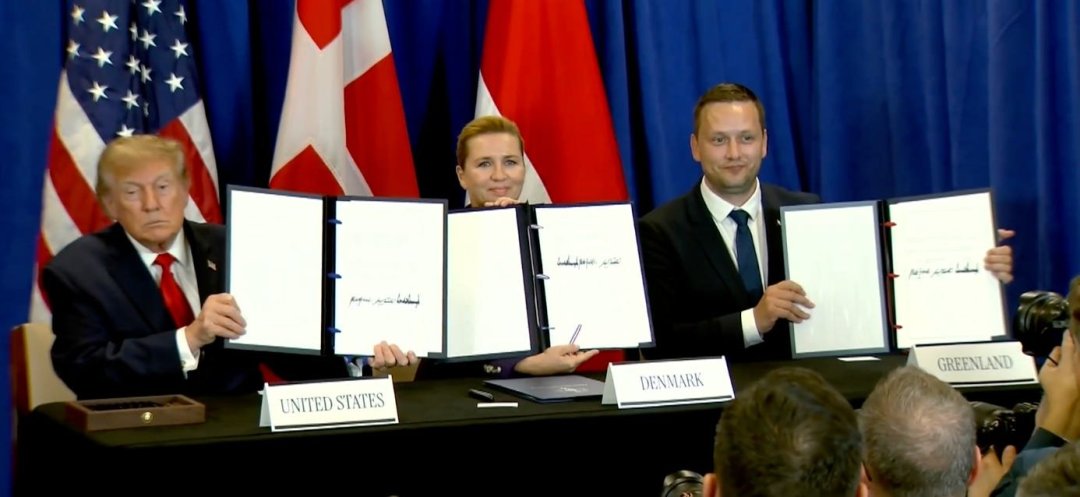
…and there you go. President Donald J. Trump signs the Greenland security deal with Danish Prime Minister Mette Frederiksen and Greenland Prime Minister Jens-Frederik Nielsen. We’ve kept up reasonably steady reporting the last couple of years on Greenland. I was never quite sure where it would come out, but I was confident that it would be—non-inclusive—in between the two extremes we heard coming out of the overly excitable and narrowly sourced commentariat of the U.S. invading or the U.S. being kicked out…and it did. I have to give a nod to our Australian friend Liz Buchanan who gave some great observations on the issue on the Midrats Podcast back in September of 2025 and January of this year. The full text of the agreement can be found here if you want to read it in detail, but let’s stick to the big pixels, as it is really a good news story for everyone…especially NATO. Rod Martin created a great executive summary…I’m just going to steal it. Bravo Zulu to the team that kept working this issue. From a national security point of view, everyone got the most important things they wanted—that’s what matters. As we like to do here, let’s go to the chartroom. We should start with something I posted five days ago over on X. Where were we in Greenland before the agreement compared to the Cold War? Well…we aren’t getting that much…but more, in a fashion. Looking just as the military aspects of the agreement (which is only a part). In addition to old Thule (now Pituffik), we will add/return to Narsarsuaq in southern Greenland, which was the site of the former US Bluie West One air base. It was used in World War II and the early Cold War before closing in the 1950s. Ashore, it has an existing airport with a runway that operates year-round and at sea, access to a deep-water port. The other is Mestersvig in northeast Greenland, which currently serves as a base for Denmark’s Sirius Dog Sled Patrol (an elite special forces unit) and has a 1,800-meter gravel airstrip. It is isolated, with a very small permanent presence, but it offers access to the east coast and adjacent waters. This is where it scratches the old Cold War itch while addressing the very real fact that regardless of what happens in the Russo-Ukrainian War and with the demographics of those nations in the coming decades, the geography is not changing. Russia is not going to disappear. Here are the three bases in context. More commentary from me here would just be a selfish imposition on your time. The maps tell the story. A final note about maps. The map at the top with my great circle routes gives a pretty solid view of the relative size of Greenland. One of the more tiresome things one hears in this discussion—on par with a 13-year-old-boy explaining the nuances of sex to a barbershop full of married men—is the, “Greenland is not that big…it just looks that way on Mercator projections…” OK, fine, yes…but, Shipmate, that ain’t small. Greenland is ~147% as large as Alaska. Doesn’t matter if it is 80% covered with ice. Our three bases will be VERY spread out. It would be as if we were defending the East Coast of the U.S. from NAS Key West to the old NAS Brunswick in Maine and then to Scott Air Force Base in Illinois. However, three beats one…and keeping the Chinese and Russians away…priceless. Take the “W”. Leave a comment Share This Substack is reader-supported. To receive new posts and support my work, consider becoming a free or paid subscriber. View the full article
-
Roketsan, the Türkiye-based missile manufacturer, said its KARAOK anti-tank missile struck an aerial target for the first time, firing the shoulder-launched weapon from a turret mounted on a light tactical vehicle. The company announced the milestone in a Sept. 23 post on X, along with footage showing the missile launching from a turreted mount on […]View the full article
-
Russia’s satellite constellation has grown to nearly 400 spacecraft, Roscosmos chief Dmitry Bakanov told Prime Minister Mikhail Mishustin during a meeting this week, with roughly 60 satellites launched in 2026 alone. The Russian government’s press service disclosed the figures as part of a broader update on the state space corporation’s activities. Bakanov said two privately […]View the full article
-
Global Military Products has been selected as one of several contractors on a new U.S. Special Operations Command indefinite delivery, indefinite quantity contract for U.S. and foreign weapons, ammunition, and personal protective equipment, the Tampa, Florida-based company said Sept. 21. The five-year contract has a ceiling of $19.5 million, and GMP will compete against other […]View the full article
-
Oshen, a UK maritime technology company based in Plymouth, is testing what it calls the first “acoustic picket line” built from small robotic sailboats at REPMUS26, a monthlong multinational maritime robotics exercise underway in Portugal. The company has deployed six of its C-Star sailboats, each about 1.2 meters (4 feet) long and fitted with a […]View the full article
-
BAE Systems said it has delivered two AMPV 30 prototypes armed with Kongsberg’s Medium Caliber Turret to a U.S. Army Transformation in Contact 2.0 unit, funding the six-month development effort itself with $17 million in internal research money. The company disclosed the delivery in a Sept. 22 release, though the vehicles reached the Army’s 1st […]View the full article
-
Rafael Systems Global Sustainment, the U.S. subsidiary of Israel’s Rafael Advanced Defense Systems, won an Other Transaction Agreement through the Aviation & Missile Technology Consortium to pursue U.S. qualification of the SPIKE SR shoulder-fired missile, the company announced Sept. 22. The agreement covers testing and adapting the missile to U.S. military requirements, but the companies […]View the full article
-
The U.S. Northern Command tested Bumblebee interceptor drones from Perennial Autonomy during Falcon Peak 26.2, a counter-drone experiment underway at Yuma Proving Ground, Arizona, through Sept. 25. The command said on Sept. 22 that the exercise is pulling lessons directly from Joint Task Force-Southern Border to sharpen how the military detects and stops unauthorized drones […]View the full article
Last week
-
South Korea’s Air Force took delivery of its first production KF-21 Boramae fighter jet, the Defense Acquisition Program Administration and the Air Force said in a joint statement. The aircraft flew from Korea Aerospace Industries’ plant in Sacheon to an Air Force unit in Yecheon, about 165 km (103 miles) to the north, escorted by […]View the full article
-
Advanced Navigation, an Australian navigation technology company, has signed an $18.5 million deal to supply inertial navigation systems for Kongsberg’s PROTECTOR counter-drone platforms, the company said Sept. 22. The systems are bound for Poland, where Kongsberg is delivering 18 counter-drone batteries under a contract worth roughly NOK 16 billion, or about $1.5 billion, with Poland’s […]View the full article
-
The Javelin Joint Venture completed a simulation demonstration in Norway using a Kongsberg Medium-Caliber Turret fitted with a prototype dual launcher assembly for the Javelin anti-tank missile. The companies described it as the first phase of an ongoing effort to integrate Javelin more closely with vehicle-mounted turret systems. The Javelin Joint Venture is a partnership […]View the full article
-
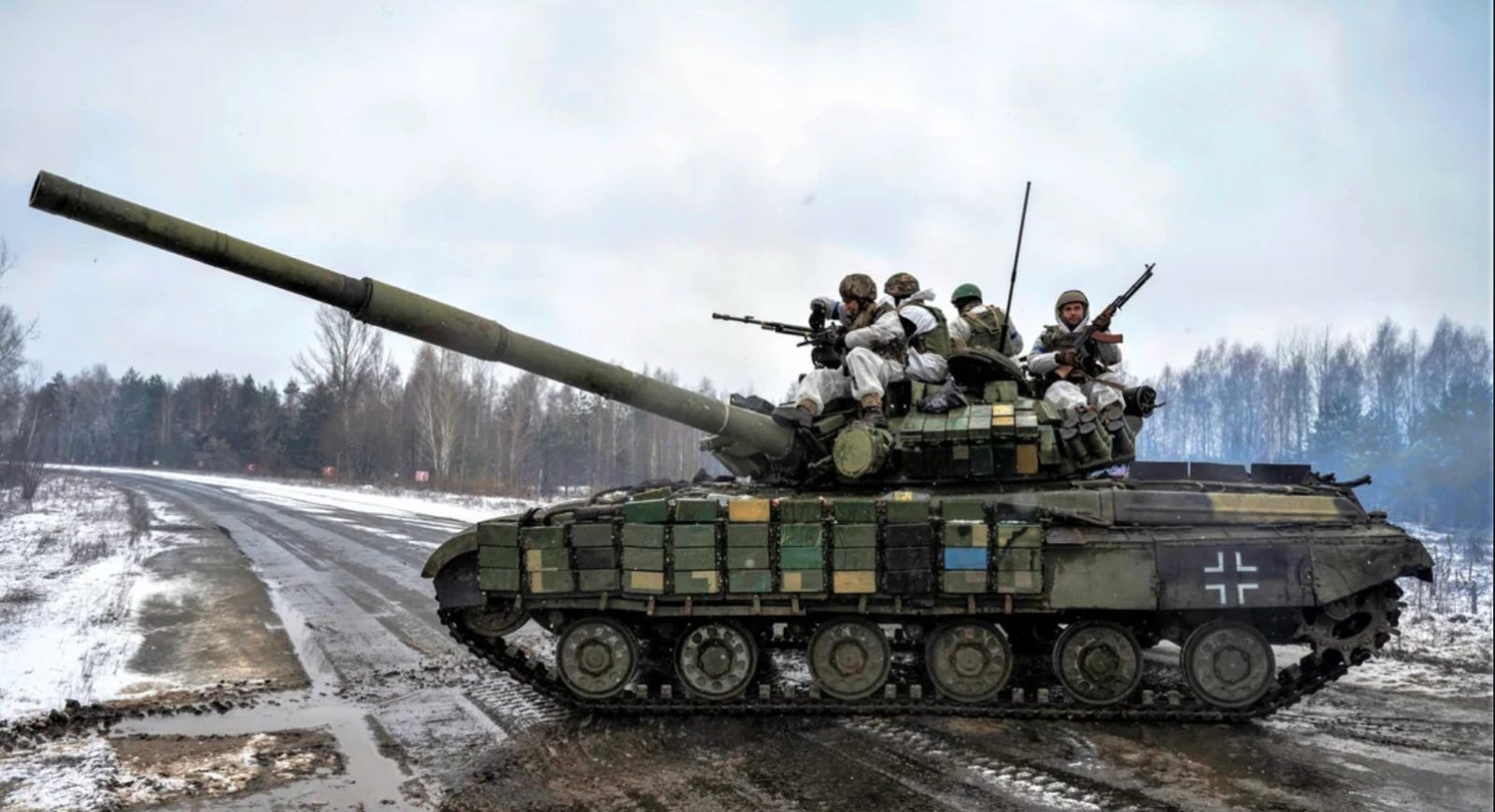
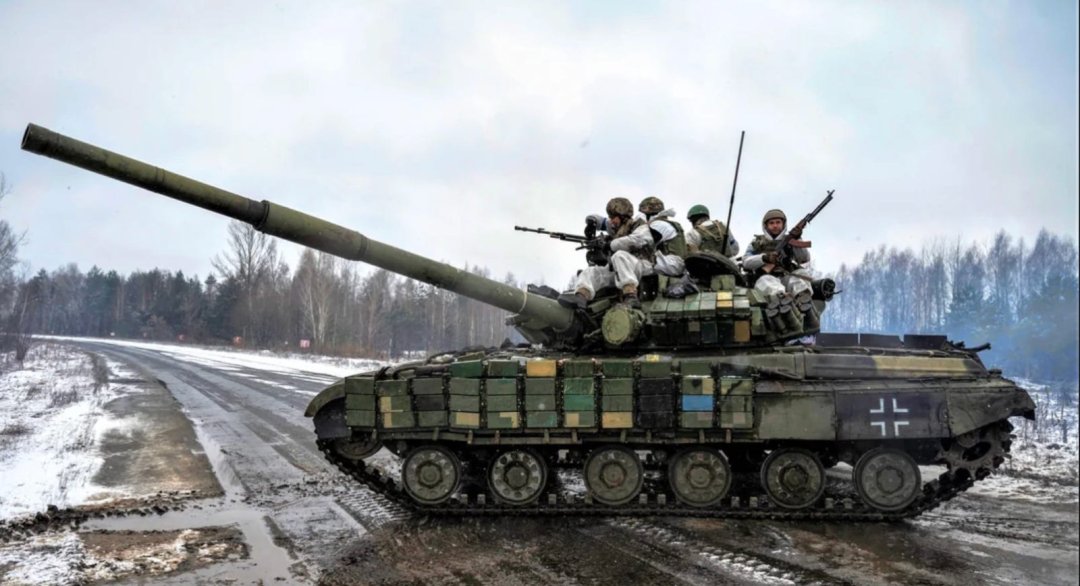
Most of the news one has heard about the Russo-Ukrainian War since the USA and Israel started their campaign against Iran in early spring has been about the expanded “Battle of the Cities” as Russia continues to pound population centers and Ukraine focuses on strategic strikes against Russian hydrocarbon industries, logistics, and commerce raiding at sea. Both Russia and Ukraine are land powers, and that is where the important moves will take place. Mick Ryan, as one would expect, has a great overview of what has been happening this summer. Vivaldi: The Summer-Autumn Counteroffensive. The week’s big story was the official disclosure of an ongoing Corps-level Ukrainian counteroffensive in eastern Ukraine. It represents the second significant Ukrainian counteroffensive this year (the first was in the south) and indicates Ukraine has developed new offensive techniques that are having an impact on ground combat operations. Brigadier General Andrii Biletskyi, commander of the 3rd Army Corps, confirmed on 15 September that his forces have been running an offensive codenamed Vivaldi in northern Donetsk Oblast near Lyman since roughly May, conducted under very strict operational security. There have been open-source stories about this for the last couple of weeks, including my report here once news broke about the counteroffensive, but it was good to get an update from the commander on the ground. Ukraine claims at least 75 square kilometres cleared of Russian infiltration units, and a further 10 square kilometres liberated around Novoselivka, Oleksandrivka, Yarova and Korovyi Yar, with the settlement of Seidnie also retaken. Several open-source analysts, working from geolocated footage put the true figure considerably higher, at 200 to 240 square kilometres. This gap is probably the result of the Ukrainians not yet wanting to announce information about some ongoing elements of the operation, and reporting lags. Biletskyi made an interesting comment that telegraphs that this operation is far from over: Vivaldi has four seasons. This is only the first. While drones had largely blunted the ability of both sides to maneuver, it appears that there is actually some significant movement taking place as, for the moment in Ukraine’s favor, the capability-counter-capability of drones v. armor has allowed for more effective point defense enabling the offensive. Via David Kirichenko at the Center for European Policy Analysis, Ukraine’s 3 Army Corps, acting under strict operational silence, has been conducting a counterattack in the Lyman sector for months. The cloud of secrecy has now been lifted, and Russian forces have lost a significant amount of territory. The operation, named Vivaldi, has so far officially cleared 75 sq km (29 sq miles), Ukrainian forces say. It is not yet over. “In Vivaldi, as you know, there are four seasons,” Brig. Gen. Andriy Biletsky said on September 15. “And this is only the first . . . Good news is coming.” We should not get too excited. 29 square miles (75 square kilometers) is only a bit larger than Manhattan and a little smaller than Walt Disney World. If we scaled that up proportionally for the USA, that would be about 490 square miles, or the city of Los Angeles. Not nothing, but not a lot. That being said, it isn’t so much the amount of territory, but what it represents. Russia’s leadership had hoped to encircle Ukraine’s formidable fortress belt in western Donbas, but the northern salient has been reduced, with Russian warbloggers claiming it will extend the battle for Donbas by a year. Credible independent sources say the Ukrainian territorial gain is even greater. Ukraine has also been making effective use of mid-range strikes to hit Russia’s rear, softening defenses, and then using troops to retake ground. Kyiv’s forces have benefited from Russian commanders falsifying reports about their progress, leading to a lack of reinforcements and allowing Ukraine to seize the initiative. The UAF says more than 1,500 Russians have been killed and wounded, and 12,000 drones destroyed along with hundreds of vehicles. That was Russia’s main effort for her summer offensive…and it has failed. What is worth noting is that the Ukrainians have demonstrated, again, that armor is not dead—limited, but when used properly, essential. The Lyman offensive shows Ukraine is improving its deployment of combined arms, a tactic it struggled to deliver during its unsuccessful counteroffensive in 2023. In the race to adapt, both sides have sought to develop the countermeasures and conditions required to restore maneuverability to the battlefield. In July, a Russian mechanized assault in Maiak featured the Arena-M active protection system (APS), which had been modified to defend tanks against first-person view (FPV) drones. Dmytro Putiata, a Ukrainian veteran and drone warfare expert, said the Ukrainians had found the system hard to break down. The system on just one tank “destroyed seven FPV drones,” Putiata wrote on Twitter/X. “In general, it took 15 to 20 FPV drones to destroy a tank (there were seven of them).” Not every sector, or every terrain, is appropriate for the use of heavy armor, and commanders are having to adapt to different combat environments. In the Donetsk-Dnipropetrovsk-Zaporizhzhia sector, Yurii, a drone operator with Ukraine’s 23rd Separate Mechanized Brigade, said tanks were scarce. “The main focus right now is on small infantry groups moving on foot or on all-terrain vehicles, supported by drones as they advance,” he said in an interview. “In our sector, tanks are very rare because of the large kill zone extending in both directions.” … The concept of combined-arms warfare hasn’t changed, but the older doctrines for its use are becoming outdated. “Tanks are used noticeably less often compared with previous years,” said Viktor, a tank operator from Ukraine’s 28th Separate Mechanized Brigade. “The survivability of the vehicles themselves has also declined because the enemy is using more advanced strike UAVs and sectors of the front have become more difficult for concealing vehicles.” … The new style of Ukrainian combined assaults has produced important results, such as in Lyman, but a major breakthrough will still be very difficult. Much like Ukraine’s 2023 counteroffensive, any limited breakthrough will face barrages of artillery and drones. … “Despite the difficulty in ground operations maneuver observed in eastern Ukraine over the past few years, offensive operations are still possible in modern war,” wrote retired Australian General Mick Ryan. “But they need the intellectual effort to develop new techniques to make them viable and repeatable at scale.” In the background, larger strategic issues are moving. There is a non-zero chance that, by the end of 2027, the European political climate—and its attitude towards Ukraine—will be very different. The French election is only seven months away with Marine Le Pen’s Rassemblement National looking to finally win. Not good news for Ukraine as it stands right now, but that may change. With each election, Germany’s Alternative für Deutschland gets stronger and stronger—and the pro-Ukrainian CDU is impaling itself on the migration issue and Merkelism. Not good news for Ukraine in isolation, but more cards are yet to be played. They have 2029 for the next election at the federal level, but with Chancellor Merz unpopularity making his position increasingly unstable, who knows. If France and Germany don’t have the stomach to continue to substantially back Ukraine…there is only so much the rest of Europe can do. The American public is not in the mood to be more concerned about Eastern Europe than Central and Western Europe are themselves. This ain’t easy, is it? Last man standing—and the victor will be drained, broke, and poorer than when the war started—only slightly less than the other guy. We only have six weeks or so until bezdorizhzhia/rasputitsa kicks in and everything get stuck to the axel…so…winter offensive, anyone? Editor’s Note: the picture of the tank at the top of the post is the same one as used in the CEPA article. I almost didn’t use it since I started coming out strongly in favor of Ukrainian self-determination 13 years ago, and have quite the record on the topic since at the OG Blog, here, the Midrats Podcast and UNCLAS Read Board Podcast—but that wouldn’t be fair to the Front Porch, as I continue to try to keep an eye on myself to avoid the death of any opinion person: audience capture and self-editing of uncomfortable truths.Yes, I understand the unhelpful and problematic iconography that some Ukrainian units use. We could do without the Balkenkreuz, even if it does troll Russians well. It is just unhelpful. The white crosses I can explain, but there’s no avoiding the problems with the Balkenkreuz…even if you’re fighting Russians.Leave a comment Share This Substack is reader-supported. To receive new posts and support my work, consider becoming a free or paid subscriber. View the full article
-
Assistant Secretary of War for Critical Technologies Michael Dodd said the Department of War needs to move directed energy weapons out of testing and into the field, arguing in a Sept. 22 post on X that high-energy laser programs have proven the technology works and now need ruggedized, deployable systems for air and missile defense. […]View the full article