All Activity
- Today
-
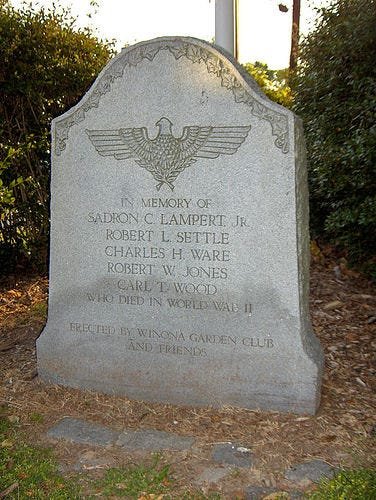
Every few years I repost this little bit from 2005. It has been a half decade. It is time again, with some slight improvements. In a culture where more often than not, all your neighbors are really just transients - they move in and out every few years, chasing whatever opportunity or ambition pulls them next. Their families are scattered hither and yon; few really related to anyone. I've wondered for a while what impact the reality of the rolling, self-imposed Internally Displaced Persons has had on our nation - perhaps causing us to miss something. Is it a net gain, or a net loss? Well, perhaps I’m projecting; I have always thought I was missing something. Sure, post-military I returned to my hometown, the place I was born—and that is nice. I now have a smattering of relatives and people I grew up with who are still here - so I feel like I finally have what I always wanted: a real sense of community. Mrs. Salamander is a very rare creature in our boomtown; a third-generation native, with another three to four generations going back another few generations a couple of hours down the road. Even though this was where I was born, it never really felt like "home" - as community was a different concept for me based on my cultural reference. My mother was the first of her generation to move from our small town in Mississippi since our family helped found the county and the city in the first decade of the nineteenth century - she still calls it "home" in spite of the fact she left it six decades ago. We would go "home" a lot when I was growing up. I always got a kick out of everyone more or less knowing each other; heck - related to each other. Names had meaning, relationships mattered - and perhaps a post for a different day; race carried enormous meaning in a way in my sheltered color-free upbringing I had no concept of. A few years ago when we traveled back to Mississippi to lay my father's remains to rest in the cemetery where my relatives’ remains go back two centuries, my oldest niece walked in to the local drug store that also has a barber shop and a coffee house in it. She had with her her youngest son and my sister. They just wanted to have a cup of coffee. The server brought it to them and then, not recognizing them, asked how they were and what brought them to town. Well, within five minutes, there were 3-4 people around the table telling stories about my mom in high school, and how they remembered her children, now all grown, when we visited during the summers. In that small Mississippi town, history isn't abstract; it walks with you. Events of a century ago were still there, still waiting for you around every corner, if you look for it and have the right person beside you to tell its story. What your family did or did not do decades or a century ago still matter; still have an impact on the present. I miss that, and think that we as a nation have lost a bit of something by not having it. In the faster parts of the nation, the hole left by that absence is even greater. As we move into Memorial Day weekend - I thought about community in the context of a post I did the first year I was blogging. I lived in Norfolk back in 2005, and I jogged by a hunk of granite all the time. It took me a couple of years before I decided to stop and read it. I'm going to post in full that bit from 2005 and the follow-on and ask you to ponder your neighborhood; the few blocks to the left and right of where you live. How many of your neighbors have been lost in this war? As many as this small Norfolk neighborhood? Regardless of the number, would anyone feel a connection strong enough to build a memorial for those lost? Maybe yes, maybe no ... but a good thing to ask yourself today. I know I am. Neighborhood Memorials; May 2005: I have gone past this monument countless times. As of late, it started to bother me more and more. What is it? Being that this is an older neighborhood, and the eagle is hard to miss, I realized that this had to be a monument of some kind. We have all been to the grand monuments. The large monuments. The understated monuments. The sublime monuments. The controversial monuments. The insulting monuments. What could be more personal than a neighborhood monument that simply states, "These were our neighbors that fought and died for us." How common are these little neighborhood monuments? I did a quick search for these names on the Internet. Inside a day I found out that in 1935, Robert L. Settle was an Eagle Scout, but that was about it. I found out more about Sadron C. Lampert Jr. through his close relatives in the area that I managed to find. In a quick email exchange I found out some detail that, when you think about it, every name on every monument carries with it. When you look at these men, struck down in the prime of life, you have to think about the lost potential. For you economists out there, the opportunity costs for a society of those lost in conflict is huge. We should earn it. With his permission, the grandson of Sadron C. Lampert sent a quick background. While I obviously never had the honor of meeting him, his father (Sadron Sr.) was alive until I was about nine. Sadron Jr. was killed when my father was just one or two. He skipped two grades in high school and went to Yale, where he played football and graduated Phi Beta Kappa. He went to work for a firm in New York, where he met my grandmother (boss's daughter, if I'm not mistaken). Sadron Jr. was drafted into the Army in late 1943. He served as a communications officer in Europe. He, like all the Sadrons, had pretty poor eyesight and was constantly breaking his glasses. This may have contributed to the circumstances of his passing. He died in September, 1944 near Empoli, Italy. He was posthumously awarded a Purple Heart. By going to the outstanding National Archival Research Catalog, I found out that Robert W. Jones was a 2nd LT in either the Army or Army Air Corps when he was KIA. Charles H. Ware and Carl T. Wood; in the digital age they are hidden. The irony is, the Winona Garden Club no longer exists, but as you can tell, someone in the neighborhood is keeping the monument up. Somewhere, on microfiche I'm sure, is the story. The questions are still there though; did they know each other before they left overseas? Did their families know each other? Did the families stay after their death? Did they serve together? I've been to the WWII monument in D.C. and this little neighborhood monument had much more of an effect on me. Perhaps it is the personal nature of it, or the depth that Sadron Lampert, Jr.'s grandson provided. Next time I see something like this hidden in a corner, I'm going to walk over and see. After all, that is what they were put there for. The former members of the Winona Garden Club succeeded. Decades later, people are still giving tribute to their neighbors. Winona Memorial II: November 2005: With Veterans Day, it is a good time to focus again on something I came across this summer; something everyone has, I hope; a local personal memorial to those who died in service to their country. In this case it is a small little memorial in Norfolk, VA in a neighborhood called Winona Park. As a byproduct of my original posting, the family of one of the men on the memorial, Sadron Lampert Jr., has been kind enough to send along some more details on Sadron Lampert Jr. that adds depth to the man behind the name. I'll quote from some of their emails below, taking out the names. A reminder that these were real people, with real families, real futures, real desires, real hopes. Everyone who leaves early, sacrifices a lifetime. Nothing dramatic here, but next time you hear or see a name, remember each one has some kind of connection - some history - some grieving family. War is an expensive undertaking—and money isn't the currency. Dear CDR Salamander: I happened to Google Sadron Lampert and found your article on the WWII memorial in Winona. My name is XXXX. I live in Norfolk, and my father, XXXX, is Sadron's brother. I would like to add to and clarify some of your information regarding the five young men from Winona who gave their lives serving their country. The only person among the five that my father did not know was Robert W. Jones. Three of the families literally lived next door to each other: the Lamperts, Settles, and Woods. In fact, my grandmother, XXXX Lampert, was next door consoling Mrs. Settle on the death of her son, not knowing that her own beloved Sadron had already been killed. By the way, my grandparents had already lost a little girl, Doris, when Sadron died, and my father, who was five years younger than Sadron, had gone into the Army before Sadron and was in New Mexico training to go overseas when he heard of his dear brother's death. My father--my hero--went on to fly more than his share of missions over Japan, flying out of Tinian. The siblings had another brother, Ralph, who died at age 56 of a massive heart attack. To clarify Sadron IV's e-mail, Sadron III was two when his father was killed. Sadron III, of course, is my first cousin. Sadron, Jr. entered Yale at age 16. He graduated at age 20. He was on a special football team--the 150 lb. varsity team--because of his slender stature. Sadron, Jr., .... met his wife, Edith, (while she) was working at Farmer's, Inc., my grandfather's company, as a secretary when Sadron, Jr. met her. She was from South Norfolk. ...... After Sadron and Edith married, they moved to New York, where Sadron was the manager of marine and war risk insurance at Johnson and Higgins on Wall Street. Sadron and Edith were married at Rosemont Christian Church in South Norfolk. The church was on Bainbridge Blvd., the same street where Edith's family lived. Her maiden name was Edith Herbert. Again, Sadron and Edith were a lovely couple. My mother and father can still picture them attending their church, First Methodist, Edith dressed to the nines and Sadron perfectly outfitted in a gorgeous white summer suit. Sadron, Jr. was actually drafted in early 1944. He was drafted as part of Roosevelt's Limited Service Act because of his nearsightedness. Instead of the Army using his vast intelligence and putting Sadron where he could have made a weighty difference, the Army sent him straight to North Africa and then to Italy. .... He died on September 14, 1944, three days before my father's 21st birthday, because he and a boy from Wisconsin caught a mortar in their foxhole at Futa Pass, Italy, which killed both of them instantly. Although Sadron Lampert was at Futa Pass at Highway 65 in Northern Italy on September 14, 1944, several WWII websites list incorrect information. For example, one lists him as "Lambert" and another lists his date of death as Sept. 29, 1944. Both are incorrect. Sadron Lampert died on Sept. 14, 1944. I know that the fighting between Sept. 2 and Sept. 25, 1944, along highway 65 through Futa Pass--known as the Gothic Line--was intense. Between Sept. 10 and Oct. 26, four U.S. divisions suffered over 15,000 casualties. Some sites even suggest that the Futa Pass activity in September 1944 was a diversionary sacrifice to draw enemy fire away from other strategic points. Sadron was dashing and extremely intelligent; everyone admired him. My mother also grew up in Winona and remembers seeing Sadron and Edith together and thinking what a perfectly beautiful couple they were. They had the aura of movie stars. My grandparents continued to live on Morris Crescent until their deaths. My grandfather, Sadron, Sr., died in 1983. I was lucky enough to know him well into my adulthood. My mother's parents lived on Huntington Crescent until their deaths (with my grandmother living almost to age 97). My uncle and my brother and his family still live in Winona, so my attachment to the neighborhood is quite strong. Charles H. Ware went by Hal. He and my dad were the same age and were on the high school football team together. My dad believes that he was in the Army Air Corps. Carl Wood was drafted rather late in life. He was 6 or 8 years older than Sadron. He was the first husband of another long-time Winona resident, Winnie (Mrs. William) Scullion, who died several years ago. Her sons (by her second husband) are still in the area. Robert Settle was an Annapolis grad. He took Naval Flight Training and was killed in a crash stateside. ..... Just last year, the Lafayette/Winona Civic League held a special Memorial Day service and dedicated the memorial site with new lights. My mother has photographs of the original dedication service, held in the early 1950s, complete with shots of Sadron, Sr.; his wife, Elizabeth; and their grandson, Sadron III. ....... To the family of S.L. Jr., thanks again for the email and putting the person behind the name. Every name has a story like S.L. Jr. Every memorial is significant, even if it is smallish and tucked into a small park. Leave a comment Share Subscribe now View the full article
-
The first Boeing E-7 Wedgetail airborne early warning aircraft destined for Royal Air Force service landed at RAF Lossiemouth in northern Scotland, beginning the final stretch of testing before the platform formally enters British military service. Registered as WT001, the aircraft flew north from STS Aviation Services at Birmingham Airport, piloted by a mixed crew […]View the full article
-
A South Korean-developed remote-controlled weapon station capable of networking three or more units into a single coordinated fire system represents a significant step forward for the country’s homegrown defense industry, according to KFN Plus. The system, known as an RCWS, is a remotely operated weapon turret mounted on light tactical vehicles and wheeled armored personnel […]View the full article
-
Japan’s Defense Minister Shinjiro Koizumi met Wednesday with the CEO of GCAP’s joint venture design company to declare the three-nation next-generation fighter program “an extremely important project that will determine Japan’s future air capabilities,” Nikkei reported. The meeting, held at the Japanese parliament, brought Koizumi together with Marco Zoff, chief executive of Edgewing, the private […]View the full article
-
South Korea finalized a $352 million deal on Friday to acquire American SM-6 shipborne missile interceptors for its Aegis destroyer fleet, with the weapons scheduled to reach operational service by 2034, the country’s Defense Acquisition Program Administration reported. The approval, granted by the Defense Project Promotion Committee, South Korea’s senior arms procurement decision-making body, covers […]View the full article
-
A U.S. Army artillery battalion at Fort Carson, Colorado fired its last rounds as a Paladin unit on May 7, closing out 43 years of service with the self-propelled howitzer while simultaneously becoming the first Paladin formation in the Army to fire using the new Artillery Execution Suite, the Army reported. The 3rd Battalion, 29th […]View the full article
-
Monocrystal, once one of the world’s three largest producers of synthetic sapphire and a supplier of optical components used in Russian missiles and drones, has notified creditors of its intention to file for bankruptcy with the Arbitration Court of Russia’s Stavropol Krai, The Moscow Times reported. The collapse of the Stavropol-based manufacturer, a subsidiary of […]View the full article
-
The U.S. Army published a request for information on May 21, asking defense industry companies whether they can build a next-generation long-range optical targeting sensor that would replace two aging systems currently in service with reconnaissance and fire support units across the force. The program, called the Future Advanced Long-range Common Optical/Netted-fires Sensor and going […]View the full article
-
The U.S. Space Force expanded a contract with Geost LLC on May 13, 2026, by nearly $90 million, pushing the total value of the Oculus Host program to $196 million and extending its completion date to May 2033, a significant commitment that reflects how central space domain awareness in geosynchronous orbit has become to American […]View the full article
-
The U.S. Navy awarded Science Applications International Corporation, known as SAIC, a $112 million contract modification to continue producing components for the MK 48 Mod 7 heavyweight torpedo, the primary submarine-launched weapon of the U.S. Navy and Royal Australian Navy. The work covers production of torpedo components, spare parts, production support materials, engineering support, and […]View the full article
-
The Netherlands is overhauling its entire fleet of 200 Boxer armored vehicles with new drone-killing weapon stations, updated IT systems, and critical spare parts fixes, hartpunkt reported, citing a Dutch Ministry of Defense announcement. The upgrade program covers vehicles that entered Dutch service starting in 2013, making the oldest units now more than a decade […]View the full article
- Yesterday
-
It was a dozen years ago that...we thought—really thought—that with the X-47B we could move from crawl to walk with large unmanned systems. From the OG Blog in July, 2017: I'm interested in how many can I physically wedge on to a carrier deck and/or hangar bay. I'll waive the flight control issue etc - but once you know how many you can actually pack in your helmet bag and carry (given tradeoffs for other aircraft etc) - then we can start to plan orbits, sorties, loss-rate mitigation, etc. Now, if there were a way to stack them like so many Pringles ..... Ponder. Of course, by the end of the year, the usual suspects killed it for all the worst reasons. We could have had over a decade more experience—probably close to two decades by now—in operating large unmanned aircraft from carriers, but alas, it did not happen. We now have a second chance. As promised on yesterday’s UNCLAS Read Board Podcast, it is time to say, “Yes. Thank you. More. Faster.” Via Diana Stancy in Breaking Defense: The Navy’s MQ-25 Stingray unmanned aerial system received the green light to move into low-rate initial production (LRIP), acting Secretary of the Navy Hung Cao said today. As part of the production decision, known as Milestone C, an LRIP Lot 1 contract for three aircraft is expected this summer, along with priced options for three Lot 2 aircraft and five Lot 3 aircraft, according to the Navy. “Unmanned refueling extends our reach against any adversary,” Cao said in a statement today. “Moving the MQ-25A Stingray to Milestone C and into production is arming our warfighters with a capability that increases the lethality of our Carrier Strike Groups. This is a decisive advantage that delivers our warfighters what they need to fight and win.” The MQ-25 will primarily conduct refueling missions for carrier air wings, freeing up the F/A-18 Super Hornet for its strike mission, and may also complete intelligence, surveillance, and reconnaissance (ISR) missions. First tanking, then ISR, and then—yes—those are two hard points. Strike. Let’s not get ahead of ourselves, however. Let’s get them to the fleet and let them experiment with them. A good solution for the fleet now is better than the perfect solution that will never show up. We can improve it as we go along, or find another platform to replace it as we work with what we’ve got…but no more wasted time. Let’s get more shadows on the ramp. Leave a comment Share This Substack is reader-supported. To receive new posts and support my work, consider becoming a free or paid subscriber. View the full article

-
GE Aerospace secured a three-year engine support contract from Boeing Defence UK to maintain the T700-GE-T701D turboshaft engines powering the British Army’s fleet of AH-64E Apache attack helicopters. The contract places a GE Aerospace field service representative permanently on-site at Wattisham Flying Station in Suffolk, the British Army’s primary Apache base, and routes engine repair […]View the full article
-
U.S. Marines demonstrated a new airborne drone relay tactic during a recent exercise, using UH-1Y Venom utility helicopters as flying command posts to extend the range and lethality of first-person view strike drones well beyond what ground operators can achieve. Marines with Marine Light Attack Helicopter Squadron 169, Marine Air Group 39, and 3rd Marine […]View the full article
-
The U.S. military gave the public its clearest look yet at AEVEX Aerospace’s Disruptor strike drone during Arcane Thunder 26, a multinational exercise that ran from April 6 to April 29, 2026, across Germany, Poland, and the United States, with the drone component tested at the National Training Center at Fort Irwin, California. Soldiers from […]View the full article
-
Russia’s Strategic Rocket Forces conducted their second successful test launch of the RS-28 Sarmat intercontinental ballistic missile on May 12, 2026, firing the weapon from a silo at Dombarovsky near Yasny in the Orenburg region and announcing the result publicly through the Russian Ministry of Defence. The test is Russia’s first publicly acknowledged Sarmat success […]View the full article
-
Ukrainian forces have tested an unusual tactic that could significantly extend the reach of the Hornet strike drone: launching it from a tethered aerostat at high altitude rather than from a ground-based catapult, a combination that Ukrainian sources claim nearly doubles the weapon’s effective range. The test, details of which circulated through Ukrainian military channels, […]View the full article
-
Canada signed two contract amendments with Lockheed Martin on May 15, committing a combined $1.15 billion to keep its CC-130J Hercules tactical transport fleet flying and modernized through the end of the decade. The first amendment, valued at $462 million, extends the current maintenance and support contract through June 2029. The second, estimated at $684 […]View the full article
-
Canada broke ground on two major military construction projects in Latvia on May 19, laying foundation stones for a rotary-wing helicopter facility at Lielvārde Air Base and accommodation buildings at both Lielvārde and Riga in a combined investment of €64 million, or approximately $70 million. The ceremony marked the latest installment in what has become […]View the full article
-
Russian Su-35 and Su-27 fighter jets repeatedly and dangerously intercepted an unarmed Royal Air Force RC-135W Rivet Joint reconnaissance aircraft operating in international airspace over the Black Sea in April 2026, the UK Ministry of Defence revealed on May 20, 2026, releasing images and video of the encounters. In the most serious incident, a Russian […]View the full article
-
The U.S. Air Force published a request for information on May 20, seeking industry proposals to design and build a new external weapons pylon for the B-52 Stratofortress bomber capable of carrying munitions up to four times heavier than anything the current hardware can handle. The notice, issued by the Air Force Life Cycle Management […]View the full article
-
The U.S. Air Force published a sources sought notice on May 20, 2026, signaling that the Long Range Standoff nuclear cruise missile program is moving toward production and that the government is now looking beyond its current sole developer to understand what industrial capacity exists across the defense industry. The notice, issued by the Air […]View the full article
-
SummaryIn this episode, Sal discusses recent congressional testimonies by Navy leaders, the MQ-25 Stingray, and the realities of directed energy weapons on ships. He emphasizes learning from past military delays, the importance of technological progress, and the significance of understanding bureaucratic growth through Parkinson’s Law. Show LinksActing S… Read more View the full article
- Last week
-
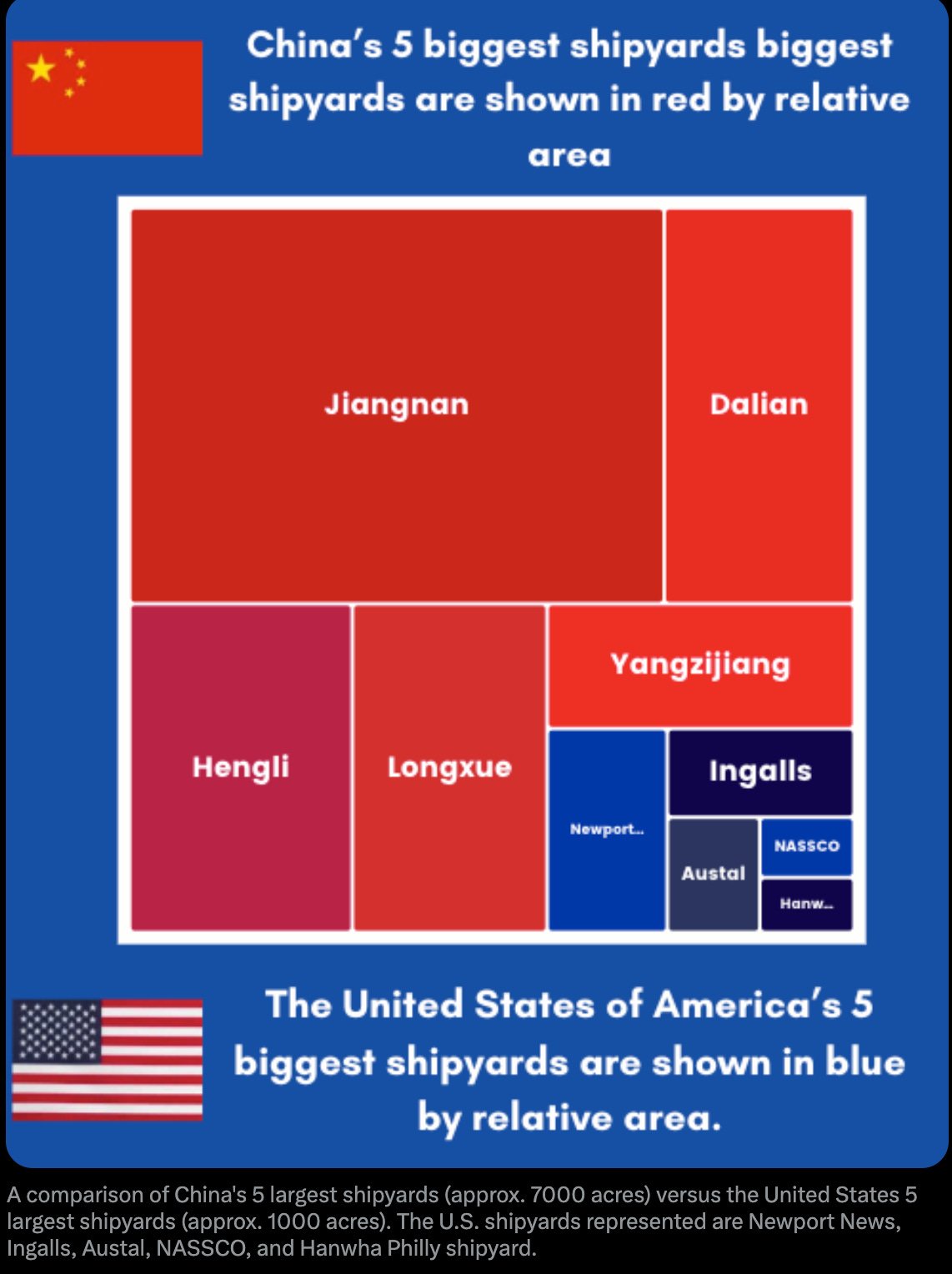
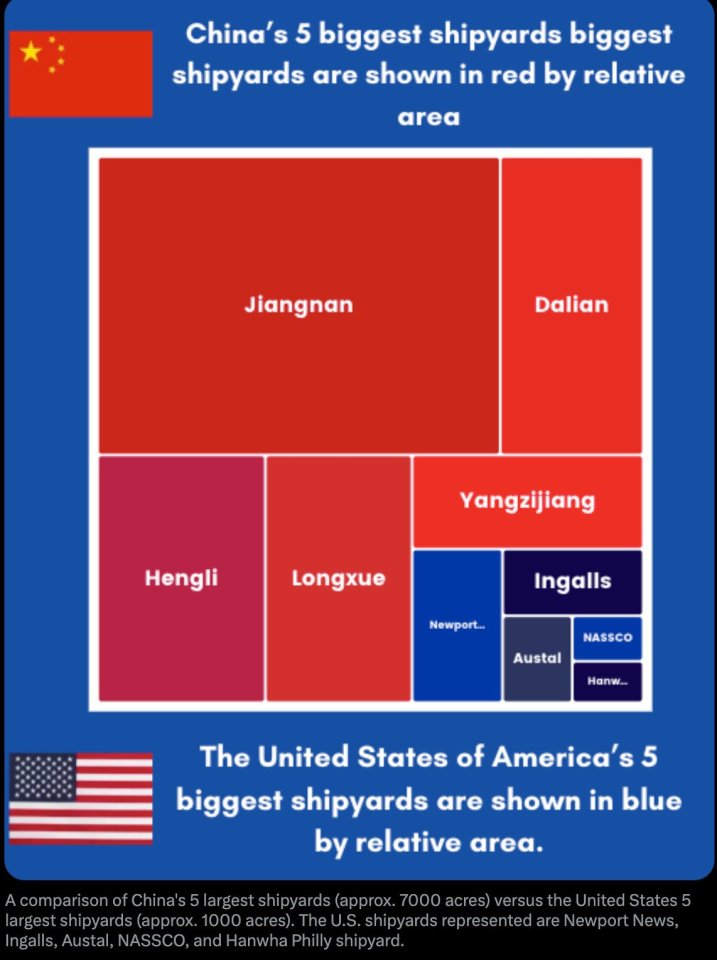
The decades-long slide into near irrelevance of the industry that led to our victory in WWII—our shipbuilding overmatch over the Axis powers—continues to receive more attention over the last couple of years. We have been “appreciating the problem” for as long as I’ve been blogg’n, and it has been a regular topic of The Long Game series we started at the OG Blog in 2004. There is a critical mass of “problem appreciation” that is beginning to resonate across the maritime sphere, but everyone is still waiting for concrete—pun intended—action. It won’t happen overnight, but one does want to see real progress. I am optimistic, but the task is as great as the generational neglect and lack of stewardship that created it by the Smartest People in the Room™. Two graphics kept popping into my mind this week: one geographic, the other industrial capacity. That is one hell of a hill to climb. We could not have won WWII if we did not start pulling our shipbuilding industry up with significant action in 1936, 38, and 40 that gave us the ships to keep both the fight and our allies alive in Europe, and the battle fleet that showed up from mid-1943 and on. Is the present team in the Executive Branch, along with its allies on this issue on both sides of the aisle in Congress, ready to make progress where others failed? This will involve land. Heavy industry. Manpower. Money. And, more importantly, a persistent mindset. We are seeing the money, and we are hearing the right things. It is all moving towards action that should begin showing results in the next couple of years, at the earliest. The best time to have done this was 20 years ago. The second best time is now. Earlier this week, we saw two examples during testimony to Congress. First, Acting Secretary of the Navy Hung Cao. Next, Secretary of Transportation Sean Duffy. Standing by. Restoring maritime power is not a partisan effort. It isn’t a political agenda. It’s national survival. Leave a comment Share This Substack is reader-supported. To receive new posts and support my work, consider becoming a free or paid subscriber. View the full article
-