All Activity
- Today
-
Germany and Ukraine signed agreements that include €750 million ($870 million) for 200 Bohdana self-propelled artillery systems on Zetros chassis, and those systems now have a confirmed name and barrel specification: defense analyst Jeff, reporting from Eurosatory 2026 in Paris on Tuesday, wrote that a representative from Ukrainian Armoured Vehicles [was likely referring to Ukrainian […]View the full article
-
The satellite communication network that Ukrainian forces depend on to coordinate everything from drone strikes to artillery fire has a new enemy, and Ukraine is already destroying it. Ukrainian defense advisor Serhii “Flash” Beskrestnov, a widely followed open-source intelligence analyst who tracks electronic warfare developments along the front, has publicly identified a Russian electronic warfare […]View the full article
-
Lockheed Martin announced the HIMARS FLEX on June 16, a modular evolution of the M142 High Mobility Artillery Rocket System that introduces a dual-pod launcher configuration capable of carrying double the munitions of the standard single-pod HIMARS, adds the ability to fire air and missile defense interceptors including the PAC-3 from the same chassis, and […]View the full article
-
The shoulder-fired missile that Ukrainian soldiers have used to destroy hundreds of Russian tanks is about to become the subject of one of the most significant American weapons procurement planning exercises in years, as the U.S. Army Contracting Command issued a sources sought notice on June 15, 2026, asking defense manufacturers to identify whether they […]View the full article
-
The United States Naval Research Laboratory, the scientific and technology development arm of the Navy and Marine Corps, has received a transportable satellite tracking antenna system from the Space Force’s Space Systems Command, transferred from a unit called System Delta 81 to NRL’s Blossom Point Tracking Facility in Welcome, Maryland, in a move that quietly […]View the full article
-
REGENT Craft, the Rhode Island company building what it calls an entirely new category of maritime transportation, announced June 16 that it has completed a 255,000-square-foot manufacturing facility in North Kingstown, Rhode Island, purpose-built for a vessel that travels like a boat, lifts onto underwater foils like a racing yacht, and then takes off to […]View the full article
-
Washington has approved Brazil’s request to purchase 100 FIM-92K Stinger Block I missiles to enhance the country’s short-range air defense capability, in a transaction valued at $330 million that upgrades South America’s largest military’s ability to protect its own airspace, with the State Department saying the sale would support Brazil’s territorial security and counter narco-terrorist […]View the full article
-
A Canadian startup has completed the design of what it describes as the first all-electric motorcycle purpose-built for military intelligence and reconnaissance missions, and the vehicle is now ready for trials with the Canadian Armed Forces, bringing a platform that operates below 50 decibels of acoustic noise, survives temperatures from minus 45 degrees Celsius to […]View the full article
-
Singapore has requested, and the U.S. has approved, a possible $73 million Foreign Military Sale package covering fire control system upgrades for the city-state’s fleet of HIMARS rocket artillery, a move that will significantly enhance one of Southeast Asia’s most capable ground-based precision strike systems and deepen the military technology relationship between Washington and one […]View the full article
-
Kalyani Strategic Systems Limited, the defense subsidiary of Indian industrial giant Bharat Forge, and Paramount, the South African-founded global aerospace and defense group, chose the opening of Eurosatory 2026 in Paris on June 16 to jointly unveil the Simha 4×4, a next-generation modular multipurpose vehicle developed by Kalyani Strategic Systems Limited and Paramount, aimed at […]View the full article
-
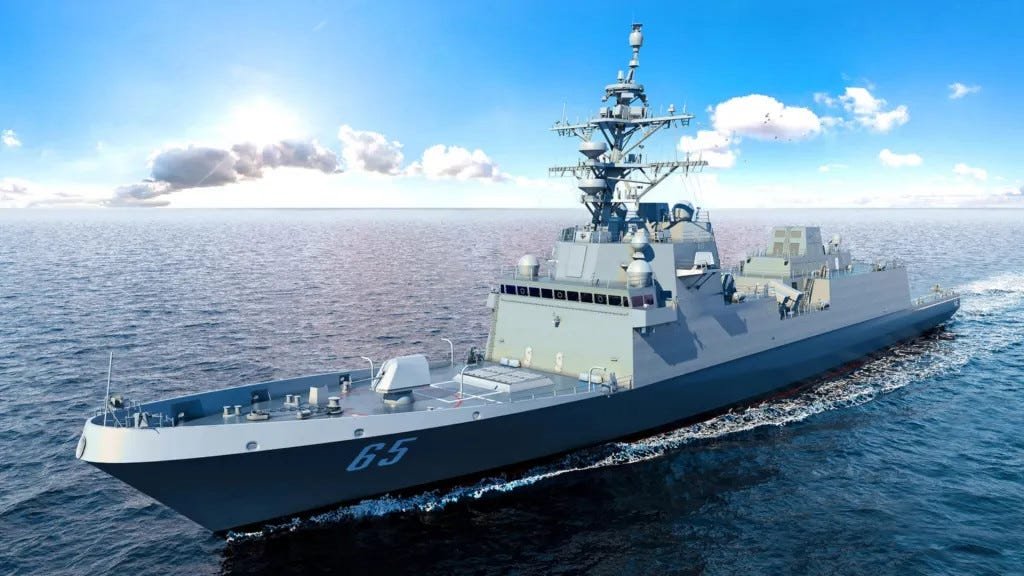
Remember, we must revisit the failures of the past in order that they shall not be repeated. Well, that’s the theory. Of all the disastrous series of failures this century to build a surface combatant, none were as unnecessary and avoidable as the failure of the Constellation Class FFG. Over six years ago, we found out that we were going to build a U.S. version of the Franco-Italian FREMM in a push to finally get a proper frigate into the fleet. I was ecstatic…but wary. Throughout the process, we had indications and warnings that the same institutional circus and its convoy of clown cars, which begat LCS, CG(X), and DDG-1000, had a hand on the wheel of what was then FFG(X). The primary warning was the shoehorned 57mm requirement that was put in there only as a way for the LCS builders to compete to…well…we all know the story. Going from 80/20 to 20/80 was simply sabotage. We knew that, but didn’t have the primary source information to really pin it down, just secondary indications. If it wasn’t rank incompetence, it was intentional. Yes, I know the bureaucracy ran with the brain of an Ottoman, the efficiency of a DMV, and a lust for diktat of a Soviet, but it could not have been set up to fail more than it was. SECNAV Phelan’s cancelling of the program was inevitable. We finally have some inside information from the builder of their side of the story. I’ll cover it in a minute and will end up with a bit of optimism, but if you will allow me—I need to rage just a little bit. Our fleet’s need for a frigate to replace the Oliver Hazard Perry Class was as clear as day. The Littoral Combat Ship (LCS) was a theory of an answer to a different question, so the blob tried to make the trusting believe we did not need a frigate just so they could get the funds for their personality driven kludge of bad theory, the LCS. A core of us knew that was wrong, but we lost the argument. We were not alone, but in the mid-00s there were not that many of us. Here on the CDR Salamander Front Porch, we were on the leading edge in calling out the catastrophic failure of the LCS concept and the need for a frigate NOW back in the first decade of this century. As we knew early on, the more of these that came into the fleet, the less people would be able to defend everything from the manning CONOPS to the tactical utility of the entire pair of classes. For the new folks, here was the Front Porch’s stand that I reviewed again last year. As a matter of fact, let’s look back at how I started an October of 2007 post. Let me beat that drum a little harder - license build a EuroFrigate NOW!!! Do it while we still have time - time to keep the Fleet numbers treading water and have enough shipyards open. A revolutionary project on PPT is just that - on PPT. An evolutionary project (see pre-WWII Cruiser development and the history of Carrier development as an example) results in ships pier-side and ships underway. Good officers have bought the line over this decade that LCS with all its toys will let them cover 10x more water than the old SPRUcans did - and do it better? ADS was to be one of the keys in doing this. We have put all our eggs in that gilded crap-basket of an LCS - thanks to Sid, we have the proof much of the oversold ASW capability increase portion has gone poof. With ADS gone we now have, well, an poorly configured, expensive, undermanned Corvette. The final form of Plan Salamander came together about 2010: Fast track a true multi-mission EuroFrigate design to be license built here for a run of no less than 12 and no more than 24 ships until a domestic design comes on line as the DDG replacement. NANSEN or ABSALOM would be a nice start. Not perfect - but good. The full execution of Plan Salamander to license build a EuroFrigate was not successful, as the cancelling of the Constellation Class proved. Why? That is best explained by a bi-partisan panel of political appointees and retired senior leadership that we will never see. I’ll save you the trouble. The base problem was that those same people given stewardship over the future of the surface force, faced with cascading failures, never sent the right people with a pair of pliers in one hand and a blowtorch in another over to NAVSEA and OPNAV. No. We continue to let the Janissaries run things as before. Why? That is a story that needs to be told. I have my theories, but perhaps for a different day. What did this look like on the industry end? In a refreshingly open interview by Howard Altman at TWZ with George Moutafis, CEO of Fincantieri Marine Group, we have a better view than before. When you know when you need something delivered and at what pace, then enable the right level of decision-making. Because otherwise – I don’t want to sound this the wrong way – but perfection sometimes is the enemy of more than good enough. Classic NAVSEA. A Good Idea Fairy with a 3,000 nm screw driver. The exact mindset that allowed the LCS CONOPS to get past the PPT, created VLS cells on LPD-17 that were never filled, built an entire class of ships based on a gun with unaffordable, bespoke ammunition, and hobbled the FORD class with cascading technology risk forced on hull-1. I think the initial and envisioned approach was a healthy one. Had we kept on track with what was, back then, the principles that led to the selection – but also how it was originally set up – we probably would have kept closer to the original design. And thus allowing [us] to be closer to the original schedule. And thus allowing [us] also to build the vessel that was desired, without delays or major changes. Correct. This is what we begged for. As we build our version of the already operational FREMM, if we want perfect—we can design its replacement—but take what we have now and displace water. But no. That would just underline the failure of those who begat LCS, DDG-1000 etc. Unlucky for us, the same institutions and, in some cases, the same people who were involved with LCS became involved with the Constellation Class.. …from the get-go, when the award was made, it was made because there was a review of the requirements, a review of the design, and a review of all the elements that led to recognition that the parent design possessed exactly the right features to represent the path forward. So collectively, we had marched on that path. We might find ourselves in a different situation right now, but like I said, it’s one thing asking somebody to change their M.O. and adopt a new approach without fully empowering them or doing something drastic to signal that type of transformation. And it’s another where we said ‘we will try this new approach.’ But there was a lot of follow-through that was needed. Everybody has developed experiences in certain ways, and everybody – especially when you have folks that have been doing it for decades – has developed their own rules of thumb and approaches to dealing with certain situations. It’s not easy to pivot an entire structure to a new idea or a new approach. So like I said, probably it was the right idea, but a little bit ahead of its time. The man is the CEO of a company that has a lot of business with and coming from the U.S. Navy. He has to be careful. Read between the lines. It is all there. I’ll play around with the highlighting feature to let you know the parts that raise one of my eyebrows. At this point of the interview, there is a discussion that there is now some change in the process, and I assume the people, to avoid what we saw most of this century. Read the full article for the details, but here’s a hint. So I’m hopeful that this new approach of the PAE [Navy Portfolio Acquisition Executives] setup will be an enabler to adopt the lessons learned: of how to move fast, of how not to mess with a design especially when it’s meeting and exceeding requirements, of how to manage change – not in the rollout of a change, but in the decision-making of whether to adopt change or not. So a lot of those new ideas that they’ve been trying to apply are promising to that effect. Trust but verify. Like we’ve seen with the defenestration of DEI through DOW, a lot of people have just changed their job titles and the name on their door, but continue to brew their bad stew. We’ll see. Leave a comment Share This Substack is reader-supported. To receive new posts and support my work, consider becoming a free or paid subscriber. View the full article
- Yesterday
-
One of America’s most iconic warplanes went down Monday morning at a military base in the California desert, setting off a large fire visible from miles away and triggering an immediate emergency response. Edwards Air Force Base, the sprawling flight test installation located in the Mojave Desert roughly 160 km (100 miles) north of Los […]View the full article
-
A Cold War-era tank first fielded in 1965 is about to get a new brain, a new gun system, and a new purpose on one of the most dangerous battlefields in the world. Defense analyst Jeff, writing for Defense Archives on Monday, reported that a Cockerill spokesperson confirmed to him at Eurosatory 2026 in Paris […]View the full article
-
The vehicle that Finnish defense company Patria and German transmission manufacturer RENK Group unveiled at Eurosatory 2026 in Paris on Monday is designed to go where commanders decide it should go and do what they need it to do without putting a single soldier in harm’s way to make that happen, because nobody sits inside […]View the full article
-
Thirty-six tank-busting rounds, a 105mm cannon, three crew members, and a vehicle light enough to fly aboard an Airbus A400M military transport. That is what John Cockerill Defense and Arquus brought to Eurosatory 2026 in Paris when they pulled the covers off the FENRIS, a wheeled fire support vehicle designed to fill the gap that […]View the full article
-
A supersonic bomber that Russia uses to launch cruise missiles at Ukrainian cities came down in a field near the Siberian city of Svirsk on Monday, adding another hull to a list of losses that the Kremlin can ill afford and has no practical way to replenish. Russia’s Aerospace Forces confirmed that a Tu-22M3 long-range […]View the full article
-
Nobody has to be inside it, and that is entirely the point, because on today’s battlefield a crewed turret is a target and the soldier behind the gun is the first to die when it gets hit. At Eurosatory 2026, the defense trade show running this week in Paris, Germany’s Rheinmetall unveiled the CT-025 20, […]View the full article
-
Russia sank the original Henichesk in 2022, striking the minesweeper with cruise missiles launched from occupied Crimea while it was covering the withdrawal of special forces troops near the Kinburn Spit, and on Monday Ukraine got the name back in the only way that matters at sea: on the bow of a warship flying the […]View the full article
-
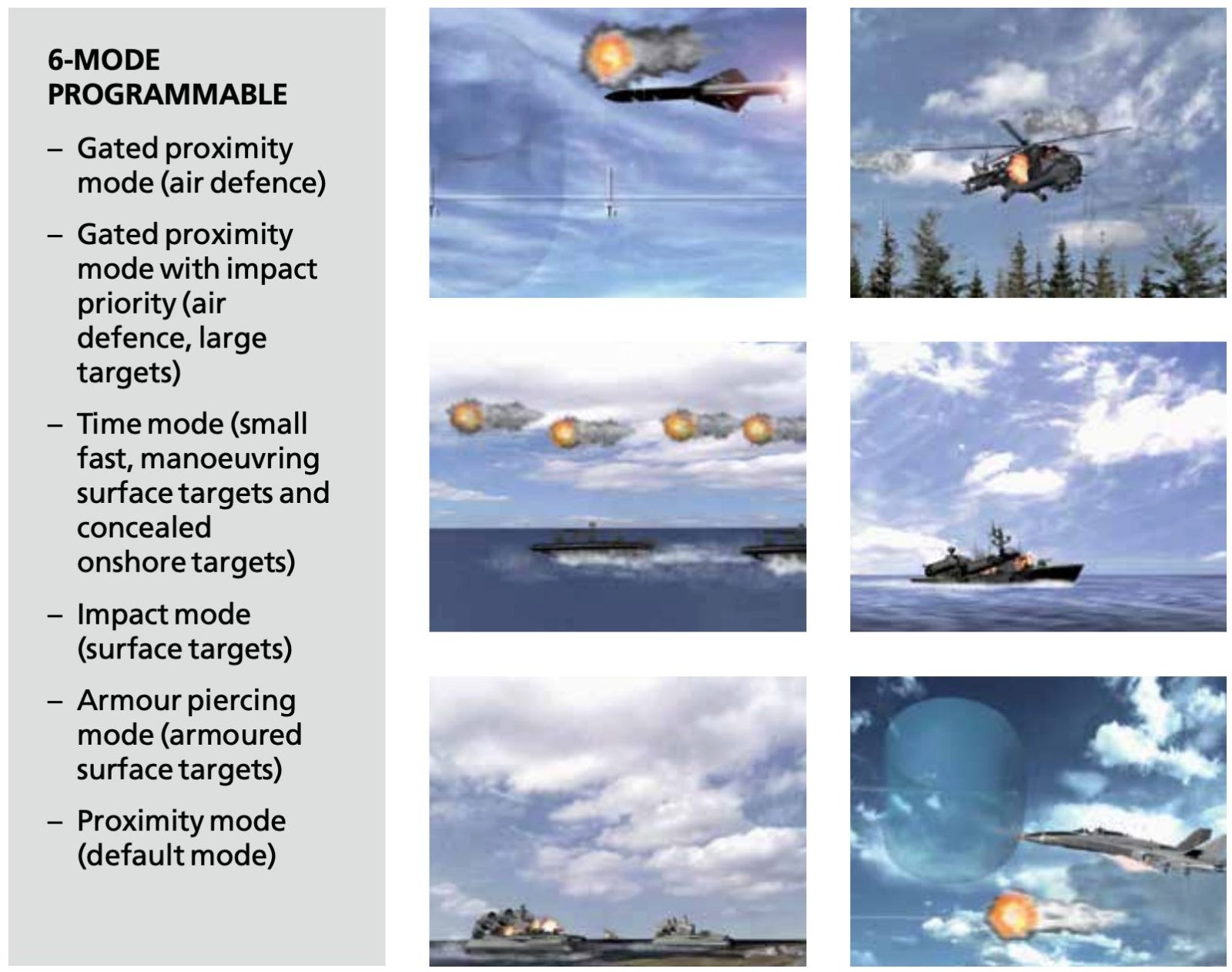
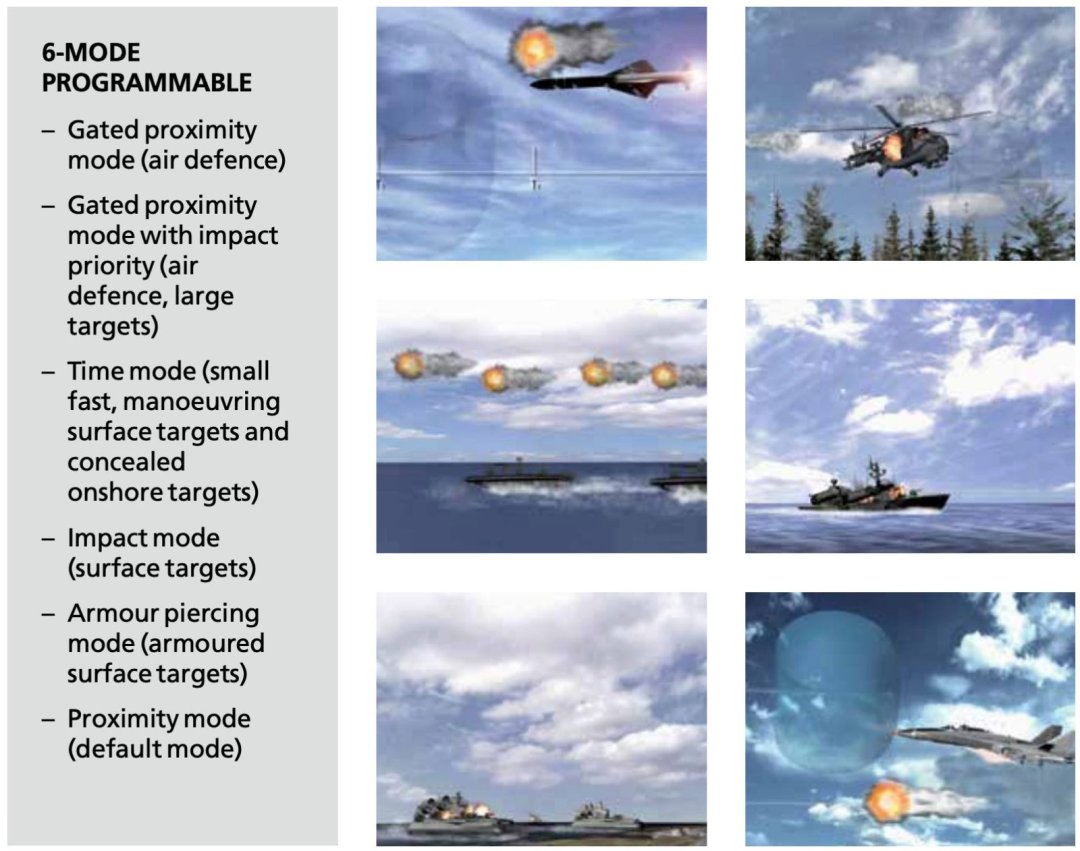
Back in the first week of May, we had the second edition in what has become a series about what options exist on the table to get additional weapons on ships: Yes, Reality Demands More Guns, Larger Guns, Everywhere. It was a follow-up to March’s Up-arm the Fleet? With What? A principal concern I have was outlined in a previous article in November 2024, Arm the Auxiliaries. If you are new to the issue, give the above a read and then come back. In addition to the primary concern, the secondary concern is our existing ships that are already armed, but do not have the best mix of weapons to address the new reality—the many cheap, unsophisticated, but deadly swarming threats now appearing both in the air and on the surface. For generations, the threat was always the few, exquisite, sophisticated, and fast. We built those, and built to defend against them. That threat is still there, but now we have new threats that cannot be ignored. Due to structural integrity, moment arms, survivability, and a whole host of engineering issues—you just can’t willy-nilly go about putting weapons all over the place. You do have options ready to go, but in the previous posts I failed to mention an old girl who is having quite a renaissance—and soon we will be seeing a lot more of. You naval history nerds are going to get all misty-eyed on me, but we’ll just have to work through it. Ladies and gentlemen, find a little topside space, and welcome onboard the Bofors 40 Mk4 Naval Gun. The low weight and compact Bofors 40 Mk4 gun system with its high rate of fire and ability to switch between optimized ammunition types – including the intelligent 40mm 3P all-target ammunition – provides high survivability and tactical freedom at all levels of conflict. … Control: Computer-controlled burst pattern On-mount muzzle velocity radar Remotely-operated with gyro-stabilised local control backup Firing: 6-mode programmable all-target ammunition Short firing sequences: 300 rounds per minute. Superb accuracy 100 rounds ready to fire with the possibility to shift between different types of ammunition Air burst capability for small boat defence That 6-mode capability is…something. The incoming Type 31 frigate for the Royal Navy, and a few export customers, has two of these in addition to its 57mm main mount (NB: really should be at least 76mm, but you know my biases). Look where these are located on this ship. It shows some flexibility on where these can be installed on other ships. There is so much confidence in the modern evolution of this almost century-old weapon that the Type 31 does not need a CIWS-SeaRam etc. Our friend Chuck covered it a bit over a year ago: The 40mm/70 has a long and successful history. The earlier 40mm/56 was the best medium caliber anti-aircraft gun of WWII. The air cooled single 40mm/56 mount was used on Coast Guard cutters post war including 125 foot Active class cutters and B-class 95 foot Cape Class patrol boats. Twin and quad water-cooled mounts were used on larger cutters e.g. 255s, 311s, 327s, and icebreakers. The US Navy moved from the 40mm to the 3″/50 at the end of WWII because it did not have room for a proximity fuse. Miniaturization now allows the 40mm to have the same sophisticated sort of 3P fuse available for the 57mm Mk110. Our ships need more defensive weapons, and due to their flexibility and utility, guns will be a major part of that. When the next Great Pacific War comes, we will put weapons anywhere we can on every kind of ship you can think of—all while cursing those who spent decades ignoring this requirement. This clearly should be in the mix. If we were smart, especially with our unarmed auxiliaries, we would not wait for war to start doing this. If you review what Navy Lookout and BAE Systems outline about its footprint requirements, you can get an idea about where we could put them. Turret Diameter: The base support ring is approximately 1,850 mm (72.8 inches) in diameter, which evenly distributes recoil forces. [1] Height: The above-deck mount has a low profile standing under 2 meters (78.7 inches) tall. [1] Deck Penetration: Because the gun stores up to 100 rounds inside the turret itself, it can function purely as a “bolt-on” system with zero deck penetration. If you choose to configure it with an under-deck penetration for a larger magazine, the penetration is only about 590 mm (23.2 inches). [1, 2, 3, 4] Weight: Weighs approximately 2,300 kg (5,100 lbs) excluding ammunition. A fully loaded mount with 100 ready-to-fire rounds weighs about 2,500 kg (5,500 lbs). [1, 2] To end things up, British Naval History crew at YouTube have a great summary. All it takes is for people to stop appreciating the problem and instead, take action. Leave a comment Share This Substack is reader-supported. To receive new posts and support my work, consider becoming a free or paid subscriber. View the full article
-
Shield AI, the San Diego-based defense technology company that has been supplying AI piloting software to U.S. military aircraft since 2019, is showcasing X-BAT at Eurosatory 2026. Eurosatory 2026, a major international defence and security exhibition held in Paris from June 15-19, gives Shield AI one of its most prominent European stages yet for a […]View the full article
- Last week
-
It has been a bit more than six years since then Commandant of the Marine Corps, General David Berger, USMC, initiated what became known as Force Design 2030 (now just known as Force Design). What followed was a controversial change to the structure of the United States Marine Corps intended to address the challenge posed by the People's Republic of China in the western Pacific. Now more than halfway to the original 2030 target, and informed by events from Ukraine and Southwest Asia since 2020, both long-standing critics of the design and other voices are readdressing the changes—and the critique—to see if it remains the right path. Joining the Midrats Podcast this Sunday from 5-6 PM Eastern will be General Anthony Zinni, USMC (Ret.). You can listen live at this link. If you can’t catch us live or are reading this after the show, reload the substack page later Sunday night for the uploaded podcast audio. General Zinni’s record of 35 years of service in uniform covers the breadth of service from the Vietnam War to his tour as Commander of U.S. Central Command (CENTCOM) from 1997 to 2000. Following his retirement from active duty, General Zinni continued to serve in senior diplomatic roles, including as the U.S. Special Envoy to Israel and the Palestinian Authority (2001–2003) and later as Special Envoy to Qatar (2017–2019). He is the author of several books, including the New York Times bestsellers Battle Ready (with Tom Clancy) and The Battle for Peace, as well as Leading the Charge and Before the First Shots Are Fired. Additionally, he continues working in academic positions and as a speaker on geopolitics, ethical leadership, and America’s role in the world. Leave a comment Share This Substack is reader-supported. To receive new posts and support my work, consider becoming a free or paid subscriber. View the full article
-
Somewhere in a desert exercise or an Arctic field camp, a U.S. Navy microbiologist or hospital corpsman can now pull out a portable DNA sequencer, run a sample, and identify harmful pathogens in less than 30 minutes and provide data that can help detect unknown or potentially genetically modified biological threats. The U.S. Naval Research […]View the full article
-
Flying a military helicopter in combat means managing a constant stream of radio chatter from multiple sources simultaneously, often while navigating at low altitude, coordinating with other aircraft, and making time-sensitive tactical decisions. For decades, U.S. Army aviation pilots have handled all of that through a single mono audio channel in their headsets, meaning every […]View the full article
-
Michigan National Guard soldiers loaded a HIMARS rocket artillery launcher onto a C-130J transport aircraft in Michigan and flew it more than 3,200 km (2,000 miles) to the California desert, where they executed simulated precision strikes before extracting, completing a long-range joint Army-Air National Guard HIRAIN training event as part of the Army’s premier combat […]View the full article
-
A nuclear-powered attack submarine completed its scheduled maintenance period at Pearl Harbor Naval Shipyard nearly a month ahead of schedule, handing the U.S. Pacific Fleet a combat-ready boat 29 days earlier than planned at a moment when undersea readiness in the Indo-Pacific has become one of the Navy’s most closely watched metrics. USS Colorado, a […]View the full article