All Activity
- Today
-
The F-35 Joint Program Office is preparing to modify the fighter’s In-Line File Encryption Device software to support government-mandated quantum-resistant algorithms, according to a presolicitation notice published on May 6, 2026. The notice, issued through Naval Air Systems Command, signals that the F-35 program is beginning the process of hardening one of the aircraft’s core […]View the full article
-
Ukraine has doubled its strikes on Russian oil infrastructure and is keeping up that pace into May, targeting refineries, export terminals, Baltic Sea ports, and sanctioned tankers in what analysts at ACLED now describe as a sustained campaign rather than a temporary escalation — one calculated to drain the revenue Russia is drawing from a […]View the full article
-
DARPA flew a hybrid-electric unmanned experimental aircraft at Edwards Air Force Base in April 2026, marking the first flight milestone for a propulsion architecture the agency believes could fundamentally change how military aircraft are designed and what they can do. The aircraft, designated XRQ-73, was developed through DARPA’s Series Hybrid Electric Propulsion AiRcraft Demonstration program, […]View the full article
-
Otto Aerospace has completed a flight-test campaign for an unmanned aircraft built around laminar-flow aerodynamics, validating in actual flight the drag-reduction performance the company has been modeling for years and generating data with direct implications for long-endurance drone design. The tests were conducted at Spaceport America in New Mexico, within White Sands Missile Range airspace, […]View the full article
-
One of the great things about writing for so long on the maritime beat—2004 in my case—is that I’ve had the chance to travel along this path with other people who have been in the game as long or longer than I have. In the November 2007 issue of The Atlantic, Robert D. Kaplan published an essay, America's Elegant Decline. I first mentioned it ten months after its publication while I was in Afghanistan, and then only briefly. It was more or less taken aboard as background info. Fifteen years after its publication, I revisited its points and covered some of it in detail. It says something for Kaplan that a decade and a half later, it still popped into my nogg’n for consideration. You can read that if you wish. No reason to rehash my points on it again. There are plenty of things that I disagree with Robert Kaplan about, but he always gives me a reason to ponder a thing or two, and he has a good eye and I think makes a better than honest effort to see where things are with a long-time-constant. On May 1st, he wrote an article, this time for NYT, titled “The Tragic Decline of the American Navy” that, in a way, is a companion piece to the almost 19 year old, America’s Elegant Decline article. An interesting side note: when it first came out, if you linked to it on X, the title came out, “America No Longer Rules the Waves.” I guess they decided to downshift it a bit...because as we’ve seen the last few years around the Arabian Peninsula and Eastern Mediterranean—in spite of all our challenges—in the land of the blind, the one-eyed man is king. I won’t do a full fisking, but enough people over the weekend asked for my thoughts that it would be rude if I didn’t pull out a few pull quotes for discussion. As Mahan wrote, “a peaceful, gain-loving nation” like the United States “is not farsighted, and farsightedness is needed for adequate military preparation.” You can rarely go wrong quoting Mahan, and this essence of the American mind remains in place…but I would argue that relatively speaking, this no longer holds. Yes, as we discuss often here, this issue remains, but it is but a shadow compared to the rapid decline of farsightedness we have seen among our European allies in their domestic, foreign, and defense policies over the last few decades. While they mostly dither and decay, there is vibrancy and forward thinking budding in, of all places, the Arabian Peninsula and more reliably, the ring of western Pacific nations. One of the cornerstones of my elevator speech regulars here have heard over and over (as only when you are sick of saying something will people finally start to listen), is that the U.S. is a maritime and aerospace power. That is also our comparative advantage…a fact that the events of the last few years have only underlined. That said, there are centers of power in our nation who not only refuse to see and act on that, they seem determined to weaken and dilute this foundational characteristic of our nation’s military power. The U.S. Navy is in decline relative to its own history and to the growth of the Chinese Navy, and has surrendered the control of the world’s vital choke points that it had at the beginning of the 21st century. The South China Sea, through which up to 40 percent of global maritime trade passes, in addition to oil and natural gas, is now dominated by China. The Strait of Bab-el-Mandeb, the crucial transit point out of the Red Sea, is harassed by the Yemen-based Shiite Houthis. Now we can add the Strait of Hormuz to the list. Just 21 nautical miles wide at its narrowest, the strait offers oil tankers and other large vessels only a limited path through. Iran’s Islamic revolutionary regime, aided by a coastline of mountains and coves, has managed to effectively shut down the waterway with drones, speedboats and mines. American warships may be able to enforce a blockade, but the Navy still can’t open the Strait. And even then, this concentration of U.S. ships in the region is robbing the Navy of assets it should be using to patrol and project power in the Pacific. Whereas in the past the United States could cover all its bases or choke points, now in an age of gradual decline it has to make choices. Two points need to be made here: There is no military force, or combination of military forces, that can counter the threats to the free flow of goods at market prices through international straits other than the U.S. and her Navy. This was proved again. Both Hormuz and Bab-el-Mandeb are threatened by the aggressive stance of the Islamic Republic of Iran and her proxies in her drive against the entire globe. Both parties are in a much degraded state than they were three years ago, when they were waxing in their power—and Iran’s march to nuclear weapons was unimpeded. That has changed drastically, and they are weakened only through the power of the U.S. and Israel. China is concerned with the Western Pacific. The South China Sea is not being ignored, but is being dealt with in a low-risk manner as possible—as everyone waits for a super-typhoon to fix the problem. In any event, the time to nip that problem in the bud was during the second Obama administration when the U.S. was leading from behind and appreciating the problem when not monitoring the situation. Benchmarking a few centuries of best practices, China saw the weakness, took advantage of it, and simply changed the facts on the ground, or sea as it were. If I were in a PRC planning cell, I’d advise doing the same exact thing. Once it was done once unchallenged effectively, I’d advise doing so on an industrial scale. That isn’t 3D chess thinking, that is checkers. Talk to the Obama natsec team. The global elite at watering holes like Davos and Bilderberg could never have prospered without the U.S. Navy, even if members of this elite are unaware of the fact. Though we live in the jet age, as much as 80 percent to 90 percent of global trade by tonnage is transported by water. That means the seas have to be relatively safe, especially around places such as Hormuz. The recent struggles of Dubai, an icon of globalization, demonstrates just how fragile our world is and always has been. Nice swipe of the Davos crowd. Never before have so many been so wrong about things so important—intentionally. Moreover, as I learned as a teacher at the U.S. Naval Academy during the Iraq and Afghanistan wars, it was the navies of China and India that had become avid followers of Mahan. His ideas languished somewhat at Annapolis, despite there being a building named after him. While the role of the U.S. Navy was, by then, already publicly diminished, Beijing and New Delhi were concentrating on naval expansion and warfighting. To compensate for its stagnating number of warships, the U.S. Navy was intent on partnering with allied navies as a means to mask its own relative decline. As we have chronicled here, this is no surprise. I would encourage everyone to review—and you can get the documents if you ask for them—the hiring practices and selection criteria of historians hired at USNA, NHHC, and NWC in the decade from 2014 to 2024…but especially the worst years 2018-2022. People are policy. You get what you hire. What is retained, blooms again. We’ll touch on that a bit more tomorrow, but let’s get back to Kaplan. In November 2007, in The Atlantic magazine, I warned of the Navy’s “elegant decline.” I emphasized that the number of hulls in the water would eventually be more important than the number of boots on the ground. But naval power was the furthest thing from people’s minds amid all the fevered discussions about counterinsurgency in Iraq and Afghanistan and how to reverse the downward trajectory of our fortunes in the chaotic deserts of the greater Middle East. Yes, but that critique is incomplete. What was needed at that time was a CNO who was willing to argue the long-term requirements in the face of short-term contingencies. If you want to see patient-zero, look at Admiral Mike Mullen, USN (Ret.), CNO from 2004-2007 and picked an admiralty in his own image that haunted the Navy for the next decade. I mean, Mullen pushed the “1,000 Ship Navy” cope, and his hand-selected successor Admiral Roughead extended the concept to include—no you can’t make this stuff up—NGOs. The most damaging CNO of this century to our Navy…and we’re naming a DDG after him. Amazing. Keep in mind that as a fleet stagnates, quantity increasingly equals quality, since a warship cannot be in two places at once. The U.S. buildup near the Strait of Hormuz hurts our deterrence against China in the South China Sea and near Taiwan. And this is to say nothing about our current long deployments that have led to maintenance problems and put undue stress on crews and their families. The Gerald R. Ford, an aircraft carrier deployed in the Middle East with a crew of over 4,500, has been at sea for 10 months now, a post-Cold War record. Correct. We do not have a large enough Navy…or enough carriers. We are an almost11-CVN navy in a 15-CVN world. Mahan was born in 1840 at West Point, the son of a professor at the United States Military Academy. His middle name, Thayer, honors the “father of the military academy,” Sylvanus Thayer, who brought the institution up to modern standards. His great, burgeoning Navy may sound like a warmonger’s dream. But Mahan was a realist. He wanted a great fleet for a purpose, because he believed in America’s spiritual mission. What kind of world do we want to live in? A world united by democracies that uphold a certain standard of human rights is incompatible with a weak Navy. That’s because a stable, humane world requires economic prosperity. That, in turn, requires relatively unimpeded intercontinental trade and commerce. And that requires secure waterways. That last paragraph is superb. Outstanding. In some way, we should all try to fold that into our conversations with people who don’t have a grasp of this simple, but powerful, concept. This Substack is reader-supported. To receive new posts and support my work, consider becoming a free or paid subscriber. Share Leave a comment View the full article
-
ThinKom Solutions has won the U.S. Space Force’s “Fight Tonight” competition for 2026, beating out competing entries with a containerized satellite ground station designed to replace the kind of fixed dish antenna infrastructure that makes military communications vulnerable to detection and attack. Space Systems Command announced ThinKom as the overall winner on May 6, 2026, […]View the full article
-
Raytheon has landed its largest single order to date for the SharpSight surveillance radar, a 120-unit contract awarded by Blue Raven that the company says signals strong global demand for a system it is now ramping up to produce in bulk. The contract, announced by Raytheon (an RTX business), pairs the radar manufacturer with Blue […]View the full article
-
RENK Group AG recorded its highest-ever order intake for an opening quarter in company history, the German propulsion manufacturer announced on May 6, 2026, with approximately $657 million in new orders and a total backlog that has climbed to an all-time high of approximately $7.8 billion. The Augsburg-based company posted first quarter 2026 revenue of […]View the full article
-
EagleNXT has sold three eBee VISION unmanned aerial system kits to the U.S. Army’s 7th Army Training Command, the company announced on May 5, 2026, adding to a growing Army-wide adoption of the fixed-wing ISR platform that now totals 34 systems across six distinct organizations. The sale was facilitated by Dronivo, a German UAS integrator […]View the full article
-
Leonardo DRS opened 2026 with its strongest quarterly earnings performance in recent memory, reporting first quarter revenue of $846 million and net earnings of $62 million while raising its full-year guidance across every key financial metric, the Arlington, Virginia-based defense electronics company announced on May 5. Revenue grew 6% over the same period last year. […]View the full article
-
ARX Robotics is expanding its deployed fleet in Ukraine to five times its initial size, the European unmanned ground vehicle maker announced in May 2026, securing a new contract to supply several hundred additional GEREON uncrewed ground vehicles to Ukraine’s Defense Forces and cementing its position as the largest supplier of Western UGVs to Ukraine. […]View the full article
-
Russia announced missile tests at the Kura test range in Kamchatka scheduled from May 6 to 10, a window that brackets its Victory Day parade in Moscow and which analysts at Militarny are reading as a deliberate nuclear signaling move timed to deter any Ukrainian strike on Red Square. The announcement came from the Emergency […]View the full article
-
A Virginia-based counter-UAS training company has launched a program focused on the phase of a drone incident that most training programs ignore entirely: what to do after the drone is already on the ground. 38 Sierra announced Drone Incident Response Training, known as DIRT, on May 5, 2026, from Barboursville, Virginia, positioning it as a […]View the full article
-
Russia ignored Ukraine’s ceasefire initiative and launched a sustained overnight attack with drones and glide bombs within minutes of a silence regime taking effect, Ukrainian Foreign Minister Andriy Sybiha declared on May 6, calling Moscow’s parallel proposal for a May 9 ceasefire a political performance with no connection to genuine diplomacy. Sybiha posted the statement […]View the full article
- Yesterday
-
Dawned on me as I was about to send the scenario that I was running on my modified database, which has a number of updates that include the units and weapons involved. I'm in the middle of updating several countries (Japan, DPRK, ROK) in my database to represent post ~2000 and omit previous years. Will shift gears later this week and remodel the scenario with the current game version database. If I have the same problem, will advise and send. 👍
-
portman joined the community
-
Turkey’s ASELSAN unveiled two new unmanned naval systems at SAHA 2026 in Istanbul on May 5, expanding the country’s autonomous warfare portfolio into both underwater strike and surface vessel domains with platforms designed for swarm operations, covert missions, and asymmetric combat at sea. The company introduced the KILIÇ family of autonomous underwater strike systems and […]View the full article
-
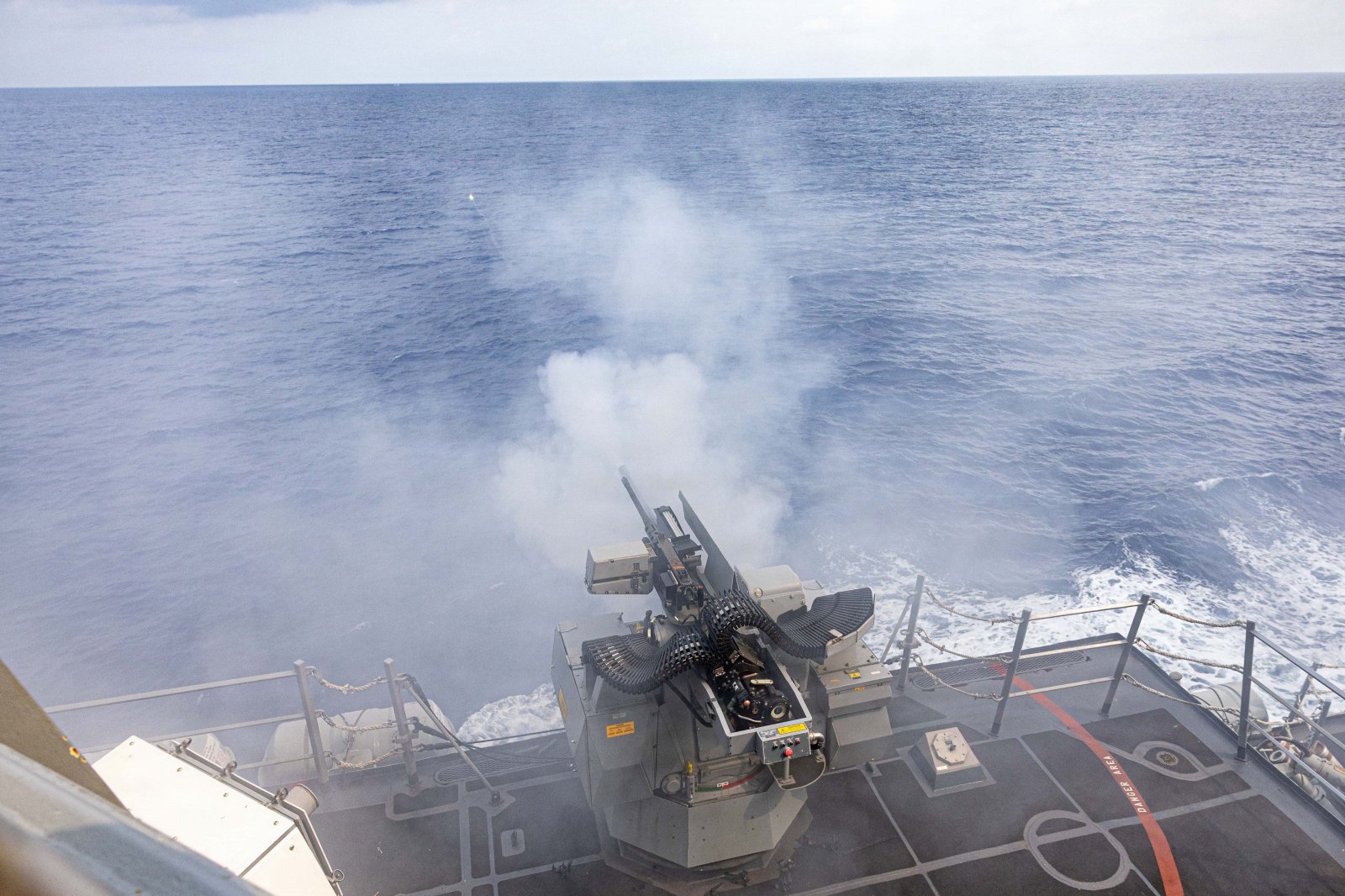
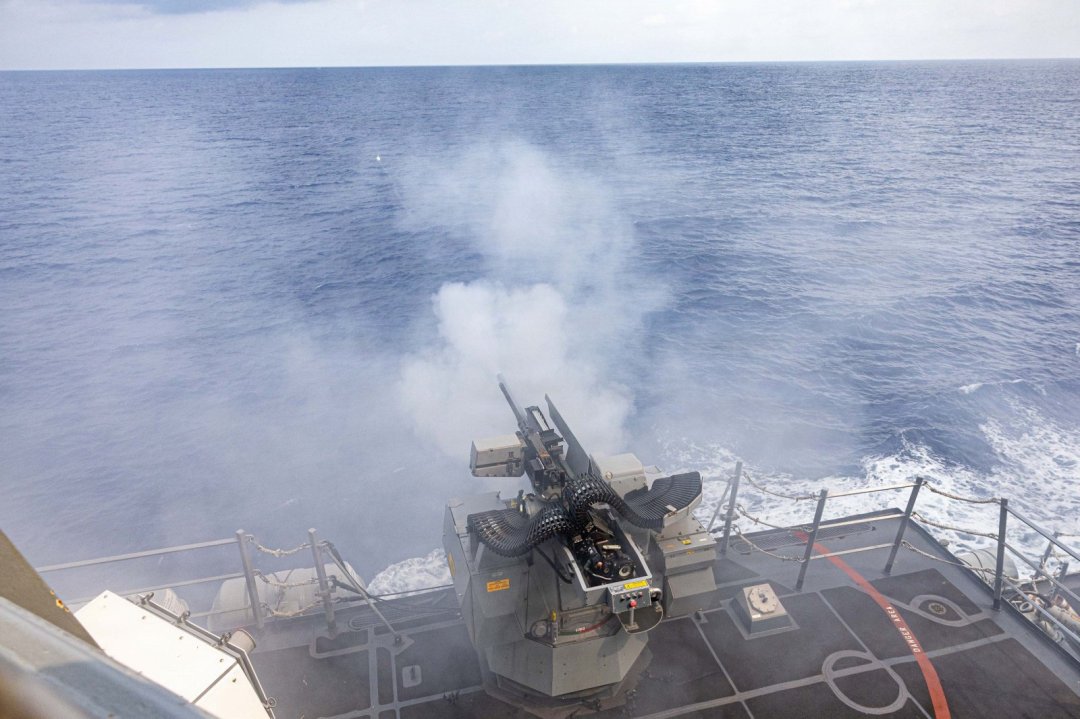
Let’s pick up the topic we spent some time on back in March. After the invention of gunpowder, every time a navy faces conflict after a long time at peace, one of the first things they realize they have to do is to get more guns, and larger caliber guns, on their ships as soon as possible. This reality today also applies to a side-branch, missiles, as well, but today let’s focus on the gun proof. In peace, the accountants and those who are willing to shift their personal career risk onto combat risk worn by other people will happily divest platforms of money and people hungry weapons to buy cheaper, smaller, none—or if they are feeling a little guilty, will “fit for but not with”. After a real war at sea happens, and the Naval War Gods of the Copybook Headings remind you of the folly of the peacetime accountants, you start to see weapons appearing on any surface that can support them. Make no mistake, in the next Great Pacific War we will be required to do with modern weapons to counter everything from ballistic missiles to low-and-slow drones what the USS Alaska (CB 1) had to do in 1945 against the threats of her day. That’s just the air threat. As the Ukrainians have reminded everyone at the Russians’ expense, you also need to be ready for the small and sometimes sneaky and slow threat on the surface. In the March post, we covered a few options of weapons we can buy to bolster the weapons options for our warships and auxiliaries that are already in production. We left one out. First, as pointed out by Trent Telenko, there is a pedigree here. First of all, let’s remember the M15 halftrack and its 37mm/.50 caliber combination mount ashore from WWII and Korea. As Virtual Bayonet pointed out, look at what we’re buying to take to sea. That pic is from USS Mustin (DDG 89) equipped with the new Mark 38 Mod 4. Where the Mod 0 through Mod 3 had a stand-alone 25mm gun, the Mod 4 has not just been up-gunned to a 30mm gun (with expanded ammo options including the Programmable Airburst Rounds that is perfect for counter-UAS and small boats), it threw in Ma-Deuce for fun and profit. The 30mm accepts standard NATO 30mm x 173mm NATO ammunition, including the whole constellation of of high-explosive (HE) and armor-piercing (AP) rounds available—just in case you have more interesting targets needing your attention. Just a superb evolutionary development. More. Faster. Also, up those numbers. Share Leave a comment This Substack is reader-supported. To receive new posts and support my work, consider becoming a free or paid subscriber. View the full article
-
U.S. Army soldiers from 2d Squadron, 2d Cavalry Regiment, launched the Hornet one-way strike drone at Pabradė Training Area in Lithuania on May 3, 2026, as the system continues to expand its footprint across American military exercises in Europe. The same week, Hornet drones were also deployed at Bemowo Piskie Training Area in Poland during […]View the full article
-
U.S. Army soldiers in Lithuania are training with an unmanned ground vehicle to evacuate casualties from the battlefield, as part of a live exercise that is simultaneously testing counter-drone systems, AI-enabled command networks, and robotic ground platforms across a month-long series of linked drills. Soldiers assigned to 2d Squadron, 2d Cavalry Regiment, practiced medical evacuation […]View the full article
-
During the U.S.-Philippines “Shoulder-to-Shoulder” exercise, allied forces used a simulated target ship near Bataan Island featuring a Chinese ZBD-05 amphibious assault vehicle as a dummy target for live-fire shooting. The exercise brought together approximately 800 personnel from the United States, the Philippines, and Japan for combined amphibious denial training on the coast of Laoag in […]View the full article
-
France has restarted production of its naval cruise missile after a production halt that began in 2021, according to reporting by Le Parisien. The missile in question is the MdCN, also known as the SCALP Naval, a cruise missile developed by MBDA from 2006 and operational since 2017. Production stopped after the completion of earlier […]View the full article
-
Turkey’s ROKETSAN unveiled the TAYFUN Block 4 ballistic missile at SAHA 2026 in Istanbul, displaying it publicly for the first time mounted on its 8×8 wheeled launcher. According to Clash Report’s coverage of the SAHA 2026 exhibition, the missile measures approximately 10 meters in length, weighs approximately 7.2 tons, and achieves speeds exceeding Mach 5, […]View the full article
-
Russia’s Rostec state defense corporation has announced a new vehicle-mounted counter-FPV drone jammer of its SERP anti-drone system family, specifically designed to protect mobile assets against FPV drone attacks. The new system, designated SERP-FPV, was developed by the Rosel holding company, a Rostec subsidiary focused on electronic warfare and radio electronics, according to the company’s […]View the full article
-
Peraton has landed a U.S. Navy contract worth up to $90.7 million to keep the MK 18 family of explosive ordnance disposal underwater drones operational across fleet commands at home and at key overseas locations, with work running from San Diego to Spain, Bahrain, and Okinawa. Naval Information Warfare Center Pacific awarded the cost-reimbursement contract […]View the full article
-
The B-52 bomber is getting new engines, and the program just cleared the last major technical hurdle before physical modification work begins on the first aircraft. The B-52J Commercial Engine Replacement Program held its Critical Design Review at Tinker Air Force Base, Oklahoma, a milestone that clears the path for Boeing to begin modifying the […]View the full article