All Activity
Past hour
-
qziobcuw joined the community
-
hknswpxy joined the community
Today
-
Russia’s state defense conglomerate Rostec has shown a mobile version of its Tsitadel anti-aircraft gun system, with the weapon and its sensors mounted on a truck chassis, the company said. Until now, Tsitadel had been fielded as a stationary system designed to guard fixed sites against drones. “The combat module, as well as the radar […]View the full article
-
Russia’s Defense Ministry has released footage of a Mi-28NM attack helicopter firing a small, low-cost cruise missile during combat operations in Ukraine. The missile appears to be either the S8000 Banderol or the closely related Dan-T, two jet-powered weapons that look alike and have been described both as drones and as cruise missiles. The video […]View the full article
-
crbgoqrx joined the community
-
kkbnroam joined the community
-
drbhvrtw joined the community
-
The U.S. Air Force is asking Congress for $4.25 billion in its fiscal 2027 budget to buy critical spare parts for its bombers, tankers, fighters and trainers, after its own figures showed that only eight of 24 measured aircraft fleets meet supply readiness standards. The request, set out in the service’s Working Capital Fund budget […]View the full article
-
The Defense Logistics Agency plans to buy a hydraulic cylinder assembly for the U.S. Army’s CH-47 Chinook helicopter only from Boeing because the government does not have the technical data it needs to let anyone else compete, the latest example of the data gap the Pentagon’s right-to-repair push is meant to close. DLA Aviation at […]View the full article
-
qxqrsnrp joined the community
-
The U.S. Army has awarded Amentum Services a $609 million contract to supply at least 500 full-time-equivalent contract workers to keep its depots running, the U.S. Department of War announced on Nov. 5. The firm-fixed-price contract, W911RQ-27-C-A004, lists Texarkana, Texas, home of Red River Army Depot, as the place of performance and runs through Nov. […]View the full article
-
The U.S. Navy has exercised an $11.3 million option with Integer Technologies to keep developing software that maps the underwater soundscape for submarines and undersea drones, the U.S. Department of War announced on Nov. 5. The Office of Naval Research awarded the modification, P00002 to contract N0001426C2208, for an effort called Operationalizing Marine Acoustics for […]View the full article
-
The U.S. Army has awarded 11 companies places on a contract worth up to $4.17 billion to design, build and commission new facilities at its government-owned, contractor-operated ammunition plants, the U.S. Department of War announced on Nov. 4. The firm-fixed-price contract runs through Nov. 4, 2031, and the companies will compete for each task order […]View the full article
-
iaqtmjym joined the community
-
uplgitty joined the community
-
hzadjelg joined the community
-
dekgwluq joined the community
Yesterday
-
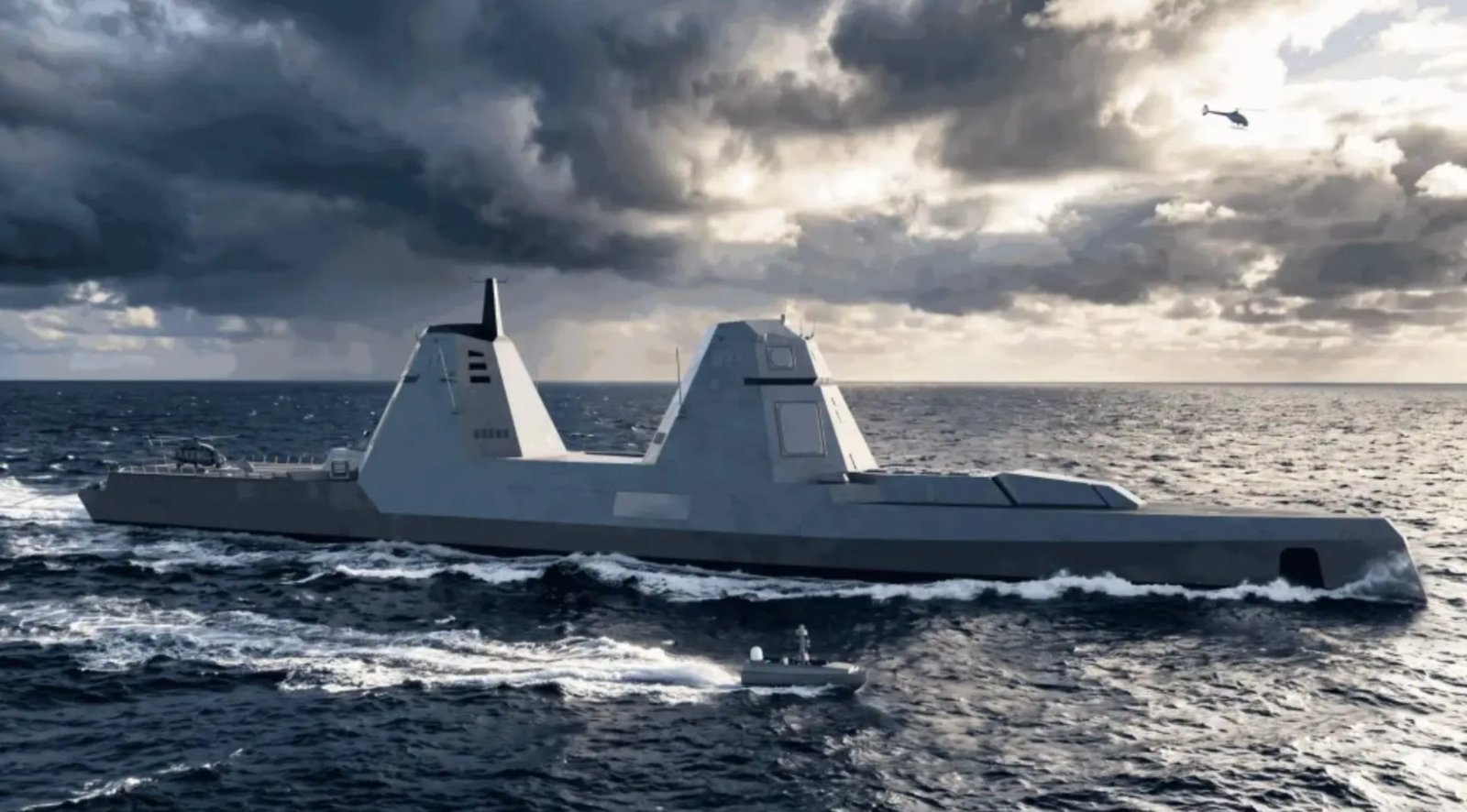
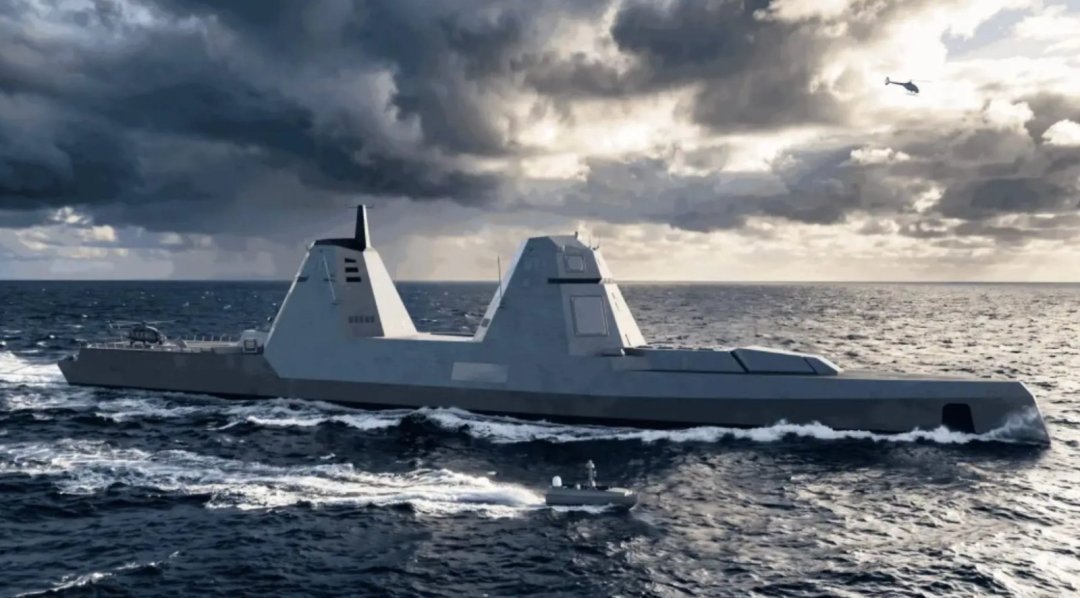
Today post is, in a fashion, a follow-on to yesterday’s post on what will probably be the never-was-has-been BBGN—and what we need to build should this no longer be an option. That being said, there is a long-standing requirement for a large surface combatant—conventional or nuclear—for decades. A big ship brings things to the fight in useful mass that smaller ships can provide only in drips: Capacity: more weapons for more warfare areas to sustain combat over a longer period Capability: large missiles with range and impact downrange require large displacement Power: radar, lasers, railguns take power And no, “drones can do this” is not the answer. They are adjuncts and additions to, not substitutes for manned platforms. The experience of the last few years in the Israeli littoral, the Red Sea, and the seas off the Strait of Hormuz has demonstrated the value of large magazines, superior sensors, and station-keeping that large surface combatants can provide better than any other platform. It also demonstrated that if you need to project power ashore or defend against ballistic missiles, nothing is more capable or survivable than a properly equipped surface vessel. More and more nations are realizing this fact. Some, like Japan, figured it out and acted on it early. All they need to do is find the money to build them. If BBGN is not to see the light of day, then let’s look at two existing ‘large frigates/destroyers’—that are actually cruisers—already at sea; one under construction; and proposals from three other nations waiting to cut steel. The ProposalsSome of these may never displace water, but the thinking behind them—and the commonality of mission—leaves an impression. From France, we have a proposal for the rail-gun armed, drone-focused SCX26. Just next door, the Germans are pondering the F127. Heading south, Italy’s DD(X) seems to fit the bill. Under ConstructionAs we’ve discussed before, Japan has the yet-to-be-properly-named ASEV under construction. At SeaOf course, we have our highly modified and updated late-Cold-War Arleigh Burke Flight III. And of course, we have the People’s Liberation Army Navy’s answer to the challenge, the Type 055. It isn’t a new design or concept any more than the Arleigh Burke, but it fits the category. Here they are for comparison’s. It used to be, back before the turn of the century, that the U.S. Navy led the world in warship development. People copied our designs, loved to buy our ships, steal our ideas, but that pretty much ended decades ago. Don’t get me wrong: we are still world-beating, mostly, in offensive and defensive weapons and sensors—but not in what carries them into battle. That can change…but we keep going to the same well expecting different results. Other nations seem to have the right ideas, but just don’t have the money to build substantial fleets. Balk. Stall. Pause. Reconsider…while the rest of the world generates the better ideas. We need to do better. This bit of animation is … fun. Enjoy. Share Leave a comment This Substack is reader-supported. To receive new posts and support my work, consider becoming a free or paid subscriber. View the full article
-
General Atomics Electromagnetic Systems will build parts for the hypersonic glide body used by the U.S. Army’s Dark Eagle and the U.S. Navy’s Conventional Prompt Strike weapons under a multiyear subcontract with Leidos that runs through 2031, the company said on Nov. 4. The San Diego-based company will produce precision-machined parts and cable assemblies for […]View the full article
-
A U.S. Marine Corps CH-53K King Stallion heavy-lift helicopter has airlifted a U.S. Navy MH-60S Seahawk off a mountainside in California’s Sierra Nevada, recovering the stranded helicopter undamaged so it can fly again, the U.S. Navy said. The CH-53K, from Marine Operational Test and Evaluation Squadron 1, carried the nearly 16,000-pound (7,260-kilogram) Seahawk on a […]View the full article
-
The U.S. Army has merged two of its sensor acquisition offices into a single organization responsible for everything from spy planes to perimeter sensors at bases, the service announced. Project Manager Terrestrial Sensors and Project Director Sensors Aerial Intelligence combined on Nov. 1 to form Project Manager Aerial-Terrestrial Surveillance and Reconnaissance, or PM ATSR. The […]View the full article
-
Slovenian company Valhalla Turrets has finished several days of live-fire testing of its ASGARD counter-drone turret armed with a Dillon Aero M134D 7.62 mm Gatling gun, firing thousands of rounds during the trials, the company said on social media. The Slovenian Armed Forces organized the tests, and the Slovenian Ministry of Defense is funding the […]View the full article
-
The U.S. Air Force has started market research for a new electromagnetic battle management capability, the Department of the Air Force Multidomain Adaptive Management and Battle Space Awareness, or DAF-MAMBA, which it describes as part of the Advanced Battle Management System. The notice, posted on Nov. 4 by the Air Force Life Cycle Management Center […]View the full article
-
The U.S. Air Force is looking for companies that can build more than 1,000 Extended Range Attack Munitions, the low-cost air-launched cruise missile developed for Ukraine’s F-16s, with deliveries starting no later than three months after a contract is signed and finishing within 15 months, according to a request for information the Air Force Life […]View the full article
-
The U.S. Navy has awarded Boeing a $119.7 million contract modification to buy nine more Increment 3 Block 2 retrofit kits for P-8A Poseidon maritime patrol aircraft, seven for the U.S. Navy and two for the Royal Australian Air Force, and to install four kits on U.S. Navy aircraft, the U.S. Department of War announced […]View the full article
Last week
-
Turkish drone maker Baykar has turned its Bayraktar TB2 combat drone into a flying carrier for small FPV attack drones, firing two of them at ground targets in a test released on Nov. 4. The TB2 carried 16 Skydagger first-person-view kamikaze drones, eight under each wing, and also served as a communications relay for the […]View the full article
-
Satellite imagery released by the Chinese commercial company MizarVision appears to show the USS Theodore Roosevelt (CVN 71) carrier strike group in the South China Sea on Nov. 4, as the carrier heads toward the Middle East. MizarVision said in a post that it identified the aircraft carrier along with the guided-missile cruiser USS Chosin […]View the full article
-
Norway’s air force has deployed NASAMS air defense sensors to Kirkenes, near the Russian border, to detect drones that drift off course into Norwegian airspace, the Norwegian Ministry of Defense said in a press release. The ministry is also sending more than 30 soldiers to reinforce the Garrison of Sør-Varanger, the army unit that guards […]View the full article
-
Satellite navigation interference hit almost the entire length of NATO’s eastern border on Nov. 3, according to a map of aircraft data published by the Italian flight-tracking project ItaMilRadar. The heaviest disruption ran in a nearly continuous band from the southern Baltic Sea through Lithuania, eastern Poland, Romania and Bulgaria to the western Black Sea. […]View the full article
-
Saronic has put a second Marauder autonomous ship in the water at its shipyard in Franklin, Louisiana, and the vessel is now running under its own power, company CEO Dino Mavrookas said in a post on Nov. 3. He said the second hull took 8% fewer labor hours to build than the first. “That’ll continue […]View the full article
-
U.S. Air Force C-17 Globemaster III transports have flown at least 16 missions into Israel’s Ovda Air Base since mid-October, most of them from Fort Bliss, Texas, the home of the U.S. Army’s air and missile defense forces, according to flight data compiled by open-source trackers. Three more C-17s were logged flying into Ali Al […]View the full article
-
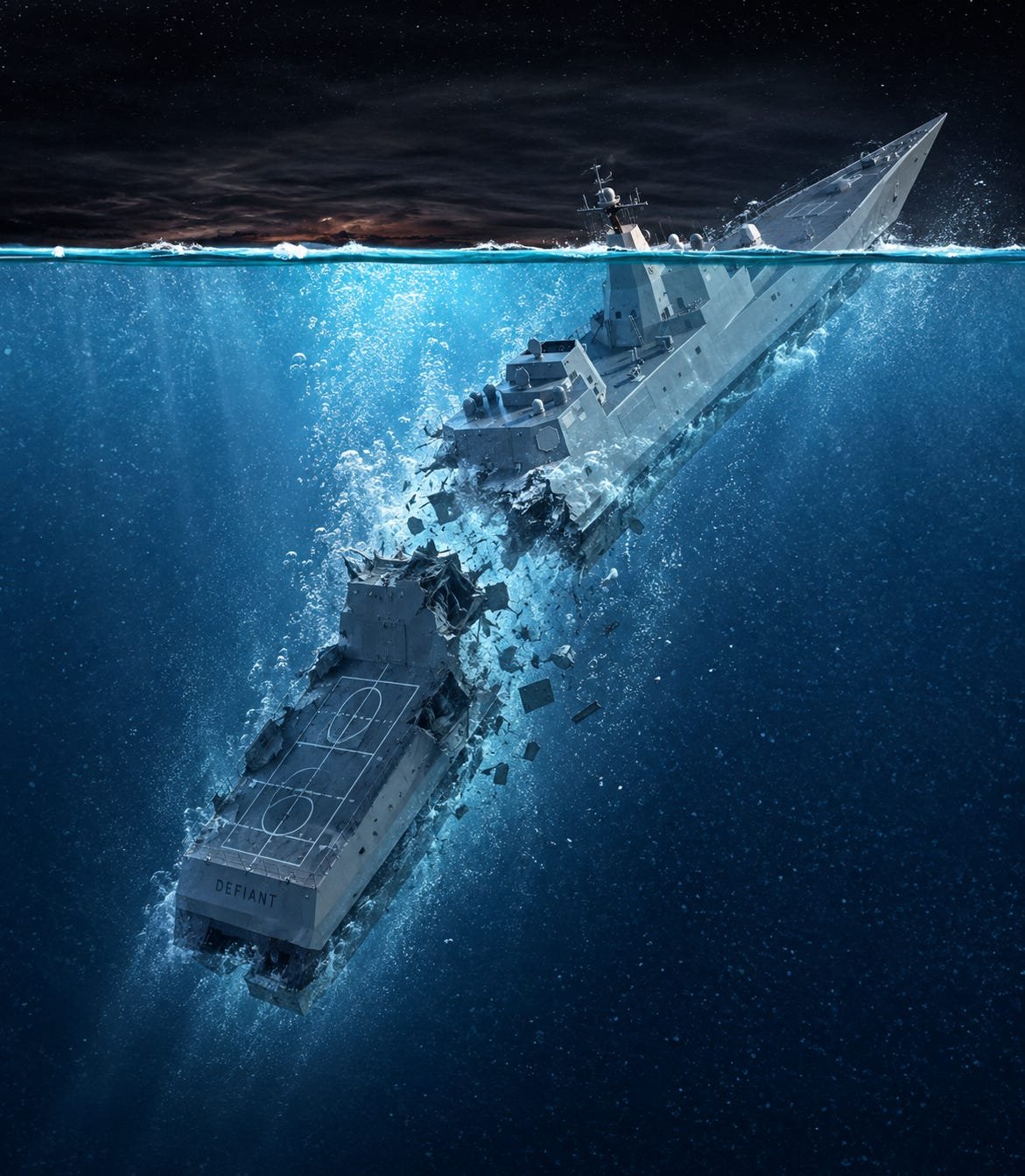
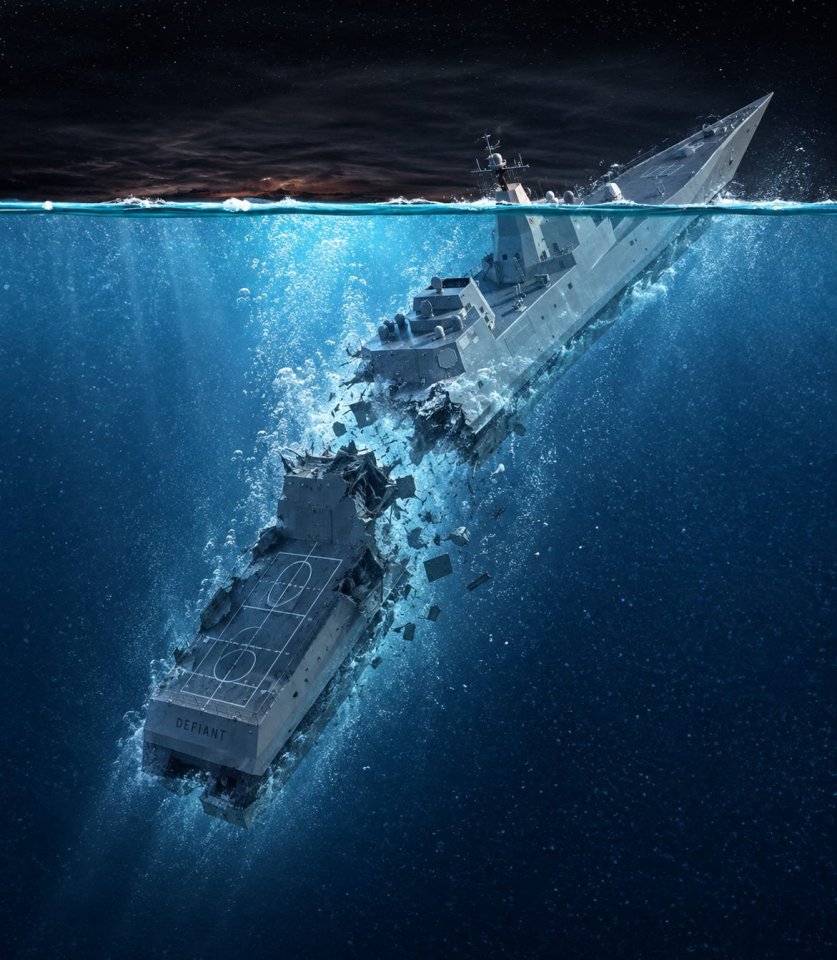
I stopped doing dedicated politics here a decade ago, and there are plenty of places you can go to get the play by play of the Democrats’ very good midterm. That round is out of the tube, so let’s start thinking about what this means for the Navy. I think it is time that we revisit my post from February of this year, We Need a Plan-B for the Battleship. I hate to say, “I told you so,” but… If you are really on team battleship, there are some critical vulnerabilities from the start that you need to accept. The Trump Class: this is the foundational error of what by all logic and tradition should be called the Defiant Class. At the start, this automatically makes 38% of the American public and their elected representatives dislike the entire project. In the greater Washington, DC metropolitan area, where our ruling class lives, 75% of voters supported Harris in the 2024 election. Calling a class of warship that will need bipartisan support, in both the Executive and Legislative branches of government through the length of the program, this poisons the program from the start. For an unnecessarily large percentage, you cannot even begin to argue the merits of the program, their ears and minds are closed to it. I’m not sure how you mitigate that unforced error at the start. Make no mistake: along a very broad front, (D) are going to go after anything with more than a passing connection to President Trump—one of the most expected and predictable outcomes of this election. They don’t have the razor-thin margins the (R) had the last couple of years, they have a bone in their teeth, and they have a mandate. It would be silly not to think that, with (D) controlling the purse strings in both houses of Congress, that they won’t go after one of the most Trump-branded items in the defense budget: BBGN. The President can propose whatever he wants, but Congress will decide where the money goes. Last year, DDG(X) was put out to pasture, and a full effort was put toward BBGN. We’ll see what the next Congress does, but I don’t think the smart money is betting on BBGN. So, what options are there except for the running seven-year joke here, building DDG-51 until the crack of doom Well, I presented the options last February. I’d recommend reading the whole post, but here’s what you’re looking for. So, we have your baseline DDG(X). Let’s call that Flight I a DDG that takes over the mission set of the Arleigh Burke DDG (PBUH). The Navy has envisaged the DDG(X) as a ship with (1) DDG-51 Flight III Aegis combat system elements; (2) more growth margin than the DDG-51 Flight III design, meaning more space, weight-carrying capacity, electrical power, and cooling capacity (aka SWAP-C) for accepting additional or higher-power equipment and weapons (including directed-energy weapons) over the ship’s service life; (3) an integrated power system (IPS); (4) reduced vulnerability due to reduced infrared, acoustic, and underwater electromagnetic signatures; (5) increased cruising range and time on station; and (6) increased weapon capacity. Without the BBG in play, we still need to fill the requirements of the BBG. I can already see requirements for three different flights of DDG(X). Flight II would be a CAG. Yes, a guided missile attack cruiser. Baseline Flight I with the addition of the DPM and substituting the 32 VLS forward for 12 CPS in what I assume will be G-VLS…unless, as I have heard rumored, you have to remove the 5” gun forward in order to have your CPS configured like in the Zumwalts with the 4 APM. If you can put 4 APM or 12 G-VLS in the DPM, then that still leaves you, what, 64 MK-41 VLS aft for SM-2/3/6, ASROC, etc? Rumor has it you can pack multiple PAC-3 missiles in the G-VLS as well, so mix and match? Sounds fun either way. Also, sorry about all the acronyms, but as a recidivist staff weenie, this is my happy place. Flight III would be your Air Warfare Commander CVN escort. It’s a CG. Baseline Flight I with the DPM full of G-VLS loaded with PAC-3 missiles, and expanded square footage to support afloat staff. In Sal’s world, in a fit of pique, I’d mandate that we build all three flights in parallel in three different yards. If, as we swag’d Monday, you can buy a bit more than three DDG(X) for each BBG…and let’s say 2.5 CG and CAG for each BBG…then you have a very solid Plan-B. If you really want to seal the deal, bring in the conversation about the intangible advantages of not so much “Distributed Lethality” but “Distributed Risk.” Most of the nightmares that come with the concentrated risk of the Arsenal Ship concept, are there with the BBG as well. I’m open to hearing what other positive directions we may have for our surface force with the (D) in power. It’s been a rough century so far regardless of who was in power. I’m not too concerned about air and submarine…they have challenging but modern programs moving forward. Don’t get me wrong, Arleigh Burke Flight III are great…but…there is only so much more we can do with that design. Well…we will see, won’t we? Pray for peace. Leave a comment Share This Substack is reader-supported. To receive new posts and support my work, consider becoming a free or paid subscriber. View the full article
-
France has ordered production of a large uncrewed combat submarine demonstrator for its navy, with first sea trials planned for 2028. The French defense procurement agency DGA and the Defense Innovation Agency signed the contract with Naval Group on Nov. 3, the French shipbuilder said in a press release. The demonstrator, called UCUV for Unmanned […]View the full article
-
U.S. Army soldiers on the southern border are training on the Army Multi-Purpose High Energy Laser, a vehicle-mounted 20-kilowatt laser that has already shot down cartel-linked drones, according to photos released by the Department of War. Troops from the 2nd Battalion, 327th Infantry Regiment, 101st Airborne Division, operated the system on an Infantry Squad Vehicle […]View the full article
-
Joint Task Force-Southern Border has deployed the Bumblebee Version 2, an updated light interceptor drone that destroys hostile drones by ramming them, for testing near the U.S.-Mexico border, according to photos and captions released by the U.S. military. The interceptors were staged near Chaparral, New Mexico, on Oct. 21, where service members and military contractors […]View the full article