All Activity
Today
-
Poland’s Ministry of National Defense said Wednesday that its armed forces maintain various air and missile defense capabilities to protect designated targets, including cities, pushing back against public criticism that Polish urban centers lack air defense coverage. The ministry did not name the source of the criticism directly, but the statement follows weeks of political […]View the full article
-
Israel struck the Abu al-Duhur military airbase in northwestern Syria’s Idlib province early Tuesday with eight airstrikes, an attack U.S. Ambassador to Türkiye Tom Barrack said carried real risk of triggering direct military confrontation between Israel, Türkiye and Syria. “The Turkish forces did not know that Israeli aircraft were making their way to this specific […]View the full article
-
Hanwha Defense USA has won a U.S. Army contract to deliver six prototype K9 Mobile Howitzers (MH) for the Army’s Mobile Tactical Cannon program, with an option for 12 more, the company announced Tuesday. It is Hanwha’s first major U.S. Army contract. The award follows a public campaign Hanwha has run for nearly a year […]View the full article
Yesterday
-
REGENT Craft’s autonomous Seaglider drone, Squire, took part in a 13-day military experimentation event called Silent Swarm in Michigan, testing electronic warfare payloads alongside uncrewed systems from across the U.S. military, the Rhode Island-based company announced Tuesday. Silent Swarm ran July 13 to 24 across Michigan’s Northern Lower Peninsula and the Alpena Combat Readiness Training […]View the full article
-
The U.S. Army has awarded Nightline Inc. a $12.8 million contract to supply commercial equivalent AN/PVS-14 night vision monoculars to Lithuania, according to a Department of War contract announcement. The Tennessee-based company will provide the devices along with extended warranties, accessories, test sets and tool sets. The award carries a total cumulative face value of […]View the full article
-
The U.S. Navy has awarded Textron Systems a $231.5 million contract modification to build two more Ship to Shore Connector hovercraft, according to a Department of War contract announcement. The modification adds two LCAC-100-class craft to an existing contract and is funded entirely through fiscal 2026 Navy shipbuilding and conversion funds. Textron will perform most […]View the full article
-
The U.S. Navy has awarded Lockheed Martin a $73.9 million contract modification to procure, test and deliver Indra Rigel radar electronic countermeasures systems for four Multi-Mission Surface Combatant ships being built for Saudi Arabia, according to a Department of War contract announcement. The award modifies an existing contract and will be funded entirely through Foreign […]View the full article
-
The U.S. Army has awarded Elroy Air a $46 million contract to develop an autonomous, hybrid-electric VTOL aircraft for modular cargo delivery, according to a Department of War contract announcement. The Phase III Small Business Innovation Research award covers development of a Group IV unmanned aircraft system, a Pentagon classification for larger drones weighing more […]View the full article
-
It is easy to forget how long the China Doves and the China Lobby—wait, I repeat myself—held absolute control of power and influence over the full spectrum of the American political nomenklatura. Bush-41 and Bush-43 were both supporters of a rising China. The Clinton Administration was LITERALLY the Coffee Klatch Era. Obama “welcomed China’s rise” … and everyone this century has been too distracted to slow the creeping influence and control of the People’s Republic of China (PRC) from the South China Sea to the Southwest Pacific. Only in the last decade has there been a real shift where the China Doves have lost the dominant position in most of the national security nomenklatura, but not totally. You can see it in the strangest places, and off-frequency messages from people, media figures, various institutions—and of course the usual leftists cadres—a strange mix of apologia for the PRC and in some cases, outright support. I’m not saying people are compromised, but it looks that way now and then. The PRC still has deep penetration in Congress, our economy, and academia. In the West, the U.S.A. has, more than others, woken up to the threat…but we are in the lead. The stragglers are the issue. Amongst many of our allies and friends, the PRC still has its full-spectrum campaign underway. In some places like Canada, it is even encouraged. Chinese economic and financial incentives are just too seductive and most Western political systems are even more immune to accountability than ours…and unquestionably are more opaque. Just like many of the self-loathing Left during the Cold War were more than happy to make excuses for and cuddle up to the Soviet Union, we are seeing that pattern again with the West’s self-loathing Left and the PRC. As discouraging as this can be to watch from a distance, you can see a pushback starting to grow. Slowly, mostly because of a combination of cocksure Wolf Warrior Diplomacy and simple ham-fisted bungling, the PRC’s actions have become simply too obvious for fair-minded patriots to ignore. As we saw in the U.S. starting over a decade ago, the strongest voices are starting to be heard from the wilderness about what the PRC is up to. Over in the United Kingdom, Ian Duncan Smith outlines their challenge well. The revelations in The Telegraph that China is accused of secretly funding pro-Palestine demonstrations in Britain – channelling funds to far-Left activist groups to sow chaos on our streets – should send a chill down the spine of every minister in Whitehall. Yet none of this is new. No one in the security establishment, or those of us in politics who have been warning about it, will be remotely astonished. For far too long, Western governments were lulled into a dangerous stupor by the siren song of the so-called “Golden Era” of relations with China. This Government hasn’t learnt either, thawing relations with Beijing in a desperate and naïve hope for growth. Beijing’s dangling of the money bag—not unlike the success the Russians have had with Germany—is hard for unserious and weak-of-character people in serious jobs to ignore. Too many policymakers convinced themselves that commercial integration would inevitably lead to political convergence. Instead, Beijing saw in our good faith an opportunity to deepen their infiltration of our institutions, manipulate our public square, and weaponise our open society against us. For totalitarian regimes, our freedoms are an existential challenge to their authority and a weakness to exploit. The potential secret funding of pro-Palestine demonstrations reflects a deliberate, methodical execution of a military doctrine that the Chinese state published a quarter of a century ago. I know the balance of the readers of CDR Salamander are familiar with this, but for those who are not, when you get done here, read up. In 1999, two senior officers in the People’s Liberation Army, Qiao Liang and Wang Xiangsui, authored a seminal text titled Unrestricted Warfare. Their thesis was simple yet radical: classical military conflict was no longer the primary means to defeat an adversary. Instead, warfare would be expanded across every conceivable domain of human activity – including political subversion and the exploitation of social division. As Liang and Xiangsui made crystal clear, modern conflict requires “using all means, including armed force or non-armed force, military and non-military, and lethal and non-lethal means to compel the enemy to accept one’s interests”. Qiao later summarised the core tenet of this total-war philosophy even more bluntly: “The first rule of unrestricted warfare is that there are no rules, with nothing forbidden.” Just look at the scale of China’s global cyber-attacks on Western nations. This doctrine accounts for exactly the kind of activity uncovered in these covert funding networks. By covertly backing fringe political groups, encouraging protests outside military sites like RAF bases, and amplifying divisive narratives that Western leaders are “bought”, Beijing aims to weaken our resolve and fracture our domestic peace. The PRC is doing this throughout the West and any other nation where they want access and influence. It is a full-spectrum attack—right out there in the open. Also, just look at how China has become the central power in the rise of the totalitarian states. Russia, for example, couldn’t have continued the war in Ukraine without Beijing’s support. It is believed the Chinese have also supported Iran’s IRGC, particularly in its supply of drones for Russia. And don’t forget China’s huge support for the brutal regime in Myanmar. On the civilian front, China is clearly attempting to undermine our markets. Heavily subsidised Chinese electric vehicles are pouring onto British roads. These are not merely cars; they are high-tech data hubs equipped with advanced sensors, capable of gathering vast troves of mapping data – and could potentially contain “kill switches” that could paralyse transport networks at the push of a button during a diplomatic crisis. Sadly, as the rest of Nato wakes up to the threat, Britain heads in a different direction – to “Project Kowtow”. Give the article a full read. Once you are done with that, are you up to speed on the PRC’s new embassy in London? Leave a comment Share This Substack is reader-supported. To receive new posts and support my work, consider becoming a free or paid subscriber. View the full article

-
Latvian unmanned systems manufacturer NEWT21 has completed an EU-funded project to move its FOG and RAY unmanned surface vehicles from prototype to production-ready status, the company announced on Tuesday. The project, formally titled “Modernisation of an Unmanned Surface Vehicle (USV) and Preparation of the Production Process,” carried the reference number 1.2.1.1/3/25/A/005. NEWT21 said the work […]View the full article
-
Australia and Japan have completed the first successful field trials of a jointly developed high-energy laser system, called Boobook, at test sites in South Australia, Australia’s Department of Defence announced Tuesday. The trials took place at the Cultana Training Area and the Defence Science and Technology Group’s Edinburgh facility. Boobook is the first co-development project […]View the full article
-
Marine Group Boat Works has delivered a new Range Support Vessel to the Naval Air Warfare Center Weapons Division for operations on the Point Mugu Sea Range off Southern California, the San Diego-based shipbuilder announced Monday. The aluminum vessel was built at MGBW’s Chula Vista, California, shipyard to support weapons testing and evaluation on the […]View the full article
-
Thirteen Democratic senators sent Defense Secretary Pete Hegseth a letter Monday demanding written answers about conditions aboard the USS Abraham Lincoln, whose deployment has stretched past 250 days with more than 200 of those days without a port call. The letter was led by Sens. Gary Peters and Elissa Slotkin, both Michigan Democrats, and signed […]View the full article
-
Japan’s Coast Guard confirmed a South Korean survey ship, the Tamhae 3, was conducting an unauthorized marine survey inside Japan’s exclusive economic zone west of the Takeshima islets on August 7, prompting formal protests from Tokyo, Japan’s Foreign Ministry and Coast Guard said. A Japan Coast Guard patrol vessel spotted the Tamhae 3 at around […]View the full article
Last week
-
Germany’s first F-35A, designated MG-01, has moved into Aircraft Final Finishes at Lockheed Martin’s Fort Worth, Texas, production facility, where it will receive paint and a stealth coating before continuing toward delivery to the Luftwaffe, the company said Monday. The aircraft entered final assembly in March, when its wing, forward, center and aft fuselage sections […]View the full article
-
Russia’s Northern Machine-Building Enterprise sent the nuclear-powered submarine Khabarovsk to sea for factory trials on August 17, the vessel’s first time underway since construction began in 2014, according to Russian defense-monitoring channels. The submarine, built under Project 09851 at the Sevmash shipyard in Severodvinsk, is designed to carry the Poseidon (NATO name: KANYON) nuclear-powered underwater […]View the full article
-
A Patriot air defense battery inside Ukraine has sat with empty launch tubes for weeks, its crew unable to fire because the country has nearly exhausted its stock of interceptor missiles, CNN reported after gaining rare access to the system. CNN was the first outlet allowed to visit an operational Patriot unit on Ukrainian territory, […]View the full article
-
The U.S. Army will evaluate the Hunter WOLF unmanned ground vehicle with the 82nd Airborne Division at Fort Polk, Louisiana, on August 20, the vehicle’s manufacturer, BLADE, formerly known as HDT, announced Monday. The event is a Transition in Contact exercise, in which soldiers operate a system in realistic field conditions to test how it […]View the full article
-
The U.S. Department of War has awarded NODA AI a $100 million contract to scale the company’s autonomous mission command software across the Joint Force, the Austin-based company announced Monday. The award builds on a smaller contract NODA won in July, when the department awarded the company $10 million to develop MAESTRO, orchestration software designed […]View the full article
-
Raytheon has won a $22.9 billion, seven-year contract to accelerate production of Tomahawk cruise missiles for the U.S. Navy, the RTX business announced Monday. The award was made under the Department of War’s Arsenal of Freedom initiative and follows framework agreements Raytheon signed with the department in February. Those earlier agreements set a target of […]View the full article
-
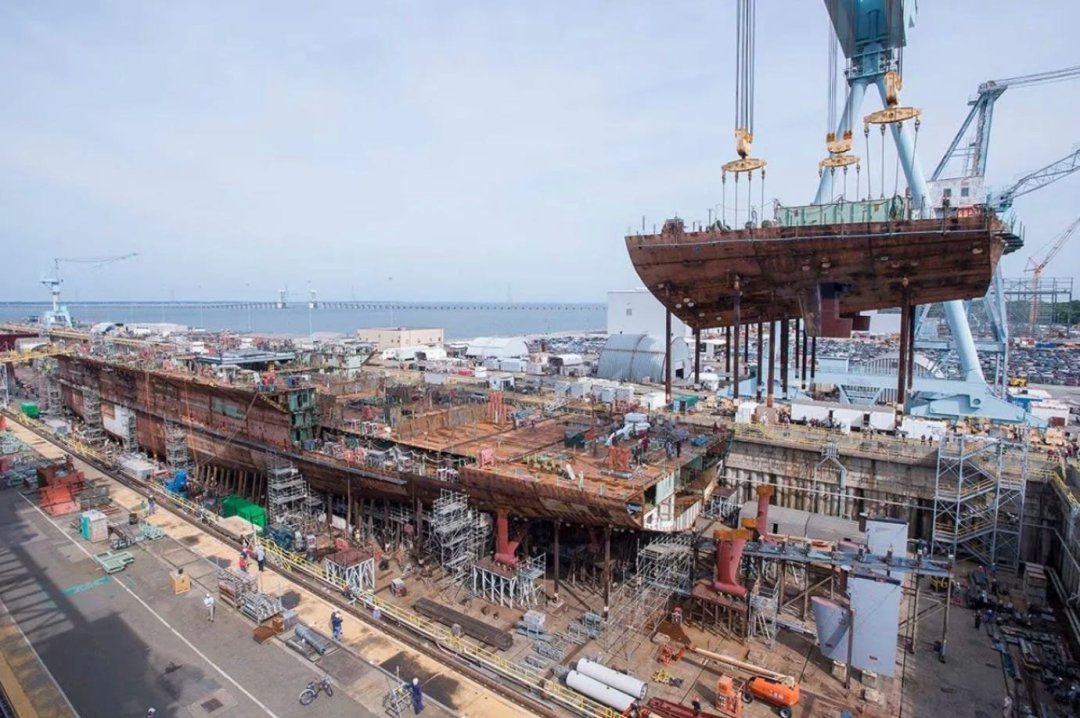
As most regulars here know, on the 13th, President Trump issued a National Security Presidential Memorandum (NSPM), which was known in previous administrations as a National Security Memorandum. Most are aware of it because almost immediately there was much gnashing of teeth, rending of clothes, and general knee-bent running about concerning the future USS Doris Miller (CVN 81) having its EMALS replaced with steam and returning to hydraulics over a lot of the problematic electrical motors used in various elevators, etc. We’ll return to that in a bit—and it is but a small fraction of the story—but let’s make sure everyone understands what an NSPM is. It operates with the authority of the president, much like an Executive Order, but it is less formal, does not require publication in the Federal Register and do not always need a formal legal justification printed with it. That being said, they achieve the same practical management goals within the government as executive orders and stay active until a new president changes or cancels them. In line with some of the foolishness we’ve seen over the last week about our aircraft carriers that we discussed on Sunday’s Midrats Podcast, this has become hyper-politicized to the point that the bad-faith actors you always find in election years are drowning out serious people critiquing or supporting the substance of the memorandum. Some of the argle-bargle we’ve had to deal with is from those who are acting like everything—though mostly the EMALS issue (almost like they all parrot the same things from the same people)—was done on a whim by the President ungrounded by anything but vibes. No, that isn’t how this works. This was proposed to the President as a solution to a problem much greater than if EMALS and all-electric is the most effective way to get carriers displacing water faster and putting planes in the air or not—and the people involved have access to information that has yet to make it in open source. You may disagree with one part or another, but if all you have to discuss is EMALS, then frankly, I’m not all that interested in listening to you. Everyone should keep in mind that nothing in this memorandum will benefit the Trump Administration. You cannot build a fleet in a few months or a POM cycle. That isn’t how it works. Never forget that by the time New Years 1943 came around, we were almost out of aircraft carriers to fight the Imperial Japanese Navy. In the fall of 1942, we even had to borrow one from the Royal Navy. By mid-1943 however, the fleet that won the war left the shipyards in waves that swamped Japan for the next two years. The Essex Class carriers and all the support ships that came with them did not show up right away. No. The naval buildup began seven years earlier in 1936, followed by even more money injected into the maritime industrial base in 1938, 1940, and then, of course, with the war that finally came to our shores at the end of 1941. We have wasted so many years in vanity. The best time to have fixed the shortfalls in our shipbuilding industrial base was 20 years ago. The second best time is now. To keep doing the same thing and expecting better results is, of course, insanity. If this team is correct, then the benefit will be seen somewhere between 2030 and 2035, closer to 2035. It would be hard to do worse than we’ve done the last decade. The memo leads with this basic understanding. …President Donald J. Trump signed a National Security Presidential Memorandum to fix critical long-term issues in Navy shipbuilding and ship repair programs and restore capacity and competition to the maritime industrial base. No quick fix. No over-promise and under-deliver. No magic beans. You can argue the details if you wish, but try to get the big picture. Now that I’ve set the table, let’s look at the full thing. You can get the full memorandum at this link. Get it, print off a copy or put it in a tab next to this post, and let’s dive in. I’ll quote the first bullet everyone is focused on in a bit, but know what is going on in the background. What problems could there be? PCU John F. Kennedy was supposed to be handed over to the US Navy a year ago, but two systems held up the delivery. These were “the Advanced Arresting Gear that catch aircraft as they land on the carrier and the Advanced Weapons Elevators that shuttle munitions from ammo storage deep in the ship to the aircraft on the flight deck”—both of which required further testing, USNI News reported. Seven of the future carrier’s 11 advanced elevators have been installed and are operational, and that is reportedly enough to enable the crew to access the weapon magazines and to continue with training and certification. It remains unclear if the remaining four AWEs will be operational when the carrier is delivered, but HII has another seven months to tackle the issues. The United States Navy had also sought to ensure that the future CVN-79 would not need to undergo the same level of post-delivery modifications that the USS Gerald R. Ford (CVN-78), the first ship in the class, required and still requires. The Ford still can’t accommodate the fifth-generation F-35C Lightning II. To head off the same problems aboard the Kennedy, Congress mandated that CVN-79 would be capable of embarking the Joint Strike Fighter on its maiden deployment. First in class issues are expected and should be fixed for follow-on classes of ships. FORD was commissioned on 22 JUL 2017. That was nine years ago, 3,313 days, to be exact. Of course, that means it is time to pull out my favorite measure of time: the time it took the U.S. to defeat Imperial Japan (and Nazi Germany) in WWII—1,364 days, AKA a “WorldWar”. CVN-78 was commissioned 2.42 WorldWars ago, and things are still not working. It still can’t handle our premier fighter, the F-35C (will it anytime soon?). Only some of the weapons elevators work…and I am sure there are more. This is why I am willing to give the benefit of the doubt for this, The Memorandum directs the Secretary of War to replace the Advanced Electromagnetic Aircraft Launch Systems and the Advanced Weapons Elevators with traditional steam and hydraulic systems during the construction of CVN-81. We have wasted the entire century at this point with failed programs that The Smartest People in the Room™ promised everyone would be transformational and bring the U.S. Navy to an unchallenged position of dominance, from LCS, DDG-1000, CG(X), FFG-62, and, of course, FORD. As a side note, this problem was predicted two decades ago. Give a listen to this Midrats Podcast with Tal Manvel from July of 2017. It is all there. We are years past running out of time. We need speed and timeliness in getting hulls in the water. The only detailed critique I have heard of the changes proposed for CVN-81 was giving up the launch rate. That is but one aspect of a larger system. I don’t think you can justify everything on that one figure. Does EMALS work? Sure, but it is worth it? If you are building a football team, are you bad if you don’t hire a wide receiver prospect who has the fastest 40 yard time you’ve ever seen? Everyone thinks you’re an idiot for not hiring the kid because…he has the fastest 40? What if he is 5’1 and 120 lbs? Pass on a 6’8” tight end? He happens to be missing one arm and is legally blind, but he’s 6’8”, right? I understand well the selling points of EMALS and going electric. It briefs well, but if we can’t make it work in 2.24 WorldWars and it is preventing us from getting functional carriers forward in a timely manner…then is the trade off worth it? It appears that a critical mass of people believe the trade off is not worth it and it is better to step back to something that works so aircraft carrier delivery doesn’t slide to the right too much. CVN-81 is going to take 15 years to be delivered. That isn’t acceptable. Aircraft carriers, like all ships, have a demographic problem. You cannot create fleets overnight, nor their airwings or support infrastructure. Ships are commissioned, get worn out, and have to be retired. If you want to grow a navy, you have to commission more ships than you decommission, just like if you want to grow your population, you have to have more births than deaths. CVN-71 through CVN-75 were all commissioned two to three years apart from 1986 to 1998. They reach the 50 year retirement point in 2036. If we are not commissioning a carrier every three years by that point, we will slip to 10 and probably 9. We already know that we are an “11” carrier navy in a 15 carrier world. Additionally, do you know how many carriers the People’s Liberation Army Navy plans to have by 2036? Conservatively, they are looking at nine, but plan to build six in 10 years. With their industrial base, I don’t doubt it. CVN-81 will be commissioned sometime after 2034. Can the engineering changes be done? I don’t know. We’ll find out. Our whole structure is creaking: Budget records state that “the delivery date of CVN-81 shifted from February 2032 to February 2034 due to shipyard construction capacity constraints, which limited its ability to fabricate the ship’s modules.” There are greater concerns here than how many point-nosed things you can launch in a day. Let’s look at the rest of the memo. The Memorandum directs the Department of War to pursue more direct investments in the American shipbuilding industrial base based off of the successful “Finland model,” which was first employed with the Coast Guard’s medium icebreaker program. As foreign shipbuilders make substantial and durable investments into America’s shipyards and train an all-American workforce for the jobs they create, they will be temporarily permitted to build up to two ships in their parent shipyards that will be delivered to bridge gaps on a quick turnaround, while additional ships will be built in revitalized American shipyards. If you are looking to get hulls in the water faster—sustainably in the long run—this is the way to do it. The way to avoid this was to not allow our maritime industrial base to degrade to the state it is in this century. In our arrogance, vanity, and sense of entitlement, we have used up all the time left for an “all American” solution. I think well-meaning people can argue the case, but unless you have a way to match this speed of delivery, I think it is too late to make the sell. Why is no one talking about this? The Memorandum directs the Secretary of War to establish a fifth Naval shipyard, the first in over 80 years, to increase the Nation’s submarine and aircraft carrier repair capacity. It has been knowv, again, for decades we do not have the ability to properly maintain our submarines and aircraft carriers…but all we did was study with no action. This takes action. The next part is, for me, the foundation for real change and success. For two decades we have discussed the absolute requirement for root-and-branch reform of NAVSEA. We will not build the fleet we need if we rely on the same processes, programs, people, and institutions that allowed us to sleepwalk into this state. BEHOLD!The Memorandum directs the Secretary of War to undertake a full review, reform, and reorganization of Naval Sea Systems Command to address chronic challenges in American naval shipbuilding. Yep, I’m going to be watching that closely. There is also some clear, direct, and firm fact delivery. The U.S. Navy has experienced several shipbuilding setbacks stemming from overly complex designs and iterative design change procedures, which have resulted in cost growth, delays, and cancellations. A lack of capacity and competition has resulted in large backlogs of orders across six major Navy shipbuilding programs and a commercial shipbuilding sector that is not globally competitive. An atrophied shipbuilding industrial base, coupled with diminished adjacent supplier bases, has expanded delays and increased costs. How could I not approve a memo that reinforces critiques we have been pounding for all these years? Yes, follow through and action is required, but to have this from the CINC matters. We have been suffering the secondary effects from Perry’s Last Supper and the warping effects of two decades of spending on imperial policing action ashore in Central and Southwest Asia. We are by nature and comparative advantage a maritime and aerospace power—not a continental land power. Let’s be clear, this memo should not be a shock. During the March 2025 joint address to Congress, President Trump promised to “resurrect the American shipbuilding industry, including commercial shipbuilding and military shipbuilding.” We’ve been waiting 17 months for follow through. Here’s the capstone of what has been building since that March: President Trump established a new Office of Maritime and Industrial Capacity at the National Security Council in the White House to prioritize American Maritime Dominance. In April 2025, President Trump signed a historic Executive Order to restore American Maritime Dominance, strengthening the nation’s economic and national security. President Trump’s Working Families Tax Cuts included nearly $9 billion to build a series of heavy, medium, and light arctic security cutters (ASCs). In October 2025, President Trump signed a Presidential Memorandum to authorize the construction of up to four ASCs abroad to address urgent national security needs in the Arctic region. In February 2026, the White House released its Maritime Action Plan, which expands the Maritime Industrial Base to include investment and expansion of commercial and defense shipbuilding capabilities, component supply chains, ship repair and marine transportation capabilities, port infrastructure, and the adjacent workforce. And there’s the NSPM. Short and to the point. Again, people will argue small points, and I hope preliminary work on how to convert to steam and hydraulics are already underway. I am naturally suspicious, but there are people involved in this decision who will be around for years. They are in the arena. They have access to levers of power. They want to be successful, not just for their reputation, but for their Navy and the nation it serves, so I’m willing to step back and let them run. If I could offer some unsolicited advice here? I would release the data on the performance shortfalls and other concerns that drove the decision to make the changes for CVN-81. It is hard to find discussions of issues, and what you do get—like linked above—is full of generalities and corporate rope-a-dope. In theory, EMALS and the electric motors will be operating on CVN-78, 79, and 80. If the problems are sorted out by the time 81 is commissioned…well…it won’t be a good look. There simply is not enough information out there to argue the point one way or another…but in a way, the point is moot. The memo is in force. Let’s cut steel. Leave a comment Share This Substack is reader-supported. To receive new posts and support my work, consider becoming a free or paid subscriber. View the full article
-
Voyager Technologies said domestic production of tactical solid rocket motors is not keeping pace with Department of War demand, and detailed how the company is scaling manufacturing to close that gap. Solid rocket motors combine fuel and oxidizer in a pressure vessel with a single nozzle exit point, producing thrust as soon as they are […]View the full article
-
Honeywell Aerospace tested an integrated counter-drone system against simulated aerial threats during EXTiC 26-2, a technology experimentation event run by U.S. Central Command. Honeywell served as lead systems integrator for the demonstration, pairing sensors and effectors with the company’s AI-driven counter-UAS software to detect, track and mitigate simulated drones while defending a simulated airfield. “As […]View the full article
-
The U.S. Air Force has designated a new turbofan engine built by GE Aerospace and Kratos Defense & Security Solutions as the F143-ZZ-100 and awarded the companies a contract to develop it as a second engine option for the Joint Air-to-Surface Standoff Missile, the companies announced. The engine, previously known as the GEK800, generates about […]View the full article
-
North Korea-linked hacking groups launched 99 state-sponsored cyberattacks in the first half of 2026, with South Korea absorbing 19 of them, the most of any country, the Korea Times reported, citing a new threat intelligence report from cybersecurity firm S2W. The figure makes North Korea the most active state-backed threat actor globally over the period, […]View the full article