



All Activity
- Today
-
Russia has publicly released footage of its Zubr automated counter-drone system operating for the first time, showing the weapon detecting, tracking, and engaging aerial targets with minimal human involvement. The release came alongside confirmation from Rostec, Russia’s state-owned defense conglomerate, that the first batch of Zubr systems has already entered active duty protecting critical infrastructure […]View the full article
-
A new batch of Canadian-built Roshel Senator armored vehicles has arrived in Europe, being unloaded and prepared for final handover to Ukraine under Operation UNIFIER, Canada’s long-running military support mission. Images released by the Canadian Armed Forces confirm the delivery is underway, adding to a fleet that has already proven its worth on some of […]View the full article
-
A ship that spent nearly a year in harm’s way, operating under persistent threat from Iranian missiles and one-way attack drones while the Ford Carrier Strike Group carried out or coordinated hundreds of strikes against Iranian targets, now needs fixing. The U.S. Navy has awarded General Dynamics NASSCO-Norfolk a $17.6 million contract modification to perform […]View the full article
-
The United States has awarded Northrop Grumman an additional $31 million to keep Poland’s advanced air and missile defense command system operational, deepening the American industrial commitment to one of NATO’s most strategically positioned frontline air defense networks. The contract modification, awarded by Army Contracting Command at Redstone Arsenal, Alabama, adds $31 million to a […]View the full article
-
The United States is building a new training facility for the nuclear missile that will replace the country’s aging intercontinental ballistic missile force, awarding a $114 million construction contract for a dedicated school at Vandenberg Space Force Base in California where airmen will train for Sentinel maintenance and operations. Korte Construction Co., based in St. […]View the full article
-
Britain’s Defence Secretary has resigned, accusing Prime Minister Keir Starmer of delivering a defence spending settlement so inadequate that staying in the job would force him to reduce military readiness and put personnel at risk. John Healey, the Rt Hon Member of Parliament who served as Defence Secretary under Starmer’s Labour government, submitted his resignation […]View the full article
-
OK, let’s let them tell their story first, then I’ll dive in. From The American Legion website: The Global War on Terrorism Memorial Foundation on June 10 unveiled the long-awaited design that will pay tribute to servicemembers and families involved in GWOT. The design incorporates a living place of reflection, a concept shaped by 20,000 Americans and a 23-member Design Advisory Council of Gold Star family members, veterans and servicemembers. It is organized around a single architectural gesture: “the embrace,” a vegetated arch of reclaimed steel rising from the earth and returning to the ground. “This design was shaped by history and held sacred from the beginning — forged by sacrifice and informed by the voices of warriors and their families,” said Michael “Rod” Rodriguez, president and CEO of the Global War on Terrorism Memorial Foundation, an American Legion member and a retired Army Green Beret. “Throughout history, societies have built sacred places to welcome their warriors home, places where a grateful people can say, ‘We see you. We honor you. You are not forgotten.’ The GWOT generations deserve that same enduring tribute. Today, we take one step closer to welcoming them home.” The memorial will be located at the intersection of 23rd Street NW, Constitution Avenue NW, and Henry Bacon Drive NW, near the Lincoln Memorial, in the Reserve area of the National Mall, Washington, D.C. The memorial will occupy 33,524 square feet, or 0.77 acres. “This design is the culmination of nearly a decade of listening, learning and working alongside the generations of Americans who answered our nation’s call during the Global War on Terrorism, and it reflects the service, sacrifice, healing and unity that define their experience,” Rodriguez said. “The American Legion has been with us from the beginning, and we are profoundly grateful for their unwavering commitment to ensuring the GWOT generations and their families receive the permanent place of honor they have earned on our nation’s most sacred civic landscape.” I’m going to stick with my first reaction on Tuesday, where I drifted from disgust to sarcasm: I’m sorry, but the design is unattractive, excessive in scale, and unsustainable in the long run. Non-concur with both the design and especially the scale of the whole thing. … I would be happier if instead of this half a Möbis Strip monstrosity that @GWOTMF is proposing, they instead proposed a gilded 40’ tall porta-potty or an equally large marble camel spider sitting on a RIP-IT can. Either would be less insulting and more reflective of the GWOT experience than this…whatever it is. … This monstrosity needs to be cancelled before we and our posterity are subjected to it. BEHOLD!I’m sorry, but I spent the last nine years of my 21 years on active duty in GWOT. I was on duty getting ready for a briefing in the C5F AOR when 9/11/01 took place, and came home from Afghanistan on my last deployment just a few months before I retired in 2009. I have skin in this game. In those years, I was feet dry in Kuwait, Bahrain, Qatar, UAE, Oman, Saudi Arabia, Afghanistan, Kyrgyzstan, and Tajikistan. Heck, throw in Turkey while you are at it. I served with people from dozens of nations. I did a fraction of what others did. Saw but a shadow of what others saw, but that was enough. There is absolutely nothing about this memorial that makes me think of any of it. Lots of grass and water? Sorry, I don’t think so, mate. Nothing in this proposal makes me think of what we started off doing that beautiful New York morning at the dawn of a new century, or ended up enduring in the national disgrace in Kabul two decades later. Nothing about the people we lost or were maimed. Nothing of the trillions of dollars we poured down that bottomless pit. Nothing of the fruitlessness of it all. Who is responsible for this carbuncle on our memory? From The Global War on Terrorism Memorial Foundation website. Lead designer Kengo Kuma, named by Time magazine in 2021 as one of the world’s “100 Most Influential People,” led the project with his team at Kengo Kuma & Associates. They worked closely with the Foundation’s Design Team, including the Board of Directors and the Design Advisory Council, a body consisting of more than 20 Gold Star family members, veterans, and active-duty service members, who came together to inspire, educate, and advise on the importance of the Memorial. After listening to more than 30 hours of stories from the Design Team key themes emerged that began to give shape to the design. Kuma isn’t even an American. He’s Japanese, and his firm is located there. What is his larger philosophy? Kuma's stated goal is to recover the tradition of Japanese buildings and to reinterpret these traditions for the 21st century. Kuma lectures extensively and is the author of numerous books and articles discussing and criticizing approaches in contemporary architecture.[7][8] In 2008 Kuma's Anti-Object: The Dissolution and Disintegration of Architecture [d], was published in English by the Architectural Association.[9][10] The book, which was first published in Japan in 2000,[11] calls for an architecture of relations, respecting its surroundings instead of dominating them. … Describing his practice, Kuma said "You could say that my aim is 'to recover the place'. The place is a result of nature and time; this is the most important aspect. I think my architecture is some kind of frame of nature. With it, we can experience nature more deeply and more intimately. Transparency is a characteristic of Japanese architecture; I try to use light and natural materials to get a new kind of transparency. Museums, design, and architecture, especially memorials, are too important to leave to architects and designers. You will find few more self-referential and arrogant people than this gaggle. Spoken word poets are more thoughtful of the wider world around them. …and one of the leads on this project in Kuma’s firm has all the right credentials…a masters in architecture from…Harvard. Of course. I don’t care if they have awards. Their organizations give out awards based on their own insular standards. Just read the above. There is no concern for anyone but themselves. If not properly controlled and directed, they create things that only please themselves and those who want to seem, edgy. Think that is too rough? Just look at all the awards received by the architect responsible for one of the ugliest government buildings in DC, a city full of ugly buildings: the CFPB building next to the White House. For most of the last century, the architects who have the most awards from their profession, who came from “the best” schools, who partnered with the “best organizations” have littered the public spaces with countless eyesores. If you want something grounded, beautiful, and has a feeling of “place”, you have to look where “the right people” don’t mention. It isn’t just an American or Japanese problem. That entire profession is worm-ridden with vandals. Don’t forget what they did during the renovation to the Museum of Military History in Dresden. Well, that was an American architect, so maybe the U.S. is the center of the problem. No American outside of the 8th Air Force has done so much damage to German beauty. I am more than happy to be the skunk to these peoples’ picnic. In 2024, I said my piece about the new National Museum of the United States Navy. Over two decades ago, I said my piece about the Flight 93 memorial. That aged quite well. You simply cannot let these people continue to uglify our public spaces. Beauty matters. Respect matters. Context matters. Place matters. Three thousand years of knowledge about what is timeless, what endures, and what is fleeting matters. Finally, let’s just be blunt about the elephant in the room. If you have not already noticed, from above and from the perspective walking up to it—the proposed GWOT memorial is in the shape of a crescent—just like the Flight 93 Memorial. Yes, the symbol of Islam that led armies against the west for fourteen centuries—including the attacks of 9/11/01. The same symbol twice in memorials for the same war? Really? No one is supposed to notice? That is not by accident. As it was intentional, this entire proposal must be cancelled. Those involved must be relieved of their duties and new people assigned. If it is not by accident, then the tone-deafness and gross incompetence should result in the same treatment. If it goes into production, shame on all of us. There is a more personal reason it should never be built. If for no other reason, fellow GWOT veterans, we need to speak bluntly and clearly to each other. Yes, the war was long…but our sacrifice in killed, wounded, missing, etc, is but a fraction of those lost in Vietnam, Korea, WWII, and WWI—wars that were all much shorter in a nation with a much smaller population. If we must have a memorial, it should be a more humble monument over in Section 60. That should be enough. Leave a comment Share This Substack is reader-supported. To receive new posts and support my work, consider becoming a free or paid subscriber. View the full article

-
Australia is investing $72 million to establish domestic production of 155 mm M795 projectiles at Maryborough, reducing the country’s dependence on foreign ammunition supply chains for a critical artillery munition used across its ground combat platforms. The Albanese Government has signed a $72 million contract with Rheinmetall NIOA Munitions, a joint venture between German defense […]View the full article
-
An Estonian defense technology startup is launching a communications module designed to keep military drones and unmanned vehicles connected when adversaries are actively trying to cut those links, set to debut the product at Eurosatory 2026 in Paris from June 15 to 19 alongside a major expansion of its battlefield command platform to cover air, […]View the full article
-
The Pentagon is seeking to buy dozens of autonomous cargo boats to resupply U.S. Army units scattered across the Pacific islands in any future conflict with China, Naval News reported, citing a Defense Innovation Unit solicitation that calls for sea drones capable of delivering shipping containers through some of the most contested waters on earth […]View the full article
-
The U.S. Army’s top civilian official visited a West Virginia munitions laboratory last week to personally assess how quickly America’s defense industry can ramp up production of the rockets and propulsion systems that power the Army’s most critical weapons, as the military pushes to rebuild stockpiles depleted by years of foreign assistance and accelerating global […]View the full article
- Yesterday
-
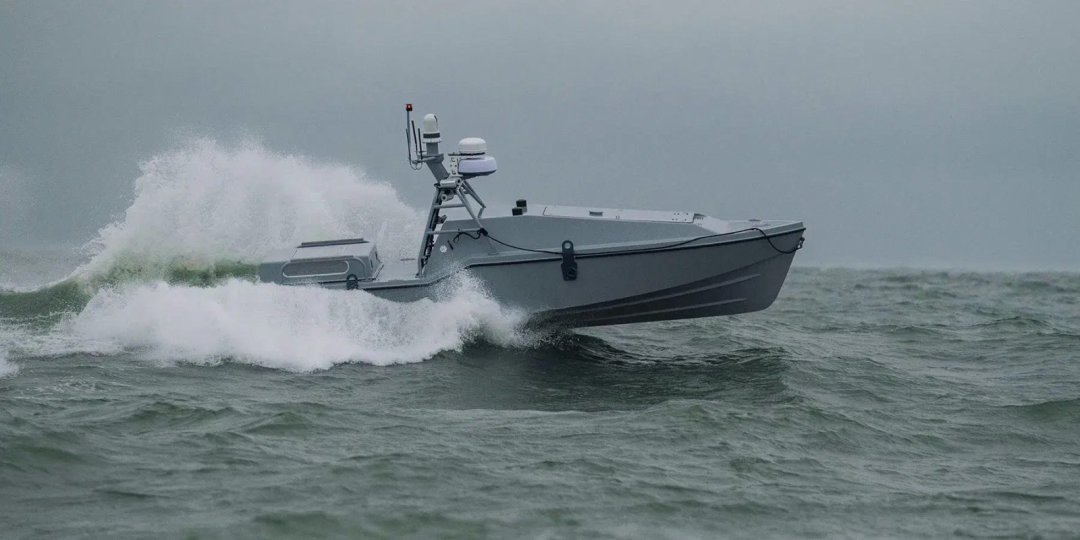
You simply cannot buy PR like this. For the last couple of days, I’ve had a big smile on my face for the good people from Saronic. Bravo Zulu fellas. Bravo Zulu. Via Brandi Vincent at Defense Scoop: The American military deployed an autonomous Corsair maritime drone built by Saronic to find and recover two soldiers who were stranded near the Strait of Hormuz on Monday after their Army AH-64 Apache helicopter crashed during a patrol operation, U.S. Central Command spokesperson Capt. Tim Hawkins told DefenseScoop. The confirmation of this unique rescue mission comes as military tensions are surging in the Middle East amid the United States-Iran conflict. It marks the U.S. military’s first publicized use of an autonomous surface vessel to locate and retrieve downed aircrew in real-world warfare, following years of experimentation with different types of sea drones. “The surface drone that assisted in last night’s rescue of the Apache crew off the coast of Oman was a U.S. Navy Corsair unmanned surface vessel operated by U.S. 5th Fleet’s Task Force 59,” Hawkins said. In that rescue operation, he told DefenseScoop, the maritime drone picked the two pilots up “and transported them to another location on the water where they were then hoisted up to a helicopter for further transport.” Simply outstanding. They’ve only been in theater for a few months, and they are still trying to figure out how to make the system work. Absolute top shelf. As I like to say: get these things forward and show what they can do. Five out of Five. Promote ahead of peers. Let’s look again at the stats for the Saronic Corsair; I’d love to see the full performance sheet on what speed it needs for that max range. My guess, if it is anything like my bay boat, that would be in the neighborhood of 25 knots in a reasonable seastate...but that is a long post beyond the scope of today’s discussion. As always, let’s go to the chartroom. For this specific argument, let’s head to the Chinese coast. That red arch is roughly 350 nautical miles from the Chinese coast. Review the threat envelope. The only things missing here are the anti-aircraft and anti-ship missile batteries on the mainland, but you get the idea. Regulars here know one of my hobby horses is the absolute horror show I see that will result at the very start of a Great Pacific War should that come. Here’s an example from a post of mine from a few years ago: There is one thing we know for absolute certainty should war come west of the International Date Line. Aircraft from reconnaissance to strike will be thrown in the battle at D-0 at as high of a rate as maintenance and refueling will allow. It will continue at a pace, ignoring cute concepts as “crew rest,” until an operational pause is needed in order to allow fuel and parts to catch up or we run out of aircraft and pilots. While that is going on, American airman will be bailing out and ditching over the western Pacific due to everything from malfunctioning engines and avionics, combat damage, running out of fuel, or just plain getting lost. The ocean is vast, one-man life rafts are very small. Unlike previous wars, we will not have our submarines performing lifeguard duties. They are too few, too large, too expensive and have a higher and best use elsewhere … underlined by the bottom topography in the yellow zone. IYKYK. Speaking of the yellow zone, unlike in the Vietnam War, we will not have surface ships performing lifeguard duties offshore with their helo detachments either. They too are too few, too large, too vulnerable in the yellow zone, and have a higher and best use elsewhere. For the absolute worse reasons, we will not be procuring what would be exceptional for this job, seaplanes like the Japanese US-2 I discussed in the previously linked article. When the next Great Pacific War comes, and better than average chance it will—for reasons we probably do not expect—the mission to rescue downed airmen lost at sea, in volume over wide expanses of contested seas, must be done. The American people and their elected representatives will not tolerate a shrugging of the shoulders and a “we didn’t expect this” response. What could do it if historical methods either cannot or should not be used? Did this unexpected rescue of the Army pilots by the Saronic Corsair serve as one of those “taps on the shoulder” pointing us toward what we should be getting more of rather than less? So, what can we do besides keep a folder full of excuses as to why we abandoned our airmen to drift at sea, abandoned? Well…how about a string of pearls of Unmanned Surface Vessels (USV) like Saronic’s Corsair stationed inside that arc? They are too small to be engaged by Chinese long range strike assets. Of course, there are a lot of known-unknowns here: How long can they stay on station, standing by for a mission, before they have to be recalled for refueling/service? How can they be modified to be a better recovery platform for downed airmen? How do we develop a CONOPS for airmen to know if they cannot make it back to the carrier or land base where to divert for rescue by USV? (A more primitive version of this has already been done. See the WWII Luftwaffe's rescue buoy (Rettungsboje)). I could come up with about ten more points, but those were the first three that came to my head. These are about the same size as my center console bay boat I fish out of, and can be launched, well, by almost anything the Navy has. We have a criminally underutilized Navy Reserve. This would be a perfect mission for a revitalized Navy Reserve. If the Corsair isn’t enough boat, well, the next size up is the Mirage. Forget at sea rescue…I want to turn that into a mine layer…but perhaps that is another post for another day. We have a mission that needs to be filled. Good news: a Corsair or Mirage can be configured for other missions as well, but I think we’ve demonstrated that we have a modification needed. We would be fools not to take advantage of this gift. Leave a comment Share This Substack is reader-supported. To receive new posts and support my work, consider becoming a free or paid subscriber. View the full article
-
Ukraine struck a Russian defense electronics factory for the second time in five weeks on Tuesday, hitting the same Cheboksary facility with domestically developed Flamingo cruise missiles, demonstrating both the growing reach of Ukrainian long-range weapons and the persistent vulnerability of Russian military industry to attacks that Moscow’s air defenses cannot reliably stop. The target […]View the full article
-
Norway’s largest defense company has completed the acquisition of a California missile startup that makes interceptors and strike weapons designed to be produced by the thousands rather than the dozens, bringing a proven American mass-munitions manufacturer into the European defense industrial base at a moment when NATO is scrambling to close the gap between its […]View the full article
-
The U.S. Army has awarded a $2.3 billion contract to keep its largest joint ammunition storage depot running for the next two decades, a commitment that reflects just how central Hawthorne Army Depot in Nevada has become to the military’s ability to store, maintain, and destroy the munitions that underpin American and allied combat power. […]View the full article
-
The U.S. Navy has awarded Lockheed Martin $154 million to begin purchasing the long-lead components needed to build 11 F-35 stealth fighters for a foreign government whose identity the Pentagon has not disclosed, adding another batch of the world’s most widely sold combat aircraft to an order book that spans more than a dozen nations. […]View the full article
-
The U.S. Navy is moving to extend and expand its contract with Raytheon for engineering support on the ALQ-249 Next Generation Jammer, the electronic attack system being developed for the EA-18G Growler, the carrier-based aircraft the Navy relies on to blind and disrupt enemy radar and communications before and during strike operations. The Naval Air […]View the full article
- Last week
-
Diehl Defence has developed a new generation of its compact mobile air defense system and unveiled it on the eve of the ILA Berlin Air Show. The German defense company announced the IRIS-T SLS MK 4 on June 9, the day before ILA Berlin opens its doors to the defense industry. The fourth-generation version of […]View the full article
-
Britain’s long-troubled Ajax armored reconnaissance vehicle is being put back into trials under tightly controlled conditions as the Ministry of Defence pursues a two-phase plan to deliver a fixed version of the program, the UK Defence Journal reported. Minister Luke Pollard set out the approach in a written answer to Conservative MP Ben Obese-Jecty, who […]View the full article
-
A defense startup building large autonomous drone swarms has selected one of aviation’s most battle-tested turboprop engines to power its aircraft, pairing a sixty-year-old powerplant with next-generation swarm technology in a bet that proven reliability at scale matters as much as cutting-edge innovation. Swarm Aero, an Oxnard, California-based developer of large UAV swarms, operates an […]View the full article
-
A U.S. defense startup has been selected by the Defense Innovation Unit, a Department of War organization focused on accelerating commercial technology into military use, to advance an autonomous close-in weapon system designed to reduce aiming latency in close-in counter-drone engagements, moving into Phase II testing in front of Department of War evaluators this month. […]View the full article
-
Raytheon, an RTX business, is investing $100 million to expand its Portsmouth, Rhode Island, facility, accelerating production and testing of two of the most in-demand air defense systems in the world as governments across NATO and beyond race to bolster protection against ballistic missiles, hypersonic weapons, and increasingly sophisticated aerial threats. The investment, announced June […]View the full article
-
Both in comments here, social media, and a variety of SEPCOR, Monday’s post on AUKUS got a lot more interest than I thought it did. That makes for a happy Salamander, as it is clear that along the broad spectrum of the navalist and Five Eyes community, the importance of this project is well understood and supported. In a way, I feel like I cheated an opportunity, so let’s assign some reading to everyone, pull out some interesting tidbits from the reading, and maybe slap a moonbat or two while we’re at it. Here is the syllabus for today’s Substack. I’ll quote from various places…and yes, it is another opportunity to thank the good people doing the hard work at the Congressional Research Service (CRS). AUKUS Nuclear Cooperation: CRS, February 5, 2026 Navy Virginia-Class Submarine Program and AUKUS Submarine (Pillar 1) Project: Background and Issues for Congress: CRS January 26, 2026 AUKUS Pillar 2 (Advanced Capabilities): Background and Issues for Congress: CRS, May 21, 2024 Remember where this is all going, From the January 2026 CRS report: In September 2021, the Australian, UK, and U.S. governments announced a significant new security partnership, called AUKUS (pronounced AW-kus, rhyming with caucus).42 One major initiative under AUKUS, referred to as Pillar 1, is a project to rotationally deploy four U.S. SSNs and one UK SSN out of a port in Western Australia; sell three to five Virginia-class SSNs to Australia and subsequently build three to five additional replacement SSNs for the U.S. Navy; and have the United States and UK provide assistance to Australia for an Australian effort to build additional three to five SSNs of a new UK-Australian SSN design called SSN AUKUS to complete a planned eight-boat Australian SSN force. If calendars are not your specialty, note which political party was in power in 2021. It should go without saying, but many of the usual suspects on the I-hate-America-really-hard-when-a-Republican-is-in-office left in Australia can’t get their narrow-minded petty-politics out of the way of clear thinking. They almost go into hibernation when a Democrat is in power, but when that changes, they just turn their knob to 11. This is more than anti-Trump feelings. I’ve seen this movie a few times over the decades. Call those people out and don’t let them go down that rabbit hole…because they absolutely want to go there. There is much more than that in Australia than in the USA, thank goodness, where there is broad support. The only real pushback are from those who really don’t want to have any decrease in USN SSN by sending what can be built to Australia. That’s an honorable position, just one I don’t agree with. That isn’t what even the center-left Australian Labor government has to deal with. Just one example, guess who is leading an independent review of AUKUS by a gaggle of musty-crusty leftists in the Australian Labor Party: The former environment minister Peter Garrett will lead an independent inquiry into the Aukus defence pact, launched by a group of Labor veterans and public figures concerned proper scrutiny has never been applied to the $368bn defence plan. Garrett, the Midnight Oil frontman and longtime environmental campaigner, will be the lead commissioner on the five-month community-based investigation, being launched on Tuesday. The guy was cringe in the 1980s and is but a farce to sane people today…but we don’t live in a sane world. We all know where this will go, and hopefully it will receive the disdain it deserves: Garrett said the new inquiry – supported by trade unions and non-profit organisations – would consider if the subs can be delivered on time and on budget, how nuclear waste will be managed and if Australia’s defence and strategic interests are well served by the deal. He has previously lashed Aukus, saying the plan “stinks” and represents “the most costly and risky action ever taken by any Australian government”. “This inquiry is doing the job that a proper parliamentary inquiry should be doing,” Garrett told Guardian Australia. “How is it that there’s been inquiries about the submarine program in other countries and we haven’t had a full parliamentary inquiry here?” A group of commissioners will be named to lead the inquiry, convened under the auspices of the Australian Peace and Security Forum. Critical to its deliberations will be the rise of China and the prospect of conflict in the Indo-Pacific region. Nuclear non-proliferation issues, employment and environmental consequences are also among the inquiry’s terms-of-reference. You can’t make this stuff up, but we must push through it all. As I said yesterday: AUKUS is not a Trump plan, nor an Albanese plan. It is an Australian, American, and British plan that is already bringing on other partners. Making this personal and partisan only demonstrates the immaturity of the people trying. This is not Australia and the U.S.’s first time working on nuclear issues. From the February 2026 CRS report: On August 7, 2024, President Joseph Biden submitted to Congress an “Agreement among the Government of Australia, the Government of the United Kingdom of Great Britain and Northern Ireland, and the Government of the United States of America for Cooperation Related to Naval Nuclear Propulsion.” This In Focus explains the agreement’s substance, as well as provisions of the Atomic Energy Act (AEA) of 1954, as amended (P.L. 83-703; 42 U.S.C. §§2153 et seq.), concerning the content and congressional review of such agreements. The agreement, which entered into force on January 17, 2025, permits the transfer of nuclear material and naval nuclear reactors among the three governments. This agreement supersedes a 2022 agreement that permitted only the transfer of Naval Nuclear Propulsion Information (NNPI) and Restricted Data (RD). The latter agreement entered into force on February 8, 2022. … The United States and Australia first concluded a civil nuclear cooperation agreement in 1957. Those governments updated that agreement in 1979 and renewed it in 2010. Australia sells around 36% of its $1 billion in uranium exports to the United States. The United States is also a major processor of Australian uranium sold to other countries. Australia does not currently possess any nuclear power plants, but it operates one research reactor. This agreement “specifically prohibits the transfer of restricted data under it,” as well as “sensitive nuclear technology, sensitive nuclear facilities and major critical components.” If Midnight Oil’s overly emotive vocalist is the best they have to throw at AUKUS, it is probably pretty safe. For everyone else who has to live in the real world and realize that the democratic Western and Western-adjacent order is not a given, and its greatest threat is stretching out from the Asian mainland into the Pacific and then the globe, AUKUS is set up to be a catalyst for creating a whole series of capabilities that will complicate any plan for war, that if we do it right, may prevent that war from ever happening. Above was focused on Pillar 1 of AUKUS. What is really exciting is the promise of Pillar 2. From the May 2024 CRS report: AUKUS Pillar 2 refers to a suite of cooperative activities conducted by the United States, the United Kingdom, and Australia to develop and field “advanced capabilities” under the AUKUS security partnership. To date, Pillar 2 activities have been coordinated among the three governments by a number of means, including topic-specific working groups. At least eight such groups are currently active: six address technological areas and two address functional areas. The current working groups are Undersea capabilities; Quantum technologies; Artificial intelligence and autonomy; Advanced cyber; Hypersonic and counter-hypersonic capabilities; Electronic warfare; Innovation; and Information sharing. That right there is sexy. That is the future, and by pulling our best minds and industry together, we can all get there faster. 1+1=3 Alignment with National Strategies The U.S., British, and Australian governments have each identified AUKUS as an important part of their respective national strategies. The Biden Administration’s 2022 U.S. Indo-Pacific Strategy cites AUKUS efforts under its “Reinforce Deterrence” line of effort, characterizing the partnership as contributing to the defense of U.S. interests, deterrence of adversary aggression, and the promotion of regional security.17 In addition, the 2024 U.S. National Defense Industrial Strategy states that AUKUS supports DOD’s “economic deterrence” priority.18 The United Kingdom’s “Integrated Review Refresh 2023” asserts that the AUKUS partnership will “allow [the UK and its allies] collectively to balance against coercive behaviours and to preserve an open and stable international order.”19 AUKUS also features prominently in Australia’s 2024 National Defence Strategy, which describes the partnership as “essential to building the Australian Defence Force’s capacity to deliver impactful projection across the full spectrum of proportionate response.”20 Formal DOD and executive branch statements concerning AUKUS have generally avoided focusing on particular threats or challenges, instead referring to more abstract interests and goals.21 However, some analysts argue the pact responds to a perception among its members that the intentions and capabilities of the People’s Republic of China (PRC) pose a significant and growing threat to Indo-Pacific security. This perspective has also been articulated by a number of U.S. policymakers, including some senior executive branch officials and Members of Congress. In April 2024, for instance, Deputy Secretary of State Kurt Campbell referred to the capabilities developed through AUKUS as creating “enormous implications in a variety of scenarios, including in cross-[Taiwan] strait circumstances,” and in March 2023 House Foreign Affairs Committee (HFAC) Chairman Michael McCaul offered the following characterization of the partnership: We are facing a generational challenge from the Chinese Communist Party. We must bring all tools to bear in our effort to counter Chairman Xi’s attempts to disrupt the global balance of power. With AUKUS, our three nations can achieve the shared strategic goal of defending the Indo-Pacific region, while maintaining our technological and military superiority.22 This view—that AUKUS is part of a broader response to the perceived threat from the PRC—appears to be shared by the other AUKUS governments. During the AUKUS Optimal Pathway Announcement, for example, British Prime Minister Rishi Sunak explained the need for an increased focus on defense by citing a number of particular challenges, including “China’s growing assertiveness.”23 In 2022, Australia’s then-Prime Minister Scott Morrison described AUKUS as a response to, in part, PRC “attempt[s] to reshape our region, and the world, in a way more conducive to autocracies than liberal democracies.”24 As other nations come onboard, they are signaling the exact same thing. In August of 2024 in a publication by the Parliament of Australia, Adam Broinowski pointed out where AUKUS can be an opportunity to bring an even closer security cooperation with friends and allies in the Pacific to everyone’s benefit: Consideration of extending Pillar 2 began as early as 2021, including New Zealand’s potential ‘Tier 2 AUKUS’ participation. Engagement with ‘Strand B’ countries Japan and South Korea was also recommended. With criteria for Pillar 2 participation based on shared strategic culture and a military strategic symmetry to maximise AUKUS’s effectiveness in the Indo-Pacific, prospective countries include Japan, South Korea, New Zealand and Canada. In addition, Taiwan has also expressed interest. Both Japan and South Korea have bilateral security alliances with the US, have increased their military spending and share close military interoperability with US forces. Each country also plans to increase defence industrial integration (shipbuilding, munitions production, repair), boost its economic security and diversify its supply chains with the US. On 8 April 2024, the AUKUS members announced Japan’s potential Pillar 2 participation on a project-by-project basis, which was reciprocated by Prime Minister Kishida. A similar announcement for South Korea’s participation followed on 1 May 2024 at the Australia-Republic of Korea 2+2 meeting in Melbourne. The Japan Maritime Self-Defense Force has advanced uncrewed and undersea systems, conducts satellite-assisted maritime surveillance, mapping and monitoring (including undersea warfare research projects with Australia), and contributes to integrated air and missile operations. Japan has also launched a new policy on military AI. Meanwhile, since the Yoon government’s foreign policy shift to a ‘global pivotal state’ in 2022, South Korea has boosted bilateral ties with Japan and under the US–Korea–Japan trilateral format. It has also established the Defense AI Center, strengthened its AI-powered surveillance and robotic systems, and increased defence exports, including to the Australian Defence Force. U.S.A., Great Britain, Australia, New Zealand, Canada, Japan, South Korea, maybe Taiwan and a few more. I don’t know about you, but that is a hell of a team. The broad political spectrum of both parties know this, that is why in spite of the change of governments we have seen in almost all these nations in the last half decade, AUKUS continues forward. Japan, especially, will bring so much to the table in Pillar 2. Austin Wu at the Pacific Forum gets it. In his January confirmation hearing, Secretary of State Marco Rubio called the AUKUS agreement a “blueprint” for other US partnerships—stressing the ability of the agreement to “(create) a geopolitical and strategic balance in the Indo-Pacific region and beyond.” As the AUKUS agreement comes up on the fourth anniversary of its signing, Rubio’s comments have again driven consideration to potentially expanding Pillar II of the agreement beyond the three original signatories. As the US looks to build on the AUKUS model, expanding the reach of Pillar II is a logical next step. … Critics have argued that Pillar II expansion could dilute the focus of the partnership and exacerbate underlying issues. However, these concerns are unfounded. Japan is fully committed to Indo-Pacific deterrence, especially containing China. It’s new national security strategy and national defense strategy have emphasized the Chinese threat to Taiwan. Moreover, it is already a leading defense partner for all three AUKUS states. Instead of weakening the focus of AUKUS, expanding pillar II to include Japan reinforces the partnership’s commitment to Indo-Pacific deterrence. … Rather than the additive nature of traditional alliances, Pillar II provides multiplicative potential, helping buttress both the quality and quantity of Indo-Pacific deterrence. At the same time, Pillar II is a risk, with close collaboration requiring mutual trust and security. On both these fronts, Japan is a natural partner. As a global leader in several of the critical technologies that AUKUS is attempting to leverage, as well as a decades-long partner of all three AUKUS countries, Japan provides both the scale and trust needed to help AUKUS achieve its mission of ensuring Indo-Pacific security. As the lead nation, the U.S. is leading from the front. We are sacrificing to make this happen, taking on risk on the bet that the resulting advantage will be an overall national security positive. Like we discussed yesterday, ignore those complaining about the transfers of active Virginia Block IV SSNs. They are either ignorant, bad-faith actors, or most of them—just strategically wrong. The U.S. is not just throwing off used boats to the Australians. Reflagging U.S. Navy SSN to the Australia knock back an already shrinking U.S. submarine force…especially as the last of the Los Angeles Class SSN end their service life. We are providing, with four boats, better than two years of submarine production to make this happen. If that isn’t friendship, I don’t know what is. As mentioned earlier, although Virginia-class boats have been procured at a rate of two boats per year, the actual Virginia-class production rate has never reached 2.0 boats per year, and since 2022 has been limited by shipyard and supplier firm workforce and supply chain challenges to about 1.1 to 1.2 boats per year, resulting in a growing backlog of boats procured but not yet built. As also mentioned earlier, the Navy and industry are working to increase the Virginia-class production rate to 2.0 boats per year, and subsequently to 2.33 boats per year, the rate the Navy states will be needed to not only execute the two-per-year procurement rate, but also build replacement SSNs for the three to five Virginia-class boats that are to be sold to Australia under the AUKUS submarine (Pillar 1) project that is discussed later in this report, and to reduce the accumulated Virginia-class production backlog. How quickly this effort will succeed in increasing the Virginia-class production rate to 2.0 boats, and subsequently to 2.33 boats per year, is not clear. I’d like to wind things up by pointing your way to Brent Ramsey’s article at The Patriot Post from June 2nd, The Thunder Down Under: Australia. In his review of recent efforts to bolster Australia’s defense, he outlines five cornerstone points as to why we should make sure that we don’t just reinforce our existing relationship with Australia, but bring them closer for both our benefit. Australia isn’t the only nation getting a significant gain from this. 1.) Australia’s location makes it, in effect, a southern anchor of the Indo-Pacific and a key to U.S. policy in the region and any potential defense of Taiwan should the PRC take military action. Australia would be a key partner for logistics support, fuel, repairs, munitions stockpiles, reconnaissance, submarine access to the South China Sea, and providing a sanctuary away from combat operations for U.S. and allied ships. 2.) Northern Australia is a U.S. training and launch location. We are building infrastructure in Tindal, Darwin, and Amberley, locations that can and will support aircraft of all types and Marine forces. A quick glance at the map shows that Australia links the Pacific to the Indian Ocean, a major factor in any military planning of a potential fight in the South China Sea over Taiwan or any U.S. treaty ally. 3.) U.S. space operations, both civil and military, already depend heavily on Australian advanced space support sites. The U.S. also receives major help from Australia in intelligence gathering. 4.) Australia’s Jindalee Operational Radar Network, described by Australia as “a world-leading high-frequency, skywave over-the-horizon radar system,” provides exceptional surveillance at long ranges for air and marine operations, disasters, and search and rescue. Its military applications are of strategic importance. 5.) Critical minerals are plentiful in Australia. The U.S. and Australia signed a critical minerals and rare earths framework in 2025 that will ease pressure on the U.S. by providing an alternative to China for these vital minerals that our defense depends on. Sold. Leave a comment Share This Substack is reader-supported. To receive new posts and support my work, consider becoming a free or paid subscriber. View the full article
-
Sudan’s military appears to have used a Turkish-made HİSAR-A surface-to-air missile during an attempt to repel a drone attack over Khartoum, offering open-source evidence that Turkish-made HİSAR-A air defense missiles may be in use by the Sudanese Armed Forces. Rich Tedd, an OSINT analyst who tracks military hardware through imagery and wreckage identification, published photographs […]View the full article
-
Two U.S. Army soldiers were pulled from the waters off the coast of Oman on June 8 after their helicopter went down during a patrol mission, rescued within two hours by a joint American force that scrambled across multiple military branches to reach them. U.S. Central Command, the military headquarters overseeing American operations across the […]View the full article


