All Activity
- Today
-
Germany and France have jointly decided to abandon the fighter jet component of the Future Combat Air System, known as FCAS, after years of industrial disputes between Airbus and Dassault Aviation proved impossible to resolve, according to Der Tagesspiegel. German Chancellor Friedrich Merz and French President Emmanuel Macron reached a shared conclusion that Airbus and […]View the full article
-
The same family of unmanned surface vessels that has been hunting Russian warships in the Black Sea made its Indo-Pacific debut at the largest annual U.S.-Philippines military exercise, sinking a decommissioned target ship in live-fire conditions off the northern tip of the Philippine archipelago. UFORCE, the exclusive manufacturer of the Magura maritime drone family, confirmed […]View the full article
-
A still image pulled from a newly released Russian Ministry of Defense video on Su-34 strike aircraft operations against Ukraine has provided what Israeli defense analyst Guy Plopsky described as “the clearest view yet” of what appears to be a new dorsal antenna hump fitted aft of the cockpit on at least one variant of […]View the full article
-
A German company that makes the transmission inside the Leopard 2 main battle tank has started production of its 4,000th unit, marking a milestone that speaks directly to how central one piece of engineering has been to Western armored capability for more than four decades. RENK Group AG, headquartered in Augsburg, Germany, announced on June […]View the full article
-
As U.S. forces confront a growing wave of low-cost drone attacks that have exposed a fundamental flaw in how America stocks and prices its air defense arsenal, the Army has tapped a rocket technology startup to scale a more affordable answer: a laser-guided version of one of the most proven rockets in the American inventory. […]View the full article
-
Ukraine has crossed a significant threshold in its air defense campaign against Russian drone attacks: an autonomous interceptor drone that can hunt down and destroy Shahed loitering munitions with minimal human input has now completed its first successful combat engagements in the Kharkiv region. Ukrainian Defense Minister Mykhailo Fedorov announced the achievement, describing a system […]View the full article
-
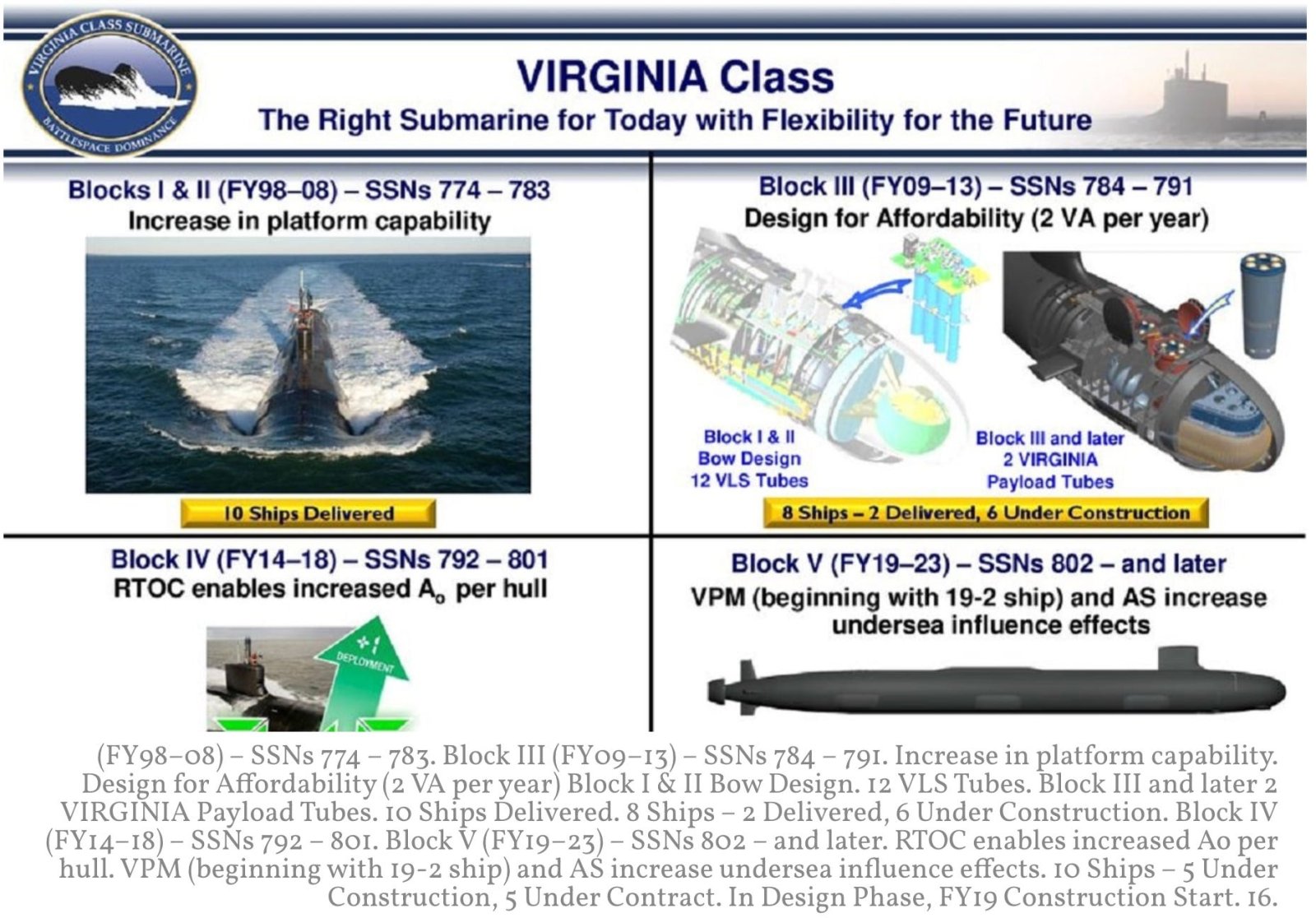
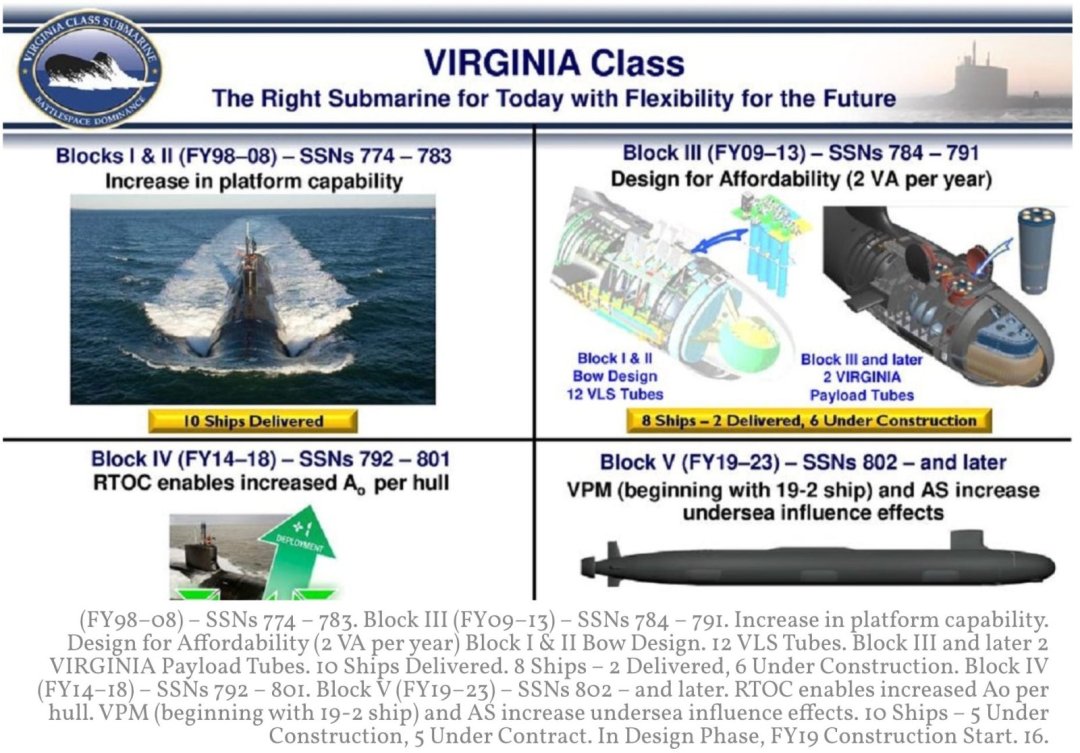
It is far past time to pick up the conversation point we last visited back in September: AUKUS. Just to refresh everyone on my position that I’ve held since this program was announced a half-decade ago: this is one of the most important military and diplomatic initiatives of this century. There are a host of reasons we discuss this on a regular basis. They are also why I have been emphatic that it not only must work, but must come online as early as possible. Australia is one of our most critical allies. She is one of our most reliable allies. She occupies one of the most strategic positions in the world. Our greatest adversary—and hers—are aggressively attempting to subdue her. Her geography demands what nuclear submarines alone can deliver. As such, this came as great news. Through discussions today, the Deputy Prime Minister and Secretaries confirmed that AUKUS Pillar I remains on track to support Australia’s acquisition of a conventionally-armed, nuclear-powered submarine capability. …Just this month, the United States authorized establishment of the U.S. Navy support elements for SRF-West and will begin rotating the first U.S. Navy personnel to HMAS Stirling later this year. Likewise, the United Kingdom reaffirmed its commitment to have a rotational presence as part of SRF-West and noted the successful Submarine Maintenance Period conducted earlier this year by HMS ANSON. …Australia to acquire three in-service VCS in lieu of a mixture of new and in-service VCS variants. In summary: we’re setting up shop at the Australian naval base on the western end of the continent within liberty-distance of Perth, and we are ensuring early delivery of capability by slating three already in service Virginia Class SSN from American to Australian service. This is a variation of exactly what I continue to believe is essential: sooner rather than later this needs to happen to cement alliances, and send messages to our adversaries. If that means a submarine that might have been USS X will instead be HMAS Y, then so be it. Should a Great Pacific War emerge, we should expect that an HMAS SSN will be able to create 87.6% of the effects a U.S. Navy SSN would have in that conflict. There is no downside. As Tom Shugart pointed out Sunday, I nodded my head until I read what he was quote tweeting. Shock-not-shocked…but the usual suspects are trying to turn this into a negative for some reason. Well, we know the reason(s). Been seeing them since the Cold War. Amazing. Jennifer Parker, Adjunct Professor, Defence and Security Institute, The University of Western Australia; UNSW Sydney did a good job trying to counter emotion with facts over at The Conversation: A stopgap solution is required. The purchase of three Virginia class submarines in 2032, 2035 and 2038 will provide this, and also give Australia the ability to start operating nuclear-powered submarines. Think of it as a “crawl, walk, run” approach. The Virginias are the walk phase before we start building our own nuclear-powered submarines. Acquiring submarines already in service reduces risk and complexity, avoids the challenges of introducing a new submarine, and removes the need for initial certification trials. Is Australia getting a less capable submarine?Not in any meaningful sense, though the third Virginia will be an older version than planned, so its sensors will probably be slightly less capable. Australia will now receive three Block IV Virginia class submarines. These remain among the most capable attack submarines in the world. They carry more than 20 torpedoes and 12 Tomahawk land strike missiles. Much of the commentary this week has suggested Australia has lost additional missile capacity because the submarines we’re receiving won’t have the “Virginia Payload Module” – a new hull section that allows the submarines to carry more missiles. But that commentary is incorrect. The submarine Australia was expected to receive in 2038 was never intended to have that capability. In conflict, Australia would predominantly use these submarines in an anti-submarine and anti-ship role. Land strike missiles are not used for this and so the extra capacity isn’t essential. It’s also capability the US has said it is not willing to provide. The main difference is the third submarine will have fewer years of life remaining than a new boat. A Virginia class submarine off the production line would normally have a 33-year life. At Senate estimates this week, the Australian Submarine Agency said each boat will have more than 20 years of life remaining when we receive them. Claims these submarines would only have eight years of life do not withstand scrutiny. The kind of submarines Australia will receive only started entering service in 2020. The Australian Prime Minister is being firm, but it appears some in his party are…well…being Laborites: Australia needs a backup plan for the Aukus submarine agreement, Labor MP Ed Husic has warned, arguing sluggish US production and the “transactional nature” of the Trump administration have put the multibillion-dollar defence deal at risk. The defence minister, Richard Marles, this week agreed to US requests for Australia to accept three second-hand Virginia-class nuclear submarines, rather than a combination of new and old vessels. Husic spoke out during Labor caucus on Tuesday in what former Labor minister Kim Carr described as an “courageous” intervention. It was the most significant internal criticism of the $368bn deal – agreed by the Morrison government in 2021 and endorsed by the then-Labor opposition – since heated debate at the ALP national conference three years ago. Labor ultimately continued its support of the multi-decade pact. Husic said production rates of submarines in the US were too low for Australia to realistically expect boats to be handed over in the early 2030s. The deal requires the sitting US president to agree to release submarines based on the US having an adequate supply for its own navy, even though Australia is paying to boost production. “We need to be open as a nation that we are not going to get the deal that was promised to us,” Husic said. You know where this is going… “Given how transactional the Trump administration is, you can almost imagine them saying ‘we give you these, you will do this with them’, and so there’s an active sovereignty question there. “It won’t be a renegotiation; it’s a reality about the production rates and whether or not we’ll get them. What’s the contingency? What’s the plan B?” AUKUS is not a Trump plan, nor an Albanese plan. It is an Australian, American, and British plan that is already bringing on other partners. Making this personal and partisan only demonstrates the immaturity of the people trying. Of course, the Greens are being defense-clueless, as usual: Appearing on ABC’s Insiders program on Sunday, the Greens’ defence spokesperson, David Shoebridge, said the focus of Australia’s military assets should be on defending the nation’s borders. He suggested that could be done with conventional submarines and other weapons, rejecting the need for capabilities designed to operate “thousands of thousands of kilometres from our shore” – such as the nuclear-powered vessels. Shoebridge said buying the Virginia-class submarines would make Australia an “interoperable” part of the US military, drawing the country into a potential conflict with China. “Nuclear submarines are pretty much a disaster on every front,” he said. “Why are we inviting ourselves to a US war with China by buying this weapons platforms and making our defence an interoperable part of the US?” I’m sure it sounded better in the original Mandarin Chinese. If you would expect any shade to be thrown, you’d think it would be the French, but even their reporting is fact based. Sooner is better than later. More is better than less. Money is in short supply. At the end of the day, you get the world’s most capable submarine. Not bad. Leave a comment Share This Substack is reader-supported. To receive new posts and support my work, consider becoming a free or paid subscriber. View the full article
-
A Lithuanian defense firm that has been developing hybrid electric military vehicles since 2020 demonstrated its latest capability to the Lithuanian Armed Forces last week: a remote-control system that can turn virtually any vehicle into an unmanned ground platform, tested during the military experimentation exercise Vanguard 2026 at the Rūdninkai Training Area. Ostara, the Vilnius-based […]View the full article
-
A Czech aircraft manufacturer that has been building military planes for a century just posted the best financial results in its modern history, with profit before tax jumping more than 400 percent in a single year as demand for affordable jet trainers accelerates across defense markets worldwide. AERO Vodochody AEROSPACE, the largest aircraft manufacturer in […]View the full article
-
Russia’s official position on negotiations with Ukraine hardened further on Monday when Kremlin spokesman Dmitry Peskov told reporters that it is “difficult to imagine” how talks with what he called the “current Kyiv regime” could take place, adding that Kyiv was taking every possible step to obstruct the peace process. The statement arrived three days […]View the full article
-
A Ukrainian strike drone flew hundreds of kilometers into Russian territory and hit the hangars of a research and production center that Russia uses to develop and manufacture its own unmanned aircraft systems, targeting the kind of facility that feeds the very drone campaign Russia has been waging against Ukrainian cities every night for years. […]View the full article
- Yesterday
-
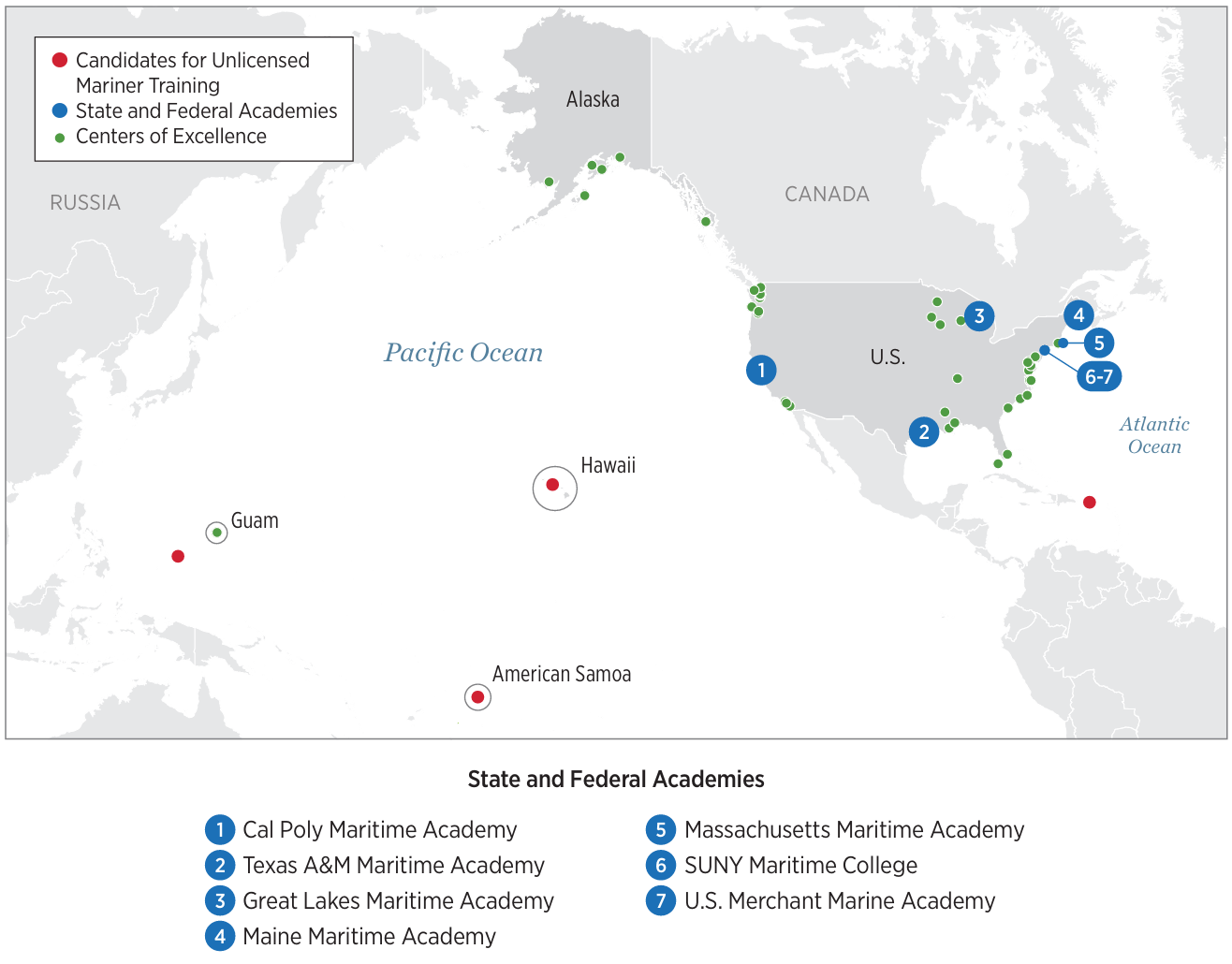
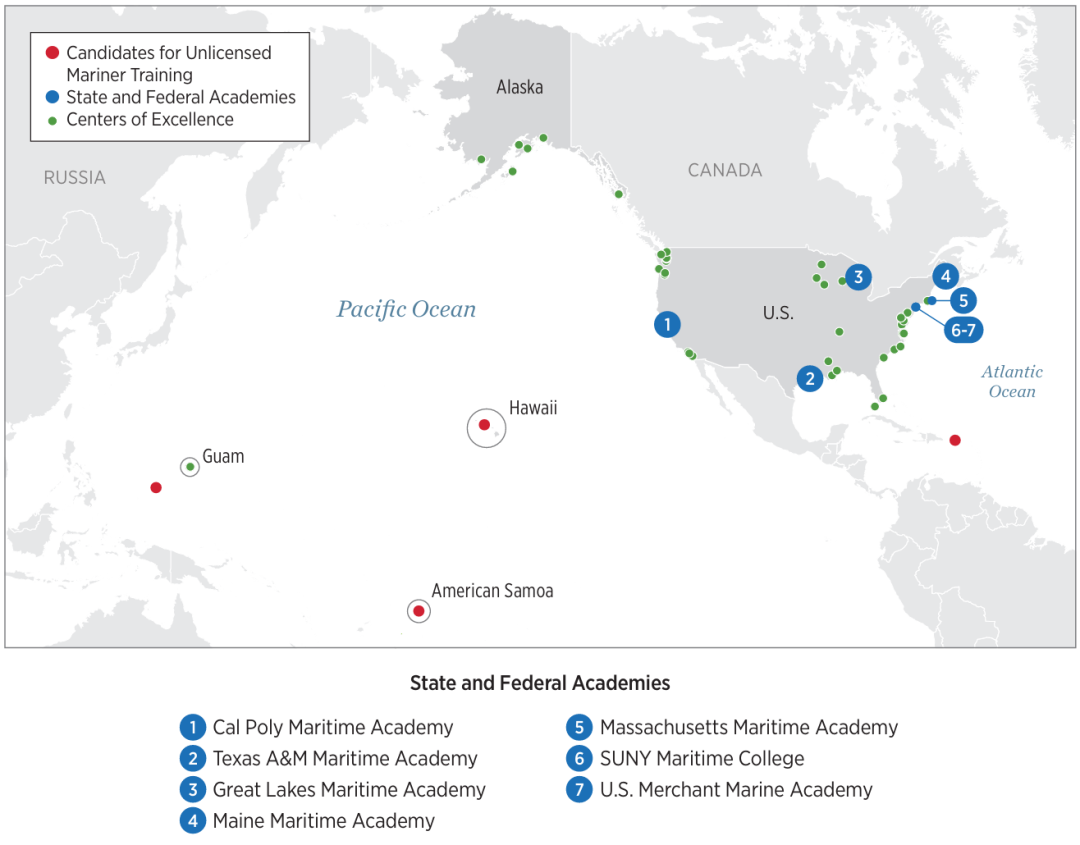
In creating a maritime renaissance in the U.S., there is a lot of work, discussion, and money going toward not just buying more ships, but also expanding the industrial base and training skilled tradespeople to make that expansion possible. A cornerstone of this should be training more dedicated Merchant Mariners and employing their skills in a better way. Returning to Midrats today is Brent D. Sadler to discuss this and related topics. Along with Hollins Randolph and Peter Lynch, he co-authored a report at Heritage, Time to Bring Back the U.S. Maritime Service to Support America’s Maritime Revival and a Wartime Economy, that we will use as a basis for our conversation. We go LIVE at 5pm Eastern, and you can join at this link. If you are reading this after the show, refresh the Substack page later Sunday night for all the podcast links. Brent is Senior Research Fellow for Naval Warfare and Advanced Technology in the Douglas and Sarah Allison Center for National Security at The Heritage Foundation, and a retired U.S. Navy Captain. Leave a comment Share This Substack is reader-supported. To receive new posts and support my work, consider becoming a free or paid subscriber. View the full article
-
Fresh Sentinel-2 satellite imagery has confirmed what local Russian officials initially denied: Ukrainian long-range attack drones struck the 15th Naval Arsenal of the Russian Navy at Bolshaya Izhora in the Leningrad region, triggering a massive fire and secondary detonations powerful enough that more than 600 residents of nearby settlements had to be evacuated while Russian […]View the full article
-
The U.S. Army has selected a European-pedigreed precision artillery shell capable of hitting targets 70 kilometers away, awarding General Dynamics Ordnance and Tactical Systems a contract to develop an American version of a munition already in service with Germany, Italy, and other allied nations. General Dynamics Ordnance and Tactical Systems, a business unit of General […]View the full article
-
A Spanish defense technology company has transformed a decommissioned military truck into one of the more unusual vehicles currently making the rounds in European defense circles: a fully operational mobile electronic warfare platform packed with jamming systems, satellite connectivity management, signal geolocation hardware, and real-time anti-drone capability, all integrated into a single deployable unit, El […]View the full article
-
British infantry soldiers are training 70 kilometers (43 miles) from the Russian border in Finland, practicing how to kill enemy targets with Anduril’s autonomous drones without ever exposing themselves to direct fire — and doing it alongside Finnish troops who have spent decades preparing for exactly the kind of war now grinding through Ukraine. Around […]View the full article
-
The United States government has approved the sale of seven surplus Marine Corps amphibious assault vehicles to Italy in a $30.6 million deal that will help Rome maintain the ability to put troops ashore from the sea as NATO faces growing pressure to expand its expeditionary capabilities. The U.S. Department of State notified Congress of […]View the full article
-
Every radio, satellite link, and data network the military operates speaks a slightly different language, and translating between those languages in a battlefield environment where jamming, interference, and degraded conditions are the norm costs time, bandwidth, and lives. DARPA, the Pentagon’s advanced research arm, published a special notice on June 5, 2026, announcing plans for […]View the full article
-
Norway’s Army has completed delivery of its final batch of new armored trucks from German manufacturer Rheinmetall MAN Military Vehicles, bringing the service’s total fleet of the new vehicles to 113 and drawing the curtain on a decades-long reliance on Cold War-era Scania logistics trucks. The Norwegian Army announced the arrival of the last 25 […]View the full article
-
A Russian Shahed attack drone struck a building at Ukraine’s centralized spent nuclear fuel storage facility before dawn on Sunday, June 7, 2026, approximately 15 kilometers (9.3 miles) from the Chornobyl Nuclear Power Plant, in what Ukrainian officials described as the latest act in a systematic campaign of nuclear terrorism. The strike hit the container […]View the full article
-
A Belgian military transport aircraft spent an entire day flying protective weapons systems from Canadian military stocks to Ukraine, in a priority delivery that Belgian Defense Minister Theo Francken announced on Sunday with enough detail to confirm the mission happened but not enough to reveal what was actually delivered. The deliberate opacity around the cargo […]View the full article
-
A Russian drone struck a building at Ukraine’s centralized spent nuclear fuel storage facility in the early hours of Sunday, June 7, 2026, in an attack that Ukrainian nuclear operator Energoatom says caused structural damage but left radiation levels within normal limits. The strike hit the container reception building at the Centralized Spent Nuclear Fuel […]View the full article
- Last week
-
A heavy transport helicopter lowered an anti-drone missile system onto the roof of a high-rise building in Moscow’s Sokolniki District, adding another node to a defensive network that Russia has been rapidly expanding across the capital’s skyline as Ukrainian drones have penetrated deeper and hit targets that Russian air defenses were previously assumed to protect. […]View the full article
-
Video circulating on Russian military Telegram channels shows what appears to be remotely controlled drone variants of a Shahed-type long-range attack drone, pursuing and striking Ukrainian Navy patrol boats in the Black Sea. Russian sources claim two patrol vessels were destroyed in the attacks, though the exact date of the engagement and the fate of […]View the full article
-
The first satellite from Russia’s nascent attempt to build a domestic broadband constellation fell back into Earth’s atmosphere and burned up on approximately June 6, 2026, less than three months after it launched, according to reporting by Anatoly Zak, a journalist who specializes in the history of Russian and Soviet space programs and maintains the […]View the full article