All Activity
Past hour
-
hpldetqn joined the community
Today
-
U.S. defense startup XDOWN has carried out a strike demonstration with its STUD system, a compact, hand-launched tactical aircraft built to give individual soldiers their own strike and reconnaissance capability. The company says the test validated the aircraft, its launch concept, flight controls and strike capability together as one integrated system, and that it is […]View the full article
-
The Federal Aviation Administration has licensed Sierra Space to bring its Dream Chaser spaceplane back from orbit and land it on the runway at Vandenberg Space Force Base in California, clearing one of the last regulatory steps before the long-delayed vehicle’s first flight. The FAA said on November 9 that it had issued a vehicle […]View the full article
-
The U.S. Department of War cannot reliably track the roughly 26 million F-35 spare parts it owns, worth about $31 billion and stored at more than 700 government and contractor facilities around the world, the Government Accountability Office said in a report released Nov. 9. The congressional watchdog found that the F-35 Joint Program Office’s […]View the full article
-
Overland AI has released footage of a six-wheeled vehicle built by Richard Childress Racing’s manufacturing arm driving itself across rough ground while carrying a heavy load, the latest attempt by the Seattle company to show that its self-driving software can be fitted to vehicles it did not design. The vehicle is the RCR 6WAP, short […]View the full article
-
U.S. drone maker AEVEX has won an indefinite-delivery, indefinite-quantity contract worth up to nearly $400 million to supply unmanned aircraft systems to an unnamed U.S. customer, the company said on November 10. The multi-year deal sets a spending ceiling and lets the customer order drones and related support services as needed, instead of buying a […]View the full article
-
German defense group Diehl has opened a new production line for 155mm artillery shell bodies at Röthenbach an der Pegnitz in Bavaria, built with help from Norwegian ammunition maker Nammo. Diehl Metall and Diehl Defence inaugurated the line on November 10, the companies said. Pilot-series production began in October. The line makes the steel bodies […]View the full article
-
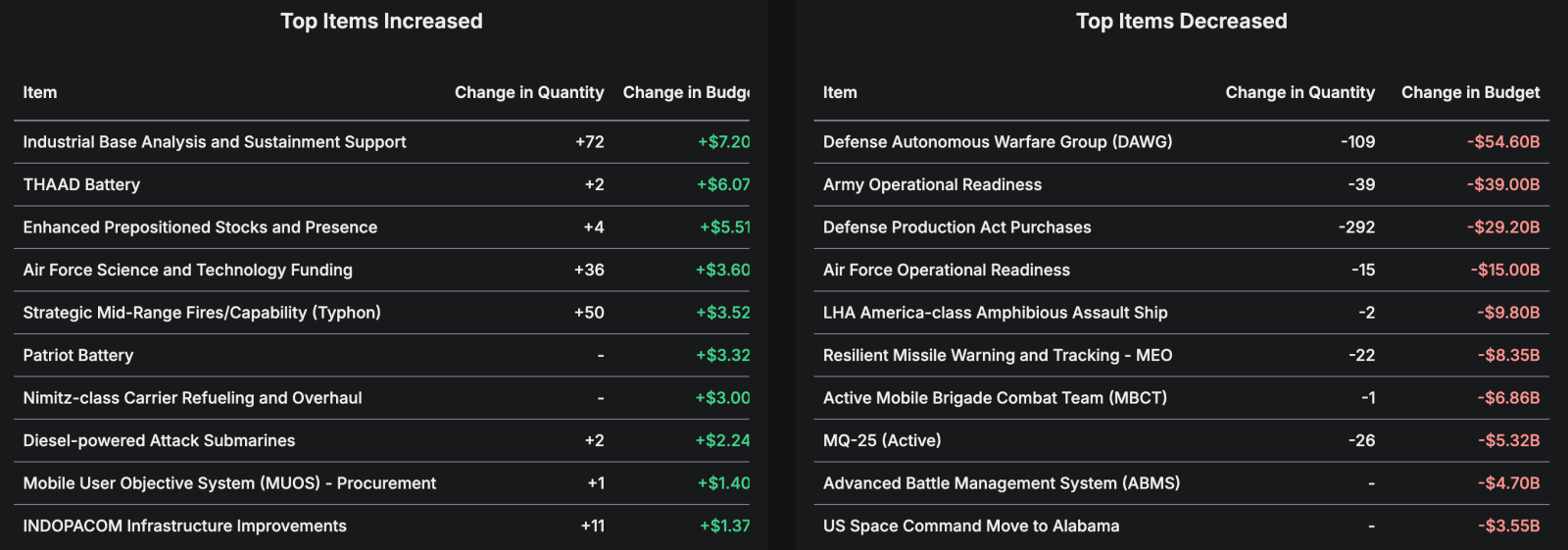
After the election, I gave a single-point quick look at what I think will be a casualty of the midterm election for our Navy. Looking ahead, I think everyone needs to be clear-headed that having a “big defense budget” was not an election winner. It really wasn’t an issue…so it has no heft. We also need to understand that we may have one of the most left-wing cohorts coming to Capitol Hill in, well, perhaps post-Watergate. The 89th and 111th were quite liberal, but not filled with as many hard-leftists, perhaps. We’ll see what they do in office, but this new class will move the center of gravity to the left. Yes, there are some (D)s coming in who know the defense issues, but they are not the ones with, well, heft. So, what could happen? I’m not emperor, so I cannot pick and choose what I want…and I am aware of my biases. I am Mr. “We are a maritime and aerospace power,” so you know where I would put money in the short term—say, a few POM cycles—if we were facing declining defense budgets. Make no mistake, we are. We are probably at the high-water mark for defense budgets, and should plan accordingly. Things are going to have to go. OK, I officially do not like automated systems—Artificial Intelligence or Super Intelligence, whatever—getting involved AT ALL in how we allocate our defense budget. As I like to say: fewer accountants, more thinkers. Letting the black-box do your thinking for you simply removes agency, accountability, and produces excuses…etc…etc. I have no illusions about how the sausage is made in DC. I know everything from the NDAA to selection boards in Millington (yes, that is politicized too) involves imperfect human imput. Trust me, I get it…but there are humans in the loop. Sure, they try to hide from responsibility, but you can find it if you want. Automated systems? Nosomuch. True, ‘garbage in—garbage out’ applies, and those who write the program shape the results…but few go after those who write the code. “It’s what the machine kicked out…” Do. Not. Like. That being said, AEI’s Defense Futures Simulator is an interesting exercise to go through if you are trying to find out what may come out the other end should defense cuts come at scale. What makes it interesting? Well, what it comes up with after the code gets through chewing on things. I’d encourage everyone to sign up for the Simulator and give it a try. It won’t let you pick this system or that. It just takes your priories. The black-box does the rest. This is how the good folks at AEI describe the project. As Congress returns from recess after the midterm elections, the FY 2027 defense budget hangs in the balance. The administration requested a record $1.45 trillion in funding for the Department of Defense (DoD) through a combination of base budget and reconciliation funding, not including additional national defense funding outside of DoD. Before Congress left for recess, it made little progress advancing defense appropriations and a reconciliation package for defense. DoD is currently operating under a continuing resolution (CR) at the FY 2026 base budget level of $858 billion until December 11, 2026. The range of outcomes at play between the CR level and the requested budget level is nearly $600 billion, roughly the size of the entire defense budget a decade ago in nominal terms. If the Congress cannot agree to the full requested level of $1.5 trillion, it will have to make hard choices about what to cut, what to defer, and what to keep. In this working paper, three AEI scholars take on this difficult task so that everyone knows the stakes involved. Using the publicly available Defense Futures Simulator, we each developed plans for how we would adapt the budget under three hypothetical levels of funding for FY 2027, including reconciliation and base budget combined, but excluding the supplemental requirements. The first scenario considered is $1.25 trillion, a cut of $200 billion from the request. The second scenario is a reduction of $350 billion to $1.1 trillion in total funding. The third scenario is $1.0 trillion, which is $450 billion less than the request and roughly equal to the FY 2026 level of funding including the prior $152 billion reconciliation package. They are much more pessimistic than I am in the second and third scenarios. If you made me make a prediction today, I’d say we’re looking at a bit under a 15% reduction from $1.45 trillion. The first 10% in FY27, and then the other 5% in decreasing amounts through FY31. It is something to start with. In the simulator, here is how my Plan Salamander works inside their emphasis slider. You enter how you would have a different emphasis, then pick your cuts. Here is how I would allocate the $209 billion in cuts over five years. What did that give me? Everything got cut, but some things more than others. My Marines—our most useful service—got hit the least. Excellent. I do like that the Simulator, rightfully, cut Army end strength the most, but what got my attention was the Tonnage (Navy). What did it cut? I was surprised that BBGN was still hanging in there…and that the LHA was taking the hit. A completely different decision from what I would make…but something has to go and, again, I cannot micromanage the outcomes here. Somehow, we’d need to claw back this loss. Just like Grok or ChatGPT, AI/SI gives you an 80% solution. The other 20% you can adjust. I like this. Good exercise. Nice Phase-1. Give it a shot. Leave a comment Share This Substack is reader-supported. To receive new posts and support my work, consider becoming a free or paid subscriber. View the full article
-
Rocket Lab has signed more than $515 million in launch contracts for its new Neutron rocket in a single quarter, and has raised the rocket’s base price to $70 million per launch, up from $55 million, the company said on November 9. The eight missions came from five customers, including the U.S. Space Force and […]View the full article
-
Russia’s Defense Ministry has for the first time claimed that its air defenses shot down AGM-188A Rusty Dagger cruise missiles, the U.S.-made weapons better known as ERAM, or Extended Range Attack Munition. The statement was later deleted from the ministry’s official accounts without explanation. The ministry gave no details of where or how many of […]View the full article
-
U.S. Special Operations Command is looking for companies that can build a helmet-mounted display that lets special operators fly first-person-view drones and see battlefield data without taking their eyes off their surroundings. The command posted a sources sought notice on Nov. 9 on the federal government’s contracting website, seeking a display module with a 50-degree […]View the full article
-
The Pentagon’s research and development arm, the Defense Advanced Research Projects Agency (DARPA), is preparing a program called Anzio to develop technology that would let spacecraft use Earth’s upper atmosphere, rather than rocket fuel, to make large changes to their orbits. DARPA’s Tactical Technology Office announced the effort on Nov. 9 in a notice on […]View the full article
-
Japan’s defense procurement agency is building its own uncrewed ground vehicles in three weight classes, ranging from under 1 ton to as much as 10 tons, a display at the agency’s technology symposium shows. The display was shared by Rikuno Yuuno, a former Japan Ground Self-Defense Force soldier who now comments on military affairs, in […]View the full article
Yesterday
-
Poland has received its last batch of South Korean K9 self-propelled howitzers and K2 tanks for this year, Poland’s Armament Agency said on November 9. Several dozen K9 Thunder howitzers and K2 Black Panther tanks were being unloaded after arriving in the country, the agency said in a post on social media. The vehicles were […]View the full article
-
A Ukrainian lawmaker says she has blocked the final vote on a bill to create Space Forces within the country’s armed forces, just hours after parliament approved it in the first reading. Mariana Bezuhla, an independent member of the Verkhovna Rada who was elected on President Volodymyr Zelenskyy’s Servant of the People party list, announced […]View the full article
-
The U.S. Marine Corps is buying two RIPSAW M3 uncrewed ground vehicles from Textron Systems and its subsidiary Howe & Howe, the company said on November 5. The vehicles will go to the Marine Corps Warfighting Laboratory in Quantico, Virginia, where Marines will use them as testbeds for experimentation. The lab plans to fit the […]View the full article
-
Unusual armored vehicles hidden under camouflage netting and tarps that turned up at a U.S. Army exercise in Hawaii have turned out to be mock enemy tanks used to play the opposing force. The vehicles arrived on semi-trailers at the Kahuku Training Area on Oahu on November 5, during preparations for Joint Pacific Multinational Readiness […]View the full article
-
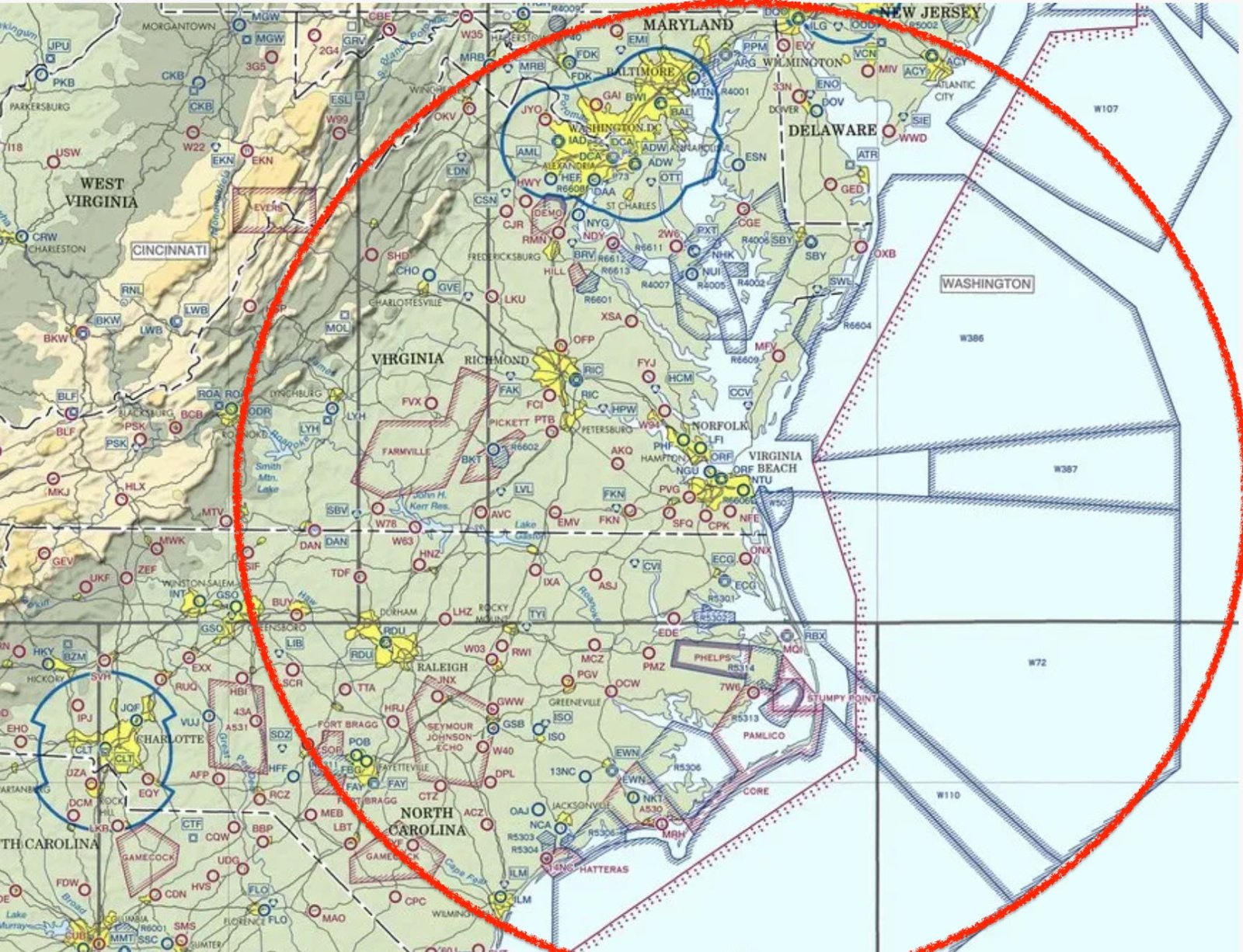
Over the weekend on X, Singapore-based Alec posted a graphic that deserves a proper geographic explainer for an American audience. As we go through the below, I’d like you to ponder a few things: Were you the People’s Liberation Army Navy (PLAN), would you do anything else? Given the size of 1QFY27’s PLAN, do you really have any other options, given what the second largest navy, the U.S. Navy, needs to train and operate? A quarter century ago, the U.S. Navy and the national security apparatus thought nothing about sending two carrier strike groups through the Taiwan Strait. How does that CONOPS look in late 2026? Of course, that means we have to go to the chartroom. It is important here for people to understand the distances involved, what that means for how the People’s Liberation Army Navy (PLAN) is operating, and the utility of its Interior Lines of Operation when it comes to the waters off Taiwan. A fair portion of the regulars here are familiar with VACAPES off Norfolk. For those who have led an incomplete life and have never been East Coast Sailors, that is the training area that everyone uses because it is close and easy to manage. Let’s all take a moment to ponder how much time we’ve spent in W72, because to get from Norfolk to the edge of Whisky-Seventy-Two, you’ve got to venture out roughly 172 nautical miles (nm), as represented by the red circle. Right opposite Taiwan is Quanzhou, PRC. If you were to travel 174 nm from there, roughly the same distance to the edge of W72 in VACAPES—the smaller of the circles below—you’ve pretty much covered all of the island of Taiwan. The larger of the two circles above represents the roughly 1,200 nm distance from NAS Key West to Caracas, Venezuela. That is about the same distance over which you see PLAN ships operating in Alec’s short video at the top of the post. For reference, the distance from Norfolk to the Strait of Gibraltar is about 3,300 nm. The distance from San Diego to Taiwan is 6,000 nm. I tried to find a map of the Puerto Rico Operating Area (PROA), but no joy on my end. If I recall correctly, it covers most of the Eastern Caribbean. Heck, the Caribbean itself is +/- an ‘American lake’. With the PLAN being the world’s largest navy, the argument can be made that the Western Pacific, roughly halfway out to Guam, is going to become its lake…or at least the PLAN is going to try to make it so. We need a larger Navy and one characterize by range and capacity. This Substack is reader-supported. To receive new posts and support my work, consider becoming a free or paid subscriber. Share Leave a comment View the full article
-
The U.S. Army has shipped its Arctic Beowulf all-terrain vehicles to Hawaii for a large training exercise in jungle and island terrain. Soldiers loaded the tracked vehicles aboard an Army transport ship at Joint Base Pearl Harbor-Hickam on November 5 to support Joint Pacific Multinational Readiness Center Rotation 27-01, the U.S. Army said. Staff Sgt. […]View the full article
-
U.S. Air Force leaders say C-17 and C-130 cargo aircraft will soon launch cruise missiles dropped from their cargo holds on standard airdrop pallets, with the service planning to field the capability in 2027 under a program now known as Dragon Cart. Air Force Chief of Staff Gen. Kenneth S. Wilsbach described the plan on […]View the full article
-
An uncrewed ground vehicle from Australian firm BIA5 was put through U.S. Army trials in Hawaii, where soldiers tested autonomous systems for evacuating wounded troops and moving supplies, the U.S. Army said. The company’s ATR platform, fitted with a remotely controlled monitor and several cameras, was evaluated on November 7 ahead of a multi-mission casualty […]View the full article
-
U.S. Army paratroopers from the 11th Airborne Division flew nearly 3,000 miles (4,800 km) from Alaska and jumped straight into a training assault in Hawaii, putting on their parachutes in the air along the way. The operation, called “Arctic Aloha,” was the division’s part in Joint Pacific Multinational Readiness Center Rotation 27-01, a large Army […]View the full article
-
U.S. Army air defense soldiers in Poland spent five days learning to fly FD-1 interceptor drones into incoming targets over the Baltic Sea, as the Army looks for cheaper ways to stop large waves of enemy drones. The training, called Operation Audacious Fury, ran November 2–6 at the Ustka Training Area on Poland’s northern coast, […]View the full article
-
U.S. Marines with the 26th Marine Expeditionary Unit rehearsed a land raid at Fort Stewart, Georgia, on November 7, clearing buildings and moving in Amphibious Combat Vehicles during the unit’s Realistic Urban Training, U.S. Marine Corps photos show. The Marines belong to Battalion Landing Team, 1st Battalion, 8th Marines, the ground combat element attached to […]View the full article
-
U.S. Army soldiers from the 25th Division Sustainment Brigade drove Swarmbotics AI’s FireAnt small uncrewed ground vehicles through a long-distance movement test in Hawaii on November 8, as the Army trialed autonomous systems for moving supplies and wounded troops in the Pacific, the U.S. Army said in a photo release. The test took place at […]View the full article
-
Ukraine’s parliament has taken the first step toward creating a Space Force within the country’s armed forces. On November 9, the Verkhovna Rada approved in the first reading draft law No. 13255, which would set up Space Forces as a new branch of the Armed Forces of Ukraine. The bill calls for developing space technologies […]View the full article