All Activity
- Today
-
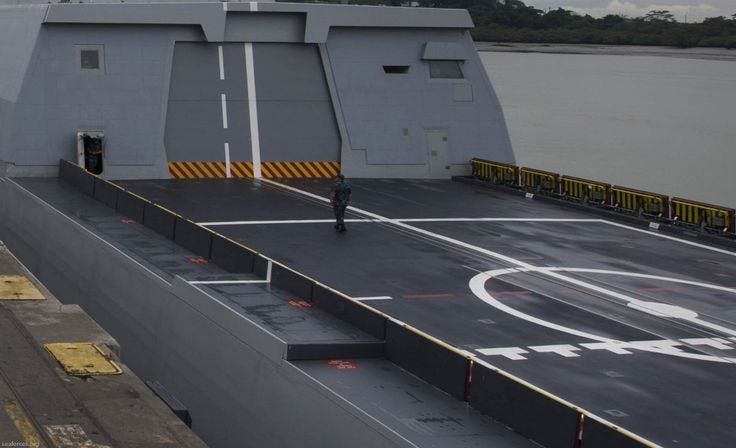
In both comments and via a couple of email/DMs yesterday, there were some sincere questions about why no one is talking about installing the “newer” design MK-57 VLS cells that we see in the three ships of the Zumwalt Class. In isolation they appear to be fine VLS cells, but are creatures of the time and place in which they were designed. Let’s go back to their first name: the MK-57 Peripheral Vertical Launch System (PVLS). They are a custom solution for the DDG-1000 Class designed in the Age of Transformation™ in the first decade of this century. It is an evolutionary dead-end riding on a white elephant. The MK-57 has a common problem found on most designs from this decade of error: it was built around novel ideas about warship construction and design that time proved wrong. Critique and best practices were hand-waved away, and entire systems were designed around weapons that simply never showed up. That left the future with all the costs of compromise without the promised delivery of new systems. Seriously, whatever happened to those “larger missiles” that were supposed to fit in there that couldn’t fit in a MK-41? Here are three major downsides from my seat that explain why we will not see them again: Inefficient use of volume: The Mk-57 is built in 4-cell modules rather than the traditional 8-cell grids, which isn’t too much of an issue. However, they take up significantly more interior hull space per missile. If you need a 1x4, the nice sales representative at LMT can get that for you in a MK-41. Not worth the additional cost: For the price and deck space it demands, it did not offer a proportionally higher return in firepower. Though they were designed to accommodate larger, next-generation missiles, that design limits the flexibility of what can be loaded. It has a slightly wider cell diameter than the MK-41, but is still not large enough to house the Conventional Prompt Strike (CPS) / hypersonic missiles. Exceptionally FPV vulnerable: Though I am sure they can be installed elsewhere, with the Zumwalts they were installed next to the skin of the ship. Everyone is worried about small drones (FPV), especially nearshore and in port. They carry small warheads, which are not too much of a concern to a big ship (however, the shaped-charge warhead of an RPG-7 many seem to be strapped with will cut right through our thin-skinned warships)...but when you have a big missile just an external bulkhead away from the side of the ship...you can figure it out from there....not to mention a Fitzgerald/McCain like collision or Cole attack. At the end of the day—larger with no additional gain, more expensive without any value, expanded vulnerability without any enhansed lethality. That is why we don’t see them. Leave a comment Share This Substack is reader-supported. To receive new posts and support my work, consider becoming a free or paid subscriber. View the full article
-
The U.S. Navy is doubling down on what it considers its most capable air and missile defense radar at sea, committing $516 million to keep the system integrated, tested, and ready across the fleet. Raytheon Missiles and Defense, the Marlborough, Massachusetts-based defense arm of RTX Corporation, secured a $515.8 million contract modification this week to […]View the full article
-
An Israeli defense firm is preparing to show off a laser weapon at Eurosatory later this month that can burn through a drone in under two seconds while drawing only a fraction of the power that comparable directed-energy systems require. Esh-Tech, a laser-focused defense technology company based in Omer, Israel, announced DroneLight on June 3, […]View the full article
-
Ukrainian forces struck the Russian Baltic Fleet corvette Boyky at Kronstadt Naval Base on the night of June 2-3, 2026, in the same overnight operation that set the St. Petersburg Oil Terminal ablaze on the opening day of Putin’s annual economic forum, with Ukraine’s Unmanned Systems Forces and the Security Service of Ukraine confirming the […]View the full article
-
Canada announced on June 2 that it finalized a deal in January 2026 to purchase 26 HIMARS rocket artillery systems from the United States for approximately $1.9 billion, giving the Canadian Army its first long-range precision strike capability and a weapon that Ukraine has used to devastating effect against Russian logistics, ammunition depots, and command […]View the full article
-
A Ukrainian defense technology company has unveiled a heavy quadcopter drone designed specifically for satellite-controlled strikes, precision minelaying, and logistics resupply at ranges and from positions that conventional radio-controlled drones cannot reach, delivering a capability that Ukrainian frontline units requested directly as the nature of drone warfare on their front evolved in ways that ground-based […]View the full article
-
Ukraine struck a major Russian oil terminal in Saint Petersburg and hit a military industrial target near the Baltic Fleet’s Kronstadt base on the night of June 2-3, with President Volodymyr Zelenskyy confirming the operations were part of his “long-range sanctions” campaign designed to make Russia’s war economy pay a direct price for its attacks […]View the full article
-
A Japanese opposition lawmaker has gone directly to Defense Minister Shinjiro Koizumi in a parliamentary committee hearing to demand that Japan supply Patriot air defense missiles to Ukraine, citing Zelensky’s stated desperation for interceptors and arguing that Japan now has both the legal authority and the moral obligation to act. Shigefumi Matsuzawa, a member of […]View the full article
-
Saab rolled out the first Gripen F two-seat fighter to the Brazilian Air Force on June 2 at its Linköping facility in Sweden, presenting the newest variant of the Gripen E family to the air force that helped develop it and marking a milestone in one of the most substantive defense industrial partnerships between a […]View the full article
-
American Rheinmetall is spending $41 million to expand and modernize six manufacturing facilities across Michigan, Ohio, and Maine, accelerating production capacity for some of the U.S. Army’s most important ground combat modernization programs while deliberately avoiding the time and cost of building entirely new factories. The German defense giant’s American subsidiary announced the capital investment […]View the full article
- Yesterday
-
Ukraine’s 146th Separate Repair and Restoration Regiment published photographs of a Soviet-era BMP infantry fighting vehicle fitted with a Spanish GUARDIAN 30 remote weapon station. The photographs, posted to the regiment’s official social media page, show a standard BMP hull carrying the GUARDIAN 30 turret in place of the original conical Soviet turret that the […]View the full article
-
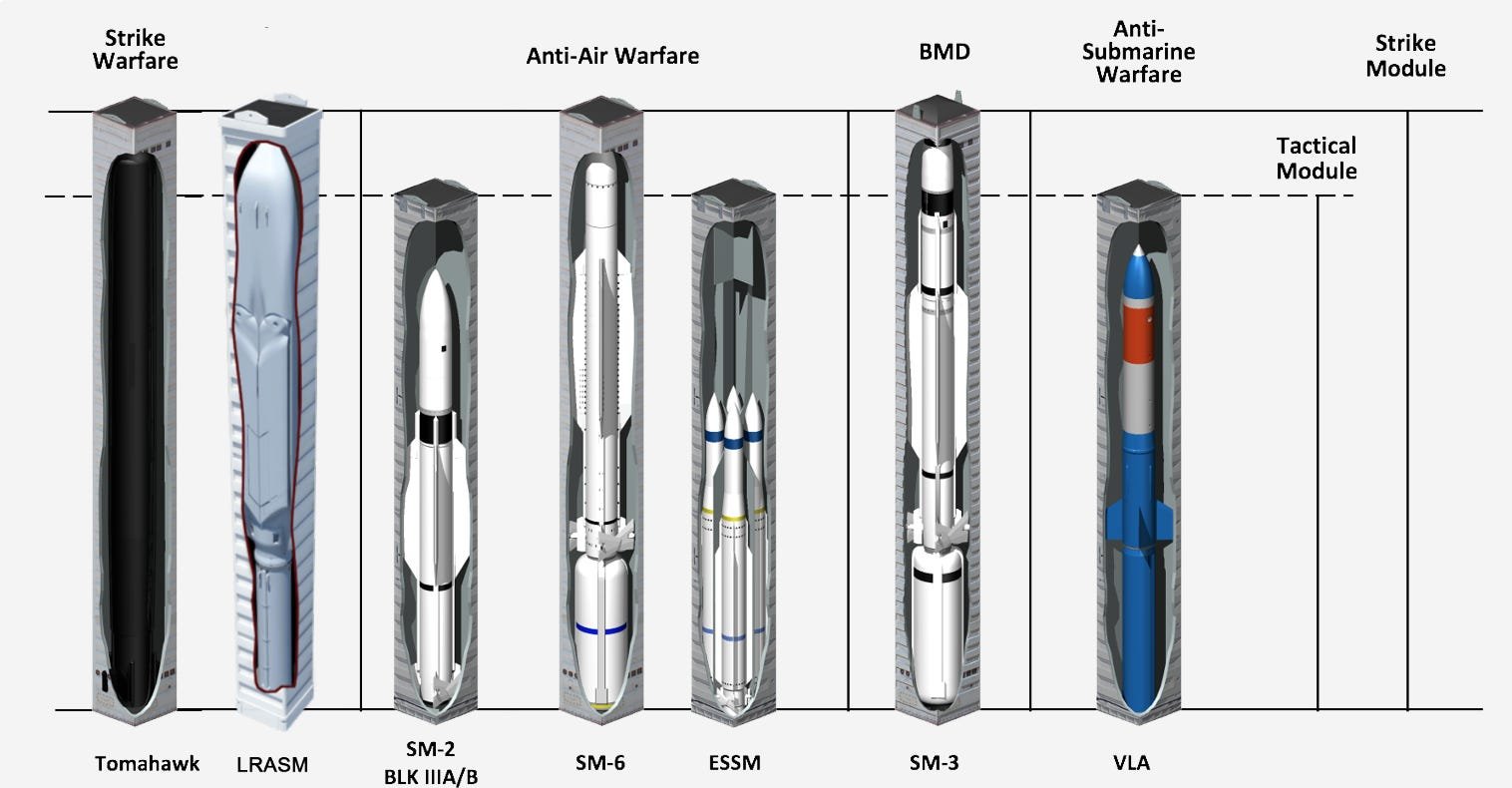
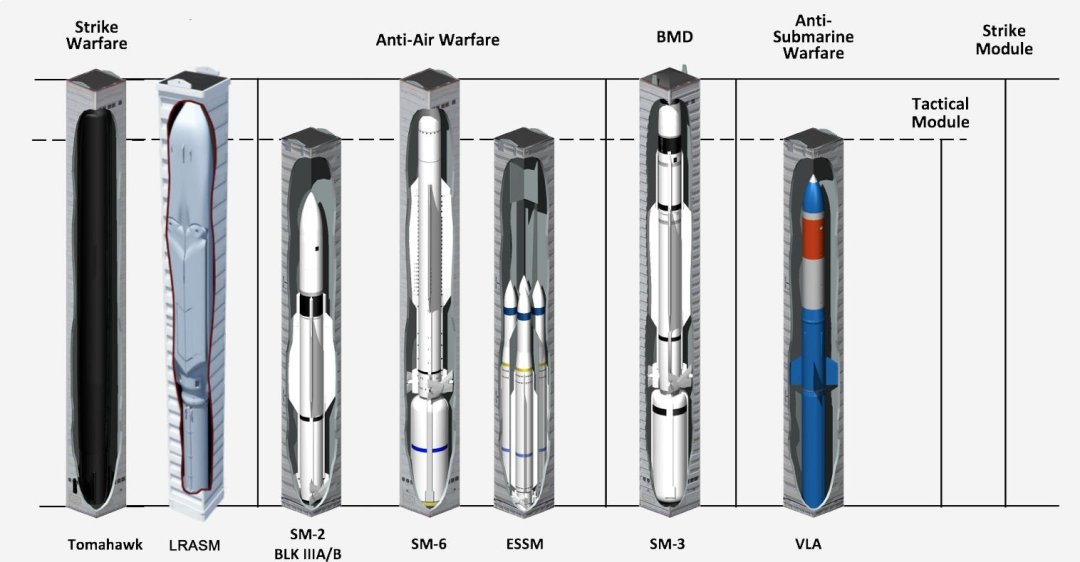
I’d like to revise and extend my remarks from my post this March, Up-arm the Fleet? With What? There is a limiting factor to my argument that I have no one but myself to blame for in the subtitle: To hell with your RCS. I want more weapons topside, now. If you want to hear the topside thoughts, give the linked-post above a read. What I’d like to ponder this fine Tuesday is something below decks. Nothing new, really. Nothing that needs to be invented. Nothing that requires all that much more than…space below deck. Right now, the smallest standard installation of the MK-41 VLS system is a single-module 8-cell package, 4x2. It is not a small bit of kit. The basic module is available in two sizes: strike and tactical length. The strike module is approximately 25 feet (7.6 meters) long and capable of launching large missiles, such as those that support sea-based midcourse ballistic missile defense and long-range strike. The tactical module is approximately 22 feet (6.7 meters) long and is capable of accommodating the same missile types as the strike length with the exception of the Tomahawk cruise missile and missiles designed for a ballistic missile defense role. But it can bring a lot to the table. The launch control system features an open, distributed architecture that allows for easy integration of future technologies. Open architecture both in the weapon control interface and the missile mechanical and electrical interface allows the system to support any missile in any cell. This is a capability unique to MK 41 VLS. The missiles currently integrated with MK 41 VLS include Evolved Sea Sparrow Missile (ESSM), Tomahawk Cruise Missile, Standard Missile 2, Standard Missile 3, Standard Missile 6 and Vertical Launch ASROC (VLA). Lockheed Martin has consistently demonstrated the ability to integrate new weapons. Future missile integration could include Long Range Anti-ship Missile (LRASM), Common Anti Air Modular Missile (CAMM), ASTER, Future Cruise/Anti-Ship Weapon (FC/ASW) and Barak. As we outlined in some detail in the March post linked to above, and over the last few decades on a regular basis here and on the Midrats Podcast, when the next big war arrives, every ship that comes in for maintenance is going to have (we hope) scores of people scrambling about installing weapons anywhere the engineers will let them when reality reminds everyone that war at sea is a nasty and dangerous place once the enemy can shoot back. We also have Cooperative Engagement Capability (CEC), the distributed lethality concept, quad-packed ESSM, and, really, if you can add two VLS cells here, and two VLS cells there, and then do that to four ships that otherwise would not have them…after a while, you have quite a bit more to play with in the aggregate. Anyway, when the enemy is coming at you up close and personal, you cannot have enough weapons. Where to put them? We have more options than you think. That big 8-cell module isn’t something you can shoehorn in via a SHIPALT willy-nilly, even if you are an LPD-17 Class ship that was designed for but not fitted with the MK-41 VLS. What if you could break that 8-cell into smaller bits from 1x1, 2x1, 2x2 etc to fit what space you could find? Lucky for us, that solution already exists. Nod to the thinkers at LMT. BEHOLD the ‘A Name Only an Engineer Would Love” …. Single Cell Launcher. Lockheed Martin has developed a scalable, modular, flexible missile launcher to provide an improved capability for navies around the world. The Single Cell Launcher maximizes commonality through use of the structure, software and electronics associated with the combat proven MK 41 Vertical Launching System (VLS)…leveraging the latest state-of-the-art MK41 VLS launch control system, MK 25 Quad Pack Evolved Sea Sparrow Missile (ESSM) Canister and a scalable, mechanical structure. Yes, I struggle through marketing-speak too—but this is the life we have chosen. This design provides a flexible system that is easily configurable, particularly where size and space concerns are paramount. SCL was designed to meet the need for a smaller, lighter and more flexible launcher for smaller ship classes which supports naval fleets around the world. I don’t know about you, but this is just plain sexy. OK, so here is what I’d like to see at peace when we have some time and the ability to scale up hardware production, because this will unquestionably be asked for at war where we don’t have the time or hardware. Get a few teams of young engineers with the best software out there. Give each team a random selection of USS, USNS (soon USS), and USCGC in active service or expected to be in active service and give them the simple task: “Tell me where you can put these on your ship, and the tradeoffs for doing so.” For each ship, give me three options Low impact Medium impact Maximum load” Tell them you want your first brief in 14 days. Then, look over at the Lockheed guys and tell them, “Make the electronics, CEC, and CIC interface common and simple—and do it now.” Then, get out of their way with a departing quote from The Great Man: Chop, chop. Peace is a luxury and we are all about to have to learn to live on poverty wages. Leave a comment Share This Substack is reader-supported. To receive new posts and support my work, consider becoming a free or paid subscriber. View the full article
-
Greece has signed an agreement to expand its fleet of Shield AI V-BAT drones for maritime surveillance operations across the Aegean Sea, the company announced June 2, deepening a partnership that has already seen the Hellenic Army deploy the systems for intelligence and reconnaissance missions across one of NATO’s most geographically complex operating environments. The […]View the full article
-
The U.S. Navy bought six specialized reconnaissance boats designed by former Australian Navy frogmen, built in North Carolina, and validated through two years of testing with Marine Corps special operations units. Naval Sea Systems Command awarded The Whiskey Project Group USA a $17.5 million contract for six Multi Mission Reconnaissance Craft (MMRC), expeditionary watercraft designed […]View the full article
-
Before any American strike package enters defended enemy airspace, an EA-18G Growler goes in first to blind the radars, jam the communications, and break the targeting chain that would otherwise kill the jets behind it. The Navy invested $61 million to significantly improve that aircraft’s ears. The Naval Air Systems Command at Patuxent River Naval […]View the full article
-
Every warship in the U.S. Navy practices shooting down the kind of supersonic cruise missiles that China and Russia have spent decades perfecting, and the Navy paid nearly $100 million to keep that practice running for another five years with the only American target missile that can actually replicate what those weapons do. The Naval […]View the full article
-
Lockheed Martin opened a purpose-built missile production facility in Courtland, Alabama on Monday dedicated entirely to manufacturing the Next Generation Interceptor, the missile that will eventually replace the aging Ground-Based Interceptors currently guarding the United States against ballistic missile attack from Alaska and California. The 88,000-square-foot Missile Assembly Building 5 represents a concrete physical step […]View the full article
-
Finland’s next generation of warships is getting armored protection from a specialist composite materials company, with Integris selected to supply advanced naval ballistic protection systems for all four Pohjanmaa-class corvettes currently under construction at Rauma Marine Constructions’ shipyard in Rauma, Finland. The partnership began at the earliest stages of ship design rather than as a […]View the full article
- Last week
-
The first Eurofighter built under Spain’s Halcon I program has rolled out of the factory at Getafe, Madrid, with Airbus Defence and Space confirming that the aircraft is ready for its first engine run and maiden flight, marking the arrival of a new generation of European air combat capability on the Spanish Air Force’s flight […]View the full article
-
Northrop Grumman completed a successful flight test of its Jackal precision strike missile on June 1, demonstrating the core systems that will define how American ground forces deliver long-range strikes in the most contested environments they are likely to face. The test validated the missile’s automated turbojet engine startup, autopilot-controlled flight, and high-speed maneuvering, confirming […]View the full article
-
Britain has ordered hundreds more Lightweight Multirole Missiles from Thales to rebuild stockpiles and reinforce the air defense of British forces in the Middle East, with the contracts worth a combined £36 million, roughly $48 million, George Allison of the UK Defence Journal reported June 1. The two contracts were placed by the National Armaments […]View the full article
-
The U.S. military fired more than 1,000 Patriot interceptors during the Iran conflict but received only 172 new ones in return, according to a Center for Strategic and International Studies analysis, leaving American air defense stockpiles in a deficit that won’t be replenished until 2029 at the earliest. That gap has driven a search for […]View the full article
-
An Israeli fire control technology company has now secured contracts with all four major branches of the U.S. military, completing a sweep across the American armed forces that took less than a year. Smart Shooter announced June 1 that it received its first significant U.S. Navy contract, a $1.8 million award for soldier-portable SMASH 2000LE […]View the full article
-
With so much else going on, it is easy to forget that the Russo-Ukrainian War of 2022 is still ongoing. It has always been true that if you want to better prepare your nation for its next war, watch closely what works or does not work in other people’s wars. We’ve seen a cottage industry build around this concept when it comes to the conflict in Ukraine. Some of it gets rather tiresome as people try to directly translate what works on the Ukrainian steppe to a potential Taiwan conflict, for just one example. Much of this pontificating and projecting is firmly where most people are comfortable, the Tactical level. We’re not going to do that today. Recently, breaking above the background noise is a development at the Operational and Strategic level that keeps tapping me on the shoulder. We’ll return to that in a bit, but for those who have been focused on DC-centric issues, Venezuela or Iran, let’s catch up. In case you were not tracking, Putin’s “72-hour War” that he started on February 24, 2022 has been going on longer than the Soviet Union fought Nazi Germany in WWII. That war lasted 1,418 days, from the invasion on June 22, 1941, to Victory Day on May 9, 1945. The Russian invasion of Ukraine on February 24, 2022 surpassed that 1,418-day mark in January 2026. Yes, this war is longer than WWII for the Russians and Ukrainians. At the end of February 2022, if you showed anyone this graph, they would not have believed you. For Russia alone: 1.3 million+ casualties, almost 12,000 tanks, and double that number in AFVs, etc…yet here we are, and more importantly, plucky Ukraine is still standing—even with the often miserly, occasionally intermittent, yet growing support from Europe and North America. It seems each month, another drip to help Ukraine from the West gets added. JDAM-ER is just the latest. The ghost of McNamara’s incrementalism still haunts us all. If you need to catch up in more detail, as always there are two sources that consistently produce quality products. Both of them underscored to me that something new and important is happening as summer arrives. There is a lesson here, one that I am sure the People’s Republic of China (PRC) is noting. First, Cappy’s videos are prime. If you are more of a text guy, the Institute for the Study of War. Ukraine is actively challenging the positional character of the war that has dominated the battlefield since 2023. Russian battlefield gains are approaching net zero, while Ukrainian forces are setting conditions potentially to break out of positional warfare by reintroducing limited elements of mechanized maneuver at the tactical level. Ukraine has re-secured an overall drone advantage and fielded systems capable of disrupting Russian forces throughout their operational depth in support of planned Ukrainian offensive or defensive ground operations. Neither Russia nor Ukraine can conduct operational maneuvers yet, however. Ukraine’s success in blunting Russian advances and reversing Russian gains in some sectors of the line, in tandem with Ukraine’s limited reintroduction of elements of tactical mechanized maneuver, may nevertheless mark the beginning of a new phase of the war. Combat in Ukraine will likely become less positional and feature more tactical maneuver until Russia’s innovation cycle renders Ukraine’s current operational concepts ineffective. Ukraine likely has a unique and time-constrained opportunity to exploit its current initiative while Russian forces remain vulnerable. … Russia is losing more soldiers to make fewer gains, with monthly Russian casualty rates reportedly outpacing monthly recruitment since December 2025. … Ukraine is starting to regain more ground than it is losing for the first time since 2023. Perhaps the Russians may have culminated…again…but more cards need to come out through the summer to make that call. Perhaps. The restructuring to align more closely with NATO standards is great; continued modernization and scale of production are superb, but this is what keeps tapping me on the shoulder. Ukraine significantly intensified its intermediate-range strike campaign against dynamic targets in Spring 2026 in order to degrade Russian logistics at operational depths ahead of a planned Ukrainian maneuver. Logistics. Logistics. Logistics. You cannot conduct offensive operations without robust logistics. None of this is new. The pilots of P-47s who haunted the roads and rails of Western Europe in WWII could tell you the story. Our pilots who targeted the Ho Chi Minh Trail knew exactly what their mission was. The key is if you have the weapons, intel, and mass to do it with a scale of effect to make a difference to the front-line effort. What is the Achilles Heel of the U.S. military in any conflict west of the International Date Line? It is our undercapitalized sealift, our forward repair and rearming capability, and our ability to replace losses in the strategic sealift and airlift we possess. Don’t forget: we may couch any conflict against the PRC as ‘defending our allies’, but our operations will be offensive in nature. We will have extended exterior lines of communication far from our homeland. Our enemy will have short, interior lines of communication from their homeland. What is the Pacific Sea-Lines-of-Communication (SLOC) for the U.S. that is comparable to Russia’s Ground-Lines-of-Communication (GLOC)? Simple: the SLOC west from Guam, north from Australia, and southwest from Japan. The deep fight is everything east of there. When you look at what the PRC has built up, specifically in their rocket forces, over the last two decades, it is clear they already know this. What they are seeing in Ukraine will only tell them that they are on the right track. Do they have the weapons, intel, and mass to make our sustainment, repair, and rearmament west of Guam untenable? So, what are we doing to counter it? Leave a comment Share This Substack is reader-supported. To receive new posts and support my work, consider becoming a free or paid subscriber. View the full article

-
Pakistan’s Chinese-made J-10CE fighter jets went undefeated against Qatar’s Eurofighter Typhoons in nine simulated air combat engagements during a joint exercise in 2024, with China’s state broadcaster CCTV confirming the result last week without identifying the specific drill or the countries involved, according to an analysis by Harrison Kass published by The National Interest. Pakistani […]View the full article