All Activity
Today
-
The Pentagon’s top policy official has spent a week meeting with defense leaders from Germany, Britain, Italy, and Romania, laying the groundwork for a review that could reshape how many American troops stay in Europe and who actually pays for the continent’s defense going forward. Under Secretary of War for Policy Elbridge Colby detailed that […]View the full article
-
A U.S. Marine Corps amphibious vehicle that can swim ashore from a warship still can’t stop a hobby-store drone from watching it do it, and the Marines just confirmed the fix, and the company they intend to buy it from, without opening the job to competition. The Marine Corps’ Program Manager Advanced Amphibious Assault, part […]View the full article
-
The U.S. Army has told drone makers it wants a battlefield scout small enough to fold into a backpack-sized case, tough enough to carry a lethal weapon, and versatile enough to deliver two pints of blood to a wounded soldier. The U.S. Army Contracting Command at Redstone Arsenal issued a Call for Solutions on August […]View the full article
-
A construction company has won a $37.6 million contract to build a facility so secure it needs its own classification category, part of a sprawling effort to turn a small Arkansas Air National Guard base into an international training hub for the world’s most advanced fighter jet. BL Harbert International LLC, based in Birmingham, Alabama, […]View the full article
Yesterday
-
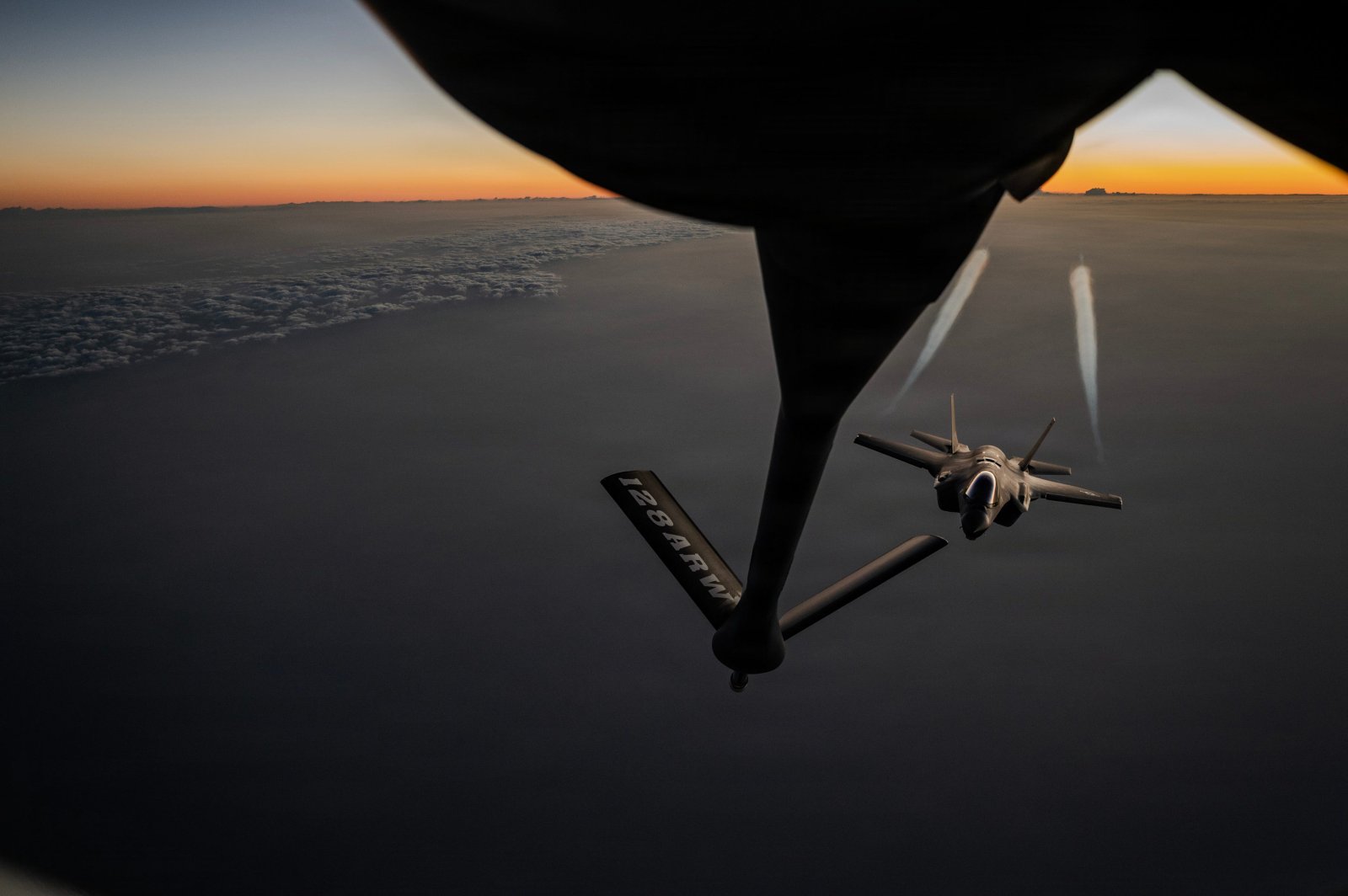
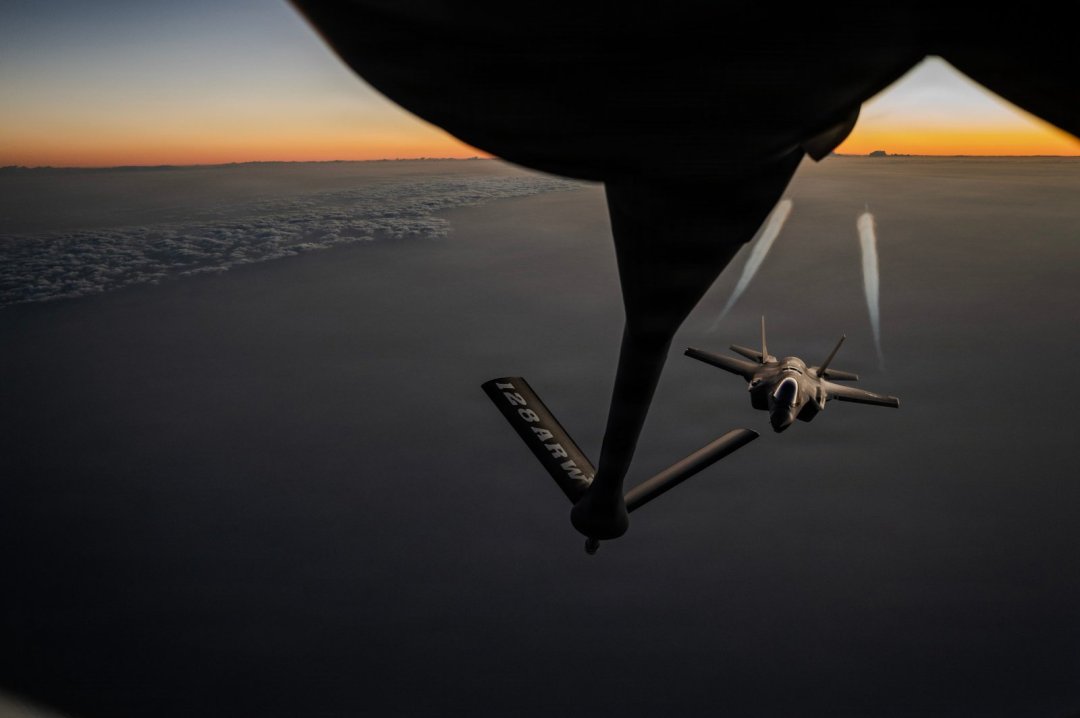
One of the great things about today’s information environment in national security is the vast number of voices out there. I know for some this is a frustration—because they desire more control or are simply too lazy to want many choices—but it is by far a net positive. It was not too long ago that there were but a few regular voices out there that could be found only on a few publications or outlets. It was very hard for new voices to get ideas out there, and established experience was provided to you, not vetted through the marketplace of ideas. It was also much harder to push back against bad ideas or compromised institutions. It was easier to silence voices simply because there were few places they could be heard. Barriers, gates, agendas…it was not a great time for the marketplace of ideas. There are still some of these problems, but it is but a shadow of what it once was. As opposed to having someone else curate your information diet for you from a limited selection, you can instead set things up yourself with a broad spectrum of choices. I make sure to read broadly. I find reading from people you disagree with to be helpful in honing your own ideas, or even—for the smart and well meaning people I disagree with—you can find common ground or even realize that, hey, not all their ideas are that bad. One of the people I force myself to read is David A. Deptula, Lt Gen, USAF (Ret.) and now dean of the Mitchell Institute for Aerospace Studies. As one would assume given his professional background and present paying gig, he is a strong advocate for airpower in general, and the USAF in particular. He’s had me roll my eyes now and then, and tilt my head more than once, but he also has me nodding my head in respect when he makes a good point. I passed on reading this the first time it came across my scan, but gave it a try on my second. I’m glad I did. Over at Forbes about a week and a half ago he put out an article titled, Stop Judging Airpower Against Missions It Was Never Assigned, that was of the “good-David” variety. You can feel his justified frustration about the nature of a lot of the discussion about the ongoing operations against Iran. Partisans on both sides are doing what you would expect. People keep trying to spot-weld their long-standing hobbyhorses to it. Most frustrating, however, is the weaponized ignorance and just poor professional practice by those you’d expect better of. Deptula is being patient here, doing exactly what one does when you see disorganized grabassary…you go back to basics. Staying in his lane, he wants to lay down the fundamentals of airpower…and I have to say, it is an exceptional master class for this purpose. Let’s dive into a bit. No serious modern airpower professional argues that bombing, by itself, can solve every military and political problem. Nor does any competent strategist contend that land, sea, air, space, or cyber capabilities should be employed by themselves, independently of the others. Modern warfare is not a contest to determine which military service can claim supremacy. It is the disciplined application of the military capabilities best suited to achieve clearly defined political objectives. The useful inquiry is not whether aircraft can independently deliver every conceivable form of victory. It is whether the choice made by military and political leaders is appropriate to the objectives defined by political leaders. That distinction matters because different objectives require fundamentally different military contributions. We’ve spent the last 85 years refining what airpower can and cannot do. The above paragraph is just about perfect. It isn’t airpower supremacist nor is it dismissive. It is balanced and in line with experience. A campaign designed to replace Iran’s government and assume responsibility for the country would require a major ground component and a far broader political project. Airpower could not occupy Iran, police its cities, or administer its population. Neither could naval, cyber, or space power. Even a successful ground invasion would not guarantee a satisfactory outcome unless political leaders had a credible plan for the post-invasion governance and order. Those advocating a regime change in Iran have to explain why the U.S. should deploy enough ground power to take a nation of 90 million. Of course, they cannot—and even if they could—the U.S. people would not support it. I don’t know any of us who had experience on the ground in the last quarter century from Afghanistan to Iraq who could sell that point. You can do some things with airpower alone, just like you can do some things with seapower alone, but you cannot change a government. That requires, at its core, a young man standing on a street corner with a weapon saying, “This is now ours. Not yours.” Specifically toward Iran, what does the U.S. want? Let’s go back to what the Chairman of the Joint Chiefs of Staff, General Caine, USAF, made it quite clear on March 10: what the goals of the operation were. 1. Destroy missiles/drones 2. Destroy navy 3. Destroy military and industrial base I have written some about this conflict here, but most of my commentary has been on the UNCLAS Read Board Podcast. Regardless of everything else that has bobbed and weaved around this operation…if we would just stick to Caine’s Three, we’ll be fine. Try to do more? Not recommended. In summary, this conflict has gone on much longer than I would have wanted, but at its core, I cannot complain about punishing the Iranian government and the IRGC the way they have. Thousands of young men and women of my generation were killed by them during GWOT, tens of thousands injured. They were more than deserving of a punitive expedition for that reason alone, but to buy more time for the international community to address their nuclear program and take the teeth out of their proxies? Just underlines the case for making the rubble bounce. These recent commentary arguments collapse every military objective into one crude test: Did the adversary’s government surrender, collapse, or disappear? If not, they seem to believe, the military campaign is a failure. By that standard, virtually every use of force short of total conquest will be unsuccessful by definition. Such a measure ignores the fact that nations frequently employ military power for limited purposes: deterrence, denial, degradation, disruption, coercion, containment, protection, or to buy time and diplomatic leverage. … If victory is defined exclusively as seizing territory or overthrowing a government, then ground forces will inevitably appear to be the only force capable of delivering it. But defining success as occupation does not prove that occupation is the appropriate political objective. Land forces are indispensable when leaders decide that seizure and control of territory, protection of populations, defeat of enemy formations in close combat, or occupation and administration of another country is the necessary course of action. Even as these remain essential military functions, they are not the purpose of every military campaign. The mission should determine the force—not the other way around. Exactly correct. I could be on David’s planning staff. My core planning team could work with this. Exceptionally solid. History also demonstrates that aerospace power can produce decisive strategic effects when assigned objectives suited to its capabilities. A little too Effects-Based Operations-ish (I am a hardshell to an extreme Conditions Based Planning adherent), but I’ll allow it. Success should be assessed by the change imposed on the adversary’s behavior and capacity, not by a tally of weapons released or aimpoints hit or “fires” imposed. The below is a very good elevator speech on Joint, best given to those who are new to the game or poorly experienced/educated in the profession of arms. As a matter of fact, if someone can memorize the below and deliver it with a Transatlantic Accent, then they should be awarded JPME I on the spot. Joint operations do not require artificial symmetry among the services or an identical share of responsibility for each component. Nor must a land force provide the final act in every campaign simply to validate the effort as joint. Jointness means employing the capabilities most appropriate to the mission in the right quantities at the right places and in the correct sequence. Sometimes land forces will dominate. Sometimes naval forces will. In other circumstances, airpower will carry the principal load. Cyber and space capabilities may be central to all of them. The optimal combination will vary according to the adversary, geography, political objective, available forces, acceptable risk, and desired end state. The purpose of joint operations is not to protect service equities. It is to maximize strategic effectiveness. The appropriate force package is the one that delivers the required result with the least exposure, casualties, and escalation risk. … No military domain possesses an inherent ability to turn tactical accomplishment into political success. Airpower cannot govern a hostile population. Naval power cannot occupy a capital. Land power cannot guarantee political legitimacy. Space and/or Cyber operations cannot by themselves compel every adversary. Even a fully optimized and integrated joint military force cannot rescue an incoherent strategy. The more productive debate is over the political result being sought, the feasibility of that result, and the combination of diplomatic, economic, informational, and military tools most likely to secure it without disproportionate cost. Political purpose—not service preference—must govern military campaign design. Foundational. Too many people are trying to operate at a high strategic level without a baseline understanding of the basics. Well done, General Deptula. Well done. Leave a comment Share This Substack is reader-supported. To receive new posts and support my work, consider becoming a free or paid subscriber. View the full article
-
A Russian satellite network built to rival Starlink has quietly reached a threshold Ukrainian defense officials have been dreading, providing at least two reliable windows of connectivity over Ukrainian territory every single day, each lasting more than an hour, Militarnyi reported, citing satellite communications expert Volodymyr Stepanets. The system, called Rassvet, is being built by […]View the full article
-
A rocket booster that has flown to space and back seven times carried a classified American spy satellite into orbit before dawn last week, the latest and least publicized entry in a launch campaign the National Reconnaissance Office has been quietly running at a pace unlike anything the agency has attempted before. SpaceX launched the […]View the full article
-
A U.S. Navy warship named for a medic who threw his own body over a wounded Marine to absorb a grenade blast just took its first public step toward joining the fleet, breaking a bottle of sparkling wine across its bow in a Maine shipyard on Saturday. The U.S. Navy christened its fifth Flight III […]View the full article
-
Rheinmetall has unveiled a warship built to outgun vessels twice its size, betting that a mid-sized frigate packed with the same missile defense technology found on America’s largest destroyers can win over navies looking to modernize without breaking their budgets. Rheinmetall, the German defense manufacturer, revealed the GMF 140, a next-generation guided missile frigate measuring […]View the full article
-
A helmet factory in northern Poland has spent its first year of operation shipping more than 90,000 ballistic helmets to NATO allies, and the company behind it says that pace confirms a bet made three years ago is finally paying off. Galvion, a designer and manufacturer of soldier head protection, power systems, and integrated soldier […]View the full article
-
A Romanian robotics company says it has built a single platform that can fight wildfires, work construction sites, and operate as a counter-drone defense system, all from the same modular chassis. Maximus Labs Romania, alongside its manufacturing arm Maximus Lab, describes the Max1 as a modular unmanned ground vehicle capable of switching between operational roles […]View the full article
-
Ukraine’s military has shown a homemade air defense system built by bolting American anti-tank missiles onto a Rada radar and welding the whole thing to a Dutch army truck. Ukraine’s 302nd Anti-Aircraft Missile Brigade publicly displayed a new mobile variant of the STASH short-range air defense system in an official video, mounting the launcher on […]View the full article
Last week
-
I can think of few 18-month periods where shipbuilding, the merchant marine, and the importance of a strong maritime sector in the U.S. has been a more active topic. Near the center of this conversation—or at least a few paragraphs in—is a long-time friend of the show, Dr. Sal Mercogliano. He joins the Midrats Podcast today from 5-6 PM Eastern. Join us live at this link if you can, but if you miss it, refresh this page later Sunday night and the podcast links will be up. Sal is the Chair of the Department of History, Criminal Justice and Political Science at Campbell University; a former merchant mariner; and a contributor to USNI Proceedings, Sea History, Naval History, and gCaptain. He is also the host of the YouTube channel, What’s Going on With Shipping. Leave a comment Share This Substack is reader-supported. To receive new posts and support my work, consider becoming a free or paid subscriber. View the full article

-
An autonomous warship that didn’t exist a year ago is now running sea trials around the clock, seven days a week, and the company behind it says that grueling schedule is deliberate proof the vessel can survive conditions no engineer would choose. Saronic Technologies said its Marauder medium unmanned surface vessel has entered full on-water […]View the full article
-
The Pentagon has agreed to lend a small Texas drone company up to $820 million, a bet that fixing a handful of tiny, unglamorous parts could unlock America’s entire drone manufacturing pipeline. The U.S. Department of War’s Office of Strategic Capital announced a conditional loan commitment of up to $820 million to Performance Drone Works, […]View the full article
-
A German reconnaissance drone flying over Ukraine has got a new paint job and a rearward-facing camera, and both changes trace directly back to a threat that barely existed a couple of years ago, other drones built specifically to hunt reconnaissance aircraft out of the sky. Quantum Systems, a German drone manufacturer based in Gilching, […]View the full article
-
Investigators have found a second impact crater from a North Korean ballistic missile fired at Ukraine, and the distance between that crater and the ruins of a family home that killed six people tells its own story about how these weapons actually behave once they leave the launch pad. Vladyslav Vlasiuk, the Ukrainian president’s commissioner […]View the full article
-
A second prototype of France’s next military helicopter just left the ground for the first time, and it did so wearing an all-black paint job that makes the aircraft look considerably more menacing than the calm, ambulance-style rescue helicopters most people associate with the civilian version. Airbus Helicopters announced that Prototype 2 of the military […]View the full article
-
An aging French-built fighter jet has got a serious upgrade, and the company behind it wants the world to see exactly how far a decades-old airframe can stretch when paired with modern guided weapons. EDGE Group, the UAE’s state-owned defense conglomerate, published photos showing its Thunder (P-32 variant) precision-guided munitions mounted on a Mirage 2000 […]View the full article
-
Kratos Defense & Security Solutions announced on July 28, 2026, that construction of its Indiana Payload Integration Facility for Hypersonic Systems in Crane, Indiana, has been completed ahead of schedule. The $50 million facility, spanning 68,000 square feet (6,317 sq m), is purpose-built for rapid, affordable preparation of experimental payloads, the sensors, guidance systems, and […]View the full article
-
U.S. Army soldiers integrated the Picatinny Common Lethality Integration Kit onto the C100 drone during Project Convergence Capstone 6, a large-scale Army technology experiment held at Fort Irwin, California, that allows the Army, joint force, and multinational partners to test emerging capabilities and collect data supporting the service’s broader modernization push, according to the Army’s […]View the full article
-
British paratroopers has spent 96 hours firing anti-tank missiles from the Canadian prairie while riding electric bikes into position, testing whether an aircraft-portable e-bike can genuinely replace the boots-on-the-ground tactics paratroopers have relied on since World War II, the British Army reported. The Anti-Tank Platoon of 2nd Battalion, The Parachute Regiment, known as 2 PARA, […]View the full article
-
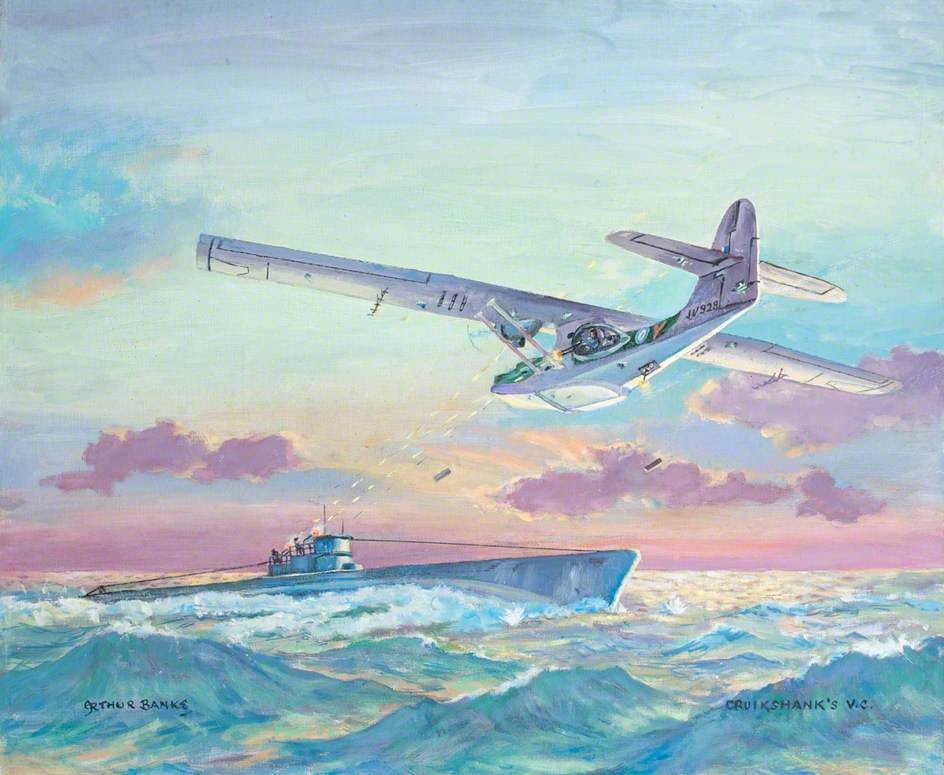
At some point in the post-WWII era, someone looked over at that quiet, unassuming man and thought, “He’s just a banker.” Really? Picture in your mind a British officer from WWII. This man, John Cruickshank, is almost right from central casting Just a junior officer flying a slow seaplane out of the Shetland Islands, taking his crew north. Just another patrol. Flying Officer Cruickshank was twenty-four years old when he piloted a Consolidated Catalina anti-submarine flying boat from Sullom Voe on 17 July 1944 on a patrol north into the Norwegian Sea. The objective was to protect the British Home Fleet as it returned from the unsuccessful Operation Mascot raid on the German battleship Tirpitz. There, Cruickshank’s “Cat” caught a German Type VIIC U-boat on the surface. At this point in the war, U-boats had been fitted with anti-aircraft guns as an attempt to counter the aerial threat. Cruickshank nevertheless attacked the U-boat, flying his Catalina through a hail of flak. His first pass was unsuccessful, as his depth charges did not release. He brought the aircraft around for a second pass, this time successful as his charges straddled the U-boat, sinking it with the loss of all 52 crew members. The U-boat was first thought to be U-347, as Cruickshank’s VC citation states, but later research suggested that it was actually U-361.[6] However, the German anti-aircraft fire had been deadly accurate, killing Cruickshank’s navigator and injuring four other members of the crew, including Cruickshank and the less seriously wounded second pilot, Flight Sergeant Jack Garnett. Cruickshank was hit in seventy-two places, with two serious wounds to his lungs and ten penetrating wounds to his lower limbs. Despite this, he refused medical attention until he was sure that the appropriate radio signals had been sent and the aircraft was on course for its home base. Even then, he refused morphine, aware that it would cloud his judgement. Flying through the night, it took the damaged Catalina five and a half hours to return to Sullom Voe, with Garnett at the controls and Cruickshank lapsing in and out of consciousness in the back. Cruickshank then returned to the cockpit and took command of the aircraft again. Deciding that the light and the sea conditions for a water landing were too risky for the inexperienced Garnett to put the aircraft down safely, he kept the flying boat in the air and circled for an extra hour until he considered it safer, when they landed the Catalina on the water and taxied to an area where it could be safely beached. When the RAF medical officer boarded the aircraft, he discovered Cruickshank had lost a great deal of blood, and had to give him a transfusion before he was stable enough to be transferred to hospital.[7] John Cruickshank’s injuries were such that he never flew in command of an aircraft again. For his actions in sinking the U-boat and saving his crew he received the Victoria Cross, while Flight Sergeant Jack Garnett received the Distinguished Flying Medal. Later that month, Cruickshank was promoted to flight lieutenant (war-substantive), with effect from 10 July. A great short video from the Imperial War Museum from six years ago, right before his 100th birthday. His Victoria Cross Citation is well worth the read. Air Ministry, 1st September, 1944. The King has been graciously pleased to confer the Victoria Cross on the undermentioned officer in recognition of most conspicuous bravery: — Flying Officer John Alexander Cruickshank (126700), Royal Air Force Volunteer Reserve. No. 210 Squadron. This officer was the captain and pilot of a Catalina flying boat which was recently engaged on an anti-submarine patrol over northern waters. When a U-boat was sighted on the surface, Flying Officer Cruickshank at once turned to the attack. In the face of fierce anti-aircraft fire he manoeuvred into position and ran in to release his depth charges. Unfortunately they failed to drop. Flying Officer Cruickshank knew that the failure of this attack had deprived him of the advantage of surprise and that his aircraft offered a good target to the enemy’s determined and now heartened gunners. Without hesitation, he climbed and turned to come in again. The Catalina was met by intense and accurate fire and was repeatedly hit. The navigator/bomb aimer was killed. The second pilot and two other members of the crew were injured. Flying Officer Cruickshank was struck in seventy-two places, receiving two serious wounds in the lungs and ten penetrating wounds in the lower limbs. His aircraft was badly damaged and filled with the fumes of exploding shells. But he did not falter. He pressed home his attack, and released the depth charges himself, straddling the submarine perfectly. The U-boat was sunk. He then collapsed and the second pilot took over the controls. He recovered shortly afterwards and, though bleeding profusely, insisted on resuming command and retaining it until he was satisfied that the damaged aircraft was under control, that a course had been set for base and that all the necessary signals had been sent. Only then would he consent to receive medical aid and have his wounds attended to. He refused morphia in case it might prevent him from carrying on. During the next five and a half hours of the return flight he several times lapsed into unconsciousness owing to loss of blood. When he came to his first thought on each occasion was for the safety of his aircraft and crew. The damaged aircraft eventually reached base but it was clear that an immediate landing would be a hazardous task for the wounded and less experienced second pilot. Although able to breathe only with the greatest difficulty, Flying Officer Cruickshank insisted on being carried forward and propped up in the second pilot’s seat. For a full hour, in spite of his agony and ever-increasing weakness, he gave orders as necessary, refusing to allow the aircraft to be brought down until the conditions of light and sea made this possible without undue risk. With his assistance the aircraft was safely landed on the water. He then directed the taxying and beaching of the aircraft so that it could easily be salvaged. When the medical officer went on board, Flying Officer Cruickshank collapsed and he had to be given a blood transfusion before he could be removed to hospital. By pressing home the second attack in his gravely wounded condition and continuing his exertions on the return journey with his strength failing all the time, he seriously prejudiced his chance of survival even if the aircraft safely reached its base. Throughout, he set an example of determination, fortitude and devotion to duty in keeping with the highest traditions of the Service. After the war, he returned to banking and only passed away last summer, aged 105—the last surviving Victoria Cross recipient from WWII. An interesting side note is the background of the U-boat he attacked. U-361 was sunk on her third patrol, less than a year before the war would be over. Not once on any of her patrols did she sink a single ship. Not a one. This was her crew. Here they were, bristling with their late-war AAA upgrade, right before the depth charge exploded on the second run, her hull breached, she sank, and all were lost at sea. I am sure those who were manning the AAA were on the surface for a while, but even in the summer in the North Atlantic, the cold gets you quickly. And here is where she was sunk, patrolling the convoy route to Murmansk. The wars we fight. Some come home. Some do not. Some see well into the next century. Some will never see another sunrise. Such has been the human condition for tens of thousands of years, and will be for tens of thousands of years. Also, that nice young banker that is helping you with your HELOC? If fate placed him there, he very well could be exactly like Cruickshank. Heroes walk all around us; they just don’t know it because fate dealt them a different set of cards, and we’ll never see it. Leave a comment Share This Substack is reader-supported. To receive new posts and support my work, consider becoming a free or paid subscriber. View the full article
-
A British-made uncrewed helicopter has flown faster than 100 miles per hour while carrying real cargo, and the company behind it says that single test run marks the opening move in a summer packed with flight trials meant to prove the aircraft is ready for military logistics work. Certo Aerospace, a UK aerospace company developing […]View the full article
-
An electric cargo drone that did not exist ten weeks ago just spent days flying nonstop supply runs for one of the U.S. Army’s biggest technology experiments, hauling everything from field rations to medical gear into locations a traditional cargo plane could never reach. Pyka, an autonomous aviation company based in Alameda, California, announced this […]View the full article