All Activity
Today
-
South Korea’s Air Force took delivery of its first production KF-21 Boramae fighter jet, the Defense Acquisition Program Administration and the Air Force said in a joint statement. The aircraft flew from Korea Aerospace Industries’ plant in Sacheon to an Air Force unit in Yecheon, about 165 km (103 miles) to the north, escorted by […]View the full article
-
Advanced Navigation, an Australian navigation technology company, has signed an $18.5 million deal to supply inertial navigation systems for Kongsberg’s PROTECTOR counter-drone platforms, the company said Sept. 22. The systems are bound for Poland, where Kongsberg is delivering 18 counter-drone batteries under a contract worth roughly NOK 16 billion, or about $1.5 billion, with Poland’s […]View the full article
-
The Javelin Joint Venture completed a simulation demonstration in Norway using a Kongsberg Medium-Caliber Turret fitted with a prototype dual launcher assembly for the Javelin anti-tank missile. The companies described it as the first phase of an ongoing effort to integrate Javelin more closely with vehicle-mounted turret systems. The Javelin Joint Venture is a partnership […]View the full article
-
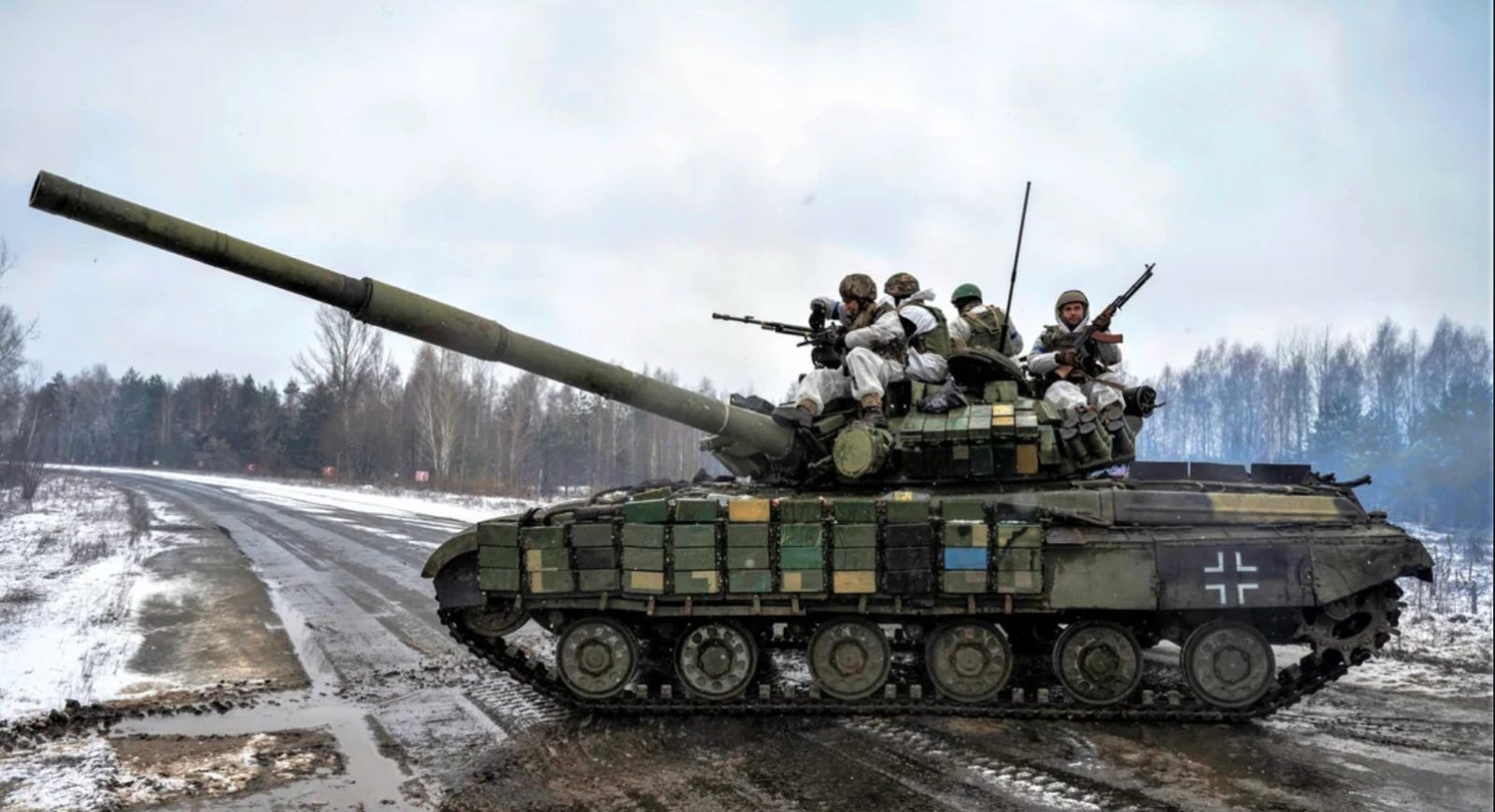
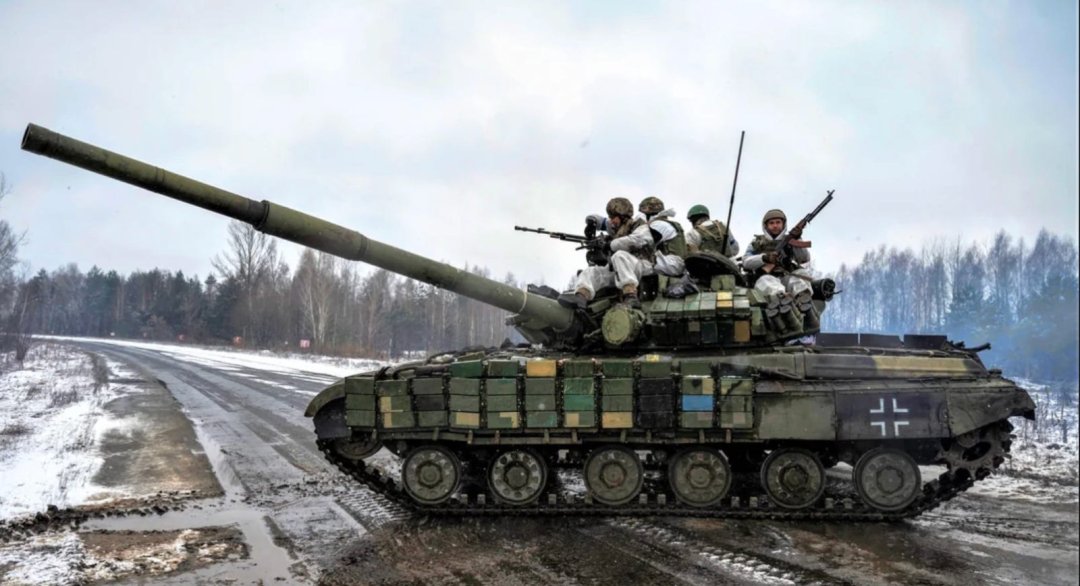
Most of the news one has heard about the Russo-Ukrainian War since the USA and Israel started their campaign against Iran in early spring has been about the expanded “Battle of the Cities” as Russia continues to pound population centers and Ukraine focuses on strategic strikes against Russian hydrocarbon industries, logistics, and commerce raiding at sea. Both Russia and Ukraine are land powers, and that is where the important moves will take place. Mick Ryan, as one would expect, has a great overview of what has been happening this summer. Vivaldi: The Summer-Autumn Counteroffensive. The week’s big story was the official disclosure of an ongoing Corps-level Ukrainian counteroffensive in eastern Ukraine. It represents the second significant Ukrainian counteroffensive this year (the first was in the south) and indicates Ukraine has developed new offensive techniques that are having an impact on ground combat operations. Brigadier General Andrii Biletskyi, commander of the 3rd Army Corps, confirmed on 15 September that his forces have been running an offensive codenamed Vivaldi in northern Donetsk Oblast near Lyman since roughly May, conducted under very strict operational security. There have been open-source stories about this for the last couple of weeks, including my report here once news broke about the counteroffensive, but it was good to get an update from the commander on the ground. Ukraine claims at least 75 square kilometres cleared of Russian infiltration units, and a further 10 square kilometres liberated around Novoselivka, Oleksandrivka, Yarova and Korovyi Yar, with the settlement of Seidnie also retaken. Several open-source analysts, working from geolocated footage put the true figure considerably higher, at 200 to 240 square kilometres. This gap is probably the result of the Ukrainians not yet wanting to announce information about some ongoing elements of the operation, and reporting lags. Biletskyi made an interesting comment that telegraphs that this operation is far from over: Vivaldi has four seasons. This is only the first. While drones had largely blunted the ability of both sides to maneuver, it appears that there is actually some significant movement taking place as, for the moment in Ukraine’s favor, the capability-counter-capability of drones v. armor has allowed for more effective point defense enabling the offensive. Via David Kirichenko at the Center for European Policy Analysis, Ukraine’s 3 Army Corps, acting under strict operational silence, has been conducting a counterattack in the Lyman sector for months. The cloud of secrecy has now been lifted, and Russian forces have lost a significant amount of territory. The operation, named Vivaldi, has so far officially cleared 75 sq km (29 sq miles), Ukrainian forces say. It is not yet over. “In Vivaldi, as you know, there are four seasons,” Brig. Gen. Andriy Biletsky said on September 15. “And this is only the first . . . Good news is coming.” We should not get too excited. 29 square miles (75 square kilometers) is only a bit larger than Manhattan and a little smaller than Walt Disney World. If we scaled that up proportionally for the USA, that would be about 490 square miles, or the city of Los Angeles. Not nothing, but not a lot. That being said, it isn’t so much the amount of territory, but what it represents. Russia’s leadership had hoped to encircle Ukraine’s formidable fortress belt in western Donbas, but the northern salient has been reduced, with Russian warbloggers claiming it will extend the battle for Donbas by a year. Credible independent sources say the Ukrainian territorial gain is even greater. Ukraine has also been making effective use of mid-range strikes to hit Russia’s rear, softening defenses, and then using troops to retake ground. Kyiv’s forces have benefited from Russian commanders falsifying reports about their progress, leading to a lack of reinforcements and allowing Ukraine to seize the initiative. The UAF says more than 1,500 Russians have been killed and wounded, and 12,000 drones destroyed along with hundreds of vehicles. That was Russia’s main effort for her summer offensive…and it has failed. What is worth noting is that the Ukrainians have demonstrated, again, that armor is not dead—limited, but when used properly, essential. The Lyman offensive shows Ukraine is improving its deployment of combined arms, a tactic it struggled to deliver during its unsuccessful counteroffensive in 2023. In the race to adapt, both sides have sought to develop the countermeasures and conditions required to restore maneuverability to the battlefield. In July, a Russian mechanized assault in Maiak featured the Arena-M active protection system (APS), which had been modified to defend tanks against first-person view (FPV) drones. Dmytro Putiata, a Ukrainian veteran and drone warfare expert, said the Ukrainians had found the system hard to break down. The system on just one tank “destroyed seven FPV drones,” Putiata wrote on Twitter/X. “In general, it took 15 to 20 FPV drones to destroy a tank (there were seven of them).” Not every sector, or every terrain, is appropriate for the use of heavy armor, and commanders are having to adapt to different combat environments. In the Donetsk-Dnipropetrovsk-Zaporizhzhia sector, Yurii, a drone operator with Ukraine’s 23rd Separate Mechanized Brigade, said tanks were scarce. “The main focus right now is on small infantry groups moving on foot or on all-terrain vehicles, supported by drones as they advance,” he said in an interview. “In our sector, tanks are very rare because of the large kill zone extending in both directions.” … The concept of combined-arms warfare hasn’t changed, but the older doctrines for its use are becoming outdated. “Tanks are used noticeably less often compared with previous years,” said Viktor, a tank operator from Ukraine’s 28th Separate Mechanized Brigade. “The survivability of the vehicles themselves has also declined because the enemy is using more advanced strike UAVs and sectors of the front have become more difficult for concealing vehicles.” … The new style of Ukrainian combined assaults has produced important results, such as in Lyman, but a major breakthrough will still be very difficult. Much like Ukraine’s 2023 counteroffensive, any limited breakthrough will face barrages of artillery and drones. … “Despite the difficulty in ground operations maneuver observed in eastern Ukraine over the past few years, offensive operations are still possible in modern war,” wrote retired Australian General Mick Ryan. “But they need the intellectual effort to develop new techniques to make them viable and repeatable at scale.” In the background, larger strategic issues are moving. There is a non-zero chance that, by the end of 2027, the European political climate—and its attitude towards Ukraine—will be very different. The French election is only seven months away with Marine Le Pen’s Rassemblement National looking to finally win. Not good news for Ukraine as it stands right now, but that may change. With each election, Germany’s Alternative für Deutschland gets stronger and stronger—and the pro-Ukrainian CDU is impaling itself on the migration issue and Merkelism. Not good news for Ukraine in isolation, but more cards are yet to be played. They have 2029 for the next election at the federal level, but with Chancellor Merz unpopularity making his position increasingly unstable, who knows. If France and Germany don’t have the stomach to continue to substantially back Ukraine…there is only so much the rest of Europe can do. The American public is not in the mood to be more concerned about Eastern Europe than Central and Western Europe are themselves. This ain’t easy, is it? Last man standing—and the victor will be drained, broke, and poorer than when the war started—only slightly less than the other guy. We only have six weeks or so until bezdorizhzhia/rasputitsa kicks in and everything get stuck to the axel…so…winter offensive, anyone? Editor’s Note: the picture of the tank at the top of the post is the same one as used in the CEPA article. I almost didn’t use it since I started coming out strongly in favor of Ukrainian self-determination 13 years ago, and have quite the record on the topic since at the OG Blog, here, the Midrats Podcast and UNCLAS Read Board Podcast—but that wouldn’t be fair to the Front Porch, as I continue to try to keep an eye on myself to avoid the death of any opinion person: audience capture and self-editing of uncomfortable truths.Yes, I understand the unhelpful and problematic iconography that some Ukrainian units use. We could do without the Balkenkreuz, even if it does troll Russians well. It is just unhelpful. The white crosses I can explain, but there’s no avoiding the problems with the Balkenkreuz…even if you’re fighting Russians.Leave a comment Share This Substack is reader-supported. To receive new posts and support my work, consider becoming a free or paid subscriber. View the full article
-
Assistant Secretary of War for Critical Technologies Michael Dodd said the Department of War needs to move directed energy weapons out of testing and into the field, arguing in a Sept. 22 post on X that high-energy laser programs have proven the technology works and now need ruggedized, deployable systems for air and missile defense. […]View the full article
-
The U.S. Army’s XVIII Airborne Corps evaluated a dual-mode flying buggy called the SkyRunner during Scarlet Dragon 26-3, an experimentation exercise held at Fort Bragg, North Carolina, on Sept. 16. Soldiers tested the vehicle’s ability to shift between driving and flying in austere conditions at Holland Drop Zone. The SkyRunner pairs an off-road buggy chassis […]View the full article
-
The U.S. Army’s XVIII Airborne Corps evaluated a drone mothership built by Modalic during Scarlet Dragon 26-3, an experimentation exercise held at Fort Bragg, North Carolina, in mid-September. The aircraft, called the Autonomous Swarm Mothership, launched smaller drones in flight as soldiers tested whether the network could track the parent aircraft, separate its daughter drones, […]View the full article
-
The U.S. Navy demonstrated a new system for planning and controlling autonomous combat aircraft during Gray Flag 2026, a large-force test event held at Point Mugu Sea Range in California this month. The Navy calls the system Collaborative Autonomy Mission Planning, or CAMP. The demonstration used a General Atomics MQ-20 Avenger acting as a surrogate […]View the full article
-
The U.S. Army Corps of Engineers awarded K & K Industries a $13.6 million contract to build a weapons release system storage facility at Whiteman Air Force Base, Missouri, part of the base’s preparation to host the B-21 Raider stealth bomber. The Windsor, Missouri-based company’s firm-fixed-price award brings the project’s total value to $14,993,485. Three […]View the full article
-
GM Defense won a $697.7 million modification to its Infantry Squad Vehicle contract with the U.S. Army, funding engineering changes to the vehicle’s five-seat cargo variant, the Department of War announced Sept. 21. The modification, designated P00053, brings the total value of the underlying contract to $915.6 million. The Warren, Michigan-based company was the only […]View the full article
-
South African defense company Paramount unveiled a new reusable drone called V-Raven at the Africa Aerospace and Defence exhibition in South Africa on Sept. 19, replacing an earlier catapult-launched design with an aircraft that takes off and lands vertically without a runway. V-Raven grew out of Paramount’s earlier N-Raven program, a swarming drone the company […]View the full article
Yesterday
-
Last week was, if anything, “Space Week.” There were two very intentional statements from senior U.S. military leaders, one civilian and one uniformed, that put markers down. It is much more important than the coverage it received would suggest. First, the Secretary of the Air Force, Air Force Secretary Troy Meink offered no details about the nature or makeup of the weapons but described them as “on-orbit space control weapons capable of defending the joint force against hostile adversary action.” He made the surprise admission during his keynote address Monday at the annual Air, Space and Cyber Conference at National Harbor, Md. A Space Force spokesperson said the weapons were deployed to increase “readiness against existing threats,” but declined to provide additional detail. The following statement is, well, a work of art. Not good art, but a work of art nonetheless. A Space Force spokesperson said the weapons were deployed to increase “readiness against existing threats,” but declined to provide additional detail. “Space control encapsulates the mission areas required to contest and control the space domain – employing kinetic and non-kinetic means to affect adversary capabilities through disruption, degradation and even destruction, if necessary,” the spokesperson said in an emailed statement under the condition his or her name not be published. “These capabilities can be employed for offensive and defensive purposes at the direction of combatant commands.” Let me see if I can tap into my old staff-weenie head to translate that for everyone. “Other nations want to impose their will on space or will try to stop us from imposing our will. That ain’t gonna to happen. We are going to do what we need to do in space because it pleases us. We will physically break your stuff in space if it gets in our way, or just fry its electronics to make it deaf, dumb, and blind, if needed. We’ll do it for our COCOMs, or if you try to do it yourself, we’ll take care of that business as well. Cope and seethe.” Weapons can be soft-kill (think Electronic Attack, jamming, etc), or hard kill (which needs no explanation). What kind are we referring to here? I’m thinking the former over the latter. Some think that “international law” prevents the militarization of space. Not true. The only thing on the books is the 1967 Outer Space Treaty. In Article IV of the treaty, it bans weapons of mass destruction in space. It also covers the Moon…which will tie in to the second part of today’s post. Before we go, something about the timing of the above announcement with recent events. Just a coincidence, I’m sure. A Chinese satellite has left “space debris” in Earth’s orbit, adding to the growing clutter that could circle our planet for centuries. Here’s what to knowThe debris field was left by Yaogan 50-02 — a Chinese reconnaissance satellite that had been flying in an unusual retrograde orbit about 590 miles above Earth, according to Futurism. The U.S. Space Force is tracking 43 fragments from the breakup in orbits ranging from 372 to 683 miles. On X, Harvard astronomer and space-tracking expert Jonathan McDowell speculated that a “battery explosion or an impact by space debris” may have caused the breakup. Interesting was this story released by WSJ about the same time. Before Iran carried out its attack that killed three U.S. troops in July, Tehran acquired high-resolution satellite images of the base in Jordan from Chinese entities, according to U.S. officials familiar with details of the incident. It is the clearest evidence so far that Chinese support for Iran during the war has had lethal consequences for U.S. forces, according to the officials, who say the U.S. has connected the imagery to the attack. Related? Who knows. I don’t think it matters, really. Point is made, and implied. Is space weaponized now? I think it always has been. The Soviets broke the seal back in 1975, but the latest news is more operational—and it seems to be more permanent. I’m OK with that. As a matter of fact, I’m relieved. From communications to imagery to defense against attack, space has been critical to the American way of war for decades, and increasingly other space-faring nations as well. We are buying the lives of Americans by dominating space. Everywhere humans go, the military will either be at the front or close behind. Space will be no different. We might as well steal a march on the rest before they steal a march on us. In case you have not noticed, there has been a quickening again in space over the last half decade, driven by innovation in the U.S. In the U.S. alone. It is all set to increase further with both commercial (SpaceX, Rocket Lab, Blue Origin, etc.) and state-owned efforts like NASA are accelerating. There is clearly a new space race, and it is USA v. China, with most of the rest by being American allies. Also last week was something that was briefly mentioned on yesterday’s Midrats Podcast, but by a person who should get your attention. This is the second leaders mentioned at the top of the post. Gen Dan Caine, who as chair of the joint chiefs of staff is the country’s most senior military leader, told the Air, Space and Cyber Conference in Maryland this week, that the armed forces including Space Force must be “prepared to fight, endure and win … from the seabed to cislunar space”. Added to a number of other maneuvers and bold pronouncements Trump has made concerning space in recent weeks and months, it is hard not to see the space weapons reveal by Meink – who holds a civilian position reporting to the US defense secretary, Pete Hegseth – as a further blending of the traditionally separate military and non-military roles of US space policy. We discussed the critical importance of the Moon two episodes ago on the Midrats Podcast with Dean Cheng. We must get to the lunar south pole first, as that seems to be the prime real estate. We need to set up a permanent base there…to be the firstest with the mostest, and stay there. Humans will move into space. That is where our species is destined to go. The question is, what will define the terms of our movement? Just as North America was founded on British law and customs because that is who mostly settled there, South America’s template was set by Spain. Quite different outcomes. Access to and movement through the high seas was set by first the British Empire and then the U.S.A. Why? Because they were the dominate powers in both. The standards and practices—not to mention law and language—of space will be determined by who is running the show between first Earth and the Moon, and then on to Mars, etc. Be the dominate power, you set the rules. Look at the People’s Republic of China and her behavior on the open seas, the South China Sea, etc., and all the “Wolf Warrior” diplomacy that comes with it. Do you want that is space, stamping on the human face forever? Imperfect as we may be, the American solution will come with a healthy flavoring of other democratic systems that we will partner with; Japan, Europe, United Kingdom, South Korea, Australia, and eventually Canada unless they continue to play footsie with the PRC, then they can pack sand. So, in a bipartisan manner with a steady and growing funding line, the U.S. needs to keep pushing to the Moon. A full court press by NASA, SpaceX, Blue Origin, Rocket Lab…everyone. Whoever can get people and material there should get a funding line. I’d also like to see how many SpaceX Starships are needed to get the Boring Company up and running on the Moon. Much of the base should be underground…and that will be how to make it happen…I think. What would it take to run that operation from the Moon? I am sure there is already an outline to do that. How many to get a small nuclear reactor that could provide power to 1,000 people doing industrial work? More. Faster. Leave a comment Share This Substack is reader-supported. To receive new posts and support my work, consider becoming a free or paid subscriber. View the full article

-
The U.S. Marine Corps has released a photo of Marines with the 11th Marine Expeditionary Unit driving a Light Marine Air Defense Integrated System, known as LMADIS, a mobile counter-drone system, in the Middle East on Sept. 2-6. The caption says only that the photo was taken in the U.S. Central Command area of responsibility, […]View the full article
-
U.S. Army soldiers launched micro-High-Altitude Balloons at the Yausubetsu Training Area on Hokkaido, Japan, on Sept. 18, including one that carried an APOLLO-R drone. Observers from Japan, the United Kingdom and Australia watched the demonstration during Exercise Orient Shield 26, according to the title of the U.S. Army’s video. Balloons are often seen as relics […]View the full article
-
U.S. Air Force officers studying at the Air Force Institute of Technology (AFIT) are testing whether small drones can scout a damaged airfield before engineers walk onto it. The research targets a job that still depends mostly on people. After an attack, U.S. Air Force civil engineers have to reopen runways while dealing with unexploded […]View the full article
-
NORAD has sent U.S. Air Force F-16 fighters from Alaska to the Atlantic side of Canada, and plans to take aircraft and personnel on into Greenland, in an Arctic operation running Sept. 13-26. The Alaskan NORAD Region moved the F-16s from Eielson Air Force Base to Goose Bay, in Canada’s Newfoundland and Labrador province, for […]View the full article
-
Turkish defense specialists inspected aircraft maintenance facilities at Royal Air Force Coningsby in England on Sept. 15-17 as work continues on Türkiye’s purchase of Eurofighter Typhoon fighter jets from the United Kingdom. The Turkish Ministry of National Defense announced the visit in a post on X. The delegation included personnel from the ministry, the Turkish […]View the full article
-
The U.S. Air Force inactivated four A-10 units at Davis-Monthan Air Force Base, Arizona, on Sept. 18, in a ceremony it described as the official end of the A-10 legacy at the base. The units were the 355th Operations Group, 357th Fighter Squadron, 357th Fighter Generation Squadron and 355th Training Squadron. Col. Jose Cabrera, commander […]View the full article
-
The U.S. Air Force retired EC-130H Compass Call tail 1590 at Davis-Monthan Air Force Base, Arizona, on Sept. 18, after more than four decades of Compass Call electronic warfare operations. The propeller-driven aircraft made its final flight on Sept. 2 and taxied in for the last time during a retirement ceremony. The EA-37B now takes […]View the full article
Last week
-
After a two-week availability period, the Midrats Podcast is back! SummaryIn this episode, we explore current geopolitical tensions, military readiness, and strategic challenges facing the US and its allies, emphasizing the importance of preparedness and international cooperation. You can listen at this link or via the Spotify widget below. Show LinksRussian restrictions on Estonia’s borders Curfew on Russia’s Border with Estonia, Holger Roonemaa on Substack Great Circle ballistic arcs over Greenland Six Days of War: June 1967 and the Making of the Modern Middle East, by Michael B. Oren Operation Red Sea Regatta Shipfinder Hormuz Tracker Hormuz Strait Monitor Strait of Tiran Italy tires of EU military bureaucracy with Operation Aspides Department of War IG report on Operation Epic Fury Ukrainian FP-7 Pelican SRBM USAF Ponders Restart of C-17 line, Joseph Trevithick in TWZ Deadly escalation in Black Sea attacks prompts fears of even higher food prices, Joanna Partridge in The Guardian The US air force admitted to deploying weapons in space. Don’t expect the White House to explain why, Richard Luscombe in The Guardian Key TopicsRussian border curfews and testing NATO responses Gray zone operations in Europe and suspected incidents The importance of naval power and the Strait of Hormuz US energy independence and refinery capacity issues The strategic significance of Greenland and the Arctic Space dominance and the importance of cislunar space European NATO capabilities and weapon shortages The role of alliances and international cooperation in security Takeaways Russian testing of border restrictions signals potential for future escalation European nations are underprepared for modern missile threats US needs to rebuild and modernize its heavy airlift capabilities Greenland’s strategic importance is increasing and must be secured Control of key maritime choke points is critical for global security Space dominance is essential for future military and economic power European navies lack sufficient missile defense capabilities Energy infrastructure vulnerabilities pose national security risks Chapters00:00: Introduction to Geopolitical Tensions and NATO 02:04: Russian Border Curfews and Testing NATO Responses 03:55: European Operations and Weapon Shortages 06:09: The Strategic Importance of Greenland and the Arctic 10:01: Energy Security and Oil Refinery Capacity 15:10: Straits of Hormuz and Global Oil Transit 22:02: Black Sea, Yemen, and Middle East Tensions 30:00: Naval Power and the US Surface Fleet 36:06: European Naval Capabilities and Weapon Shortages 45:11: Space Power, Cislunar Space, and Future Threats 59:47: International Alliances and Strategic Cooperation 01:05:02: Conclusion: Preparing for a Dangerous World Leave a comment Share This Substack is reader-supported. To receive new posts and support my work, consider becoming a free or paid subscriber. View the full article

-
Combat medics from Ukraine’s 1st Separate Medical Battalion traveled to Sweden last week to share their experience evacuating wounded soldiers under drone threat, meeting with medical personnel from the Swedish Armed Forces’ Life Guards regiment, according to a Life Guards post and a LinkedIn account from the Ukrainian company that built the ground robot involved […]View the full article
-
Five companies posted the top scores in the close-quarters battle category of Gauntlet II, the latest round of testing under the U.S. Department of War’s $1 billion Drone Dominance Program, according to results the program released and companies confirmed this week. Neros topped that category with a score of 88.1, followed by ORQA US LLC […]View the full article
-
The U.S. Space Force wants companies to pitch satellites that can chase down and inspect objects in orbit on short notice, according to a request for information Space Systems Command published September 18. Space Systems Command asked industry September 18 to pitch designs for a spacecraft that can chase down another object in space, close […]View the full article
-
The U.S. Air Force will hold a two-day industry day October 20-21 at Wright-Patterson Air Force Base to brief companies on a new mission computer upgrade for its F-16 fighter fleet, according to a notice posted September 18 by the Air Force Life Cycle Management Center. The event covers the Next-Generation Mission Computer program, an […]View the full article
-
The U.S. Navy is asking defense companies to pitch designs for a carrier-launched combat drone that could fly, fight and land on aircraft carriers alongside manned fighters, according to a request for information released August 31 by Naval Air Systems Command. The RFI covers the first increment of the Navy’s Collaborative Combat Aircraft program, run […]View the full article